
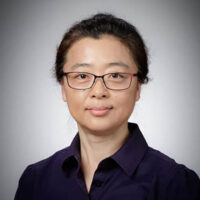
Dr. Dongmei Zhao is a Professor in the Department of Electrical & Computer Engineering at McMaster University, part of the Faculty of Engineering. She specializes in wireless networking, network resource management, mobile edge computing, mobile computation offloading, and digital twins. Her research clusters focus on Digital & Smart Systems. Dr. Zhao holds a Ph.D. from the University of Waterloo. She teaches courses such as COMPENG 4DK4 (Computer Communication Networks), COMPENG 4DN4 (Advanced Internet Communications), and graduate-level courses like ECE 729 (Resource Management in Wireless Networks). Her research interests span cutting-edge topics including UAV-enabled edge computing, digital twin migration, vehicular networks, and reinforcement learning applications in resource allocation. She actively contributes to advancing 6G networks, security redundancy in autonomous systems, and decentralized manufacturing platforms. Dr. Zhao's recent publications emphasize optimization techniques for dynamic networks, platooning systems, and multi-agent learning frameworks. She has been recognized for her work in vehicular edge computing and digital twin integration, though explicit awards are not listed here. She advises on graduate studies in networking and edge computing, though no specific student names are provided in the text. Her work often intersects with practical challenges in smart infrastructure and autonomous vehicle systems.
جستوجوی استاد و پژوهشگر
استاد راهنما، استاد دانشگاه یا پژوهشگر مناسب برای مسیر پژوهشیتان را پیدا کنید و با او ارتباط بگیرید.
نمایش ۷۲۱-۷۳۵ از ۵٬۹۱۸ استاد راهنما
اطلاعات این پروفایلها از صفحات عمومی دانشگاهها جمعآوری شده و ممکن است بهروز نباشد.

John Newbold is a Professor of Dairy Nutrition at Scotland's Rural College (SRUC), specializing in dairy nutrition science with a focus on connecting scientific research to practical applications. His research interests include mammary physiology, rumen metabolism, methane and manure management, feedstuff analysis, and calf development. He leads projects on optimizing amino acid nutrition in dairy cows and exploring novel feed additives to reduce methane emissions. Newbold holds a PhD in Dairy Science from the University of Nottingham. Education: PhD in Dairy Science (University of Nottingham, 1987), BSc in Agricultural Biochemistry and Nutrition (University of Newcastle-upon-Tyne, 1981). Research Interests: Mammary Physiology: Milk component synthesis rates Rumen Physiology: Cell wall digestion and protein synthesis Methane Mitigation: Feed additives and rumen management Feedstuff Evaluation: Nutrient composition analysis Calf Development: Growth and health optimization Grants & Projects: Over £2.5M in competitive funding, including DEFRA and EU projects on greenhouse gas mitigation, rumen microbiology, and sustainable livestock systems. Recent initiatives include the Daffodil-enabled Climate-Friendly Ruminant Production project and Re-Livestock for resilient farming systems. Labs & Teams: Collaborates with interdisciplinary teams on rumen microbiology, biorefinery applications, and methane reduction technologies. Active in industry partnerships for feed additive development and climate-smart agriculture.
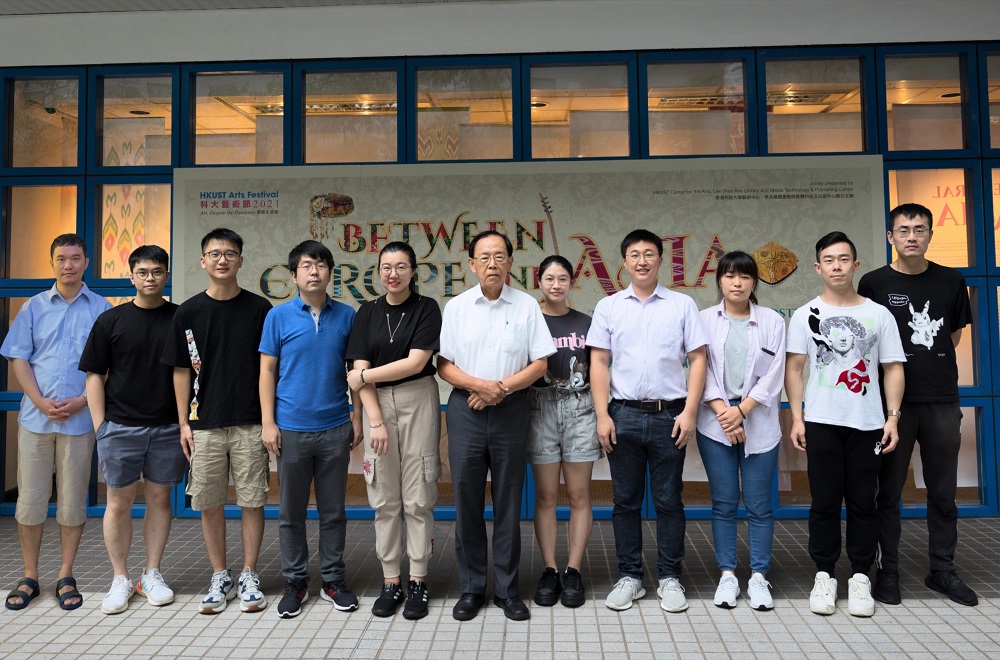
Dr. Ping Sheng is Chair Professor of Nanoscience and Professor of Physics at the Hong Kong University of Science and Technology (HKUST). A pioneer in acoustic metamaterials, he established the conceptual foundation for locally resonant sonic materials and developed innovative metamaterial absorbers. His research encompasses wave-matter interactions across phononic, photonic and electronic systems, with seminal contributions to acoustic metamaterials, carbon nanostructure superconductivity, and electrorheological fluids. Current work focuses on broadband absorption technologies for underwater and microwave applications. Dr. Sheng has received the Brillouin Medal, Rolf Landauer Medal, and Bloch Prize for his transformative contributions. He co-founded Acoustic Metamaterials Group (AMG), enabling commercial applications of metamaterial technologies.
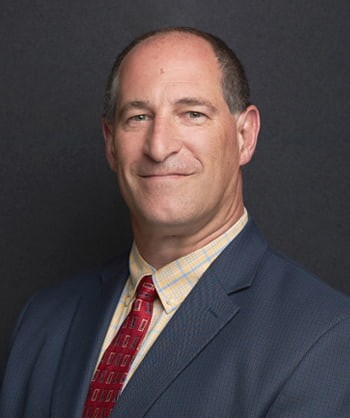
Glenn R. Gaudette is the John W. Kozarich ’71 Chair and Professor in the Department of Engineering at Boston College. He pioneered plant-based scaffolds for heart regeneration and cellular agriculture, featured in global media including BBC and Netflix. His work bridges biomaterials science with engineering education, emphasizing human-centered design and sustainability. Educational Background: PhD in Biomedical Engineering. He developed Boston College’s first Engineering program, integrating innovative research with interdisciplinary teaching. Research focuses on tissue engineering, biomechanics, and scalable solutions for regenerative medicine and cellular agriculture. His lab’s spinach-based scaffolds revolutionized lab-grown meat research, while decellularized plant materials enable vascularized tissue constructs. Publications highlight advancements in biomaterials, bioengineering education, and sustainable bioprocessing. Over 200k citations across disciplines reflect his cross-field impact. Awards: NAI Fellow, AIMBE Fellow, Top 2017 Altmetric Paper Patents: Bladder mapping systems, plant-derived tissue scaffolds Advises undergraduate researchers (8 named in patents) and leads NSF-funded projects. Co-directs BC’s Engineering Innovation Lab, emphasizing empathy-driven design and social justice in engineering. Labs/Teams: Plant-based Biomaterials Group, Bioengineering Education Collective, BC Tissue Engineering Core.
Mirko Bothienمشاهده پروفایل
مدرس ارشد
- Thermoacoustics
- Combustion
- Gas Turbines
- +۷ مورد دیگر
Mirko Bothien is a Senior Lecturer and Head of Research/Focus Area Renewable Energy at the Institute of Energy Systems and Fluid Engineering (IEFE) within the Zurich University of Applied Sciences (ZHAW) School of Engineering. He also holds an Associate Professor position at the Department of Energy and Process Engineering at the Norwegian University of Science and Technology (NTNU) in Trondheim. Previously, he was a Rudolf Diesel Industry Fellow at the Institute for Advanced Study at TU München from 2018 to 2022. His work focuses on renewable energy systems with particular emphasis on hydrogen technologies and gas turbine applications. Dr. Bothien earned his Dr.-Ing. in Thermoacoustics and Combustion from the Institute of Fluid Mechanics and Acoustics at TU Berlin (2005-2008) and his Dipl.-Ing. in Turbo-machinery and Jet Propulsion from RWTH Aachen (2001-2005). In 2023, he completed a Certificate of Advanced Studies in Teaching and Learning in Higher Education from PH Zürich, enhancing his pedagogical expertise. Dr. Bothien's research spans thermoacoustics, combustion dynamics, gas turbine technology, hydrogen energy systems, and alternative fuels. He leads numerous projects investigating hydrogen combustion in gas turbines, ammonia-hydrogen co-firing, and advanced combustion systems for carbon-free power generation. His work addresses critical challenges in decarbonizing power systems through innovative combustion technologies that maintain high efficiency while reducing emissions. His research integrates experimental, numerical, and theoretical approaches to understand complex combustion phenomena, particularly focusing on thermoacoustic instabilities in reheat combustors and novel flame stabilization mechanisms. He teaches Thermodynamics, Heat Transfer, and Wind Power and Hydropower courses. Analysis of Dr. Bothien's recent publications reveals a strong focus on hydrogen and ammonia combustion technologies for gas turbines, with particular attention to thermoacoustic stability, flame dynamics, and emissions characteristics. His work demonstrates increasing emphasis on carbon-free energy carriers and their integration into existing power generation infrastructure. The research spans fundamental combustion science to applied engineering solutions, with a clear trajectory toward enabling hydrogen-based power systems. Dr. Bothien actively leads multiple research projects including HyPowerGT (demonstrating hydrogen-powered gas turbines), FLEX4H2 (hydrogen flexibility), AETHER (hydrogen burner development), and ADONIS (ammonia-hydrogen combustion in micro gas turbines). These projects involve collaboration with industry partners and research institutions across Europe, securing significant research funding for advancing renewable energy technologies. As Head of Research at IEFE, Dr. Bothien oversees a research team focused on renewable energy systems, with particular expertise in thermoacoustic analysis, combustion dynamics, and hydrogen technologies. The team operates advanced experimental facilities for combustion research and maintains strong industry partnerships to translate research findings into practical applications for the energy sector.
- Microfluidics
- Biosensors
- Optofluidics
- +۵ مورد دیگر
Xudong Fan is a Professor at the University of Michigan specializing in advanced analytical and diagnostic technologies. His work bridges engineering, chemistry, and clinical medicine through innovative device development. His research focuses on: Miniaturized gas chromatography systems for portable chemical analysis and planetary science missions Optofluidic immunoassays using biolasers for ultrasensitive, label-free biomarker detection Machine learning integration for chromatographic data analysis and biosensor accuracy enhancement Breath-based diagnostics for cancer, infectious diseases, and respiratory conditions Microfluidic platforms requiring minimal sample volumes (e.g., 1μL fingertip blood) Professor Fan's 2025 publications reveal a strong emphasis on device miniaturization, automation, and multimodal sensing. Key trends include the convergence of micro-GC with photoionization detectors for field-deployable chemical analysis, deep learning solutions for chromatographic co-elution challenges, and biolaser-based platforms enabling antigen-independent cancer cell detection. These efforts target affordable point-of-care diagnostics with applications in tuberculosis monitoring, COVID-19 immunity assessment, and early lung cancer screening through breath analysis. His work demonstrates significant translational impact, particularly in resource-limited settings where cost, portability, and minimal sample requirements are critical. Current projects show strong alignment with NASA planetary science objectives through micro-GC development for extraterrestrial organic analysis.
Luke Kelleherمشاهده پروفایل
دانشیار
Dr Luke Kelleher is an Associate Professor in Environmental Policy at University College Dublin (UCD), working within the UCD School of Architecture, Planning and Environmental Policy. He is a member of the UCD Environmental Policy Group, a research-intensive faculty group central to national and international debates and policy action in environmental policy. Kelleher also serves as a Principal Investigator in the UCD Earth Institute and is a member of both BiOrbic, the National Bioeconomy Research Centre funded by Science Foundation Ireland, and the UCD Centre for Irish Towns. Dr Kelleher holds a BA and PhD from Queen's University Belfast, an MSc from the University of Ulster, and a UCD Professional Certificate in Creativity and Innovation for Education. Prior to joining UCD, he was a lead researcher at the University of Hertfordshire in its high-impact transport evaluation group. Before his academic career, he gained nearly 10 years of experience in the public service, including roles in local government, the Land Registers of Northern Ireland, Northern Ireland Water Service, and the global consulting firm RPS Group. Dr Kelleher's research focuses on two main areas: transport policy and environmental performance, and bioeconomy policy. His work applies strong theoretical and methodological expertise in spatial analysis, policy analysis and evaluation, stated preference techniques, and demand-side policy instruments. His research has been published in prestigious journals such as Energy Policy, Atmospheric Environment, Environment and Planning B, and Transport Research Part A, and presented at leading conferences including the World Conference on Transport Research and Transportation Research Board Annual Meeting. Analysis of Dr Kelleher's recent publications reveals a strong focus on the bioeconomy and its policy coherence, transport poverty, and just transition frameworks. His work often employs spatial analysis methodologies to address environmental policy challenges, with a particular emphasis on creating practical tools for policymakers. There's a clear trajectory showing increasing focus on the bioeconomy in his more recent work, while maintaining strong connections to transport policy and environmental justice issues. Dr Kelleher has secured research funding from multiple prestigious sources including the Economic and Social Research Council (ESRC), Northern Ireland Department of Education (DENI), Arts and Humanities Research Council (AHRC), and Science Foundation Ireland (SFI). Current projects include "Enable-BIO Project" funded by the Environmental Protection Agency, "Aerodynamic Design and CFD Analysis of Drag Reducing Appendable Devices for Large Ground Vehicles" funded by Science Foundation Ireland, and "Just Transition for Agriculture in the Circular Bioeconomy" (JusTACE) also funded by the Environmental Protection Agency. Dr Kelleher actively supervises PhD students and contributes to multiple educational programs including the BSc (City Planning & Environmental Policy), MRUP, MSc (Environmental Policy), the Graduate Diploma Bioeconomy with Business, and the BSc in Transport City Planning and Environmental Policy at Chang'an University. His teaching philosophy emphasizes active participation, critical analysis, and the development of informed judgment. Dr Kelleher maintains strong connections with policy makers at multiple levels, having provided expert advice to the European Commission, UK Department of Transport, Department of Education (DENI), Department of Agriculture, Food and Marine (DAFM), Department of Environment, Climate and Communications (DECC), and various city councils. He has been particularly active in the Heritage Council led Collaborative Town Centre Health Check Programme since 2016.

Yoann Altmann is Professor in the School of Engineering & Physical Sciences at Heriot-Watt University and a member of the Institute of Sensors, Signals & Systems. Since 2024 he holds the Chair in Electrical, Electronic & Computer Engineering (EECE), directing a research programme that bridges statistical signal processing, computational imaging and quantum & neuromorphic sensing. Education & career: 2010 – Eng. degree (Electrical Engineering), ENSEEIHT, Toulouse, France 2010 – M.Sc. (Signal Processing), National Polytechnic Institute of Toulouse 2013 – Ph.D. (Signal & Communications), IRIT Laboratory, Toulouse 2014-2017 – Post-doctoral Research Fellow, Heriot-Watt University 2017 – Royal Academy of Engineering Research Fellow & Assistant Professor, HWU 2024 – promoted to Professor, School of Engineering & Physical Sciences, HWU Research interests: Prof. Altmann develops mathematical and algorithmic tools for Bayesian inverse problems, with emphasis on single-photon LiDAR, low-illumination imaging, neuromorphic computational sensing, variational inference and sparse reconstruction. His work combines principled statistical modelling with efficient computational schemes to enable imaging in extreme scenarios such as underwater scattering, photon-starved environments, quantum metrology and real-time 3-D scene reconstruction. Publication trends: Across 160 outputs (2011-2025) his recent articles reveal a clear trajectory toward integrating modern machine-learning paradigms—variational autoencoders, diffusion generative models, spiking neural networks—with rigorous physics-based forward models. Applications span quantum parameter estimation, multimode-fiber endoscopy, hyperspectral & Compton imaging, nuclear safeguards and cultural-heritage spectroscopy, demonstrating both methodological breadth and high-impact interdisciplinary deployment. Honours & recognition: Royal Academy of Engineering Research Fellowship – competitively awarded (2017) Grants & datasets: He has generated four open datasets supporting reproducible research in quantum sensing, variational autoencoders, underwater single-photon LiDAR and multispectral fluorescence imaging, reflecting sustained funding and commitment to open science. Continuous peer-review service for IEEE and Elsevier journals since 2013 underlines his standing within the signal-processing community. Labs & teams: He leads the Bayesian Imaging & Sensing Computing (BISC) group ( https://bisc.site.hw.ac.uk ) which hosts post-docs, PhD researchers and international visitors working on statistical machine-learning for imaging, sensing and quantum technologies.
Pedro M. B. Silva Girão is a Full Professor in the Department of Electrical Engineering at Instituto Superior Técnico (IST), University of Lisbon (UL), and a Senior Researcher at Instituto de Telecomunicações where he heads the Instrumentation and Measurements Group and coordinates the Basic Sciences and Enabling Technologies area. His dual institutional roles position him at the forefront of academic research and technological innovation in Portugal. His research program focuses on instrumentation, transducers, and measurement techniques with specialized applications in biomedical and environmental domains. Key interests include wireless sensor networks for health monitoring, metrology standards, and digital data processing methodologies. This work bridges engineering principles with real-world healthcare and ecological challenges, emphasizing practical implementations in diagnostic systems and environmental sensing. Analysis of his 2019-2024 publications reveals a strong thematic trajectory in IoT-enabled healthcare solutions and precision environmental monitoring. Recurring motifs include gait rehabilitation through mixed reality systems, advanced dosimetry for liver cancer radioembolization, microvascular reactivity assessment, and water quality sensor networks. His output demonstrates consistent interdisciplinary collaboration between engineering, medical, and environmental science communities. Dr. Girão's scientific recognition includes: IEEE Senior Member status IEEE IMS Distinguished Lecturer appointment Honorary Chairmanship of IMEKO TC19—Environmental Measurements As leader of the Instrumentation and Measurements Group at Instituto de Telecomunicações, he directs a multidisciplinary team developing next-generation measurement systems. Current initiatives integrate microwave Doppler radar, wearable biopotential sensors, and wireless networks for unobtrusive health monitoring and environmental assessment, with active partnerships across medical institutions and ecological agencies.
Pedram Johariمشاهده پروفایل
پژوهشگر
Pedram Johari serves as a Principal Research Scientist at Northeastern University's Institute for Wireless Internet of Things, working under Prof. Tommaso Melodia in the Department of Electrical and Computer Engineering within the College of Engineering. His research focuses on next-generation wireless communications with particular emphasis on medical applications and nanoscale networks. Dr. Johari earned his Ph.D. in Electrical Engineering from the University at Buffalo, State University of New York in 2018 under the supervision of Prof. Josep M. Jornet. Prior to joining Northeastern, he served as CTO of an IoT-tech startup in New York (2018-2019) and held academic positions at University at Buffalo as Adjunct Instructor and Research Assistant Professor (by courtesy appointment). His research spans four interconnected domains: Intra-body Communications and Networking focusing on nanoscale electromagnetic and optical communications within biological tissues; Internet of Medical Things developing wireless systems for healthcare applications; Low Power Wireless IoT creating energy-efficient communication protocols; and Vehicular Communications advancing cooperative driving systems. His work bridges theoretical modeling with practical implementation, often incorporating AI techniques for network optimization. Analysis of his recent publications reveals a strong trend toward digital twin technology for wireless networks, AI-enabled communication systems, and medical applications of nanoscale communications. His research increasingly integrates machine learning with traditional communication theory, particularly in Open RAN systems and seizure prediction technologies, demonstrating cross-disciplinary impact across engineering, computer science, and biomedical fields. Best Paper Award at IEEE Global Communications Conference (GLOBECOM) Best Short Paper Award at IEEE Vehicular Networking Conference (VNC) Best Presentation Award at IEEE Conf. on Computer Communications Workshops (INFOCOM WKSHPS) Dr. Johari actively contributes to academic service as a reviewer for numerous prestigious journals including IEEE Transactions on Wireless Communications, IEEE Transactions on Mobile Computing, and IEEE Internet of Things Journal. He has served on technical program committees for major conferences including IEEE/ACM CHASE and IEEE SECON. His teaching experience includes courses in programming, circuit analysis, and digital principles at University at Buffalo. As a key member of the Wireless Networks and Embedded Systems Lab at Northeastern University, Dr. Johari contributes to the Colosseum wireless network emulator project - recognized as the world's largest wireless network emulator. His work with the Institute for Wireless Internet of Things involves collaboration with industry partners to translate research into practical wireless communication solutions.

Naoki Shidaمشاهده پروفایل
دانشیار
Naoki Shida is an Associate Professor in the Department of Functional Creation at the Graduate School of Engineering, Yokohama National University. He also holds a concurrent position as a JST PRESTO Researcher. His academic journey began with a BS from Yokohama National University, followed by MS and PhD degrees from Tokyo Institute of Technology, where he specialized in bipolar electrochemistry. He has held postdoctoral positions at Tokyo University of Agriculture and Technology, California Institute of Technology, and worked as a specially appointed assistant professor before joining Yokohama National University. Dr. Shida's educational background includes: BS, Yokohama National University, School of Engineering (2011) MS, Tokyo Institute of Technology, Graduate School of Science and Engineering (2013) PhD, Tokyo Institute of Technology, Graduate School of Science and Engineering (2016) Dr. Shida's research focuses on organic electrosynthesis and electrocatalysis, with particular expertise in flow electrochemistry, bipolar electrochemistry, and polymer electrochemistry. His work bridges fundamental electrochemical principles with practical applications in sustainable chemistry. His research group develops innovative electrochemical methodologies for organic synthesis, with emphasis on green and sustainable approaches that minimize waste and energy consumption. The team specializes in designing novel electrochemical reactors, particularly flow microreactors and membrane-based systems, to enable efficient and selective transformations. Analysis of Dr. Shida's recent publications reveals a strong focus on electrocatalytic hydrogenation processes, particularly for nitrogen-containing heterocycles like pyridines and quinolines. His work also explores the development of novel electrochemical methodologies for C-C and C-N bond formation, as well as the creation of advanced electrochemical reactors using solid polymer electrolytes. A significant portion of his research addresses the fundamental understanding of electrolyte effects on electrochemical reactions, aiming to develop rational design principles for electrolyte systems. Dr. Shida has received numerous prestigious awards recognizing his contributions to electrochemistry, including: Young Scientists Award from the Minister of Education, Culture, Sports, Science and Technology Electrochemical Society Business Creation Pitch Contest Grand Prize Progress Award from the Chemical Society of Japan Electrochemical Society Progress Award Sano Prize Electrochemical Society Best Paper Award As a mentor and researcher, Dr. Shida leads multiple significant research projects funded by the Japan Society for the Promotion of Science, including grants for developing innovative molecular transformation processes based on solid polymer electrolyte electrolysis technology and green catalytic reactions using electrochemically generated main group element radical cations. His collaborative work spans multiple institutions and disciplines, reflecting the interdisciplinary nature of modern electrochemistry research. Dr. Shida's laboratory at Yokohama National University focuses on developing next-generation electrified organic synthesis methods, with particular attention to reactor design, catalyst development, and fundamental mechanistic understanding of electrochemical transformations. The group actively collaborates with researchers across Japan and internationally to advance the field of electrochemical synthesis.
Dongdong Sheمشاهده پروفایل
استادیار
- Security
- Machine Learning
- Fuzzing
- +۳ مورد دیگر
Dongdong She is an Assistant Professor in the Department of Computer Science and Engineering at The Hong Kong University of Science and Technology (HKUST). His research focuses on the intersection of security and machine learning, applying data-driven approaches to solve security problems. He has established himself as a prominent researcher in software security and fuzzing techniques with publications in top conferences including IEEE S&P, CCS, and USENIX Security. Dr. She received his Ph.D. from Columbia University's Department of Computer Science, where he worked with Professors Suman Jana and Baishakhi Ray. Prior to Columbia, he conducted research with Zhiyun Qian on Android Security at the University of California, Riverside. He completed his undergraduate studies at Huazhong University of Science and Technology. His research spans two main areas: LLM Security, which investigates the security of large language models and LLM-powered systems, and LLM for Traditional Security, which leverages LLMs to solve traditional security problems such as program analysis and vulnerability discovery. His work often combines machine learning techniques with traditional security approaches to develop innovative solutions for software security challenges. Dr. She's publication record shows a consistent evolution from foundational work in neural network-assisted fuzzing (NEUZZ) toward more advanced applications in LLM security and program analysis, demonstrating both theoretical rigor and practical impact with techniques adopted by the security community. Among his notable achievements: Distinguished Paper Award at ISSTA 2025 Distinguished Paper Award at IEEE S&P 2025 Best Paper Award Runner-Up at CCS 2022 Second Place in SBFT 2024 Fuzzing Competition Finalist in 2019 NYU CSAW Applied Research Competition Dr. She currently advises several Ph.D. students including Yuchong Xie, Shuangjie Yao, and Qiao Zhang, who began their studies in Fall 2024. He serves on program committees for major conferences including ASE 2025, where he is a PC Member for the Research Papers track. His research is supported by grants enabling his team to pursue innovative approaches at the intersection of machine learning and security. His research group maintains active collaborations with institutions worldwide and contributes to open-source security tools that are widely used in both academia and industry, with a particular focus on developing advanced techniques for software security analysis through the application of machine learning.
Yamine Ait-Ameur is a Full Professor in Data Engineering at ISAE-ENSMA (Institut Supérieur de l'Aéronautique et de l'Espace - École Nationale Supérieure de Mécanique et d'Aérotechique). He maintains dual laboratory affiliations with LIAS (Laboratoire d'Ingénierie des Applications de la Connaissance et des Systèmes) at both ENSIP (École Nationale Supérieure d'Ingénieurs de Poitiers) and ISAE-ENSMA campuses, reflecting his cross-institutional research activities. Professor Ait-Ameur's research program centers on formal methods for data engineering, with particular expertise in Event-B modeling applied to ontology-based database systems and multimodal human-computer interaction. His work bridges theoretical computer science with practical engineering applications, developing frameworks like OntoDB/OntoQL that enable semantic data representation and querying. His research trajectory shows evolution from foundational work in formal verification of numerical computations (1990s) to sophisticated applications in semantic web technologies, industrial automation systems, and multimodal interfaces (2000s-present). The publication record reveals strong thematic continuity across three decades, with recent work emphasizing formal verification of interactive systems (2013-2017), semantic data engineering methodologies, and multimodal interface design. His scholarly output demonstrates consistent international collaboration, particularly with researchers in Spain, Tunisia, and other European countries, as evidenced by co-authored publications and conference organization. Professor Ait-Ameur has played significant editorial roles including guest editing special issues of Data and Knowledge Engineering (2010) and Computers in Industry (2014), and co-organizing the Models and Data Engineering (MEDI) conference series. His research has practical applications in industrial automation, geological modeling, and transportation systems, as indicated by multiple publications addressing real-world implementation challenges.
Kimin Leeمشاهده پروفایل
استادیار
- Safe and capable decision-making agents
- Physical AI
- Reinforcement Learning from Human Feedback
- +۹ مورد دیگر
Kimin Lee is an assistant professor at the Graduate School of AI at Korea Advanced Institute of Science and Technology (KAIST), where he focuses on developing safe and capable decision-making agents. His research spans multiple aspects of artificial intelligence with a strong emphasis on safety and reliability. Dr. Lee completed his educational journey at KAIST, earning a Ph.D. in Electrical Engineering with a focus on Machine/Deep Learning (2015-2020), advised by Professor Jinwoo Shin. He also holds a Master's degree in Electrical Engineering (Wireless Communication Networks, 2013-2015) and a Bachelor's degree in Electrical Engineering (2009-2013), both from KAIST. His primary research interests include: Physical AI - developing AI systems that can interact safely and effectively with the physical world Alignment - particularly reinforcement learning from human feedback (RLHF) and scalable oversight techniques Monitoring - safety evaluation frameworks and benchmarking for AI systems LLM Agents - enhancing the capabilities and safety of large language model-based agents Dr. Lee's recent publications reveal a strong trajectory toward addressing critical challenges in AI safety. His work consistently bridges theoretical advances with practical applications, particularly in the areas of reinforcement learning, computer vision, and natural language processing. A notable trend in his research is the development of methods to evaluate and enhance the safety of AI systems, especially large language models and diffusion models, while maintaining or improving their capabilities. As an active member of the academic community, Dr. Lee serves as an area chair for major conferences including NeurIPS, ICLR, and ICML, and regularly reviews for top-tier AI venues. He has also organized workshops focused on safe and trustworthy AI agents. Dr. Lee's research group at KAIST appears to focus on AI safety and decision-making, with research projects spanning from theoretical foundations to practical implementations of safe AI systems. His collaborative work with institutions like UC Berkeley and Google Research demonstrates the interdisciplinary nature of his research approach.

Kerrianne Harrington is a Researcher in the Department of Physics at the University of Bath, focusing on developing hollow core optical fibres for advanced applications. Her work contributes to the 'u-Care' interdisciplinary project, aiming to create compact UV-C light sources for medical therapies targeting drug-resistant pathogens and precision cancer surgery. She also leads the 'Robotic microscopy for globally accessible science and healthcare' project, advancing fibre-based imaging and diagnostic tools. Her research expertise spans optical fibre fabrication, splicing, and simulation, with a focus on anti-resonant fibres enabling UV light transmission below 220 nm—unachievable in traditional fibres. Key contributions include Axi-Stack manufacturing techniques and methods to minimize interconnection losses in hollow-core fibres. Collaborations involve projects funded by EPSRC and The Royal Society, addressing quantum communication, low-loss fibre integration, and biomedical applications. Her work aligns with UN SDGs, particularly in advancing health and innovation. Recent publications highlight achievements in supercontinuum generation, UV light guidance, and multi-core fibre designs. Harrington’s research bridges fundamental physics with practical innovations in healthcare, photonics, and quantum technologies.
فقط ۷۵۰ نتیجه اول نمایش داده میشود. برای رسیدن به نتایج دقیقتر، جستوجو را با فیلترها محدودتر کنید.