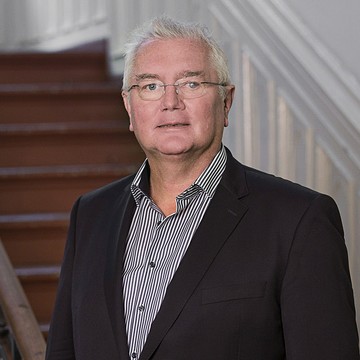
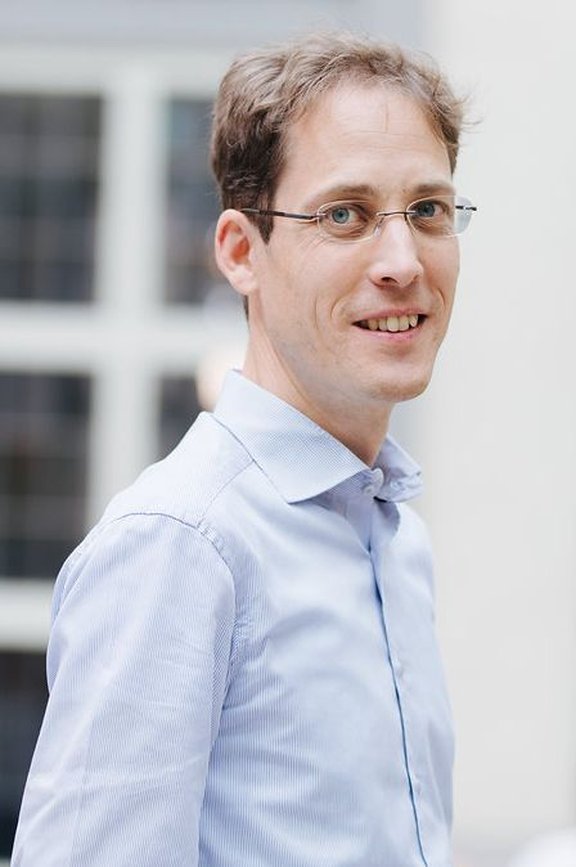
Dr. Mathew Todres is a Senior Lecturer in Management at the School of Business, Faculty of Business and Law, University of Wollongong. His research focuses on Management, Change Management, International Business Management, and Strategic Management, with a particular emphasis on Social Entrepreneurship and Workplace Value Congruence. He has conducted action research in Social Enterprise Development and published in journals such as the Social Enterprise Journal and Journal of Business Ethics . Dr. Todres currently supervises PhD candidates Douglas Opoku Agyeman (Micro Entrepreneurship in West Africa) and Grant Hughes (Sports Management). He has received a University of Wollongong Faculty of Business Start-Up Grant (2018). His peer-reviewed work spans organizational behavior, narrative analysis, and social enterprise innovation. His research interests include autoethnographic analysis, narratological analysis, and the application of social theory to entrepreneurial practices. Dr. Todres has contributed to journals such as Medical Education and serves as a reviewer for Journal of Spirituality, Leadership, and Management , among others. His work bridges theoretical frameworks with practical applications in organizational dynamics and social impact initiatives.
Dr. Karin A. King is an LSE Fellow in the Department of Management at the London School of Economics and Political Science (LSE). Her expertise spans global talent management, leadership development, and strategic human resource management. She teaches in LSE's Master's programs, focusing on organisational behaviour, negotiations, and strategic rewards. With over two decades of experience in corporate HR and consulting, Dr. King advises leaders on evidence-based talent management practices aligned with business priorities. Her research explores global talent systems, leadership succession, and diversity in organisational contexts. Dr. King has been recognized with multiple awards, including the LSE Teaching Award (2023), Top Ten Best Lecturer (2022), and repeated Teaching Excellence Awards (2015–2022). She holds professional certifications in HR, management consulting, and is a Fellow of the Higher Education Academy. Her work bridges academic research and practice, with publications in leading journals like BRQ Business Research Quarterly and Journal of Global Mobility . Recent research emphasizes macro-contingent talent strategies and the role of line managers in global talent initiatives.
Marya Besharov is a Professor of Organisations and Impact at Saïd Business School, University of Oxford, and Academic Director of the Skoll Centre for Social Entrepreneurship. She holds a BA, MA, and PhD from Harvard University, alongside an MBA from Stanford University. Her work focuses on leadership, social impact, and hybrid organizations, advising global entities on balancing social and financial priorities. Education: PhD in Organizational Behavior, Harvard University MA in Sociology, Harvard University BA in Social Studies, Harvard University MBA, Stanford University Research Interests: Dr. Besharov’s research explores how organizations navigate competing goals, particularly in hybrid models like social enterprises. She investigates organizational identity, institutional logics, and leadership frameworks for systemic change. Her findings appear in Administrative Science Quarterly , Harvard Business Review , and Stanford Social Innovation Review . Engagement & Teaching: She leads executive education programs and workshops on leadership and systems change through the Skoll Centre. Her teaching emphasizes contingency-based frameworks for managing organizational complexity. Labs & Initiatives: Academic Director of the Skoll Centre for Social Entrepreneurship, a global hub for social impact education and research.
Soroush Saghafian is an Associate Professor of Public Policy at Harvard Kennedy School, specializing in applying operations research and machine learning to address public health challenges. He leads the Public Impact Analytics Science Lab (PIAS-Lab), focusing on analytics-driven solutions for societal problems. His research spans healthcare delivery optimization, emergency department efficiency, and public health policy. Notable collaborations include Massachusetts General Hospital and Harvard's Center for Health Decision Science. Awards include the INFORMS MSOM Responsible Research Award and the Pierskalla Award for healthcare research. Recent work includes studies on hospital closures' impacts, predictive analytics for bipolar disorder using Fitbit data, and policy implications of race in disease risk models. He teaches courses on machine learning and big data for public impact.
Prasanna (Sonny) Tambe is a Professor at the Wharton School of the University of Pennsylvania, specializing in the economics of technology and labor markets. His research explores AI’s impact on workforce dynamics, HR algorithms, and the gender wage gap in tech industries. Education: Ph.D. in Managerial Science and Applied Economics (Wharton, UPenn); S.B. and M.Eng. in Electrical Engineering and Computer Science (MIT). His work leverages internet-scale data from job platforms and patent databases to analyze trends in skill acquisition, remote work diversity, and algorithmic bias in hiring. Recent studies examine AI’s role in HR decision-making, the economics of emerging technologies, and labor market responses to IT innovation. Scientific Awards: Best Undergraduate Professors (Poets & Quants, 2020) Best Paper Awards (Management Science, Information Systems Research) ISS Sandra A. Slaughter Early Career Award (2016) Tambe co-directs Wharton Human-AI Research, focusing on ethical AI integration in organizations. His teaching includes award-winning courses on AI’s societal implications and data-driven business strategies.
Gary William Hecht is a Professor in the Department of Accountancy at the Gies College of Business, University of Illinois at Urbana-Champaign. He serves as Associate Dean of Professional Education Pathways and holds the Arthur Andersen Faculty Fellowship. His research focuses on performance measurement systems, management accounting, and organizational behavior. Associate Dean, Gies College of Business Arthur Andersen Faculty Fellow Professor, Department of Accountancy Hecht’s research explores the intersection of performance measurement , managerial decision-making , and organizational incentives . Key themes include strategic use of performance data, impact of reporting frequency on employee behavior, and experiential vs. vicarious learning mechanisms in accounting contexts. His recent work (2020-2025) emphasizes effort intensity metrics , transparency in promotion behavior , and noise in performance measures . Articles reveal a focus on optimizing management control systems and understanding behavioral responses to accounting frameworks. Scientific awards : Arthur Andersen Faculty Fellow
Prof. Dr. Christian Homburg holds the Chair of Business-to-Business Marketing, Sales & Pricing at the University of Mannheim's Faculty of Business Administration. Since 2007, he has been a Professorial Fellow at the University of Melbourne. His research spans marketing strategy, sales management, pricing, and customer relationship management, with a focus on business-to-business contexts. He collaborates with global firms such as Accenture, BOSCH, SAP, and BASF. Research Interests: Prof. Homburg explores topics like sales force automation, key account management, IoT in marketing, and augmented reality in sales. His work bridges academic theory and practical implementation, emphasizing organizational systems driving customer and competitor responsiveness. Scientific Awards: Hermann Billing Prize (1989) Multiple Best Paper Awards from the American Marketing Association (1997-2010) Louis W. Stern Award (2009) Best Paper Awards from Journal of the Academy of Marketing Science and Journal of Business to Business Marketing Publications: Author of 7+ editions of Marketing Management , co-editor of the Handbook of Customer Loyalty Management , and contributor to leading journals like Journal of Marketing and Strategic Management Journal .
Chendi Zhang is a Professor of Finance at the University of Exeter Business School. He serves as the founding Director of the Exeter Sustainable Finance Centre and Director/Treasurer of the Global Research Alliance for Sustainable Finance and Investment. Previously, he was Associate Dean for Research & Impact (2021-2025) and Director of Research for Finance and Accounting (leading REF2021 submission). He holds affiliations with the Global Systems Institute and Environment and Sustainability Institute, contributing to UN Sustainable Development Goals including Climate Action and Responsible Consumption. Education PhD in Financial Economics from Tilburg University MRes in Finance from Tilburg University MSc in Economics from Tilburg University BSc in International Finance from Shanghai Jiao Tong University Research Focus Professor Zhang's research explores sustainable investing, corporate finance, and behavioral finance with emphasis on ESG integration, climate risk, and stakeholder governance. His work examines how environmental/social factors influence financial markets, corporate decision-making, and asset pricing through empirical and theoretical frameworks. Recent studies analyze biodiversity's financial impact, carbon pricing mechanisms, income inequality disclosures, and ESG resilience during crises (e.g., COVID-19, Ukraine conflict). His research identifies market inefficiencies related to climate sensitivity, gambling sentiment, and dividend policies while exploring corporate governance in state-owned enterprises. Funding and Recognition Research funded by UKRI Natural Environment Research Council, British Academy, BNY Mellon, Royal Bank of Canada, and World Bank. Work featured in The Economist , Wall Street Journal , and Forbes . Articles published in top journals including Management Science and Journal of Financial Economics , cited over 10,000 times. Professional Service Vice Chair of Research Committee for Chartered Association of Business Schools. External examiner for Imperial College London. Previous appointments at University of Cambridge, University of Warwick, University of Sheffield, and Tilburg University.
Lorin Schöni is a PhD candidate at ETH Zürich, actively contributing to the Security, Privacy and Society research group since October 2022. Concurrently, he serves as a Lecturer at the Department of Humanities, Social and Political Sciences, where he teaches the course Focus on the Human: Human-Centered Security and Privacy Lab (Autumn Semester 2025, Unit 851-0391-00L). His research focuses on human-centered approaches to cybersecurity , particularly through three key domains: Human-Computer Interaction - Investigating design decisions that influence user behavior in digital security contexts Extended Reality Applications - Developing immersive training systems for phishing prevention Usability Engineering - Creating intuitive security interfaces with explainable AI components Recent publications highlight his work at the intersection of autonomous motivation theory and personalized cybersecurity training , with notable presentations at top venues including CHI 2025 and SOUPS 2024. His research aims to transform security from a restrictive framework into a collaborative partnership between users and digital systems, as emphasized in his award-winning work on human-centered cybersecurity.
Aeli Roberts is a Professorial Teaching Fellow at The Bartlett School of Sustainable Construction, University College London, specializing in sustainability, health and safety, and sustainable construction practices. She is a member of BSSC's Centre for Sustainable Governance and Law in the Built Environment, a partnership between UCL and Gatehouse Chambers. Her educational background includes a diverse range of qualifications: PhD from Open University (2004), Bar Vocational Course from BPP Law School (2005), BSc in Construction Management from University College London (2003), MSc from Royal Holloway (1988), BSc from Royal Holloway (1986), and Higher National Diploma from Camberwell College of Art (1990). Initially trained as a chemist, she worked in industry and taught material science to conservation students before transitioning to construction management. Roberts' research focuses on integrating green space within urban environments for environmental and social benefits, health and safety in construction, and sustainable building practices. Her work examines sustainability in small and medium enterprises (SMEs), which employ 85% of UK construction workers, and explores architect-client interactions for sustainable domestic construction. She has conducted comparative studies of health, safety, and well-being in UK and Hong Kong construction industries. Her publication record shows a strong focus on operational failure mitigation, knowledge transfer for safety culture, and the role of building control in sustainable construction. Recent work emphasizes climate change impacts on construction, wellbeing in the industry, and sustainable design integration. Her research bridges academic theory with practical application in the construction sector. Scientific Awards: Significant contributions serving the Design Futures Council's London and Cambridge Think Tank (2012) Roberts has held teaching positions across multiple subject areas including materials science, law, and sustainability. She has developed a third-year module on built asset management, emphasizing the importance of post-occupancy building performance. Her teaching philosophy connects historical building conservation with contemporary sustainability challenges, particularly in the context of upgrading existing housing stock to meet carbon reduction targets. She has been involved in collaborative research projects with organizations including the London Chamber of Commerce and Industry (LCCI), focusing on eco-design training for the construction supply chain. Her work with the CIC 2050 Group demonstrates engagement with industry-wide sustainability initiatives.
Ernst Maug, Ph.D. is Professor of Corporate Finance at the University of Mannheim Business School, where he has held a faculty position since February 2006. He has served in significant leadership roles including Associate Dean for Research and director of the business school's doctoral programs. Maug currently holds the position of President of the European Finance Association, reflecting his standing in the academic finance community. Professor Maug's research program focuses on corporate finance with particular emphasis on corporate governance mechanisms. His work examines the interface between financial markets and labor markets, executive compensation structures, shareholder voting behavior, and the role of institutional blockholders. His research demonstrates a consistent interest in understanding how governance structures affect firm performance and decision-making processes. The analysis of Professor Maug's recent publications reveals a strong focus on shareholder democracy, executive compensation design, and the intersection of labor markets with corporate governance. His work frequently appears in the top finance journals including the Journal of Finance, Journal of Financial Economics, and Review of Financial Studies, indicating the high quality and impact of his research contributions. Professor Maug has served in significant academic leadership positions, directing doctoral programs and contributing to research strategy as Associate Dean for Research at the University of Mannheim Business School. His service as President of the European Finance Association further demonstrates his influence in shaping the direction of finance research across Europe.
Professor Duc Duy (Louis) Nguyen is Professor in Finance at Durham University Business School. Previously, he was Associate Professor at King's College London and Assistant Professor at University of St Andrews. His research has been featured in Forbes, Harvard Business Review, and BBC. He holds a BSc in Computing from National University of Singapore, MSc in Accounting, Finance, and Management from University of Bristol, and PhD in Finance from University of Edinburgh. Research foci include: Climate risk integration in mortgage markets and corporate finance Impact of social policies (e.g., marriage equality) on credit access Corporate governance and misconduct prevention in banking Local information environments and fraud detection Cross-cultural dimensions of executive decision-making His publication portfolio demonstrates consistent examination of how institutional frameworks (regulation, culture, governance) shape financial behaviors and market outcomes, with recent emphasis on climate finance and social equity impacts. Awards include: David Hume Publication Prize (2015) Semi-finalist, FMA Europe Best Paper Award (2018) Finalist, FMA Asia/Pacific Best Paper Award (2019) Best Registered Report on "Politics and Corporate Power" Vietnam Symposium in Climate Transition Best Paper Award (2024) He currently supervises PhD candidates Bingzhi Zhang and Jing Wei. His externally funded research includes grants from British Academy/Leverhulme Trust and Carnegie UK Trust. He serves as Associate Editor for European Journal of Finance and British Accounting Review. As frequent speaker at central banks and policy forums (Federal Reserve Banks of New York & St. Louis), he translates research insights into regulatory practice and policy development.
Prof. Martin Messner is a University Professor at the University of Innsbruck, leading the Controlling Institute within the Department of Organization and Learning. His work focuses on management accounting, performance measurement, and the intersection of accounting practices with organizational behavior. He holds editorial leadership roles, including Editor-in-Chief of Accounting, Organizations and Society (2021–present) and previously served on the Management Accounting Research editorial board (2015–2019). Prior to his current position, he was an Assistant Professor at HEC Paris (2006–2011). Research Interests: His research explores performance measurement systems, ethics in management control, and the evolving roles of accounting in organizational narratives and governance. He investigates topics like algorithmic decision-making, narrative reporting, and entrepreneurial governance structures. Professional Activities: Member of the European Accounting Association’s Publications Committee Co-organizer of the MASOP Workshops (2008–2023) His publications span academic journals and edited volumes, addressing themes such as zero-based budgeting, data scientist identities, and the ethical implications of control systems. He actively bridges theoretical and practical accounting issues through interdisciplinary collaboration.
Heather Knight is an Assistant Professor in the Department of Electrical Engineering and Computer Science at Oregon State University, part of the College of Engineering. Her research focuses on social robotics and human-robot interaction, emphasizing non-verbal communication and the design of non-anthropomorphic robots. She directs the CHARISMA Research Lab, which applies principles from performing arts to enhance robot charisma through expressive motion and interaction design. Dr. Knight holds a Ph.D. in Robotics from Carnegie Mellon University (2016), and dual M.S. degrees in Robotics (Carnegie Mellon) and Electrical Engineering & Computer Science (MIT, 2008), alongside a B.S. in Electrical Engineering from MIT (2006). She also leads Marilyn Monrobot, a robot theater company producing comedic performances and an annual Robot Film Festival. Her work bridges technical innovation with societal impact, exploring how robots can better communicate intent through motion and interaction. Notable contributions include the 'Sanitizerbot' project for playful public health support and the development of Laban-based motion frameworks for expressive robotics. Awards include being named to Forbes' 30 Under 30 in Science (2011) and her TED talk on robot comedy. Key Research Themes: Multi-robot formations, expressive motion design, human-robot social dynamics, and ethical integration of AI in robotics. Recent Projects: VR storytelling with social robots, service robots in workplace environments, and motion-based affective communication. Her articles span topics from robot humor generation to industrial light communication systems, reflecting a commitment to both foundational research and applied solutions for human-robot coexistence.
Christian Grönroos is Professor of Marketing at Hanken School of Economics, recognized among the top marketing researchers globally. His pioneering work established service marketing theory and the service logic paradigm. Research focuses on value co-creation frameworks, relationship marketing evolution, and service-driven business model innovation. Publications have transformed understanding of customer management and service productivity. Awards include the Don Schultz Award (2025) and AMS-Parasuraman Best Paper Award. Recent work examines service-informed marketing reform and employee alignment in brand promise co-creation.