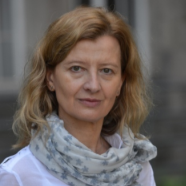
Prof. Dr.-Ing. André Borrmann is an academic leader at the Technical University of Munich (TUM) , where he has headed the Chair of Computing in Civil and Building Engineering since 2011 (formerly Computational Modeling and Simulation). He serves as Director of the TUM Georg Nemetschek Institute - AI for the Built World since 2025 and Spokesperson for the Leonhard Obermeyer Center since 2013. Research Interests Artificial Intelligence in Civil Engineering Digital Twinning Building Information Modeling (BIM) Pedestrian Dynamics Knowledge Representation Construction Simulation His work focuses on AI application across the built environment lifecycle - from generative design to maintenance prediction - with significant contributions to BIM standardization and buildingSMART International IFC extensions. He co-authored the German Ministry of Transport BIM Roadmap and led the BIM4INFRA2020 project. Awards include the 2024 Konrad Zuse Medal and multiple best paper awards at international conferences.
Jingjie Li is a Lecturer (Assistant Professor) in the School of Informatics at the University of Edinburgh, where he conducts interdisciplinary research at the intersection of computer systems, cybersecurity, and human-computer interaction. He is a member of the Institute for Computing Systems Architecture and the School of Informatics Ethics Committee. Ph.D. in Computer Engineering, University of Wisconsin-Madison (2017–2023) B.Eng. (R&D) with First-Class Honours, Australian National University (2015–2017) B.Sc., Beijing Institute of Technology (2013–2015) His research focuses on user-centric security and privacy , measuring human behavior in digital systems , and efficient human-machine interfaces . He investigates risks in emerging technologies such as smart homes, AR/VR, and AI systems, aiming to make them safer and more human-centric. His work combines technical innovation with behavioral insights to design practical privacy controls, measure digital risks, and build efficient computing platforms. The recent publications highlight a strong trend in privacy transparency , AI explainability , smart home and AR/VR security , and hardware-software co-design . His work frequently appears in top-tier venues including IEEE S&P, USENIX Security, ACM CHI, and ISCA, reflecting a consistent focus on both technical depth and human factors. Notable scientific awards include: ACM CHI Best Paper Award (2019) Facebook Trustworthy Products in AR, VR, and Smart Devices Award (2021) CPS Rising Star, NSF (2022) Generative AI Laboratory Seedcorn Award, University of Edinburgh (2024) Qualcomm Innovation Fellowship Finalist (2019, 2021) Jingjie Li actively supervises PhD students including Jiuming Jiang and Karen Jiamin Zheng, and co-supervises Lawrence Piao and Temima Hrle. He has received research support through fellowships such as the UW–Madison Chancellor’s Opportunity Fellowship and has collaborated globally with institutions including Max Planck Institute, Visa Research, and CSIRO. He serves on the program committees of major conferences like ACM CCS, USENIX Security, and ACM CHI. He leads a dynamic research team focused on systems security and human-centered computing, hosting undergraduate researchers and mentoring students through projects in privacy, AI transparency, and hardware security. His lab fosters interdisciplinary collaboration and real-world impact through community engagement, such as the 'Hack Your Age' workshop with intergenerational participants.
Francesco Strada is a Fixed-term Assistant Professor at the Department of Control and Computer Engineering (DAUIN) at Politecnico di Torino. He serves as a Course Lecturer for Virtual Reality and Technical Art for Cinema and Video Games, and as a Course Collaborator for multiple courses across Computer Engineering, Film and Media Engineering, and Architecture programs. He is an active member of the College of Computer, Film and Mechatronics Engineering and the College of Architecture and Design teaching committees. Dr. Strada's research focuses on Computer Graphics, Virtual Reality, Augmented Reality, and Human-Computer Interaction with particular emphasis on Embodied Conversational Agents, emotion recognition, and serious games applications. His work bridges technical computer science with psychological and human factors considerations to create more believable and effective virtual experiences. His research spans applications in education, healthcare, automotive interfaces, cultural heritage, and emergency response training. His recent publications demonstrate a strong trend toward emotionally intelligent virtual agents, VR/AR applications in specialized domains, and technical innovations in latency management and digital human representation. His work often combines psychological principles with technical implementations to enhance user experience and system effectiveness. Dr. Strada actively supervises PhD students including Alessandro Emmanuel Pecora, Stefano Calzolari, and Leonardo Vezzani, whose research focuses on Emotionally Aware Embodied Conversational Agents (E2CA) and Car AR-HUD design. He leads significant research projects including Holo-BLSD (2024-2025), a Mixed Reality tool for first aid emergency response training, and '50 shadows of AI' (2025), focusing on personalized education in corporate settings. He is a member of the CGVG - Computer Graphics and Vision Group at DAUIN, where his team develops cutting-edge applications in AR/VR, Human-Computer Interaction, User Experience, Computer Vision, Machine Learning, and Artificial Intelligence. His research has practical applications in education, training, healthcare, automotive interfaces, and cultural heritage preservation.
Professor Tim Ryley is a leading academic in aviation and transport planning at Griffith University's School of Engineering and Built Environment. He joined Griffith University in March 2015 as the inaugural Professor of Aviation and has held significant leadership roles including Head of Griffith Aviation and Head of the School of Natural Sciences, managing approximately 100 staff members and over 1,500 students. He is currently a member of both the Cities Research Institute and the Griffith Institute for Human and Environmental Resilience. Professor Ryley has extensive academic experience from previous positions at Loughborough University, Edinburgh Napier University, and the University of Ulster in the United Kingdom. His educational background includes a BSc (Hons) in Geography from the University of Bristol and a PhD in transport planning from Edinburgh Napier University. With over twenty-five years of transport research experience, Professor Ryley's work is industry-linked, transdisciplinary, and problem-based, focusing on aviation sustainability and environmental issues. His research spans four key areas: environmental impacts of air transport, development of alternative air transport solutions (particularly electric aircraft), user attitudes and behavior in aviation, and responses to broader transport challenges. His work involves collaborations with major airports, airlines, and government partners across multiple continents. Professor Ryley has led research projects totaling over $5 million throughout his career, with eleven projects at Griffith University amounting to approximately $500,000 in external funding. He serves on the Editorial Advisory Board of two leading international transport journals: Journal of Transport Geography and Transportation Research Part D: Transport and the Environment. Fellow of the Higher Education Academy (FHEA) Member of the Griffith Learning & Teaching Academy His recent publications demonstrate strong trends toward sustainable aviation solutions, circular economy applications in construction, and aviation's role in climate change mitigation. Professor Ryley's work bridges academic research with practical industry applications, addressing critical challenges in aviation sustainability through innovative approaches to electric aircraft, hydrogen fuel systems, and virtual reality training solutions. As an educator, Professor Ryley serves as Program Director for multiple aviation-related degrees and currently supervises six doctoral students across diverse aviation research topics. His research aligns with several United Nations Sustainable Development Goals, particularly focusing on Quality Education, Affordable and Clean Energy, Decent Work and Economic Growth, Industry Innovation and Infrastructure, Sustainable Cities and Communities, and Climate Action.
Patanjali Sristi is an Assistant Professor at Augusta University's School of Computer and Cyber Sciences, specifically within the Department of Cybersecurity Engineering. Located at 100 Grace Hopper Lane in Augusta, Georgia, Dr. Sristi joined the university in January 2025 after previously working as a Postdoctoral Researcher at the University of Florida with Dr. Swarup Bhunia. Their academic journey began with a B.Tech in Electrical and Electronics Engineering from Pondicherry University in 2011, followed by both MS and Ph.D. in Computer Engineering from the Indian Institute of Technology (IIT Madras). Dr. Sristi's educational background demonstrates a strong foundation in electrical engineering and computer science, with advanced specialization in hardware security. Their Ph.D. research at IIT Madras was supervised by Dr. Kamakoti Veezhinathan, focusing on critical aspects of hardware security that would form the basis of their future research career. Dr. Sristi's research program centers on addressing one fundamental question: "How can we design, measure and build efficient and affordable security assurances for a given hardware design in the context of an untrusted supply chain while respecting the design constraints at each level of abstraction?" This research vision spans three interconnected domains: AI for System Design: Developing data models and AI techniques for next-generation hardware systems AI for Hardware Security: Creating AI models for vulnerability detection, countermeasure evaluation, and mitigation of supply chain threats Cybersecurity for AI: Establishing metrics and algorithms for secure development, deployment, and operation of AI systems Dr. Sristi's scholarly output reveals a consistent focus on hardware security challenges within the modern distributed electronics supply chain. Their work demonstrates a progression from foundational research on hardware trojans and side-channel attacks toward comprehensive frameworks addressing the emerging "zero trust" paradigm in hardware security. A notable trend is the integration of AI/ML techniques with traditional hardware security approaches, reflecting the evolving nature of security threats and countermeasures. Their publications span prestigious venues including IEEE Transactions on VLSI Systems, IEEE Transactions on Computers, and various IEEE conferences, indicating strong recognition within the hardware security community. While specific awards aren't detailed in the available information, Dr. Sristi's research impact is evident through multiple US patents (including US Patent 11,899,827 and US Patent App. 17/392,376) and invitations to deliver talks at prominent organizations including Sony Finishing School, Northrop Grumman, and IEEE events. Their work on Netflix Privacy Analysis was featured in Wired, demonstrating real-world relevance and impact. Dr. Sristi actively engages with students through courses including CSCI 8940 (Dissertation Research), CSCI 8720 (Problems in Computer & Cyber), and CSCI 7900 (Research Colloquium). Their research program appears well-supported through collaborations with major institutions and industry partners, as evidenced by workshops conducted for the Indian Army in conjunction with Pravartak and IIT Madras. These partnerships suggest substantial research funding and collaborative opportunities that enhance the educational experience for students. Though specific lab information isn't provided in the available text, Dr. Sristi's research scope suggests involvement with hardware security laboratories equipped for VLSI design, testing, and security evaluation. Their work on IoT security, hardware trojans, and supply chain security would require facilities for physical device testing, side-channel analysis, and hardware emulation. The focus on "zero trust" implementation for hardware security indicates a research environment that bridges theoretical security models with practical implementation challenges.
Victoria Szabo serves as Research Professor of Art, Art History, & Visual Studies at Duke University's Trinity College of Arts & Sciences since 2019. She additionally holds appointments as Research Professor in Gender, Sexuality & Feminist Studies (2021-present) and Core Faculty in Innovation & Entrepreneurship (2018-present). Currently, she directs the PhD Program in Computational Media, Arts & Cultures and serves as Associate of the Duke Initiative for Science & Society. Education: Ph.D., University of Rochester (2000) M.A., University of Rochester (1996) M.A., Indiana University at Bloomington (1992) B.A., Williams College (1990) Professor Szabo's research focuses on the intersection of digital humanities with spatial, immersive, and interactive media forms, histories, and cultures. Her current projects emphasize extended reality (XR) experiences in urban, exurban, and exhibition contexts, with particular attention to location-based augmented reality (AR), digital storytelling, and artificial intelligence applications. She approaches these technologies through critical and creative lenses, examining how they reshape cultural heritage interpretation and public engagement. Her publications reveal a consistent trajectory toward establishing methodological frameworks for evaluating digital humanities scholarship in emerging media formats, particularly XR. Her work bridges technical implementation with humanistic inquiry, developing standards that honor both scientific and humanities values in digital scholarship. Major Awards and Recognition: Director of Duke Digital Humanities Initiative (John Hope Franklin Humanities Institute, 2015 with renewal in 2018) Co-Director of FHI GreaterThanGames Lab (Franklin Humanities Institute, 2011) Institute for Enabling Geospatial Scholarship (University of Virginia Scholar's Lab/NEH, 2010) RENCI Visualization Grant (2010) Exhibiting Hidden Histories grant from J. Paul Getty Trust (2022-2024) American Council of Learned Societies Emerging Voices Fellow (2020-2021) As Director of Graduate Studies for the PhD Program in Computational Media, Arts & Cultures, Professor Szabo oversees doctoral education at the intersection of technology and humanities. Her major grants demonstrate significant external funding for projects exploring digital cultural heritage, with recent support from the J. Paul Getty Trust and Johnson C. Smith University focusing on XR applications for public engagement with historical narratives. Professor Szabo manages staff and resources in the Computational Media, Arts & Cultures Labs at Smith Warehouse and co-directs the FHI GreaterThanGames Lab. Her leadership extends to Bass Connections projects like 'Building Duke: The Architectural History of Duke Campus' which employs digital tools to document campus evolution through interactive 3D models and augmented reality tours.
Lie-Liang Yang is a Professor of Wireless Communications at the University of Southampton's School of Electronics and Computer Science. With a career spanning over two decades at the institution, he has held roles from Postdoctoral Fellow to his current professorship. His research focuses on wireless communications, networks, signal processing, and emerging areas like molecular and nano communications. BEng (Shanghai Tiedao University, 1988) MEng (Beijing Jiaotong University, 1991) PhD (Beijing Jiaotong University, 1997) Postgraduate Certificate in Education (University of Southampton, 2005) His work spans advanced modulation techniques (e.g., OTFS, index modulation), reconfigurable intelligent surfaces, terahertz communication, and integrated sensing-communication systems. Recent publications emphasize next-generation wireless technologies, including 5G/6G, mmWave systems, and orbital angular momentum applications. Active projects include Beyond The Generations and Pervasive Wireless Intelligence , sponsored by EPSRC and Huawei. He has also contributed to editorial roles in IEEE Transactions on Vehicular Technology , IEEE Access , and special issues for IEEE Journal on Selected Areas in Communications and others. Scientific accolades: Fellow of the IEEE (USA) Fellow of the IET (UK) IEEE Vehicular Technology Society Distinguished Lecturer He supervises multiple PhD students in the School of Electronics and Computer Science, including Yi Zhao , Hugo Zakaria Jose Hawkins , and Zhou Lu . His research group integrates wireless communications with interdisciplinary applications in nanotechnology and machine-type communications.
Zhu Zhichun is an Associate Professor in the Department of Electrical and Computer Engineering at the University of Illinois at Chicago, College of Engineering. His primary research focuses on computer architecture, performance modeling, and energy-efficient designing of computer systems. Ph.D. in Computer Science from College of William and Mary (2003) B.Sc. in Computer Engineering from Huazhong University of Science and Technology, China (1992) His research interests center around computer architecture , particularly in performance modeling and evaluation , energy-efficiency computer designs , and memory system optimization . He investigates techniques for improving power efficiency, thermal management, and bandwidth utilization in DRAM and PCM memory systems, with a focus on multicore processors and low-power designs. Zhu's publications demonstrate consistent work in memory architecture and power-efficient computing . Key trends include thermal modeling , DRAM optimization , and hybrid memory systems . His collaborations with Zhao Zhang, Jiang Lin, and other researchers highlight interdisciplinary approaches to solving computer architecture challenges.
Alisa Lorenz is a Lecturer for Business Intelligence and Research Associate for the VLUID project at Technische Hochschule Mittelhessen (THM) in Gießen, Germany, while pursuing her PhD in Information Systems at the University of Cologne. With over 7 years of industry experience in Data & Analytics, Business Intelligence, and Project Management, she bridges academic research and practical application in smart city development. Her research focuses on the intersection of smart cities, technology acceptance, and data-driven traffic management. Specifically, she investigates how citizen science approaches influence technology acceptance and adoption in smart city contexts, with a particular emphasis on intelligent traffic management applications. Her work combines business intelligence methodologies with urban planning considerations to develop more effective and user-accepted smart city solutions. Best Paper Award at the International Conference on Software Business (ICSOB) 2022, Bolzano As an educator, she lectures on Business Intelligence for master's courses in Digital Business and Corporate Management at THM. She actively supervises student theses on emerging topics such as Data Mesh architecture and its implications for data-driven organizations. Currently, she is working on the VLUID project in Wetzlar, funded by the German Federal Ministry for Digital and Transport, which aims to revolutionize traffic management through data-driven approaches and intelligent solutions developed in collaboration with citizens.
Tiago Miguel Ferreira is a Senior Lecturer in Smart and Resilient Cities and Structures at the University of the West of England's College of Arts, Technology and Environment (CATE), School of Engineering. He also holds positions as an Invited Associate Professor at the University of Coimbra (Portugal), Visiting Professor at D'Annunzio University of Chieti-Pescara (Italy), and Associate Researcher at the Institute for Sustainability and Innovation in Structural Engineering (ISISE) at the University of Minho (Portugal). Ferreira earned his PhD in Civil Engineering from the University of Aveiro (2015), an Advanced Studies degree in Rehabilitation of Built Heritage from the University of Porto (2010), and an MSc in Civil Engineering from the University of Aveiro. As a Chartered Civil Engineer, his academic activity focuses on structural vulnerability of historical buildings and urban areas to natural and anthropogenic hazards, particularly earthquakes, fires, floods, and landslides, with recent emphasis on multi-hazard interactions. His publication record includes over 170 scientific and technical publications, with more than 70 articles in international peer-reviewed SCI journals. Ranked among the top 2% scientists globally for three consecutive years (2021-2023), Ferreira serves as Co-Editor-in-Chief of GeoHazards and Section Editor-in-Chief of Fire journals, demonstrating his leadership in the field. Ferreira has participated in eight R&D projects (four ongoing), currently leading both a CATE College Building Research project on VR environments for pedestrian evacuation after earthquakes and an MIT Portugal research project on multi-hazard risk assessment. His editorial work and extensive publication record show consistent focus on methodological advances in vulnerability assessment across multiple hazard types. Ranked among top 2% scientists globally (2021, 2022, 2023) Carlos Sousa Oliveira prize 2019 for best journal paper International Red Temática Conacyt prize for best research thesis Outstanding Contribution in Reviewing award for Engineering Structures Publons Peer Review Awards 2016 (Top 10% reviewer) Ferreira has supervised 25 Master's Dissertations (23 completed, 2 ongoing) and 10 PhD Theses (5 completed, 5 ongoing), demonstrating strong commitment to academic mentorship. His research projects span multiple European and international collaborations, with particular focus on developing practical methodologies for vulnerability assessment that can be implemented at urban scales. His work bridges theoretical advances with practical applications for improving urban resilience.
Dr Arthi Manohar is a Senior Lecturer in Design at Brunel University London and serves as Programme Director for the BSc Product Design degree within Brunel Design School, College of Engineering, Design and Physical Sciences. Since joining Brunel in 2018 she has led multiple undergraduate and master-level modules, championed Equality, Diversity & Inclusion, and secured significant EPSRC research funding. Education PhD Digital Product Design, University of Dundee (2017) MA Architecture and Digital Media, University of Westminster (2009) BArch Architecture, National Institute of Technology, India (2007) FHEA (Fellow of the Higher Education Academy), 2021 Research Interests Arthi’s research lies at the intersection of social design and emerging technology . She investigates participatory, inclusive and co-design approaches to Human–Computer Interaction, privacy and trust in the Internet of Things, and the application of AI to accessibility and health technologies. Her work emphasises human values, cross-cultural perspectives and ethical considerations in technology design. Recent funded projects include Trust in Home: Rethinking Interface Design in IoT (EPSRC HDI Network Plus) and From Understanding Privacy and Trust to Re-visualising TAPESTRY (EPSRC Sandpit). She collaborates across disciplines with partners such as the University of Nottingham, University of Kent, Royal Holloway and industry partners like LoomiAssist Ltd. Publications & Scholarly Service Arthi has published extensively in top-tier venues such as DRS, DIS, British HCI, Multimedia Tools & Applications, IEEE Transactions on Services Computing and CHI Workshops. Since 2020 she has served as Equality, Diversity & Inclusion Champion for the Department of Design and has held programme-committee roles for British HCI 2021, DIS 2019 and IndiaHCI 2019. PhD Supervision & Teaching She currently supervises four doctoral researchers exploring antimicrobial resistance design, stigma in assistive technology, virtual production and user engagement. At undergraduate and masters levels she leads modules on Interaction & UX Design, Digital Design Prototyping, Professional Practice and Design Communication, and has mentored over a dozen master dissertations on inclusive design, AI/AR retail experiences and speculative futures.
Paul Miller is a researcher in the Department of Pharmacology at the University of Cambridge, part of the School of Biological Sciences. His work focuses on the structural and molecular pharmacology of ligand-gated ion channels, particularly GABAA and glycine receptors, with a strong emphasis on allosteric modulation and receptor activation mechanisms. His research interests lie at the intersection of structural biology, neuropharmacology, and molecular biophysics. He investigates how neurosteroids, zinc, and other modulators influence receptor function, using structural and biochemical approaches to uncover mechanisms of drug action. His work contributes to understanding inhibitory neurotransmission and developing targeted CNS therapeutics. The publication record shows a consistent focus on Cys-loop receptors, especially GABA and glycine receptors, with recent work advancing structural insights into receptor activation and drug selectivity. Themes include receptor subtype specificity, allosteric modulation, metal ion effects, and high-resolution structural determination via cryo-EM and crystallography. While no formal awards are listed in the provided text, his contributions to the field are evident through high-impact publications in structural pharmacology. Paul Miller advises postgraduate researchers and contributes to the academic mission of the Department of Pharmacology. His work is supported by research grants in molecular neuroscience and structural pharmacology, though specific funding sources are not detailed. He is an active member of the department’s research and postgraduate education committees. He is involved in research groups focusing on receptor biology and the Naked Mole-Rat Initiative, contributing to innovative models in pharmacological research.
Lavinia Stănică Justina is a university lecturer at the Faculty of Managerial Informatics, Romanian-American University (URA), with 18 years of teaching experience in software programming and e-learning domains. Holding a PhD in Cybernetics and Economic Statistics since 2011, she teaches courses in Romanian and English at both bachelor's and master's degree programs. Her research focuses on ICT's role in innovation, educational technologies, and data analysis for energy consumption, with over 30 publications and multiple coordinated research projects. Faculty: Managerial Informatics University: Romanian-American University Academic Rank: Lecturer Teaching Experience: 18 years PhD: Cybernetics and Economic Statistics (2011) Her research interests include: e-Learning systems and technology integration Artificial Intelligence applications in education ICT's impact on innovation performance Mathematical content modeling Energy consumption data analysis Internet of Things implementations Fractal techniques in imaging Recent publications highlight trends in: Comparative innovation-ICT readiness analysis AI education accessibility Smart energy systems Competitive programming metrics Neural network energy forecasting IoT cloud solutions Modular educational software As Erasmus coordinator since 2013 and Institutional Erasmus Coordinator since 2020, she actively promotes internationalization efforts and academic collaboration with partner universities across Europe.
Sandro Bartolini serves as Associate Professor in the Department of Information Engineering and Mathematical Sciences at the University of Siena, Italy, where he teaches advanced courses in computer architecture and parallel programming while leading cutting-edge research in high-performance computing systems. His academic journey began with a cum laude Laurea in Computer Engineering followed by a PhD in Computer Science and Engineering from Università di Pisa. Education: PhD in Computer Science and Engineering, Università di Pisa Laurea in Computer Engineering (cum laude), Università di Pisa Research Focus: His work centers on photonic interconnects for chip multiprocessors , energy-efficient software optimization for multi-core/GPU architectures, and performance-portable parallel programming models . Current investigations span cryptographic acceleration, blockchain algorithms, and hardware/software co-design for emerging computing paradigms, with strong emphasis on practical implementations bridging theoretical advances and real-world applications. Publication Trends: Recent publications (2019-2023) reveal three dominant threads: (1) Photonic network innovations addressing energy bottlenecks in chip multiprocessors, (2) The PHAST library ecosystem enabling seamless CPU/GPU programming across domains from autonomous vehicles to UAV navigation, and (3) Hardware accelerator designs for convolutional networks and cryptographic workloads. These works consistently target performance-portability challenges in heterogeneous computing environments. Grants and Collaborations: As principal investigator for the Italian Ministry-funded PHOTONICA project, he established international research partnerships with Murcia University, Columbia University, and Hong Kong University of Science and Technology, while securing industry collaborations with STMicroelectronics, Intel Munich, IBM, and IMEC. He has also managed complex IT system deployments for Siemens Italy, RAI (Italian public broadcasting), and SpaceDys. Academic Leadership: Bartolini serves as Associate Editor for the Eurasip Journal of Embedded Computing and actively contributes to the European HiPEAC network. His research group at Siena maintains strong industry ties for technology transfer, particularly in photonic interconnect validation and parallel programming frameworks for next-generation computing systems.
Prof. Lucyna Nyka serves as Professor and Head of the Department of Urban Architecture and Waterfront Spaces at the Faculty of Architecture, Gdańsk University of Technology. Her leadership role encompasses academic administration and research direction within this specialized department focused on climate-resilient urban design. Her research interests center on urban flood resilience , nature-based solutions , and waterfront adaptation strategies in the face of climate change. She employs advanced methodologies including GIS spatial analysis , multi-objective optimization algorithms , and comparative urban studies to develop practical frameworks for sustainable urban development. Her work bridges theoretical research with real-world implementation through numerous international projects. Recent publication trends reveal a strong focus on climate-sensitive urban environments , particularly examining the intersection of walkability and flood resilience in waterfront public spaces across the Baltic Sea Region. Her research portfolio demonstrates consistent evolution from theoretical explorations of architecture-water relationships toward actionable strategies for climate adaptation, with increasing emphasis on nature-based solutions and spatial optimization techniques since 2020. Prof. Nyka leads significant international research initiatives including the Horizon 2020 project 'SOS Climate Waterfront' (agreement 823901) and the 'Premium on the Horizon' funded initiative, both focused on improving waterfront adaptation strategies to climate change. Additional projects include 'Urban ElemenTREE' for smart green space development and the 'ENACT 15mC' initiative for neighborhood co-creation within the 15-minute city framework. Her department actively engages in practical implementation through projects like the revitalization of Potok Królewski stream on the university campus, demonstrating integration of academic research with tangible urban interventions. Current work emphasizes data-driven approaches to climate adaptation, particularly through nature-based solutions that address both flood risk and socio-economic considerations in urban planning.