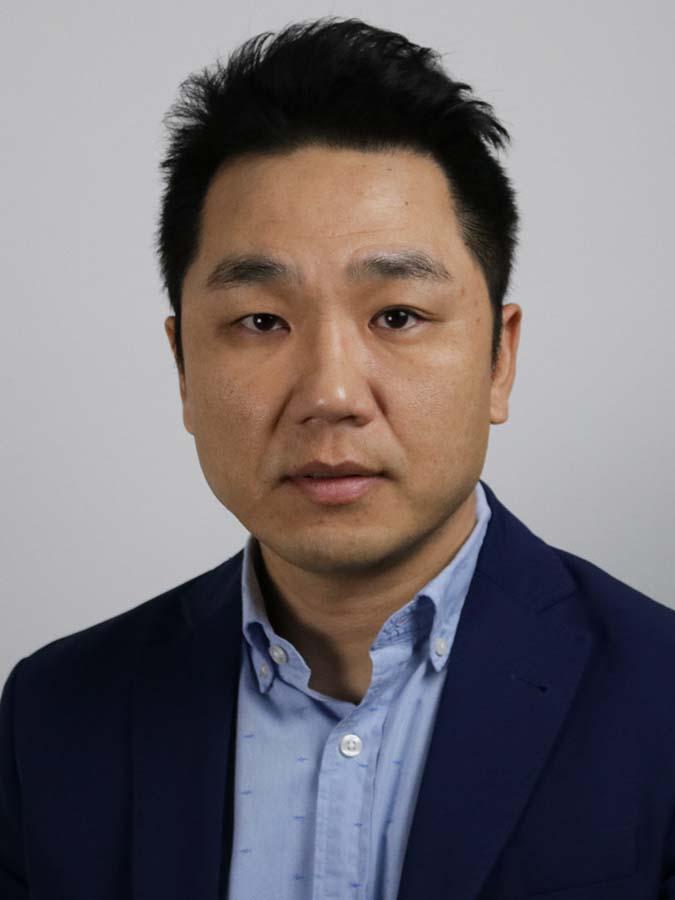
JaeHwan Kwon is an Associate Professor of Marketing at Baylor University, teaching Marketing Research (MKT 3330) since 2015. He serves on editorial boards for the European Journal of Marketing, Journal of Psychological Research, Journal of Marketing Thought, and Asia Marketing Journal, and is an active member of the Association for Consumer Research, Society for Consumer Psychology, and Society for Judgment and Decision Making. His academic credentials include: PhD in Marketing, University of Iowa (2015) MS in Marketing, New York University (2010) MBA in Marketing, Yonsei University, Seoul (2007) BS in Environmental Science, Korea University, Seoul (2004) Dr. Kwon specializes in behavioral judgment and decision making (JDM) within consumer contexts, investigating how individual differences and situational factors shape evaluative judgments. His research spans consumer attitude formation, persuasion mechanisms, numerical cognition in pricing, financial decision processes, and technology product adoption. Methodologically, he employs laboratory experiments, eye-tracking, and online gaming to uncover underlying cognitive processes driving consumer choices. Analysis of his 2015-2024 publications reveals a cohesive focus on how numerical representations (e.g., price formatting, precision) influence consumer perceptions and adoption decisions, particularly for technology products. His work also examines cultural moderators in persuasion, embodiment effects on attitude strength, and spillover phenomena in endowment effects, contributing significantly to understanding psychological mechanisms in marketing contexts. Scientific Awards : No major scientific awards were listed in the provided information. Advising and Grants : The source text did not provide details on graduate student advising or research grants.
Kathryn Riley is an Assistant Professor in the Department of Curriculum, Teaching and Learning at the University of Manitoba's Faculty of Education. With a PhD from Deakin University (2019), her work spans Physical Education, Environmental Education, and Climate Change Education across Australia, the UK, and Canada. Focuses on posthumanist and new materialist scholarship Advances anticolonial praxis through relational pedagogies Co-creates Indigenous physical literacy initiatives Associate Editor of the Australian Journal of Environmental Education Her research explores place-based environmental education, transdisciplinary curriculum design, and teacher/learner identities through the lens of Land/Country/Place relationships. Publications demonstrate a consistent focus on decolonizing pedagogies, multispecies ontologies, and creative research methodologies. Kathryn's recent work reveals trends in: Intersections of physical literacy and sustainability Eco-anxiety and hopeful pedagogies Art-based research creation Indigenous relational worldviews Postqualitative methodologies Reimagining education in the Anthropocene
Pascal Mark Gygax is a faculty member at the University of Fribourg , specifically within the Faculty of Philosophy under the Department of Psychology . His academic career spans psycholinguistics, cognitive psychology, and gender studies, focusing extensively on how language structures influence gender perceptions and cognitive biases. With a research profile marked by experimental methodologies, Gygax has published 64 works, including a 2021 book Does the Brain Think Masculine? that critically examines the psycholinguistic impacts of gender-fair language reforms. Role: Researcher at Department of Psychology, University of Fribourg Key Collaborations: Sandrine Zufferey, Ute Gabriel, Anton Öttl Research Focus: Gygax investigates the cognitive mechanisms behind gender representation in language, particularly how grammatical gender systems (e.g., French, German) perpetuate male-dominated mental models. His work explores: Experimental validation of gender-neutral pronouns Discourse connective processing across age groups Impact of language reform on occupational stereotypes Cross-linguistic comparisons of gender perception Implicit bias in performance evaluation (e.g., magic tricks) Recent Publications (2023-2025) demonstrate methodological rigor in studying: Neological intuition in Romance languages Temporal focus and spatial cognition Connective mastery in L2 contexts Participant variability in experimental linguistics Gender ratio norms across global languages Pragmatic constraints on causal connectives Scientific Contributions: While no explicit awards are listed, Gygax's work has significantly advanced: Development of experimental paradigms for gender perception studies Creation of multilingual datasets on role noun norms Validation of facial feedback mechanisms through collaborative research Understanding of discourse coherence in educational contexts Advising & Collaborations: Though specific students aren't named, Gygax collaborates with: Development of the Routledge Handbook of Experimental Linguistics Leadership in SNSF-funded projects Contributions to debates on inclusive language policies
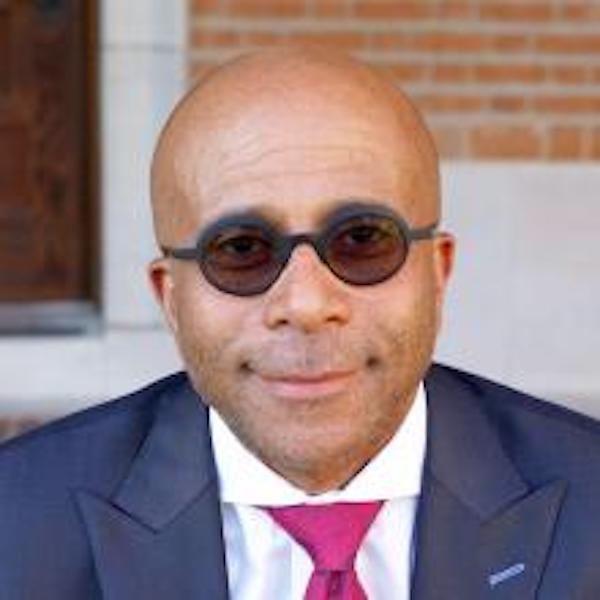
Anthony B. Pinn is the Agnes Cullen Arnold Professor of Humanities and Professor of Religion at Rice University, where he also serves as Founding Director of the Center for Engaged Research and Collaborative Learning (CERCL). He holds a BA from Columbia University and both a Master of Divinity and PhD from Harvard University. His research focuses on liberation theologies, hip hop culture, humanism, African American religious traditions, and constructive theology. Pinn has authored or edited over 35 books, including influential works like The Black Church in the Post-Civil Rights Era and Noise and Spirit: Rap Music’s Religious and Spiritual Sensibilities . He directs research at the Institute for Humanist Studies and advises the Rice University PhD student Hassan Henderson-Lott. Recent awards include the 2018 Rice Faculty Excellence Award and the 2017 Unitarian Universalist Humanist Association’s Humanist of the Year honor. His work bridges academic inquiry with public engagement through initiatives like the PinnDrop Podcast , exploring intersections of art, culture, and spirituality. Education: PhD and MDiv (Harvard University), BA (Columbia University) Affiliations: Director of CERCL, Editor for Religion and Hip Hop book series (Routledge), Board Member of the Journal of Religion Research interests emphasize the transformative potential of African American religious thought and its contemporary cultural expressions. His interdisciplinary approach integrates theology, anthropology, and critical theory. Recent publications (2015–2018) address humanism, technology, and hip hop’s spiritual dimensions. Pinn’s grants include the Yale Center for Faith and Culture’s 2017 “Theology of Joy” initiative. He co-teaches Rice’s popular Religion and Hip Hop Culture course and mentors scholars in African American religious studies. The Center for African and African American Studies at Rice further amplifies his mission to advance interdisciplinary research on Black religious life.
Professor Martin Clayton is a leading scholar in Ethnomusicology at Durham University's Department of Music. He holds a BA in Music/Hindi (SOAS, 1988) and a PhD in Ethnomusicology (SOAS, 1993). His work focuses on Hindustani classical music, rhythmic analysis, and embodied musical interaction. He has directed major research projects like the EU-funded EnTimeMent and AHRC-funded 'Interpersonal Entrainment in Music Performance.' Clayton is a Fellow of the British Academy (2020) and former editor of the British Journal of Ethnomusicology. His research explores cross-cultural musicology, computational analysis of performance, and rhythmic entrainment across global traditions. Education: Bachelor of Arts in Music and Hindi (SOAS, University of London, 1988) Doctor of Philosophy in Ethnomusicology (SOAS, University of London, 1993) Research Interests: Clayton’s work bridges ethnomusicology with computational methods, focusing on rhythmic structures in Indian classical music, embodied performance practices, and cross-cultural musical interactions. His studies analyze gesture-sound relationships, temporal frameworks in rag performance, and the social dimensions of musical entrainment. Recent projects integrate machine learning and computer vision to classify ragas and analyze performer movements in ensemble contexts. Publications Overview: His 15+ years of research span theoretical works (e.g., Time in Indian Music , 2000), edited volumes (e.g., Experience and Meaning in Music Performance , 2013), and interdisciplinary studies combining ethnography with computational analysis. Recent work emphasizes multimodal data collection to study synchronization in global music traditions, including Japanese gagaku and Indian khyal. Awards: British Academy Fellowship (2020), Leverhulme Trust Major Research Fellowship Advising & Grants: Supervised doctoral students focusing on Indian music, global guitar practices, and embodied music interaction. He led a £1.2M AHRC grant (2016–2018) on interpersonal entrainment and co-investigated projects on Khyal music and South Asian cultural networks. Labs/Teams: Collaborates with interdisciplinary teams on projects like the Interpersonal Entrainment in Music Performance (IEMP) initiative, developing tools such as the movementsync R package for synchrony analysis. Active in global music research networks, including ESEM and the British Forum for Ethnomusicology.
James O'Shea is a Professor in the School of Philosophy at University College Dublin (UCD), where he has served as Head of School from 2015–2017. He holds roles as Reviews Editor for the International Journal of Philosophical Studies and Treasurer of the international Irish Philosophical Club. Education: BA, Georgetown University MA, University of North Carolina PhD, University of North Carolina (1992), supervised by Prof. Jay F. Rosenberg and Prof. Simon Blackburn Research focuses on systematic issues in Hume and Kant, contemporary analytic philosophy (naturalism, normativity, perceptual epistemology via Sellars, Brandom, McDowell), and American pragmatism. Major publications include monographs on Sellars and Kant, and edited volumes such as Sellars and His Legacy and Kant's Critique of Pure Reason: A Critical Guide . His work bridges Kantian themes with scientific naturalism, emphasizing the interplay between normative and empirical dimensions of human cognition. Recent articles explore Sellarsian direct realism, Kant's empirical conception of human agency, and the myth of the given. Key awards include Mellon Foundation-funded Sellars Centenary Conference (2012), UCD President's Fellowship (2010), and multiple seed funding awards for conference participation. Grants include a National Endowment for the Humanities grant for a seminar on Kant, Hegel, and Sellars (2018–2019). Teaching leadership includes coordinating modules on Hume/Kant, philosophy of mind, and Wittgenstein, with a focus on Socratic pedagogy and interdisciplinary innovation. Active in academic service, including organizing international conferences and serving on editorial, teaching, and professional committees across UCD and beyond.
MICHELLE BAE-DIMITRIADIS is an Associate Professor of Art Education at the School of Visual Arts within the College of Arts and Architecture at Pennsylvania State University. She is also an affiliate faculty member in the Women’s, Gender, and Sexuality Studies program. Her work bridges art education, diasporic girlhood studies, and social justice advocacy. Dr. Bae-Dimitriadis holds a Ph.D. from the University of Illinois, Urbana-Champaign . Her research focuses on U.S. Korean diasporic youth culture, refugee girlhood experiences, and community-based art practices. Notably, she collaborates with Karen tribe refugee girls to create GPS-based oral story archives addressing environmental and racial justice in Western New York. Her interdisciplinary research integrates historic, socioeconomic, and geographical perspectives to explore Asian immigrant and refugee girlhood through art and media. Key themes include decolonizing pedagogy, land-based art practices, and critical counternarratives in social justice education. Selected grants include the E.O. Smith Arts & Humanities Faculty Development Research Grant , Arts and Architecture Faculty Research Grant , and National Art Education Foundation Research Grant . Her work appears in journals such as Discourse: Cultural Politics in Education and Studies in Art Education , alongside co-edited volumes on girlhood and media studies. Her current projects emphasize radical vulnerability in art education, land-based thinking in museums, and antiracist interventions in Asian American art practices. She advocates for civic participation through digital media and has pioneered community-based art initiatives with marginalized youth.
Renee Galliher is a Professor and Director of Clinical Training for the Combined Clinical/Counseling Specialization in the Psychology Department at Utah State University’s Emma Eccles Jones College of Education and Human Services. Her research focuses on identity development processes at the intersection of cultural contexts, emphasizing multicultural issues, discrimination, and prejudice. She employs observational, self-report, and qualitative methodologies to explore ethnic, sexual, religious, and professional identities across developmental transitions. Her work examines risk and resilience in family/peer relationships and cultural influences, with a particular focus on marginalized groups. Recent publications highlight LGBTQ+ BIPOC resilience strategies, microaggression interventions, and Native American sovereignty issues. She advises students in clinical training programs and contributes to the field through validated scales like the LGBTQ+ Community Resilience and Inequity Scale. Notable research areas include intersectionality, identity negotiation, and community resilience. Her lab’s work bridges theory and practice, addressing systemic inequities through identity-focused interventions.
Aira Huttunen is a Research Fellow at the University of Oulu's Faculty of Humanities, affiliated with the History, Culture and Communication Studies department. Her work focuses on information practices in everyday life and life transitions, particularly exploring how artificial intelligence impacts young people's information environments. Currently, she leads the Kone Foundation-funded AIM project examining AI's role in youth information agency and identities. Previously, her doctoral research investigated transgender individuals' embodied information practices during gender transitions, also supported by the Kone Foundation. Her research interests span co-research methodologies, embodiment studies, and societal impacts of AI. She contributes to interdisciplinary projects through affiliations with research groups like Health Information Mastering (HIM-Oulu&Åbo) and INSPIRES. Key outputs include work on information barriers faced by marginalized groups and participatory research frameworks integrating AI technologies. Education: Holds a PhD in Information Studies Affiliations: Research Unit for History, Culture and Communications Key Projects: AIM project (2023- ), Transgender Information Practices Study (2018-2022) Her work bridges critical information studies with digital sociology, emphasizing ethical considerations in technology's societal impact. She publishes in venues like Proceedings of the Association for Information Science and Technology and participates in annual Information Studies Days conferences.
Dr. Mary O'Neill serves as Associate Head (Education) and Programme Leader for Fine Art at De Montfort University's School of Arts, Design and Architecture within the Faculty of Arts, Design and Humanities. Holding an AHRC-funded PhD in Ephemeral Art: Mourning and Loss from Loughborough University (2007), she is a Senior Fellow of the Higher Education Academy with extensive leadership in art education and research. Her academic journey includes significant professional development through prestigious awards including the AHRC Doctoral Award (2003) and Higher Education Academy Teaching Fellowship (2008). Her educational background culminated in a PhD focused on the intersection of ephemeral art and concepts of mortality, establishing the foundation for her ongoing research trajectory. Dr. O'Neill's research is fundamentally interdisciplinary, exploring how contemporary artworks engage with significant cultural issues. Initially focused on ephemeral art and concepts of mortality and immortality, her work has evolved to investigate intangible culture, particularly the lost skills embodied in museum objects. Her current project, 'Re-creative Practice: Learning from the Past,' examines how historical objects can inform contemporary artistic practice. She identifies key research areas including Ephemeral Practice, Collaborative Practice, Art and Society, Art Activism, Science Art, and Re-creative Practice. Her work bridges theoretical and practical approaches, connecting art practice with broader social, ethical, and cultural concerns through both academic texts and creative fiction. Analysis of her publication record reveals consistent engagement with themes of memory, loss, and artistic practice, with recent work showing increasing focus on art education methodologies, collaborative approaches, and the application of historical craft knowledge to contemporary practice. She has produced significant interdisciplinary work connecting art with healthcare, social policy, and cultural heritage, demonstrating the expanding scope of her research interests. Dr. O'Neill has received numerous awards and recognitions throughout her distinguished career: 2023 HEIF Award for the Artefacts Live project 2022 Academic Innovation Project Award 2015 Writer in Residence at Centre for Contemporary Art (CCA), Glasgow 2014 and 2012 Artist in Residence positions at Gray Zone and Grace Exhibition Center 2008 Higher Education Academy Teaching Fellowship 2003 AHRC Doctoral Award Her career has been marked by prestigious international residencies including at Banff Centre for Media and Visual Arts (1997), Frans Masereel Centrum, Belgium (1990), and House of Creativity, Chelyuskinskii, Moscow (1989). As an educator and mentor, Dr. O'Neill supervises PhD students including Rebecca Walker (researching 'Henry Moore: The Shape of Trauma') and Talvir Kaur. She has presented on collaborative teaching approaches internationally, notably 'A year of living dangerously: Collaborating with undergraduate students' at Temasek Polytechnic, Singapore (2010). Her leadership extends to directing the 'Artefacts Live' project (2022-2023), a HEIF-funded collaboration between DMU and The Museum of Leathercraft, Northampton, which resulted in the documentary 'The Museum of Leathercraft – Ordinary Objects: Extraordinary Stories' produced with filmmaker Nik Trzcinowicz. Dr. O'Neill leads the Practice Based Research group within the Institute of Art and Design. She actively contributes to academic discourse through international conference presentations, recently speaking at 'Psychogeography, How did we get here?' panel at Leicester Gallery (2024) and 'Flotsam, Jetsam, Lagan, Derelict. The Things We Have Lost' at the Narratives of Water conference in Torino (2024). Her teaching encompasses Fine Art Studio Practice, Critical Theory, Art History, and Professional Practice across multiple undergraduate and postgraduate courses.
Chris Doran is a Professor of Sociology at the University of New Brunswick's Department of Social Science. He holds a PhD in Sociology from the University of Calgary and has taught at multiple institutions including the University of Saskatchewan and McMaster University. His research focuses on post-structural social theory, feminist discourse analysis, and historical sociology, with notable contributions to Foucault's 'parrhesian standpoint' theory and the development of concepts like 'Encodification' and 'Parrhesia'. Educations: BA (Honours, Social Science) – University of York, England MA (Linguistics) – University of Calgary PhD (Sociology) – University of Calgary Research Interests: Post-Foucauldian and post-Feminist theory Critical reflexive research methodologies Embodied resistance and class analysis Institutional ethnography and qualitative analysis His work critiques neo-liberal institutional reforms and explores the intersections of power, knowledge, and resistance. Recent Contributions: Recent publications (2024-2015) emphasize reflexive research frameworks, Foucault's influence on sociology, and the evolution of official statistics as tools of social control. His 2024 edited volume on Critical Reflexive Methodologies reflects ongoing engagement with interdisciplinary sociological debates. Labs/Teams: Pioneered graduate studies in interdisciplinary cultural sociology at UNB Saint John, fostering innovative research programs in social theory and methodology.
Dr. Martijn Goudbeek is an Associate Professor at Tilburg University's Tilburg School of Humanities and Digital Sciences (TSHD), specifically within the Department of Communication and Cognition. His research focuses on the intersection of emotion, language, and cross-cultural communication, with a strong emphasis on vocal and linguistic expression of affect. He has contributed significantly to understanding how emotional states influence language production and perception, particularly across cultural and linguistic boundaries. His work spans experimental psychology, computational linguistics, and human-robot interaction. He is affiliated with the Communication and Cognition department and teaches courses like 'The Emotional Brain' and 'Statistics and Experimental Methods.' Key research themes include vocal emotion recognition in multilingual contexts, the role of rhythm and acoustic cues in affective communication, and the reproducibility of language evaluation methods. He has led projects such as the Multilingual Emotional Football Corpus (MEmoFC) and explored how cultural factors shape nonverbal expressions like smiles and gestures. His studies often combine empirical experiments with computational modeling, addressing topics ranging from politeness in mood-influenced communication to the design of socially intelligent chatbots and robots. Dr. Goudbeek’s interdisciplinary approach bridges cognitive science, linguistics, and digital technologies. While no specific grants or awards are listed, his extensive publication record reflects sustained contributions to understanding human emotion expression and its technological applications. His work frequently engages with questions of reproducibility in NLP and dialogue systems, emphasizing methodological rigor in computational linguistics.
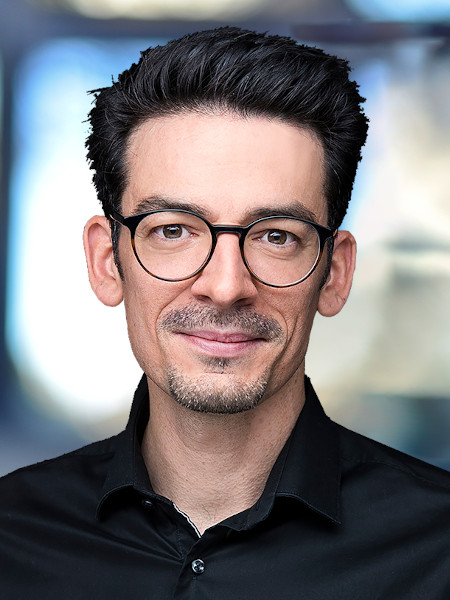
Christian Alexander Hildebrand is a Full Professor of Marketing Analytics and Director of the Institute of Behavioral Science and Technology (IBT-HSG) at the University of St. Gallen. His research bridges Human-Computer Interaction (HCI) and consumer behavior, focusing on digital voice assistants, chatbots, and mobile devices. He holds post-doctoral affiliations with Stanford University, Duke University, and the University of Michigan. Education: Doctoral studies and post-doctoral visits at Stanford, Duke, and University of Michigan His research emphasizes methodologies like large-scale field experiments and feature extraction from voice/image/text data. Key themes include consumer-firm interface optimization and technology's impact on decision-making. His work appears in top journals such as Journal of Consumer Research and Information Systems Research . Awarded the Swiss Academy of Marketing Science’s 'Rigor and Relevance Award,' his research is funded by public/private institutions and disseminated through practitioner outlets like NIM Marketing Intelligence Review . He teaches Machine Learning for Marketers, Web Data Analytics, and experimental design. Grants: Supported by major public/private institutions Labs/Teams: Leads IBT-HSG, collaborating with corporations in retail, consumer electronics, automotive, and finance sectors
Dr. Tanya Ní Mhuirthile is a Senior Lecturer and Head of School at the School of Law and Government, Dublin City University (DCU). She previously held roles at Griffith College and University College Cork (UCC). Her research focuses on the intersection of law and corporeality, particularly how legal frameworks conceptualize gender recognition, intersex rights, and consent in medical ethics through human rights, feminist jurisprudence, and interdisciplinary approaches. Education: BCL, LLB, and PhD from UCC; Masters of Drama from Royal Scottish Academy of Music and Drama. Research Themes: Depathologisation of gender recognition; consent in medical interventions for intersex individuals; transformative potential of legal education. Advisory Roles: Legal consultant to Transgender Equality Network Ireland and IntersexUK; advised Irish government ministers and NGOs on Gender Recognition Act 2015, FGM legislation. Her publications address gender identity, intersex rights, and medical law, with a focus on policy development and legislative frameworks. She has contributed to books and presented internationally on these topics. Dr. Ní Mhuirthile also explores legal education's role in social justice, co-authoring a textbook on the Irish legal system.
Professor Jill Marshall is a Professor of Law in the Department of Law and Criminology at Royal Holloway, University of London, affiliated with The Centre for the Study of Pain and Well-being and Rights and Freedoms. Her work bridges jurisprudence with human experience, emphasizing feminist perspectives on care, belonging, and identity within legal frameworks. Her educational background includes: LLB Hons from Queen's University Belfast MA in Legal and Political Philosophy from University College London PhD in Law from Queen Mary University of London Law Society Finals and admission as Solicitor of the Supreme Court of England and Wales (1992) Marshall's research critically examines gender equality through feminist legal theory, investigating structural inequalities in rape legislation, pregnancy rights, and clothing regulation (including Islamic headscarves). She pioneers studies on deepfakes in virtual reality, everyday spatial jurisprudence via Georges Perec's frameworks, and intersections between US Black literature and justice. Her work consistently connects theoretical analysis to real-world human rights challenges. Recent publications (2023-2024) reveal a pronounced shift toward technology-law interfaces, with virtual reality police training and metaverse governance emerging alongside feminist rewrites of International Criminal Court decisions. These works demonstrate how spatial theory and embodiment inform legal responses to digital transformation while maintaining core focus on women's bodily autonomy. Her scientific recognition includes: Reid Research Fund Award (2021) Marshall leads significant research initiatives including 'Humanising systems: using arts practices for social work' and 'CSEL: Centre for the Study of Emotion and Law', alongside completed projects on metaverse rights (TRIM), girls in care systems, and pandemic impacts in Colombian rural communities. She supervises postgraduate research and serves as founding author for the University of London's Human Rights of Women Masters module. She founded the Legal Ideas Factory (www.legalideasfactory.com) and maintains global collaborations through visiting scholarships at institutions including the University of Ibagué and University of Bergen, focusing on transnational human rights implementation.