
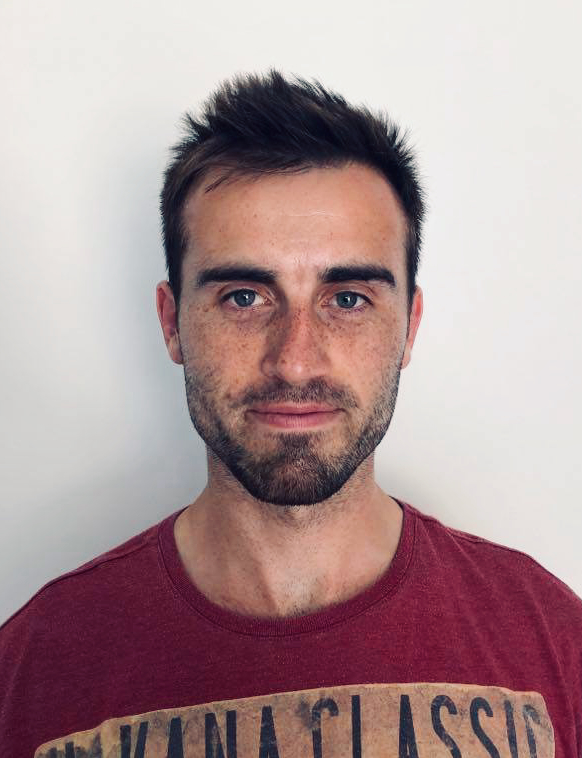
Cameron Alexander serves as a Lecturer in the Department of Philosophy at the University of Zurich since August 2025, specializing in Philosophy of Mind, Philosophy of Psychology, Social Cognition, and 4E (embodied, extended, embedded, enactive) approaches to cognition. His academic background includes: Doctorate in Theoretical Philosophy from the University of Zurich (2020-2025), supervised by Prof. Dr. Hans-Johann Glock under the Swiss National Fund NCCR project Evolving Language Master (Research) in Philosophy from the Universiteit van Amsterdam (2016-2018) Master of Arts in Philosophy from the University of Glasgow (2011-2015) His research interrogates how cognition emerges through bodily engagement with environments and social contexts, challenging traditional intellectualist theories of mind. The dissertation project "Situating Other Minds" develops frameworks for understanding intersubjective cognition through situated and dynamic processes, emphasizing that mental state attribution operates via embodied practices rather than theoretical inference. Recent publications reveal a systematic critique of representationalist paradigms in cognitive science. The 2025 article establishes foundational principles of 4E cognitive science, while the 2023 collaborative paper demonstrates how "script-reading" mechanisms can explain social cognition without attributing complex mental state reasoning. Both works exhibit interdisciplinary integration of philosophical analysis with empirical findings from comparative psychology and cognitive neuroscience. Doctoral research was funded by the Swiss National Science Foundation's Evolving Language NCCR project. No current advising roles or additional grants are documented in available sources. He contributes to the Evolving Language National Centre of Competence in Research, an interdisciplinary consortium investigating language evolution through biological, cultural, and cognitive lenses. His work specifically advances the project's social cognition research stream through philosophical frameworks for situated intersubjectivity.
جستجوی استاد راهنمای دانشگاهی
برای مسیر پژوهشیتان، استاد راهنما، استاد دانشگاه و پژوهشگر مناسب را پیدا کنید و با آنها ارتباط بگیرید.
نمایش ۷۳۶-۷۵۰ از ۹٬۲۲۱ استاد راهنما
اطلاعات پروفایلها از صفحات عمومی دانشگاهها گرفته شده و ممکن است بهروز نباشد.
Shannon Leddyمشاهده پروفایل
دانشیار
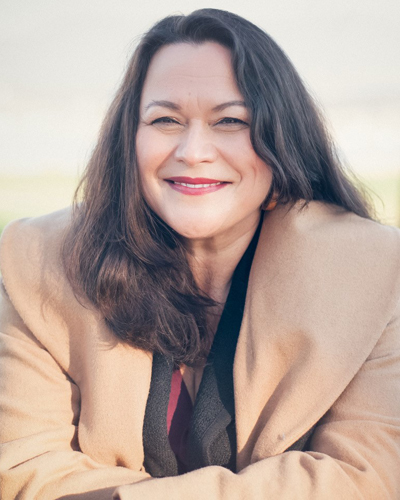
Shannon Leddy is an Associate Professor in the Department of Curriculum & Pedagogy at the University of British Columbia . Her work focuses on Indigenous education, art education, and decolonizing practices within teacher training programs. She previously served as a Faculty Associate at Simon Fraser University 's Faculty of Education, where she co-developed sustainability-focused teacher education modules. Research Interests span Indigenous education, decolonial literacy, relational ethics, and the role of contemporary Aboriginal art in disrupting colonial narratives. She integrates slow pedagogies and Indigenous principles to address sustainability and environmental learning, emphasizing place-based, experiential approaches. Publications reveal a focus on anti-colonial art education, Indigenous environmental education, and the use of humor as a culturally relevant pedagogy. Her recent work explores métissage and sister scholarship as tools for decolonizing academia, while earlier research includes the SEEDs (Sustainability Education in an Environment of Diversity) program, which aimed to reorient teacher education toward ecological competencies. No scientific awards or formal honors are explicitly mentioned in the provided texts.

Dr. Olivia Petit is a Lecturer and researcher in Marketing at KEDGE Business School specializing in consumer neuroscience, sensory marketing, and digital marketing. Her research employs advanced methodologies including functional magnetic resonance imaging (fMRI) studies to investigate mental imagery and multisensory interactions in consumer experiences. Her research interests focus on consumer neuroscience , sensory marketing , digital marketing , AR/VR applications , and food marketing . Dr. Petit examines how sensory cues influence consumer behavior, particularly in digital environments, with emphasis on visual, auditory, and tactile elements that shape consumer experiences and decision-making processes. Analysis of her recent publications (2021-2024) reveals a strong trajectory toward multisensory digital experiences , ethical considerations in customer experience , and advanced applications of extended reality in marketing contexts. Her work bridges neuroscience, psychology, and business applications with particular focus on food and beverage marketing. Scientific recognition includes: Nestlé Foundation award (2012) EMAC McKinsey Marketing Dissertation Award (2015) Dr. Petit has established significant collaborations with researchers across Europe and has published in top-tier journals spanning marketing, neuroscience, psychology, and food science domains. Her work demonstrates a consistent focus on understanding the cognitive and sensory mechanisms underlying consumer behavior in both traditional and digital contexts. Her laboratory work incorporates advanced technologies including virtual reality systems and neuroimaging techniques to explore how multisensory cues influence consumer perception, decision-making, and behavior in retail and online environments.
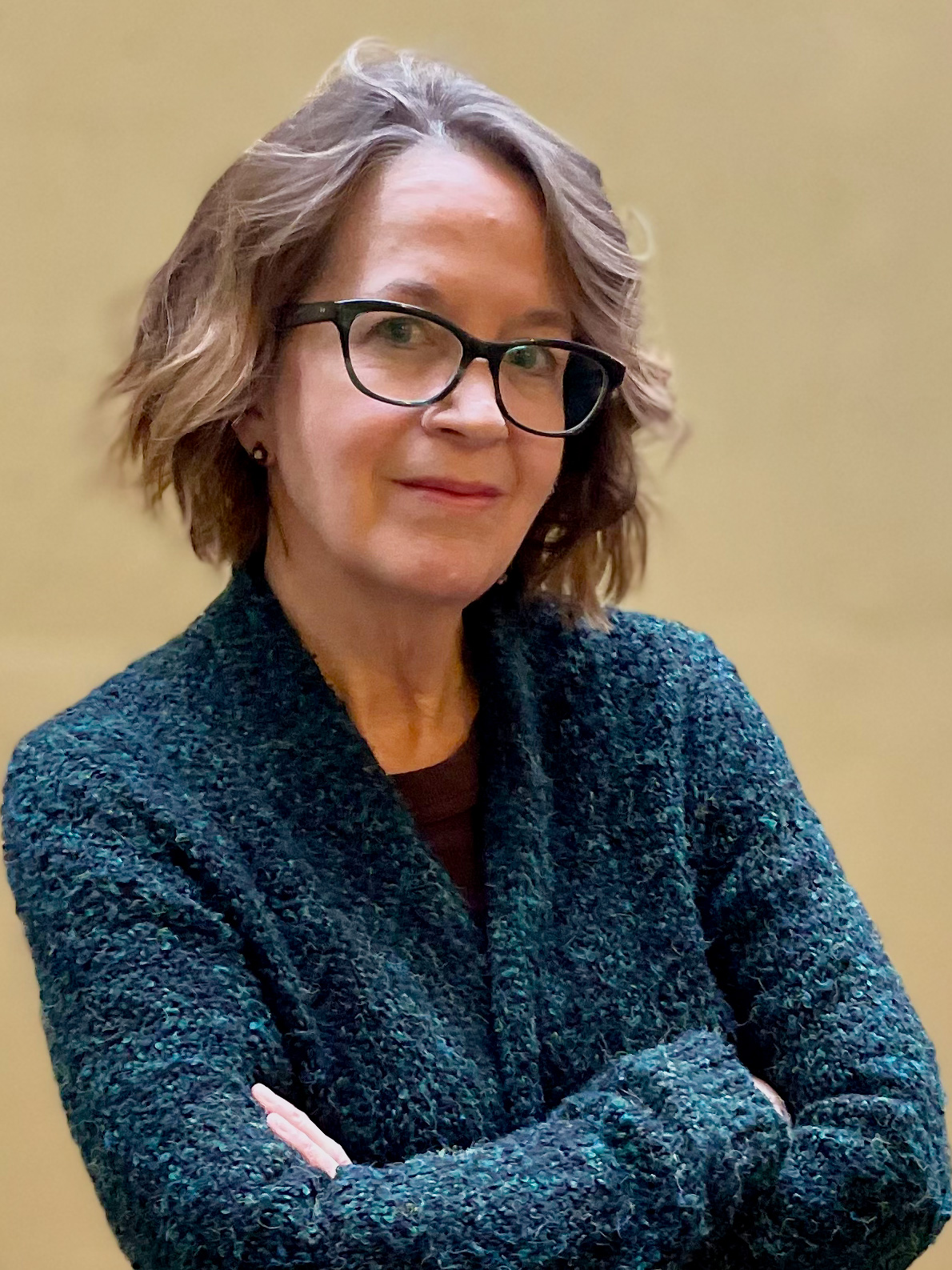
Susan Herrington is a Professor in the School of Architecture and Landscape Architecture at the University of British Columbia, where she teaches histories of landscape architecture, theories, and vertical studios including the Rewilding Play Design Build studio. As a licensed landscape architect in both the United States and Canada, she maintains an active professional practice while making significant scholarly contributions to landscape architecture. Her educational background includes: MLA from Harvard University BLA from State University of New York Herrington's research focuses on design theories of contemporary landscape architecture, with particular emphasis on children's landscapes and LGBTQ2+ perspectives. Her work examines how landscapes serve as agents of power in constructions of nature, identity, and space. She is currently writing a book on Christopher Tunnard that explores queer aesthetics and ecology in landscape architecture, addressing the notable gap in historical accounts of LGBTQ2+ landscape designers. Her research on children's landscapes has produced the influential Seven Cs guidelines for children's outdoor play spaces, implemented globally. Herrington's publications demonstrate consistent focus on historical and theoretical aspects of landscape architecture, increasingly incorporating social justice, gender studies, and ecological perspectives. Her work bridges academic scholarship with practical application, as evidenced by student design studios addressing real-world challenges like the Rewilding Play project for Vancouver. Her significant contributions have been recognized with numerous awards: UBC Killam Faculty Research Prize (2020) Anne de Fort-Menares Award (2016) John Brinckerhoff Jackson Book Prize (2015) UBC Killam Faculty Fellowship (2011) Landscape Architecture Canada Foundation award (2019) ASLA THE DIRT Best Books of 2021 Professor Herrington has secured research funding from major organizations including SSHRC, CIHR, Graham Foundation, and Canada Council for the Arts. She served as chair of the Landscape Architecture program at SALA (2016-2020) and president of the Society of Architectural Historians Landscape History Chapter (2011-2013), demonstrating leadership beyond her institution. Her studio work, particularly the Rewilding Play initiatives, demonstrates commitment to connecting academic work with community needs, as evidenced by the 2024 exhibition of student work at Vancouver City Hall.
Nathalia Costaمشاهده پروفایل
پژوهشگر ارشد
Dr. Nathalia Costa is a Senior Research Fellow at the University of Queensland's cLinical TRials cApability (ULTRA), located within the Centre for Clinical Research in Herston, and affiliated with the Centre for Innovation in Pain and Health Research (CIPHeR). She holds appointments in the School of Health and Rehabilitation Sciences within the Faculty of Health, Medicine and Behavioural Sciences. Her research focuses on theoretically grounded qualitative and mixed methods approaches to understanding low back pain, pain management, and healthcare systems. Costa is particularly known for her groundbreaking work on low back pain flares, which established the first rigorous definition of pain flares through stakeholder engagement with over 70 experts and consumers. Her methodological expertise spans systematic reviews, qualitative methodologies (interviews, ethnography, Delphi studies), embedding qualitative research in clinical trials, and systems-thinking frameworks. Costa's recent publications demonstrate a growing focus on culturally responsive care, healthcare access for migrant populations, and the intersection of legal services with mental health. Her work bridges micro-level patient experiences with macro-level healthcare systems, aiming to make pain care more nuanced, equitable, and evidence-based. She has published over 55 papers spanning musculoskeletal conditions, pain research, health policy, and qualitative methodologies. Her scientific achievements include the 2021 ISSLS Prize for Lumbar Spine Research, recognition from the International Society for the Study of the Lumbar Spine. Her research has influenced international pain frameworks, including adoption by the International Association for the Study of Pain (IASP) in their online Fact Sheet (July 2023). Costa actively supervises multiple PhD students, serves as Associate Editor for Qualitative Health Research and the Journal of Humanities in Rehabilitation, and has taught across disciplines including research methods, musculoskeletal physiotherapy, and health policy. She has secured over AUD$7.5M in research funding, currently leading the FORENSIC trial investigating lumbar fusion surgery effectiveness for persistent severe low back pain.

Stefanos Nikolaidis is a tenured Associate Professor in the Department of Computer Science at the University of Southern California (USC), where he directs the Interactive and Collaborative Autonomous Robotic Systems (ICAROS) Lab. His research focuses on enabling robots to interact robustly with humans in dynamic environments through advancements in artificial intelligence, human-robot interaction, procedural content generation, and quality diversity optimization. Education: PhD in Robotics from Carnegie Mellon University (CMU) and MS in Computer Science from MIT. The ICAROS Lab develops interactive agents for real-world tasks while creating diverse testing scenarios to enhance system robustness. Research integrates AI techniques with human-centric design principles across applications like rehabilitation robotics, collaborative manufacturing, and socially interactive embodiments. Recent publications demonstrate trends in quality diversity optimization, human-aware planning, and policy adaptation. Notable works include AutoQD for behavior discovery, CMA-MA for multi-objective optimization, and applications in hair manipulation, rehabilitation personalization, and large language model integration. Scientific Awards: NSF CAREER Award (2022). He actively shares research updates via Twitter and has contributed software tools like pyribs for quality diversity optimization. His work spans theoretical advancements in optimization algorithms and practical implementations in assistive robotics.

- Aesthetic Theory
- Art History
- Black Critical Theory
- +۷ مورد دیگر
Rizvana Bradley is Associate Professor of Film and Media and Affiliated Faculty in the History of Art and the Center for Race and Gender at the University of California, Berkeley. She served as the 2023-24 Terra Foundation Visiting Professor for American Art at the John F. Kennedy Institute for North American Studies at Freie Universität Berlin, where she taught courses on Horror and the Cinematic Unconscious, Political Depression and the Aesthetics of Sovereignty, and Art, Race, and Media Poetics. Bradley's research spans Aesthetic Theory , Black Critical Theory , Contemporary Art , Continental Philosophy , Film Theory , and Race and the Philosophy of Media . Her work examines how Black art deconstructs aesthetic forms foundational to modernity, with particular attention to questions of race, gender, and representation. She approaches these themes through explorations of affect theory, its interlocutors, and its critics, with emphasis on what Sianne Ngai terms 'minor feelings' and 'negative affects' in their racial and gendered dimensionality. Her critically acclaimed book Anteaesthetics: Black Aesthesis and the Critique of Form (Stanford University Press, 2023) was named a Best Book of the Year by Frieze Magazine and shortlisted for the Modern Language Association Prize for a First Book. The book moves across multiple histories and artistic mediums—from nineteenth-century painting and early cinema to contemporary text-based works, video installations, and digital art—to inaugurate ante-formalism, a new method for interpretation that demonstrates black art's recursive deconstruction of aesthetic forms foundational to modernity. Advisory Board member of October Advisory Board member of Camera Obscura Bradley's scholarly articles appear in Diacritics , Film Quarterly , Black Camera , Discourse , and TDR: The Drama Review . Her art criticism has been published in The Yale Review , Artforum , e-flux , Art in America , and Parkett , as well as in exhibition catalogs for major institutions including the Serpentine Galleries, the New Museum, and the Berlin Biennale for Contemporary Art. Bradley has curated numerous academic arts symposia at institutions including the British Film Institute, Serpentine Galleries, and Stedelijk Museum of Art. Her work has been supported by the Andrew W. Mellon Foundation, the Terra Foundation for American Art, Creative Capital, and the Andy Warhol Foundation. She holds a PhD from Duke University and was a Helena Rubinstein Critical Studies Fellow at the Whitney Museum of American Art in New York.
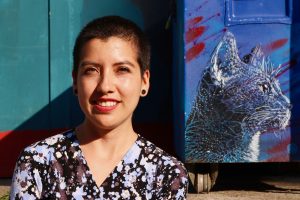
Tania Lizarazoمشاهده پروفایل
دانشیار
Tania Lizarazo is an Associate Professor at the University of Maryland, Baltimore County (UMBC), affiliated with the Department of Modern Languages, Linguistics & Intercultural Communication. She contributes to the Global Studies Program, Spanish Area, and MA in Intercultural Communication, with additional roles as Affiliate Faculty in Gender, Women’s + Sexuality Studies and Language, Literacy & Culture. Ph.D. in Latin American Literature and Cultures from UC Davis (2015) Research focuses on Latin American cultural studies, transnational feminisms, digital storytelling, and performance studies Key projects include mujerespacificas.org with Colombian Black peasant organizations and sexualidadescampesinas.ucdavis.edu with California farmworkers Author of Postconflict Utopias: Everyday Survival in Chocó, Colombia (University of Illinois Press, 2024) Her recent publications and collaborations emphasize digital storytelling as a tool for community engagement and critical analysis of race, gender, and violence in Latin America. She co-edited Repensando a Policéfalo (2006) and has published in journals like Journal of Latin American Cultural Studies and Corpografías . Her work bridges academic research with social justice initiatives. Current courses include topics on digital humanities, migration, Afro-Latin America, and performance studies. She collaborates with Dr. Thania Muñoz D. on the teaching project Intercultural Tales: Learning With Baltimore’s Immigrant Communities .
Konstantinos Alexakos is a Professor and Program Coordinator for General Science (GSCI) and Science Education (covering biology, chemistry, physics and earth science for grades K-12) at the School of Education, Brooklyn College, City University of New York (CUNY). He also holds a professorship in The Ph.D. Program in Urban Education at the Graduate Center, CUNY. His academic work focuses on science education, teacher development, and the integration of mindfulness practices in educational settings. His educational background includes: B.S. in Physics from The City College of New York - CUNY (1989) M.A. in Education in Physics and General Science from New York University (2000) M.Phil. in Science Education from Columbia University (2004) Ph.D. in Science Education from Teachers College, Columbia University (2005) Alexakos's research interests span multiple interconnected domains within science education. He has made significant contributions to understanding mindfulness and wellness in educational contexts , particularly how contemplative practices can enhance teaching and learning environments. His work explores emotional dimensions of science education , examining how teachers and students navigate emotional landscapes in classrooms. He has pioneered research on cogenerative dialogue and coteaching as mechanisms for improving educational practice. His scholarship also addresses diversity, equity, and inclusion in science education, with particular attention to race, gender, and cultural considerations. Alexakos investigates teacher identity formation and the challenges science educators face in urban settings, while also developing frameworks for authentic inquiry that empower teachers as researchers. His recent work increasingly focuses on holistic approaches to education that integrate physical, emotional, and intellectual dimensions of learning. Analysis of his recent publications (2017-2022) reveals a clear trajectory toward integrating contemplative practices with science education. His scholarship demonstrates a consistent focus on teacher development through authentic inquiry, with increasing emphasis on wellness, mindfulness, and emotional dimensions of teaching and learning. The publications show a progression from theoretical frameworks to practical applications of heuristics and contemplative practices in educational settings. His collaborative work with Kenneth Tobin forms a substantial portion of his output, indicating a productive research partnership focused on transforming educational practices. The publications span multiple formats including books, book chapters, and journal articles, demonstrating versatility in scholarly communication. His scientific awards and recognitions include: Brooklyn College Student Technology Fee Award for "Science Lab Probes" ($12,000) PSC-CUNY Research Award (PSCREG-38-335) for "Self and Science Teacher Attrition" ($6,000; 2007-08) PSC-CUNY Research Award (PSCOOC-37-30) for "The Science Teacher, Subjective Constructs of Science Teaching, and the 'Organic Link'" ($5,990; 2006-07) Alexakos has been actively involved in mentoring students through various teaching practicums and research activities. His courses include Natural Science for Early Childhood & Childhood Education, General Science for Child & Elementary School, Physical Science for Childhood Teachers, and multiple student teaching practicum courses. He has developed the master of arts in teaching (MAT) in science education program at Brooklyn College that infuses research and practice in science teaching in urban settings. His grant activities include research projects on teacher attrition, the science teacher as the organic link, and wellness practices in educational contexts. He has also secured funding for technology implementation in science education through the Student Technology Fee Award. While not explicitly mentioned as leading a specific laboratory, Alexakos is deeply involved with the Urban Science Education Research Seminar at the CUNY Graduate Center, where he has presented and organized numerous sessions. He has collaborated extensively with colleagues including Kenneth Tobin, Maria Powietrzynska, and Leah Pride on research related to emotions, mindfulness, and wellness in educational settings. His work with the Association of Greek American Professional Women (AGAPW) on "Inspiring Women in Science, Technology, Engineering, and Mathematics (STEM)" demonstrates his commitment to supporting underrepresented groups in STEM fields.
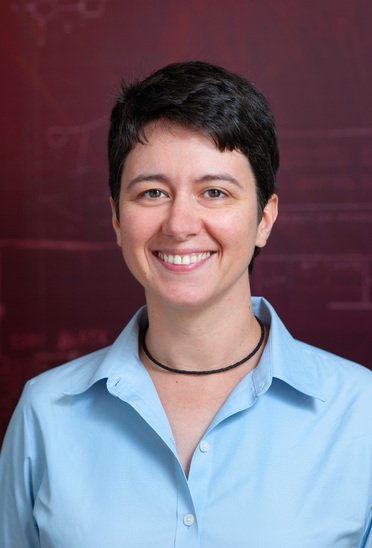
Svetlana "Lana" Yarosh is an Associate Professor in the Computer Science & Engineering Department at the University of Minnesota, and a faculty member in the GroupLens Research Center. She holds the distinguished titles of Distinguished University Teaching Professor and McKnight Presidential Fellow, and serves as Director of Undergraduate Studies for Computer Science. Her academic journey began with dual B.S. degrees in Computer Science and Psychology from the University of Maryland, followed by a Ph.D. in Human-Centered Computing from Georgia Institute of Technology. Dr. Yarosh's research focuses on embodied interaction in social computing systems, with particular contributions to Child-Computer Interaction, Online Health Communities, and Pervasive Health applications. She leads the ProDUCT (Prototyping, Design, and Usability of Communication Technologies) research group within GroupLens, where her team explores how technology can enhance social connections, particularly in contexts like intergenerational mentorship, substance use disorder recovery, and health support communities. Her work often integrates embodiment perspectives, such as adding projection and haptics to communication systems. Her recent publications reveal a strong trend toward VR/AR technologies, ethical considerations in children's technology, and applications supporting recovery from substance use disorders. The research spans HCI, social computing, and health informatics, with growing emphasis on ethical design frameworks and participatory approaches to technology development. Morse-Alumni Award for contributions to undergraduate education McKnight Presidential Fellow (2020-2023) NSF CAREER Award recipient Multiple Best Paper and Honorable Mention awards at top venues including CHI, CSCW, and IDC Google Faculty Research Award Dr. Yarosh has successfully advised numerous Ph.D. students who have gone on to tenure-track positions at institutions like Carnegie Mellon University, North Carolina State University, and McMaster University. Her research is supported by significant grants including NSF ER2 ($400,000), NSF REU Site ($404,983), and her NSF CAREER award ($548,228). She is particularly committed to mentoring students interested in computational support for substance use disorders and has established structured pathways for undergraduate and graduate students to join her research lab.

Prof. Dr. Michaela Schäuble is a media anthropologist and documentary filmmaker at the University of Bern , where she serves as a professor and co-director of EMB-Ethnographic Mediaspace Bern . Her work bridges sensory ethnography, religious studies, and ecological critique through experimental methodologies. MA Comparative Literature (Tübingen University) MA Visual Anthropology (University of Manchester) PhD Social Anthropology (University of Halle-Wittenberg) with European Doctorate (Ca' Foscari Venezia) Her research examines media as belief apparatuses , focusing on sensory embodiment in religious rituals, ecological perception, and subaltern representation. Recent work explores digital surveillance through Big Data Lives (SNSF 184862) and climate change visual politics via Mediating the Ecological Imperative (SNSF 193842). Scientific awards include prestigious fellowships at Harvard, Bologna, UCL, Yale, and Vienna. She curates film programs at institutions like Grassi Museum and Zentrum Paul Klee , while co-hosting the RAI Film Festival Conference and leading the network VANEASA . As a supervisor, she has guided doctoral research on topics spanning Vodun ethnography, post-war memory, and more-than-human ecologies. Her film Tarantism Revisited (2024) premiered at DokLeipzig, reflecting her interest in trance practices and corporeal cinematography.
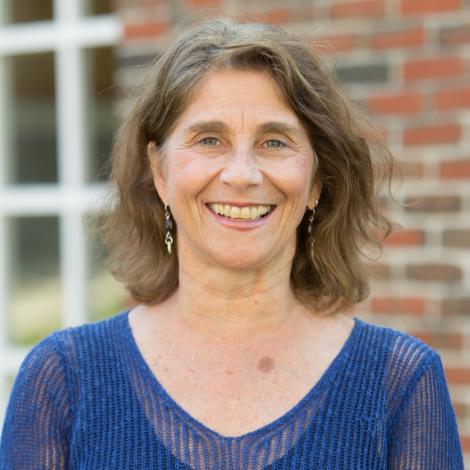
Nancy Jo Cardilloمشاهده پروفایل
استادیار
Nancy Jo Cardillo serves as an Assistant Professor of Expressive Arts Therapy within the Graduate School of Education at Lesley University. Her teaching portfolio encompasses expressive arts therapy studio practice, arts-based research and performance methodologies, art therapy and expressive therapies internships and seminars, principles of expressive arts therapy, healing and community applications in South Africa, and dance movement therapy theory and practice. This multidisciplinary approach reflects her commitment to integrating diverse artistic modalities into therapeutic education and clinical practice. Dr. Cardillo's academic foundation includes a Bachelor of Arts from the College of Brockport, State University of New York (SUNY), and a Master of Education from Lesley University. She is currently advancing her scholarly expertise as a PhD candidate at Lesley University, focusing on expressive arts therapy frameworks and applications. Her research centers on expressive arts therapy and dance movement therapy theory, clinical application, and supervision across the lifespan, with particular emphasis on community-based healing through the arts. She investigates cross-cultural therapeutic practices, notably through her work in South African community contexts, and explores the integration of multiple art forms in mental health interventions. This scholarship bridges clinical practice, pedagogical innovation, and global community engagement. Professionally, Nancy Jo Cardillo holds dual credentials as a Licensed Mental Health Counselor (LMHC) and Board Certified Dance Movement Therapist (BC-DMT), validating her clinical expertise in both traditional counseling and movement-based therapeutic modalities. These qualifications directly inform her teaching methodology and research focus on embodied therapeutic approaches.

- Pedagogy
- Philosophy of Education
- Aesthetics
- +۶ مورد دیگر
Marie Hållander is an Associate Professor and Lecturer in Pedagogy at Södertörn University, Sweden. She teaches within teacher education and pedagogical frameworks, focusing on transformative educational theories. Current academic rank: Associate Professor Email: marie.hallander@sh.se Her research explores: Witnessing and testimonies in education Emotions, shame, and suffering in pedagogical contexts Biopolitics and profanation in teaching Subjectivity and feminist critiques Aesthetic experiences in sloyd (craft) education Escapism and cinematic representations Recent publications span interdisciplinary topics at the intersection of philosophy, cultural critique, and pedagogy. Highlights include: 2025: Analysis of sloyd education through discourse theory 2024: Philosophical exploration of religious education 2022: Re-evaluation of shame's educational role 2021: Escapism via cinema and its pedagogical applications 2020: Multi-article contributions to Agamben-inspired pedagogy 2018: Feminist and biopolitical educational frameworks

- Social Work
- Long-Term Care
- Ethics
- +۳ مورد دیگر
Michelle Greason is an Associate Professor in Social Work at St. Thomas University (STU), with a PhD from the University of New Brunswick. She specializes in structural social work, ethics, long-term care (LTC), and narrative engagement. St. Thomas University (BA, BSW) University of New Brunswick (PhD) Her research focuses on policy-ethics intersections in LTC, anti-oppressive practice, and narrative care training. She employs qualitative methods with a "bottom-up" approach, emphasizing knowledge mobilization and interdisciplinarity. Notable contributions include empirical ethics studies in LTC, structural social work mentorship frameworks, and narrative engagement training for healthcare professionals. She collaborates with public/private sectors and participates in provincial aging strategy initiatives. Embodying structural social work in practice Narrative care training models System navigation for older adults Policy-ethics dynamics in LTC Qualitative Delphi methodology Anti-oppressive social work pedagogy Michelle actively teaches graduate and undergraduate courses on social policy, ethics, and practice theory while maintaining her registered social work credentials.

- Film Studies
- Cinema Philosophy
- Film Archaeology
- +۳ مورد دیگر
Professor Janet Harbord is a Professor of Film Studies within the School of Languages, Linguistics and Film at Queen Mary University of London, where she serves as Principal Investigator for the Wellcome Trust-funded 'Autism through Cinema' project and contributes to the Centre for Film and Ethics. Her academic leadership spans research, teaching of core courses including Film Archaeology and Modern/Postmodern Cinema, and supervision of doctoral candidates. Her research interrogates cinema's relationship with embodiment, environments, and philosophical frameworks—particularly through Giorgio Agamben's theories—while pioneering intersections between autism studies, neurodiversity, and film representation. Key trajectories include film archaeology's exploration of sensory discipline, public space media's transformation of urban environments, and avant-garde practices challenging conventional narrative structures. This intellectual breadth manifests in analyses of medical film, entertainment cinema, and artists like Chris Marker and Apichatpong Weerasethakul. Recent publications demonstrate sustained engagement with film philosophy and archaeology, evolving from historical analyses of cinematic institutions toward contemporary concerns about attention, distraction, and neurodiverse embodiment. Her work consistently bridges theoretical rigor with empirical investigations of film festivals, autism representation, and the ethical dimensions of screen-based media across public and private spheres. Her major research awards include: Wellcome Trust Award for 'Autism through Cinema' (2018-2022, £657,000) AHRC International Network Grant for 'Bazaar Cinema' (2012-2014, £45,000) AHRC Researcher in Residence Scheme (2013, £40,000) EPSRC and AHRC Grant for 'MediaCity' (2009-2010) Leverhulme Trust Grant for 'Spaces of the Media' (2008-2012) Professor Harbord currently supervises three PhD candidates: Songyan Du (Chinese subtitling of English-language films), Cathy Lomax (screen makeup and female identity), and Tashi Petter (Lotte Reiniger's silhouette films). Her grant portfolio reflects strategic focus on cinema's evolving relationship with public space, philosophical inquiry, and neurodiversity, securing over £1 million in competitive funding from major UK research councils. As an active member of Queen Mary's Centre for Film and Ethics, she contributes to interdisciplinary dialogues examining cinema's ethical dimensions, while her 'Autism through Cinema' project fosters collaboration between medical researchers, filmmakers, and neurodiverse communities to reimagine cinematic representation.
نمایش نتایج تا ۷۵۰ مورد اول. برای یافتن نتایج دقیقتر، جستجوی خود را با فیلترها محدود کنید.