David Lindlbauer is an Assistant Professor at Carnegie Mellon University's Human-Computer Interaction Institute (HCII), where he leads the Augmented Perception Lab and co-directs the CMU Extended Reality Technology Center. His research focuses on advancing Mixed Reality (MR) and Extended Reality (XR) interfaces through computational interaction methods that optimize spatial, temporal, and multimodal feedback.
Irene McMullin is a Professor at the University of Essex within the School of Philosophical, Historical, and Interdisciplinary Studies, affiliated with the Department of Philosophy. She joined the university in 2013 after postdoctoral work at Bergische Universität Wuppertal and six years teaching at the University of Arkansas. Her academic background includes a PhD from Rice University, an MA from the University of Toronto, and a BA Hons from St. Francis Xavier University. Her research examines questions of personhood, agency, and self-becoming, particularly emphasizing the role of others in these processes. Drawing from both Continental and Analytic traditions, McMullin explores: Existentialism and Phenomenology Virtue ethics and Kantian ethics Moral psychology and social relations Current investigations focus on the phenomenology of ideality and how encounters with 'the good' shape practical agency. Her publications demonstrate sustained engagement with themes of moral deliberation, trust, and rationality across philosophers including Heidegger, Kant, and Løgstrup. Analysis reveals consistent interdisciplinary bridges between ethics, phenomenology, and social theory, with recent work increasingly addressing normative foundations of shared human experience.
Dr. Nikki Hayfield is an Associate Director in Psychology at the University of the West of England (UWE Bristol), affiliated with the Health and Social Sciences department. She holds a Psychology PhD and BSc. Her research spans peri/menopause, women's reproductive lives, bisexual/pansexual/ace spectrum identities, qualitative methods, critical psychology, and feminist psychology. She co-authored Essentials of Thematic Analysis (2021) and Bisexual and Pansexual Identities (2020). She serves on editorial boards for Sex Roles , Feminism & Psychology , and Women's Reproductive Health . Her recent publications focus on LGBTQ+ inclusion in motorsport, mixed-sex civil partnerships, and intersectional challenges in reproductive health. She supervises qualitative research projects and emphasizes methodological innovation.
Mischa Billing is a Senior Lecturer at Örebro University specializing in Culinary Arts and Meal Science. She is actively involved in research on sensory experiences, wine studies, and food pairing. Her work spans across multiple disciplines including haptics, olfaction, and culinary traditions. Her research interests focus on the intersection of sensory perception and culinary practices. Billing explores how sound affects taste perception, develops haptic attribute models for food design, and investigates improved sensory experiences for the elderly. Her work in sommelier training and critical attribute techniques bridges traditional culinary knowledge with scientific approaches to sensory evaluation. Analysis of her publications reveals a strong focus on practical applications of sensory science in culinary contexts. Her work spans from theoretical explorations of wine tasting as embodied knowledge to practical guides for food and beverage pairing. The recurring themes include sensory integration, cultural contexts of food consumption, and innovative methods for enhancing meal experiences. Gastronomic Academy's Silver Medal Wine Profile of the Year Nose of the Year Honorary Truffle of the Year Billing has served as general secretary of the International Sommelier Association (ASI) and is a member of the Wine Academy in Sweden. She has extensive experience in evaluating diverse products including Swedish tap water and apple juice. Her media presence includes serving as a jury member on TV4's Sweden's Master Chef and delivering radio talks for Sveriges Radio. She leads several research initiatives including the Sense Lab, which focuses on future sensory experiences, and participates in research groups examining meals from social and cultural perspectives. Her projects like 'Rewine The World' demonstrate interdisciplinary approaches to reducing food waste through innovative culinary methods.
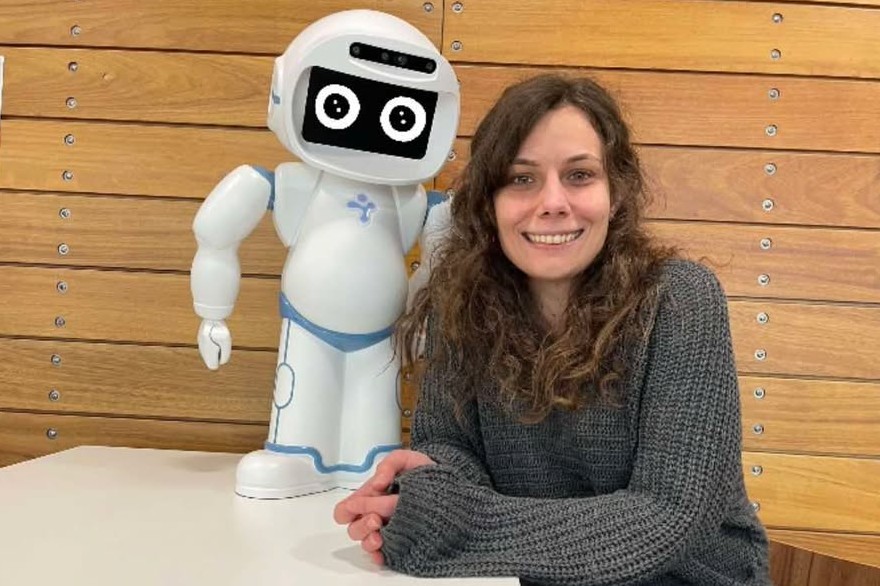
Fethiye Irmak Dogan is a Postdoctoral Research Associate at the University of Cambridge's Department of Computer Science and Technology, working in the Affective Intelligence and Robotics Laboratory. She holds a Ph.D. in Computer Science from KTH Royal Institute of Technology (2023), an M.Sc. and B.Sc. in Computer Engineering from Middle East Technical University (METU). Her research focuses on human-robot interaction, continual learning, and socially appropriate robot behaviors leveraging explainability. She has conducted robotics research at KTH's Division of Robotics, Perception and Learning and collaborated internationally, including a visiting scholar stint at Georgia Institute of Technology. Education highlights include: B.Sc., Computer Engineering, METU (2015) M.Sc., Computer Engineering, METU (2018), with research at Kovan Robotics Lab Ph.D., Computer Science, KTH (2023), with visiting research at Georgia Tech Research interests emphasize deploying autonomous robots in human environments, resolving ambiguous user instructions through explainability, and enabling socially intelligent robot behaviors. Recent work explores continual learning for context adaptation, multimodal frameworks for human-robot collaboration, and vision-language models for wellbeing assessment in children. Key projects include BT-ACTION (modular instruction understanding), GRACE (LLM-driven socially appropriate actions), and STREAK (continual learning for household tasks). Her contributions span robotics, AI ethics, and human-centered design, with a focus on real-world applications in healthcare and education.
Linda Mulcahy is Professor of Socio-Legal Studies and Director of the Centre for Socio-Legal Studies at the University of Oxford. She specializes in dispute resolution and the experiences of lay users in legal systems, with research spanning healthcare complaints, court design, and digital justice. Her interdisciplinary work bridges law, sociology, and architecture. Mulcahy's research examines the socio-legal dynamics of disputes in contexts ranging from medical negligence to neighborhood conflicts. She explores how institutional designs and digital transformations affect access to justice and procedural fairness. Her current projects include oral histories of law centers and rape crisis movements, plus studies on explaining legal rights to the public. Mulcahy's extensive publications focus on legal architecture's impact on due process, visual representations of justice, and digital court reforms. Her work demonstrates consistent attention to how marginalized groups experience legal institutions. Awards and Recognition: Fellow of the Academy of Social Sciences She directs doctoral training programs and leads the Frontiers of Socio-Legal Studies blog/podcast for early career scholars. Mulcahy consults for governmental bodies including the Access to Justice Foundation and Law Centres Network.
Aradhna Krishna is the Dwight F. Benton Professor of Marketing at the Stephen M. Ross School of Business, University of Michigan. She holds affiliations with the International Institute and the Center for South Asian Studies. Her research focuses on sensory marketing, health and nutrition, corporate social responsibility, and political decision-making. She has authored influential books like Customer Sense: How the 5 Senses Influence Buying Behavior and edited collections on sensory marketing. Education: PhD in Marketing, New York University (1989) MBA, Indian Institute of Management Ahmedabad (1984) B.A. in Economics, University of Delhi (1982) Research Interests: Her work explores how sensory cues (sight, sound, touch, smell, taste) shape consumer perceptions and behaviors. Key areas include food marketing, health decision-making, and the impact of political identity on risk perceptions. She has pioneered studies on sensory marketing’s role in persuasion and product design. Awards & Recognition: Fellow of the Society of Consumer Psychology (highest honor) Recognized by HBR as 'foremost expert in sensory marketing' Consulting & Expertise: Advised organizations like Procter & Gamble, General Mills, and the World Food Program. Served as expert witness for legal cases involving Hallmark Entertainment. Engages with policy boards for global health initiatives. Labs & Teams: Active in interdisciplinary collaborations at the Ross School, focusing on consumer behavior and sensory research.
Suyi Li is an Associate Professor in the Department of Mechanical Engineering at Virginia Tech's College of Engineering, where he leads the Dynamic and Architected Robot and structurE (DARE) Lab. Previously, he served as an Assistant Professor at Clemson University from 2016-2022 after completing postdoctoral research at the University of Michigan. Ph.D. in Mechanical Engineering, University of Michigan, Ann Arbor (2014) M.Sc. in Mechanical Engineering, Pennsylvania State University (2008) B.S. Summa Cum Laude in Mechanical Engineering, University of Michigan, Ann Arbor (2006) Dr. Li's research focuses on pioneering new paradigms of intelligent robots and functional structures by exploiting the interplay between geometry, mechanics, actuation, and computation. His work spans origami-inspired morphing structures, physically computing materials that perform machine learning tasks without traditional electronics, and soft/reconfigurable robots that can move like animals or grow like plants. His innovative approach combines mechanical engineering principles with computational thinking to create systems with 'mechano-intelligence'. Analysis of Dr. Li's recent publications reveals a strong trajectory toward embodied intelligence and mechanical computing, where physical structures themselves perform computational tasks. His work increasingly integrates origami/kirigami principles with advanced materials to create systems that can sense, process information, and actuate without conventional electronics. The research shows progression from fundamental mechanics of adaptive structures to sophisticated applications in robotics and computing. Dean's Awards of Excellence – Faculty Fellow, Virginia Tech (2024) C.D. Mote Jr Early Career Award, ASME Design Engineering Division (2022) Gary Anderson Early Achievement Award, ASME Aerospace Division (2021) Junior Researcher of the Year Award, College of Engineering, Clemson University (2020) CECAS Dean's Faculty Fellow, Clemson University (2018) CAREER Award, National Science Foundation (2018) ASME Freudenstein Young Investigator Award Dr. Li has secured nearly two million dollars in research funding, including the prestigious NSF CAREER award and an NSF EFRI project to build mechano-bio hybrid reservoir computers. He advises multiple Ph.D. and Master's students in the DARE Lab, with recent successes including Vishrut Deshpande's Ph.D. defense. His research has generated close to 80 journal and conference papers, demonstrating significant impact in the fields of adaptive structures and materials systems. Dr. Li also serves on editorial boards for several prominent journals including Journal of Intelligent Material Systems and Structures and Philosophical Transactions of the Royal Society A. The DARE Lab at Virginia Tech comprises a multidisciplinary team of researchers working on origami-inspired meta-structures, physically computing materials, and soft robotics. Current projects include developing electronics-free crawling robots with mechanical central pattern generators, creating kirigami-based wearable medical devices, and engineering metamaterials with programmable mechanical properties. The lab actively collaborates with institutions across the country and has received recognition for its innovative approaches to combining mechanical design with computational capabilities.
Eduardo Velloso is a Professor of Computer Science at the University of Sydney , focusing on interaction design for emerging technologies . His work explores novel user experiences through input modalities, interaction devices, and AI/ML integration in systems. Education: PhD in Computer Science (Lancaster University, UK), Bachelor in Computer Engineering (Pontifical Catholic University of Rio de Janeiro, Brazil) Research Interests: Interdisciplinary work combining Human-Computer Interaction , Augmented/Virtual Reality , Eye Tracking , Wearable Computing , and Machine Learning . Publication Trends: Recent work addresses methodology in HCI , AR/VR applications , AI integration , and sensor-based interaction . Scientific Awards: Best Paper Award at CHI Best Paper Award at UIST Best Paper Award at TOCHI Best Paper Award at TEI Supervision: Actively supervises PhD students and collaborates with companies/government on projects like VR training systems and AI mediation tools . Labs/Teams: Affiliated with institutions in Australia (University of Sydney) and Brazil (PUC-Rio), with global co-authors in projects involving mixed reality , wearables , and AI ethics .
Professor Anna Marie Munster is a distinguished academic and artist at UNSW Art and Design (College of Fine Arts), where she has held a full-time tenured position since 2001. Her work bridges theoretical scholarship with creative practice, establishing her as a leading figure in digital media art and critical theory. University: University of New South Wales School: College of Fine Arts (UNSW Art and Design) Position: Professor Qualifications: PhD from UNSW (2002), BA (Class 1 Hons with University Medal) from University of Sydney (1984) Professor Munster's research explores the intersections of art, technology, and philosophy, with particular focus on statistical visuality, radical empiricism, the politics and aesthetics of machine learning, and more-than-human perception. Her work integrates process philosophy with contemporary media practices, examining how time, movement, and sonicity shape our experience of digital environments. She approaches these topics through both theoretical scholarship and creative practice, often collaborating with artist Michele Barker on multi-channel audiovisual installations. Her publications reveal a consistent trajectory exploring the relationship between embodiment and digital media, with recent work focusing on AI and machine learning in cultural contexts. Munster's creative output demonstrates sophisticated integration of technical innovation with philosophical inquiry, particularly in how her installations challenge conventional perceptions of time and space. ARC, UNSW Student Council Award for Excellence in Postgraduate Supervision (2017) Dean's Award for Excellence in Postgraduate Supervision (2015) Highly commended for Materializing New Media at Prix Ars Electronica (2008) Winner of National Digital Art Awards 'The Harries' (2006) University Press of New England Publishing Award (2005) Professor Munster has completed over 20 PhD and Masters supervisions at UNSW and been involved in another 10 secondary supervisions. She currently supervises five PhD candidates working on diverse topics including coding materialities, critical bio-textiles, schizophrenia and XR technologies, sound and resonance, and affective drawing. Her ARC-funded research projects demonstrate sustained commitment to interdisciplinary work, particularly at the intersection of art, science, and technology. Her creative practice with Michele Barker has resulted in numerous commissioned installations exploring perception, embodiment, and the relationship between humans and technology.
Manolis Savva is an Associate Professor in the School of Computing Science at Simon Fraser University and holds the Canada Research Chair in Computer Graphics. He specializes in 3D scene analysis, generative methods for 3D content, and computer graphics for AI. His research bridges computer graphics, vision, and robotics. Education: Ph.D. (Computer Science, Stanford University, 2016), MS (Computer Science, Stanford, 2012), B.A. (Physics & Computer Science, Cornell, 2009). Research Interests: Human-centric 3D scene analysis, generative 3D content creation, AI-driven rendering, and applications in robotics. Key projects include Habitat (Embodied AI platform), ScanNet , and ShapeNet datasets. Recent Articles: Focus on articulated object modeling, 3D scene synthesis, and AI-driven visualization. Notable work includes SceneMotifCoder (generating object arrangements) and R3DS (panoramic scene understanding). Awards: CHCCS Early Career Award (2022), ICLR 2023 Outstanding Paper Award, ICCV 2019 Best Paper Nomination, and SGP 2020 Dataset Award (ScanNet). Lab/Teams: Leads research groups in 3DLG (3D Learning and Graphics) and GrUVi (Graphics and Vision). Collaborates on projects like AI Habitat and HomeRobot .
Andrew Campana is an Assistant Professor of Asian Studies at Cornell University's College of Arts and Sciences, specializing in modern and contemporary Japanese literature and media. His research explores the possibilities and limitations of expression during media transitions, with particular focus on poetry, digital media, and disability studies. His academic journey includes a Ph.D. in East Asian Languages and Civilizations from Harvard University and an Honors B.A. in East Asian Studies from the University of Toronto. Campana's first book, Expanding Verse: Japanese Poetry at the Edge of Media , published by the University of California Press in 2024 as an open access work, examines Japanese poetic practice from the 1920s to the present as poets engaged with evolving media technologies including film, tape recording, television, and the internet. As a researcher, Campana's work bridges literary studies, media studies, game studies, and disability studies, with current projects exploring how poetry became a key site of digital experimentation in Japan. His research methodology combines traditional literary analysis with hands-on creative practice, informed by his experiences at MIT's Trope Tank laboratory. His scholarly interests span Japanese media history, disability representation in literature and gaming, digital poetics, and gender studies. His research has received significant media attention, including features in the Cornell Chronicle ('Poets in Japan Experiment at the Edge of Media' and 'Japanese Poets Open New Ways of Thinking About Media'), The Statesman, and interviews on NPR's Academic Minute and the Curiosity Daily podcast discussing his work on gaming and accessibility. As an educator, Campana teaches courses including 'Introduction to Japan,' 'Japanese Poetry,' and 'The Glitch: Errors, Disability, and the Edges of Digital Media' (ASIAN 4703/6703), guiding students through interdisciplinary explorations of Japanese literature, media, and digital culture. His teaching reflects his commitment to understanding media transitions through both theoretical and practical lenses.
Stephen Ferrigno is an Assistant Professor and Chair of the Biology of Brain and Behavior Area Group at the University of Wisconsin-Madison's Department of Psychology. His research investigates the origins of uniquely human cognition through developmental, comparative, and cross-cultural methodologies. He focuses on foundational cognitive abilities such as number sense, recursive grammar, logical reasoning, and metacognition, exploring their evolutionary and developmental bases. Ferrigno's work bridges disciplines including cognitive neuroscience, developmental psychology, and cultural anthropology, with practical applications in early childhood education and curriculum design. His research employs cross-cultural studies with indigenous populations (e.g., the Tsimane) to assess cultural variability in cognitive development. Key themes include spatial mappings of numerical concepts, recursive sequence processing in non-human primates, and the metacognitive capacities shared between humans and monkeys. The Cognitive Origins Lab, led by Ferrigno, seeks to uncover universal cognitive principles while identifying culturally mediated differences. No scientific awards or grants are explicitly listed in the provided materials. While no advisees are mentioned, his research program suggests involvement in mentoring graduate students through the Department of Psychology's PhD program. Current projects include investigating the developmental trajectories of logical reasoning, the neural correlates of recursive sequence processing, and the design of culturally adaptive educational interventions targeting early math and language skills in preschool settings.
Christopher Honey is an Associate Professor in the Department of Psychological & Brain Sciences at Johns Hopkins University, affiliated with the Krieger School of Arts & Sciences. His research focuses on computational cognitive neuroscience, exploring how the brain processes sequential information such as language and memory. He holds a PhD from Indiana University and has held positions at Princeton University and the University of Toronto before joining JHU in 2016. Education: PhD in Psychological and Brain Sciences, Indiana University Postdoctoral Fellowship at Princeton University with Uri Hasson Bachelor’s in Applied Mathematics and English Literature, University of Cape Town Research Interests: Neural dynamics of memory and perception Temporal processing in the brain Cognitive modeling using computational methods Neuroimaging data standards (e.g., BIDS) Publications highlight his work on brain state fluctuations, neuroimaging data structures, and memory enhancement. His lab develops tools for analyzing fMRI and EEG data, emphasizing real-world applications like smartphone-based cognitive interventions. Lab and Collaborations: Active projects on narrative processing and hippocampal replay Development of open-source neuroscience tools like iELVis Focus on translational research for aging populations
Eliza Little is an Assistant Professor of Philosophy at the University of Warwick. Her research focuses on post-Kantian European philosophy, particularly Hegel's theories of self-consciousness and perception, and Simone de Beauvoir's aesthetics. She explores the role of art and literature in shaping human experience. Education includes a PhD from the University of Chicago (2020), MA from St. John’s College Annapolis, and BA from Oberlin College. Prior roles include Postdoctoral Fellow at Auburn University. Education: PhD in Social Thought, University of Chicago (2020) MA in History of Western Thought, St. John’s College BA in Politics, Oberlin College Her interdisciplinary work bridges philosophy with literary studies and social theory. Recent publications analyze Hegel's critiques of Schelling, Kant's influence on Hegel, and the social dimensions of aesthetic perception. She is completing a book manuscript on Beauvoir's aesthetics titled *The Aesthetic Lives of Others*. Teaching includes courses on philosophy and tragedy, and 20th-century French philosophy. Supervises projects on Kant, Hegel, Beauvoir, and aesthetics.