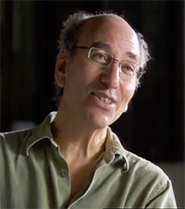
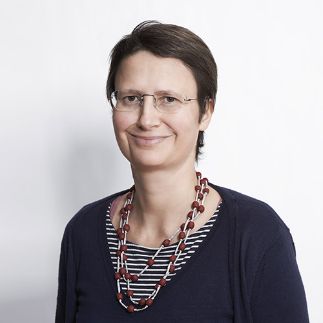
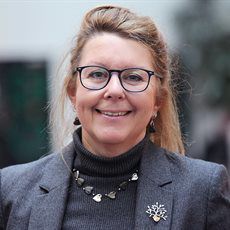
David Kirsh is a Professor in the Department of Cognitive Science at the University of California, San Diego. He holds a D.Phil from Oxford University and completed post-doctoral work at MIT's AI Lab. His research focuses on distributed cognition, embodied cognition, and human-computer interaction, with specific interests in how environments shape cognitive processes and how physical objects become tools for thought. Key research areas include: Theory of Interaction: Examines how people adapt environments to simplify cognitive tasks Environment Design: Develops principles for designing collaborative spaces and smart rooms Information Architecture: Designs large-scale web systems and information spaces Dr. Kirsh directs the Interactive Cognition Lab and co-directs the Arthur C. Clarke Center for Human Imagination. His work bridges cognitive science with practical applications in workplace design, e-learning, and human-computer interaction.
Dr. Carl Bonner-Thompson is an Assistant Professor in Urban (In)justice at Utrecht University's Human Geography and Spatial Planning Department. His work integrates feminist and queer perspectives to explore how vulnerabilities, care, and digital technologies intersect with marginalized urban experiences. Key areas include digital geographies of LGBTQ+ communities, masculinities, and the spatial politics of inequality. Research interests focus on embodied approaches to digital platforms (e.g., Grindr), gender/sexuality geographies, and urban precarity. He examines how technologies mediate identity and spatial practices, particularly for marginalized groups. Recent publications analyze queer social reproduction in precarious cities and feminist spaces for masculinities. Editorial Board: Gender, Place and Culture: Journal of Feminist Geography Teaching courses: Diverse Cities and Urban Inequality, Inclusive Cities? Theories and Concepts Publications span peer-reviewed journals like Gender, Place and Culture and Geoforum , with a focus on digital embodiment, queer temporalities, and urban marginalization. His work bridges qualitative methods and participatory action research to address social justice issues.
Chris Moore is a Professor in the Department of Psychology and Neuroscience at Dalhousie University, where he has held this position since 1988. He earned his Ph.D. in Experimental Psychology from the University of Cambridge (UK) and a B.A. Hons in Natural Sciences from the same institution. His research focuses on developmental and social psychology, particularly the emergence of social understanding and prosocial behavior in early childhood. Key topics include theory of mind, joint attention, moral development, and the influence of social contexts on decision-making. Moore previously held a Canada Research Chair (2003–2005) at the University of Toronto. His work bridges academic and public engagement, with a forthcoming book on guilt (2025) and a third-year social psychology course based on this research. He has published extensively on topics such as intergroup cooperation, autism spectrum disorder and moral reasoning, and cross-cultural sharing behaviors. Scientific Awards: Canada Research Chair (2003–2005) Advising & Grants: Dr. Moore is currently not accepting new research students, but his past work has involved collaborations across disciplines. His research has explored the interplay between developmental psychology and broader societal issues, including fairness, empathy, and cultural influences on moral behavior. Research Themes: His investigations span developmental trajectories of social cognition, the neurological underpinnings of moral judgment, and the transition from early childhood prosocial tendencies to adult social behavior. Recent work emphasizes translational research, connecting laboratory findings to real-world moral dilemmas.
Thecla Schiphorst is Professor and Director of the School of Interactive Arts and Technology at Simon Fraser University. Her research bridges dance, computing, and embodied interaction, focusing on movement knowledge representation, wearable technologies, and aesthetics of interaction. With interdisciplinary MA (Dance and Computing Science) from SFU and PhD from University of Plymouth, she applies somatic models like Laban Movement Analysis to technology design. Schiphorst co-developed Life Forms, the choreographic composition tool used by Merce Cunningham for his creations (1990-2005). Her work expands embodied theory applications in HCI through research in tangible interfaces, natural interaction, and experience design. She teaches courses exploring artificial intelligence applications and ethical challenges.
Professor Beatriz Calvo Merino is a Cognitive Neuroscientist at City St George's, University of London, where she is affiliated with the Department of Psychology in the School of Health Sciences. She serves as Programme Director for the MSc Clinical, Social and Cognitive Neuroscience and the Joint PhD Programme in Psychology and Social Neuroscience with Sapienza University, Italy. Her academic journey includes training at University College London and Universidad Complutense de Madrid, with postdoctoral work at the Institute of Cognitive Neuroscience. Research Interests: Her research explores the neural basis of action observation, sensorimotor expertise, and emotion perception, with a strong emphasis on dance and performing arts. She investigates how sensorimotor experience modulates aesthetic and emotional processing, contributing significantly to the field of neuroaesthetics. Her work integrates EEG, TMS, behavioral, and physiological methods to study embodiment and social cognition. Recent Research Trends: Her recent publications (2020–2025) reflect a sustained focus on embodiment in autism, emotion perception, multisensory integration, and the cognitive neuroscience of dance. She employs ERP and SEP methodologies to dissect somatosensory contributions to social perception, particularly in clinical populations. Her editorial and review work also highlights her leadership in methodological advancements in dance neuroscience. Scientific Awards: Alexander Gottlieb Baumgarten Award (2018) British Association of Cognitive Neuroscience Early Career Award (2019) Grants and Collaborations: Her research has been supported by the ESRC, Leverhulme Trust, Wellcome Trust, Ramon y Cajal Fellowship, and City University funding schemes. She collaborates widely with the dance community, including the Royal Opera House Ballet, Laban Dance Centre, and choreographers such as Wayne McGregor, bridging science and the arts. Labs and Teams: She leads a research group focused on sensorimotor processing and neuroaesthetics within the Department of Psychology, contributing to the Cognitive and Social Neuroscience research theme at City St George's.
Claudia Molitor is a composer, artist, and performer at City St George's, University of London, where she is affiliated with the Department of Music and Sound Arts within the College of Arts and Sciences. Her work bridges music, sound art, video, and fine art, with a strong focus on interdisciplinary and collaborative practices. University: City St George's, University of London School: College of Arts and Sciences Department: Department of Music and Sound Arts Email: claudia.molitor@citystgeorges.ac.uk Her research explores composition as a cultural and technological practice, particularly through the lens of expanded notation, the phenomenology of listening, and collaborative creation. Her artistic inquiry often engages with philosophical concepts such as Timothy Morton’s 'hyperobject,' challenging traditional notions of authorship and the musical work. The breadth of her recent publications and compositions reveals a sustained engagement with themes of perception, environment, embodiment, and materiality. Projects like Sonorama , The Singing Bridge , and MELT demonstrate her interest in site-specific sound installations, acoustic ecology, and the interplay between sound and space. Her work frequently integrates technology, historical reconstruction (e.g., Walking with Partch ), and sensory experience. Notable scientific contributions include peer-reviewed articles such as 'Composition as Hyperobject' and 'Curating experience: Composition as cultural technology – a conversation,' reflecting her theoretical depth and engagement with contemporary art discourse. She has been actively involved in mentoring and collaborative research, though specific student names are not listed. Her artistic projects often involve partnerships with institutions like Tate Britain, NMC Recordings, and the British Library, indicating significant grant and project funding, though specific grants are not detailed. Her creative output is exhibited and performed internationally, including at festivals such as Wien Modern, hcmf//, Spor, BBC Proms, and Sonica, as well as venues like Somerset House and the Onassis Cultural Centre. These engagements suggest leadership in collaborative artistic teams and labs focused on experimental sound and interdisciplinary research.
Erik Nystrom is a composer and academic at City, University of London, specifically affiliated with City St George's, where he conducts research and artistic work in electroacoustic and computer music. His practice centers on multichannel sound, spatial texture, and live interactive performance using algorithmic systems. He previously held a Leverhulme Early Career Fellowship at the University of Birmingham’s BEAST studio, contributing significantly to spatial synthesis and performance aesthetics. Education: PhD in Electroacoustic Music, City University, London (supervised by Denis Smalley) MA in Electroacoustic Music, City University, London (supervised by Denis Smalley) Erik’s research explores the intersection of human and machine agency in improvisation, focusing on post-human cognition, nonconscious processes, and the concept of intra-action. His work integrates machine learning, agent-based systems, and real-time synthesis, particularly through the SuperCollider environment. He investigates how algorithmic systems can co-create with human performers, generating emergent sonic textures through feedback and listening behaviors. Key themes include spatial sound, acousmatic improvisation, and the philosophical underpinnings of technological creativity. His 15 most recent works and publications reveal a strong trend toward algorithmic improvisation, cognitive assemblages, and spatial synthesis. The articles and compositions emphasize machine learning, real-time interaction, and the blurring of composition and performance. Subfields such as post-human attractors, topographic synthesis, and listening agents dominate his recent output, reflecting a deep engagement with both technical innovation and philosophical inquiry in music. Scientific Awards: Leverhulme Early Career Fellowship (2015–2018) The Merciful Company Cordwainer's Prize for Outstanding Achievement on the MA Programme Mercer's Music Prize for Most Outstanding Achievement on the PhD Programme Audience Prize at Metamorphoses International Electroacoustic Composition Competition, Brussels (2010) Erik has advised no formal students listed in the text, but his research has been supported through competitive grants such as the Leverhulme Fellowship. He has presented his work globally at major conferences including ICMC, SMC, NIME, and Beyond Humanism. His compositions have been released by empreintes DIGITALes and performed at institutions like the University of Oxford and De Montfort University. He is actively involved in creative labs and research teams, notably through his work with BEAST (Birmingham Electroacoustic Sound Theatre) and participation in symposia such as the IKO/OSIL Symposium in Graz, Austria. His current practice involves developing interactive systems for live spatial performance, often involving collaborative electroacoustic composition with intelligent agents.
Dr. Jaipreet Virdi is an Associate Professor in the Department of History at the University of Victoria, specializing in the history of disability, science, technology, and medicine. She holds a PhD from the University of Toronto’s Institute for the History and Philosophy of Science and Technology and has held prestigious fellowships at the Max Planck Institute and Brock University. Her research bridges academic scholarship with public engagement, focusing on how medical and technological interventions shape disabled lives. BA: York University MA, PhD: Institute for the History and Philosophy of Science and Technology, University of Toronto Her research centers on disability history , particularly the intersections of technology, medicine, and identity. She explores how deafness has been historically pathologized and how assistive devices like hearing aids are sites of cultural and political resistance. She also investigates endometriosis as an invisible illness, analyzing how gender, race, and cultural stigma affect diagnosis and care, especially within South Asian communities. Her work in material culture examines how everyday objects reflect and shape disabled experiences. Her recent publications span topics from deaf futurity and respiratory technologies to colonial pharmaceuticals and feminist health networks. These works reveal a consistent focus on marginalized voices, patient agency, and the co-production of medical knowledge. Her scholarship demonstrates a deep commitment to making historical insights accessible beyond academia. Her awards include the British Society for the History of Science Hughes Prize (2021) , the American Association for the History of Medicine Welch Award (2022) , and the Disability History Association Best Article Award . She is also an Organization of American Historians (OAH) Distinguished Lecturer , underscoring her national impact in public history. Dr. Virdi is actively involved in mentoring through public scholarship and community-based research. She leads a CIHR-funded project on endometriosis and feminist health networks, advocating for accessible healthcare and disability justice. Her work is supported by grants that enable oral history collection and interdisciplinary collaboration. She co-leads the Objects of Disability project, which investigates the design and cultural meaning of assistive technologies. This initiative brings together historians, designers, and disabled communities to rethink the narratives embedded in everyday objects.
Alessandro Di Nuovo is a Professor in the Department of Computing and Mathematics at Sheffield Hallam University, within the College of Business, Technology and Engineering. He is a leading researcher in cognitive and developmental robotics, with a focus on human-robot interaction, assistive technologies, and neuromorphic computing. His work bridges AI, robotics, and healthcare, particularly in applications for autism therapy and active ageing. His research spans cognitive robotics , neuromorphic computing , assistive robotics , and human-robot interaction , with a strong emphasis on embodied cognition, numerical cognition in robots, and privacy-aware systems. He has pioneered the use of spiking neural networks and event-based vision for real-time robotic perception and learning. His work often integrates cloud computing and multimodal interfaces to enhance robotic services for elderly care and children with developmental disorders. The recent publications highlight a consistent trend in personalized, interactive learning systems , where robots learn from human feedback using reinforcement learning, natural language, and sleep-inspired consolidation. There is also a growing focus on privacy and cybersecurity in social robotics, reflecting ethical considerations in assistive technologies. Applications are strongly oriented toward healthcare , including stroke rehabilitation, ASD screening, and in-home monitoring for older adults. He has been involved in numerous collaborative projects, often as a principal investigator or senior researcher, working with institutions across Europe. His contributions to major conferences and journals underscore his leadership in the field of cognitive and developmental systems. Di Nuovo has supervised and collaborated with a wide range of students and researchers, including Simone Varrasi, Roberto Vagnetti, Muhammad Aitsam, and Daniela Conti. His work has been supported by grants from EPSRC and other UK research councils, particularly in the domain of robotics for healthcare and social good. He is actively involved in research groups focusing on assistive robotics , cognitive systems , and cybersecurity in healthcare robotics , contributing to both theoretical models and real-world implementations of socially intelligent robots.
Francesca Maria De Vecchi is Full Professor of Theoretical Philosophy at the Faculty of Philosophy, Vita-Salute San Raffaele University, Milan. She teaches courses such as Social Ontology, Gender Studies, Philosophy of the Person, and Phenomenology of the Person and Empathy across philosophy and medicine programs. She serves as President of the Master's Degree Program in Philosophy of the Contemporary World (since 2024), Director of the PERSONA Research Centre, and Co-Editor-in-Chief of the journal Phenomenology and Mind . She previously directed the Interfaculty Centre for Gender Studies (2016–2022) and chairs the university’s Equal Opportunities Committee (CUG). Ph.D. in Philosophy, University of Geneva Diplôme d’Études Approfondies, University of Geneva Laurea in Philosophy (with honors), University of Milan Her research centers on social ontology , phenomenology of the person , and gender identity , with a strong phenomenological foundation influenced by Husserl, Edith Stein, and Adolf Reinach. She investigates the interplay between personal identity, social structures, empathy, and normativity, emphasizing qualitative and lived aspects of social reality. Her work bridges philosophy with neuroscience and psychiatry, particularly in understanding personhood and social being. The 15 most recent publications reflect a sustained focus on qualitative social ontology , collective intentionality , and empathy . They explore the eidetic structures of social acts, the personhood of social entities, and the phenomenological distinctions in empathetic experience. Her writings appear in top journals and are published by Springer, Routledge, and Il Mulino. Fellow, International Social Ontology Society (2013–) Fellow, Normactivity Research Network (2022–) Member, SWIP Italia (2018–) Member, Network for Phenomenological Research (2018–) Advisory Board, FICTA – Feminist Philosophies, Bodies and Technologies (2025–) She has supervised doctoral students through the university’s Ph.D. program in Philosophy and has been actively involved in editorial work, scientific committees, and international conferences. As Director of PERSONA and former Director of GENDER, she leads significant research initiatives. She also serves on the Scientific Board of the Interuniversity Research Center in Gender Cultures and participates in public engagement through interviews, seminars, and public lectures on gender, identity, and philosophy. She leads the PERSONA Research Centre in Phenomenology and Sciences of the Person and was previously Director of the GENDER Interfaculty Centre for Gender Studies . She also coordinates the Gender Lunch Seminars and contributes to public philosophy through initiatives like Le arti per il CUG and media interviews on gender and health.
Lera Boroditsky is an Associate Professor of Cognitive Science at the University of California, San Diego (UCSD) and Editor in Chief of Frontiers in Cultural Psychology. She previously held faculty positions at MIT and Stanford University. Her research focuses on the interplay between language, thought, and perception, particularly how linguistic structures shape cognitive processes such as time perception, spatial reasoning, and causal reasoning. She investigates cross-linguistic differences in mental representations, including how speakers of languages like English, Mandarin, and Indonesian conceptualize time and events differently. Her work bridges cognitive psychology, linguistics, and neuroscience, emphasizing the 'experiential basis of meaning.' Notable contributions include demonstrating that grammatical structures (e.g., gender distinctions in nouns) influence object conceptualization and that spatial metaphors for time (e.g., 'the future is ahead') affect behavior and decision-making. She has also explored how metaphor framing influences societal issues like immigration policy and healthcare attitudes. Awards: Searle Scholar, McDonnell Scholar, NSF Career Award, APA Distinguished Scientist Lecturer Research Highlights: Language and Time Perception, Metaphor and Cognition, Cross-linguistic Cognition Boroditsky’s grants include funding from the McDonnell Foundation and NSF, supporting projects on cultural psychology and cognitive modeling. She advises on experimental and theoretical research in cognitive science, though specific student names are not listed here. Her lab explores topics like embodied cognition and the neural correlates of linguistic relativity.
Steve Taylor is a Professor at The Business School of Worcester Polytechnic Institute (WPI), with a PhD from Boston College. His research focuses on Organizational Aesthetics and Reflective Practice, emphasizing the intersection of art and management. He has authored books like Staging Organization and Leadership Craft, Leadership Art , and his plays have been performed globally. Taylor holds roles such as Series Editor for Palgrave Macmillan and Fulbright Specialist. He advises numerous student projects, including initiatives in sustainability and community development. His work aligns with UN SDGs related to Quality Education, Decent Work, and Innovation. Taylor’s contributions span academic leadership, arts-based methodologies, and organizational ethics.
Professor Paula Hyde is a Professor of Organisation Studies at the Birmingham Business School, University of Birmingham , with a visiting position at Macquarie University, Australia . She is a Fellow of the Academy of Social Sciences and a leading scholar in health and social care organisation studies. PhD, University of Manchester (2003) MBA, University of Manchester (1997) BSc (Hons), University of Salford (1994) State Registered Occupational Therapist, Dorset House, Oxford (1985) Her research lies at the intersection of organisation studies, sociology of work, human resource management, and critical research methods . She specializes in the organisation and delivery of health and social care, particularly for older people. Her work employs participatory, ethnographic, and interdisciplinary methodologies. She has advanced methodological innovation in organisational ethnography and qualitative research in public services. Her recent publications span top journals such as Organization Studies, Human Relations, Gender, Work and Organization , and Journal of Social Policy . These works explore organisational boundary work, professionalisation, values-based HRM, lean management in the NHS, and the colonisation of the aged body . Her research shows a consistent focus on power, equity, and the lived experience of care workers and recipients. Fellow of the Academy of Social Sciences Shortlisted for AACSB's Innovations that Inspire (2017) Paula has secured over £6.5 million in research funding from bodies like the Department of Health and NIHR. She is a co-investigator on the Policy Research Unit for Older People and Frailty (2019–2023). She has supervised numerous PhD students and developed early-career researchers through funded projects. She has held leadership roles including Director of the Health Services Research Centre at the University of Manchester. She has co-founded research networks such as the Society for the Study of Organizing for Healthcare (SHOC) and serves as series editor for the Palgrave Macmillan monograph series on Organisational Behaviour in Healthcare . Her public engagement has influenced policy discussions, with citations in Financial Times, The Guardian , and Private Eye .
Dr Ann-Christine Frandsen is a Reader in Accounting at the Department of Accounting, Birmingham Business School, University of Birmingham, UK. She joined the university in January 2016, having previously held academic positions at the University of Essex and Warwick Business School. She holds a PhD in Accounting from Gothenburg University (2004), an MSc in Accounting and Finance (1996), and a Civilekonom degree (1995), also from Gothenburg. Her academic journey began as a mature student, and she brings diverse professional experience from roles in nursing, public transport, publishing, and advisory accounting. Ann-Christine Frandsen’s research is centered on critical and theoretical understandings of accounting as a ‘space-time-value dispositif’. Her work investigates how accounting, as a practice and knowledge form, shapes perception, strategy, and action across diverse settings such as healthcare, public transport, banking, and education. Key themes include accounting as the first writing, its role in constructing truth and governance, embodiment in accounting (e.g., accounting as dance), and ethical dimensions in accounting education. Her research is deeply interdisciplinary, drawing on Foucault, Latour, and critical theory to challenge conventional views of accounting as a neutral technical tool. Her recent publications reveal a strong trend towards philosophical and historical inquiries into the origins and societal roles of accounting. Articles explore topics such as non-glottographic statements, the historical construction of the governing subject, soundscapes in accounting, and mobilizing Islamic finance for climate action. This body of work spans disciplines including accounting, philosophy, history, sociology, and environmental studies, demonstrating a unique and critical interdisciplinary approach. Dr Frandsen has held significant leadership roles, including Director of the MSc International Accounting and Finance programme and Head of the Department of Accounting from 2018 to 2021. She is actively involved in the academic community, serving on the editorial board of Accountancy Business and the Public Interest , organizing international conferences, and acting as a PhD examiner. Her research has been supported by the University of Birmingham’s Alumni Impact Fund, particularly her work on role-play in professional ethics education. She supervises PhD students, including Raeni Raeni and Nicholas Bailey, and contributes to teaching at both undergraduate and postgraduate levels, with modules in public sector accounting, advanced management accounting, and professional integrity. Her work extends into collaborative projects on responsible business and climate change, reflecting a commitment to impactful and socially relevant research.
Vera Gallistl is an Assistant Professor and Research Associate (PostDoc) at the Competence Center for Gerontology and Health Research, Karl Landsteiner Private University for Health Sciences. Her work is interdisciplinary, bridging sociology, health sciences, and digital technology, with a strong focus on aging research. She is actively involved in multiple research projects including Digi4AGE, BUILD, AgeingAlgos, Waste/Land/Futures, and 3WINPA. Her research interests center on the intersection of aging and digitalization, particularly the role of artificial intelligence in care, digital education for older adults, and the socio-political implications of technology in later life. She critically examines societal perceptions of aging, advocating for a rethinking of age-related stereotypes and greater recognition of older adults as societal resources. Her work emphasizes lifelong learning, intergenerational relations, and the reduction of social inequalities in aging. The recent publications show a strong trend in exploring the co-constitution of aging and AI, the materiality of aging, cultural gerontology, and digital participation. Her research agenda is interdisciplinary, theoretically grounded, and socially engaged, aiming to open the 'black box' of AI in gerontological contexts. Assistant Professor, Karl Landsteiner Private University for Health Sciences Research Associate, Competence Center for Gerontology and Health Research Active in multiple EU and national research projects Vera Gallistl has not received any explicitly mentioned scientific awards in the provided text. She is involved in research grants through her participation in various funded projects, though specific grant names or amounts are not listed. She collaborates extensively with interdisciplinary teams across medicine, psychology, and social sciences. She is part of the Competence Center for Gerontology and Health Research, which fosters interdisciplinary collaboration and serves as a hub for aging research in Austria. The center enables her to work on complex, real-world issues related to aging, digitalization, and care ecosystems.