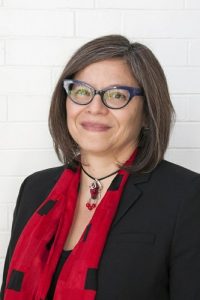
María Rocio Cobo Piñero is a researcher at the University of Seville in the School of English Philology , specializing in African American Literature and African Diaspora Studies . Her work critically examines intersections of race, gender, and cultural identity through postcolonial and transatlantic frameworks. PhD in English Philology (2014) on 'The influence of Blues and Jazz on three African-American authors' Key collaborators: Dr. Stelamaris Coser, Dr. Juan Ignacio Guijarro González Research Focus Investigates queer representations in African arts, gender dynamics in jazz traditions, transnational narratives in Afrodiasporic literature, and decolonial epistemologies in visual arts. Recent work analyzes Zanele Muholi and Akwaeke Emezi through the lens of trans-embodiments and Black counter-archives . Publications Her scholarship traces musical influences on literary production, postcolonial science fiction , and afrodiasporic consciousness in contemporary travelogues. Notable works include analyses of Claudia Rankine's affect theories and Toni Morrison's interdisciplinary legacy .
Dr. Ali Abbas is an Associate Professor of Structural Engineering at the University of East London, within the School of Architecture Computing and Engineering and Department of Engineering & Construction. He serves as Course Leader for both MSc Civil Engineering and MSc Structural Engineering programs, and has played a key role in developing MSc courses with Industrial Placement. Dr. Abbas leads the teaching of structural design across undergraduate and postgraduate courses and has over 40 publications in leading journals and international conferences. Dr. Abbas holds the following educational qualifications: PhD in Civil Engineering (Structural Engineering) from Imperial College London Diploma of Imperial College (D.I.C.) in Structural Engineering/Concrete Structures PG Cert in Advanced Study in Learning and Teaching (CASLAT) from Imperial College London Dr. Abbas has a broad research interest in structural analysis and design with a focus on improving current design guidelines. His key research theme centers on low-carbon concrete and innovations in new bio-concretes to address the climate emergency. He specializes in numerical and experimental modeling of structural systems, with particular expertise in the behavior and design of concrete structures. His research spans low-carbon concrete, self-healing and bio-concretes, fiber-reinforced concrete, concrete ground-floor slabs, seismic and impact modeling of concrete structures, and increasingly, artificial intelligence applications in structural engineering. He has strong industry links and has led several successful collaborative research projects funded by UK funding bodies. Analysis of Dr. Abbas's recent publications reveals a strong focus on sustainable concrete technologies, particularly low-carbon alternatives and self-healing properties. His work increasingly integrates biological approaches (bio-concrete) with traditional engineering principles. There's also a notable trend toward applying artificial intelligence and machine learning techniques to structural engineering problems, demonstrating interdisciplinary innovation. His research has practical industry applications, with collaborations on bio-concrete manufacturing and sustainable material development. Dr. Abbas has received significant recognition for his teaching and research: National prestigious design competition winner (including the Sustainability Prize) with MSc students five times in the last eight years (2023, 2022, 2019, 2018, 2016) Several international prizes with undergraduate students Dr. Abbas has successfully supervised over 8 PhD research projects and numerous MSc and undergraduate research projects. He has secured substantial research funding from various sources including UKRI Innovate UK and the Royal Academy of Engineering. Recent successful grants include: UKRI Innovate UK Sustainable bio-based materials project (£125,689), UKRI Innovate UK Accelerated Knowledge Transfer project (£34,981), and Royal Academy of Engineering Visiting Professors Scheme (£29,030). He maintains strong industry links with organizations including Biozeroc, JP Concrete, Lytag, and ARUP. Dr. Abbas leads research in sustainable concrete technologies through collaborations with industry partners. He is a member of the fib (International Federation for Structural Concrete) Commission 4 on Concrete & Concrete Technology Task Group TG4.8 on Low Carbon Concrete, and previously served on the Institution of Structural Engineers Research Panel. His work bridges academic research with practical industry applications, focusing on making concrete construction more sustainable and resilient.
Ana Trincão is a Visiting Assistant Professor at the Escola Superior de Dança (Instituto Politécnico de Lisboa), where she bridges academic and artistic domains through her expertise in contemporary dance, somatics, and performative practices. She is a multidisciplinary artist and researcher whose work interrogates the intersections of body-mind integration, sensory exploration, and socio-political structures. Education PhD in Cultural Studies, Universidade Católica Portuguesa (2015–2021) Master's in Solo, Dance, and Authorship, Berlin University of the Arts (2010–2012) Degree in Plastic Arts, ESAD das Caldas da Rainha (1999–2005) Specialization in Somatic Movement Education (ongoing) Ana's research focuses on somatic practices in dance and performance, emphasizing conscious movement, internal body perception, and the political dimensions of embodied knowledge. Her artistic projects, such as Mudjeres Di Mondon (2024) and BlindDances (2024), employ sensory and bodily approaches to critique social systems. The themes of her recent publications reveal interdisciplinary trends, merging somatic theory with explorations of identity, collective art, and performance politics. Her work spans performance, video, installation, and collaborative practices, reflecting a commitment to experimental methodologies. Artistic Collaborations : Ana is a member of the experimental music project SAS Radio Orkestra and the artist collective Apneia Colectiva, further demonstrating her fluid engagement with individual and collective creative practices.
Simone Neuber serves as a Visiting Professor and Head of the Philosophy Department at Pädagogische Hochschule Schwäbisch Gmünd, maintaining regular office hours in room M1 2.05 and virtual sessions during academic breaks. Her institutional affiliation centers on philosophical research and teaching within Germany's higher education framework for teacher training. Her academic journey began with studies in Philosophy and Modern English Literature at the University of Tübingen, including an exchange year at SUNY Stony Brook. She earned her doctorate in 2013 from Tübingen with research on fictional relationships in analytical aesthetics, followed by habilitation in 2021 at the University of Jena focusing on self-deception as an archaeological search, published as a 657-page monograph in 2025. Neuber's research program critically engages with self-deception mechanisms across Kantian ethics, Kierkegaardian existentialism, and Sartrean phenomenology. Her work examines moral psychology in aesthetic contexts , religious epistemology , and pre-reflective consciousness , with particular attention to how moods structure existential awareness and how deception operates in religious belief formation. Recent publications demonstrate sustained analysis of Kant's theory of lying, Kierkegaard's anxiety treatise, and Sartre's ontology of subjectivity. Her 2023-2025 publications reveal three converging trajectories: Kantian investigations into the metaphysical foundations of evil and deceptive practices Kierkegaardian explorations of religious epistemology and immortality concepts Sartrean phenomenological analyses of mood, consciousness, and self-deception mechanisms These strands intersect in her examination of how philosophical frameworks address the tension between rationality and affective states in moral decision-making. Neuber's scholarly contributions extend through guest professorships at the University of Notre Dame and academic appointments in Heidelberg, Freiburg, and Basel. Her teaching responsibilities include mentoring students through the Staufer Studienmodell framework at this German university of education, with particular focus on preparing philosophy educators for secondary school instruction.
Maren Butte is a Professor of Theater and Performance Studies at the Institute for Media and Cultural Studies, Faculty of Arts and Humanities, Heinrich Heine University Düsseldorf, where she has taught and researched since 2016. Previously, she held research positions at the University of Bayreuth (2015), Freie University of Berlin (2011-2014), and University of Basel (2006-2009). Professor Butte completed her doctorate on audiovisual aesthetics of melodrama in 2014. Her academic journey demonstrates consistent interdisciplinary engagement with performance, media, and cultural studies, with particular attention to intersections between artistic practices and theoretical frameworks. She holds the title of apl. Professor (außerplanmäßiger Professor), a permanent academic position in the German system that sits outside the standard salary scale. Her research focuses on performative practices between the arts and between art and everyday (media) life, body techniques and digital technologies. Her teaching emphasizes theater history, theory, and aesthetics at the intersection with media cultural studies: communicative and affective processes (staging, representation, performance), body techniques and knowledge, ritual theories (theater anthropology and transculturality), choreography, gender and fashion studies, intermediality, and transmodal perception (sensory studies). Her scholarly output reveals evolving engagement with the ephemeral nature of performance, politics of visibility, and intersection of embodied practices with technological mediation. Recent work shows increasing attention to queer aesthetics, digital materialism, and politics of belonging in contemporary performance. Publications demonstrate sophisticated understanding of how affect operates as a medium in performance art and how artistic practices navigate disciplinary boundaries. Kuratoriumsmitglied: iDas (International Dance Artist Service NRW) Member: Gesellschaft für Theaterwissenschaft (GTW) Member: Gesellschaft für Medienwissenschaft (GfM) Member: International Federation for Theatre Research Reviewer for: DFG, DAAD, Tanzrecherche NRW Professor Butte regularly presents at international conferences and has delivered numerous invited lectures on topics including techno-aisthesis, contact zones of the body, digital materialism, and post-melodramatic experience. Her editorial work includes forthcoming volumes on choreographic procedures and obscene scenes in performative arts.
Eric Brymer is an Associate Professor in the Human Sciences department within the Faculty of Health at Southern Cross University, Gold Coast, Australia. His academic work centers on the intersection of adventure, extreme sports, and nature-based contexts with human health and wellbeing. Education: PhD from University of Wollongong (UoW) Research Interests: Dr. Brymer investigates the psychological mechanisms through which adventure activities and nature immersion enhance wellbeing, with particular focus on ecological dynamics frameworks and human-environment interactions. His work spans nature prescribing, social prescribing, and the design of evidence-based interventions for mental health improvement. He examines how extreme sports contexts foster psychological growth while addressing critical issues of diversity, inclusion, and accessibility in adventure tourism. His research integrates phenomenological perspectives with practical applications in clinical, educational, and community settings. Publication Trends: Brymer's recent publications demonstrate a clear trajectory toward nature-based healthcare solutions, with increasing emphasis on social prescribing frameworks, community implementation, and health equity. His work bridges adventure psychology with public health, showing strong methodological diversity through mixed-methods approaches, Delphi consensus studies, and ecological dynamics applications. A recurring theme is the operationalization of human-nature relationships into measurable wellbeing outcomes, particularly through mindfulness mechanisms and affordance theory. Professional Recognition: AHPRA registered psychologist with sport and exercise psychology endorsement Board approved supervisor status Chartered psychologist with the British Psychological Society Supervision and Community Engagement: As an experienced research supervisor, Brymer actively mentors higher degree research students and encourages prospective candidates to contact him regarding potential projects. He maintains strong community partnerships to translate research into practical applications, particularly in nature-based health interventions and adventure sports safety. His work with Australian healthcare systems focuses on developing implementable nature prescribing frameworks that address real-world barriers to adoption.
Bruno Gas serves as a Professor at Sorbonne University, affiliated with the ASIMOV research team within the Intelligent Systems and Robotics Institute (ISIR). His academic work bridges robotics, artificial intelligence, and cognitive science through innovative investigations into sensorimotor learning frameworks for embodied agents. Gas's research centers on how naive robotic agents develop spatial and bodily representations through sensorimotor interactions, with particular emphasis on multimodal sensory integration (audition, vision, and touch). His work demonstrates how robots can autonomously construct internal models of their environment through active exploration, utilizing principles from developmental psychology and neuroscience. Key methodologies include neural network modeling, predictive processing architectures, and bio-inspired sensorimotor contingency frameworks that enable agents to learn without pre-programmed spatial knowledge. Analysis of Gas's recent publications (2013-2020) reveals consistent thematic progression in developmental robotics, focusing on the emergence of topological spatial representations, active exploration strategies, and multimodal sensor fusion. His research demonstrates how sensorimotor flow generates internal spatial models, with notable contributions including the Head Turning Modulation System for environment exploration and tactile space representation models. This work establishes critical links between robotics, cognitive science, and neuroscience through experimentally validated frameworks for embodied learning. No explicit information regarding student supervision or research grants appears in the source material, though extensive collaborative publications with researchers like Sylvain Argentieri and J. Kevin O'Regan suggest active mentorship and project leadership within the ISIR ecosystem. His publication record shows sustained interdisciplinary collaboration across European robotics institutions. Gas operates within the ASIMOV team at ISIR (Institut des Systèmes Intelligents et de Robotique), a premier robotics research unit jointly operated by Sorbonne University and CNRS. The team specializes in adaptive systems and intelligent machines, with research spanning embodied cognition, developmental robotics, and human-robot interaction. ASIMOV's experimental platforms focus on sensorimotor learning paradigms for autonomous exploration, positioning Gas at the forefront of bio-inspired robotics research in France.
Heiner Böttger is a Full Professor of English Didactics and EFL (English as a Foreign Language) at the Catholic University of Eichstätt-Ingolstadt, Germany, where he has served since 2007. He holds the Professorship for Didactics of English Language and Literature within the Faculty of Languages and Literature. His academic journey includes positions at the University of Erlangen-Nuremberg and visiting professorships at institutions including Akdeniz University in Turkey, Aristotle University in Greece, and Long Island University in New York. Professor Böttger's research focuses on the intersection of language education and neuroscience, with particular expertise in foreign language anxiety (xenoglossophobia), sensitive phases of language development, multilingual didactics, and evidence-based foreign language teaching. His work bridges theoretical knowledge with practical classroom applications, emphasizing how insights from neuroscience can transform language teaching methodologies. He has pioneered approaches to early foreign language learning, corporate language instruction, and the psychological aspects of language acquisition including memory, resilience, and mindfulness. His extensive publication record demonstrates a clear trajectory toward integrating neuroscientific findings with language education. Recent works focus on language educational neurosciences (LEN), outdoor language learning, storytelling techniques, and the neuromotor foundations of speaking skills. Böttger's research shows increasing sophistication in connecting brain-based learning principles with practical language teaching strategies across diverse contexts from primary education to corporate settings. As an active academic, Böttger serves as Chairman of the Early language learning advisory board BIG (foundation Lernen, Munich) and as an External Academic Reviewer to the Greek state. His professional activities demonstrate a commitment to advancing evidence-based language education through both theoretical contributions and practical implementation.
Alexandre Baril is currently an Associate Professor at the University of Ottawa in the Faculty of Social Sciences , specifically the School of Social Work . His work bridges Transgender Studies , Disability Studies , and Queer Theory , focusing on anti-oppressive frameworks in suicide and end-of-life debates. Research Focus : Suicidism, Medical Assistance in Dying (MAID), trans aging, dementia care, and intersectional oppressions (cisgenderism, ableism). Key Contributions : Author of Undoing Suicidism (2023/2025), which rethinks assisted suicide through trans/queer/crip lenses. Recent Publications explore trans youth detransition, dementia experiences in marginalized communities, and critiques of biomedical frameworks. His scholarship emphasizes epistemic resistance and ethical caregiving. Expertise Areas : Disability Rights, LGBTQ+ Aging, Medical Ethics, Francophone Advocacy.
Hyacinthe Ravet is Professor of sociomusicology at the Faculty of Arts, Sorbonne University, and a senior researcher at the Institute for Research in Musicology (IReMus, UMR 8223). Since January 2018 she also serves as Vice-Dean for Equality and Anti-Discrimination at the Faculty of Arts. Education & Academic Posts Professor, Faculty of Arts, Sorbonne University Researcher, IReMus (Institut de Recherche en Musicologie, UMR 8223) Vice-Dean for Equality and Anti-Discrimination, Faculty of Arts, Sorbonne University (2018–present) Research Focus Her work lies at the intersection of sociology and musicology, concentrating on: Gender relations in musical and artistic professions, with sustained attention to female conductors and composers. Sociology of orchestras , examining interactions, negotiations and cooperation within symphonic ensembles. Creative processes in music-making, combining ethnographic observation with sociological theory. Music mediation , including the design and evaluation of programs that broaden public engagement with music. Research Leadership & Projects Co-head, “Institutional and Social Frameworks” team, IReMus (with Louisa Martin-Chevalier since 2020). Director, ANR project “Prodige – Research program on orchestras, discrimination and gender” (2018–2023). Co-director, “Alcoll – Analyzing the collective in musical creation processes” (Sorbonne Universités Emergence program, 2017–2018). Founding co-director, CReIM (Interdisciplinary Research Circle on Female Musicians). Director, journal Travail, genre et sociétés (CNRS – La Découverte) since 2017. Scientific Awards & Recognition While no single competitive award is listed, her extensive record of invited keynotes, scientific‐committee memberships and international conference organization attests to significant scholarly recognition in sociomusicology and gender studies. Teaching & Mentoring Created and directs the Master’s degree “Music Mediation” in collaboration with Sorbonne Nouvelle University. Regular courses: Sociomusicology, sociology of music, theories of sociology of the arts, music mediation, sociology of music education, research methodology. Organizer of an ongoing doctoral & post-doctoral seminar in sociomusicology at Sorbonne University (since 2016). Laboratories & Teams She carries out her research within IReMus (mixed research unit 8223), co-leading the “Institutional and Social Frameworks” team and actively participating in the international MAGE network (Labour Market and Gender).
Matthew H. Johnson is the Kenneth F. Burgess Professor of Anthropology at Northwestern University, specializing in historical archaeology with a focus on medieval and early modern Europe. He holds a PhD from the University of Cambridge (1990) and has held visiting positions at institutions such as UC-Berkeley, Heidelberg University, and UCLA. His research explores the archaeology of the British Isles, castles, and the intersection of material culture with cultural identity. Johnson has authored influential books like Archaeological Theory: An Introduction (2019) and Behind the Castle Gate (2002), and his work frequently bridges interdisciplinary approaches to understanding historical landscapes and social structures. Education: PhD in Archaeology, University of Cambridge (1990) Affiliations: Department of Anthropology, Northwestern University Key Projects: Bodiam Castle collaborative study, archaeology of capitalism, and Atlantic world material landscapes His research interests include medieval castles as social spaces, the archaeology of capitalism, and the cultural interpretation of landscapes. Awards include a 2019 Guggenheim Fellowship. Johnson’s current work examines English material landscapes from the Middle Ages to colonial contexts, emphasizing long-term identity formation through material culture. Grants & Awards: Guggenheim Fellowship (2019), multiple book prizes Labs/Teams: Archaeological Survey of Colonial Dominica, Spatial and Cartographic Analysis of Landscape and Environments (SCALE) Lab
Deepika Bahri is a Professor and Chair of the Department of English at Emory University. She also directs the Interdisciplinary Program in Global and Postcolonial Studies. Her research focuses on critical theory, postcolonial literature, political aesthetics, and the intersections of race, culture, and health. Bahri’s work bridges literary analysis with broader socio-political questions, including the impact of colonialism on contemporary global structures and the role of narratives in healthcare advocacy. Her major publications include Postcolonial Biology: Psyche and Flesh after Empire (2017) and Native Intelligence: Aesthetics, Politics, and Postcolonial Literature (2003). She has curated academic exhibitions such as Salman Rushdie: A World Mapped by Stories and maintains a digital resource hub for postcolonial studies. Current research explores the relationship between anger, justice, and the good life in public discourse. Bahri’s publications span critical essays in venues like PMLA and The Lancet , reflecting her interdisciplinary engagement with literature, medicine, and philosophy. She is a leading voice in redefining postcolonial studies through innovative frameworks that integrate biological and cultural perspectives.
Kimberly Bain is an Assistant Professor in the Department of English Language and Literatures at the University of British Columbia's Faculty of Arts. Her scholarly work centers on the African diaspora, race, gender, environmental and medical racism, the Anthropocene, and Black arts and letters. Dr. Bain's research spans multiple interdisciplinary fields: Book History, Digital Humanities and Media Studies Critical Race Studies and Black Studies Gender and Sexuality Studies Science and Technology Studies United States Literatures She is currently working on two scholarly monographs: On Black Breath , which traces a genealogy of breathing and Blackness in the United States, and Black Alchemy: Dirt, Soil and Other Dark Matter , which explores how Blackness has shaped global considerations of the Anthropocene and refused extractive relations of racial capitalism. Dr. Bain's publications demonstrate a cohesive intellectual trajectory examining Black breath, Black soil, Black afterlives, and Black resistance across environmental, medical, and digital contexts. Her work consistently challenges conventional frameworks in environmental humanities, medical humanities, and digital studies by centering Black perspectives and experiences. UBC Dean of Arts Faculty Research Award (2024) Dr. Bain teaches survey and specialized courses on 19th century through contemporary Black and American arts and cultures, literary and critical theory, and Black feminist and queer thought at UBC.
Rowland Stout is a Full Professor and Head of School of Philosophy at University College Dublin (UCD). He holds a BPhil and DPhil from Oxford University, an MSc from the University of Sussex, and has held academic positions at institutions including Manchester University and Oxford. His research focuses on philosophy of agency, moral philosophy, emotions, and the metaphysics of mind. Key publications include Things That Happen Because They Should (1996) and the upcoming Passions in Action (2025). He has directed the UCD Centre for Ethics in Public Life and serves as Editor-in-Chief of the International Journal of Philosophical Studies . Awards include Royal Irish Academy membership (2019). Education: DPhil (Oxford), BPhil (Oxford), MSc (Sussex) Positions: Former Tutorial Fellow at Oriel College, Oxford; Founder of UCD’s Centre for Ethics in Public Life Research themes include practical reasoning, emotional rationality, and teleological approaches to action. Recent work explores empathy, vulnerability, and the interplay between emotion and moral agency. He has secured grants including the IRCHSS Senior Research Fellowship (2008) and an AHRC grant (2000).
Mariana Ortega is an Associate Professor of Philosophy and Women’s, Gender, and Sexuality Studies at Pennsylvania State University. Her work bridges continental philosophy with intersectional feminist frameworks, focusing on questions of identity, sociality, and embodied experience in marginalized communities. She is particularly known for her contributions to Latina feminist phenomenology and critical race theory. Her research explores the intersection of aesthetics, memory, and racialized experiences, often engaging with thinkers like Heidegger while centering the lived realities of women of color. Ortega co-edited Constructing the Nation: A Race and Nationalism Reader and authored In-Between: Latina Feminist Phenomenology, Multiplicity, and the Self , which examines the multiplicitous selves of Latinas navigating borderland identities. She founded and directs the Roundtable on Latina Feminism, a key platform for discussions on Latin American and Latina feminisms. Ortega’s current research investigates aesthetics, epistemologies of ignorance, and Latinidad through practices like photography and performance art. Her work critiques colonial and patriarchal frameworks while proposing transformative methodologies rooted in embodied knowledge and decolonial praxis.