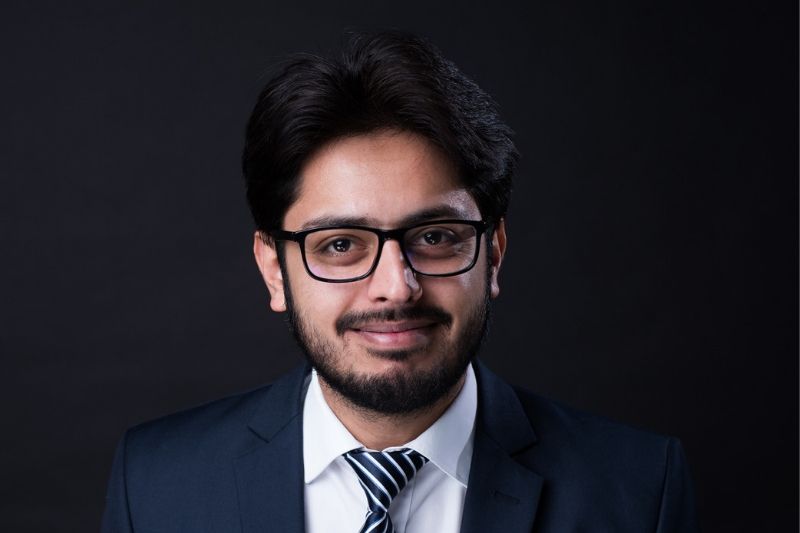
Dr. Muhammad Ali Babar Abbasi is an Associate Professor (Reader) at the Centre for Wireless Innovation (CWI) within the School of Electronics, Electrical Engineering and Computer Science at Queen's University Belfast. He holds a PhD from Frederick University under the Erasmus Mundus Doctoral Scholarship and has held roles including Postdoctoral Research Fellow, Lecturer, and Senior Lecturer. His research focuses on microwave/millimeter-wave antennas, metamaterials, beamformers, and AI-driven electromagnetics. He has supervised numerous PhD students and leads/co-leads multiple research projects with grants totaling over £1.66 million. Education: PhD (Frederick University), M.S. (NUST SEECS), B.S. (COMSATS-UI). Awards include the 2019 Mobile World Scholar Challenge Grand Prize and IEEE/AP-S Young Professional Ambassadorship. He teaches courses like High-Frequency Systems Technique and Communications (Electromagnetics and Antennas). Current funded PhD topics include advanced beamforming hardware and active polarization antennas. Key projects include the Future Communications Hub (HASC), EME Hub, and REASON (Open Networks). Awards highlight his contributions to 5G beamforming and security, with media recognition as a top 100 global 5G influencer.
James Irvine is a Reader in the Department of Electronic and Electrical Engineering at the University of Strathclyde, Faculty of Engineering. He is actively involved in research and teaching, with a focus on wireless communications, resource management, and security. He serves as Course Director for the joint Computer and Electronic Systems degree and has extensive leadership roles in IEEE, including Vice-President for Publications of the IEEE Vehicular Technology Society. His research interests include: Radio Resource Management Error Control Coding Wireless System Design (3G to 5G) Wireless Sensor Networks Security Protocols for Wireless Networks Communications for Power Networks Privacy and Cyber Security His recent publications reflect a strong trend toward secure, efficient communication in smart grids and industrial networks, with applications in teleprotection, cloudlets, and bandwidth-constrained environments. He has led and contributed to numerous research projects involving smart infrastructure, 5G, and assistive technologies. His scientific awards include: UBICOMM - Best Paper Award (2011) IEEE Distinguished Lecturer (2011) He has supervised multiple PhD students and is currently accepting new PhD candidates. His research is supported by grants from Energy Networks Association, Scottish Funding Council, and other public and private partners. He is a co-investigator in major projects such as DEFGRID, CAELUS 2, and ReDI, focusing on digital resilience and secure infrastructure. He is affiliated with the StrathCyber initiative and contributes to innovation through the PNDC (Power Networks Demonstration Centre), where he participates in knowledge exchange and technology validation forums.
Andres Barrado Bautista is a Full Professor in the Department of Electronic Technology at the School of Engineering, Carlos III University of Madrid (UC3M). He leads research within the Electronic Power Systems Group (GSEP), focusing on power electronics, energy conversion, and their applications in aerospace, electric vehicles, and renewable energy systems. His work bridges theoretical modeling and practical implementation, with a strong emphasis on high-efficiency DC-DC converters, fuel cell integration, and smart energy management. PhD in Electrical Engineering (specific date not provided) His research interests center on power electronics for energy systems, including modeling and control of DC-DC converters, fuel cells, batteries, and supercapacitors. He has made significant contributions to the development of advanced converter topologies for photovoltaic systems, electric propulsion in aerospace, and hybrid electric vehicles. His work integrates system-level black-box modeling, small-signal analysis, and real-time digital control, often applied to complex embedded and distributed power architectures. The recent publications (2020–2025) highlight a strong trend in high-performance power converters for space applications (e.g., electrospray thrusters), biomedical devices (e.g., wireless pacemaker charging), and renewable integration. The articles reflect expertise in magnetic component modeling, converter stability, and advanced control techniques, with frequent publication in IEEE Transactions journals. He has supervised numerous theses and leads a wide portfolio of research projects funded by national agencies (AEI, CAM), EU programs, and industry partners such as Airbus, Siemens, CIEMAT, and SENER. Convertidor CC-CC reductor y elevador, método de conversión CC-CC, y planta fotovoltaica que incorpora dicho convertidor (2019) Convertidor y método de conversión bidireccional de corriente continua a corriente continua sin aislamiento galvánico (2019) Active control procedures for the connection of very capacitive loads using SSPCs (2017) Active control procedures for the connection of very capacitive loads using SSPCs (2014) Método y dispositivo de transformación de corriente continua en corriente alterna (2014) Método y sistema de alimentación de una carga constituida por una pluralidad de cargas elementales, en particular de LED (2013) He has secured substantial research funding as principal investigator on projects such as SMARTGREENERGY, ECOSIVE, and several initiatives related to hydrogen-powered drones and space propulsion. He also actively collaborates on projects involving intelligent modular converters, energy storage, and electromagnetic compatibility. His lab, the Electronic Power Systems Group, works on both simulation and experimental validation of power electronics systems, with applications ranging from microsatellites to electric transportation.
Vincent Lange-Nowak is a Researcher at the Ruhr University Bochum , affiliated with the Faculty of Electrical Engineering and Information Technology and the Integrated Systems department. His work focuses on radar technology, embedded systems, and sensor applications for medical and automotive contexts. Research Interests: Radar systems, microwave sensors, assistive technology, and signal processing. Publications: Specializes in 77-81 GHz MIMO FMCW radar, harmonic RFID tags, and navigation aids for the visually impaired.
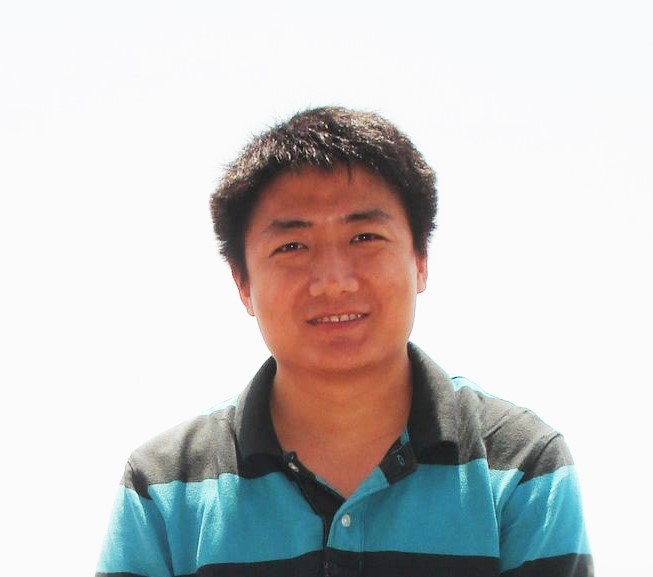
Ang Li is an Assistant Professor in the Computer and Information Science Department at the University of Michigan-Dearborn's College of Engineering and Computer Science. His research focuses on cybersecurity, privacy in networked systems, and AI/ML-powered wireless technologies, including RFID, IoT, and 5G/6G networks. Ph.D., Arizona State University M.S., Beihang University B.E., Guangxi University His research integrates cybersecurity with wireless/mobile systems, emphasizing secure authentication, IoT protocols, and machine learning applications. Recent work explores RFID security, drone-aided key generation, and magnetic wearable authentication. Notable scientific awards include the USENIX Security Student Travel Grant (2023), University Grad Fellowship Summer (2023), Electrical Engineering Department Scholarship (2022), and IEEE CNS Student Travel Grant (2018). Ang actively seeks motivated Ph.D. students with interests in security, AI/ML, IoT, and mobile sensing. Contact: anglial@umich.edu
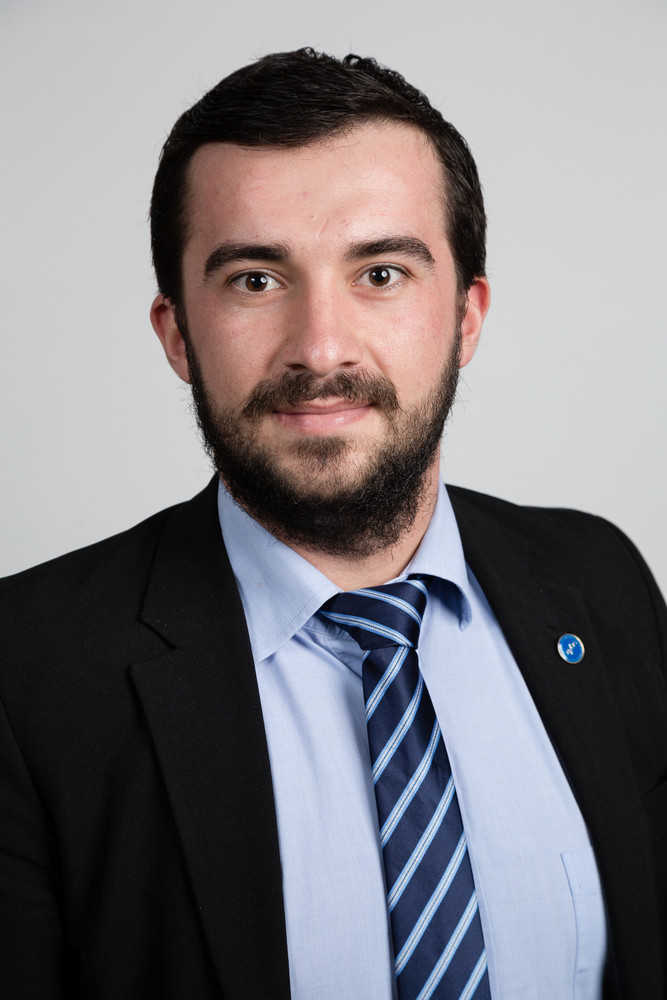
Rus Cosmin is a Professor and Head of Department at the Faculty of Mechanical and Electrical Engineering, University of Petroșani. His expertise spans electric vehicle systems, automation, IoT, and environmental monitoring. As a leading academic, he focuses on interdisciplinary research addressing energy efficiency, smart city technologies, and sustainable manufacturing. His research interests include autonomous systems (e.g., drones, electric vehicles), predictive modeling, and AI applications in environmental and healthcare domains. Notable projects involve smart grid integration, wildfire detection drones, and elderly fall detection using IoT. Rus Cosmin’s work bridges theory and practice, with a focus on real-world solutions for Romania’s industrial regions like the Jiu Valley. His technical contributions include innovative sensor networks, control strategies, and data-driven environmental forecasting systems. His publications reflect a trend toward applying advanced technologies to solve contemporary challenges in transportation, energy, and urban sustainability. Despite prolific output, no awards or student advisement details are explicitly listed in the provided materials.
Geoff Merrett is Professor of Electronic and Software Systems at the University of Southampton and serves as Deputy Head (Research) of the School of Electronics and Computer Science (ECS). He is a member of the Cyber Physical Systems Research Group and was previously Head of the Centre for Internet of Things (IoT) and Pervasive Systems (2018-2024) and Co-Director of the Arm-ECS Research Centre (2020-2024). His educational background includes a BEng (1st, Hons) and PhD in Electronic Engineering from Southampton (2004 and 2009 respectively), along with a Postgraduate Certificate in Academic Practice (2011). He was appointed as a Lecturer shortly after completing his PhD, promoted to Associate Professor in 2014, and Professor in 2019. Professor Merrett's research focuses on energy management of mobile and embedded systems, self-powered computing, and the Internet of Things. His work bridges theoretical AI models with practical implementation on resource-constrained devices, particularly addressing energy efficiency challenges in computing systems. He has published over 250 papers with more than 5,000 citations, an h-index of 39, and a g-index of 64. His recent publications reveal a strong emphasis on dynamic neural networks, intermittent computing for energy-harvesting devices, and hardware acceleration for AI at the edge. His research consistently addresses the challenge of making computing systems more energy-efficient while maintaining performance, particularly for IoT applications and mobile/embedded environments. Vice Chancellor's Award for Public Engagement and Outreach (2019) IEEE R8 'Outstanding Counsellor' award (2013) VC Teaching Award (2011) Multiple Best Paper awards (IJCAI 2013, ICCES 2017, PECCS 2018, ISTM 2023) Professor Merrett currently leads 8 PhD students and has previously graduated 30 PhD students. His research is supported by significant funding including a £1.4M EPSRC Platform Grant on Smart Cities (as Deputy Director), a £1.2M EPSRC International Centre for Spatial Computational Learning (as Southampton PI), and a £5.6M EPSRC PRiME Programme Grant (as Theme Leader). He has been involved in numerous EPSRC-funded projects totaling over £10 million in research funding. He leads a research team focused on energy management and self-powered computing within the Centre for Internet of Things and Pervasive Systems, collaborating closely with industry partners including Arm through the Arm-ECS Research Centre. His team has developed innovative approaches to energy harvesting, intermittent computing, and efficient AI implementation for resource-constrained environments.
Lars Jonsson is a Professor at the Royal Institute of Technology (KTH), affiliated with the School of Electrical Engineering and the Division of Electromagnetic Engineering and Fusion Science . His work focuses on advanced antenna design, electromagnetic wave propagation, and optimization techniques for wireless systems. Array Antennas (FJI3325) - Examiner and Course Responsible Degree Project in Electrical Engineering (EA275X) - Examiner Electromagnetic Theory (EI1220, EI1228) - Examiner, Course Responsible, and Teacher Electromagnetic Wave Propagation (EI2420) - Examiner, Course Responsible, and Teacher Jonsson’s research explores antenna arrays , RF energy harvesting , and electromagnetic compatibility , with a focus on minimizing mutual coupling and maximizing efficiency in integrated systems. His recent publications emphasize Q-factor bounds , wideband antenna design , and convex optimization for array performance. His work bridges theoretical electromagnetics and practical implementation, including applications in IoT devices , 5G communication , and quantum systems . Jonsson has contributed to understanding fundamental physical limits of antennas and developing high-power rectennas for energy transfer. Doctoral Thesis: "Directional Decomposition in Anisotropic Heterogeneous Media for Acoustic and Electromagnetic Fields" (2001) Active participation in international conferences like EuCAP and ICEAA Key collaborations with researchers in antenna optimization , microwave engineering , and electromagnetic theory
Yang Peng is an Associate Professor at the University of Washington Bothell , affiliated with the School of Science, Technology, Engineering & Mathematics and the Division of Computing & Software Systems . His research focuses on cyber-physical systems , Internet of Things , and energy-efficient wireless sensor networks . Education: Ph.D. in Computer Science (2014), Iowa State University M.S. in Computer Science (2008), Washington State University B.E. in Electrical Engineering (2006), Beijing University of Posts and Telecommunications Yang Peng’s research spans device, application, and network protocol designs for self-sustainable IoT systems, including RF-powered wireless networks , implantable body area networks , and edge computing architectures . His work addresses energy efficiency, delay guarantees, and cross-interface scheduling in networked systems. Recent publications highlight trends in serverless computing for IoT, VANET-based data transportation , and energy-aware protocol design . He has secured grants from Microsoft Azure , University of Washington Student Technology Fee Fund , and CSS Graduate Research Fund , totaling over $40,000. Scientific Awards: Best Paper Award, IEEE Wireless Communications and Networking Conference (WCNC'15) Yang Peng advises graduate students working on IoT and edge computing projects, with many alumni employed at Amazon , Microsoft , and Nordstrom . He teaches courses like Network Design , Internet of Things , and Embedded Systems , emphasizing practical implementation and research methods.
Muzaffar Rao serves as an Associate Professor in the Department of Electronic and Computer Engineering within the Faculty of Science and Engineering at the University of Limerick, Ireland. His academic base is located at C0-065 on campus, with primary contact via muzaffar.rao@ul.ie. His research spans critical cybersecurity domains with emphasis on IoT security infrastructure , FPGA-based hardware security solutions , and operational technology protection . Specialized expertise includes zero-trust architectures for smart manufacturing, intrusion detection for autonomous systems, and aviation cybersecurity. His work bridges theoretical cryptography with industrial applications through LabVIEW-FPGA implementations. Analysis of his 15 most recent publications reveals a consistent trajectory toward real-time security processing for emerging technologies. Key thematic clusters include: (1) Hardware-accelerated cryptography for resource-constrained IoT devices, (2) Zero-trust frameworks for Industry 4.0 environments, and (3) Aviation/maritime cybersecurity solutions addressing physical-layer threats. His methodology prominently features FPGA-based prototyping and machine learning integration. Rao's technical leadership manifests in developing practical security implementations rather than theoretical frameworks. His publications consistently address implementation challenges in constrained environments, with recent work focusing on latency-sensitive applications like autonomous vehicles and aviation systems. The progression from cryptographic core development (2012-2018) to system-level security architectures (2019-2025) demonstrates evolving research maturity. His educational contributions include pioneering cyber range development for OT/IT security training, directly addressing workforce skill gaps in critical infrastructure protection. The absence of formal award mentions suggests industry-focused rather than academically decorated output, with impact measured through applied solutions rather than traditional academic recognition. Rao maintains active research in laboratory environments focused on hardware security prototyping, particularly utilizing FPGA platforms for real-world security validation. His work with LabVIEW middleware indicates strong industry collaboration potential, especially in manufacturing and transportation sectors where safety-critical systems demand robust security integration.
Stefano Scanzio is a Senior Researcher at the National Research Council of Italy (CNR-IEIIT) and teaches computer science courses at Politecnico di Torino . With over 60 publications in wireless networks, real-time communication, and industrial IoT, he serves as Associate Editor for Ad Hoc Networks , IEEE Access , and Electronics journals. Ph.D. in Computer Science (Politecnico di Torino, 2008) Laurea in Computer Science (Politecnico di Torino, 2004) His research focuses on industrial wireless networks , particularly Wi-Fi and IEEE 802.15.4 TSCH, with emphasis on: Energy-saving mechanisms in wireless sensor networks Predictive models for Wi-Fi channel quality Reliable communication through seamless redundancy Machine learning integration for network optimization Clock synchronization under non-Gaussian noise Recent publications analyze Wi-Fi 7's multi-link operation, executable QR codes for IoT, and AI-driven network self-configuration. His work has been recognized with multiple best paper awards .
Andrew C. Singer is a Professor at the University of Illinois at Urbana-Champaign , with joint appointments in the College of Engineering (Electrical and Computer Engineering, Industrial and Enterprise Systems Engineering) and the College of Business (Business Administration). Since 1998, he has held roles including the Fox Family Endowed Professorship , Associate Dean for Innovation and Entrepreneurship (2018–present), and Director of the Technology Entrepreneur Center (2005–2017). He co-founded Intersymbol Communications, Inc. (2000, acquired by Finisar) and OceanComm (2015, underwater video communication). Education: Ph.D. in Electrical Engineering and Computer Science, MIT (1996). Research Interests span statistical signal processing , acoustic communication systems , machine learning , and low-power VLSI design , with applications in underwater acoustics, through-tissue communication, and augmented listening. His work integrates theoretical signal processing with practical hardware implementations. Recent Publications focus on acoustic communication under nonlinear conditions , low-complexity ADC design , and biomedical applications of signal processing . Articles from 2023–2020 highlight innovations in underwater navigation, face mask acoustics, and subsurface data transmission. Scientific Awards include: Hughes Aircraft Masters Fellowship Harold L. Hazen Memorial Award (1991) NSF CAREER Award (2000) Xerox Outstanding Faculty Award (2001) IEEE Fellow IEEE Signal Processing Society Distinguished Lecturer (2014) Best Paper Awards (2006, 2008) Leadership roles include Associate Editor for IEEE Transactions on Signal Processing and service on the MIT Educational Council . He directs the Coordinated Science Lab and advises on expert witness cases in audio and communication industries.
Dr. Umit Karabiyik is an Associate Professor in the Department of Computer and Information Technology at Purdue University, leading the Ubiquitous and Mobile Investigative Techniques and Technologies (UMIT²) Lab. He holds a PhD from Florida State University and focuses on Digital Forensics, Cybersecurity, and AI-driven security solutions. His research addresses challenges in mobile and IoT forensics, forensic intelligence, and privacy-preserving technologies. Dr. Karabiyik has secured federal funding from agencies like the National Institute of Justice and Department of Homeland Security, and delivers training programs for law enforcement. He serves on editorial boards for journals like the Journal of Digital Forensics, Security and Law, and has been recognized as an AAFS Fellow and Purdue Faculty Scholar. Education: PhD (Computer Science, Florida State University, 2015), MS (Computer Science, Florida State University, 2010), BS (Computer Systems Teaching, Sakarya University, 2006). Research Grants: Includes projects on IoT forensics training, AI-enabled community supervision, and cyber resilience. Current affiliations include a courtesy appointment at Florida State University's Computer Science Department. Awards: Promoted to AAFS Fellow (2023) and named Purdue University Faculty Scholar (2023). Recent research emphasizes forensic intelligence, mobile app security, and IoT crime scene analysis.
Douglas E. Comer is a Distinguished Professor of Computer Science at Purdue University, where he has made significant contributions to the fields of computer networking, operating systems, and distributed computing. He is renowned for his foundational work on TCP/IP protocols and for authoring influential textbooks that have shaped academic and professional understanding of computer science concepts. Comer's research interests focus on networking fundamentals, operating system design (particularly the XINU OS), and cloud computing architectures. His professional activities include consulting for industries, delivering seminars on TCP/IP, DNSSEC, and network processor design, and advising on large-scale web systems. He has authored over 20 books translated into multiple languages, including Computer Networks and Internets , Internetworking with TCP/IP , and Operating System Design . His work emphasizes practical education through experimental projects and lab guides, such as Hands-on Networking with Internet Applications . He is also known for his guidance on Ph.D. programs and academic careers in computer science, advocating for rigorous research and mastery of domain knowledge. Comer's contributions extend to open-source software implementations, including protocol stacks and educational tools. His consulting practice focuses on network security, distributed systems design, and emerging technologies like edge computing and software-defined networking.
Dr. Kai Wu is a Lecturer at the School of Electrical and Data Engineering (SEDE), University of Technology Sydney (UTS). He holds dual PhD degrees from UTS (2020) and Xidian University (2019), with his UTS thesis recognized in the Chancellor’s List 2020. His research focuses on Joint Communications and Radio Sensing (JCAS), digital/antenna array signal processing, and 5G+/IoT technologies. He has published the world-first authored book on JCAS and leads funded research projects in wireless sensing, millimeter-wave communications, and flood sensing systems. Education: PhD in Electrical Engineering, University of Technology Sydney (2020) PhD in Information and Communication Engineering, Xidian University (2019) Research Interests: Dr. Wu’s work spans JCAS, antenna array signal processing, and embedded systems. He emphasizes practical applications of ISAC (Integrated Sensing and Communication) for next-generation wireless systems. His projects include flood sensing via communication signals and secure waveform design for RIS-assisted networks. Funded Research: Network as a sensor for flood sensing (TPG Telecom Limited, 2023–2028) Smart Flood and Storm Intelligence Sensing Initiative (NSW Department of Planning, 2023–2024) Awards: Chancellor’s List 2020 (UTS) Teaching & Service: Teaches Introductory Embedded System and Internet of Things . Serves on the editorial board of ISAC-Focus . His work bridges theory and industry, with experimental validations in radar-communication systems and MIMO arrays. Labs/Teams: Active in the Global Big Data Technologies Centre (GBDTC) at UTS, collaborating on interdisciplinary projects in signal processing and IoT.