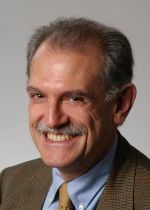
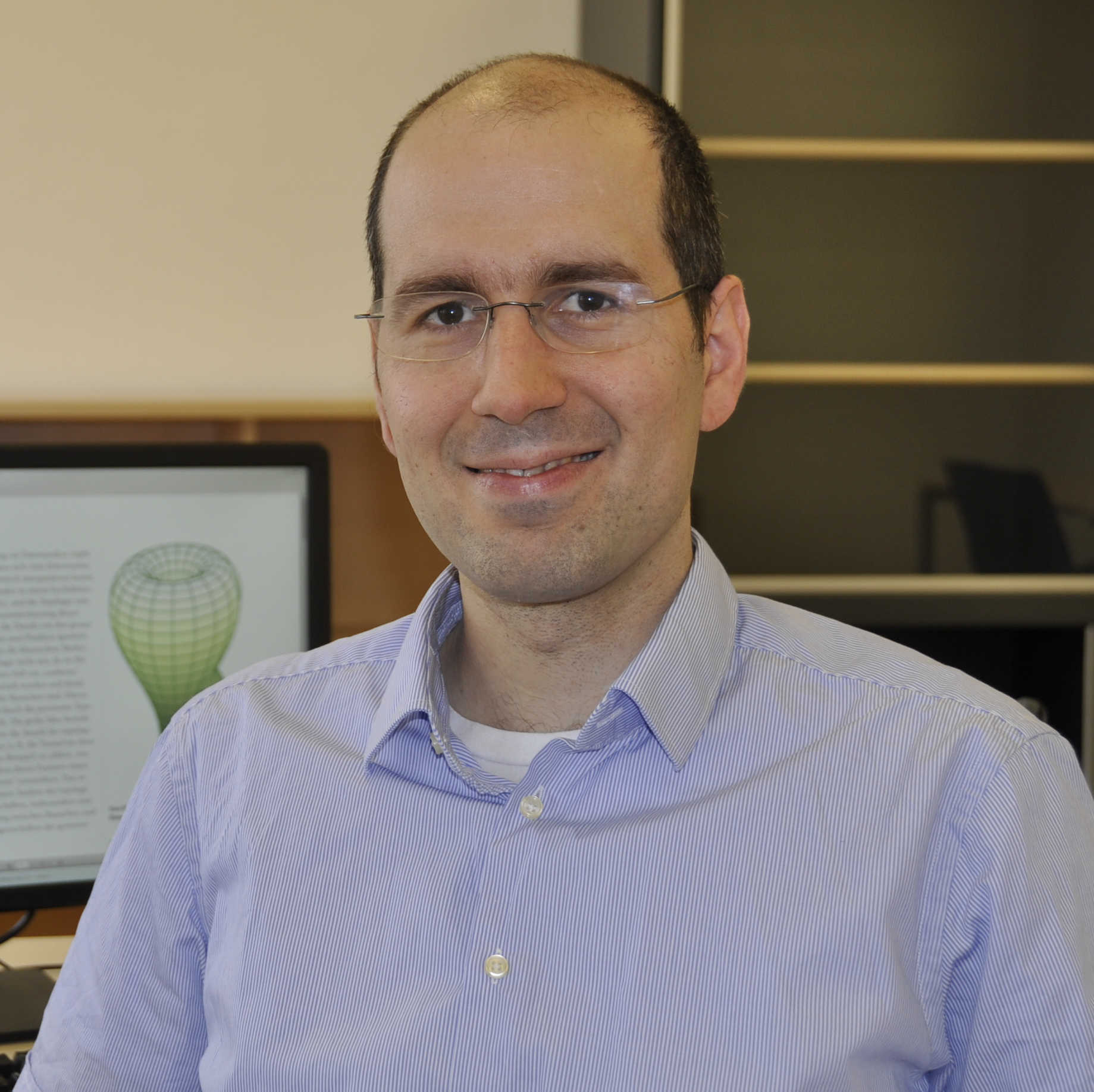
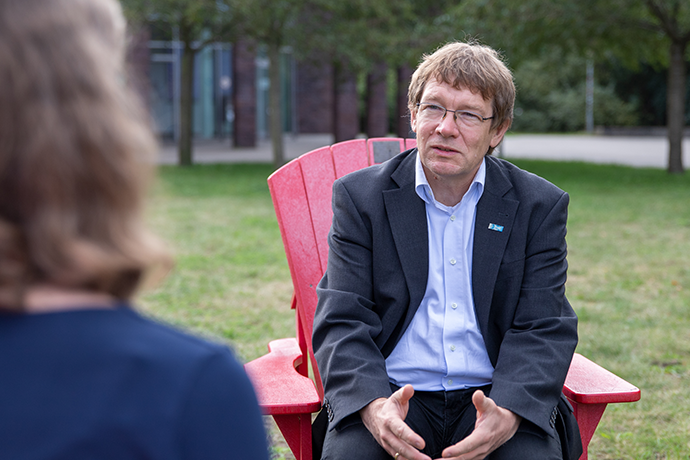
Christian Fibich is a Researcher and Lecturer at the Department of Electronic Engineering, University of Applied Sciences Technikum Wien, Austria. He leads the Research Group Embedded Systems, focusing on FPGA reliability and high-level synthesis. His roles include project management for R&D initiatives like VECS (2013-2018), INES (2018-2023), and the 2024 Drohnentechnik integration project. Fibich holds an MSc in Embedded Systems from Technikum Wien and has been active in the field since 2010. Research interests include fault-tolerant FPGA design, reliability analysis of SRAM-based FPGAs, and high-level synthesis optimization. His work emphasizes practical applications of open-source tools and automated design exploration. Recent projects explore temperature-dependent fault effects and drone integration in academic programs. Publications span FPGA reliability, fault injection methods, and embedded systems design, with a focus on open-source IP cores and hardware security. His contributions include Fiji (a fault injection tool) and HLShield (a reliability framework for HLS).
Douglas Comer is a distinguished academic and researcher in computer science and electrical engineering at Purdue University, affiliated with the School of Electrical and Computer Engineering. He holds the position of Distinguished Professor, reflecting his significant contributions to the field. His primary research interests include computer networking, TCP/IP protocols, software-defined networking (SDN), cloud computing architectures, data center networks, and network security. Comer is also recognized for his influential textbooks on computer networking and operating systems, which are widely used in academic curricula globally. Comer's academic contributions span decades, with a focus on foundational networking principles and practical implementations. His work on DCnet, an innovative data center network architecture, and the development of SDN frameworks like Osdf and Umbrella highlight his expertise in scalable and resilient network systems. He has also explored emerging areas such as space-terrestrial integrated networks and IoT protocol emulation through projects like WIST. His research emphasizes bridging theoretical concepts with real-world applications, evident in his experimental studies on network simulation reliability and packet delivery resilience. Comer's publications consistently address challenges in network architecture, security, and performance, making him a pivotal figure in both academia and industry. Comer's academic leadership includes contributions to institutional awards and recognition at Purdue University, though specific honors are not detailed in the provided text. His teaching and research labs focus on hands-on networking projects and network processor design, as seen in courses like Network Systems Design (CS490N). He has advised numerous students through his academic roles, though specific advisee names are not listed here. His work has been supported by grants focused on next-generation network architectures and cloud computing infrastructure advancements.
Alberto L. Sangiovanni-Vincentelli holds the Edgar L. and Harold H. Buttner Chair of Electrical Engineering and Computer Sciences at the University of California, Berkeley. He is a pioneer in Electronic Design Automation (EDA) and co-founder of Cadence and Synopsys. His research focuses on Cyber-Physical Systems (CPS), embedded systems, hybrid systems, and formal methods for AI. He has authored over 800 papers and 17 books, with major contributions to design automation and methodologies. Education: Dr. Ing., EECS, Politecnico di Milano (1971) Research interests include design methodologies, CPS, and AI integration. He has received numerous awards, including the IEEE James Clerk Maxwell Medal (2008) and ACM/IEEE A. Richard Newton Technical Impact Award (2009). He serves on multiple corporate boards and advisory councils, including the Strategic Committee of the Italian Strategic Fund and the Executive Committee of the Italian Institute of Technology. His work spans academia, industry, and policy, with a focus on innovation ecosystems and CPS design automation. Awards: Over 20 major honors, including Fellowships from IEEE and ACM.
Michael Kerber is a Professor at Graz University of Technology, Institute of Geometry, specializing in computational topology and geometry. His research bridges mathematical theory with applications in data analysis, focusing on persistent homology and geometric algorithms. PhD from Max Planck Institute for Informatics (2009) Postdoc positions: Max Planck Institute, Stanford University, IST Austria His work centers on designing efficient algorithms for topological data analysis, particularly: Persistent Homology 2-Parameter Persistence Geometric Filtrations Algebraic Curve Analysis High-Dimensional Sphere Packing Recent publications emphasize: Improved Delaunay bifiltration methods NP-hardness of interleaving distance computation Sparse Čech filtrations for big data Integration with graph neural networks He has co-developed key software tools: PHAT DIPHA HERA SOPHIA
Jürgen Schönwälder is a Professor at Jacobs University Bremen, Germany, with affiliations at the University of Osnabrück and TU Braunschweig's Department of Computer Science. His research focuses on network management, protocol design, and internet infrastructure. Key research areas include network management protocols (NETCONF, RESTCONF, YANG), IPv6 performance analysis, cybersecurity, and network configuration. He has contributed extensively to standardization efforts through RFCs and collaborations with institutions like the IETF and Dagstuhl Seminars. Recent publications highlight trends in RESTCONF implementation for constrained devices, active malware analysis using Bayesian models, and metamorphic testing for cryptographic protocols. His work intersects network management, internet infrastructure, and security evaluation. Co-authors like Vaibhav Bajpai, Anuj Sehgal, and Abhilash Hota appear frequently in his research, indicating long-term collaborations. He has participated in editorial roles for journals like IEEE Communications Magazine.
Jan Peleska is a Professor at the Department of Computer Science, Faculty of Mathematics and Computer Science, University of Bremen. He is a member of the Bremen Institute of Safe Systems (BISS) and co-editor of the BISS Monographs series. His research focuses on the application of formal methods and model-based testing to safety-critical embedded systems in domains such as avionics, railways, and automotive engineering. Affiliation: University of Bremen, TZI (Center for Computing Technology), BISS (Bremen Institute of Safe Systems) Academic Role: Professor of Computer Science Research Interests Peleska’s work emphasizes formal methods for dependable systems, particularly distributed and reactive real-time systems. Key areas include: Formal methods (safety, reliability, availability, security) Development of fault-tolerant systems Test automation for reactive systems Tools development for formal methods Integration with software development standards His research is applied to industrial projects involving safety-critical embedded systems, such as avionic systems and railway control systems. A comprehensive overview is provided in his Habilitation Thesis: Formal Methods and the Development of Dependable Systems . Publication Trends Peleska’s recent publications (2012–2022) focus on model-based testing (e.g., symbolic finite state machines, CSP refinement), standardisation of autonomous train control, and tools for automated testing. His work addresses challenges in railway interlocking systems, avionic software verification, and hybrid system validation, often combining formal methods with practical industrial applications. Scientific Awards Best Paper Award at FORMS/FORMAT 2014 Best Paper Award at QA+Test 2007 Other Responsibilities Peleska co-manages the Post Graduate Programme Embedded Systems GESy and serves as a shareholder/consultant for Verified Systems International GmbH. He has delivered invited lectures on industrial verification, model-based testing, and formal methods at institutions like the University of Tunghai (2016) and workshops including CyPhyAssure Spring School (2019).
Gyunam Park is a Research Group Lead and Process and Data Scientist at Fraunhofer FIT and a Scientific Assistant at the Chair of Process and Data Science at RWTH Aachen University, a leading institution in computer science and engineering. He is actively involved in both research and teaching, contributing to the advancement of process mining, data science, and artificial intelligence. His work bridges academic research and industrial applications, particularly in SAP ERP systems and digital twins of organizations. Research Interests: Gyunam Park’s research focuses on Action-Oriented Process Mining (AOPM) , Object-Centric Process Analysis , and Responsible Machine Learning . He aims to transform process mining insights into actionable management decisions, ensuring transparency, fairness, and compliance. His work enables organizations to monitor operational constraints, generate corrective actions, and assess their impact using data-driven methods. Publication Trends: His recent publications emphasize object-centric approaches to process mining, predictive monitoring, constraint checking, and integration with AI planning. There is a strong trend toward preserving structural information in event logs, improving machine learning performance, and applying these techniques to real-world systems like SAP ERP and after-sales service processes. Scientific Awards: No awards are explicitly mentioned in the provided text. Advising and Grants: While no formal students are listed, Gyunam Park leads research projects and collaborates with industry partners such as Samsung Electronics and SAP. His projects involve root cause analysis, resource optimization, and educational data mining. He has developed open-source tools like ProAct and OCPA , indicating active grant or institutional support for software development and research dissemination. Labs and Teams: He is a core member of the Process and Data Science (PADS) group led by Prof. Wil van der Aalst at RWTH Aachen University and leads a research group at Fraunhofer FIT. These teams focus on cutting-edge research in process mining, data science, and AI, with strong industry collaborations and regular contributions to top conferences and journals.
Erik Brunvand is a Professor at the School of Computing , University of Utah, and holds an Adjunct Professor position in the Department of Electrical and Computer Engineering. He was a University Professor from 2014–2016 and is currently on leave at the National Science Foundation (CISE/CNS division) (Fall 2019–2021). His research focuses on computer architecture, VLSI systems, asynchronous circuits, and graphics processing, particularly GPU architectures for ray tracing. Teaching includes courses like Digital VLSI Design , Embedded Systems and Kinetic Art , and interdisciplinary classes like Making Noise: Sound Art and Digital Media . He has organized the ASYNC international symposium series and contributed to projects such as TRaX (ray tracing architecture) and ACK (asynchronous design framework). Grants include NSF awards for GPU architectures, ray tracing applications, and microengine-based control systems. His work spans hardware design, sustainable computing, and arts/technology collaborations, including kinetic art installations and educational initiatives like circuit bending.
Brian Nielsen is an Associate Professor at Aalborg University's Department of Computer Science, under The Technical Faculty of IT and Design. His research focuses on Distributed Systems, Embedded Systems, Real-Time Systems, Model Checking, IoT Networks, and Autonomous Vehicles. He has been actively involved in projects such as domOS (operating system for smart buildings), FED (Flexible Energy Denmark), and compositional verification of multicore avionics systems. His work emphasizes model-based validation, formal methods, and industrial applications, particularly in safety-critical systems. Recent research highlights include energy-efficient motion planning for autonomous vehicles, comparative analysis of network simulators, and sigfox-based IoT modeling. He has received awards including the Application Coordinator Pool and START funds (both in 2007). Key Projects: domOS, FED, compositional verification of multicore systems Grants: Multiple EU-funded projects (e.g., Horizon Europe) and industry collaborations Awards: Application Coordinator Pool (2007), START funds (2007) His publications span over 80 articles, with a focus on real-time systems, IoT interoperability, and model-driven development. He has advised two PhD students and has been actively involved in organizing international conferences and workshops.
Sonia Coriani is a Professor in Physical Chemistry at DTU Chemistry, Technical University of Denmark, since 2017. She leads a research group focused on theoretical chemistry and computational spectroscopy. Her academic journey includes a PhD from Aarhus University (2000), a permanent research scientist position at the University of Trieste (1999-2014), and associate professorship there since 2014. She held an adjunct associate professor position at the Centre for Theoretical and Computational Chemistry in Oslo (2007-2011) and was a Marie Curie IEF fellow (2010-2012) and AIAS-COFUND senior fellow (2015-2016). Education: Chemistry, University of Modena (1993) PhD in Theoretical Chemistry, Aarhus University (2000) Her research centers on developing quantum-chemical methodologies for static and dynamic molecular properties, particularly for systems with high dimensionality, complex environments, or novel spectroscopic phenomena. Key areas include non-linear optical experiments, magnetic circular dichroism, X-ray spectroscopies, and quantum computing applications in chemistry. Her recent publications highlight advancements in quantum linear response theory, polarizable embedding environments, X-ray absorption in water, and quantum algorithms for molecular properties. Collaborative work spans interdisciplinary projects with experimentalists, covering gas-phase molecules to biomolecular systems. Scientific Awards: Marie Curie IEF fellowship AIAS-COFUND senior fellowship Her work addresses challenges in ultrafast dynamics, photoionization, and the intersection of chemistry with physics and computational science, emphasizing accuracy and novel experimental guidance.
Dr. Artur Basiura serves as an Assistant Professor in the Department of Applied Informatics at AGH University of Science and Technology's Faculty of Electrical Engineering, Automatics, Computer Science and Biomedical Engineering in Kraków, Poland. His institutional affiliation centers on applied informatics research within electrical engineering and computer science domains. His research spans graph theory applications in lighting systems, energy efficiency optimization, and software engineering. Key interests include graph-based street lighting modernization, XBRL taxonomy integration, and adaptive control systems. His work bridges theoretical computer science with practical electrical engineering solutions for urban infrastructure. Analysis of his 14 publications (2004-2022) reveals an evolving research trajectory: early work (2004-2007) focused on software engineering fundamentals including e-commerce frameworks and UML diagram comprehension, while recent publications (2016-2022) demonstrate a strategic shift toward graph-theoretic approaches for lighting system optimization and energy reduction in urban environments.
Christoph Lüth is a Professor of Computer Science at the University of Bremen and Deputy Head of the Cyber-Physical Systems research group at the German Research Center for Artificial Intelligence (DFKI) in Bremen. He has been affiliated with DFKI since 2006 and focuses on constructing provably correct software through theoretical foundations and practical tool development. Doctorate from University of Edinburgh Habilitation from University of Bremen His research spans advanced systems engineering , formal methods , and functional programming , with applications in robotics and hardware security. Recent work emphasizes open-source chip design , post-quantum cryptography , and memory protection for RISC-V architectures . Lüth contributes to projects like PROTECT (cybersecurity resilience), EASEPROFIT (post-quantum secure protocols), DI-OCDCPro (open-source chip design education), and SIGN-HEP (hardware security modules). He has authored over eighty scientific papers. At the University of Bremen, he teaches courses on functional programming , programming languages , and formal methods .
Pererik Andreasson is a Lecturer at the Academy of Information Technology , Halmstad University. His research focuses on 3D printing, materials science, electromagnetic compatibility testing, and wireless communication. Key contributions include optimizing 3D-printed radar lenses, advancing phase-change material characterization via femtosecond x-ray diffraction, pioneering augmented reality methods for electromagnetic field visualization, and developing substrate integrated waveguide antennas for IoT devices. 3D printing of optical components Dynamic processes in phase-change materials Augmented reality for electromagnetic testing IoT antenna design His recent work on frequency-adjustable SIW antennas (2024) and AR-based EMC visualization (2021) demonstrates cross-disciplinary innovation. While no scientific awards are documented, his 15+ publications since 2007 highlight sustained expertise in material science and wireless technologies.
Dr. Christos Antonopoulos is an Associate Professor at the Department of Electrical and Computer Engineering, University of Patras. He holds a Diploma and PhD in Electrical Engineering from the University of Patras (2002, 2008) and has participated in over 16 European research projects (FP5, FP6, FP7, Horizon 2020) and 6 national projects. Research Interests: Wireless Networks Cyberphysical Systems Embedded Software Architecture Internet of Things Cross-Layer Protocols Sensor Networks Technical Expertise: His work involves network simulation, power optimization, and reconfigurable computing. He has published >100 journal/conference papers and 13 book chapters with over 1000 citations.
Professor Damien Coyle is a leading academic at Ulster University , holding the title of Professor of Neurotechnology and serving as Director of the Intelligent Systems Research Centre (2017-2022) and Research Director in the School of Computing, Engineering and Intelligent Systems. He also leads the Cognitive Analytics Research Laboratory (CARL) and directs Ulster’s Spatial Computing and Neurotechnology Innovation Hub (SCANi-hub) . His research focuses on AI-driven brain-computer interface (BCI) development , translating electrophysiological signals into control signals for applications in rehabilitation, diagnostics, assistive communication, and entertainment. With over 190 publications and an h-index of 31, he pioneered wearable neurotechnology through his spinout company NeuroCONCISE Ltd (founded 2016). 2008 IEEE CIS Outstanding Doctoral Dissertation Award 2011 INNS Young Investigator of the Year 2018 IET Innovation Award Over £18m in external grants Co-investigator for Northern Ireland Functional Brain Mapping Facility As a IEEE Senior Member and founder of the International Brain-Computer Interface Society , he bridges academic research with industrial applications through projects like AI for Intelligent Neurotechnology and Smart Nano-Manufacturing Corridor .