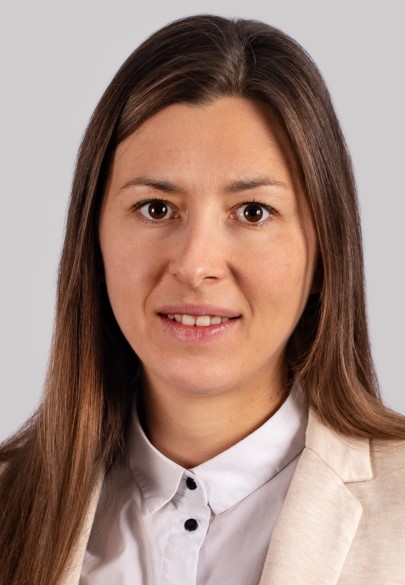
Milena Stróżyna is an Assistant Professor at the Department of Economic Informatics in the University of Economics in Poznan , Poland. Her work focuses on data modeling, AI applications in disinformation detection, and maritime data analysis . Email: milena.strozyna@ue.poznan.pl Research interests span: Data Modeling & Analysis : Extracting insights from diverse data sources, ensuring quality, and implementing ERP systems Disinformation Studies : Developing AI tools for fake news detection and semantic mapping of misinformation topics Maritime Data Science : Crisis impact analysis in shipping, anomaly detection in maritime transport Scientific Contributions include: Pioneering OpenFact system for information verification Creating adversarial text detection methods Leading research on generative AI risks in information integrity Notable Awards : 2018: Most innovative article at NATCON conference Multiple first-place international competition wins with OpenFact system (2022-2024)
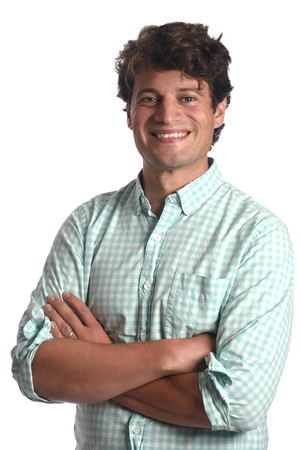
Jesse Wolfson is an Associate Professor and Vice-Chair for Inclusive Excellence in the Department of Mathematics at the University of California, Irvine. His research focuses on the interplay of arithmetic, geometry, and topology, with notable contributions to arithmetic topology, resolvent degree, and algebraic geometry. He co-directs the Southern California Geometry and Topology Center (SCGTC), an NSF Research Training Group (RTG) program actively recruiting graduate students in geometry and topology. He holds a PhD and has expertise spanning algebraic structures, homological algebra, and interdisciplinary applications such as fractals in music. His work bridges pure mathematics with educational outreach, including public lectures and collaborations with institutions like St. John’s College, Santa Fe. His email is wolfson@uci.edu , and he maintains an active research blog detailing his projects and collaborations. Wolfson’s research emphasizes foundational questions in mathematics, including Hilbert’s 13th problem and the epistemic role of proofs in AI. His recent talks and articles explore topics like prismatic cohomology, modular functions, and geometric gauge theories, reflecting his commitment to advancing both theoretical and applied mathematical frontiers.
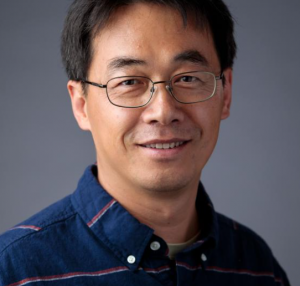
Navid Rekab-saz is an Assistant Professor at the Institute of Computational Perception, Johannes Kepler University Linz (JKU), Austria. He is actively involved in research and teaching, offering courses such as Natural Language Processing and Natural Language Processing with Deep Learning . He maintains regular office hours and is accessible via email and a dedicated booking system for meetings. His research focuses on natural language processing , information retrieval , fairness and bias in AI , and recommender systems , with applications in humanitarian action and ethical AI. He employs deep learning and machine learning techniques to address challenges in bias mitigation, explainability, and domain adaptation. His work often bridges technical innovation with societal impact, especially in developing inclusive and fair AI systems. The recent publications of Navid Rekab-saz reflect a strong trend in debiasing strategies , parameter-efficient learning , and evaluation of societal biases in search and recommendation systems. His research spans from foundational work on word embeddings and retrieval models to applied studies in humanitarian NLP and gender bias in user queries. He frequently collaborates with a broad network of researchers and contributes to the development of datasets and benchmarks. Scientific Awards: Best Student Paper Award at ISMIR 2022 for 'Traces of Globalization in Online Music Consumption Patterns and Results of Recommendation Algorithms' Advising and Grants: Navid Rekab-saz has advised and collaborated with numerous students and researchers, many of whom are co-authors on his publications. While specific grant details are not listed in the provided text, his extensive publication record in top-tier venues suggests active involvement in funded research projects, likely supported by national or European funding bodies. He is also engaged in interdisciplinary research, particularly at the intersection of technical AI and legal or social implications. Labs and Teams: He is a core member of the Institute of Computational Perception at JKU, where he contributes to research projects in computational linguistics and AI. He collaborates closely with the team led by Prof. Markus Schedl and participates in initiatives related to music information retrieval, fairness in AI, and humanitarian applications of NLP.
Associate Professor Wayne Wobcke is a faculty member in the School of Computer Science and Engineering at the University of New South Wales (UNSW), where he has been employed since 2002. His academic career includes previous positions at the University of Sydney until 1998, British Telecom Labs in the UK for three years, and the University of Melbourne for one year. He holds a PhD in Computer Science from the University of Essex (1989), an MSc from the University of Queensland (1985), and a BSc (Hons) in Mathematics/Computer Science from the University of Queensland (1984). Dr. Wobcke's research spans both theoretical and practical aspects of artificial intelligence and data science. His work encompasses intelligent agents, data mining, agent-based modeling, dialogue management, personal assistants, recommender systems, and computational social science. He has collaborated extensively with industry through three Cooperative Research Centres (Smart Internet Technology CRC, Smart Services CRC, and Data to Decisions CRC), where he served as a Programme Manager and Project Leader for over 10 years. Notable achievements include developing a voice-controlled mobile application for email and calendar interaction (a precursor to Apple's Siri) and deploying a people-to-people recommender system for online dating on one of Australia's largest dating sites. His recent research focuses on data science in humanitarian contexts and machine learning applications in official statistics, conducted in collaboration with BPS (Statistics Indonesia) and STIS (Politeknik Statistika, Indonesia). His publication record shows a consistent trajectory of impactful research, with recent work concentrating on poverty targeting, domain adaptation, natural language processing for recommender systems, and political opinion mining. Scientific Awards: Best Paper Nomination, 11th Workshop on Argument Mining (2024) UNSW Arc Postgraduate Research Supervisor Award (2017, 2018) AAAI Deployed AI Application Award, Twenty-Sixth Annual Conference on Innovative Applications of Artificial Intelligence (2014) Best application paper runner up, 17th Pacific-Asia Conference on Knowledge Discovery and Data Mining (2013) Dr. Wobcke has successfully supervised numerous research students, with Irwan Rahadi currently working on 'Causal Modelling and Machine Learning for Official Statistics'. His grant portfolio includes significant funding from the Australian Research Council and various Cooperative Research Centres, totaling over $3.7 million since 2003. He teaches COMP9414 Artificial Intelligence and COMP9727 Recommender Systems at UNSW.
Piotr Szewczak is a Senior Lecturer at the Faculty of Mathematics and Natural Sciences, Cardinal Stefan Wyszyński University (UKSW). He is actively involved in research related to set-theoretic topology, covering properties, and selection principles. His work focuses on foundational aspects of topology, including Menger and Hurewicz properties, productivity of paracompactness, and interactions between combinatorics and topological spaces. The trends in his recent publications highlight interdisciplinary connections with forcing models, game theory, and ultrafilter dynamics. His contact information includes the email p.szewczak@uksw.edu.pl , and he holds regular consultations in room 1224.
Sam Scott is an Associate Professor in the Department of Computing and Software at McMaster University's Faculty of Engineering. He teaches undergraduate computer science and software engineering courses but does not supervise graduate students. His contact information includes phone number 905-525-9140 x22500 and email samscott@mcmaster.ca. Dr. Scott's research spans multiple interdisciplinary domains with primary interests in Natural Language Processing, Machine Learning, Cognitive Science, Philosophy of Language, and Computer Science Education. His scholarly work demonstrates a consistent trajectory from theoretical foundations in cognitive science and philosophy toward practical educational applications. He has made notable contributions to culturally responsive teaching approaches, particularly in incorporating Indigenous Ways of Knowing into computer science curriculum development. Analysis of Dr. Scott's publication history reveals an evolution from foundational work in natural language processing and philosophical inquiry toward innovative educational approaches. His recent publications show increasing focus on inclusive pedagogy, flexible assessment methods, and culturally relevant computing education. The interdisciplinary nature of his work bridges theoretical computer science with practical classroom applications. According to available information, Dr. Scott does not supervise graduate students. The VIVO database indicates no grants are currently listed for him, though the system note suggests this may represent only a small sample of his total professional activities. His teaching portfolio is extensive, covering core computer science and software engineering courses through 2025.
Ove Edvard Hatlevik is a Professor at the Faculty of Education and International Studies , Department of Primary and Secondary Teacher Education at Oslo Metropolitan University. His research focuses on Teacher Professional Digital Competence , ICT integration in education , Psychometrics , and Critical Health Literacy . He leads the Teacher Education for a Future in Flux (TEFF Academy) and Teacher Education Panel Study (TEPS) projects, while previously managing initiatives such as Developing ICT in Teacher Education (DiCTE) and Literacies for Health and Life Skills . Email : ove-edvard.hatlevik@oslomet.no Office : Pilestredet 42, Oslo (Q6007) His recent publications explore: AI applications in thesis categorization (2025) Gender differences in early childhood education outcomes (2025) Job satisfaction dynamics in teaching (2024) Digital distraction management in teacher training (2024) Professional digital competence in technology-rich classrooms (2024) Systematic reviews on digital competence dimensions (2023) Key thematic areas include: Algorithmic thinking in mathematics education Long-term impacts of ECEC quality Digital divide in adult education Assessment of critical health literacy ICT access barriers in education centers Psychometric properties of educational tools
Andreas Kleiner is a Professor in the Department of Economics at the University of Bonn. His research focuses on Mechanism Design , Voting Theory , Game Theory , and Political Economy . Research Interests Mechanism Design Voting Theory Game Theory Political Economy Recent Publications (2018-2025) Kleiner's work explores multidimensional delegation with stochastic mechanisms, convex choice properties in mechanism design, and extreme point analysis in fusions. He investigates sequential veto bargaining dynamics, interdependent voting models, and costly verification in resource allocation. His research connects linear programming to monopoly pricing duality and examines historical legislative agenda-setting strategies. Contact Email: andreas.kleiner@uni-bonn.de Email: andykleiner@gmail.com
Fangji Liu is affiliated with the Department of Mathematics at the University of Pennsylvania, part of the School of Arts and Sciences. Contact information includes email fjliu@sas.upenn.edu and office location 3W1 DRL. Their role is listed under the department's academic personnel, though specific academic rank details are inferred based on departmental categorizations. Research interests are not explicitly detailed in the provided text but are assumed to align with broader mathematical disciplines given their departmental affiliation, potentially including areas such as algebra, analysis, geometry, and applied mathematics. No publications, grants, or awards are listed in the available information. Their professional profile emphasizes institutional affiliation and contact details without further elaboration on research output or academic contributions.
Kylie Gorney is an Assistant Professor of Measurement and Quantitative Methods in the Department of Counseling, Educational Psychology and Special Education at Michigan State University (MSU). She holds a Ph.D. in Educational Psychology (Quantitative Methods) from the University of Wisconsin-Madison and served as the 2022–23 Harold Gulliksen Psychometric Research Fellow at Educational Testing Service. Her research focuses on test security, item response theory, and computerized adaptive testing (CAT), with publications in leading journals such as British Journal of Mathematical and Statistical Psychology and Psychometrika . Dr. Gorney’s work addresses challenges in maintaining testing integrity, including detecting cheating through methods like answer similarity analysis and response time analysis. She has developed an R package called aberrance for automated detection of aberrant test-taker behavior. Her contributions span both theoretical advancements in psychometrics and practical applications in secure testing environments. Her recent publications (2022–2025) emphasize innovations in CAT algorithms, person-fit statistics, and the integration of response-time data into security frameworks. These studies highlight advancements in detecting item compromise, preknowledge, and test speededness while improving subscore interpretation for polytomous items. Dr. Gorney is affiliated with MSU’s College of Education and maintains an active research agenda bridging statistical theory with real-world testing scenarios. She is accessible via email at kgorney@msu.edu .
Jun Yang is a Senior Lecturer in Chinese Language at the Department of East Asian Languages and Civilizations, University of Chicago. He serves as Director of the Chinese Language Program and focuses on pedagogy, linguistics, and language evaluation. His work bridges theoretical and applied research in language acquisition and teaching methodologies. University: University of Chicago School: East Asian Languages and Civilizations Role: Director of Chinese Language Program His research interests span Chinese linguistics , second language acquisition , discourse analysis , and Chinese language pedagogy . These areas are reflected in his leadership and instructional strategies within the Chinese language curriculum. Jun Yang’s publication record includes 14 recent articles (2017–2022) focused on optimizing database-backed web applications. Key themes involve automated code refactoring , schema management , reinforcement learning for data pipelines , and performance bug detection . These works emphasize tools for improving software reliability and efficiency in distributed systems and IDE environments. Jun Yang holds a Ph.D. in Second Language Acquisition and Teaching, underscoring his expertise in language education. His email address is yangj@uchicago.edu , and he is based at Classics 416, 1010 E 59th St, Chicago, IL 60637.
Arunima Krishna is an Associate Professor in the Department of Mass Communication, Advertising and Public Relations at Boston University College of Communication, where she has been employed since 2016. Her office is located at 305, 704 Commonwealth Avenue, and she can be reached via email at arunimak@bu.edu or phone at (617) 358-5860. Education: PhD in Communication, Purdue University MA in Communication, Purdue University B.Com (Honors), Shri Ram College of Commerce, Delhi University Research Focus: Dr. Krishna investigates public perceptions of controversial social issues through interdisciplinary frameworks combining communication theory, social psychology, and public relations. Her pioneering work includes developing the typology of misinformation-susceptible publics , which categorizes individuals as Misinformation-immune, -vulnerable, -receptive, or -amplifying based on issue-specific motivation, attitudes, and knowledge. Her research spans two primary domains: (1) science-related controversies (climate change denial, vaccine hesitancy) and (2) morality-based issues (workplace discrimination, corporate misconduct). Recent Publications: Her scholarly articles predominantly examine misinformation counter-strategies, narrative interventions, and corporate identity dynamics, with consistent themes of audience segmentation and message efficacy across health and environmental contexts. Leadership: Senior Editor for Health Communication Associate Director of Boston University’s Institute for Global Sustainability Advisory Committee Member for the International Public Relations Research Conference Teaching: Courses include CM313 Corporate Communication, CM522 Crisis Management, CO101 The World of Communication, and KHC401 Epistemologies at Kilachand Honors College.
Christopher Cain is a tenured Professor of Education at Mars Hill University , where he serves as Coordinator for M.Ed. and AIG programs and Director of the Center for Engaged Teaching & Learning. His work focuses on fostering conceptual and language-based mathematical learning in educational settings, particularly for students with special needs. Education : B.A. in Elementary Education (Mars Hill College, 1999), M.S. in Cross-Categorical Special Education (East Tennessee State University, 2002), Ed.D. with ELPA concentration in research design (University System of Tennessee, 2007) Dr. Cain specializes in helping educators develop mathematical concepts beyond procedural methods, with a strong emphasis on inclusion and collaboration. He has led national grants totaling $18 million dollars as principal investigator/director and authored mathematics professional development modules for the National Dynamic Learning Maps (DLM). His expertise spans teacher support systems, special education pedagogy, and curriculum innovation. Key Contributions: Developed multi-tiered systems for mathematics instruction Created research-based professional development frameworks Worked across multiple states to improve outcomes for diverse learners Contact: Office: Nash 306 Phone: (828) 689-1495 Email: ccain@mhu.edu
Prof. Ing. Eva Cihelková, CSc. is a distinguished Professor at the Institute of International Business , Faculty of Economics and Business, Slovak University of Applied Sciences. She serves as Guarantor/co-guarantor of study programs and Chairwoman of the Council for Strategic Management of Study Programs. Her expertise spans world economy dynamics , regional integration , EU external relations , governance frameworks , and comparative methodology . Research Focus: Long-term global economic trends, regionalism, EU governance, and comparative economic analysis. Key Publications: Authored 15+ works on EU-China strategic partnerships, NAFTA impacts, and global governance challenges. Email: cihelkovae@gmail.com
Michael C. Laskowski is a Professor in the Department of Mathematics at the University of Maryland, College Park. His office is located in Room 3312 of the Mathematics Building with contact information including phone (301) 405-5336 and email mcl@math.umd.edu. For Fall 2025, he teaches Math 712 (Mathematical Logic I) on Tuesdays and Thursdays from 12:30-1:45 PM, with office hours on Tuesdays from 11:00 AM to 12:00 PM. His research focuses on model theory with significant contributions across multiple subfields: Classification theory (uncountable spectra, Karp complexity, Schröder-Bernstein property) Atomic models of countable theories Borel complexity of first-order theories Monadic expansions and NIP theories Mutually algebraic structures Hrushovski and Fraisse constructions Laskowski's recent publications (2022-2024) demonstrate continued innovation in model theory, particularly in monadic NIP characterizations, Borel completeness, and atomic model theory. His work bridges foundational mathematical logic with applications in combinatorics and computer science. His research program has received continuous NSF funding through grants DMS-9403701 to 2154101, spanning over 30 years of sustained scholarly contribution. His collaborative network includes prominent researchers like Saharon Shelah, John Baldwin, and Simon Thomas. While the webpage doesn't list specific students, his numerous collaborations suggest extensive mentorship of graduate students throughout his career.