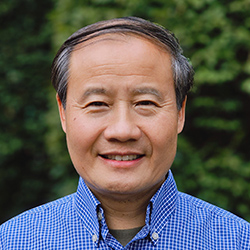
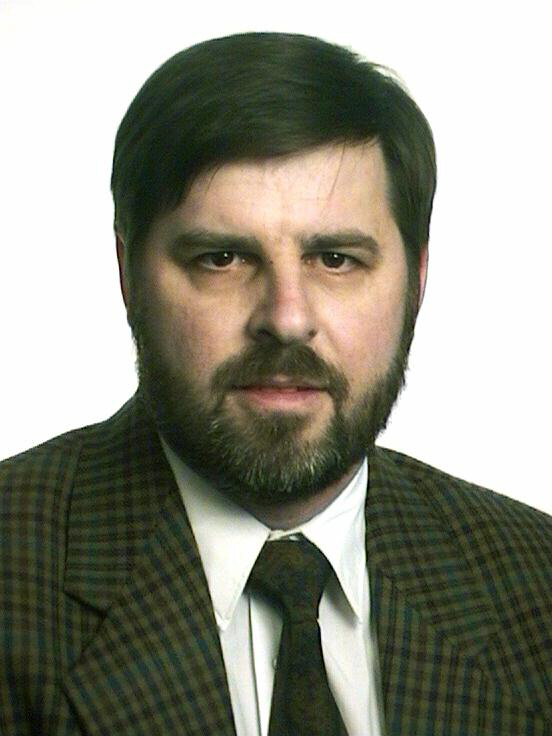
Ingve Simonsen is a Professor in the Department of Physics at the Norwegian University of Science and Technology (NTNU), specializing in surface physics and light scattering phenomena. His research focuses on the theoretical and experimental characterization of randomly rough surfaces, electromagnetic wave interactions, and nanoscale optical phenomena. Affiliated with NTNU's Faculty of Natural Sciences, he maintains an active research program with extensive collaborations across international institutions. His research interests center on surface physics and light scattering , particularly the inversion of scattering data for surface characterization, plasmonics in nanostructures, and statistical properties of rough surfaces. His work bridges theoretical modeling with experimental validation, applying techniques like Mueller matrix ellipsometry and reduced Rayleigh equations to solve complex problems in optical metrology and nanomaterial characterization. Analysis of his recent publications reveals strong emphasis on multi-scale surface topography , polarized light interactions with disordered systems, and nanophotonic applications . His research demonstrates consistent innovation in developing computational frameworks for surface characterization and exploring novel optical phenomena in two-dimensional materials. Professor Simonsen actively mentors students and researchers, evidenced by frequent co-authorship with junior researchers on complex projects. His collaborative approach spans disciplines including condensed matter physics, materials science, and biomedical optics, as seen in his work on graphene-based virus detection sensors.
Dr. Demosthenes Koutsogeorgis is an Associate Professor of Photonic Technologies in the Department of Physics & Mathematics at Nottingham Trent University's School of Science & Technology. He serves as a Module Leader, Placement Tutor, Project Supervisor, Director of Studies for PhD programmes, IMEC Research Centre PGR coordinator, and NTU Laser Safety Adviser. He leads the iSMaRT Research Group (Innovations in Surfaces Materials And Related Technologies) based at MTIF Clifton, and was one of the founding members of industry-facing initiatives "Thin Film Services" and "Scientific Services To Industry" at NTU. Dr. Koutsogeorgis received his education at: BSc in Physics from the University of Ioannina, Greece (1997) PhD in "Investigation of laser annealing of phosphor thin films for potential luminescent devices" from Nottingham Trent University (2003) His research focuses on Material Science, with specific expertise in thin film technology, laser processing, luminescent devices, plasmonics, electronic devices, and smart coatings. His work spans numerous applications in nanotechnology across industries including photovoltaics, data storage, security and authentication, optoelectronics, flexible electronics, displays, optical coatings, and biomedical technologies. He has developed unique technologies for subsurface modification of nanoparticles and laser processing of phosphor thin films for enhanced light output and longevity. His recent publications demonstrate strong focus on laser processing techniques for transparent conductive oxides, plasmonic nanostructures, and thin film materials. The research spans from fundamental materials characterization to practical applications in electronics, photonics, and biomedical devices. Key trends include reactive laser annealing, plasmonic nanoparticle engineering, thin film transistor development, and applications of these technologies in both industrial and medical contexts. Dr. Koutsogeorgis has collaborated with numerous institutions including: University of Ioannina (Greece) Aristotle University of Thessaloniki (Greece) OpSec Group (UK) University of Southampton (UK) The University of Nottingham (UK) Sheffield Hallam University (UK) University of Milano (Italy) KAUST (Saudi Arabia) He has supervised multiple PhD students including WEST, J.M. (2023) on "Laser induced nitrogen doping of zinc oxide" and KOUTSIAKI, C. (2023) on "Photonic conversion of sol-gel organometallic precursors into inorganic thin films." His research has been supported by various sponsors including Innovate UK, EU FP7 programme, Engineering and Physical Sciences Research Council EPSRC, and numerous industrial partners. Dr. Koutsogeorgis leads the iSMaRT Research Group, which benefits from long-standing expertise in thin film technology and laser processing. The group works extensively with the MTIF (Manufacturing Technology Innovation Facility) at NTU and maintains strong industry connections through the SS2i initiative. The research environment includes advanced capabilities in deposition, processing, and characterization of thin film materials for various applications.
Professor Alexander Grigorenko, affiliated with the University of Manchester's Condensed Matter Physics Group, is a leading researcher in graphene, plasmonics, and metamaterials. His work spans 2D materials, optical modulation, and biosensing technologies. Key institutions: National Graphene Institute, University of Manchester Research focus: Metamaterials, Plasmonics, 2D Materials, Hydrogen Bonding His research explores advanced materials for nanophotonics applications, including hybrid graphene-waveguide modulators and topological shear polaritons. He has contributed to the development of graphene-based systems for electrochemical gold extraction from electronic waste, gold recovery, and plasmonic biosensors with ultra-high sensitivity. Recent publications highlight his expertise in: 2D/1D periodic structures for sensing and spectroscopy Quantum plasmonic resonances Topological darkness in metamaterials Electrochemically tunable optical properties Self-assembled silicon particles for infrared applications Grigorenko participated in the H2020 Graphene Flagship Core1 project (2016–2018) and delivered an invited talk on graphene plasmonics in 2016. His work has received significant media attention, including coverage in 11 outlets for miniature computer circuits research (2016).
Dr. Aurelian Catalin GALCA is a Senior Researcher I at the National Institute of Materials Physics (NIMP) in Magurele, Romania, where he works in the Laboratory of Complex Heterostructures and Multifunctional Materials (HeCoMat). He serves as NIMP's responsible for international collaborations with the Agence universitaire de la Francophonie (AUF) since 2016, managing administrative procedures and educational, training, and research activities for foreign PhD students and postdocs. Dr. GALCA's educational background includes: PhD in Physics from the University of Twente, Netherlands (2006) Master's degree in Solid State Physics from the University of Bucharest, Romania (2002) Bachelor's degree in Physics from the University of Bucharest, Romania (2002) Dr. GALCA's research focuses on the non-destructive characterization of nanoscaled materials using advanced techniques including spectroscopic ellipsometry, X-ray diffraction, UV-Vis and infrared spectroscopy, and Raman spectroscopy. His work also encompasses the preparation of dielectric/semiconductor/metallic thin films by physical vapor deposition methods and the development and testing of optoelectronic devices . His expertise spans materials science, nanotechnology, photovoltaics, and magnetooptics, with particular emphasis on thin film characterization and engineering for solar cell applications, memory devices, and other electronic applications. Analysis of Dr. GALCA's recent publications reveals a strong focus on advanced materials for energy applications , particularly photovoltaics and energy storage. His work spans thin film solar cells (CZTS, CBTS), perovskite solar cells, supercapacitors, and magnetocaloric materials. A common thread is the precise engineering of material properties through composition control, phase transitions, and surface morphology optimization. His research increasingly incorporates computational methods to complement experimental findings, demonstrating an interdisciplinary approach to materials science. Dr. GALCA has received notable recognition for his work, including: RADU GRIGOROVICI prize awarded by the Romanian Academy in 2011 for contributions to the optical characterization of oxide systems As a research leader, Dr. GALCA has coordinated three national projects, two of which as Principal Investigator, including the "Science and engineering of kesterites for the next generation of solar cells" project. He has also contributed to economic projects with CyberSwarm Inc. and Honeywell Romania. His expertise is sought after as a scientific reviewer for top journals including Scientific Reports, ACS Applied Materials & Interfaces, and Applied Surface Science, and as an Expert Evaluator for the European Commission (H2020), ANR (France), CNR (Italy), and Romanian funding agencies. Dr. GALCA leads research activities at the Laboratory of Complex Heterostructures and Multifunctional Materials (HeCoMat) at NIMP, where his team focuses on the characterization and development of advanced materials for optoelectronic applications. The laboratory is equipped with state-of-the-art instrumentation for thin film deposition and characterization, supporting research in photovoltaics, memory devices, and other electronic applications. Dr. GALCA's team collaborates extensively with international partners, reflecting his role as NIMP's responsible for AUF collaborations.
Golden Kumar is an Associate Professor in the Department of Mechanical Engineering at The University of Texas at Dallas, affiliated with the Erik Jonsson School of Engineering and Computer Science. He holds a PhD in Physics from the Technical University Dresden, Germany, and has postdoctoral experience at Yale University. His research focuses on nanomanufacturing, metallic glasses, and additive manufacturing, with emphasis on processing-microstructure-property relationships in advanced materials. Education: Postdoc, Mechanical Engineering (Yale University); PhD, Physics (Technical University Dresden); MTech, Materials Science (IIT Kharagpur); BSc, Panjab University. Research interests include metallic glass nanowires, surface engineering, phase transformations, and photothermal properties. Notable awards include the NSF CAREER Award (2017) and Excellence in Research Awards (2013, 2017). His lab, equipped with advanced facilities like a laser-powder-bed-fusion printer and characterization tools, investigates additive manufacturing, metallic glass fabrication, and material characterization. Recent publications highlight work on metallic glass nanowires, additive manufacturing processes, and lattice structures. He advises graduate and undergraduate students, contributing to over 20+ publications and fostering industry partnerships through his Advanced Materials and Manufacturing Lab.
Georgi Yordanov Georgiev is a Professor of Physics at Assumption College and an Affiliate Associate Professor at Worcester Polytechnic Institute. He holds a Ph.D. in Physics from Tufts University (2002) and postdoctoral experience at Northeastern University. His research focuses on complex systems, non-equilibrium thermodynamics, self-organization, and materials science, particularly in polymers and nanocomposites. He has published extensively on topics such as entropy-driven systems, energy efficiency in evolving networks, and the interplay between carbon nanotubes and liquid crystals. Education: B.A., Sofia University, Physics and Chemistry M.S., Sofia University, Physics and Chemistry M.S., Tufts University, Physics Ph.D., Tufts University, Physics (2002) Postdoc, Northeastern University, Physics (2002–2004) Research Interests: Dr. Georgiev’s work bridges physics and complexity science, emphasizing quantitative measures of self-organization and energy dynamics. His studies on nanocomposites explore how carbon nanotubes influence polymer crystallization and thermal/electrical properties. He also investigates entropy production in systems like Bénard cells and applies variational principles to model complex systems. Recent Articles: His recent work includes Bayesian approaches to biological morphogenesis, entropy-driven mechanisms in Bénard convection, and energy efficiency in evolving technological systems. These studies highlight interdisciplinary connections between physics, biology, and materials science. Advising and Collaborations: Dr. Georgiev has advised numerous students, including Kaitlin Henry, Erin Gombos, and Michael Daly. He collaborates with institutions like the University of Massachusetts Lowell and actively participates in conferences on complex systems. Labs and Teams: Leverages experimental facilities for polymer characterization (X-ray scattering, ellipsometry) and computational modeling to study self-organization phenomena in both synthetic and biological systems.
Dr. Sven Burger is a leading Researcher at the Zuse Institute Berlin (ZIB) within the Modeling and Simulation of Complex Processes department. His work focuses on Nanophotonics , Quantum Technologies , and Optical Resonance Computation , particularly in photonic crystals, plasmonic systems, and quantum light sources. Key projects: NanoLab GRIPS 2024 , MATH+ TES QT , MATH+ PaA-1 (perovskite solar cells), Colour Impression of Solar Cells Collaborations: MATH+ , BIFOLD , Research Campus MODAL His research spans Bayesian optimization for quantum systems, quasinormal mode expansions , chiral plasmonics , and terawatt-scale photovoltaics . Recent work emphasizes RPExpand software for resonance analysis and AAA algorithm applications in photonic design. He contributes to quantum key distribution via plug&play single-photon sources, hot carrier dynamics in plasmonic nanocrystals, and high-efficiency light extraction for deep-UV LEDs. His computational methods address non-Hermitian systems , exceptional points , and self-interference nanoparticle tracking .
Prof. Dr. Michael Veith is a Professor at the Westphalian University of Applied Sciences, serving as Vice Dean and Chair of the Examination Board in Molecular Biology within the Department of Engineering and Natural Sciences. He leads the Biophysics Laboratory and Laboratory for Physical Chemistry, focusing on biomaterials and biomedical applications. Research areas: Biomaterials, Medical Implants, Biosensors, Nanotechnology, Biophysics, Nano-Biotechnology Key methods: Ellipsometry, SPR spectroscopy, Laser confocal scanning microscopy, SEM/EDX, Atomic Force Microscopy He teaches modules including Thermodynamics, Biophysics, Quantum Physics, and Bio-Nanotechnology, with a focus on surface functionalization of medical implants. His supervised students include Michael Lehnert (2012), Stefan Pfeifer (2013), and Volker Ettelt (2017).
Titel Jurca is an Associate Professor in the Department of Chemistry at the University of Central Florida, College of Sciences. His research focuses on synthetic inorganic chemistry for catalytic organic transformations and thin film materials chemistry, with emphasis on developing novel main-group metal catalysts and chemical precursors for atomic layer deposition (ALD). Research areas include: Design of inorganic precursors for ALD growth of metal oxides and transition metal dichalcogenides Development of sustainable nanocatalysts for fine chemical transformations Convergence of molecular synthesis, thin film deposition, and heterogeneous catalysis Application of green chemistry principles in materials synthesis His recent publications demonstrate strong focus on vapor deposition techniques (ALD, CVD), catalytic nanomaterials, surface analysis, and structure-property relationships in inorganic systems. Research frequently employs spectroscopic characterization, computational modeling, and nanofabrication approaches. Dr. Jurca currently advises graduate students in inorganic synthesis and materials characterization techniques, while maintaining active collaborations in energy and nanotechnology research.
Alexandre Baron serves as an Assistant Professor at the University of Bordeaux and holds a concurrent position as Adjunct Assistant Professor at Duke University. Based at the Paul Pascal Research Center (CNRS) in Pessac, France, his work bridges fundamental optical physics with materials science applications in nanophotonics and metamaterials. His academic training includes: PhD in Nonlinear Optics from Institute of Optics Graduate School/University Paris-Sud 11 (2007-2011) Master Degree in Physics - Optics and Photonics from Paris-Sud 11 University (2006-2007) Engineering Degree in Optics from Institute of Optics Graduate School (2004-2007) Baron's research program focuses on cutting-edge optical phenomena, particularly in metamaterials including self-assembled structures, optical magnetism, hyperbolic metamaterials, and metasurfaces. His nanophotonics work investigates plasmonic, dielectric and composite nanoparticles, while his nonlinear optics research examines field enhancement effects and nonlinear plasmonics. His photonic crystals studies address slow light phenomena, nonlinear effects, and disorder impacts. Analysis of his publication record reveals consistent contributions to fundamental understanding of light-matter interactions at the nanoscale, with increasing emphasis on engineered nanostructures and their optical properties. His recent work demonstrates sophisticated control over multipolar responses and tailored scattering in metamaterial systems. As a member of the Paul Pascal Research Center - a joint CNRS and University of Bordeaux unit focused on functional materials and soft matter - Baron contributes to an interdisciplinary research environment that brings together chemists, biochemists, physical chemists and physicists across six research teams.
Professor Xunming Deng is affiliated with the College of Natural Sciences and Mathematics at the University of Toledo , where he serves in the Physics and Astronomy department. His research focuses on advanced materials and devices for renewable energy applications. Education: Ph.D. in Physics from the University of Chicago (1990) Deng's research interests span photovoltaic technology, amorphous silicon materials, thin film deposition, and photoelectrochemical hydrogen production. He has pioneered methods for high-efficiency solar cells and water-splitting systems using silicon alloys. His publication trends highlight innovations in multijunction solar cell design, phase diagram optimization, and light-trapping mechanisms, alongside contributions to nuclear physics through studies of parity-violating asymmetry in electron-deuteron scattering. Contact details: Email: xunming.deng@utoledo.edu
Professor Jane Jiang is a distinguished academic at the University of Huddersfield , affiliated with the School of Computing and Engineering and the Department of Engineering . She specializes in surface metrology, precision engineering, and advanced manufacturing technologies. Her work focuses on optimizing measurement techniques for additive manufacturing, X-ray computed tomography, and optical systems. Research Interests Her research spans surface texture analysis , 3D vision systems , and metrology for smart manufacturing . She develops novel methods for characterizing complex surfaces using techniques like phase measuring deflectometry and chromatic confocal sensors. Her contributions bridge engineering and materials science, emphasizing practical applications in aerospace, biomedical, and industrial sectors. Recent Contributions Her 2025 work includes advancements in freeform optics design, vibration-resistant microscopy, and neural network-based surface characterization. Her studies on XCT measurement for additive manufacturing parts address critical challenges in precision and data analysis. Affiliations & Projects She leads the Centre for Precision Technologies and actively collaborates on EU-funded projects. She organized the 1st International Conference on Metrology and Standard (2024) and contributes to interdisciplinary initiatives in bio-engineering and advanced materials. Grants & Teams Her team includes researchers like Shan Lou and Paul Scott , focusing on metrology for medical implants and aerospace components. She supervises PhD students exploring AI-driven surface specification and manufacturing process optimization.
Stefanos Papadakis serves as a Research Staff Scientist at the Telecommunications and Networks Laboratory (TNL) of the Institute of Computer Science at Foundation for Research and Technology-Hellas (FORTH) and holds an Adjunct Lecturer position in the Department of Computer Science at the University of Crete. Since 2001, he has pioneered hardware and software prototyping at TNL-FORTH, currently leading the Software Defined Radio (SDR) group he established to drive vertical integration from physical layer design to application development. His educational foundation includes a Physics degree (2001) and M.Sc. (2004) and Ph.D. (2009) in Computer Science, all earned at the University of Crete. Teaching responsibilities encompass core courses CS-330: Introduction to Telecommunication Systems Theory and CS-435: Network Technology & Programming. Papadakis' research spans wireless innovation frontiers including software-defined/cognitive radios, spectrum sharing, heterogeneous networking, position location, radio propagation modeling, and emergency communications. His work emphasizes practical implementation, yielding functional prototypes across the entire communications stack. Notable contributions include GPU-accelerated SDR frameworks, robust spectrum virtualization techniques, and emergency response communication systems validated through international competitions. Analysis of his 15 most recent publications (2010-2016) reveals dominant themes in SDR optimization for IoT and critical communications, with significant focus on GPU parallelization, interference management in dense networks, and real-time spectrum sharing mechanisms. His experimental approach consistently bridges theoretical models with hardware validation, particularly in emergency response and heterogeneous network scenarios. Key recognitions include: Ericsson Award of Excellence in Telecommunications for position location research First place in PENED doctoral proposal competition Fourth place in IEEE DySPAN 2015 5G Spectrum Challenge Second place in Virginia Tech ShaRC 2016 with the 'Skynet' cognitive radio system Mentorship spans 16 undergraduate projects (11 completed), 8 M.Sc. students (3 completed theses), and 1 Ph.D. candidate. His research is sustained through major EU and national projects including REDComm (emergency communications), EU-MESH (metropolitan networks), RERUM (IoT security), and Heraklion smart city initiatives. The SDR group maintains critical infrastructure like the Heraklion metropolitan wireless network, FORTH campus network, and specialized mobile emergency nodes equipped with multi-radio SDR platforms, satellite transceivers, and high-performance computing resources.
Prof. Dr. Donat Josef As is a Professor in the Department of Physics at the University of Paderborn’s Faculty of Science, leading the Optoelectronic Semiconductors group focused on Group III-Nitrides (GaN, AlN, InN). He is a member of the Center for Optoelectronics and Photonics (CeOPP) and heads the research area Optoelectronic Materials and Devices. Research Focus: Fabrication and characterization of cubic III-nitride semiconductors via molecular beam epitaxy (MBE), enabling advanced optoelectronic devices (e.g., field-effect transistors, quantum dot emitters, THz detectors). Notable Achievements: Developed the first field-effect transistor using cubic AlGaN/GaN and demonstrated single-photon emissions from cubic quantum dots up to 200 K. His recent projects include TRR 142 (Tailored Nonlinear Photonics) and ultrafast acoustics for light emission modulation. He has received an ERC grant for his groundbreaking work. His research intersects semiconductor physics, nanotechnology, and quantum photonics. Key Publications: Investigated dielectric properties of cubic GaN, remote epitaxy of nitrides on graphene-covered substrates, and many-body optical effects in AlGaN alloys. Prof. As teaches courses including Materials Physics and Analysis , Lab Project , and Halbleiterepitaxie (semiconductor epitaxy). His lab explores device structures for extreme environments and high-frequency applications.
Jerome Martin is an Assistant Professor at the University of Technology of Troyes (UTT) and a member of the Light, Nanomaterials, and Nanotechnologies (L2n) laboratory, part of CNRS-UMR 7076. His research focuses on aluminum plasmonics, plasmon-assisted photoluminescence in ZnO, and nanospectroscopy/nanofabrication techniques. He has been affiliated with UTT since 2012, with prior postdoctoral work there from 2010–2012. Martin holds a PhD in Physics from Université de Lorraine (2009) and a Master's in Physics (Plasmas, Optoelectronics, Micro-Systems) from the same institution (2005). Research Interests : His work explores aluminum-based plasmonic systems for applications in nanophotonics, including optical antenna design, UV emission enhancement via surface lattice resonances, and nanofabrication methods for precise material structuring. He also investigates the interplay between material morphology (e.g., ZnO thin films) and optoelectronic properties. Key Contributions : Recent articles highlight advancements in scalable broadband optical antennas using Cayley tree geometries, zeptogram-scale chemical sensing via hybrid plasmonic-photonic sensors, and precise characterization of plasmonic resonances in aluminum nanostructures through electron microscopy and spectroscopy. Teaching : He instructs courses in optical technologies, quantum optics, semiconductor materials, and electricity/magnetism at both undergraduate and graduate levels. Labs & Facilities : Active in the L2n lab, which provides advanced resources for nanomaterial synthesis, spectroscopic analysis, and plasmonic device prototyping.