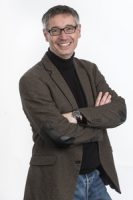
Professor Hunter researches formal syntax, computational linguistics, and cognitive modeling of language. Key areas include minimalist grammars, mild context-sensitivity, probabilistic models of language processing and acquisition, and the syntax of ellipsis. Recent work explores computational approaches to syntactic variation, noise-tolerant learning models, and integrating grammatical theories into cognitive architectures. Teaches computational linguistics and syntax at undergraduate and graduate levels. Education includes PhD from University of Maryland (2010) focusing on syntactic effects of conjunctivist semantics.
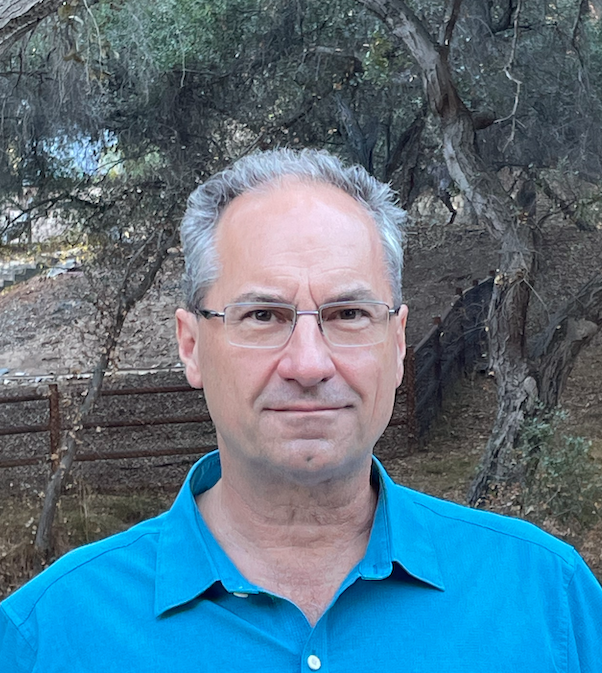
Andrew McInnerney is a full-time Lecturer in the Department of Linguistics at the University of Michigan. He holds a PhD from the University of Michigan and conducts research at the intersection of syntax, semantics, and sentence processing. His primary research explores: Syntactic theory and grammatical structures Interfaces between syntax, semantics, and prosody Argument/adjunct distinction mechanisms Syntactic island constraints Analysis of parenthetical constructions His 2023 publication in Language establishes a theoretical framework analyzing 'extra be' sentences through coordination structures and ellipsis processes, contributing significantly to syntactic theory.
Vanessa Corby is a Professor of the Theory, History, and Practice of Fine Art at the School of the Arts, York St John University. Her research focuses on the intersection of art, politics, and neoliberalism, with particular attention to marginalized experiences through the lens of class, gender, race, and sexuality. She holds a PhD in feminism and art history (2002, University of Leeds) and has taught critical theory and art history for over 20 years, emphasizing inclusive education. Her work explores materiality in art, including sculpture, drawing, and installation, analyzing how artworks negotiate silenced histories. Key topics include the body politic, migration, trauma, and the visual primacy in contemporary art. She has curated exhibitions, published monographs like Eva Hesse: Longing, Belonging and Displacement , and contributed to journals such as Journal of Visual Studies . Professional activities include roles in the National Art Education Archive and the Research Innovation and Knowledge Exchange Alliance. Her teaching philosophy prioritizes learner confidence, rooted in her own experience as a first-generation university student.
Dr. Bart Hollebrandse is an Assistant Professor (tenured) in the Department of Linguistics at the University of Groningen, Faculty of Arts. His research focuses on Linguistics, Child Language, Syntax, Semantics, and Cognition, with a particular emphasis on recursion, quantification, and the relationship between language and Theory of Mind. He has held academic positions since 2000, including roles at the University of Massachusetts Amherst and Smith College. Education: PhD in Linguistics (2000), University of Massachusetts Amherst MA in Linguistics (1993), Tilburg University Civil Engineering (1985), Delft University of Technology Research Interests: Hollebrandse investigates language acquisition, syntactic recursion, quantifier interpretation, and the role of language in cognitive development. He collaborates internationally, including with the University of Nantes and UMass Amherst. His work bridges experimental methods (e.g., eye-tracking) with formal linguistic theory. Key Awards: Drongo Award (2014) for outreach at Science Nemo Grants: CHLaSC (€1.5M), Alpha-stimulation (€75k), and multiple NWO/National Science Foundation projects Advising & Grants: Supervised over 50 theses, advised PhD committees globally, and led projects on recursion and quantification. His grants include CHLaSC (2006–2009) and collaborations with institutions like the University of Western Australia. Labs & Teams: Member of the Center for Language and Cognition Groningen and the School of Behavioral and Cognitive Neuroscience. Active in experimental linguistics, including iPad game-based studies on recursion and cognitive development.
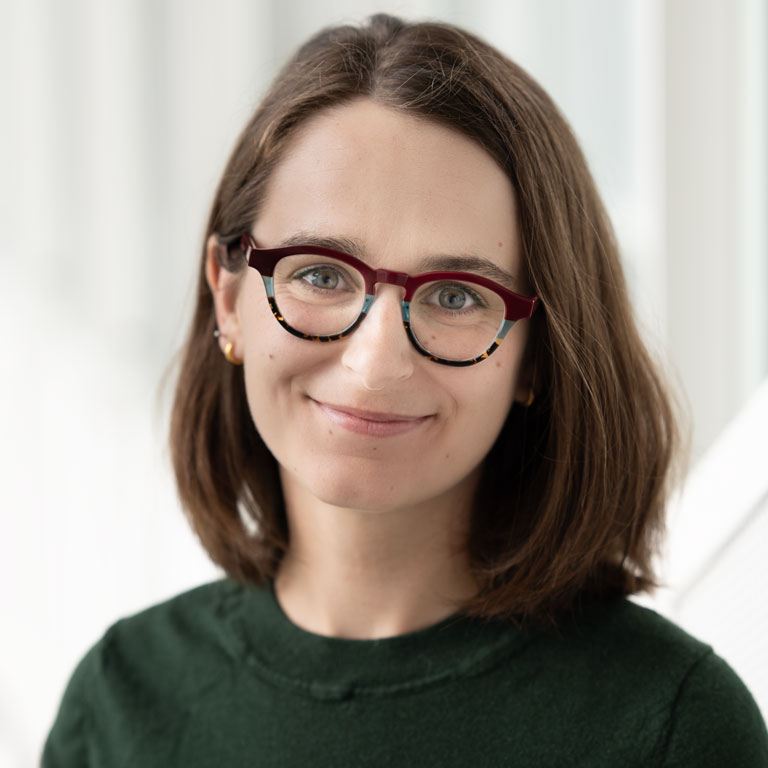
Caroline Andrews is a Marie Skłodowska-Curie Research Fellow at the University of Oxford's Faculty of Linguistics, Philology and Phonetics. Previously, she held a postdoctoral position at the University of Zurich's Department of Comparative Language Science. She completed her doctorate in Linguistics at the University of Massachusetts Amherst and a BA in Linguistics at the University of California, Santa Cruz. Her research focuses on understudied languages, particularly in South America and Europe, with a specialization in psycholinguistics, syntax, and cognitive processes. She has been supported by grants including the Fulbright Scholar Award (2023–2024) and an Early Career Research grant from the Leading House for the Latin America region. Her work examines ergative case processing in Shipibo-Konibo, syntactic memory in sentence processing (via priming and interference paradigms), and switch reference constructions in Peruvian languages. She has also contributed to cross-linguistic studies of Basque and investigated primate cognition's role in event comprehension. Recent publications explore neural correlates of case processing in children and adults, animacy effects in Basque, and comparative visual tracking of event roles in humans and apes. Key awards include the Marie Skłodowska-Curie Fellowship and grants enabling fieldwork in Peru. She has advised on postdoctoral hiring initiatives and collaborates with teams at Oxford and international institutions. Current projects include studies on intergroup relations, linguistic diversity in academic conferences, and multilingual eye-tracking research.
Katarzyna Maria Maniowska is an Adjunct Professor at the Faculty of Languages, Literatures and Cultures, Maria Curie-Skłodowska University (UMCS). With a PhD in Italian Studies from Jagiellonian University (2014), her academic career spans teaching, translation research, and international collaborations. PhD in Italian Studies (2014, Jagiellonian University) MA in Italian Philology (2008, Jagiellonian University) BA in Italian Philology (2006, University of Silesia) Postgraduate translator training (2019, UMCS) Postgraduate Master in Italian L2 (2016, Università Cattolica del Sacro Cuore) Her research focuses on linguistic interfaces between Italian and Polish, particularly in medical terminology and literary translation . Key interests include phraseology, specialized language teaching (Italian as third language), and metaphor analysis in medical contexts. Recent publications examine: historical disease narratives , Umberto Eco's theory of stupidity , medical term synonymy , and prepositional semantics in clinical reports . These works demonstrate her expertise in cross-linguistic medical communication. Rector's award for outstanding scientific work (2023) Scuola Dante Alighieri scholarship (2023) Università per Stranieri di Perugia scholarships (2021, 2015) Dote Unica Lavoro grant (2016) She has conducted 15+ teaching workshops on Italian L2 pedagogy, including: Dante's pedagogical interpretation , medical terminology teaching , and literature instruction for Generation Z . Active in professional associations since 2013, she collaborates on European translation initiatives.
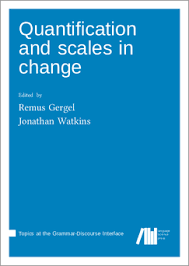
Prof. Dr. Remus Gergel is Chair of English Linguistics at Saarland University since 2016, following professorships at the University of Graz (2012-2016) and acting professorship at Göttingen (2010/11). With a Habilitation (2010) and PhD (2005) from Tübingen, he specializes in Semantics, Syntax, and their Interfaces with applications to language change, corpus linguistics, and theoretical modeling. His work spans Germanic/Romance comparative linguistics, language typology, and experimental approaches. Research Focus : Interface phenomena (semantics-syntax), diachronic processes, particle/adverb evolution Methodology : Corpus studies, computational simulations, experimental validation Recent publications examine pseudo-partitives , presuppositions , and decompositional adverbs across English, German, and Arabic dialects. Supervision includes 42 theses (2018-2025) on topics like African American English be , Turkish-English adverb trajectories, and social media discourse analysis. Contact: remus.gergel@uni-saarland.de
Ming Xiang is the David B. and Clara E. Stern Professor and Director of Graduate Studies in the Department of Linguistics at the University of Chicago. She holds a Ph.D. from Michigan State University (2005) and has been teaching at UChicago since 2010. Her research investigates the processing and neural mechanisms underlying real-time construction of linguistic representations, focusing on sentence processing across syntax, semantics, and discourse comprehension. Recent collaborative work explores how language processing influences language change. Her primary research interests include: Psycholinguistic and neurolinguistic mechanisms Syntax-semantics-pragmatics interfaces Chinese language processing Experimental methodologies (eye-tracking, ERP) Computational modeling of language Her recent publications demonstrate strong focus on: Real-time language processing mechanisms Interactions between syntax, semantics and pragmatics Cross-linguistic comparisons (Mandarin/English) Computational psycholinguistics approaches Neurocognitive correlates of language comprehension She directs the Language Processing Lab and teaches advanced courses including Structure of Chinese, Psycholinguistics, and Experimental Methods.
Ingo Reich is a Professor of Semantics and Pragmatics at Saarland University, leading research on linguistic encoding and information density. As Principal Investigator for projects B3 and T1 within the SFB 1102 Collaborative Research Center, he explores interface phenomena like coordination, ellipsis, and anaphora. He also serves as Scientific Coordinator for the Integrated Research Training Group (IGK), mentoring graduate students and collaborating with researchers such as Elke Teich and Heiner Drenhaus. Current Role: Professor, Saarland University Projects: SFB 1102 B3, T1, IDeaLite Contact: i.reich@mx.uni-saarland.de | C5.3 Room 3.10 His research combines systematic and psycholinguistic approaches to study how information is encoded in German, particularly in "Leichte Sprache" (Easy Language). Projects analyze ellipsis redundancy, coordination structures, and cognitive processing mechanisms, contributing to theoretical models of linguistic competence. Recent work focuses on SFB 1102 initiatives, emphasizing interdisciplinary collaboration between linguistics, information theory, and language acquisition studies. The secretariat for his department (Constanze Göbel) coordinates administrative matters and inquiries.
Wendy Diepgrond is a Research Fellow at the Department of Italian Studies (Sprach- und Literaturwissenschaften) within the Faculty of Philosophy and History at the University of Basel. She specializes in Italian linguistics, with a focus on text linguistics, syntax, and pragmatic analysis. University of Basel, Switzerland Department of Italian Studies Research Fellow Her research interests include: Text Linguistics Italian Syntax Discourse Analysis Pragmatics Her recent publications in the Dictionary of Text Linguistics for Use in the Human Sciences (2024) explore focusing structures and ellipsis mechanisms in Italian discourse. These works align with broader interests in linguistic processing and historical language evolution. Contact: wendy.diepgrond@unibas.ch
Jose Oriol Valentin Fernandez Gallart is a researcher in the Department of Computer Science at the Faculty of Mathematics and Statistics (FME), Polytechnic University of Catalonia (UPC). With a substantial publication record spanning from 2004 to 2017, his work primarily focuses on computational linguistics and formal grammar systems. Dr. Fernandez Gallart's research centers on Type-Logical Grammar (TLG) , Displacement Calculus , and Lambek Calculus , with significant contributions to understanding grammatical formalisms for natural language. His work addresses complex linguistic phenomena including gapping constructions, anaphora resolution, and syntactic discontinuities. He has developed formal systems that bridge theoretical linguistics with computational applications, particularly in parsing algorithms and semantic interpretation. Analysis of his recent publications reveals consistent advancement in computational models of natural language. His research demonstrates how formal mathematical approaches can effectively model complex linguistic structures while maintaining computational tractability. Key contributions include extensions to displacement calculus for handling linguistic discontinuities and comprehensive analyses of Type-Logical Grammar's computational coverage. Dr. Fernandez Gallart has participated in significant research projects including "Aprendizaje Computacional y Comunicación" and "Gestió i Anàlisi de Dades Complexes," demonstrating broader engagement with computational approaches to language and data analysis. His extensive collaboration with Professor Glyn Morrill Verden (21 joint publications) indicates a strong research partnership in formal linguistics.
Andy Kehler is a Professor in the Department of Linguistics at the University of California, San Diego (UCSD), where he directs one of the Computational Linguistics Labs. His research focuses on pragmatics, discourse interpretation, and the computational modeling of linguistic phenomena. He has held academic roles including Chair of the Linguistics Department (2009–2014) and Director of Graduate Studies (2016–2018). He teaches courses such as 'Making and Breaking Codes' and 'The Language Code,' and advises graduate students in computational and theoretical linguistics. His lab explores interdisciplinary topics like discourse coherence, coreference resolution, and ellipsis, blending theoretical, computational, and psycholinguistic approaches. Editorial Roles: Academic Editor at PLOS ONE, Review Editor at Frontiers in Language Sciences, and Associate Editor at Journal of Logic and Computation. Teaching: Extensive record since 2000, including courses on pragmatics, computational linguistics, and semantics. Research Interests: Explores how discourse coherence drives linguistic interpretation, with emphasis on anaphora, ellipsis, and Bayesian models of pronoun resolution. His work bridges formal semantics, computational methods, and experimental psycholinguistics. Recent Articles: Focus on ellipsis theory, LLMs' pragmatic competence, and Bayesian models of German pronouns. These studies advance understanding of discourse structure and computational linguistics applications. Awards & Grants: Not explicitly listed, but his editorial roles and extensive publications reflect scholarly recognition. Active in securing grants for lab research and student support. Labs/Teams: Leads UCSD Computational Linguistics Lab, collaborating on projects like LLM analysis and discourse modeling. Engages with international academic networks through invited talks and visiting fellowships.
Bert Cappelle is a faculty member at Université de Lille, affiliated with the Department of English Studies within the Faculty of Languages, Culture and Societies. He holds the rank of Lecturer-HDR (Habilitation à Diriger des Recherches) in English linguistics, combining teaching and research roles. His research focuses on construction grammar, cognitive linguistics, and corpus linguistics, with particular emphasis on verb-particle constructions, modal verbs, and the syntax-semantics interface. He has contributed to studies on privative prefixes, negative fragments, and the lexical integrity principle. His work bridges theoretical linguistics with applied areas like translation studies and psycholinguistics. Notable research includes analyses of motion typology across languages, experimental studies on particle verb processing, and corpus-based investigations of modal verb usage. His publications span journals like Constructions and Frames , Languages in Contrast , and Zeitschrift für Wortbildung , with a focus on English and cross-linguistic comparisons. Recent articles emphasize the role of constructional networks in diachronic change and the application of corpus methods to translation quality assessment. His interdisciplinary approach integrates neurobiological evidence (e.g., ERP studies) with traditional linguistic analysis. Bert Cappelle has collaborated on edited volumes such as Modality and Diachronic Construction Grammar and Models of Modals . He actively engages in public discourse on linguistics' societal relevance, including its role in legal interpretation and policy analysis. His teaching spans advanced linguistic theory and methodology courses, while his lab affiliations include the CNRS-UMR 8163 'Savoirs, Textes, Langage' (STL) research unit. Professional activities include international arbitration involving linguistic expertise in legal text interpretation.
Eva Portelance is an Assistant Professor in the Department of Decision Sciences at HEC Montréal. She holds a PhD in Computational Linguistics from Stanford University and a BA in Linguistics and Computer Science from McGill University. Her research focuses on computational linguistics, artificial intelligence, and the application of neural networks to understand language acquisition and grammar induction. She teaches courses such as Text Mining and Analyse de données textuelles. Recent work explores topics like neural network models for language learning, AI ethics, and cross-linguistic studies of vocabulary acquisition. Her publications span computational linguistics, cognitive science, and machine learning, emphasizing interdisciplinary approaches to language systems. Education: PhD (Computational Linguistics), Stanford University BA (Linguistics & Computer Science), McGill University Research Interests: Computational Linguistics, Neural Networks in Language Acquisition, Grammar Induction, Machine Learning, Cognitive Modeling, and Ethical Considerations in AI. Teaching: Courses include Text Mining (MATH 60621A) and Analyse de données textuelles (MATH 60621).
Lyn Frazier is a Professor in the Department of Linguistics at the University of Massachusetts, Amherst. Her research focuses on adult language comprehension, syntax-prosody interfaces, and syntax-semantics interactions, particularly in ellipsis processing and discourse coherence. Collaborating closely with Professor Charles Clifton, her work bridges psycholinguistics and theoretical linguistics, examining how structural and pragmatic factors influence sentence interpretation. Her research interests include: (1) Ellipsis processing mechanisms, especially cross-sentence phenomena like sluicing and fragment answers; (2) Syntax-discourse interface dynamics, including QUD-driven integration and implicature resolution; (3) Prosodic influences on parsing, such as boundary effects and focus realization; (4) Pragmatic constraints shaping syntactic recovery processes, including non-actuality implicatures and variable quantifier scoping. Recent work explores negation anticipation mechanisms, scalar implicature computation, and the role of parallelism in corrective exchanges. Her 2017 Syntax paper proposes a novel account of negation-related processing phenomena. Earlier work established foundational theories like the recycling hypothesis for flawed ellipsis antecedents and the two-stage parsing model (the 'sausage machine'). Key contributions include over 50 peer-reviewed articles in journals like Cognition , Linguistic Inquiry , and Language , as well as co-editing Explicit and Implicit Prosody in Sentence Processing (2015). Her research employs eye-tracking, corpus analysis, and experimental methodologies to explore real-time language processing challenges.