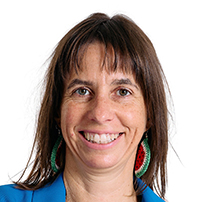
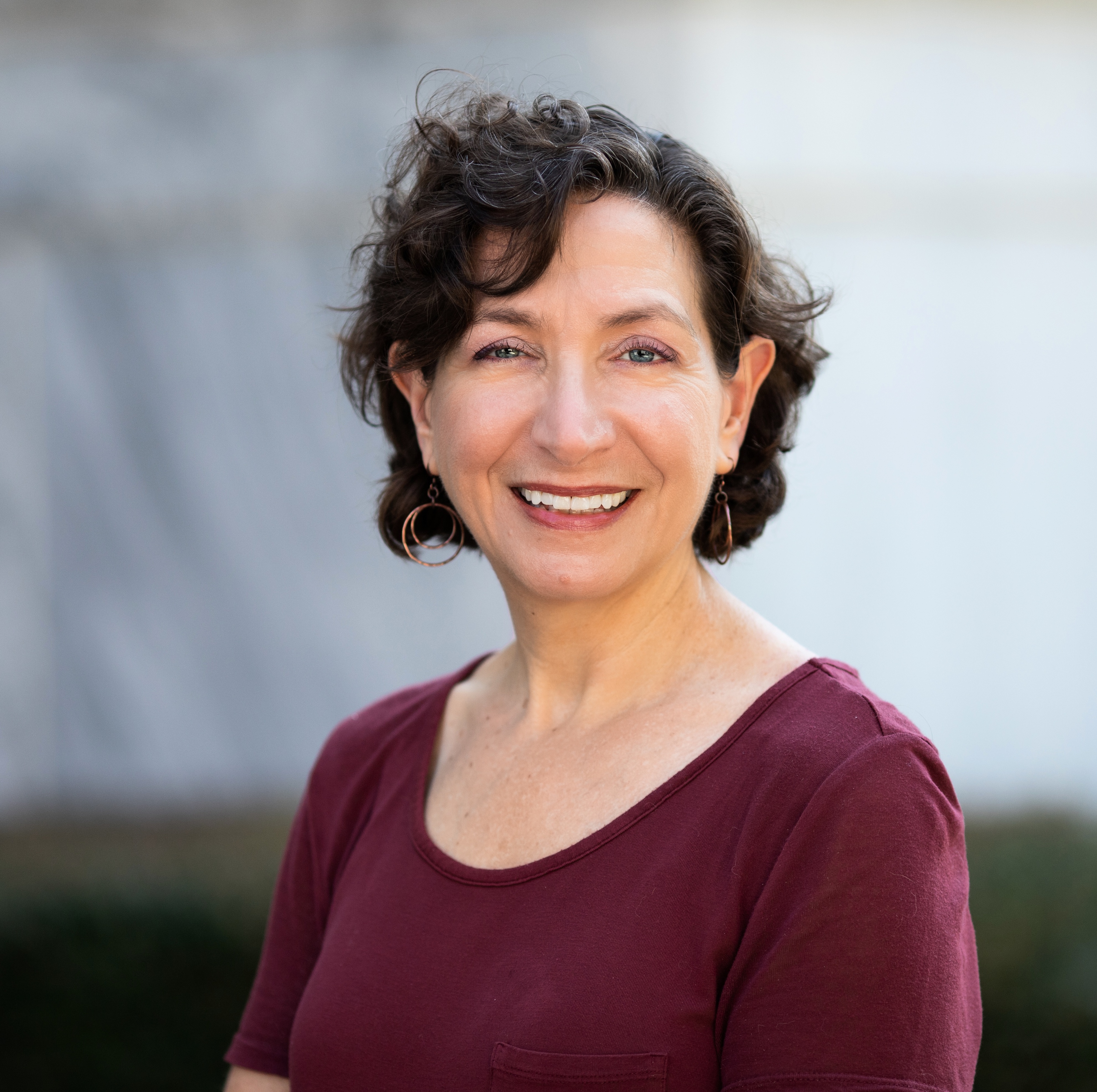
Xiaogang Wu is a Professor of Sociology and Yufeng Global Professor of Social Science at New York University, affiliated with the College of Arts & Science and the Department of Sociology. He holds a Ph.D. from UCLA, an M.A. from Peking University, and a B.A. from Renmin University of China. His research focuses on China's social stratification, education policy, inequality dynamics, urban studies, and quantitative methodologies. Key interests include social cohesion, housing policy impacts, migrant labor outcomes, and the interplay between education and socioeconomic status. His recent work analyzes pandemic vulnerability, educational expansion effects on earnings, and gender dynamics in reform-era China. He has contributed to major publications like Research in Social Stratification and Mobility and Demographic Research .
Rebecca Jordan-Young is the Ann Whitney Olin Professor in the Department of Women's, Gender and Sexuality Studies at Barnard College. Her interdisciplinary scholarship bridges feminist science and technology studies, neuroscience, endocrinology, and public health, critically examining how gender, sexuality, race, and class shape scientific knowledge and practice. Research Interests: Her work focuses on the intersection of science and social hierarchies, particularly how biological concepts like testosterone and brain sex differences are culturally constructed and politically deployed. She challenges entrenched narratives in neuroscience and endocrinology, advocating for more rigorous, context-sensitive, and ethically grounded research. Her recent publications reveal a consistent trend of interrogating the scientific validity of hormone-based gender assumptions, especially in sports, reproduction, and neurodevelopment. Keywords across her work include feminist STS, gender in science, health disparities, and neurogenderings. She emphasizes methodological reform and social justice in scientific practice. Scientific Awards: Gold Medal in Science, Independent Publisher Book Awards Distinguished Book Award, Association for Women in Psychology (2011) John Simon Guggenheim Fellowship (2016-17) ACL Fellow (2016-17) Tow Professorship, Barnard College (2013-15) Visiting Professor Award, Royal Dutch Academy (2013-14) Health Disparities Scholar, NCMHD (2003-04) Advising and Grants: While specific students are not listed, she has led multiple funded research projects, including NSF and NIH grants. Her grants focus on testosterone models, gender verification in sports, and sexual minority health. She has served as Principal Investigator on projects funded by the National Science Foundation, NIH (NIDA), and Barnard College, reflecting sustained external support for her critical science scholarship. Labs and Collaborative Networks: She is an active member of the international Neurogenderings Network , collaborating with scholars across neuroscience, anthropology, sociology, and political science. Her interdisciplinary collaborations span from physical chemistry to cultural studies, emphasizing dialogic and feminist approaches to science.
Professor Craig Sale holds the position of Professor of Human Physiology and Nutrition at Manchester Metropolitan University (MMU) and previously led research initiatives at Nottingham Trent University (NTU). He specializes in investigating exercise and nutrition interventions, particularly focusing on bone and muscle adaptations. His roles include Co-Lead of NTU’s Health & Wellbeing Strategic Research Theme, Director of the SHAPE Research Centre, and REF Unit of Assessment Coordinator for UoA C24. His research spans bone metabolism, muscle performance, genetics, sports nutrition, biomechanics, and environmental physiology, with a commitment to impactful real-world applications. His research has addressed topics such as beta-alanine supplementation for exercise performance, diet/exercise interventions for bone health in athletes, and the biological actions of carnosine. He has supervised 17 completed PhD students and currently guides 8 more. His awards include Fellowship in the American College of Sports Medicine (ACSM) and a Section Editor role at the European Journal of Sports Sciences. Recent work emphasizes bone biomarker responses to exercise, myocardial carnosine roles, and pregnancy’s legacy on athletic performance.
Dr. Angela Flynn is a Senior Lecturer in the School of Population Health at RCSI. She holds a BSc in Pharmacy from Trinity College Dublin, an MSc in Nutrition, and a PhD in maternal health from King's College London. Her academic career includes a Lecturer position at King's College London (2021–2023) before moving to RCSI in 2023. Her research focuses on optimizing pregnancy preparation, improving outcomes for women at metabolic risk, and leveraging community pharmacies for public health interventions. Key themes include gestational diabetes prevention, postpartum care for pregnancy complications, and intergenerational health patterns. She employs large datasets and qualitative methods to inform policy and clinical practice. Her work aligns with UN Sustainable Development Goal 3 (Good Health and Well-Being) and targets vulnerable populations through innovative interventions. Recent studies investigate preconception health behaviors, maternal obesity outcomes, and the role of AI in nutritional assessment. Publications span peer-reviewed journals like BJOG , Nutrients , and Public Library of Science , with a focus on systematic reviews, meta-analyses, and clinical trial insights. Her research emphasizes translational healthcare solutions and community engagement.
Susana Santos serves as a Visiting Professor at NOVA School of Law, NOVA University Lisbon, and concurrently at the School of Sociology and Public Policy at ISCTE – Lisbon University Institute. As an integrated researcher at the Center for Research and Studies in Sociology (CIES), she actively contributes to international socio-legal discourse through leadership roles in the International Sociological Association. Her academic credentials include: PhD in Sociology (2012) from ISCTE – University Institute of Lisbon Master's in Communication, Culture and Information Technologies (2007) from ISCTE Degree in Sociology (2002) from ISCTE Santos' research critically examines the intersection of law, society, and communication, with particular emphasis on gender dynamics in legal professions, insolvency systems, and socio-legal movements. Her work consistently employs empirical methodologies to analyze professional socialization, workplace culture in law firms, and the impact of legal reforms on judicial systems. She investigates how structural inequalities manifest in elite educational trajectories and legal practice, especially through feminist and comparative lenses. Her publication record reveals a sustained focus on socio-legal evolution since 2012, with increasing attention to gendered workplace dynamics and transnational legal practices. Recent works demonstrate methodological diversity spanning qualitative narrative analysis, comparative institutional studies, and empirical evaluations of legal procedures, all contributing to global conversations on justice accessibility and professional ethics. Santos coordinates significant research initiatives including a European Commission-funded Humanitarian Action project (2021-2024) implementing summer schools in Mozambique and Cape Verde, and the IN_SOLVENS multidisciplinary analysis of Portuguese insolvency law. She spearheaded the 7th Global Meeting on Sociology of Law (2022), mobilizing over 2,000 international participants to advance comparative socio-legal scholarship. Professionally, she co-coordinates the Sociology of Law and Justice section of the Portuguese Sociological Association and contributes to International Sociological Association working groups on Comparative Legal Professions and Comparative History and Sociology of Law, driving collaborative research across national contexts.
Dr. Stuart J. Turnbull-Dugarte is an Associate Professor in Quantitative Political Science at the Department of Politics & International Relations, University of Southampton. His research focuses on political sociology, LGBTQ+ politics, and comparative politics, with a particular emphasis on far-right party success, political identity dynamics, and LGBTQ+ political behavior. He actively supervises PhD students and teaches quantitative research methods, including causal inference, at undergraduate and postgraduate levels. Associate Editor: Public Opinion Quarterly, European Journal of Politics and Gender, Research & Politics Steering Group Member: Centre for Behavioural Experimental Action and Research (C-BEAR) His methodological expertise includes experimental and quasi-experimental designs, with applications in electoral campaigns and public policy analysis. Current projects include a Leverhulme Trust Fellowship for his book The Rainbow Vote and research on surrogacy reform, homonationalism, and far-right mobilization. Recent publications in American Political Science Review , British Journal of Political Science , and Journal of European Public Policy highlight his work on identity projection, religious stereotyping, and class perception in politics. He has received multiple accolades, including the ECPR Rising Star Award (2024) and Best Article Prizes from European Union Politics (2020, 2025).
Dr. Sol Gamsu is an Assistant Professor in the Department of Sociology at Durham University and Director of the MSc Sociology Programme. His work bridges sociology, geography, and history, focusing on spatial and temporal dimensions of educational inequality. PhD in Geography, King’s College London (2017) Masters and undergraduate degrees in interdisciplinary studies (sociology, history, geography, French/German) His research spans elite education, spatial inequality, and educational policy, using mixed methods, GIS, and critical theory. Recent publications examine class/racial disparities in UK schooling, neoliberal university reforms, and colonial legacies in elite institutions. 2021: Editorial Board, British Journal of Sociology of Education 2020: SAGE Prize for Sociological Research Online 2000: Invited speaker at international conferences He supervises PhD students in educational inequality and collaborates with organizations like the University and Colleges Union. His policy work critiques meritocracy, private school integration, and marketization of universities.
Beth Reingold is a Professor of Political Science and Women’s, Gender, and Sexuality Studies at Emory University, where she also serves as Director of Graduate Admissions and Placement. She holds a Ph.D. in Political Science from the University of California, Berkeley, and a B.A. in Political Science and History from Rice University. Her research focuses on the intersections of gender, race/ethnicity, and political representation, particularly within U.S. state legislatures. Key areas include legislative behavior, intersectionality, and policy-making processes related to anti-abortion, welfare, and immigration politics. Reingold’s work has been widely recognized, including the 2023 Mac Jewell Enduring Contribution Book Award for her first monograph Representing Women , and the 2021 Richard Fenno, Jr. Prize for her co-authored book Race, Gender, and Political Representation . She collaborates with scholars like Irene Browne on NSF-funded projects examining Black elites and immigration politics. Her current research explores legislative power dynamics and how marginalized groups attain institutional influence. Her scholarly contributions span over three decades, with publications in top journals like Political Research Quarterly and American Journal of Political Science . She has advised numerous projects and serves as a leading voice in intersectional political theory and legislative studies.
Professor Stephen Bird is a renowned performance scientist and strength and conditioning expert at the University of Southern Queensland (USQ), leading the School of Health and Medical Sciences. He holds the title of Professor (Sport and Exercise Science) and directs the High-Performance Sport program. His roles include Editor-in-Chief of the International Journal of Strength and Conditioning and advisor to organizations like the Australian Strength and Conditioning Association. Education: BHumMov(ExSc), BHumMov(Hons), and PhD from Charles Sturt University. Research Focus: Strength and conditioning methodologies, nutritional supplementation, athlete recovery, and technology-driven performance optimization. Key Projects: '2 WIN 2032' student-athlete empowerment initiative, NBA sleep health studies, and blood flow restriction (BFR) training for muscle/bone health in space travel. Affiliations: Institute for Resilient Regions (IRR), National Health and Medical Research Council (NHMRC) peer review, and collaborations with Flinders University, University of Gloucestershire. Research interests span elite athlete performance (basketball, rugby, hockey), female athlete health, and applications of pupillometry and wearable tech for fatigue monitoring. Awards include the prestigious ESSA Medal (2006) and Life Membership (Western Region Academy of Sport). Teaching includes courses on strength training, sports nutrition, and athlete workload monitoring. He has supervised over 20 doctoral and master’s students, contributing to >40 research outputs annually. Grants include a $832k Quantum wearable sensor project (2024) and $240k AI-driven motion capture initiative. His work bridges academia and elite sport, advising teams like the Brisbane Bullets (NBL) and GB Women’s Basketball. Recent trends in publications emphasize NBA performance metrics, sleep science, and interdisciplinary solutions for athlete resilience.
J. Brad Reich serves as a Professor in the School of Business and Leadership at the University of Puget Sound, where he teaches Law and Ethics (BUS 340), Sports Law (BUS 476), and Never-Never Land (CONN 387) for the Fall 2025 semester. His scholarship emphasizes practical application for diverse audiences across legal and business domains. His academic credentials include: BBA, University of Iowa, 1991 JD, Drake University, 1994 LLM, University of Missouri Columbia, 2001 Reich's research centers on cutting-edge intersections of law and technology, particularly "cyberprocreation" (internet-based human reproduction through sperm/egg donation, embryo acquisition, and surrogacy), alongside critical sports law issues including National Letter of Intent enforcement, Title IX compliance, and NFL concussion liability. His work garners significant scholarly attention with citations from Harvard, Stanford, Columbia, and other elite institutions, reflecting its real-world relevance in evolving legal landscapes. No scientific awards were documented in the source material. His teaching philosophy prioritizes preparing students for immediate professional challenges through courses emphasizing ethical decision-making and dispute resolution. No information was provided regarding student advising, research grants, or laboratory affiliations.
Manolis Kalaitzake is a Lecturer in Political Economy at the University of Edinburgh's School of Social and Political Science. His research focuses on comparative political economy, capitalism, business-government relations, EU politics, central banking, and sociology of elites. He actively supervises PhD students in these areas and contributes to the International Political Economy Research Group. His work explores structural power dynamics, financial political influence, and post-Brexit economic resilience. He is based at 16-19 George Square, Edinburgh (B.09). Key research themes include the political power of financial institutions, regulatory reform, and the sociological impacts of neoliberal capitalism. Recent publications analyze Brexit's financial consequences, corporate welfare mechanisms, and solidarity dynamics under individualism. His work bridges theoretical frameworks with empirical studies on policy processes and institutional influence. Publications span journals like Politics & Society , New Political Economy , and Competition & Change , reflecting interdisciplinary engagement with economic sociology, policy analysis, and global governance structures.
Dr. Lawton Stewart serves as a Professor and Extension Coordinator in the Department of Animal and Dairy Science at the University of Georgia's College of Agricultural & Environmental Sciences. With over 15 years of experience at UGA, Dr. Stewart leads statewide extension and applied research initiatives focused on beef cattle production systems in Georgia, building a synergistic program that leverages knowledge, collaboration, communication, and technology to improve the livelihood of Georgia's beef cattle producers. Dr. Stewart's educational background includes: B.S. in Animal Science from the University of Georgia M.S. in Agronomy with emphasis in Forage Management from the University of Florida Ph.D. in Animal Science with emphasis in Ruminant Nutrition and Forage Utilization from Virginia Tech Post-Doctoral Research Fellowship at the University of Kentucky investigating nitrogen metabolism in ruminants Dr. Stewart's research and extension program focuses on beef cattle nutrition, management, and forage systems, with particular emphasis on improving production efficiency in Georgia's diverse beef operations. His work integrates fundamental animal science research with practical extension programming to address challenges specific to southeastern US agriculture. Key areas include optimizing beef-forage systems, evaluating preconditioning and backgrounding strategies, developing sustainable parasite control methods, and investigating the impacts of nutrition on reproductive performance. He actively explores opportunities in beef cattle production such as stockering and retained ownership to enhance producer profitability. Analysis of Dr. Stewart's recent scholarly output reveals a strong thematic focus on integrated beef-forage systems, with particular attention to alfalfa-bermudagrass mixtures, nutritional impacts on reproductive physiology, and innovative management strategies for southeastern production environments. His publications bridge fundamental research with practical applications, addressing challenges like cotton byproduct utilization, baleage production, and sustainable grazing systems while maintaining scientific rigor through collaborations across multiple institutions. Dr. Stewart has received recognition for his contributions to student development: Student Career Success Influencer Award (2023) As an active researcher, Dr. Stewart manages a substantial portfolio of funded projects totaling significant grant support, primarily through the Georgia Commodities Commission for Beef, Cotton Incorporated, Merck & Co., and the Georgia Farm Bureau Federation. His research program includes studies on parasite control, forage improvement, cotton byproduct utilization, and sustainable beef production systems. He coordinates the UGA Beef Team, providing travel and educational support for student competitions including the Elite Stockman Short Course and Top Hand Stockmanship and Stewardship Contest, demonstrating his commitment to developing the next generation of agricultural leaders. Dr. Stewart participates in multiple interdisciplinary research teams focused on beef-forage systems across the southeastern United States, collaborating with agronomists, animal scientists, and extension specialists to address complex challenges in beef production. His program maintains strong industry partnerships that ensure research addresses practical on-farm challenges while advancing scientific understanding of beef cattle production systems in the southeastern agricultural environment.
Dr. Gábor Koloh is a contemporary Assistant Professor and Research Fellow at the Eötvös Loránd University (Department of Economic and Social History) and the HUN–REN RCH Institute of History . His scholarly work focuses on demographic history , social history , and rural economic structures , with particular emphasis on fertility transitions , household organization , and modernization processes in 19th-20th century Hungary. Education : Law (ELTE), Aesthetics (BA), MA and PhD in Economic and Social History (supervised by György Kövér) Research Themes : Demographic change in interwar Hungary Ethnic agricultural practices in Baranya Temporal/spatial patterns in peasant communities Social mobility of Protestant clergy Methodology : Micro-historical analysis, family reconstitution, manuscript source interpretation Current Projects : Interdisciplinary studies on pronatalist discourse, cooperative territorial development, and aristocratic demographic patterns
Lea Remmers is a Doctoral Researcher at the Max Planck Institute for the Study of Societies (MPIfG) in Cologne since 2024, affiliated with the International Max Planck Research School on the Social and Political Constitution of the Economy (IMPRS-SPCE), a collaborative doctoral program with the University of Cologne. Her academic credentials include: MA in Social Policy, University of Bremen (2019-2021) BA in Sociology, University of Göttingen (2013-2018) Her research investigates how super-wealthy elites utilize private art collections as instruments of social power and status maintenance, examining intersections of wealth reproduction, cultural capital, and power dynamics through qualitative methodologies. This work contributes to critical understandings of inequality mechanisms within contemporary capitalism. Her recognition includes: Hans Böckler Foundation Scholarship (2020-2021) Funded by the Hans Böckler Foundation Scholarship, Remmers conducts independent dissertation research under primary advisor Jens Beckert. Prior professional experience includes research assistance at the University of Hannover's Institute for Special Needs Education (2023-2024) and project work at IEA Hamburg (2022-2023), demonstrating methodological versatility across educational and sociological domains.
Linda Quirke serves as an Associate Professor in the Department of Sociology at Wilfrid Laurier University's Faculty of Arts, maintaining active contact through office DAWB 5-142, email lquirke@wlu.ca, and Teams phone number 1 548-889-5153. Her institutional position demonstrates ongoing engagement with academic duties and research leadership within the university's educational framework. Her research expertise spans several interconnected domains: Sociology of Education with focus on Ontario's private sector Parenting advice literature and historical shifts in childrearing Gendered foodwork and emotion labor in family contexts Children's leisure activities and cognitive development Institutional legitimacy strategies in non-elite schools Market-institutional tensions in educational organizations Quirke's scholarly trajectory reveals consistent thematic threads: evolving parenting narratives (particularly around obesity and food allergies), organizational adaptation in educational markets, and critical analysis of textbook representations. Her work bridges micro-level family practices with macro-level institutional analysis, emphasizing how social class permeates both educational structures and domestic life. Scientific Awards: No specific awards or honors documented in source materials Advising and funding details remain unreported in the provided texts, though her extensive publication history suggests significant research activity. Her teaching portfolio includes sociology courses, but specific pedagogical methods or student mentorship outcomes aren't elaborated. Lab affiliations or collaborative research teams also lack explicit mention in the available information.