Prof. Daniel Memmert is a Professor at the German Sport University Cologne, leading research in Sport Informatics and Sports Games within the Institute of Exercise Training and Sport Informatics. His work focuses on cognitive aspects of sports performance, decision-making, and data-driven analysis in football (soccer) and other sports. He has published extensively on topics like penalty kick strategies, home advantage dynamics, artificial intelligence applications in coaching, and route-setting in climbing. Memmert's research bridges sports science, computer science, and psychology, with over 550 publications and 41 projects to his name. He frequently engages with media, explaining complex sports phenomena to the public. Key Research Areas: Football analytics, cognitive psychology in sports, sports technology, decision-making under pressure Media Contributions: Over 50 media features discussing topics such as AI in coaching, referee bias, and athlete creativity Projects: Includes initiatives on sports data visualization, performance metrics, and prevention of sports betting addiction His work emphasizes translating academic findings into practical tools for athletes, coaches, and sports organizations, combining rigorous data analysis with real-world applications.
Dr. Bill Sheel is a Professor and Distinguished University Scholar at the School of Kinesiology, University of British Columbia. His research focuses on the integrative physiology of exercise, particularly respiratory and cardiovascular interactions. Email: bill.sheel@ubc.ca Office: Chan Gunn Pavilion, Room 221B, Vancouver, BC Lab: Health and Integrative Physiology Laboratory Research Interests: Dr. Sheel investigates respiratory physiology during exercise, cardiovascular modulation by breathing patterns, and human performance optimization. His work spans elite athletes, aging populations, and clinical applications. Publication Trends: Recent studies include pulmonary mechanics in exercise physiology, respiratory muscle training applications, and socio-cultural factors in sports science. Collaborative works address aging interventions and environmental influences on athletic performance. Scientific Recognition: Distinguished University Scholar, UBC Laboratory & Collaborations: Leads the Health and Integrative Physiology Laboratory at UBC, focusing on respiratory-cardiovascular integration and exercise tolerance mechanisms.
Tarik Abou-Chadi is a Professor in European Union and Comparative European Politics at the University of Oxford's Department of Politics and International Relations, and a Professorial Fellow at Nuffield College. He holds a PhD from Humboldt University Berlin (2015). His research focuses on elections, political parties, and the transformation of democratic representation in post-industrial societies. Key affiliations include the Government and Politics Network, Comparative Politics and Government, and leadership of the Swiss National Science Foundation-funded project on 'Social Status and the Transformation of Electoral Behavior in Western Europe'. He previously served as Assistant Professor at the University of Zurich before joining Oxford. His work appears in top journals like the American Political Science Review and World Politics. Awards include the Henrik Enderlein Prize (2022) and inclusion in Capital magazine's 'Top 40 under 40' (2022). He advises four doctoral students and actively contributes to media commentary on European political trends through outlets like The Economist. Research interests emphasize far-right dynamics, voter behavior, and party strategy in Western Europe. His recent analyses address gendered political preferences among youth, climate policy acceptance, and the electoral consequences of mainstream parties adopting radical-right policies.
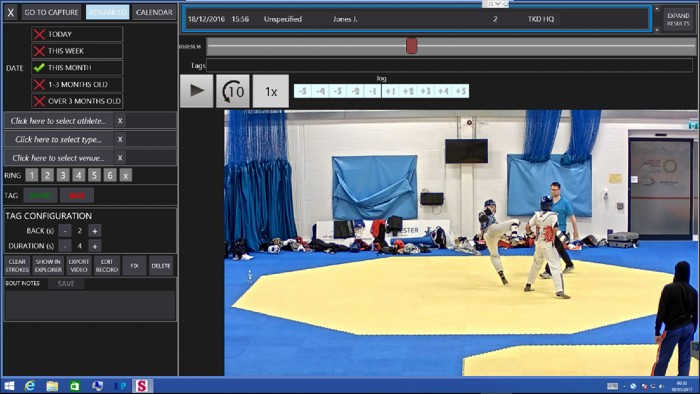
Dr. Simon Goodwill is the Head of Research in Sport and Physical Activity and Head of the Sports Engineering Research Group (SERG) at Sheffield Hallam University's Academy of Sport and Physical Activity. He holds a PhD focused on tennis ball-racket impact modeling and has collaborated with the International Tennis Federation. His expertise includes novel photogrammetry techniques, software development for athlete performance analysis, and camera calibration systems like check2d/check3d. He led projects supporting Team GB athletes in multiple Olympics, contributing to 42 medals at Rio 2016. Currently, he oversees the Advanced Wellbeing Research Centre (AWRC), applying sports performance methodologies to health research. His work integrates machine vision, data acquisition hardware, and elite athlete monitoring systems, with notable contributions to the EIS Innovation Partnership and sports tech exhibits like Le Tour Yorkshire's bike simulator. Education & Research: Simon’s PhD (modeling tennis impacts) and extensive software engineering background underpin his research. His projects span biomechanics, sports engineering, and health tech, with collaborations involving UK Sport, FIFA, and Adidas. He has developed systems used by athletes in London 2012, Rio 2016, and Glasgow 2014 Commonwealth Games. Research Themes: His work emphasizes performance analysis through photogrammetry, real-time athlete tracking, and health-related applications of sports tech. Key projects include court pace rating for the ITF, iBoxer2 boxing data tools, and the AWRC’s health innovations. Grants & Impact: The AWRC, funded by UK DoH and ESIF (£15.7M), reflects his role in translating elite athlete tech to public health. His work is cited in UK government reports on Olympic legacy and has received media attention, including BBC features on GB Boxing’s iBoxer software. Advising & Leadership: Supervised 17 PhD students on topics like machine learning in taekwondo, swimming analysis, and tennis racket dynamics. Served as External/External advisor and led 10+ Olympic cycle projects. Active in the International Sports Engineering Association as Director.
Michael Kjær is a Clinical Professor at the Department of Clinical Medicine, University of Copenhagen, Faculty of Health and Medical Sciences. He specializes in Internal Medicine: Rheumatology and leads research groups focused on exercise physiology, sports injuries, and aging. His work addresses the impact of physical activity on the human organism, with particular emphasis on tissue damage and repair mechanisms. Dr. Kjær's primary research interests center around sports medicine, physiology, and exercise science. His work investigates tendon pathology, muscle physiology, sports injuries, and the effects of exercise on aging populations. He has made significant contributions to understanding sports-related injuries, particularly tendon overuse conditions, and the physiological responses to physical activity across different age groups. His recent publications (2025) demonstrate a strong focus on tendon research, sports injury treatment dilemmas, effects of anabolic steroid abuse, muscle physiology, and bone health in athletes and older adults. The research spans from basic science investigations of cellular mechanisms to clinical studies addressing practical sports medicine challenges. His work shows particular strength in connecting molecular and tissue-level changes with clinical outcomes in sports medicine. With 415 research outputs including 369 journal articles, 15 book chapters, and 15 reviews, Dr. Kjær maintains an active research program with substantial impact. His work has been referenced in Wikipedia pages, cited by Bluesky users, and picked up by news outlets, demonstrating its relevance to both academic and public discourse. Dr. Kjær leads multiple research groups within the Center for Healthy Aging Damage and Repair at the Department of Clinical Medicine. His laboratory work focuses on tissue response to injury and exercise, particularly examining tendon and muscle physiology using both in vivo and in vitro approaches. His research bridges basic science with clinical applications in sports medicine and rehabilitation.
Cassidy R. Sugimoto is the Tom and Marie Patton Professor and School Chair at the Jimmy and Rosalynn Carter School of Public Policy at Georgia Institute of Technology. She previously held a professorship in Informatics at Indiana University Bloomington (2010–2021) and served as Program Director for the Science of Science and Innovation Policy at the National Science Foundation (2018–2020). Her research focuses on knowledge production systems, equity in STEM, scientific collaboration dynamics, and research evaluation metrics. She holds degrees from the University of North Carolina at Chapel Hill including a B.Mus. in Music Performance, M.S. in Library Science, and Ph.D. in Information and Library Science. Research interests include: Structural inequities in science and technology Ethical authorship practices Global scientific collaboration patterns Open science initiatives Gender and diversity in academic careers Notable awards include the 2020 Bicentennial Service Award from Indiana University and 2014 Trustees Teaching Award. Her recent work examines intersectional disparities in science, AI ethics, and systemic barriers to equity in academic publishing. Key contributions include co-authoring Equity for Women in Science (2023) and foundational scholarship on alternative metrics beyond citation counts. She advises on science policy matters related to institutional equity and open access publishing.
Tim Woodman is a Professor in Sport & Exercise at the School of Psychology and Sport Science , Bangor University. He is a leading expert in Performance Psychology , focusing on personality, stress, anxiety, and risk-taking in elite sports. His groundbreaking theory positions risk as central to human development and performance. Research Interests : Narcissism, anxiety-performance relationships, risk-taking behavior, athlete mental health, agentic emotion regulation. Scientific Contributions : Over 150 peer-reviewed publications, including 2025 studies on cricket mental health, coach support dynamics, and pressure training methodologies in elite sports. Projects : Leads the North West Air Ambulance performance psychology initiative and collaborates with Manchester City Football Club on personality-climate change research. Teaching & Supervision : Accepts PhD students interested in risk-taking, personality, and performance psychology topics.
Prof. Dr. Rudi Zagst is a Professor of Mathematical Finance at the Technical University of Munich (TUM), where he serves as Head of the Department of Mathematical Finance within the TUM School of Computation, Information and Technology. He has held this position since 2001 and is actively involved in teaching, research, and academic leadership. In 2003, he was appointed as a second member of the Faculty of Economics, and since 2004, he has served as Deputy Chairman of the joint elite degree program 'Finance & Information Management' of the University of Augsburg and TUM. Prof. Zagst earned his doctorate in business mathematics from the University of Ulm, where he later completed his habilitation in 2000. His academic journey began with a professional career at HypoVereinsbank AG, where he served as Head of Product Development in Institutional Investment Management before becoming Managing Director of RiskLab GmbH in 1997. His research focuses primarily on financial engineering, risk management, and asset management, with particular emphasis on portfolio optimization, mathematical finance, and quantitative risk management. His work bridges theoretical finance with practical applications, often incorporating advanced mathematical techniques to solve complex financial problems. Recent publications demonstrate his continued interest in GARCH models, portfolio optimization under various constraints, and the application of machine learning techniques to financial problems. Analysis of his recent publications (2024-2025) reveals a strong focus on portfolio optimization under complex market conditions, particularly using GARCH models to capture volatility dynamics. His work increasingly incorporates machine learning techniques (as seen in the credit spread analysis paper) while maintaining rigorous mathematical foundations. Many papers explore the intersection of theoretical finance with practical investment strategies, reflecting his commitment to bridging academic research with real-world financial applications. Professor of the Year 2007 (awarded by Unicum Profession magazine) Prof. Zagst has supervised numerous bachelor's, master's, and doctoral theses through TUM's Finance and Actuarial Science research group. His collaborative work with industry partners through the TUM CAIR Labs and RiskFactory demonstrates strong connections between academic research and practical financial applications. He has received research funding through various industry partnerships with major financial institutions including Allianz, Munich Re, and ERGO Group AG. Prof. Zagst leads the Research Group Finance and Actuarial Science at TUM, which includes Professors Matthias Scherer, Aleksey Min, and Christoph Knochenhauer. The group maintains strong industry connections through the TUM CAIR Labs initiative, collaborating with over 25 financial institutions including Allianz, Munich Re, Deloitte, PwC, and KPMG. Their RiskFactory laboratory serves as a bridge between academic research and practical financial risk management applications in the industry.
Dr. Kris Beattie is a Lecturer in the Department of Sport and Health Science at Technological University Dublin (TU Dublin). He specializes in sports science education, coordinating modules such as Human Physiology 2, Sport & Exercise Physiology, and Applied Coaching Science. His research focuses on the physiological adaptations of strength, speed, and endurance training in athletes, particularly in endurance athletes and combat sports like boxing. Beattie holds a PhD from the University of Limerick (2012–2016), an MSc in Sports Physiology from Liverpool John Moores University (2008–2009), and a BSc (Hons) in Sport and Exercise Sciences from Ulster University (2005–2008). He is a UKSCA-accredited Strength & Conditioning coach. Beattie’s research interests include strength training modalities for sprint performance, physiological adaptations in Gaelic football and boxing, and the biomechanics of athletic movements. His work bridges theoretical and applied aspects of sports science, emphasizing practical applications in coaching and athlete development. Recent studies explore sprint testing methods in Gaelic games, strength characteristics of female athletes, and the role of maximal strength in punch impact force in boxing. His publications span peer-reviewed journals like the International Journal of Performance Analysis in Sport and Journal of Strength and Conditioning Research , with a focus on systematic reviews and empirical studies. Though no specific awards are listed, his h-index of 7 reflects growing recognition in sports physiology. Beattie actively collaborates with sports organizations and coaches to inform evidence-based training practices. He currently contributes to TU Dublin’s BSc (Hons) Sports Science with Exercise Physiology program, integrating his research into teaching. Future work likely continues exploring interdisciplinary approaches to athlete development and performance optimization.
Jonas Tallberg is a Professor of Political Science at Stockholm University and Co-Director of the Stockholm Center on Global Governance . His research focuses on global governance, European Union politics, and legitimacy dynamics in international organizations. Primary Affiliation: Department of Political Science, Stockholm University Research Leadership: Directs DemCoop (European Research Council-funded) and GGAI (Marianne and Marcus Wallenberg Foundation-funded) Editorial Roles: Serves on editorial boards of International Organization , European Political Science Review , Cooperation and Conflict , and Political Research Exchange Key Research Areas: Legitimacy in Global Governance EU Institutional Dynamics Artificial Intelligence Governance International Organization Performance Transnational Actor Participation Comparative Global Governance Frameworks Publications Trends: Focus on legitimacy-building mechanisms in international institutions Analysis of EU decision-making and institutional design Emerging AI governance frameworks Methodological contributions to content analysis Comparative studies of democratic and autocratic regimes Performance indicators in international organizations Scientific Recognition: Wallenberg Scholar (2024) Friedrich Wilhelm Bessel Research Award (2012) Distinguished Mentor Award (2023) Multiple grants from European Research Council, Swedish Research Council, and Wallenberg Foundations Academic Leadership: Former Chair of SNS Democracy Council (2009-2011, 2023) Executive Committee of European Consortium for Political Research (2009-2015) Recipient of research grants from Riksbankens Jubileumsfond, Fulbright Commission, and other major institutions
Jukka Rintamäki is an Assistant Professor in the Department of Management Studies at Aalto University's School of Business. His work focuses on organizational behavior, corporate social responsibility (CSR), collective memory, and sustainability. He holds a doctoral degree from Aalto University (2016), with earlier master's (2010) and bachelor's (2007) degrees in business administration from Helsinki School of Economics and Aalto's business school. Research interests include the interplay between memory and organizational ethics, institutional dynamics, power struggles in academic and corporate settings, and CSR in emerging sectors like esports. His 2024 work on 'Institutional Parasites' explores organizational dependency relationships, while 2023 studies investigate CSR's role in sport development and memory work across organizations. He has contributed to top journals like Academy of Management Review and Annals . Rintamäki's work addresses UN SDGs related to responsible consumption and partnerships. He has been active in peer-review roles for major management journals since 2015. Media engagements include commentaries on corporate responsibility and economic policy in 2023-2024.
Babett Lobinger is a Researcher at the Institute of Psychology at the German Sport University Cologne, specializing in Performance Psychology and Applied Sport Psychology. She holds academic qualifications including Dipl.-Psych., MA Sportwiss, and Dr. in Sport Sciences. Her research focuses on Performance Psychology , Motor Control Disorders (e.g., Yips in Golf), Movement Safety in Aging , and Coaching Psychology . She has collaborated with organizations like the DFB (German Football Association) and clubs like Arminia Bielefeld and 1.FC Köln, providing sport psychological consulting and research. Key Projects include: DFG-funded studies on Yips in Golf Cross-cultural training needs analysis for football coaches Development of the Athlete Competency Questionnaire for Employability (ACQE) She teaches in the German Football Association’s (DFB) coaching academy and contributes to sport psychology curricula for trainers. Her work appears in journals like InMind and conferences such as FEPSAC.
Professor Holly Thorpe is a Professor of Sociology in Te Huataki Waiora / School of Health at the University of Waikato, specializing in Sport and Human Movement. She serves as Associate Dean Research in the Division of Health PVC Office and is an internationally recognized sociologist of sport, physical culture and gender whose work has earned prestigious fellowships and awards including Fulbright, Leverhulme, and Royal Society honors. Her educational background includes a PhD from the University of Waikato and Papa Reo Level 1 certification from Te Wananga o Aotearoa, reflecting both academic excellence and cultural engagement with Māori language and knowledge systems. Professor Thorpe's research centers on equity and inclusion in sporting cultures, with particular attention to women's health and wellbeing, sport and gender, and the impact of social media on athletic experiences. She employs critical and feminist theoretical frameworks with expertise in qualitative methods to examine how sport, physical activity, and health intersect in rapidly changing social landscapes. Her work spans gender studies, feminist methodologies, sports science, sociology of health, and digital media studies within sporting contexts, with a strong commitment to community-engaged research. Her extensive publication record reveals consistent thematic focus on contemporary issues including menstruation in sport, digital technologies and athlete experiences, pandemic impacts on wellbeing, and the gendered dimensions of mega-sport events. Her work frequently employs intersectional analysis and collaborates across disciplines to address complex questions about embodiment, identity, and social change in sporting cultures, particularly as they relate to women and marginalized communities. Professor Thorpe's significant scholarly recognition includes: Royal Society Early Career Research Excellence Award for Social Sciences (2018) Fellow of the North American Society for the Sociology of Sport (2018) Royal Society James Cook Fellowship for a two-year project focused on women's wellbeing through and beyond pandemic (2021) She actively supervises students and has secured substantial research funding including the Te Punaha Matatini CORE Research Institute project 'Youth Wellbeing in Uncertain Times: The Voices of Rangatahi from Flood-Effected Tairāwhiti Gisborne' (2023-2025). Professor Thorpe collaborates extensively with international and national sports organizations including the International Olympic Committee, High Performance New Zealand, Sport New Zealand, Skateistan, and Voice in Sport to ensure her research has real-world impact on policy and practice. She serves as Series co-editor for 'New Femininities in Digital, Physical and Sporting Cultures' and maintains active media engagement through The Conversation and other outlets. Professor Thorpe leads several significant research initiatives including 'Reimagining Fields of Play' (2023) and co-organized the 'Gender, Health and Wellbeing Symposium' (2022), demonstrating her commitment to creating spaces for critical dialogue about sport, gender, and health while advancing culturally responsive methodologies that center Indigenous and diverse perspectives.
Dr. Shushu Chen is an Associate Professor in Sport Policy and Management at the University of Birmingham's School of Sport, Exercise and Rehabilitation Sciences, and also serves as a Visiting Professor at the Capital University of Physical Education & Sports in China, demonstrating her strong international academic presence. Education: PhD in Sport Policy and Management, Loughborough University (Centre for Olympic Studies & Research) MSc in Sport Management, Loughborough University BSc in Bioengineering Her research expertise lies in sport policy analysis and evaluation, particularly the legacy and societal impact of major sporting events such as the Olympic Games and Commonwealth Games. She investigates how these events influence social inclusion, urban development, and public policy, with a strong focus on both the UK and Chinese contexts. Her methodological strengths include realist evaluation and meta-evaluation, applied to complex policy environments. Dr. Chen’s recent work centers on high-impact projects related to the Birmingham 2022 Commonwealth Games and Beijing 2022 Winter Olympics, analyzing their legacies for disadvantaged communities and policy development. Her publications span top journals like the Journal of Sport Management and Sport Management Review , covering themes such as event leveraging, volunteering, policy development in China, and Olympic education. Her research consistently bridges academic rigor with practical policy relevance. Scientific Awards: British Academy Innovation Fellow Dr. Chen actively contributes to the academic community as an editorial board member for journals including Event Management , International Journal of Sport Policy and Politics , and Sport in Society . She supervises PhD students on topics such as women in sport in China, social integration through sport, and mental health. She has secured significant research grants from the British Academy, ESRC, World Anti-Doping Agency, and China National Social Science Foundation. Her work has been featured in major media outlets including the BBC, Financial Times, and The Guardian, highlighting her public engagement and policy influence. She is currently an Academic Advisor to the Commonwealth Scholarship Commission and a Discipline Expert for Sport Management Digest. Her prior role as a member of the United Nations Expert Group on Inclusive Social Development further underscores her global impact in shaping inclusive sport policy.
Bruno Palier is a CNRS Research Director at Sciences Po, affiliated with the Centre d'études européennes et de politique comparée (CEE) and a key member of the Laboratoire interdisciplinaire d’évaluation des politiques publiques (LIEPP). He is a leading scholar in comparative politics and public policy, focusing on the reform of social protection and pension systems in France and Europe. University: Sciences Po School: Centre d'études européennes et de politique comparée Academic Rank: Researcher (CNRS) His research interests lie at the intersection of political science, sociology, and public policy. He is a foremost expert on the political economy of welfare state reform, social investment strategies, and the dynamics of pension reforms. His work examines how political institutions, economic pressures, and social actors shape the evolution of social policies across advanced democracies. Palier's recent projects center on the contemporary crisis of work in France. He coordinated the 2023 collective work What Do We Know About Work? , which brought together 60 social scientists to document the realities of working conditions, management practices, digitalization, and inequalities. This project has sparked a major public and academic debate, leading to a follow-up initiative, Working Better , which aims to translate research findings into concrete policy proposals for improving the quality of work. Major Works: What do we know about work? (2023) Working Better (2025, forthcoming) The World Politics of Social Investment (2022, 2 vols.) Refonder le système de protection sociale (2014) Réformer les retraites (2021) Throughout his career, Palier has led major research initiatives, including serving as the director of LIEPP (2014-2020) and coordinating the European Network of Excellence RECWOWE. He has also held visiting professorships at Harvard, Tokyo, and Stockholm universities, demonstrating his international academic standing. His work is highly influential in both academic circles and public policy debates, particularly in France. He has a strong record of scientific mediation, actively engaging with the media and policymakers to bridge the gap between academic research and public discourse. His current work on the future of work and social investment represents a significant contribution to understanding and addressing some of the most pressing social challenges of our time.