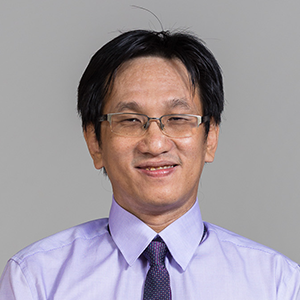
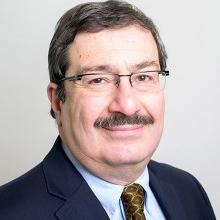
Alec Morton is an Associate Professor (Practice) at the National University of Singapore (NUS) Saw Swee Hock School of Public Health and concurrently holds a Professor of Management Science position at the University of Strathclyde in Glasgow, UK. His career spans multidisciplinary roles across engineering, social science, business, and public health, focusing on evidence-based decision-making in healthcare. Education: PhD in Management Science (University of Strathclyde, 2000), MSc in Operational Research (University of Strathclyde, 1997), BSc in Mathematics and Philosophy (University of Manchester, 1995) Morton’s research integrates decision analysis , health economics , and operations research to address critical questions in health technology assessment , priority-setting in healthcare , and global health governance . His work on antimicrobial resistance, antibiotic reimbursement models, and health system strengthening has influenced international policy frameworks. His recent publications explore economic evaluations for global health challenges, including antimicrobial resistance , assisted dying policies , and health system equity . He is a Fellow of the Royal Society of Public Health and serves as Departmental Editor of Healthcare Management Science . Morton has held advisory roles for organizations such as the UK National Audit Office , NICE , GAVI , and the WHO Global Malaria Programme , with research funded by entities like the Health Foundation and UK Medical Research Council .
Dr. Haiyan Liu is an Associate Professor of Quantitative Methods, Measurement, and Statistics in the Department of Psychological Sciences at the University of California, Merced, within the School of Social Sciences, Humanities, and Arts. She earned her Ph.D. in Quantitative Psychology from the University of Notre Dame (2018). Her research focuses on advanced statistical modeling of psychological and educational data, including high-dimensional, longitudinal, and social network data. She develops Bayesian methodologies and machine learning techniques to enhance understanding of human behavior, with recent emphasis on structural equation modeling, network dynamics, and nonparametric growth curves. Her work addresses challenges in survey methodology and behavioral data analysis. Dr. Liu’s educational background includes a Ph.D. in Quantitative Psychology from the University of Notre Dame (2018), complementing her current academic role. Her lab, accessible at https://sites.google.com/view/ucmhaiyanliu , supports her research activities. Her research interests span Bayesian SEM, social network analysis, and applications of machine learning to behavioral data, aiming to bridge methodological innovation with practical psychological inquiry. Her recent articles highlight advancements in Bayesian model selection, longitudinal sentiment analysis, and social network mediation. She emphasizes prior specification rigor in Bayesian frameworks and explores nonlinear relationships in social dynamics. Though no awards are explicitly listed, her contributions to statistical methodologies in psychological research reflect significant scholarly impact. Dr. Liu advises students in quantitative methods and has developed software tools like logistic4p for misclassification correction in logistic regression. Her work integrates computational methods with theoretical advancements, positioning her as a key contributor to modern quantitative psychology.
Robert W. Levenson is a Professor of Psychology at the University of California, Berkeley, and Professor of the Graduate School. He directs the Berkeley Psychophysiology Laboratory and the Institute of Personality and Social Research. His work focuses on emotion, psychophysiology, and affective neuroscience, particularly in aging and neurodegenerative disorders. He has held roles such as Director of the Clinical Training Program and the Bay Area Predoctoral Training Consortium in Affective Science. Levenson earned a Ph.D. in Clinical Psychology from Vanderbilt University. His research examines emotional processes in marital interaction, cultural influences on emotion, and neural correlates of emotion in disorders like Alzheimer's and frontotemporal dementia. Key projects include longitudinal studies on marital dynamics and age-related emotional changes, supported by NIH grants. His research interests span psychophysiological measures of emotion, empathy, and emotional control, with notable contributions to understanding autonomic specificity in emotions. He trains students in psychophysiological methods, neuroanatomy, and emotion assessment.
Johanna Ziegel is a Professor of Statistics at ETH Zurich, Switzerland, since 2024, and a Visiting Scientist at the Heidelberg Institute for Theoretical Studies (HITS). Previously, she held positions at the University of Bern, where she was promoted to Full Professor in 2023. Her research focuses on decision-theoretically sound methods for forecast evaluation, probabilistic forecasting, risk measures in finance, and applications in meteorology, medicine, and climate science. She is actively involved in editorial roles for journals like Bernoulli , JASA: Theory & Methods , and SIAM Journal on Financial Mathematics . Education: PhD in Stereological Analysis of Spatial Structures from ETH Zurich (2010), supervised by Paul Embrechts and Eva B. Vedel Jensen. Postdoctoral research at the University of Melbourne and Heidelberg University. Research Interests: Forecast evaluation, elicitable functionals, risk measures, isotonic regression, statistical calibration, and applications in finance, climate science, and biostatistics. Her work bridges theoretical statistics with practical challenges in uncertainty quantification and decision-making under uncertainty. Advising & Collaborations: Supervised 7 PhD students and mentored several postdocs. Collaborates with the Computational Statistics group at HITS and the Oeschger Centre for Climate Change Research. Her group explores distributional regression under order constraints and novel methods for forecast comparison. Recognition: Credit Suisse Award for Best Teaching (2022), H.I.T. Program for Academic Leadership (2021–2022). Active in professional service, including the Bernoulli Society Council and editorial boards.
Samir Mamadehussene is an Assistant Professor of Marketing at the Naveen Jindal School of Management (JSOM), University of Texas at Dallas. His research focuses on pricing strategies, promotional tactics, game theory applications in marketing, and consumer decision-making processes. He holds a PhD from Northwestern University (2016), an MSc from Catolica-Lisbon (2010), and a BA from Catolica-Lisbon (2008). Research Interests Dr. Mamadehussene explores how firms strategically use pricing and promotional tools to influence consumer behavior. He analyzes competitive dynamics in markets using game theory frameworks, with a focus on subscription models, rebate mechanisms, and price-matching guarantees. His work bridges marketing strategy and economic theory, addressing questions such as: - How do information transparency policies (e.g., Sunshine Act) reshape technology markets? - What are the unintended consequences of entrepreneurial activity on incumbent firms? - How do consumers process fragmented information across price comparison platforms? Recent Publications Trends His 2025 Organization Science paper examines entrepreneurship's indirect effects on wage structures, while 2024's Marketing Science work analyzes multiproduct rebate strategies. Recent contributions also explore methodological rigor in economic experiments ( Management Science , 2023) and competitive dynamics under limited consumer awareness ( Journal of Industrial Economics , 2023). His work often combines theoretical models with empirical validation, yielding policy-relevant insights (e.g., 2021 Paul Geroski Prize-winning paper). Awards: EARIE Young Economists' Essay Award (2016), Paul Geroski Prize (2021) Grants/Advising: No explicit grants noted; no listed advisees He collaborates widely with scholars in marketing, economics, and strategy, contributing to top-tier journals. His current research portfolio reflects a strong focus on subscription-based industries and regulatory policy impacts.
Dr. Michael Philben is an Associate Professor of Chemistry and Geological and Environmental Science at Hope College, where he joined in 2019 after postdoctoral positions at Memorial University (Canada) and Oak Ridge National Laboratory. His research focuses on climate-carbon cycle feedbacks in vulnerable ecosystems, particularly peatlands and Arctic tundra. His educational background includes a Ph.D. in Marine Science from the University of South Carolina (2014) and a B.A. in Earth and Planetary Science from Northwestern University (2010). At Hope College, he teaches Environmental Science courses and contributes to the Day1: Watershed program. Philben's research centers on carbon and nitrogen cycling in ecosystems containing vast organic carbon stocks. He leads an NSF CAREER-funded project investigating Michigan peat bogs as natural laboratories for climate change impacts, using a north-south transect from Portage to Newberry as a 'space-for-time' experiment. His work examines methane emissions, nitrogen availability, and net carbon balance under warming conditions, with particular attention to Sphagnum-dominated peatlands at the southern edge of their climate range. His 15 most recent publications (2020-2024) reveal a strong focus on peatland biogeochemistry, with increasing emphasis on methane dynamics, nitrogen cycling, and the role of specific biochemical compounds like sphagnan. The research combines field measurements across climate gradients with laboratory experiments, often involving Hope College students in all project phases. NSF CAREER Award for peatland climate research Philben actively mentors undergraduate researchers through the Philben Research Group, which investigates how warming impacts carbon cycling in peatlands. His projects involve interdisciplinary work spanning analytical chemistry, geology, and ecology. The group maintains a network of seven Michigan peat bog field sites and collaborates on international research, including Arctic studies in Alaska and Canada. His laboratory focuses on using analytical chemistry tools to predict climate-carbon cycle feedbacks, with particular attention to southern Michigan peatlands as sentinels for larger northern peatland complexes. The research group employs techniques including greenhouse gas flux measurements, radiometric dating of peat cores, and analysis of organic matter composition.
Peter G. Troyan is an Associate Professor of Economics and Director of Graduate Studies at the University of Virginia, where he has served on the faculty since 2014. His research bridges theoretical and experimental economics with practical applications in market design, focusing on strategic behavior in matching systems and auction mechanisms. Education: Ph.D. in Economics, Stanford University (2014) B.S. in Mathematics (with High Honors) and Physics, University of Michigan (2008) Troyan's research centers on microeconomic theory with emphasis on game-theoretic foundations of market design. His work develops novel frameworks for matching under constraints, analyzes strategic manipulation in allocation mechanisms, and pioneers experimental validations of theoretical predictions. Key contributions include formalizing 'obvious strategyproofness' as a solution concept and designing ranking methods that improve welfare in competitive matching processes. His interdisciplinary approach integrates experimental economics to test theoretical models in real-world settings like school choice and labor markets. His publication record reveals a consistent trajectory toward foundational contributions in mechanism design, with increasing focus on simplicity principles and behavioral realism. Recent work in Econometrica establishes theoretical limits of mechanism simplicity, while experimental studies in Games and Economic Behavior validate preference structures in matching markets. The recurring themes across his publications demonstrate how theoretical insights can be operationalized to solve allocation problems with distributional constraints. Scientific Awards: Best Paper Award and Exemplary Theory Paper Award at ACM Conference on Economics and Computation (EC19) UVA Quantitative Collaborative (2022) and Arts & Sciences Research Grant (2022) Roger Sherman Fellowship (2019-2020) and multiple university research grants Stanford and University of Michigan fellowships during graduate training Troyan directs the Economics Department's graduate program while securing continuous research funding, including five consecutive Bankard Fund grants (2017-2024) supporting his theoretical and experimental work. His service includes editorial roles at the American Economic Journal: Microeconomics and extensive peer review for top economics journals. As an active conference participant, he regularly presents at the ACM Conference on Economics and Computation and Econometric Society meetings, contributing to the market design research community through the University of Virginia Bankard Workshop in Economic Theory. His leadership extends to mentoring graduate students in economic theory research and collaborating with international scholars like Marek Pycia and Thayer Morrill. Current projects explore desirable ranking methodologies and the boundaries of strategyproof allocation mechanisms, positioning his work at the forefront of market design theory.
Roger Flage is a Professor of Risk Management at the University of Stavanger, affiliated with the Faculty of Science and Technology and the Department of Security, Economics and Planning. His research focuses on foundational and applied aspects of risk analysis, uncertainty quantification, and decision-making under uncertainty, with applications in critical infrastructure, environmental systems, and offshore energy. Roger Flage's research interests lie at the intersection of risk science, safety engineering, and decision theory. He investigates how uncertainty—especially epistemic uncertainty and assumptions—affects risk assessments, and advocates for more transparent and robust frameworks. His work spans theoretical advances, such as the treatment of 'black swan' events and the concept of 'real risk', as well as practical applications in offshore safety, power systems, and geohazards. He emphasizes the integration of data-driven methods, AI, and digital twins while critically assessing their limitations and associated security risks. His recent publications show a strong trend toward integrating dynamic, data-rich, and interdisciplinary approaches to risk analysis. Themes include the role of time in risk, AI applications, infrastructure interdependencies, and environmental risk in the oil and gas sector. He frequently publishes in top-tier journals like Risk Analysis , Reliability Engineering & System Safety , and Safety Science , often in collaboration with leading scholars such as Terje Aven and Seth Guikema. No scientific awards are mentioned in the provided text. Roger Flage has supervised or collaborated with several researchers, though no formal list of advisees is provided. His work is supported through academic collaborations and institutional affiliations rather than explicit grant mentions. He is actively involved in advancing risk science methodology, particularly in the treatment of assumptions and uncertainty, and contributes to both theoretical foundations and real-world applications in safety-critical domains. He is associated with research groups and collaborative networks at the University of Stavanger, particularly within the Department of Security, Economics and Planning. His work often involves interdisciplinary teams focusing on risk in complex engineered systems, including energy, transportation, and environmental systems.
Nils Wilde is an Assistant Professor in the Faculty of Computer Science at Dalhousie University, Halifax, Canada. He specializes in robotics, AI, and human-computer interaction, with a focus on cognitive robotics, multi-robot systems, and human-robot interaction. His research integrates planning, optimization, control, and machine learning to develop interactive and adaptive robotic systems. His educational background includes: BSc and MSc in Computer Science or related field from Technical University Berlin (2012, 2016) PhD in Electrical and Computer Engineering from the University of Waterloo (2016–2020), co-supervised by Dana Kulić and Stephen L. Smith Postdoctoral Fellow at TU Delft (2021–2024) in the Autonomous Multi-Robots Lab with Javier Alonso-Mora Postdoctoral Fellow at the University of Waterloo’s Autonomous Systems Lab (until August 2021) Nils Wilde's research centers on enabling robots to learn from human feedback and adapt to user preferences in dynamic environments. His work spans preference learning , multi-objective planning , motion planning , task assignment in multi-robot systems , and human-robot interaction . He develops algorithms that allow robotic systems to balance competing objectives such as efficiency, safety, and user comfort, particularly in service robotics applications like hospitals and industrial facilities. His recent publications (2020–2024) demonstrate a strong trajectory in top robotics venues (T-RO, RA-L, ICRA, IROS, CoRL, CDC, WAFR), with a focus on multi-objective optimization, dynamic vehicle routing, sensor scheduling, and learning user preferences. A key theme is improving the quality of service in robotic systems by optimizing metrics like waiting times, statistical distinctness of plans, and user satisfaction, often through novel cost functions and learning frameworks. Nils is actively building a new robotics lab at Dalhousie University, with funded PhD positions and an interdisciplinary research environment. He is involved in organizing academic workshops, such as the upcoming 2025 RSS workshop on Multi-Objective Optimization and Planning in Robotics. He mentors prospective students and encourages applications from diverse backgrounds.
Dai O'Brien is an Associate Professor of British Sign Language and Deaf Studies at York St John University, where he has worked since 2012. As a deaf academic who uses British Sign Language, he brings unique lived experience to his teaching and research in Deaf Studies. Dr O'Brien's educational background includes: BSc Hons in Biological Sciences from University of Bristol MSc in Deaf Studies from University of Bristol MRes in Sociology from University of Bristol PhD in Sociology from University of Bristol His research focuses on deaf space - how deaf people navigate and creatively transform environments not designed for them. His work explores deaf young people's transition to adulthood, responses to loss of deaf community spaces, and the experiences of deaf academics in higher education. He has a growing interest in deaf people's involvement in radical left politics and applies Bourdieu's and Lefebvre's theories to understand deaf spatial experiences. Recent publications reveal a clear trend toward examining the intersection of deaf identity with broader social and political movements, particularly through spatial theory. His work demonstrates increasing attention to deaf-led research methodologies and the application of visual methods in Deaf Studies. Dr O'Brien actively supervises postgraduate researchers and has contributed significantly to making higher education more accessible for deaf students and staff through initiatives like the LIdIA Position Statement on making higher education more Deaf-friendly. He serves on the Journal of Deaf Studies and Deaf Education Advisory Board and co-organizes the Bridging the Gap conference series, which strengthens connections between deaf communities and higher education institutions. His professional service includes peer reviewing for major journals and evaluating research grants for organizations like the European Research Council.
Dr Elisabeth Huynh is a Senior Research Fellow at the Australian National University's Centre of Epidemiology for Policy and Practice. She specializes in health economics, focusing on understanding health-related preferences, choice behavior, and economic evaluations in public policy and medical interventions. Education: PhD in Economics (Econometrics) and B.Com from the University of Sydney. Affiliations: Research Affiliate at the University of Sydney (2021-2026). Research Interests: Her work spans health economics, applied econometrics, and public policy, with specific contributions to discrete choice experiments, best-worst scaling, health workforce dynamics, healthy aging, nutrition interventions, and quality-of-life valuation. She investigates decision-making patterns in health care, including patient preferences, end-of-life care, and health service provider behavior. Publications: Her recent articles focus on pediatric quality-of-life metrics, pandemic preparedness modeling, dietary supplement choices during pregnancy, and workforce dynamics in health care. These studies employ advanced econometric methods and systematic reviews to inform policy decisions. Supervision: Elisabeth supervises PhD candidates exploring topics like child health valuation, chronic disease management, and maternal nutrition programs.
Dr. Sebastian Birk is an environmental scientist and researcher at the Aquatic Ecology department within the Faculty of Biology at the University of Duisburg-Essen. His work focuses on the science-policy interface for aquatic ecosystems in Europe, emphasizing large-scale bioassessment and management under multiple stressors. He served as coordinator for the EU project MARS (2014-2018) and currently manages freshwater science initiatives at the European Topic Centre for Inland, Coastal and Marine Waters (ETC-ICM) supporting the European Environment Agency (EEA). Research Interests : Multiple stressors, ecosystem services, restoration ecology, environmental policy assessment, bioassessment methods, and climate change impacts. Teaching : Scientific writing, surface water ecology, taxonomic identification, and fieldwork in river/lake systems. Recent publications highlight integrated frameworks for freshwater restoration, stressor interactions, and policy-driven water management. Key themes include agricultural land use effects on rivers, diversification of restoration funding, and challenges in harmonizing ecological assessment across Europe. His work bridges ecological theory with practical implementation for sustainable water resource management. Projects like MARS and MERLIN reflect his leadership in addressing complex environmental issues through collaborative science and stakeholder engagement. Dr. Birk's role in the Water Framework Directive intercalibration exercises underscores his technical expertise in standardizing ecological assessment across national borders.
Anthony TUNG Kum Hoe is a Professor in the Department of Computer Science at the National University of Singapore (NUS), where he has established himself as a leading researcher in database systems and data mining. He is also affiliated with the NUS Graduate School for Integrative Sciences and Engineering and serves as a SINGA supervisor. His educational background includes a Ph.D. in Computer Science from Simon Fraser University (2001), an M.Sc. in Information Systems & Computer Science from NUS (1998), and a B.Sc. with 2nd Class Upper Honours in Information Systems & Computer Science from NUS (1997). Professor Tung's research spans several interconnected areas within database systems and data mining. His primary focus is on developing efficient methods for indexing and searching complex data structures including time series, trajectories, trees, graphs, and high-dimensional objects. He has pioneered work in visual query processing, keyword search, and ranking systems. His GENIE (Generic Inverted Index) and LAMP (semi-Lazy Mining Paradigm) projects represent significant contributions to big data analytics, particularly in handling the 'variety' aspect of big data by providing unified frameworks for processing diverse data structures while preserving semantic meaning. His research bridges theoretical database concepts with practical applications in visual data mining, collaborative analytics, and just-in-time model construction. His recent publications reveal a clear evolution from traditional database research toward more complex analytics on diverse data types. While maintaining his core expertise in database indexing and query processing, his work has expanded to incorporate machine learning techniques, particularly in areas like nearest neighbor search, anomaly detection, and predictive analytics. There's a noticeable trend toward interdisciplinary applications, with publications spanning computer vision, natural language processing, transportation systems, and social computing. His research group consistently publishes in top-tier venues including SIGMOD, VLDB, ICDE, and KDD, demonstrating both theoretical rigor and practical relevance. 2005 Best Paper Award for 'Indexing DNA Sequences Using q-grams' 2007 Invited panel speaker on 'Advice for a successful database researcher career in Asia' at SIGMOD 2010 Guest Lecturer for VLDB Database School 2012 VLDB 2012 Research PC Co-chairs 2015 10 Years Best Paper Award, DASFAA 2015 Invited to SIGMOD 2008 and SIGKDD 2008 Program Committees Professor Tung has supervised numerous PhD students and research associates throughout his career, including notable researchers like Zhang Zhenjie (recipient of the 2007 President Graduate Fellowship) and Wang Nan (published in SIGMOD'08). His research group has been consistently productive, with students publishing in top conferences including SIGMOD, ICDE, and VLDB. His professional service is extensive, having served as PC Chair for COMAD'06, Research PC Co-chair for VLDB 2012, and on program committees for virtually all major database and data mining conferences over the past two decades. His research has been supported by various grants that have enabled significant contributions to database technology. His GENIE and LAMP projects represent a cohesive research direction focused on developing systematic approaches to big data analytics. GENIE provides a unified platform for storage and retrieval of big data with various structures, while LAMP introduces a novel paradigm for predictive analytics that combines the strengths of lazy and eager learning approaches. These projects have evolved to incorporate GPU acceleration and parallel processing capabilities, reflecting his commitment to addressing real-world scalability challenges in data-intensive applications.
Dr. Kenneth Edwin Barker is a Professor in the Department of Computer Science within the Faculty of Science at the University of Calgary, where he also serves as Director of the Institute for Security, Privacy and Information Assurance (ISPIA). His academic career spans several decades with significant contributions to database systems and privacy research. Dr. Barker earned his B.S. and M.S. in Computer Science from the University of Calgary in 1982 and 1984 respectively, followed by a Ph.D. in Computer Science from the University of Alberta in 1990. His educational background established the foundation for his extensive research career in database systems and information security. His primary research interests focus on Privacy Preserving Data Repositories , with specific attention to protecting privacy in mobile applications, understanding privacy's impact on data analytics, and architecting database management systems that inherently respect user privacy. His work also extends to distributed database environments, integration of legacy systems, and multidatabase environments. Dr. Barker's research bridges theoretical foundations with practical applications, making significant contributions to how privacy is implemented in real-world systems. An analysis of his recent publications reveals a strong trend toward practical privacy-preserving techniques for cloud data, social networks, and location-based services. His work consistently addresses the tension between data utility and privacy protection, developing innovative methods to maintain data value while safeguarding personal information. The publications span multiple subfields including encrypted search, graph privacy, high-dimensional data privacy, and privacy metrics. Best Paper Award at DBSec 2012 Best Paper Award at CODASPY 2012 Best Paper at BNCOD 2009 Dr. Barker has been instrumental in establishing privacy research infrastructure at the University of Calgary through his leadership of ISPIA. His research has attracted significant funding from various sources supporting privacy and security initiatives. While specific grant details aren't provided in the text, his extensive publication record indicates sustained research funding throughout his career. He has collaborated extensively with researchers both within and outside the University of Calgary, particularly with R. Alhajj and other colleagues on numerous projects. As Director of ISPIA, Dr. Barker oversees a research environment focused on advancing security and privacy technologies. The institute serves as a hub for interdisciplinary research, bringing together computer scientists, social scientists, and legal experts to address complex privacy challenges. His leadership has positioned the University of Calgary as a significant player in privacy research within Canada.
Refik Soyer is a Professor of Statistics at The George Washington University. His research focuses on Bayesian statistics, reliability modeling, decision analysis, and time series analysis. He has made significant contributions to the application of Bayesian methods in reliability engineering, queueing systems, and adversarial risk analysis. Education: D. Sc. in Statistics (1985), George Washington University His recent publications highlight advancements in Bayesian reliability analysis, adversarial decision frameworks, and computational methods for time series and queueing systems. Areas of emphasis include dynamic INAR processes, accelerated life testing, and software failure modeling. Soyer's work bridges theoretical statistics with practical applications in call centers, healthcare fraud detection, and risk management.


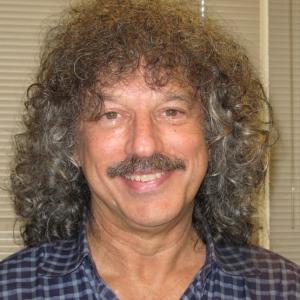
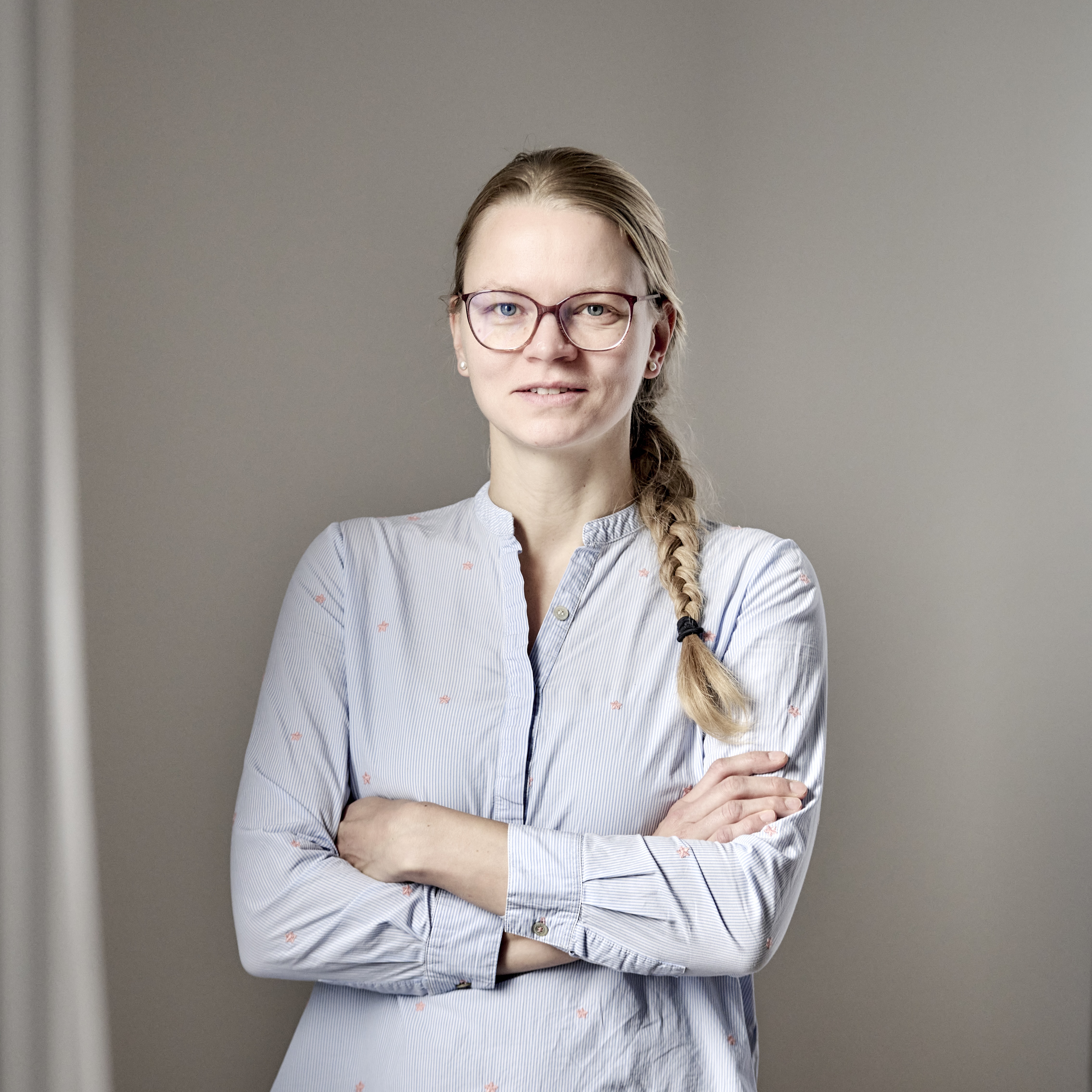



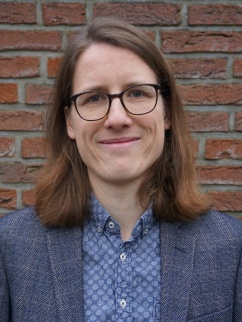
/prod01/yorksjacuk/media/content-assets/safe-images/1600-x-1000/Dai-Obrien.jpg)