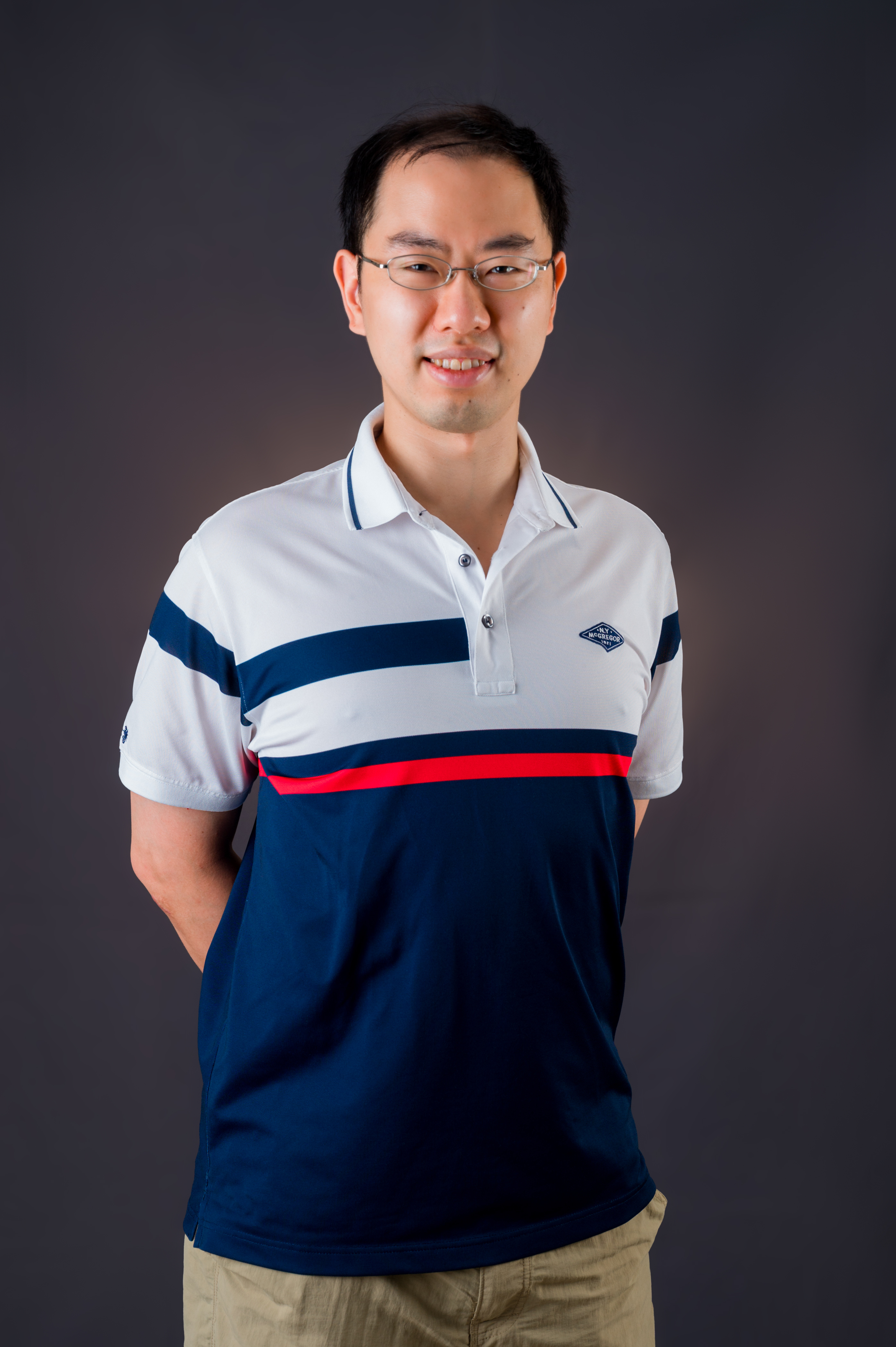
Abdurrahman Yılmaz is an Assistant Professor at Istanbul Technical University's Department of Control and Automation Engineering within the College of Electrical-Electronics. His career spans academic and industrial roles, including a Research Assistant position at Istanbul Technical University (2018-2022) and Test Rig Design Engineer at ASELSAN INC. (2014). Education: PhD in Control and Automation Engineering (Istanbul Technical University, 2014-2022) MSc in Mechatronics Engineering (Yildiz Technical University, 2014-2017) BSc in Electronics Engineering (Istanbul Technical University, 2009-2014) Double Major in Control and Automation Engineering (Istanbul Technical University, 2011-2014) Research Interests focus on Robotics, Autonomous System Design, and Control Theory. His work includes localization frameworks for autonomous mobile robots, adaptive control algorithms for quadcopters, and soft haptic sensing technologies. Recent research explores digital twin simulators and quadruped robot dynamics. Scientific Output trends highlight advancements in mobile robot navigation, industrial automation, and autonomous systems. Publications span journals like Journal of Field Robotics and conferences including TAROS and RoboSoft. Awards: The Most Successful Doctoral Thesis Award of 2022 (University, 2023) 1st Water Management Awards (Ministry of Forestry and Water Affairs, 2019) Collaborations extend to international researchers in robotics and control systems. He serves as PI for the project "Development of a Design-Aiding Analysis Tool for Four-Legged Robots" (2023-2024).
Tami Brown-Brandl is Professor and holder of the Dr. William E. and Eleanor L. Splinter Chair in Biological Systems Engineering at the University of Nebraska-Lincoln, where she conducts pioneering research at the intersection of agricultural engineering and animal science. Her research program focuses on: Computer vision systems for animal behavior monitoring Vibration-based vital signs detection in livestock Digital twin development for agricultural buildings RFID and sensor fusion for precision livestock farming Swine and beef cattle production optimization Individual animal identification using deep learning Recent publications (2023-2025) demonstrate a clear trajectory toward real-time, non-invasive monitoring systems using multi-modal sensor fusion. Her work integrates computer vision with ambient vibration analysis for piglet nursing behavior assessment, develops depth-image-based posture classifiers for sows, and creates digital twin frameworks that harness real-time data for precision livestock management. These innovations address critical challenges in animal welfare assessment and production efficiency through advanced engineering solutions. Dr. Brown-Brandl's leadership in precision livestock farming is evidenced by her extensive publication record on sensor systems development, with particular emphasis on practical applications for swine production systems including shoulder lesion detection, feeding behavior monitoring, and farrowing pen optimization.
Vishesh Mishra is a Prime Minister's Research Fellow at the Department of Computer Science and Engineering, Indian Institute of Technology Kanpur. He concurrently serves as a Visiting Research Fellow at INRIA Centre, University of Rennes, France, and an External Research Collaborator at CANDLE LAB, IIT Roorkee. His research centers on hardware security vulnerabilities in approximate computing systems, with focus areas including hardware trojan detection in approximate circuits, energy-efficient error-resilient architectures, and side-channel attack mitigation. He develops novel methodologies for securing IoT devices and blockchain implementations through circuit-level innovations and floating-point approximation techniques. Analysis of his 15 most recent publications reveals dominant themes in approximate arithmetic unit design (adders/multipliers), hardware trojan countermeasures, and floating-point resilience. His work bridges theoretical security models with practical VLSI implementations, consistently targeting energy efficiency without compromising critical functionality in error-tolerant applications. Scientific recognition includes: Prime Minister's Research Fellowship (India's premier PhD fellowship) Collège doctoral de Bretagne international mobility grant (€9600 for 6-month INRIA research) His research is supported through competitive fellowships rather than traditional grants, with no student advising roles documented. Current collaborations span IIT Kanpur's C3i Center, IIT Roorkee's CANDLE LAB, and INRIA's Rennes research unit, focusing on cross-institutional hardware security projects.
Chung-Wei Lin is an Associate Professor and Deputy Director at the Department of Computer Science and Information Engineering and the Graduate Institute of Networking and Multimedia at National Taiwan University. His research focuses on cyber-physical systems, particularly in the domains of connected and autonomous vehicles, system security, and design methodologies. He maintains active collaborations with industry partners including Toyota and has established himself as a leading researcher in intelligent transportation systems in Taiwan. Education: Ph.D. (2015) from Department of Electrical Engineering and Computer Sciences, University of California, Berkeley (Advisor: Alberto L. Sangiovanni-Vincentelli) M.S. (2007) from Graduate Institute of Electronics Engineering, National Taiwan University (Advisor: Yao-Wen Chang) B.S. (2005) from Department of Computer Science and Information Engineering, National Taiwan University Dr. Lin's research interests center on cyber-physical systems with specific focus on connected and autonomous vehicles, security mechanisms, and system design methodology. Before returning to NTU in 2018, he worked at Toyota InfoTechnology Center, USA, Inc. His recent projects cover diverse topics including systems engineering, formal verification for robustness and compatibility, runtime monitoring, and intelligent intersection management. His work bridges theoretical foundations with practical applications, addressing real-world challenges in transportation systems through innovative technical solutions. Analysis of Dr. Lin's recent publications (2023-2025) reveals a strong emphasis on intelligent transportation systems with particular focus on security challenges for connected vehicles, formal verification techniques for safety-critical systems, and novel control algorithms for vehicle coordination. His research demonstrates increasing integration of machine learning approaches, especially reinforcement learning, to address complex decision-making problems in transportation. The work spans multiple technical domains including control theory, networking, cybersecurity, and formal methods, reflecting the inherently interdisciplinary nature of cyber-physical transportation systems research. Selected Awards: 2016 Best Paper Award, ACM Transactions on Design Automation of Electronic Systems 2015 Most Accessed ESL Paper Best Paper Award, IEEE ISSREW 2016 workshop Best Paper Award, ICCD 2010 Best Paper Nominee, ASP-DAC 2015 Dr. Lin currently advises multiple Ph.D. and M.S. students, with research focusing on various aspects of cyber-physical systems for transportation. His group includes Ph.D. students Pintusorn Suttiponpisarn and I-Ching Tseng, as well as several M.S. students. His extensive publication record and numerous patents (over 20 granted) indicate significant research impact and likely substantial research funding from both government and industry sources. His research program demonstrates strong translational potential, with many concepts moving from theoretical foundations to practical implementations. Dr. Lin leads the Cyber-Physical Systems Laboratory at NTU, which focuses on research related to intelligent transportation systems. The lab conducts research in areas including vehicle control, intersection management, security mechanisms, and formal verification for cyber-physical systems. His team collaborates with researchers from various institutions globally, as evidenced by his extensive publication record with international co-authors from universities and research institutions in the United States, Japan, and Europe.
Giovanni Squillero is a Full Professor in the Department of Control and Computer Engineering (DAUIN) at Politecnico di Torino, Italy. He leads the CAD group (Electronic CAD & Reliability) and serves on Politecnico's Joint Committee for Teaching and Ph.D. Steering Committee (Pure and Applied Mathematics).
John J. Lucido, III, Ph.D., is a Medical Physicist at the Mayo Clinic in Rochester, Minnesota, specializing in Radiation Oncology . He is affiliated with the Mayo Clinic College of Medicine and Science and actively involved in clinical research, education, and global medical physics initiatives. Education: Ph.D. in Medical Physics (2013) - University of British Columbia M.S. in Mathematical Physics (2008) - Rutgers University B.S.E. in Engineering Physics - Electrical Engineering (2008) - University of Michigan Dr. Lucido's research focuses on advanced radiation therapy techniques , including: Automated treatment planning systems Dosimetric characterization of novel radiation devices Machine learning applications in organ-at-risk segmentation Clinical decision tools for spine stereotactic body radiation therapy (SBRT) Quality assurance protocols for radiation delivery His publications highlight the integration of Monte Carlo simulations , deep learning , and radiobiological modeling to optimize radiation therapy for complex cases such as pregnant patients, ultracentral lung cancers, and skin electron beam therapy. Scientific awards and honors include: Teacher of the Year - Radiation Physics (Mayo Clinic, 2022) International Graduate Student Fellowship (University of British Columbia, 2009) Graduate Aid in Areas of National Need Fellowship (Rutgers University, 2005) Certified Therapeutic Medical Physicist (American Board of Radiology, 2016) Dr. Lucido actively contributes to professional societies as a Voting Member of the Society of Directors of Academic Medical Physics Programs (SDAMPP) , Chair of the Eclipse Scripting and Automation Group , and International Consultant for C/CAN - Kumasi City Radiotherapy Project . He also serves on multiple Mayo Clinic committees related to education and quality assurance. His work emphasizes global radiation therapy standardization and educational infrastructure development , particularly in underserved regions like Ghana. Recent projects include automated testing platforms for treatment planning scripts and customizable radiation shields for skin therapy.
Dr. Benjamin Durakovic is an Associate Professor at the Faculty of Engineering and Natural Sciences, International University of Sarajevo since 2016. He holds a PhD in Industrial Engineering (2016), MSc in Industrial Engineering and Management (2008), and a Dipl. Eng. in Energy Engineering from the University of Sarajevo (2003). Education: PhD in Industrial Engineering, International University of Sarajevo (2016) MSc in Industrial Engineering and Management, University of Sarajevo (2008) Dipl. Eng. in Energy Engineering, University of Sarajevo (2003) Research Interests: His work focuses on lean manufacturing integration with Industry 4.0, phase change materials (PCMs) in construction and energy systems, thermal energy storage, quality management, and optimization of manufacturing processes. He explores applications of PCMs in building envelopes, electronics cooling, and sustainable composites, while also investigating the impact of industrial IoT on quality control and workforce productivity. Recent Articles: Recent publications highlight advancements in PCM applications, lean 4.0 manufacturing, measurement system capability, and error analysis in shift-based production. His research bridges theoretical frameworks with practical case studies in metal coating, textile, and rebar manufacturing. Advising & Grants: No formal advisees listed, but his research emphasizes industry collaboration and applied solutions. His work contributes to innovation ecosystems through initiatives like the Science-Technology Park Ilidža. Labs & Teams: Engaged in interdisciplinary projects at the International University of Sarajevo, focusing on smart technologies, sustainable materials, and advanced manufacturing systems.
John W. Gillespie Jr. is the Donald C. Phillips Professor of Civil and Environmental Engineering at the University of Delaware, with joint appointments in Materials Science and Engineering and Mechanical Engineering. He leads four Centers of Excellence in composites research and directs the Center for Composite Materials. A global authority in composites, his work focuses on multifunctional materials, interphase science, and composites manufacturing. He has contributed over 800 publications and 19 patents, advising 56 Master’s and 38 Ph.D. students. Education: PhD, MS, BS in Mechanical/Aerospace Engineering from University of Delaware. Leadership: Served on National Research Council Board and National Materials Advisory Board. Research interests include processing-structure-property relationships, durability, and multi-scale modeling of composites. His work addresses real-world challenges in aerospace, defense, and microelectronics. Awards include the U.S. Army’s Paul A. Siple Memorial Award (1998), Jud Hall Composites Award (2000), and Fellowships from Society of Manufacturing Engineers (2013) and SAMPE (2015). Advising and grants: 38 doctoral graduates and over 60 industrial consortium partners. Active in editorial roles for Journal of Thermoplastic Composite Materials since 1993.
Professor Peter Fussey holds a dual role at the University of Sussex as a Professor in the School of Engineering and Informatics and Associate Dean for Global and Civic Engagement at the Faculty of Science, Engineering and Medicine. He leads the Energy and Materials Engineering Research Centre, focusing on Thermal Systems , Battery and Vehicle Energy Management , Model Predictive Control , and Data Analytics . Previously, he spent over 25 years at Ricardo UK, leading the Control Department and developing advanced control systems for hybrid/electric vehicles and thermal management. His career also includes rail acoustics research at British Rail Research and SNCF. Education: DPhil in Engineering from the University of Oxford MA in Engineering from the University of Cambridge Research Interests: Professor Fussey’s work spans automotive and mechanical engineering , with a focus on low-emission powertrains , energy management systems , and advanced control algorithms . His recent projects include optimizing EV cabin climate control for extended range, geofencing for smart mobility, and neuro-fuzzy modeling for thermal systems. He has also pioneered applications of model predictive control (MPC) in selective catalytic reduction (SCR) systems and engine combustion optimization. Teaching: Courses include Low Emission Vehicle Propulsion , Vehicle Dynamics , and supervising Formula Student projects. His teaching emphasizes practical applications of control theory and sustainability. Labs/Teams: Leads the Energy and Materials Engineering Research Centre , fostering interdisciplinary research in sustainable energy and advanced propulsion systems.
Wen-Ben Jone is an Associate Professor at the University of Cincinnati 's Department of Electrical Engineering & Computing Systems. He previously held positions as Assistant/Associate Professor at New Mexico Institute of Mining and Technology and Visiting Associate/Full Professor at National Chung-Cheng University, Taiwan. His research focuses on VLSI system design, low-power circuits, and fault-tolerant testing methodologies. He has advised over 70 graduate students and authored/co-authored numerous papers in top-tier journals and conferences. Education : PhD: Case Western Reserve University (Computer Engineering, 1987) MS: National Chao-Tung University (Computer Engineering, 1981) BS: National Chao-Tung University (Computer Science, 1979) Research Interests : Reliable VLSI design and testing Low-power and fault-tolerant circuits Many-core processor architectures Parallel computing and debugging tools Awards : 2003 IEEE Donald G. Fink Prize Paper Award 2008 Best Paper Award (International Symposium on Low-Power Electronics) 2012 Best Paper Award (VLSI Design, Automation & Test) Grants : $390k NSF Grant (CCF-0541103) for cache optimization techniques His work emphasizes practical solutions in VLSI testing and reliability, with a focus on low-power strategies and resilient system design.
Ahyeon Koh is an Associate Professor in the Department of Biomedical Engineering at Binghamton University. She earned her BS and MS from Sogang University, followed by a PhD from University of North Carolina at Chapel Hill, and completed postdoctoral training at University of Illinois at Urbana-Champaign. Her research focuses on overcoming biocompatibility challenges in biosensors through innovative approaches including therapeutic release systems, flexible/stretchable platforms, and bio-inspired materials. Research interests center on developing biocompatible sensing systems for real-time physiological monitoring. The Koh Lab pioneers wearable biosensors with specific emphasis on breathable epidermal devices, electrochemical detection, and microfluidic sweat analysis. Key innovations include skin-interfaced microfluidic systems for sweat capture/storage, ultrathin injectable sensors for cardiac monitoring, and sustainable electronics from upcycled materials. Her 15 most recent publications (2018-2025) primarily focus on wearable biosensors (73%), microfluidics (13%), sustainable electronics (7%), and wound monitoring (7%). Emerging trends include epidermal electronics, stretchable nanofibers, non-invasive biomarker detection, and mobile health integration. Patented technologies cover epidermal biofluid characterization devices and organ-mounted electronics. Significant contributions include NSF CAREER Award research advancing biosensor design and leadership in Mayo Clinic inflammatory disease projects. Current investigations target flexible bioelectronics, enhanced sweat biomarker analysis, and smart wound care platforms serving clinical, point-of-care, and diagnostic applications.
Anna Lombardi is an Associate Professor at the Department of Science and Technology (ITN) of Linköping University, Sweden. She is responsible for courses in control systems across engineering programs at Campus Norrköping. She holds a Master's (1992) and PhD (1996) in Control Systems from Università di Firenze, Italy, with prior research at the Neural Network Group at Università di Firenze and Università di Siena. Her research focuses on predictive control, neural networks, and modeling biological systems. Key contributions include controllability analysis of networks and community structures in complex systems. She collaborates internationally, as seen in co-authored works with institutions like DII of Università di Siena and the ISMIS conference. Her academic affiliations include Physics, Electronics, and Mathematics at Linköping University. No specific grants or awards are listed in the provided texts, though her work reflects sustained engagement in interdisciplinary technical research.
Wenting Shao is a Research Fellow in the Department of Chemistry, specializing in advanced nanotechnology and biosensor development. Her work focuses on integrating carbon nanotubes and metal-organic frameworks into high-sensitivity detection systems for environmental monitoring, biomedical diagnostics, and drug analysis. Notable research includes fentanyl detection using machine learning-enhanced sensors, rapid SARS-CoV-2 antigen screening, and stress hormone analysis through nanoelectronic platforms. Her research interests span nanomaterials synthesis, electrochemical sensing mechanisms, and biomedical applications of nanotechnology. She has developed innovative sensor designs such as carbon nanotube-based field-effect transistors (FETs) and automated electrolyte-gate systems for multi-sensor screening. Publications highlight contributions to drug detection (e.g., fentanyl and norfentanyl), pathogen diagnostics (tuberculosis), and endocrine system monitoring (stress hormones). Her work bridges material science with clinical applications, emphasizing practical solutions for environmental and healthcare challenges.
Jory Lietard is an Assistant Professor in the Department of Inorganic Chemistry at the Faculty of Chemistry. His research focuses on nucleic acid chemistry, RNA/DNA microarray synthesis, and light-directed chemical synthesis. He leads three major research projects: FANArrays (2022–2025), RNA arrays: die nächste Generation, and Large libraries of base-modified RNA for Nanopore sequencing (2021–2024). His work contributes to UN Sustainable Development Goals related to sustainable innovation in biosensors and biotechnology. Education: PhD (Privatdozent title) Key Projects: FANArrays: High-throughput platform for nucleic acid synthesis (2022–2025) RNA arrays: Next-generation RNA microarray development Base-modified RNA libraries for nanopore sequencing (2021–2024) Research interests include nucleic acid photolithography, biosensor design, and enzymatic synthesis of oligonucleotides. Recent advancements include color-corrected optical systems for high-resolution nucleic acid printing and accelerated RNA microarray synthesis. Collaborations span material science, optics, and synthetic biology. Media contributions include expert commentary on RNA chip innovations and DNA-based art (e.g., 16 million color palette creation). He actively engages in scientific presentations, including posters at international conferences on photolithography and enzymatic synthesis.
Mr. Sami Siddiqui is a Visiting Professor at the School of Electronic Engineering and Computer Science, Queen Mary University of London. He is affiliated with the Peter Landin building (Room CS 419) and can be reached at m.s.siddiqui@qmul.ac.uk . His research interests span Robotics, Control Systems, and Computer Vision, with a focus on applications such as haptic feedback systems, robotic grasping under uncertainty, and exoskeleton design for medical rehabilitation. He also explores Bayesian models for autonomous systems and advanced control techniques in mechatronics. Mr. Siddiqui’s publications reflect a trajectory from early work on crane control systems and Urdu sign language recognition to recent advancements in underwater robotics and dexterous manipulation. His contributions highlight interdisciplinary approaches at the intersection of robotics, AI, and biomedical engineering. No scientific awards or grants are explicitly mentioned in the provided texts. Advising roles or student supervision details are not listed here. His involvement in specific labs or teams is not detailed in the available information.