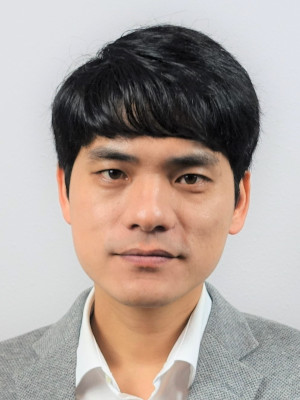
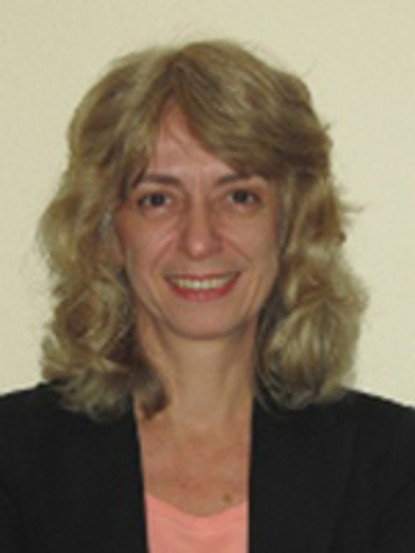
Raquel Verdejo is a Research Scientist at the Institute of Polymer Science and Technology (ICTP-CSIC) in Spain. She holds a PhD in Metallurgy and Materials from the University of Birmingham (UK) and an MSc in Physics from the University of Valladolid (Spain). Her academic career includes postdoctoral work at Imperial College London under Prof. Milo Shaffer before joining CSIC in 2006 via Juan de la Cierva and Ramón y Cajal contracts. Current Affiliation: ICTP-CSIC, Madrid, Spain Education: University of Valladolid (MSc Physics) , University of Birmingham (PhD Metallurgy and Materials) Raquel’s research focuses on polymer composites, nanocomposites, and foams, including: Smart Polymers for dielectric elastomer actuators Sustainable Processing of self-healing and recyclable materials Advanced Applications in radiation shielding and soft robotics Her work spans over 100 publications in Q1 journals like Advanced Materials and Chemical Communications , with recent emphasis on circular economy and bio-based systems. Scientific Recognition : Juan de la Cierva and Ramón y Cajal contracts Raquel also serves as Academic Director of the Official High Master's Degree in Plastics and Rubber (UIMP-CSIC) and Academic Coordinator of the Doctoral Program in Science and Technology (UIMP). Her patents include conductive rigid foams and liquid crystal-based actuators.
Fang Luo is the Empire Innovation Associate Professor and Director of the Spellman High Voltage Power Electronics Laboratory at Stony Brook University's Department of Electrical and Computer Engineering. He is affiliated with the College of Engineering and Applied Sciences, focusing on advancing power electronics technologies. His research interests encompass Power Electronic Converters and Systems, Power Module Packaging, and EMI Modeling and Mitigation. These areas address challenges in high-voltage systems, renewable energy integration, and electromagnetic compatibility. Dr. Luo's work emphasizes practical applications, such as optimizing power converters for offshore wind farms and developing advanced packaging solutions for wide bandgap (WBG) semiconductors. His laboratory, the Spellman High Voltage Power Electronics Lab, drives innovation in high-voltage systems and energy-efficient power electronics. His recent publications highlight advancements in HVDC wind energy systems, GaN-based converter designs, and EMI mitigation strategies. He has contributed to the design of modular power converters and cryogenic power electronics for electric aircraft propulsion. As a leader in his field, Dr. Luo's research bridges theoretical modeling and practical engineering solutions, with a focus on sustainable energy systems and cutting-edge semiconductor technologies.
Dr. Sheldon Williamson is a Professor and NSERC Canada Research Chair in Electric Energy Storage Systems for Transportation Electrification at Ontario Tech University's Department of Electrical, Computer and Software Engineering, Faculty of Engineering and Applied Science. His research focuses on advanced energy storage technologies, power electronics, and their integration into transportation systems and smart grids. Education: Ph.D. (Electrical Engineering, Illinois Institute of Technology, 2006), M.S. (Electrical Engineering, Illinois Institute of Technology, 2002), B.E. (Electrical Engineering, University of Mumbai, 1999). Research Interests - Electric Energy Storage Systems for Transportation Electrification - Battery Management Systems (BMS) and Thermal Safety - Wireless Power Transfer and Charging Infrastructure - Cyber-Physical Security in EV Systems - Smart Grid Integration of Renewable Energy Publications : Over 50 peer-reviewed articles from 2021–2025, focusing on battery technologies, power electronics, and electrification challenges. Key themes include solid-state batteries, cloud-based BMS architectures, and dynamic wireless charging systems. No scientific awards explicitly listed in provided texts. Active in academic leadership and curriculum development within the department.
Markeljan Fishta is a Researcher at the Department of Electronics and Telecommunications (DET) of the Polytechnic University of Turin. His roles include teaching assistance in courses such as PCB Design for PhD students, Analog Electronics for Master’s students, and Foundations of Electronics for Aerospace Engineering undergraduates. His research focuses on electromagnetic compatibility (EMC), power electronics, and wireless communication systems, particularly in reducing electromagnetic interference (EMI) in power converters and developing acoustic-based communication for smart water networks. His recent work emphasizes EMI mitigation techniques in wide bandgap (WBG) inverters, GaN-based DC-DC converters, and sigma-delta modulators. Additionally, he explores in-pipe acoustic communication for urban water infrastructure, addressing challenges in channel modeling and data transmission reliability. Fishta collaborates with researchers like Franco Fiori and Erica Raviola on these topics, contributing to both theoretical advancements and applied solutions. His publications reflect a multidisciplinary approach, spanning IEEE Transactions on Electromagnetic Compatibility and international workshops. His research trends show a strong emphasis on source-based EMI reduction strategies, robust modulator design, and innovative communication methods for infrastructure monitoring. Fishta’s teaching contributions span multiple engineering programs, demonstrating his commitment to both academic instruction and cutting-edge research in electronic systems and communication technologies.
Paul R. Chiarot is a Professor and Chair of the Department of Mechanical Engineering at Binghamton University, State University of New York (SUNY). He holds a BASc, MASc, and PhD in Mechanical Engineering from the University of Toronto. His research focuses on microfluidics, multiphase flows, and electrospray deposition, with applications in advanced manufacturing, biotechnology, and biomedical engineering. Research Interests: Chiarot leads the Microfluidics and Multiphase Flow Laboratory, exploring electrospray printing for electronics packaging, synthetic vesicle fabrication for membrane biology studies, and fluid mechanics of the brain. His work addresses challenges in energy, healthcare, and nanotechnology. Key areas include: Electrospray-based additive manufacturing Microfluidic platform development for asymmetric vesicles Interstitial fluid transport in brain tissues Thermal management solutions for electronics Awards and Grants: He has received the NSF CAREER Award (2016) and the SUNY Chancellor's Award for Excellence in Scholarship (2022). His research is supported by the NSF, NIH, ACS, SRC, and industry collaborators. Lab and Collaborations: The lab's interdisciplinary approach integrates fluid dynamics, materials science, and biotechnology. Recent projects include developing high-throughput vesicle production and modeling cerebral fluid dynamics. Chiarot also contributes to thermal optimization of microchannel heat sinks for data centers and high-performance computing.
Lionel Pichon is a leading researcher at the Laboratory of Electrical and Electronic Engineering of the University of Paris. His primary affiliations include the Department of Electrical and Electronic Engineering of Paris, where he specializes in advanced electromagnetic research. His work focuses on Electromagnetics , Electromagnetic Compatibility (EMC) , and Wireless Power Transfer , with particular emphasis on composite materials, biomedical applications, and automotive systems. Expertise in numerical methods (FDTD, FIT, DGTD) for electromagnetic simulations Pioneer in shielding effectiveness analysis for composite materials Developer of AI-driven approaches for dielectric property characterization Over 70 publications since 2017 highlight his contributions to fields like inductive power transfer systems, medical device EMC, and GPR imaging techniques. Collaborates extensively with institutions globally, including research on antenna design for implantable medical devices and electromagnetic compatibility in healthcare facilities. Current research trends emphasize machine learning integration with traditional electromagnetic analysis to optimize system performance and safety standards.
Victoria Shao is a Teaching Associate Professor in the Department of Electrical and Computer Engineering at the University of Illinois Urbana-Champaign (UIUC). She specializes in electromagnetic compatibility (EMC), computational electromagnetics (CEM), and high-power microwave technology. Her work focuses on advancing numerical methods for transient electromagnetic analysis, stochastic modeling in complex enclosures, and the design of integrated electronic systems. Affiliations: Holonyak Micro and Nanotechnology Laboratory at UIUC Education: B.S. in Electrical Engineering (USTC, 2003), Ph.D. in Electromagnetics (Chinese Academy of Sciences, 2008) Prior positions: Researcher at ElectroScience Laboratory, Ohio State University (2009–2014) Research Interests: Dr. Shao’s work bridges computational methods with practical engineering challenges, emphasizing: Stochastic Green’s function approaches for statistical wave physics Multi-physics analysis of electronic systems Development of scalable algorithms for high-performance computing Nanotechnology integration for 3D RF components Her research has led to innovations in: Self-rolled-up membrane (S-RuM) nanotechnology for compact inductors Supercomputing-driven radio wave propagation models for urban environments Parallel-in-space-and-time electromagnetic simulation methods Awards: She has received multiple recognitions, including Best EMC Paper finalist awards (2022, 2023) and a Best Paper Award in IEEE Transactions (2017). Teaching and Contributions: Dr. Shao teaches core ECE courses such as ECE 110, ECE 210, and specialized EMC courses (ECE 498 YS3/YVS). She pioneers educational strategies using visualization tools and asynchronous learning to enhance STEM accessibility.
Vesna Javor is a Full Professor at the Faculty of Electronics, University of Niš, Serbia, where she is affiliated with the Department of Electrical Power Engineering. She earned her PhD in 2009 and completed her undergraduate studies in 1999, both in Theoretical Electrical Engineering at the same institution. She was promoted to full professor in 2023. Her research focuses on lightning electromagnetic fields , lightning current modeling , electromagnetic compatibility (EMC) , and power system transients . She has made significant contributions to modeling double- and two-peaked lightning currents, Fourier transform applications in field computation, and compliance with IEC 62305 standards. Her work bridges theoretical electrical engineering with practical applications in high-voltage systems and medical device safety. The recent publications (2009–2012) reflect a strong focus on lightning physics, transient electromagnetic phenomena, and EMC. They span modeling techniques, standard compliance, and real-world deployment of lightning detection networks. Keywords across these works include Electromagnetics, Power Systems, and Signal Processing, with subfields ranging from return-stroke dynamics to medical EMC. Scientific and Professional Leadership: President of the IEEE EMC Chapter Head of DAAD Project 'Electrical Engineering' (2005–2006) President of the Organizing Committee of the biennial PES Conference Author of 3 textbooks and ~80 scientific papers She is currently participating in 2 national and 1 international research project . While no formal advising or grant details are listed, her role as a full professor and project leader suggests active mentorship and research leadership. She has contributed to international monographs and advanced educational and research initiatives at her faculty. She is associated with the research environment at the Faculty of Electronics, particularly in high-voltage and EMC research, and has led efforts in deploying the European LINET lightning detection network in Serbia.
Dr. Robert Vogt-Ardatjew is a researcher specializing in Radio Systems , with a focus on Electromagnetic Compatibility (EMC) , Risk Management , and Software Defined Radio (SDR) . His work spans Shielding Effectiveness , Propagation Channel Modeling , and Frequency-Selective Emission Detection , contributing to both academic research and practical EMC engineering solutions.
Karolina Filak-Mędoń, PhD, Eng., is an Assistant Professor at the Faculty of Physics, Warsaw University of Technology. Her research focuses on advanced nanocomposites, particularly graphene-based materials for electromagnetic interference (EMI) shielding, stealth technology, and radiation protection. She also investigates thermal management applications of these composites. Current affiliation: Faculty of Physics, Warsaw University of Technology Academic rank: Assistant Professor Research Trends : Her recent work (2022-2024) emphasizes: Graphene nanoplatelet (GNP) and multi-walled carbon nanotube (MWCNT) composites Applications in EMI shielding, radiation protection, and thermal management Development of flexible, multifunctional materials for aerospace and defense industries Numerical modeling of composite properties Her publications in journals like Materials Today Advances highlight both theoretical and applied approaches to material design.
Cristina MOREL is a Permanent lecturer-researcher at ESTACA since 2020, specializing in electrical engineering and control systems. Previously, she held academic positions at ESEO (2016-2020) and the IUT of Angers (2000-2020), and began her career at the Technical University of Cluj-Napoca (1992-1999). Her research focuses on nonlinear dynamics, chaos control, and applications in power electronics and renewable energy systems. Dr. MOREL holds a Doctorate in Automatics and Applied Computer Science from the University of Angers (2005) and a Habilitation to Direct Research (2016). She earned her Graduate Engineer degree in Automation and Computer Science from the Technical University of Cluj-Napoca (1992), where she was Vice-major of her promotion. 2016: Habilitation to Direct Research in Electronics, University of Angers 2005: Doctorate in Automatics and Applied Computer Science, University of Angers 1992: Graduate Engineer in Automation and Computer Science, Technical University of Cluj-Napoca Her research spans chaos control , nonlinear dynamics , and their applications in power electronics and renewable energy systems . She pioneered anticontrol of chaos to reduce electromagnetic interference in power converters and developed novel maximum power point tracking (MPPT) algorithms for photovoltaic systems under partial shading. Current work focuses on fault diagnosis for electric vehicle powertrains using entropy analysis and neural networks. Recent publications (2022-2025) show strong focus on chaos applications for MOSFET thermal management, entropy-based fault diagnosis in inverters, and energy storage optimization for electric vehicles and drones. There is clear evolution toward data-driven approaches (neural networks) for fault detection and real-world applications in e-mobility. Dr. MOREL has received several academic honors early in her career: Winner of the National University Assistant Competition (Romania, 1996) Winner of the National University Preparation Competition (Romania, 1993) Winner of the national entrance exam to the Polytechnic School of Cluj-Napoca (1987, 15th out of 700 candidates) She has supervised five PhD theses and three Master's research projects on topics including fault diagnosis in polyphase machines, energy management for battery-ultracapacitor vehicles, and MPPT for photovoltaic systems. Her research is supported by collaborations with University of Angers, ESEO, and ESTACA laboratories. Dr. MOREL led the Automation and Electrical Engineering research group at ESEO (2016-2018) and the Energy and Environment option (2016-2020), conducting experimental work in power electronics and control systems laboratories focused on converter design and EV powertrain validation.
Yanwu Ding is an Associate Professor in the Department of Electrical and Computer Engineering at Wichita State University's College of Engineering. His research focuses on signal processing, satellite communications, wireless networks, and electromagnetic interference mitigation. He holds a Ph.D. and has published extensively on topics such as Doppler-based localization, channel estimation, and interference detection in satellite and terrestrial systems. Research interests include optimizing satellite navigation systems, developing robust algorithms for EMI geolocation, and enhancing wireless network performance through advanced signal processing techniques. His work spans both theoretical contributions (e.g., Doppler signatures, Kalman filter applications) and practical applications (e.g., 5G channel modeling, RIS-aided systems). Recent publications emphasize satellite-borne localization, semi-passive RIS systems, and distributed antenna array optimizations. No awards or grants are explicitly listed, though his prolific output indicates significant scholarly contribution. No advising or student information is provided. His work contributes to improving satellite communication reliability, EMI detection capabilities, and next-generation wireless infrastructure design.
Javier Pozuelo de Diego is an Associate Professor and Director of the Department of Materials Science and Engineering and Chemical Engineering at the University Carlos III of Madrid (UC3M). He leads the Polymers and Composites research group under the Álvaro Alonso Barba Institute of Chemistry and Materials Technology. His work spans materials science, industrial engineering, and applied physics. Academic Rank: Associate Professor Department: Materials Science and Engineering and Chemical Engineering Research Focus: Polymer composites, electromagnetic interference (EMI) shielding, self-healing materials, and nanotechnology applications Research Interests Dr. Pozuelo specializes in advanced polymer composites for electromagnetic shielding, active food packaging, and infrastructure durability. His work explores graphene and MXene-based lightweight nanostructures, carbon nanotube scaffolds, and self-healing asphalt composites for industrial applications. Key areas include nanomaterial functionalization, interfacial engineering, and microwave-absorbing materials. Scientific Contributions The recent 2024 2023-2022 2019-2016 publications highlight his expertise in biodegradable EMI shielding materials, antimicrobial packaging, and conductive nanocomposites. Trends show a focus on sustainability, hierarchical architectures, and multifunctional properties. Patents: Materiales para apantallamiento electromagnético (2015) Grants: 15+ projects funded by Airbus, EADS Casa, AITEX, and Spanish government agencies (AEI, Ministry of Science, etc.)
Dr. Chulsoon Hwang is an Associate Professor of Electrical Engineering at Missouri University of Science and Technology (Missouri S&T) , part of the College of Engineering . He leads the EMC Laboratory and focuses on RF desensitization, signal/power integrity, machine learning in hardware design, and electromagnetic interference (EMI). His work bridges theoretical electromagnetics with practical applications in high-speed digital systems and hardware security. Education: Ph.D., M.S., and B.S. in Electrical Engineering from KAIST (Korea Advanced Institute of Science and Technology), Daejeon, South Korea. Prior to joining Missouri S&T in 2015, he worked as a Senior Engineer at Samsung Electronics (2012–2015). Research Highlights: Developed machine learning-driven simulators for signal integrity (e.g., High-speed Channel Transformer). Pioneered physics-assisted genetic algorithms for PDN decoupling optimization. Explored intentional EMI attacks (e.g., inaudible voice command injection into smart speakers). Advanced understanding of power supply-induced jitter (PSIJ) and EMI mitigation strategies. Recent Trends in Publications: Focus on AI-driven hardware optimization (deep learning/RL for PDN design), EMI/RFI modeling, and security vulnerabilities in IoT devices. Over 150 IEEE publications and multiple patents (e.g., inaudible voice command injection, laser foil printing for resonators). Awards and Recognition: Best Paper Awards (7 papers, 4 student papers). Dean’s Scholar Award (2022–2023) and IEEE EMC Society Technical Achievement Award (2023). Google Faculty Research Award (2020) and APEMC Young Scientist Award (2018). Grants and Labs: Active in securing research grants for AI-driven hardware design and EMI mitigation. The EMC Lab collaborates on industry-relevant projects, such as acoustic noise analysis in power distribution networks. Labs/Teams: Director of the EMC Laboratory at Missouri S&T, fostering interdisciplinary research in electromagnetics and hardware security.
Prof. Irina Munteanu is a Professor at the Department of Electromagnetic Field Theory (TEMF) at Technische Universität Darmstadt. Her research focuses on computational electromagnetics, biomedical applications of electromagnetic fields, and high-frequency systems. She specializes in numerical methods such as the Finite Integration Technique (FIT) for solving complex electromagnetic problems in areas like SAR distribution analysis, aircraft electromagnetic compatibility (HIRF), and anechoic chamber design. Her work bridges theoretical modeling and practical applications in aerospace, biomedical engineering, and consumer electronics safety. Education and Professional Background: Details not explicitly provided in text, though her academic rank and publications suggest advanced training in electrical engineering and computational physics. Research Interests: Her studies emphasize electromagnetic field interactions with human bodies, electromagnetic compatibility in aviation, and advanced simulation techniques for biomedical and aerospace systems. She has pioneered methods in voxel-based human body modeling for SAR assessment and optimized field uniformity in testing environments. Publications: Over 50 peer-reviewed articles since 2000, with recent focus on bioelectromagnetics and aerospace electromagnetic compatibility. Notable contributions include HIRF interaction studies and innovative approaches to 3D electromagnetic simulation. Advising & Labs: While student names are not listed, her research themes suggest involvement in advising graduate students working on computational electromagnetics and biomedical engineering projects. Active in the TEMF department’s research groups focusing on high-frequency systems and biomedical applications.