Zainab Hermes is an Associate Instructional Professor in the Department of Near Eastern Studies at the University of Chicago, where she has taught since 2018. She holds a PhD in Linguistics from the University of Illinois at Urbana-Champaign (2018), earned through experimental research combining phonetics and neuroscience methodologies. Education PhD in Linguistics, University of Illinois at Urbana-Champaign (2018) Research Interests Her work focuses on experimental linguistics, particularly the articulation of Arabic dialects (Cairene, Lebanese, Jordanian, Saudi). Key projects involve: MRI studies of vocal tract configurations for back consonants MEG investigations of neurological representations during Arabic diglossic code-switching Self-paced reading studies on L2 acquisition of Arabic grammatical gender Publications & Methodologies Her research employs advanced imaging techniques (rt-MRI, EMA) and neurolinguistic methods (MEG) to analyze speech production and processing. Her teaching includes courses on Arabic linguistics, dialectology, and academic reading. Academic Contributions She collaborates on interdisciplinary studies bridging phonetics, neuroscience, and language acquisition frameworks.
Dr. Jacek Kudera is a post-doctoral researcher in the Department of Phonetics at the University of Trier, coordinator of the LODinG project at the Trier Center for Digital Humanities, and adjunct faculty at WSB Merito University in Wrocław. His work bridges phonetics, Slavic linguistics, digital humanities, and forensic speech science. Education 2022 – PhD, Department of Language Science and Technology, Saarland University, Germany 2019 – MA (Linguistics), Department of Linguistics, Cognitive Science and Semiotics, Aarhus University, Denmark 2015 – Magister (Slavic Philology), Institute of Slavic Studies, University of Wrocław, Poland Research Interests His research focuses on phonetic and prosodic aspects of Slavic languages , cross-linguistic speech perception , forensic automatic speaker recognition , and human-robot interaction . He employs experimental methods such as eye-tracking, articulatory measurements (EMA), and large-scale digital corpora to investigate how speakers of closely related languages understand one another and how machines can replicate or support this process. Publication Trends Across more than 25 peer-reviewed articles (2014-2025), Kudera has consistently explored Slavic intercomprehension , speech technology evaluation , and digital humanities infrastructure . Recent work (2024-2025) targets voice cloning security , linked open data for linguistics , and mismatch conditions in forensic speaker recognition . Scientific Awards & Fellowships Visegrad Fellowship, University of Presov (2025) Erasmus+ Fellowships (Ostrava 2025, Zagreb 2014, Rijeka 2012-2013) NAWA Fellowship, Polish Academy of Sciences (2022) Nordlys Fellowship, University of Eastern Finland (2018-2019) CEEPUS & additional Central-European mobility grants (2014-2018) Projects & Funding Coordinator : “Mismatch conditions in machine speaker identification” (University of Trier Research Fund, 2024-2025) Coordinator : LODinG – Linked Open Data in the Humanities (Trier Center for Digital Humanities, ongoing) Coordinator : “Patterns: Linguistic Creativity and Variation” (Trier Center for Language and Communication, 2022-2024) Member : SFB 1102 “Information Density and Linguistic Encoding” (Saarland University, DFG, 2019-2022) Member : Digital Atlas of Dialects of Bosnia and Herzegovina (2017-2018) Member : CLARIN-PL & European Roadmap for Research Infrastructures (2014-2017) Labs & Teams He conducts research within the Phonetics Team at the University of Trier , collaborates closely with the Trier Center for Digital Humanities , and maintains affiliations with the Phonetics Group at Saarland University and the WSB Merito University in Wrocław.
Dr. Patrycja Strycharczuk is Senior Lecturer in Linguistics at the University of Manchester, specializing in experimental phonetics and sociophonetics. Her award-winning research employs ultrasound imaging, acoustic analysis, and computational modeling to study speech production and perception. Research Focus: Strycharczuk's investigations address lingual articulation dynamics, vowel variation, and sound change mechanisms. Current projects examine speaker-specific articulation strategies, neural modeling of phonetic accommodation, and diphthongization patterns in English varieties. Methodologies include high-speed ultrasound, electromagnetic articulography, and machine learning approaches. Publication Trends: Recent articles (2023-2025) demonstrate increasing focus on computational modeling of speech production and perception. Earlier work established insights into dialect levelling, coda /l/ vocalization, and sociophonetic variation in UK English. Awards: Journal of Phonetics Best Early Career Scholar Article (2016).
Phil Hoole is a Professor of Phonetics at the Ludwig Maximilian University of Munich, affiliated with the Institute of Phonetics and Speech Processing. His work focuses on articulatory phonetics, speech production mechanisms, and advanced imaging techniques like real-time MRI and electromagnetic articulography (EMA). He leads research on topics such as consonant clusters, vowel nasalization, and speech motor control, with applications to speech disorders and language variation. Hoole has developed extensive MATLAB-based software for EMA data analysis and collaborates internationally on projects involving speech production dynamics and clinical speech assessment. Research Interests: Articulatory kinematics, real-time imaging, cross-linguistic phonetics, speech motor control, and clinical speech analysis (e.g., stuttering, glossectomy speech). His work integrates experimental methods with computational modeling to explain phonological and phonetic patterns. Key Contributions: Advances in EMA and MRI techniques for studying vocal tract movements. Investigations into consonant cluster production across languages (e.g., German, Moroccan Arabic, Russian). Studies on vowel nasalization, tense-lax contrasts, and sound change mechanisms. Teaching: Courses on experimental phonetics, speech production, and acoustic phonetics, with extensive teaching materials and software tools publicly available.
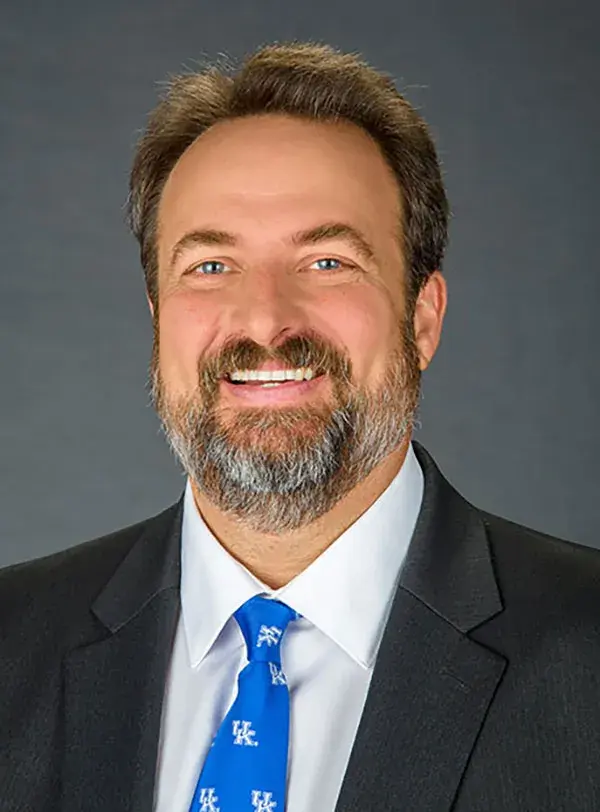
Dr. Michael T. Johnson is a Professor and Associate Dean for Undergraduate Education and Student Success at the University of Kentucky College of Engineering . Previously, he served as Professor and Chair at UKY (2016–present), Full Professor at Marquette University (2013–2016), and in progressive academic roles from Assistant to Associate Professor at Marquette (2000–2013). PhD in Electrical and Computer Engineering, Purdue University (2000) M.S. in Electrical Engineering, University of Texas at San Antonio (1994) B.S. in Engineering (EE concentration) and Computer Science, LeTourneau University (1989–1990) His research spans speech processing , machine learning , bioacoustics , and dynamical systems modeling . Key projects include electromagnetic articulography (EMA) for language learning, acoustic-to-articulatory inversion , and bioacoustic analysis of animal vocalizations (tigers, belugas, elephants). Collaborative work with institutions like Tsinghua University and the Georgia Aquarium highlights his interdisciplinary focus. Recent publications emphasize deep learning for speech enhancement (CNN-based temporal envelope reconstruction), dysarthric speech synthesis , and cross-lingual speaker identification . His 15 most recent articles (2016–2024) span machine learning, signal processing, and bioacoustics, with subfields including neural networks, articulatory modeling, and pandemic preparedness analysis. Scientific awards include Eta Kappa Nu (HKN) Teaching Awards (2005, 2014). He has mentored numerous PhD/Masters students at University of Kentucky and Marquette University, with theses on topics like acoustic-to-articulatory inversion , EMA databases , and bioacoustic classification . His work also involves virtual reality welding systems and nonlinear speech enhancement via phase space reconstruction.
Karee Garvin is a Postdoctoral Fellow at Harvard University's Department of Linguistics, working on Professor Franich's NSF-funded project Speech and Communicative Timing Across Languages and Linguistic Contexts . She holds a PhD in Linguistics from UC Berkeley (2021) and has conducted extensive fieldwork on under-studied languages like Nafaanra (Senufo, Ghana) and Mam (Mayan, Guatemala). Research Interests : Phonetics-Phonology Interface Speech Coordination and Syllabification Q-Theory Applications STAMP Morphology Typology Articulatory Timing and Gesture Alignment Information-Theoretic Biases in Typology Her recent work leverages Electromagnetic Articulography (EMA) data to model syllabic variability in English and cross-linguistic rhythm patterns. She collaborates on projects analyzing jaw oscillation, co-speech gestures, and phonological encoding mechanisms.
Will Styler is a Postdoctoral Research Fellow in the Department of Linguistics at the University of Michigan, affiliated with the College of Literature, Science, and the Arts. His research focuses on acoustic phonetics and speech perception, employing computational and technical methods. He specializes in investigating vowel quality and nasality perception under variable conditions and explores applications of machine learning in natural language processing and speech analysis. Styler’s work includes studies on identifying acoustic cues for vowel nasality using machine learning algorithms and analyzing speech production data from Electromagnetic Articulography (EMA). His research demonstrates methods for modeling feature importance and classifying speech gestures, with implications for broader linguistic inquiry. He has presented his findings, such as a 2017 colloquium at Michigan State University titled “Ask an Algorithm: Using Machine Learning to Study Human Speech.”
Stephen Tobin is a Research Fellow in the Department of Linguistics at the University of Michigan, joining in August 2018. He holds a BA in Modern Languages and Linguistics from the University of Cambridge, an MA from the University of Southern California, and a PhD from the University of Connecticut (2015). Prior to UMich, he was a Research Fellow at Universität Potsdam (Germany) from 2014 to 2018. His research focuses on phonetics, including speech production, perception, and their interrelation, particularly through studies of phonetic accommodation. He employs advanced methodologies such as Electromagnetic Articulography (EMA), real-time MRI, eye-tracking, and data analysis using MATLAB and R. Stephen contributes to the Linguistics department’s research initiatives and is affiliated with 440 Lorch Hall, Ann Arbor.
Kornel Wolak is an Adjunct Assistant Professor at Queen's University and a renowned clarinetist, chamber musician, and educator. He specializes in clarinet performance, pedagogy, and interdisciplinary research on the biomechanics of woodwind playing. His work focuses on clarinet embouchure dynamics, leveraging tools like 3D Electromagnetic Articulography (EMA) to study tongue and jaw movements during performance. Affiliations: Queen's University (Music Department), collaborator at the Speech-Language Pathology Department, University of Toronto. Education: Doctorate (DMA) from the Paderewski Music Academy (Poznan, Poland), further studies at the Royal Conservatory of Music (Toronto). Research Interests: His research explores motor control strategies in clarinet playing, including register changes, double-tonguing articulation, and the prevention of performance-related injuries through evidence-based methods. Collaborators include Dr. Pascal van Lieshout, Dr. Aravind Namasivayam, and Dr. Anneke Slis. Awards: Fryderyk Nomination, Debut Tours, Presser Music Award. Teaching & Mentorship: Developer of clarinet embouchure training methods, founder of Music Mind Inc. (music education initiatives), and mentor in the Bridge & Wolak online mentorship program. Performance: Known for expanding the clarinet repertoire through commissions, and co-leads the Bridge & Wolak duo, producing shows like Tangorium blending classical, jazz, and world music.
Diane Walsh is a Professor of Practice in the Department of Speech, Language, and Hearing at the School of Behavioral and Brain Sciences, The University of Texas at Dallas. Her work focuses on neurogenic speech and language disorders in adults, particularly aphasia, apraxia of speech, and cognitive communication impairments, with an emphasis on aging and lifelong disabilities. She employs advanced technologies like electromagnetic articulography (EMA) for biofeedback treatment. Education: M.S. in Communication Disorders (University of Texas at Dallas, 2004) B.A. in Speech and Hearing Sciences (University of New Mexico, 2002) Her research explores the application of biofeedback techniques for apraxia of speech rehabilitation, prosody analysis in foreign accent syndrome, and cognitive communication strategies. Recent publications highlight interventions using visuokinematic and auditory feedback to improve speech motor control in apraxia. Scientific Awards : ASHA Continuing Education Ace Award (2017, 2014, 2011, 2008) ASHFoundation 2003 Graduate Student Scholarship Regents' Scholar, University of New Mexico (1998-2002) Phi Beta Kappa, Phi Kappa Phi, Golden Key Honor Societies Diane has collaborated on clinical trials funded by the Veteran Administration Merit Award and contributed to studies on Parkinson's Disease speech patterns. She is licensed by the American Speech-Language-Hearing Association and Texas State Speech Language Pathology Board.
Prof. Dr. Doris Mücke is a leading experimental phonetician at the University of Cologne , specializing in speech production and perception, with a focus on dynamic systems theory and the interplay between prosody, articulation, and phonology . Her work bridges linguistic theory with clinical research, particularly in neurodegenerative diseases like Parkinson’s and Essential Tremor, analyzing how Deep Brain Stimulation and Levodopa affect speech motor control. She is a member of the CRC1252 Prominence in Language and an elected member of the IPA Permanent Council (2023-2031). Key research areas: Experimental phonetics, Laboratory phonology, Prosody and articulation, Acoustic and kinematic measurement techniques, Speech motor control in aging and disease. She has developed innovative tools like the ema2wav-converter and Vowel Hunter software for phonetic analysis. Her publications span acoustic and kinematic studies in German, Persian, Polish, Italian, and Tashlhiyt Berber, with recent emphasis on sign language coarticulation (LSF) and multimodal speech accommodation . She has supervised over 30 doctoral and MA theses, with her students receiving awards like the IPA Student Award and Offermann-Hergarten Prize . Her interdisciplinary collaborations with neurologists and institutions like Université Sorbonne and LMU Munich highlight her integrative approach.
Andrea Deme is a Habilitated Associate Professor at the Department of Applied Linguistics and Phonetics at Eötvös Loránd University's Faculty of Humanities since 2016. She is also affiliated with the MTA–HUN-REN NYTK Lendület "Momentum" Neurophonetics Research Group. Her research focuses on articulatory and acoustic aspects of speech, with particular emphasis on vowel production, coarticulation, and speech variation across different contexts and languages. Dr. Deme's research interests span phonetics, sociophonetics, speech acoustics, and articulatory phonetics. She has conducted extensive work on vowel variation in different speech modes, examining how factors like speech rate, pitch accent, and phonological context influence articulatory and acoustic parameters. Her research often employs advanced methodologies including electromagnetic articulography (EMA), ultrasound tongue imaging, and acoustic analysis to investigate speech production phenomena. Her recent publications demonstrate a strong focus on fast speech phenomena, cross-linguistic comparisons (particularly between Hungarian and German), vowel length contrast maintenance, and coarticulatory patterns. Her work integrates both theoretical phonetics and practical applications in speech science, contributing significantly to our understanding of how speech is produced and perceived across different linguistic contexts. Bolyai János Research Scholarship (2019-2021, 2021-2022) Bolyai Memorial Award (Hungarian Academy of Sciences, 2023) Faculty Publication Excellence Award (ELTE BTK, 2021, 2022) ELTE Promising Researcher Award (2021) Academy Youth Award (2018) Hermann József Young Researcher Award (2018) Dr. Deme has been Principal Investigator for several German-Hungarian collaborative projects funded by TKA and DAAD on vowel variability, vowel contrasts, and fast speech phenomena. She is currently a holder of the Bolyai János Research Scholarship for her project "The relative importance of acoustic correlates of vowel length contrast in Hungarian." She collaborates extensively with researchers from the University of Cologne on articulatory and acoustic features of vowels in different speech modes. She is an active member of the MTA–HUN-REN NYTK Lendület "Momentum" Neurophonetics Research Group and previously worked with the MTA-ELTE "Lendület" Lingual Articulation Research Group. Her research group investigates articulatory and acoustic features of vowels in several different speech modes and phonetic contexts, with a focus on vocalic variation caused by factors within and outside the speech stream.
Michael Proctor is an Associate Professor in the Department of Linguistics at Macquarie University, affiliated with the Centre for Language Sciences (CLaS) and multiple research centres including the Data Horizons Research Centre and Hearing Research Centre. His research focuses on speech production and perception, phonological organization, and language acquisition across diverse populations. Utilizing advanced technologies like MRI, electromagnetic articulography, and ultrasound, his work examines speech articulation dynamics in adults, children, L2 learners, and clinical populations. Key affiliations: CLaS, Data Horizons, Hearing Research Centre Research tools: MRI, EMA, ultrasound, eye-tracking Research interests include: Vowel and consonant articulation Language variation (Australian English, Indigenous languages) Clinical speech analysis (Parkinson’s disease, speech disorders) Recent projects investigate vocal tract configuration in real-time MRI, lateral consonant production, and cross-linguistic phonological structures. Collaborations span speech science, clinical research, and interdisciplinary data governance initiatives. His work bridges experimental and clinical applications to advance understanding of speech mechanisms and language evolution. Labs/teams: Leads research groups in phonetics/phonology within CLaS, contributes to VisVoiS (Visualising Voice and Speech) and Kaytetye language structure projects. Supervises postgraduate research through Macquarie University and IDEALAB platforms.
Yunjung Kim is a Professor and Doctoral Program Coordinator in the School of Communication Science & Disorders at Florida State University (FSU), where she directs the FSU Motor Speech Laboratory. She specializes in speech science, focusing on the relationship between articulatory behavior and listener perception, particularly in individuals with Parkinson’s disease. Her work integrates acoustic analysis, electromagnetic articulography (EMA), and ultrasound imaging to identify speech characteristics impacting intelligibility. Education: PhD in Communicative Disorders, University of Wisconsin-Madison MS in Korean Linguistics, Korea University BS in Korean Education, Korea University Research Interests: Yunjung’s research explores motor speech disorders, foreign accents, and cross-linguistic speech rehabilitation. She investigates how native language and dialect influence perceptual ratings of dysarthria and develops multidisciplinary interventions for linguistically diverse populations. Her lab collaborates internationally with experts in rehabilitation psychology, engineering, and clinical care. Grants & Funding: $932,094 NIH-NIDCD R01 grant for speech rehab models for immigrants $1,226,691 KHIDI grant for stroke-related dysarthria tech development $55,890 LSU grant for EMA system implementation Labs & Teams: Leads the FSU Motor Speech Lab, focusing on kinematic and acoustic analysis of speech disorders. Collaborates with multidisciplinary teams on global initiatives.
Lena Pagel is a researcher at the University of Cologne 's Department of Linguistics , specializing in phonetics and prosodic prominence. Her work bridges speech production , sign language kinematics , and multimodal communication . Research Focus: Prosodic marking strategies, articulatory adaptations in loud vs. habitual speech, coarticulation in sign language, and multimodal accommodation during dialogue Key Methodologies: Electromagnetic Articulography (EMA), kinematic analysis, multimodal data capture (audio/video/EMA) Notable Work: Co-development of the DiCE cooperative game for controlled data elicitation, systematic EMA studies in Persian and German focus types Scientific Recognition: 2023 IPA Student Award for kinematic analysis of visual prosody 2022-2026 a.r.t.e.s. Doctoral Scholarship with Mercator funding 2019 Best Poster Award at Young Female Researchers in Speech Workshop 2019 Faculty Price for Bachelor thesis on German prominence marking