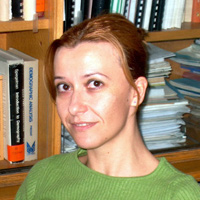
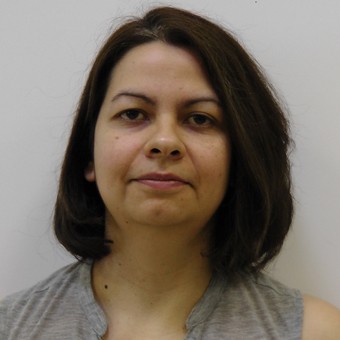
Minos Garofalakis is a Professor at the School of Electronic & Computer Engineering at the Technical University of Crete, specializing in data stream management, complex event processing, and privacy-preserving analytics. His work bridges theoretical and applied computer science, with a focus on scalable algorithms for high-velocity data. Best Paper Award at VLDB 2024 for 'OmniSketch' Leader in sketch-based and distributed stream processing Pioneer in differential privacy for relational data Research interests span stream analytics , probabilistic databases , and interactive query systems . Recent work includes oblivious parallel joins (2025), relational data synthesis under privacy constraints (2024), and cross-platform analytics frameworks (2020). His publications demonstrate a consistent focus on error-controlled approximations and real-time distributed processing. Scientific contributions have been recognized at premier conferences like VLDB, with awards highlighting innovations in multi-dimensional stream analysis and privacy-preserving operations . Collaborations span academia and industry, particularly in bioinformatics and distributed systems.
Panagiotis G. Zervas is an Associate Professor at the Department of Electrical and Computer Engineering, University of Peloponnese (since 2020). His expertise spans audio signal processing, music information retrieval, and natural language processing for knowledge extraction. He teaches courses including Signals & Systems, Digital Signal Processing, and Machine Learning. His research focuses on AI-driven applications in sound analysis, music feature extraction, and multimodal information processing. Education: PhD (2007) in Electrical Engineering from the University of Patras, specializing in Greek prosody modeling for text-to-speech systems. Previous roles include Assistant Professorships at Hellenic Mediterranean University (2015–2020) and Technical Educational Institute of Crete (2008–2015). Research Interests: Natural Language Processing (NLP) for text analysis and large language models (LLMs) Audio signal processing, voice analysis, and embedded systems AI applications in job market analytics and skills frameworks Machine learning for music information retrieval Notable Projects: Principal Investigator in EU projects EU-ALMPO (2025–), Train4Blue (2025–), GROWTH4BLUE (2024–), and MICROIDEA (2024–) World Bank consultant (2023–) for AI-driven employment systems in Greece and Pacific Islands Publications in journals like 'Acoustics' and conferences like WAC 2022 and Forum Acusticum 2023 Office: Building K, Office K2.07 | Contact: pzervas@uop.gr
Zhenjiang Hu is a Chair Professor and Dean of the School of Computer Science at Peking University. He serves as Director of the Programming Languages Laboratory and has held significant academic positions including Professor at the National Institute of Informatics and University of Tokyo. BS and MS from Shanghai Jiaotong University (1988, 1991) PhD from University of Tokyo (1996) Lecturer/Assistant Professor at University of Tokyo (1997) Associate Professor at University of Tokyo (2000) Full Professor at National Institute of Informatics (2008) Full Professor at University of Tokyo (2018-2019) Professor Hu's research primarily focuses on programming languages and software engineering, with special emphasis on functional programming, bidirectional transformation, and software adaptation. His work explores transformational programming approaches for automatic program optimization, systematic parallelization of sequential programs, efficient manipulation of structured documents, and bidirectional model transformation for software development. His research has significantly advanced the field of bidirectional programming, developing foundational theories and practical applications that enable more reliable and maintainable software systems. His recent publications demonstrate a strong trajectory in bidirectional programming, program synthesis, and graph processing. The research shows increasing sophistication in handling program transformations, with growing emphasis on practical applications in software engineering contexts. His work increasingly integrates formal methods with practical programming language design, creating systems that maintain theoretical soundness while addressing real-world software development challenges. The research spans multiple venues including top conferences like PLDI, POPL, ICFP, and OOPSLA, reflecting its broad impact across programming language research. Fellow of JFES (Japan Federation of Engineering Society, 2016) ACM Distinguished Scientist (2016) Member of Academia Europaea (2019) IEEE Fellow (2020) Member of Engineering Academy of Japan (2020) Professor Hu actively mentors students and has welcomed excellent candidates to join his group through Peking University's International Elite PhD Program and Boya Postdoctoral Fellowship Program. He serves on numerous program committees for major conferences including PLDI, POPL, ICFP, and OOPSLA, and holds editorial positions for prestigious journals such as Journal of Functional Programming and Science of Computer Programming. His leadership extends to conference organization, having served as PC Chair for CNCC 2024 and General Co-Chair for SoICT 2019. As Director of the Programming Languages Laboratory at Peking University, Professor Hu leads a research team focused on advancing programming language theory and practice. His lab has developed influential frameworks like BiGUL for bidirectional programming and Fregel for graph processing. The laboratory maintains strong international collaborations and contributes to both theoretical foundations and practical implementations in programming languages and software engineering.
Michael Carbin is an Associate Professor at MIT in the Department of Electrical Engineering and Computer Science (EECS), where he leads the Programming Systems Group at the Computer Science and Artificial Intelligence Laboratory (CSAIL). His research centers on developing programming systems that handle uncertainty through probabilistic programming, quantum computing, and neural networks. Carbin's work spans programming languages, systems, and machine learning, with themes including uncertainty management, efficiency optimization, and formal verification. His publications demonstrate a strong focus on probabilistic inference methods, neural network optimization, and quantum programming frameworks. Awards and Honors: Sloan Research Fellowship (2020) Multiple Best Paper Awards (OOPSLA 2013, 2014; ICLR 2019) NSF CAREER Award (2018) Google Faculty Research Award (2018) As the head of the Programming Systems Group, he advises 10+ graduate students and postdocs, focusing on cutting-edge systems research. He has secured grants including Facebook Research Awards and NSF funding.
Minos Garofalakis is a Professor of Computer Science at the School of Electrical and Computer Engineering (ECE) of the Technical University of Crete (TUC), where he directs the Software Technology and Network Applications Laboratory (SoftNet). He is also the Director of the Information Management Systems Institute (IMSI) at the Athena Research and Innovation Centre in Athens. Previously, he held roles at Yahoo! Research, Intel Research Berkeley, and Bell Laboratories, and was an Adjunct Associate Professor at UC Berkeley. Education: He earned a BSc in Computer Engineering from the University of Patras (1992), followed by MSc (1994) and PhD (1998) in Computer Science from the University of Wisconsin-Madison. Research Interests: His work focuses on Big Data analytics , including database systems, data streams, approximate query processing, probabilistic databases, and secure/private data analytics. Key areas include distributed stream processing, data synopses, and machine learning applications. He has authored over 150 papers and holds 29 patents, with an h-index of 63 and 13,500+ citations. Recent Work Trends: His recent articles emphasize scalable stream analytics (e.g., OmniSketch), privacy-preserving techniques, and distributed event processing. He explores challenges in handling high-velocity data streams, uncertainty in databases, and real-world applications like healthcare analytics. Scientific Awards: ACM Fellow (2018), IEEE Fellow (2017), TUC Excellence Award (2015), and multiple patents from Bell Labs/Yahoo/AT&T. Advising & Grants: He led EU projects such as FERARI, LEADS, and The Human Brain Project. His lab, SoftNet, develops tools for extreme-scale analytics and declarative networking. Current work includes interactive cross-platform analytics (Infore) and AI-driven medical data systems. Labs/Teams: Director of SoftNet Lab and IMSI. Collaborates with industry partners on distributed systems and privacy-preserving technologies.
Tsichlas Kostas serves as an Associate Professor in the Department of Computer Engineering and Informatics at the University of Patras, Greece, within the Division of Applications and Foundations of Computer Science. His research spans fundamental and applied computing domains with active involvement in the ML@Cloud laboratory. His expertise centers on algorithmic innovation across multiple dimensions: Memory-optimized algorithms for primary/secondary storage systems Distributed environment data structures and computational geometry Physics-informed computing and complex network analysis Specialized domains including alphanumeric and graph algorithms Recent publication trends (2022-2025) demonstrate concentrated research in historical graph management systems, temporal network analysis, and physics-computing intersections. Key contributions include vertex-centric partitioning strategies, temporal community detection frameworks, and machine learning applications for energy data motif discovery. He maintains active laboratory affiliations with the LARGE-SCALE CLOUD DATA MACHINE LEARNING WORKSHOP (ML@Cloud lab), Combinatorial Algorithms Laboratory, and Distributed Systems and Telematics Laboratory, contributing to Greece's computational research infrastructure.
Nikos Tsourveloudis is a Professor of Manufacturing Technology at the School of Production Engineering and Management, Technical University of Crete. He leads the Intelligent Systems & Robotics Laboratory and the Machine Tools Laboratory. His research focuses on autonomous robotics, field robotics, and computational intelligence, with over 100 publications in these areas. He has been honored with awards such as the 3rd EURON/EUROR Robotic Technology Transfer Award (2009) and multiple ADAC Safety Awards (2010, 2011, 2016, 2017). His work integrates robotics, manufacturing systems, and energy efficiency, with applications in electric vehicles and UAV missions. Academic roles include editorial positions in journals and leadership in professional organizations like the Hellenic Association of Industrial Engineers. Education: Diploma in Production and Management Engineering (1990), Technical University of Crete PhD in Production and Management Engineering (1995), Technical University of Crete Research Interests: Autonomous navigation of field robots, computational intelligence, production systems modeling/control, and energy-efficient robotics. His labs develop cutting-edge solutions like the TUCer low-consumption vehicle prototype and advanced path-planning algorithms for UAV swarms. Awards: 3rd EURON/EUROR Robotic Technology Transfer Award (2009) 1st ADAC Safety Award (2010, 2011, 2016, 2017) Advising & Grants: His research has been funded by public/private partnerships. Notable projects include energy management systems for hybrid vehicles and swarm-based UAV missions. Collaborations bridge academia and industry, driving innovations in manufacturing and autonomous systems. Labs & Teams: Leads two major research groups: the Intelligent Systems & Robotics Lab and the Machine Tools Lab, focusing on robotics, control systems, and sustainable manufacturing technologies.
Antonios Deligiannakis is a Professor at the Department of Electronic and Computer Engineering, Technical University of Crete. His research focuses on databases, sensor networks, online analytical processing (OLAP), approximate query processing, and distributed systems. He holds a Ph.D. in Computer Science from the University of Maryland (2005), an M.Sc. from the same institution (2001), and a Diploma in Electrical & Computer Engineering from the National Technical University of Athens (1999). His career includes postdoctoral work at the University of Athens (2006–2007), a lecturer position there (2007), and an internship at AT&T Labs-Research (2003). He leads the Software Technology and Network Applications Laboratory , contributing to projects like extreme-scale analytics platforms (INFORE) and federated learning systems. Research areas span IoT workflow optimization, communication-efficient distributed learning, and real-time maritime event detection. His work emphasizes scalability, efficiency, and practical implementations for big data challenges. Courses taught include Structured Programming . Notable contributions include DAG* algorithms for IoT workflows, federated learning frameworks, and systems for proactive streaming analytics at scale. He has pioneered methods for outlier detection in sensor networks and efficient query processing over distributed streams.
Manolis G.H. Katevenis is a Professor at the Department of Computer Science, University of Crete, and the founder and Head of the Computer Architecture and VLSI Systems (CARV) Laboratory at the Institute of Computer Science (ICS), Foundation for Research and Technology – Hellas (FORTH) in Heraklion, Crete, Greece. He has held academic positions since 1986 and played a pivotal role in establishing the Computer Science Department at the University of Crete. His research spans computer architecture, interconnection networks, VLSI systems, and high-performance computing, with a strong focus on scalable, low-power, manycore systems and RISC-V. He has led numerous European R&D initiatives, including serving as Coordinator of the ExaNeSt project. PhD in Computer Science, University of California, Berkeley (1983) MSc in Electrical Engineering and Computer Science, University of California, Berkeley (1980) Diploma of Electrical Engineering, National Technical University of Athens (1978) Manolis Katevenis's research focuses on advancing scalable system architectures for high-performance and big data computing. His work in computer architecture includes RISC-V, exascale computing, and manycore systems. He has made foundational contributions to interprocessor communication, particularly through remote-write, remote-DMA, and remote-enqueue mechanisms, and has pioneered innovations in interconnection networks and low-latency network interfaces. His research integrates hardware and software co-design to optimize performance, energy efficiency, and scalability in large-scale computing systems. The recent publications highlight a strong trend in exascale computing, interconnection networks, and FPGA-based prototyping of manycore systems. His work emphasizes scalable, low-power architectures, with recurring themes in congestion management, fair scheduling, crossbar design, and hardware-software integration for HPC. The articles span high-impact journals such as IEEE/ACM Transactions on Networking, IEEE Micro, and Computer Networks, reflecting sustained contributions to computer architecture and networking. ACM Doctoral Dissertation Award (1984) David J. Sakrison Memorial Prize (1983) IBM PhD Fellowship (1981–1983) Greek State Fellowship (1973–1978) Stelios Pichoridis Award for Outstanding University Teaching (2015) Member of Academia Europaea (elected 2012) Award by the Secretary General of the Region of Crete (2003) IEEE Milestone recognition for the RISC Project (2015) Manolis Katevenis has supervised over 50 graduate theses and mentored many prominent Greek computer architects, including recipients of the ACM Maurice Wilkes Award. He has served as Principal Investigator or co-PI in over 30 R&D projects with a total budget exceeding 18 million euros, including major European initiatives such as ExaNeSt (which he coordinated), EuroEXA, EcoScale, SARC, ENCORE, and multiple HiPEAC Network of Excellence projects. His leadership extends to project coordination, architectural design, FPGA prototyping, and systems software development. Katevenis founded and leads the CARV Laboratory at FORTH-ICS, a major research team with 80–100 members focused on computer architecture and VLSI systems. The lab has spun off the Distributed Computing Systems (DCS) Laboratory and is central to European exascale computing efforts, including participation in the European Processor Initiative. CARV has developed large-scale prototypes such as the 768-core ExaNeSt system and the Formic FPGA platform for manycore research.
Giannis Tzimas is a Professor at the Department of Electrical and Computer Engineering, University of Peloponnese. He holds a BSc and PhD in Computer Engineering and Informatics from the University of Patras. His research focuses on Net-centric systems, Web Engineering, Big Data, AI applications, Digital Transformation for public sectors, and Bioinformatics. He has been a World Bank consultant since 2018, advising on digital transformation projects in Social Protection, Labor, and Education across Europe, Africa, Asia, and the Caribbean. Dr. Tzimas has extensive leadership experience, including Technical Manager at the Graphics, Multimedia & GIS Lab (University of Patras, 1996–2018) and Technical Coordinator at the Computer Technology Institute (1997–2011). He managed EU-funded R&D projects and collaborated on infrastructure development for the TEI of Messolonghi’s Network Operations Center (2009–2013). His research interests include Service-Oriented Architectures, Web Data Engineering, and applications of Machine Learning in public sector digitization. He has published widely in top journals and conferences, with recent work exploring AI-driven labor market analytics and pandemic employment impacts. Dr. Tzimas collaborates with international organizations and academic institutions, contributing to frameworks for interoperable social protection systems and digital labor market observatories. His work bridges academic research with real-world policy implementation, emphasizing data-driven solutions for societal challenges.
Dr. Ioulia Papageorgiou is an Associate Professor in the Department of Statistics at the Athens University of Economics and Business (AUEB), School of Information Sciences and Technology. She holds a B.Sc. in Mathematics (2.1) and a Ph.D. in Statistics, both from the University of Ioannina. Her career spans since 2001, with prior roles as a Post-Doctoral Research Fellow at AUEB and Nottingham Trent University, and Lecturer at AUEB (2002-2007). Education B.Sc. in Mathematics (2.1), University of Ioannina Ph.D. in Statistics, University of Ioannina Employment History Associate Professor, AUEB Department of Statistics (2007-present) Lecturer, AUEB Department of Statistics (2002-2007) Post-Doctoral Research Fellow, AUEB (2001-2002) Post-Doctoral Research Fellow, Nottingham Trent University (1998-2001) Her research focuses on Sampling Theory, Model-Based Clustering, Mixture Models, and their Applications to Archaeometry. She has developed statistical methodologies for ceramic artifact provenance studies, explored hierarchical cluster analysis for overpainted artwork identification, and addressed optimal sampling designs for autocorrelated populations. Her work bridges statistical innovation with archaeological and medical applications. Analysis of her recent publications reveals a strong emphasis on statistical modeling in archaeology (e.g., ceramic provenance via p-XRF), computational methods for multivariate data, and pharmacoeconomic assessments for chronic diseases. Keywords across her work include Archaeometry, Cluster Analysis, Multivariate Modeling, and Survey Sampling.
Panagiotis Stamatopoulos is an Assistant Professor at the Department of Informatics and Telecommunications, National and Kapodistrian University of Athens, where he has been employed since 1993. He holds a PhD in Computer Science (1988) and a Diploma in Physics (1982) from the University of Athens. His research spans artificial intelligence, constraint programming, natural language processing, machine learning, and optimization. Specific interests include: Hybrid approaches combining constraint programming with operations research Natural language understanding for database access Parallel processing and distributed constraint solving Multi-agent systems and web intelligence applications His publications show consistent focus on constraint satisfaction algorithms, text summarization techniques, educational timetabling systems, and AI applications in diverse domains like sports analytics and robotics. Recent works demonstrate increased attention to NLP evaluation metrics and multimodal learning. He has supervised numerous diploma theses and led projects funded by the European Union (EDS, APPLAUSE, PARACHUTE, PARROT), University of Athens, and Olympic Airways. Stamatopoulos teaches undergraduate courses in Introduction to Programming and Logic Programming, plus postgraduate courses in Advanced Artificial Intelligence. He previously taught Artificial Intelligence, System Programming, and Expert Systems.
Professor Mathioudakis Konstantinos holds a prestigious position at the School of Mechanical Engineering, National Technical University of Athens (NTUA), leading the Laboratory of Thermal Turbomachines. His academic journey includes a Doctorate in Applied Sciences from the Catholic University of Leuven (Belgium) with highest distinction, alongside advanced studies from the Von Karman Institute and NTUA. He has over 35 years of professional experience in academia and industry, including roles as Secretary General for Energy (2009–2015) and professorships since 1990. His research focuses on gas turbine performance optimization, turbomachinery diagnostics, and energy systems, with notable contributions to fault detection algorithms, combustion chamber modeling, and alternative fuels. Key areas include aero-engine preliminary design, marine propulsion systems, and solar hybrid technologies. He has authored over 150 peer-reviewed papers and received multiple awards, including best paper honors from ASME and ImechE. Education: PhD in Applied Sciences (1985), Catholic University of Leuven Fluid Dynamics Diploma (1981), Von Karman Institute Mechanical Engineering (1980), NTUA Awards: ASME Best Paper Awards (2012, 2004, 2003, 2002) PE Publishing Award (2004) Outstanding Service Award (ASME, 2002) Professor Mathioudakis has pioneered diagnostic methodologies combining probabilistic reasoning and neural networks, enhancing fault localization accuracy. His work on transient modeling and steady-state diagnostics improves engine operability and maintenance strategies. He actively contributes to international committees, including leadership roles in ASME’s Controls and Diagnostics Committee. Current duties include coordinating Erasmus programs and advising on propulsion systems for next-generation aircraft. His lab develops tools for turbine disk design, contra-rotating propeller modeling, and solar hybrid gas turbines, bridging academic research with industrial applications.
Georgia Koloniari is an Associate Professor at the Department of Applied Informatics, School of Information Sciences, University of Macedonia. She holds a PhD in Computer Science from the University of Ioannina (2009), along with an MSc (2003) and BSc (2001) in Computer Science from the same institution. Her research focuses on distributed systems, graph databases, and peer-to-peer (P2P) systems, with notable contributions to social network analysis, XML data management, and privacy-preserving techniques. She has led or participated in multiple funded research projects, including the Cloud9 project (2011–2014) and the Self-Peer initiative (2005–2008). Her teaching roles include instructing courses such as Distributed Systems , Data Structures , and Advanced Information Systems at the undergraduate level, and IT Infrastructure and Databases at the graduate level. She has also contributed to online educational initiatives, including the development of the Data Structures course in the Open Digital Courses project. Dr. Koloniari’s research interests span social network evolution, graph database management, and distributed data processing. She has published extensively on topics like clustered overlay networks, privacy-preserving record linkage, and temporal query processing. Her work integrates game-theoretic approaches and algorithmic solutions to address challenges in P2P systems and cloud computing. Her recent publications highlight advancements in privacy-preserving techniques (e.g., PRIVATEER toolkit) and time-aware social search systems. She remains active in academic service, serving on program committees for conferences like WWW and EDBT, and reviewing for journals such as IEEE Transactions on Parallel and Distributed Systems. Labs/Teams: Her involvement with the DMOD Lab (Digital Media, Data Management, and Distributed Systems Lab) reflects her focus on interdisciplinary research in data management and distributed computing.
Anastasios Gounaris is a Professor at the Department of Informatics, Aristotle University of Thessaloniki, where he has been a faculty member since April 2008. He previously served as a Visiting Lecturer at the University of Cyprus (2007-2008) and held research positions at the University of Manchester and CERTH. His academic journey includes a PhD from the University of Manchester (2005), an MPhil from UMIST (2002), and a degree in Electrical and Computer Engineering from Aristotle University of Thessaloniki (1999). His research spans Distributed Databases, Autonomous Data Processing, Big Data Management, Workflow Optimization, and Data Mining . He has made significant contributions to large-scale data management systems, massive parallelism techniques, and business process analytics. His work bridges theoretical computer science with practical industrial applications, particularly in predictive maintenance and edge computing environments. His recent publications (2024-2025) demonstrate a strong focus on process mining, anomaly detection, predictive maintenance systems, and edge analytics . These works address critical challenges in handling evolving data streams, optimizing task allocation in resource-constrained environments, and developing parameter-free algorithms for real-world applications. His research shows consistent progression from foundational database systems work to cutting-edge applications in industrial IoT and healthcare analytics. Dr. Gounaris has successfully supervised numerous PhD students to completion, including Athanasios Naskos (2017), Georgia Kougka (2017), Christos Bellas (2022), Theodoros Toliopoulos (2022), Anna-Valentini Michailidou (2023), Ioannis Mavroudopoulos (2024), and Konstantinos Varvoutas (2025). His research has been supported by multiple national and European projects including DataflowOpt, PRECognition, NavGreen, CUREX, Rainbow, Lifechamps, and Trineflex. He is an active member of Datalab (formerly Delab) and has contributed to industry applications through collaborations with companies such as Comidor, Gnomon, Istognosis, Atlantis, AFS, Follow-Apps, Sboing, and Upcom. His work demonstrates a strong commitment to transferring research results to real-world applications while maintaining academic rigor.