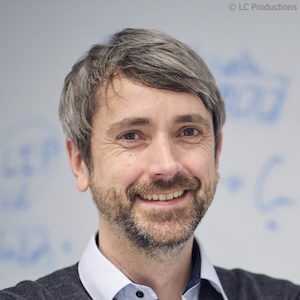
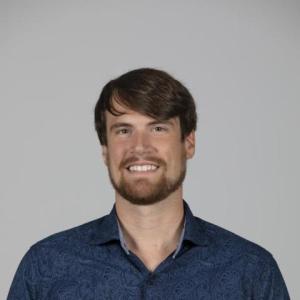
Prof. Dr. Johannes Kinder is a Professor and Chair of Programming Languages and Artificial Intelligence at the Institute of Informatics , Ludwig Maximilian University of Munich. His research focuses on software security through program analysis and machine learning, particularly targeting malware detection , vulnerability analysis , and reverse engineering . He has held faculty positions at Royal Holloway, University of London, and Bundeswehr University Munich. Research Interests include: Securing software systems via program and machine learning techniques Detection of software vulnerabilities and malware Preventing exploitation through binary analysis Applications of formal methods in systems security Recent Publications highlight advancements in binary function embedding , malware detection in npm , and speculative execution attack modeling . His work appears in top venues like USENIX Security and IEEE S&P . Education : Diplom from TU Munich (2005), Doctorate from TU Darmstadt (2010). Professional Roles : General Chair, ACM CCS 2019 Doctoral Symposium Chair, ESSoS 2016 Program Committee member for NDSS 2026, IEEE S&P 2022-2025
Professor Isabella Dobrescu is Head of the School of Economics at the University of New South Wales (UNSW) Business School and co-chair of the STEP UP initiative in Education. She serves as an editor for the Journal of Pension Economics & Finance and maintains an active research program spanning labor economics, public finance, health economics, and applied econometrics. Her educational background includes a Ph.D. in Economics with Honors from the University of Padua (2009), an M.Sc. in Economic Mathematical Modeling Summa cum Laude from West University of Timisoara (2005), and dual bachelor's degrees in Economics from Nottingham Trent University and Finance Summa cum Laude from West University of Timisoara (2003). Dobrescu's research has evolved from structural work on consumption and saving dynamics to pioneering applications combining theory, empirical analysis, and randomized controlled trials to improve educational outcomes through technology. Her recent work focuses on financial literacy interventions for high school students through the STEP UP program, while maintaining her longstanding research on aging populations, retirement decision-making, and risk behavior. Her publication portfolio demonstrates consistent output across labor economics, health economics, and applied econometrics, with recent emphasis on educational technology interventions and financial decision-making in retirement contexts. The research shows methodological diversity spanning structural modeling, nonparametric partial identification techniques, and experimental approaches. UNSW Business School Research Impact Award (2021) UNSW President's Award for Building Collaborations (2019) UNSW Scientia Education Fellowship (2017) Australian Government Office of Learning & Teaching Citation (2016) ARC Early Career Research Fellowship (2012) Dobrescu has secured over AU$2.5 million in competitive research funding since 2010, including major ARC Linkage grants and substantial UNSW strategic investments. She leads the STEP UP initiative which has received over AU$650,000 in funding for financial literacy outreach programs. Her collaborative approach is evident in numerous multi-investigator projects with colleagues including Bateman, Thorp, Motta, and Newell across economics, finance, and education domains. As Head of the School of Economics and co-chair of STEP UP, Dobrescu leads research teams focused on educational interventions using technology, retirement decision-making, and the economics of aging. Her Playconomics platform represents a significant innovation in experiential economics education, receiving media coverage from major outlets including The Sydney Morning Herald and The Australian.
Gideon Hartman is an Associate Professor in the Anthropology Department at the University of Connecticut, where he conducts interdisciplinary research at the intersection of paleoenvironmental reconstruction, plant and animal eco-physiology, anthropology, and archaeology. His work primarily employs stable isotope methods to reconstruct past environments, human mobility patterns, paleodiets, and ancient economic systems. Dr. Hartman received his Ph.D. from Harvard University in 2008. His educational foundation in anthropology and archaeological science has enabled his innovative approach to stable isotope analysis. Rather than treating isotopic values as static markers, he investigates the mechanisms causing variability in stable isotope ratios as they move along foodwebs from soil and atmosphere to plants and then to animals and humans. Hartman's research program uniquely begins in the contemporary world to establish principles that can be reliably applied to archaeological settings. His work spans diverse geographical regions including the Eastern Mediterranean, Levant, Jordan Valley, and Armenian Highlands, with temporal coverage from the Middle Pleistocene to the Early Bronze Age. He has made significant contributions to understanding how environmental factors like water availability, temperature, and soil conditions affect isotopic signatures in modern ecosystems, creating robust models for archaeological interpretation. His publication record demonstrates consistent productivity in high-impact journals, with research trends showing increasing sophistication in multi-isotope approaches applied to complex archaeological questions about pastoralism, trade networks, human migration, and human-environment interactions. His work increasingly integrates zooarchaeological, archaeobotanical, and geochemical evidence to build comprehensive pictures of past societies. As director of the Stable Isotope Preparation Lab at UConn, Hartman leads a research team that processes and analyzes samples from archaeological sites worldwide. His laboratory serves as a hub for interdisciplinary collaboration between archaeologists, anthropologists, geoscientists, and biologists seeking to apply isotopic methods to their research questions. His work has been instrumental in refining methodologies for interpreting strontium, carbon, nitrogen, and oxygen isotope data in archaeological contexts, particularly regarding animal and human mobility patterns in the Eastern Mediterranean region.
Prof. Dr. Katja Scharenberg is a faculty member at the Ludwig-Maximilians-Universität München (LMU) , affiliated with the Faculty of Psychology and Education. Her research focuses on inclusive education, heterogeneity in classrooms, teacher training, science education, and sustainability education. She leads and collaborates on multiple projects funded by the German Federal Ministry of Education and Research (BMBF) and the European Union’s Horizon 2020 program. Her work examines how heterogeneous learning environments impact student outcomes, particularly in science and sustainability education. She investigates teacher diagnostic competence in inclusive settings and develops digital learning environments to support accessible experimentation. Current projects include evidence-based modular continuing education programs for teachers and studies on ethnic school segregation’s effects on educational attainment in Germany and Switzerland. Key publications include empirical analyses of sustainability competencies in schools, inclusive pedagogy in primary and vocational education, and classroom dynamics affecting students with special educational needs. She serves on editorial boards and collaborates with networks like the European Association for Research on Learning and Instruction (EARLI) and the Deutsche Gesellschaft für Erziehungswissenschaft (DGfE) . Her research is supported by grants from the BMBF and EU Horizon 2020 . She supervises students in inclusive education and teacher training, and her work integrates research-based learning with practical school reforms in the Freiburg region.
Ergin Tönük serves as an Associate Professor in the Mechanical Engineering Department at Middle East Technical University (METU) in Ankara, Turkey. With a career deeply rooted at METU where he earned all his degrees, he maintains an active research profile with office B-319 and contact details tonuk@metu.edu.tr and +90 312 210 5293. His academic credentials include: Bachelor's Degree (B.Sc.) from METU, 1990 Master's Degree (M.Sc.) from METU, 1992 Ph.D. from METU, 1998 Professor Tönük's research spans Pneumatic Tires, Finite Element Analysis, Mechanism Synthesis, Soft Tissue Biomechanics, and Railway Vehicles. His biomechanics work focuses on computational modeling of biological systems including joint mechanics, tissue behavior, and medical device development. Tire and railway research leverages his mechanical engineering expertise for transportation applications, while his mechanism design studies address complex kinematic problems. Analysis of his 2016-2025 publications reveals a strong biomedical trajectory with emphasis on orthopedic applications. Key themes include hand/knee joint modeling, tissue engineering scaffolds, gait/posture analysis systems, and viscoelastic material characterization. His methodological signature combines finite element analysis with experimental validation, particularly in soft tissue mechanics and surgical simulation. While specific advising records and grant details aren't provided, his 70+ publications indicate substantial graduate mentorship and research funding acquisition. His work aligns with biomechanics and computational mechanics groups within METU's Mechanical Engineering Department, though dedicated laboratory facilities aren't specified in available sources.
Konrad Burchardi is Professor of Economics at the Institute for International Economic Studies (IIES) at Stockholm University. His academic work focuses on understanding economic development processes and the social foundations of economic behavior, with significant contributions to development economics and migration studies. Professor Burchardi obtained his PhD in Economics from the London School of Economics (LSE), with prior studies conducted in Munich, Aix-en-Provence, and at LSE. His educational background reflects a strong international foundation in economic theory and development perspectives. His research primarily centers on productivity growth at early stages of economic development and the social underpinnings of economic interactions. Key contributions include field experiments on sharecropping contracts in developing countries, demonstrating how output-sharing rules affect agricultural productivity, and research showing how migration ancestry influences foreign direct investment patterns. His work spans agricultural economics, migration studies, experimental economics, and economic networks, often employing rigorous field and natural experimental designs to establish causal relationships. Analysis of Professor Burchardi's publication record reveals consistent contributions to top economics journals with a focus on development and labor economics. His work shows an evolution from examining micro-level economic behaviors in developing countries to broader questions about migration networks and their economic impacts. His recent publications indicate increasing attention to historical economic data and financial inclusion, with work scheduled through 2025.
Karen Crowther is Associate Professor in the Department of Philosophy, Classics, History of Art and Ideas at the University of Oslo, where she specializes in the philosophy of science and philosophy of physics. Previously, she held postdoctoral positions at the University of Geneva (2016-2019) and the University of Pittsburgh (2014-2015). Her research focuses on the foundations of physics, particularly quantum gravity and the emergence of spacetime, and she is an active contributor to the international philosophy of physics community. Dr. Crowther's educational background includes: PhD in Philosophy, University of Sydney, 2015 BA (Hons) in Philosophy, Monash University, 2009 BSc (Hons) in Physics, Monash University, 2008 Her primary research interests span the philosophy of science and philosophy of physics, with additional focus on metaphysics and epistemology. Dr. Crowther investigates scientific methodology, non-empirical approaches to theory development, inter-theory relations in physics (including reduction, correspondence, and emergence), fundamentality, space and time, and quantum gravity. Her work examines how fundamental physical theories relate to one another and how spacetime might emerge from more basic quantum structures. Dr. Crowther's publication record demonstrates a consistent focus on quantum gravity and the philosophical foundations of physics. Her recent work explores the motivations for seeking quantum gravity, levels of fundamentality, and the role of principles in theoretical physics. She has developed nuanced analyses of spacetime emergence, distinguishing between synchronic and diachronic conceptions, and has critically examined reduction in physics. Her research bridges conceptual analysis with technical understanding of physical theories, particularly effective field theory approaches to quantum gravity. Dr. Crowther is actively involved in several research communities: Centre for Philosophy and the Sciences (CPS) at the University of Oslo Nordic Network for Philosophy of Physics Geneva Symmetry Group Foundational Questions Institute (FQXi) John Bell Institute for the Foundations of Physics Editorial board for Studies in History and Philosophy of Science She has taught courses including Metaphysics/Philosophy of Consciousness, Philosophical Method and Practice, Epistemology/Philosophy of Science, Cognitive Theory, and Specializations in Philosophy of Science and Metaphysics. Dr. Crowther frequently presents her research at international conferences and has organized special journal issues on spacetime functionalism and principles of quantum gravity.
Carina Hanashima is a Professor at the Faculty of Education and Integrated Arts and Sciences , Waseda University, Japan. Her research focuses on neuroscience , developmental biology , and molecular mechanisms underlying cortical development . She has held academic positions at Kobe University (2014.04-2018.03), RIKEN (2008.10-2017.03), Osaka University (2012.04-2015.03), and Nara Women's University (2007.09-2014.11). Research Interests Neuronal specification and cortical circuit formation Role of transcription factors (e.g., Foxg1, Robo1) in brain development Gene regulatory networks in neurogenesis Evolutionary origins of the neocortex Recent Trends in Publications : Her work explores transcriptional repression , axon guidance signaling , and developmental clock mechanisms in mammalian and non-mammalian models (chicks, mice). Key themes include neurodevelopmental disorders (e.g., autism, schizophrenia), angiogenesis , and cell migration . Scientific Awards : Poster Award, Asia-Pacific Developmental Biology Conference APDBC (2012.10) Grants and Projects : Japan Society for the Promotion of Science Grants-in-Aid (2016.06-2021.03, 2021.04-2022.03) RIKEN Joint Retreat Organizer (2011-2017) Labs and Collaborations : She leads the Hanashima Lab at Waseda University, focusing on spatiotemporal control in neuronal identity and neurovascular coupling . Her lab employs genetic lineage tracing , in situ hybridization , and in utero electroporation techniques.
Professor Richard Allen holds the position of Professor of Cognitive Psychology at the University of Leeds, School of Psychology. He joined the university in 2008 as a Lecturer, became Associate Professor in 2015, and was promoted to full Professor in 2025. His academic journey includes a BSc and PhD in Psychology from the University of York, followed by postdoctoral research at the University of Bristol and University of York with renowned psychologists Alan Baddeley and Graham Hitch. He is an Associate Editor of Psychonomic Bulletin & Review (2019–2024) and previously served at Memory (2013–2019). He organized the 4th International Conference on Working Memory (2024) and is involved in international memory conferences. His research focuses on memory function across populations, including mechanisms of binding in working memory, attentional control, and aging. Key projects include ESRC-funded work on cognitive ageing and ARC-funded studies on cognitive offloading in children. He leads the Working Memory and Cognition (WoMCog) and Psychology of Ageing at Leeds (PAL) research groups, and his work is supported by grants from ESRC, ARC, and others. He has supervised over 20 PhD students and teaches at all levels in the School of Psychology. Research interests emphasize memory binding, attention-memory interactions, and applications to education/clinical settings. His work explores how information is encoded, maintained, and retrieved across modalities, with a focus on lifespan development and neurodegenerative conditions. Recent studies include detecting long-term forgetting in epilepsy and improving memory strategies for older adults. He has pioneered concepts like 'visuospatial bootstrapping' and 'strategic prioritization' in memory research.
Dr. Aisling Devine is a Senior Lecturer in the Department of Biosciences at Swansea University, within the School of Biosciences, Geography and Physics. Her research focuses on plant community ecology, particularly African woodlands and savanna ecosystems, emphasizing ecological and socio-economic impacts of vegetation change. She specializes in fire ecology, Miombo Woodlands, and biodiversity conservation. Dr. Devine is available for postgraduate supervision and teaches modules including BIO018 (Biology Transition), BIO232 (Plant Ecology), and BIO347 (Tropical Ecology in Borneo). Her research explores savanna dynamics, biochar applications in agriculture, and circular economic approaches to waste management. Recent work investigates biochar effects on tomato growth and nutrient recovery from faecal sludge. She has supervised projects on African savanna tree conservation and non-native macropod impacts on Isle of Man ecosystems. Dr. Devine’s teaching spans field ecology, conservation strategies, and scientific research methods, preparing students for careers in ecology, conservation, and environmental consultancy. Her research integrates classical ecological theory with practical field techniques, addressing global biodiversity challenges and sustainable resource management.
Dr. Srishti Banerji is an Assistant Professor in the Department of Civil and Environmental Engineering at Utah State University and Director of the Systems, Materials, and Structural Health (SMASH) Lab. She leads research on advanced construction materials, structural resilience under extreme loads (particularly fire), sustainable infrastructure, and structural health monitoring. Her group focuses on experimental testing, numerical simulations, and developing design solutions for civil infrastructure. Education: PhD in Civil (Structural) Engineering, Michigan State University (2021) MS in Civil (Structural) Engineering, Concordia University (2016) BS in Civil Engineering, National Institute of Technology Silchar (2013) Research Focus: Her work spans: 1) Characterization of high-performance/sustainable materials (e.g., UHPC, recycled glass pozzolan), 2) Structural behavior under fire exposure, 3) Integration of electric charging systems in concrete pavements, 4) Non-destructive testing and structural health monitoring, and 5) Retrofitting techniques for infrastructure strengthening. She employs machine learning, thermo-mechanical modeling, and full-scale experimentation. Publication Trends: Her 13+ journal articles primarily analyze fire resistance of concrete/timber structures, UHPC material properties at high temperatures, sensor-based infrastructure monitoring, and sustainable material development. Recent works increasingly incorporate machine learning and electrification concepts. Awards & Honors: Teacher of the Year (USU, 2025) ASCE ExCEEd Faculty Teaching Fellowship (2023) Top Cited Article Award, Fire and Materials Journal (2023) SHMII-11 Early Career Grant (2022) NSERC Scholarship (2015) Best Conference Paper (SEC 2016) Current Projects & Teams: She leads 5+ funded projects including fire performance of polymer concrete, self-healing concrete for bridges, and Utah-sourced UHPC development. Mentees include 3 PhD students (Abdullah Al Sarfin, Mehrnoosh Nazari, Mahmoud Ali) and alumni working on sustainable materials and additive manufacturing.
Olenka Kacperczyk is a Professor of Strategy and Entrepreneurship at London Business School. She earned her PhD from the Ross School of Business at the University of Michigan and previously held a faculty position at MIT's Sloan School of Management. PhD - Ross School of Business, University of Michigan BA - Mount Holyoke College Her research focuses on entrepreneurship, particularly examining inequality in startup ecosystems, labor market dynamics, and institutional impacts on innovation. Key themes include gender disparities in entrepreneurial funding, the role of institutional protections for minority employees, and the paradoxical effects of corporate social responsibility on firm value. Recent publications highlight her work on gender homophily in venture hiring, wage dispersion mechanisms, and the racial entrepreneurship gap. Her articles span journals like Strategic Management Journal , Organization Science , and Administrative Science Quarterly . Kauffman Junior Faculty Scholarship for Entrepreneurship Research William F. Glueck Award at the Academy of Management Olenka serves as Associate Editor for Management Science , Organization Science , and Administrative Science Quarterly . She has also held editorial roles at Strategic Management Journal and Management Science . Her teaching portfolio includes entrepreneurship strategy and strategic management courses.
Andreas Matouschek is a Professor in the Department of Molecular Biosciences at the University of Texas at Austin, where he served as Associate Dean for Research and Facilities from 2020-2024. He oversees research support for the College of Natural Sciences, managing over 1 million square feet of research space across multiple campuses. Prior to joining UT Austin in 2012, he spent 15 years at Northwestern University where he held leadership roles including Program Leader for Cancer Cell Biology in the Robert H. Lurie Comprehensive Cancer Center. Matouschek received his education at prestigious institutions: Diplom in Biology from Ludwig-Maximilians-University in Munich (1990), Ph.D. in Chemistry from Cambridge University (1992), and was an EMBO Fellow at the Biocenter of the University of Basel. His research focuses on the mechanisms of protein machines, particularly protein folding, unfolding, and degradation. The Matouschek Lab investigates the biochemical mechanisms of the Ubiquitin Proteasome System (UPS) in physiologically relevant contexts, with the goal of understanding how cellular processes are regulated through protein degradation. The lab employs diverse experimental techniques including protein engineering, quantitative biochemical assays, cell biology, genome-scale screens, and single molecule biophysics. Analysis of his recent publications reveals a consistent focus on proteasome structure and function, substrate recognition mechanisms, and the regulation of protein degradation. His work has significant implications for understanding cellular regulation and developing therapeutic approaches targeting the ubiquitin-proteasome system. As Associate Dean, he managed a team of 17 full-time staff supporting research across the College of Natural Sciences, including facilities spanning from the McDonald Observatory in West Texas to the Marine Science Institute on the Gulf Coast. His laboratory continues to make significant contributions to understanding the fundamental mechanisms of protein degradation and its implications for cellular function and disease.
Sean Wilson is a Researcher at the Georgia Institute of Technology , affiliated with the College of Engineering and the School of Electrical and Computer Engineering . He serves as the Collaborative Autonomy Branch Chief at the Georgia Tech Research Institute (GTRI) and Director of the Robotarium Lab (https://www.robotarium.gatech.edu/), which provides free remote access to robotic hardware for algorithm testing. Educational Background: B.A. in Physics and Mathematics from State University of New York at Geneseo (2012) M.S. and Ph.D. in Mechanical Engineering from Arizona State University (2017) Dr. Wilson's research focuses on remotely-accessible robotic hardware , collaborative autonomy , and control of multi-agent and swarm robotic systems . His recent publications emphasize distributed control, swarm robotics, and bio-inspired robotic behaviors. The Robotarium Lab he directs enables global access to robotics testbeds for control research. Research Themes (2014-2023): Remote-access robotics (5), swarm coordination (7), bio-inspired algorithms (3), barrier functions (2), multi-robot systems (9), and control theory (4). Sean operates from the Robotarium Lab (Office Location: CCRF B11-3133D) as part of Georgia Tech's Institute for Robotics and Intelligent Machines (IRI) core faculty. His work bridges robotics infrastructure development with theoretical control research.
Adrian Whitty is an Associate Professor in the Department of Biology at Boston University . His research focuses on protein-protein and protein-ligand recognition, particularly in developing mechanistic understandings of growth factor receptor activation and advancing drug discovery for protein-protein interaction inhibition. Education: B.Sc. (Honors) in Chemistry from King’s College, University of London (1985); Ph.D. in Organic Chemistry from the University of Illinois at Chicago (1991); Postdoctoral Research Fellow at Brandeis University's Biochemistry Department (1990-93). His work integrates biochemical and cell-based assays using advanced technologies like FRET, Time-Resolved Fluorescence, and Surface Plasmon Resonance (Biacore 3000). He collaborates with computational chemists, organic synthesis experts, X-ray crystallographers, and biologists to develop novel approaches for designing small molecule inhibitors of protein-protein interactions. Recent publications highlight trends in machine learning applications for molecular scientists, structural analysis of enzyme mechanisms, macrocycle-based drug design, and quantitative studies of protein interaction energetics. His lab emphasizes rigorous hypothesis-driven experimental design, preparing students for careers in academia or industry. Advisory and leadership roles include membership in The Protein Society (2008-present), the American Society of Biochemistry and Molecular Biology (ASBMB) Governing Council (2007-present), and founding roles in the Council for Systems Biology in Boston (CSB2) and the Institute for Chemical Biology and Drug Discovery at SUNY Stony Brook. His laboratory is equipped with state-of-the-art facilities for fluorescence, analytical ultracentrifugation (AUC), dynamic light scattering (DLS), isothermal titration calorimetry (ITC), and tissue culture, supporting diverse techniques including flow cytometry and reaction pathway modeling with Mathematica and MATLAB.