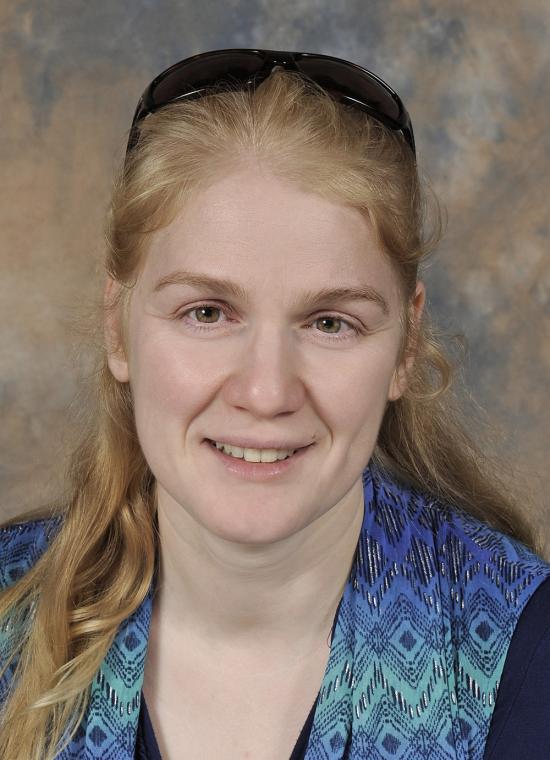
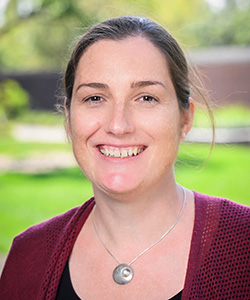
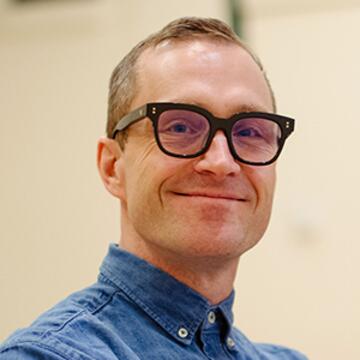
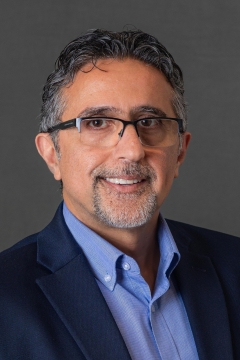
Gizem Karaali is a Professor of Mathematics and Statistics and Chair of the Mathematics Department at Pomona College, part of The Claremont Colleges. She holds a Ph.D. in Mathematics from UC Berkeley (2004) and a B.S. in Electrical Engineering and Mathematics from Boğaziçi University. Her research spans algebraic structures like Lie algebras, representation theory, and humanistic mathematics, with a focus on integrating social justice into mathematics education. She co-founded the Journal of Humanistic Mathematics and created innovative courses such as the first-year seminar Can Zombies Do Math? to explore mathematics’ humanistic dimensions. Research Interests: Representation Theory, Algebraic Combinatorics, Quantitative Literacy, Mathematics Education, and the intersection of math with social justice. She has published widely in journals like Advances in Mathematics , Ramanujan Journal , and Journal of Humanistic Mathematics . Awards: NSA Young Investigator Award (2011-2013), NEH Enduring Questions Grant (2014-2016), AMS Project NExT Fellow. Active in editorial roles for Journal of Humanistic Mathematics and Numeracy . Teaching: Courses include Calculus, Linear Algebra, Abstract Algebra, and interdisciplinary topics like Mathematics, Philosophy, and the Real World. Advised senior theses in diverse areas including ethnomathematics and quantitative literacy.
Ulrich Ermann is a Professor of Human Geography with a focus on subject didactics at the Institute of Geography and Spatial Research, University of Graz, a position he has held since 2012. He teaches foundational and advanced topics in human geography, including economic geography, geographies of nutrition and consumption, regional development, and globalization. His research lies at the intersection of cultural and economic geography, emphasizing the social and material dimensions of markets and consumption. Key areas include agro-food systems, sharing economies, and the reconfiguration of human-nonhuman relations through science and technology studies (STS) and actor-network theory. Human Geography Economic Geography Agro-Food Studies Geographies of Consumption More-than-Human Geographies Science and Technology Studies His work explores the materiality of economic practices, particularly how goods, brands, and everyday consumption shape spatial relations between production and consumption. Regional research focuses on Austria, Germany, Southeast Europe, and Indonesia. Prof. Ermann maintains active teaching and student engagement, with regular office hours on Wednesdays from 9:00 to 11:00. He advises students and contributes to curriculum development in geography education. No specific scientific awards or publications were listed in the provided text. He is involved in theoretical and empirical research on integrative concepts bridging society and environment, nature and technology, with a strong emphasis on qualitative and social theory-informed methodologies.
Giuseppe Fontana is Professor of Monetary Economics at the Leeds University Business School, University of Leeds. He also holds affiliations as Associate Member at the Cambridge Centre for Economic and Public Policy (University of Cambridge), Life Member Fellow at Clare Hall (Cambridge), Research Associate at the Levy Economics Institute (USA), and Associate Professor at the University of Sannio (Italy). His educational background includes a PhD and MA in Economics from the University of Leeds, a Dottorato di Ricerca from the University of Naples, and a Laurea (First Class Honours) from the same institution. Fontana specializes in Endogenous Money Theory , New Consensus Macroeconomics , fiscal and monetary policy , and the economics of uncertainty . His research critically examines financial crises, the Great Recession, and labour market dynamics from a Post-Keynesian and institutional perspective. He has published extensively in top heterodox economics journals such as the Cambridge Journal of Economics , Journal of Post Keynesian Economics , and Review of Political Economy . His recent scholarly output shows a strong focus on macroeconomic theory, crisis analysis, monetary institutions, and economic pedagogy. Themes of financialisation, sustainable development, and policy critique recur across his publications, especially in the context of EU-funded research like the FESSUD project. President of the Association for Social Economics (elected 2015) Life Member Fellow, Clare Hall, University of Cambridge Fontana has supervised multiple PhD students, including Toby Swales and Aidan Knox. He has led major research initiatives, notably serving on the executive board and as work-package leader for the €8 million EU FP7 FESSUD project. His research has been supported by international institutions and collaborative networks across Europe and the US. He is actively involved in academic leadership and interdisciplinary research teams focused on rethinking macroeconomic frameworks and policy responses to global economic challenges.
Paolo Sellari is an Associate Professor in the Department of Political Science at Sapienza University of Rome, where he contributes significantly to research and teaching in political and economic geography, geopolitics, and infrastructure security. He is affiliated with the research group Geopolitics of the Sea and plays a key role in the Master in Geopolitics and Global Security , contributing to curriculum development and academic supervision. Department: Department of Political Science University: Sapienza University of Rome Email: paolo.sellari@uniroma1.it His research interests span a broad yet interconnected spectrum, including maritime geopolitics, Mediterranean and Arctic strategic dynamics, Chinese foreign policy (especially the Belt and Road Initiative), infrastructure as instruments of power, and the geopolitics of climate change. He also explores unconventional intersections such as sports and geopolitics. His scholarly work emphasizes spatial dimensions of power, resilience, and connectivity in a rapidly transforming global order. The analysis of his recent publications (2023–2025) reveals a strong thematic consistency focused on maritime routes, infrastructure security, and the evolving geopolitical roles of the Mediterranean and Arctic regions. His work frequently addresses the interplay between physical geography and power projection, with a particular interest in how climate change, technological evolution, and strategic investments reshape global and regional orders. He contributes to both academic journals and reference works, including the Italian Encyclopedia. While specific scientific awards are not listed in the provided texts, his consistent publication record in reputable venues and leadership in advanced academic programs suggest recognition within the academic community. Sellari advises students through the Master in Geopolitics and Global Security and is involved in organizing seminars and educational content. Although no direct mention of grants is made, his editorial roles and institutional leadership imply active engagement in academic projects and collaborations. He supervises thesis work and contributes to academic discourse through prefaces, introductions, and editorial reviews. He is a core member of the Geopolitics of the Sea research group, which focuses on maritime spatial dynamics, naval security, and the geopolitical implications of oceanic infrastructure and climate change. This group serves as a hub for interdisciplinary research connecting geography, political science, and security studies.
Yoshua Bengio is a Full Professor at the Université de Montréal, affiliated with the Department of Computer Science and Operations Research at the Faculty of Arts and Sciences. He is a pioneer of deep learning and a leading figure in AI safety. He co-founded Mila – Quebec Institute of Artificial Intelligence and serves as its scientific director. His work focuses on advancing AI technology while addressing ethical and safety challenges, including AI governance and catastrophic risk mitigation. Education: Ph.D. in Computer Science from McGill University (1991), postdoctoral studies at MIT. Research interests include deep learning, causal inference, AI ethics, and responsible AI development. He contributed to the Montreal Declaration for Responsible AI and leads the International Scientific Report on AI Safety. Recent articles emphasize AI safety frameworks, governance, and technical advancements in machine learning. Awards include the Turing Award (2018), Killam Prize (2019), and recognition as TIME's Most Influential Person (2024). He holds prestigious fellowships and is a member of the UN Scientific Advisory Board for Breakthrough Science and Technology. Affiliations include Mila, IVADO (as founding scientific director), and CIFAR programs. His work bridges academia, industry, and policy to ensure AI benefits humanity while minimizing existential risks.
Assoc Prof Siok Kuan Tambyah is an Associate Professor at the National University of Singapore (NUS) Business School and a Fellow at The College of Alice & Peter Tan, NUS. She holds a PhD in Business from the University of Wisconsin-Madison. Her research focuses on consumer behavior, consumer culture theory, services marketing, and happiness/quality-of-life studies. She has authored/co-authored five books and numerous articles in leading journals such as the Journal of Consumer Research and Journal of Service Research . Her teaching spans undergraduate and graduate levels, including courses on Principles of Marketing, Consumer Behavior, and The Pursuit of Happiness. She has supervised over 60 undergraduate research projects and advised two PhD students. Her pedagogical research emphasizes interdisciplinary learning and residential college environments, highlighted in works like Student Growth and Development in New Higher Education Learning Spaces . A/P Tambyah’s work on Singapore’s quality of life and well-being has positioned her as a leading expert. Key publications include Happiness and Wellbeing in Singapore: Beyond Economic Prosperity (2023) and Drivers of Sustainability and Consumer Well-Being (2022). Her research often bridges consumer behavior with societal issues, such as immigrant inclusion and economic hardship impacts. She is an award-winning educator, recognized for innovative teaching methods in residential colleges and executive education programs. Her contributions to interdisciplinary learning and community engagement are further detailed in her writings on reflective practices and community-based research models.
Judith Roitman is a full Professor of Mathematics at the University of Kansas, where she has been since 1976, rising to full professorship after earlier roles at Wellesley College and the Institute for Advanced Study. Her academic journey began with an English Literature degree from Sarah Lawrence College (1966) before transitioning to mathematics at UC Berkeley, earning a Ph.D. in 1974 under Robert Solovay, with research in set-theoretic topology and Boolean algebra. She has held leadership roles in the Association for Women in Mathematics (AWM), serving as its President (1979–1981) and shaping its early structure. Her research spans over 40 papers and a textbook, Introduction to Modern Set Theory (1990), while her work in mathematics education includes co-authoring the NCTM Principles and Standards 2000 . She received the 1990 Louise Hay Award for Mathematics Education and was inducted into the AWM Fellows Program in 2018. Roitman’s career combines research with advocacy: she mentored students, advised on national education policy, and ran teacher workshops for elementary and high school educators. Her non-academic pursuits include poetry (e.g., Slippage , 1999) and Zen Buddhism, co-founding the Kansas Zen Center in 1978.
Darshana Sreedhar Mini is an Assistant Professor in the Department of Communication Arts at the University of Wisconsin–Madison, where she teaches and conducts research at the intersection of feminist media, gender & sexuality studies, transnational media, migrant media, and South Asian screen cultures. She is also the Director for Media and Gender Justice at the 4W Initiative and holds affiliations with the Center for Southeast Asian Studies, Gender and Women’s Studies, Center for Visual Cultures, Center for South Asia, and the Havens Wright Center for Social Justice. Ph.D., Division of Cinema and Media Studies, University of Southern California M.Phil., Center for Studies in Social Sciences, Calcutta (CSSSC), India Dr. Mini’s research centers on Global Media Cultures, Transnational Cinemas and Migration, South Asian Cinema, and Feminist Media. Her work critically examines soft-porn cinema in India, media publics, censorship, labor in the entertainment sector, and migrant media practices. Her first book, Rated A: Soft-Porn Cinema and Mediations of Desire in India (UC Press, 2024), is a groundbreaking study that combines archival and ethnographic methods to explore the social and cultural impact of Malayalam soft-porn from the 1970s to the 2000s. Her second book project, Telegeographies of Indian Migration , investigates media flows between South Asia and Southeast Asia, focusing on colonial-era labor migration and its lasting effects on identity and community formation. Her recent publications span a diverse range of topics including South Asian pornographies, digital intimacy, anti-caste activism, #MeToo and intersectional feminism, transnational empathy in cinema, and media infrastructures. These works reflect a strong trend toward interdisciplinary, feminist, and decolonial scholarship that challenges dominant canons in film and media studies. Edward Cameron Dimock, Jr. Prize in the Indian Humanities, AIIS, 2024 Early Career Award, NCA, 2024 Race, Ethnicity and Indigeneity Fellow, IRH, UW-Madison, 2024 Byerly Award for Feminist Political Economy, ICA, 2023 First Book Award, The Center for Humanities, UW-Madison, 2022 SCMS Student Writing Award, 2017 Dr. Mini has been actively involved in academic service and leadership, including directing the Media and Gender Justice initiative, co-organizing seminars on migrant media, and contributing to feminist and anti-caste scholarship. Her research has been supported by prestigious grants from the Social Science Research Council (SSRC), American Institute of Indian Studies (AIIS), National Endowment for the Humanities (NEH), and the University of Wisconsin–Madison. She also leads a significant grant-funded project as Principal Investigator for the 'South Asian Film and Media Collection' at UW-Madison. She is a key member of several collaborative research environments, including the Center for Visual Cultures and Performance Studies (CVCPS), the Wisconsin Center for Film and Theatre Research (WCFTR), and the 4W Initiative, where she directs programming on media and gender justice. These affiliations reflect her commitment to interdisciplinary, socially engaged scholarship and the creation of inclusive academic communities.
LIM Yi Hao is an Adjunct Lecturer at the School of Computing and Information Systems (SCIS), Singapore Management University (SMU), where he contributes expertise in cyber threat intelligence. He is also Google’s Intelligence Strategy Lead for Asia Pacific, based in Singapore, leading strategic engagements, partnerships, and thought leadership initiatives across the region. His research and professional interests focus on Cyber Threat Intelligence , Information Security , and Digital Risk Management . He actively shapes regional narratives through speaking engagements, conferences, and webinars, bridging industry strategy with academic insight. While no recent publications are listed, his work centers on strategic cybersecurity intelligence and its application in enterprise and policy contexts, reflecting a strong interdisciplinary approach combining technology, strategy, and regional dynamics. No scientific awards listed. LIM Yi Hao advises and collaborates within both academic and corporate frameworks, leveraging his dual role to align real-world cybersecurity challenges with educational development. Though no formal advisees are mentioned, his leadership at Google involves mentoring and strategic guidance across teams. There is no public information on grants or funded research projects. He is affiliated with the School of Computing and Information Systems at SMU and operates at the intersection of academia and industry, contributing to curriculum relevance through practical intelligence frameworks.
Emma Mercier is an Associate Professor and Associate Head & Director of Graduate Programs in the Department of Curriculum & Instruction at the University of Illinois, Urbana-Champaign's College of Education. She also holds a secondary appointment in the Department of Educational Psychology, demonstrating her interdisciplinary approach to educational research. Dr. Mercier's research focuses on the relationship between social interaction and learning, with particular emphasis on collaboration and computer-supported collaborative learning (CSCL) in classroom settings. Her work examines how technology influences group interactions and learning, especially through the use of multi-touch tables in classrooms. She investigates between-group and whole-class interactions, device ecologies, teacher tools, and classroom contexts that shape learning opportunities in technology-enhanced environments. Her research spans K-12 and higher education settings, with significant contributions to engineering education and the design of collaborative learning spaces. Analysis of Dr. Mercier's recent publications reveals a strong focus on orchestration tools that support instructors in facilitating collaborative learning, the role of technology (particularly augmented and virtual reality) in collaborative problem solving, and the design of effective collaborative tasks in engineering education. Her work bridges educational theory with practical classroom applications, often employing design-based implementation research methodologies. A notable trend is her increasing focus on machine learning applications to analyze and support collaborative interactions in real-time classroom settings. Dr. Mercier has been actively involved in mentoring graduate students and teaching courses related to educational research methods, child development and technology, and advanced study of education. Her work has involved significant collaboration with researchers across institutions and disciplines, particularly in the fields of educational technology, learning sciences, and engineering education. Her research has been supported through various projects, including the CSTEPS (Collaborative Support Tools for Engineering Problem Solving) initiative, which has developed and evaluated tools to support collaborative learning in engineering classrooms. This work has involved partnerships with teaching assistants, course assistants, and faculty to implement and refine collaborative learning approaches in undergraduate engineering courses.
Jonathan Chapman is a Professor and Director of Doctoral Studies at Carnegie Mellon University's School of Design, where he leads the PhD in Transition Design program. He also serves as a Visiting Professor in Design at the Politecnico di Milano and advises graduate students at MIT, Cambridge University, Royal College of Art, and KAIST. His educational background includes a PhD in Design (2008), MA in Design Futures (2001), and BA (Hons) in Industrial Design (1997). At 38, he became the youngest person in the UK to achieve Full Professor in Design. Chapman is a leading researcher in sustainable design, focusing on emotional durability, product longevity, and transition design. His work explores how design can foster meaningful, lasting relationships between people and products through an 'experience heavy, materials light' approach. He investigates psychological, cultural, and systemic factors influencing product lifespans, developing frameworks for sustainable consumption patterns. His scholarly output shows a trajectory from foundational work on emotional durability toward broader systems thinking and transition design. Recent publications address PhD education in design, worldview transformation, dematerialization, and applications to complex challenges including space development. Chapman consults for global organizations including Puma, COS, Philips, the House of Lords, United Nations, and NASA. His Guardian Op-Ed received over 1,000 comments upon publication. New Scientist has described him as 'a mover and shaker' and a 'new breed of sustainable design thinker.' As Director of Doctoral Studies, Chapman mentors PhD candidates in the Transition Design program and provides academic leadership internationally through his visiting professorship and advisory roles at prestigious institutions worldwide.
Reza Taheri is a Professor and Senior Associate Dean of Pharmacy Education at Chapman University School of Pharmacy. His expertise spans leadership development, curriculum design, strategic planning, and programmatic accreditation in pharmacy education. Previously, he served as Chief Strategy Officer at RxPrep Inc., founding Associate Dean at West Coast University, and held faculty and leadership roles at Western University of Health Sciences and Loma Linda University School of Pharmacy. Education: Doctor of Pharmacy (University of Minnesota), Executive MBA (University of Southern California) Current Role: Department of Pharmacy Practice, Chapman University His research focuses on pharmacy education , emphasizing emotional intelligence coaching , interprofessional collaboration , and virtual learning modalities . Recent studies examine mock-trial simulations for teaching-assessment, supplemental instruction efficacy, and interprofessional virtual simulations for leadership and patient advocacy. Publications highlight technology integration in pharmacy curricula and resilience measurement in educational contexts. Taheri collaborates extensively on interprofessional education (IPE) interventions, analyzing their impact on patient outcomes like length of stay , medical errors , and mortality . He is a certified Emotional Intelligence Coach and trainer with Crucial Learning and The Table Group.
Yoon Ji-hyun is a Professor in the Department of Food and Nutrition at Seoul National University's College of Human Ecology. Her work focuses on food service management, nutrition policy, and dietary behavior analysis, with a particular emphasis on multicultural dietary practices and sustainable development in food systems. Education: Bachelor's in Food and Nutrition (SNU), BBA (SNU), MS in Hotel, Restaurant, and Institution Management (Iowa State University), PhD in Hospitality and Tourism Management (Purdue University). Leadership Roles: Associate Dean (2019-2021), Director of Ho-Am Faculty House (2010-2012), and multiple directorships in nutrition policy centers. Her research integrates public health and consumer behavior, analyzing topics like pandemic-induced dietary changes, school lunch standards, and food safety anxiety. She has led projects on non-face-to-face food safety management, food education policies, and sodium-reduced environments, funded by South Korea's Ministry of Food and Drug Safety, Ministry of Education, and others. Professor Yoon's work also addresses urban dietary trends, including single-person households' kitchen needs and workers' meal patterns, using data from national health surveys and time-use studies. She has contributed to regional and inter-Korean comparative studies on nutritional disparities and dietary guidelines. She teaches courses on foodservice management, consumer market analysis, and graduate-level research methodologies, while serving as Vice President in several academic societies, including the Korean Society of Dietary Culture and Korean Cancer Association.
Anthony J. Gambino is a Postdoctoral Research Associate in the Department of Educational Psychology at the University of Connecticut. His research focuses on gifted education, teacher evaluation, and multilevel modeling techniques. Ph.D. in Research Methods, Measurement, and Evaluation (University of Connecticut) M.A. in Measurement, Evaluation, and Assessment (University of Connecticut) B.S. in Psychology (Wagner College) His work addresses critical issues in educational equity, including disparities in gifted program identification by race, poverty, and language status. He develops and evaluates statistical tools for multilevel modeling and contributes to understanding the role of teacher rating scales in educational assessments. Gambino’s publications emphasize methodological rigor in educational research, particularly in behavioral interventions like PBIS and analytical frameworks for teacher effects. He maintains active engagement in advancing evaluation curricula for graduate programs.
Jasmine Begeske serves as Clinical Assistant Professor of Special Education in Purdue University's Department of Educational Studies within the College of Education. She co-founded and directs CREATE: Center for Research and Equipment for Assistive Technology in Education, an AT library and makerspace providing hands-on opportunities for pre-service teachers to develop individualized solutions for students with disabilities using 3D printers, Cricut, and Glowforge equipment. Her educational background includes: PhD in Special Education with Cognate in Art Education from Purdue University MFA in Photography and Related Media from Purdue University MS in Secondary Education (Special Education specialization) from Indiana University Northwest BFA in Photography with Art History minor from Indiana University Dr. Begeske's research program examines inclusive access to arts education through program evaluation and creative assistive technology development. Her experimental printmaking practice integrates individuals with disabilities as co-creators , while her scholarly work validates instruments measuring preschool arts accessibility and develops multisensory adaptations for students with visual impairments. She bridges art education and special education through evidence-based AT interventions . Analysis of her publication history reveals consistent focus on arts/special education intersections with increasing emphasis on empirical validation of accessibility instruments and multisensory adaptations. Her 2023 work on teacher education in art classrooms and multisensory adaptations demonstrates practical applications of her CREATE center's mission, while her 2022 instrument validation study establishes methodological rigor in measuring arts accessibility. Her scientific recognition includes: 2023 USSEA Outstanding Dissertation Award 2023 Purdue Focus Award for equity initiatives 2022 AEAI President's Award for EDI service Multiple Purdue University teaching and discovery awards (2020-2023) With 15+ years of teacher preparation experience spanning 100+ course sections, Dr. Begeske mentors doctoral students while securing grant funding including $100K from Purdue's Instructional Equipment Grant for CREATE. Her professional service encompasses state-level program reviews, academic standards committees, and leadership roles in Indiana Division of Early Childhood and CEC-DARTS. The CREATE center operates as a dual-space AT innovation hub with fixed location in Beering Hall and mobile carts supporting field experiences. It empowers pre-service teachers to prototype solutions addressing specific student needs while advancing Dr. Begeske's mission of making education universally accessible through technology and creativity.