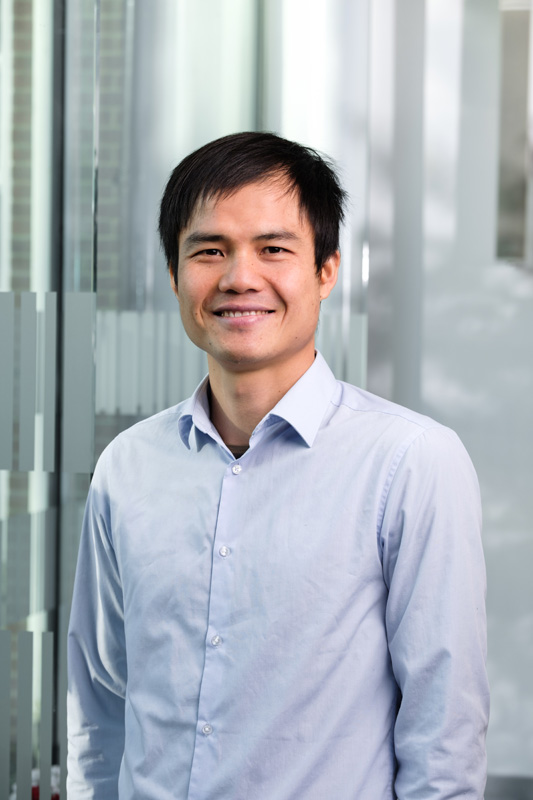
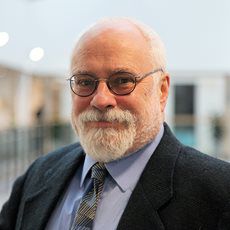
Kaido Soom is a Lecturer in Practical Theology at the University of Tartu's Faculty of Arts and Humanities, School of Theology and Religious Studies. He holds a Doctor's Degree from the University of Tartu (2007) focusing on adult confirmation strategies in the Estonian Evangelical Lutheran Church. His career spans over two decades with continuous academic and administrative roles within the University's theological departments. Research interests center on contemporary religiosity, church dynamics, and practical theology with notable projects including studies on young people's religious attitudes (ETF9108) and the historical dynamics of Estonian religiosity (SF0182580s03). Publications span topics such as Estonian religious demographics, comparative theology with Finland, and liturgical practices. He has contributed to interdisciplinary projects including medical education reforms and ecclesiastical administration during crises. Active in both national and international theological discourse, his work bridges academic research with practical church development strategies.
Dr. Juan Felipe Torres is a Senior Lecturer and course convener for Aerodynamics, Fluid Mechanics, and Heat Transfer at the School of Engineering, ANU. His research focuses on sustainable heat and fluid flow phenomena with applications in environmental, energy, and aerospace engineering. Key contributions include hierarchical solar absorber coatings and the development of thermodiffusive desalination. He holds dual doctoral degrees from Tohoku University (Japan) and École Centrale de Lyon (France), with 12 years of experience in Japan, including a JSPS Fellowship and industry work at Toshiba Corporation. Education: Doctor of Philosophy (Engineering), Tohoku University & École Centrale de Lyon (2014) Master of Engineering, Tohoku University (2011) Bachelor of Engineering, Tohoku University (2009) Research Interests: Sustainable energy systems, solar thermal technologies, phase-change materials, desalination, and advanced coatings for high-temperature applications. His work emphasizes scalable solutions for environmental and energy challenges, including heat transfer optimization and materials innovation. Grants & Projects: ANU-funded projects on microplastic collection, hydrogen storage, lunar dust mitigation, and solar carbon sequestration (2018–2026). Focus on lab-scale prototypes (e.g., packed bed thermal storage, bladed solar receivers) and field applications. Labs & Teams: Group Leader of the ANU HEAT Lab, advancing heat/mass transfer technologies for environmental and energy applications. Collaborates internationally on solar thermal systems and desalination.
Dr. Luca Castiglione is a Research Associate in Resilience and Safety to Cyber Attacks at the Department of Computing, part of the Faculty of Engineering at Imperial College London. His work focuses on interdisciplinary cybersecurity challenges in cyber-physical systems (CPS), emphasizing the intersection of safety and security. Research interests include threat modeling for CPS, hazard analysis in smart grids and aviation systems, and secure file storage in cloud environments. His methodologies often combine systems theory with practical frameworks like assurance case generation and cooperative communication protocols over 5G. Recent publications explore automated detection of safety-critical attacks, impact analysis of cyber threats on flight management systems, and security-aware hazard analysis for infrastructure systems. While no awards or grants are explicitly mentioned, his research demonstrates expertise in cross-disciplinary approaches to system resilience. His location is listed as the Huxley Building on the South Kensington Campus, though no email or educational background details are provided in the available text.
Professor Kathy Douglas is the Associate Deputy Vice Chancellor, Learning, Teaching & Quality in RMIT University's College of Business and Law. She leads initiatives in pedagogy innovation, program development, and educational governance. With over 20 years in dispute resolution (ADR), her research spans legal education, mediation practices, and technology-enhanced learning. Previously, she served as Dean of the Graduate School of Business and Law (2018–2022), receiving the 2020 Vice Chancellor’s Leadership Award for Imagination. Her work integrates transformative educational experiences with impactful research, focusing on community, industry, and staff engagement. Research Interests: Alternative Dispute Resolution (ADR) practices and education Legal pedagogy and blended learning Technology’s role in dispute resolution and legal training Mediation ethics and emotional intelligence Awards: Vice Chancellor’s Leadership Award for Imagination (2020) Advising & Grants: Supervises research projects in mediation and legal practice innovation Prior grants focused on ADR training and educational technology integration Labs/Teams: Leads the College’s Learning & Teaching Quality portfolio, collaborating with academic boards and industry partners.
Susana M. Morris is an Associate Professor and Associate Chair in the School of Literature, Media, and Communication at the Georgia Institute of Technology. She holds a Ph.D. in English and a Women’s Studies certificate from Emory University (2007) and a B.A. in English from Mount Holyoke College (2002). Her research focuses on Black Feminism, Afrofuturism, and African American literature, with a current project exploring Black women’s engagement with Afrofuturism and feminism. Prior to Georgia Tech, Morris taught at Auburn University (2007–2017) and Spelman College (2006–2007). She is the author of Close Kin and Distant Relatives: The Paradox of Respectability in Black Women’s Literature (2014) and co-editor of The Crunk Feminist Collection (2017) and Sycorax’s Daughters (2017). She co-edits the New Suns book series on race, gender, and sexuality in speculative arts. Her awards include the PULSE Community Building Award (2017), DILAC Fellowship (2017), and Dream Defender recognition (2015). Morris teaches courses on Afrofuturism, gender studies, and African American literature, emphasizing critical theory and cultural analysis.
Srinivas Narayana is an Assistant Professor in the Department of Computer Science at Rutgers University, specializing in programmable networking, formal verification, and systems research. He holds a PhD from Princeton University and a B.Tech from IIT Madras, with postdoctoral work at MIT. His research focuses on building safe, high-performance networks through optimizing compilers, verified programming, and distributed system monitoring. He has received NSF grants, the CGO 2022 Distinguished Paper Award, and the 2017 SIGCOMM Best Paper Award. Education: PhD and MA in Computer Science, Princeton University (2016) B.Tech in Computer Science, IIT Madras (2010) Postdoctoral Research, MIT (2018) Research Interests: His work bridges networking and systems with a focus on compilers, formal methods, and programmable hardware. Notable projects include K2 compiler for eBPF, the eBPF verifier soundness work, and congestion control mechanisms like CCP. He explores parallel packet processing, privacy-preserving analytics, and load balancing strategies. Grants & Awards: NSF Awards #2422076, #1910796, #2019302 eBPF Foundation Grant Facebook Networking Research Award Network Programming Initiative (NPI) Funding Lab & Teams: Leads the NetSys group at Rutgers, collaborating with teams on projects like the eBPF verifier, verified packet processing, and network monitoring tools like Marple. His lab emphasizes open-source contributions and industry collaboration.
Benjamin R. Silliman, Ed.D., is a Professor of Accountancy at The Peter J. Tobin College of Business, St. John's University. He holds multiple degrees including an Ed.D. in Higher Education Administration from New York University, and advanced credentials in Economics, Taxation, and Accountancy. His academic career spans over 15 years, with tenures at Queens College/CUNY and part-time teaching roles at Cornell University. Dr. Silliman's research focuses on financial reporting, federal taxation, governmental accounting, and adult learning. He has published over 32 articles in journals such as the CPA Journal and Journal of Accounting and Finance, and contributed a chapter on International Financial Reporting Standards (IFRS) to the GAAP 2021 Handbook. His grant-funded dissertation analyzed federal college tuition tax credits at public community colleges. Education: Ed.D., Higher Education Administration, New York University (2004) MAcc, Accountancy, University of Mississippi MA, Economics and Education, Columbia University M.P.A., Public Administration, University of North Carolina at Chapel Hill Dr. Silliman has received numerous awards, including the PWC Teaching Fellowship and the Max Block Award for research. He advises Beta Alpha Psi (Kappa Zeta Chapter), leading to national and regional competition wins for St. John’s University. His service roles include membership on 8 university committees and leadership in the Faculty Association’s bargaining unit. His teaching spans advanced accounting courses (e.g., BUS ENTITIES & COMBINATIONS, GOVERNMENTS & NOT-FOR-PROFITS) and integrates public policy perspectives. Professional experience includes 18 years as a budget and compliance consultant for CUNY and prior roles at Arthur Andersen & Co. and NBC.
Dr. Jing Li is a Senior Research Fellow at the University of Hull's Energy and Environment Institute. He holds a BSc (2006) and PhD (2011) from the University of Science and Technology of China (USTC), followed by a postdoctoral position there and an EU Marie Skłodowska-Curie Fellowship at the University of Nottingham (2017–2019). His research focuses on renewable energy, energy storage, and sustainable heating technologies, with expertise in heat pumps, organic Rankine cycles, and solar PV/T systems. Dr. Li has led/co-led 12 research projects funded by organizations such as the EU, BEIS, and the Royal Society. He is a Fellow of the Higher Education Academy (FHEA) and has co-authored over 100 peer-reviewed papers, 3 books, and holds 10 patents. His innovations include vapor-injection heat pumps, novel thermal storage techniques, and advanced photovoltaic/thermal systems. Key research themes include low-carbon energy systems, thermodynamic cycle optimization, and sustainable building technologies. His recent work demonstrates low-carbon heating systems in public buildings and advanced solar-assisted heat pump designs. Education: BSc (USTC, 2006), PhD (USTC, 2011) Awards: FHEA, EU Marie Curie Fellowship Grants: £12k (Royal Society, 2022), EU/BEIS/EPSRC-funded projects His lab investigates cutting-edge energy solutions, including heat batteries, solar-driven ORC systems, and hydrogen-based CHP systems. He actively contributes to international conferences, delivering keynote speeches on sustainable energy advancements.
Madis Talmar is an Assistant Professor of Innovation and Entrepreneurship at Eindhoven University of Technology (TU/e) , affiliated with the Industrial Engineering and Innovation Sciences (ITEM) Group . He holds a Ph.D. from TU/e and a D.Sc. from Aalto University (2018), focusing on organizing innovation in transitioning domains. His teaching includes the Introduction to Technology Entrepreneurship course (425+ students) and the Data Entrepreneurship in Action III at the Jheronimus Academy of Data Science. He has been nominated for the Industria Teaching Award three times (2017–2019). His research centers on innovation ecosystems , open innovation programs , and energy transition dynamics . He pioneered the Ecosystem Pie Model (published in Journal of Business Venturing Design ), a tool for analyzing innovation ecosystems. He supervises 2 PhD students and 1 PDEng, contributing to projects like the SMART-SPACE Interreg initiative . His sectoral expertise spans energy and mobility, with consultancy work for corporations in Spain, Germany, Sweden, and Belgium. Madis has authored over 70 student theses across levels and co-founded three startups. His awards include a nomination for the Best TU/e PhD Dissertation Award (2019) and a Best Paper Award nomination (2019). He also chairs entrepreneurship education initiatives like the 4TU Entrepreneurship Research Network and organizes conferences on topics like regional energy strategy.
Huda Khan is a Senior Lecturer in Marketing at the Business School of the University of Aberdeen, where she also serves as Director of the MSc Marketing Management Program and Associate Director of the Africa-Asia Centre for Sustainability Research. She holds a PhD in Marketing from the University of South Australia and has previously worked as a marketing academic there, engaging in high-value research projects with global brands through the Ehrenberg-Bass Institute. University: University of Aberdeen School: Business School Academic Rank: Senior Lecturer Email: huda.khan@abdn.ac.uk Office: 719, MacRobert Building, UK Education: PhD in Marketing, University of South Australia, 2016 Graduate Certificate in Digital Learning, University of South Australia, 2020 Huda Khan’s research centers on international marketing, sustainability, digital transformation, and SME internationalization. Her work explores strategic agility, responsible innovation, and the impact of digitalization on business models and consumer behavior. She is particularly interested in emerging markets and the challenges faced by firms in volatile environments. Her recent publications (2023–2025) span top journals such as Journal of Business Research , Industrial Marketing Management , International Business Review , and European Journal of Marketing . The articles reflect a strong interdisciplinary focus on sustainability, digitalization, and international business, with recurring themes of strategic agility, value co-creation, and responsible innovation. She has also contributed to book chapters and edited special issues on sustainability and marketing disruption. Scientific Awards and Recognitions: Fellow of the Royal Society of Arts Endorser of Responsible Research in Business & Management (RRBM) Certified Practising Marketer (CPM), Australian Marketing Institute Affiliate Professional, Chartered Institute of Marketing (CIM) Member, BAM Peer Review College (2023–2026) Huda Khan has secured research funding from the Society for Advancement of Management Studies and the Royal Society of Edinburgh for projects on supply-chain resilience and women-led startups in Pakistan. She is actively supervising PhD students in Business Management, with a focus on international marketing, digital marketing, and sustainability. She serves on the editorial boards of several journals, including Industrial Marketing Management and Journal of Business Research , and is an Associate Editor for Rutgers Business Review . She is also an External Examiner at the University of Sussex and the University of Kent. Huda is actively involved in research centers and networks, particularly the Africa-Asia Centre for Sustainability Research, where she contributes to cross-regional sustainability initiatives. She has also led special issues on climate change, de-globalization, and sustainable partnerships, reflecting her leadership in shaping scholarly discourse on global business challenges.
Sara Bennett is a Professor at the Johns Hopkins Bloomberg School of Public Health, Department of International Health. She is affiliated with the Center for Global Health and serves as the Director of the DrPH program. She is also the CEO of the Future Health Systems consortium and chairs the Joint Health Systems Research Committee (Wellcome Trust/MRC/DFID/ESRC). PhD, London School of Economics, 1997 MPhil, University of Cambridge, Kings College, 1987 BA, University of Oxford, St. Anne's College, 1986 Her research centers on health systems in low- and middle-income countries, with a focus on governance, institutional capacity, sustainability, evidence-to-policy processes, multisectoral collaboration, and donor transition . She integrates political science into health systems research, emphasizing accountability mechanisms and policy networks. Her interdisciplinary approach often employs mixed-methods designs. Her recent publications (2024–2025) reflect a strong trend in global health governance, refugee health data integration, fair financing for universal health coverage, and sustainability of HIV programs . These works demonstrate her leadership in shaping policy debates around health system resilience, equity in funding, and effective international collaboration. She has received recognition through extensive citations and engagement across academic and policy platforms, though specific awards are not listed in the provided text. Bennett leads major research initiatives such as the Future Health Systems consortium and the DrPH program. She has advised on numerous projects including the Avahan Program, Uttar Pradesh Health Systems Support, and the African Health Diagnostics Platform. Her work involves deep collaboration with institutions in Uganda, India, Jordan, and Lebanon.
Karine Charry is a Professor at the Louvain School of Management (LSM) within the University of Louvain (UCLouvain), affiliated with the Louvain Research Institute in Management and Organizations (LouRIM) . Her work focuses on behavioral responses to marketing strategies in health and sustainability contexts. Email: karine.charry@uclouvain.be Office: Building B, Floor 02, Office B207, Chaussée de Binche 151, 7000 Mons Research Interests: Behavioral impact of sustainability labels and nudges Effectiveness of environmental NGO campaigns Role of social media influencers in dietary and ecological behaviors Prosocial communication via platforms like Twitter Co-branding and packaging strategies for child-targeted products Key Article Trends (2006-2025): Her publications span food marketing ethics, social media dynamics, threat appeals in youth campaigns, gamification for health apps, and sustainability labeling. Notably, she investigates how social norms and digital engagement shape pro-environmental and healthy eating behaviors in children and adolescents.
Professor Mark NK Saunders is a distinguished academic at the University of Birmingham, serving as Professor of Business Research Methods within the Department of Management at Birmingham Business School. He holds visiting professorships at the Universities of Pretoria, Mälardalen, Surrey, and Worcester, reflecting his international academic standing. Education: PhD in Geography (1986) PGCE (1982) MSc in Urban Studies (1981) BA in Geography and Soft Systems (1980) Mark Saunders' research is centered on research methodology, particularly participant selection and methods for understanding organizational relationships. His work extends to human resource aspects of organizational change, with a focus on trust and organizational learning, as well as the success factors of small and medium-sized enterprises (SMEs). He is also deeply engaged in pedagogic practice, textbook writing, and the supervision of doctoral students. His extensive publication record includes over 150 research articles and book chapters, with recent works exploring themes such as social entrepreneurial identities in later life, trust dynamics in consulting, and the impact of generative AI on human resource management. His research is frequently published in top-tier journals like the British Journal of Management , Human Relations , and the International Small Business Journal . Scientific Awards and Fellowships: Fellow of the Academy of Social Sciences (2019) Fellow of the British Academy of Management (2014) British Academy of Management Medal for Leadership Fellow of the First International Network for Trust Fellow of the Chartered Institute of Personnel and Development (2006) Fellow of the Higher Education Academy (2007) Mark Saunders is a dedicated mentor and advisor, actively supervising doctoral students and contributing to doctoral capacity building. He has co-authored and edited over 30 books, including the highly influential Research Methods for Business Students , which is currently in its 9th edition. He holds significant editorial responsibilities as a consulting editor for the International Journal of Management Reviews and as an associate editor (Methodology) for the Human Resource Management Journal . His work is supported by his active involvement in key academic networks, including the British Academy of Management’s Research Methodology Special Interest Group, where he serves as Co-Chair, and the European Foundation for Management Development Doctoral Programmes Conference Committee.
Anders Kalsgaard Møller is an Associate Professor in the Department of Culture and Learning at Aalborg University's Faculty of Humanities and Social Sciences. He is actively engaged in research and innovation in learning design, digital technologies, and artificial intelligence in education. His work is centered around the L-ILD (IT and Learning Design), Green Society, and MASSHINE Xlab – Design, Learning and Innovation research environments. His research interests span Learning Design , Computational Thinking , Artificial Intelligence in Education , Human-Robot Interaction , and Environmental Literacy . He investigates how emerging technologies can be integrated into educational practices to enhance collaborative learning, literacy development, and sustainable thinking. His work often involves participatory and co-design methods with educators and children. The recent publications of Anders Kalsgaard Møller reflect a strong trend toward the application of generative AI, robotics, and digital tools in language and primary education. His scholarly output emphasizes interdisciplinary collaboration, technological innovation, and real-world educational impact, particularly in K-12 and higher education contexts. Principal Investigator, 'Using artificial intelligence in English teaching at upper secondary schools' (2023–2026) Co-PI, 'Co-Designing Robot-Assisted Learning for Children' (ongoing) Co-PI, 'Labor market-oriented AI skills at cand.it.' (2024–2026) Co-PI, 'Understanding and fostering future consumers' environmental literacy' (2024–2025) Anders Kalsgaard Møller has been involved in media outreach, including coverage on children's interactions with social robots and discussions on AI in education. He has also contributed to academic leadership through conference organization and editorial roles, such as in the DLI conference series. He is affiliated with key research labs including: L-ILD – IT and Learning Design Green Society MASSHINE Xlab – Design, Learning and Innovation These labs focus on digital innovation, sustainability, and human-centered design in educational contexts.
Anna Mukamal is an Assistant Professor of Digital Culture and Design in the Department of English at Coastal Carolina University. Her interdisciplinary work bridges literary studies, digital humanities, and mental health discourse, focusing on how literature and digital media can function as therapeutic spaces. She teaches courses in digital culture, feminist digital humanities, and critical making, with a commitment to inclusive pedagogy and social justice. Dr. Mukamal's educational background includes: Ph.D. in English and Graduate Certificate in Digital Humanities, Stanford University, 2022 B.A. in English and Spanish, Duke University, 2017 Her research centers on the intersection of literature, digital culture, and mental health, with particular attention to how therapeutic discourse appears in 20th and 21st century American literature. Dr. Mukamal examines how women and marginalized individuals use writing in therapeutic contexts to navigate issues of gender, sexuality, and race. She also investigates how reading literature can create therapeutic experiences for readers, helping them recognize and work through their own psychological complexities. Her work integrates feminist perspectives with computational text analysis to explore interpretive communities around feminist literature. Dr. Mukamal's publications reveal a consistent focus on therapeutic discourse in literature, feminist publishing practices, and computational approaches to literary analysis. Her work spans traditional literary criticism and digital humanities methodologies, often combining close and distant reading techniques to examine how literature functions as a space for psychological exploration and social critique. Recent publications address feminist editorial labor, therapeutic identification in reading, and computational analysis of short story form. Dr. Mukamal has received several prestigious awards: Alden Dissertation Prize for her Stanford PhD dissertation, "The Therapeutic Encounter" (2023) Apple Award for Professor of the Year in the Department of English at Coastal (2023) Inclusive Pedagogy Award for pre-tenure faculty (2023) Professional Enhancement Grant (2024-25) Sustainability Grant for "Book Arts and Embodied Experience" project (2024-25) Dr. Mukamal actively mentors students in the Digital Culture and Design program, guiding interdisciplinary projects that combine digital making with social justice concerns. Her current grant-funded project "Book Arts and Embodied Experience: Building Community and Empowering Social Change through Bookmaking" involves collaboration with Academic Engagement & Outreach Librarian Loren Mixon and Associate Professor of Art Meghan O'Connor. This project exemplifies her commitment to community engagement through interdisciplinary approaches to mental health and social change. While not explicitly mentioned as leading a formal lab, Dr. Mukamal collaborates extensively with the Stanford Literary Lab and has worked as Project Manager for the Modernist Archives Publishing Project. Her current work integrates digital humanities methodologies with mental health discourse, creating spaces for students to explore therapeutic dimensions of digital creation and literary engagement.