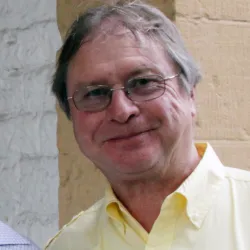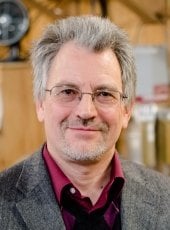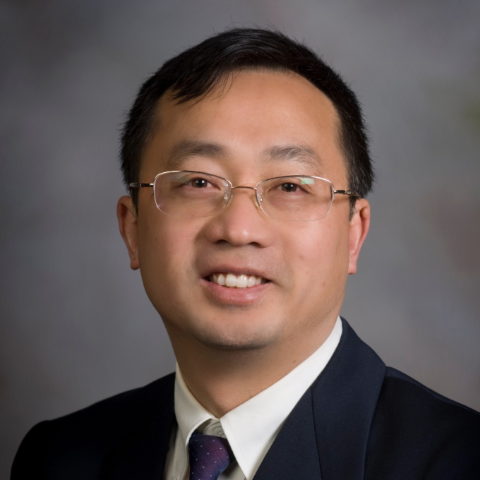
Shuhai Xiao is a Professor of Geobiology in the Department of Geosciences, College of Science, at Virginia Tech. His research integrates paleobiology, sedimentology, and geochemistry to investigate Earth-life co-evolution during critical transitions, particularly the Ediacaran-Cambrian period. He directs the Geobiology Lab, advising PhD students on projects ranging from Siberian Ediacaran fossils to Tonian eukaryote evolution. Education: Ph.D., Organismic and Evolutionary Biology, Harvard University, 1998 M.A., Organismic and Evolutionary Biology, Harvard University, 1996 M.Sc., Geology, Peking University, 1991 B.Sc., Geology, Peking University, 1988 Research Interests: Dr. Xiao explores the environmental drivers of evolutionary innovations—such as the rise of eukaryotes, multicellularity, and animals—and their feedback effects on Earth's systems. His work combines field geology, geochemical analysis, and taphonomic experiments to decode ancient biosphere-environment interactions, with emphasis on the Ediacaran-Cambrian transition. Publications: Recent articles (2024–2025) focus on Ediacaran-Cambrian paleobiology, geochemical proxies (δ 13 C, Li, Ba isotopes), and global-scale events (Shuram Excursion, Marinoan glaciation). Key themes include microfossil preservation, biomineralization origins, redox fluctuations, and geomagnetic influences on early animal radiation. Awards: National Academy of Sciences Member (2023) Mary Clark Thompson Medal (2021) Guggenheim Fellowship (2010) Charles Schuchert Award (2006) AAAS Fellow (2019) Lab & Outreach: Leads a team studying Ediacaran fossils, taphonomy, and geochemistry. Actively contributes to the Virginia Tech Museum of Geosciences and conducts workshops for K–12 educators internationally.