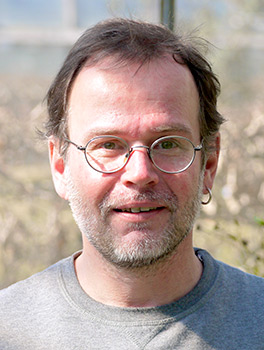
Dr. Stefan Trogisch is a Professor at the Institute of Biology - Geobotany and Botanical Garden, Faculty of Natural Sciences III at Martin Luther University Halle-Wittenberg. He serves as Principle Investigator for the TreeDì International Research Training Group and coordinates European subprojects in the forest biodiversity ecosystem experiment BEF-China in subtropical China. His research focuses on forest biodiversity and ecosystem functioning, with particular emphasis on litter decomposition, nutrient cycling, and the effects of tree diversity on ecosystem processes in subtropical forests. His work examines how environmental conditions, species richness, and forest succession stages influence key ecological processes including carbon and nitrogen cycling, soil respiration, and plant-soil interactions. Analysis of his 15 most recent publications reveals a consistent focus on biodiversity-ecosystem functioning relationships in subtropical forest ecosystems. His research spans multiple dimensions including decomposition ecology, soil microbial communities, forest succession dynamics, and methodological frameworks for assessing forest multifunctionality. A notable pattern is his investigation of how tree diversity affects nutrient cycling processes across different successional stages. As Principle Investigator for the TreeDì International Research Training Group funded by the German Research Foundation (DFG) and University of Halle, Dr. Trogisch leads an international collaborative effort examining tree-tree interactions in local neighborhoods in Chinese subtropical forests. His previous role as PostDoc in project management and coordination for European subprojects in BEF-China demonstrates his longstanding commitment to large-scale biodiversity research. Dr. Trogisch's laboratory work centers around the BEF-China experiment, one of the world's largest forest biodiversity experiments, where he investigates ecological processes across multiple spatial and temporal scales. His team conducts field research in the Gutianshan National Nature Reserve in southeastern China, examining how tree diversity influences ecosystem functioning in subtropical forest ecosystems.