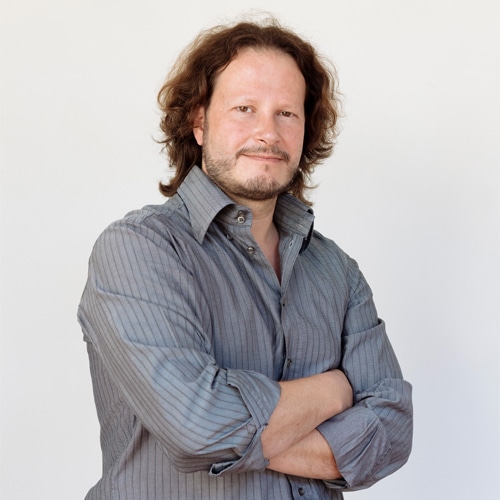
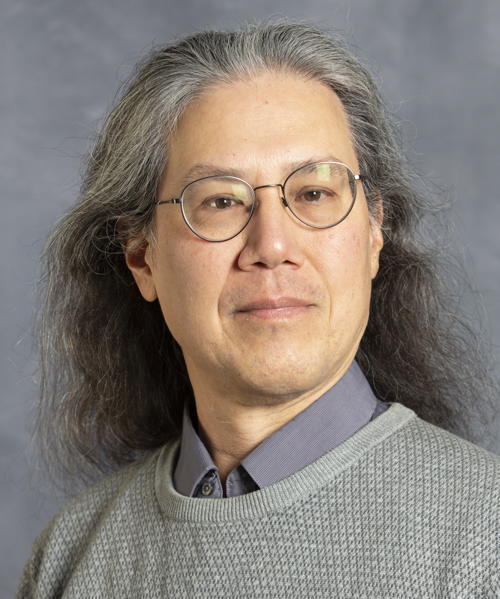
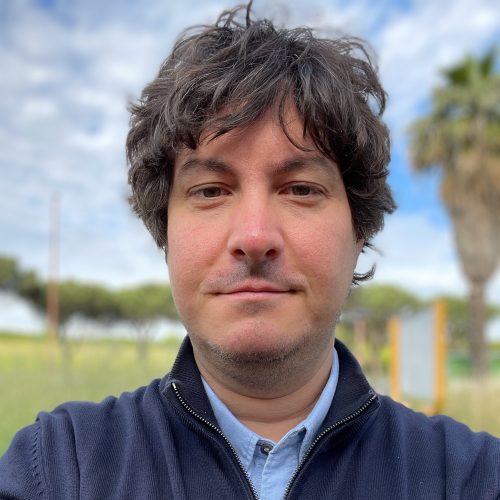
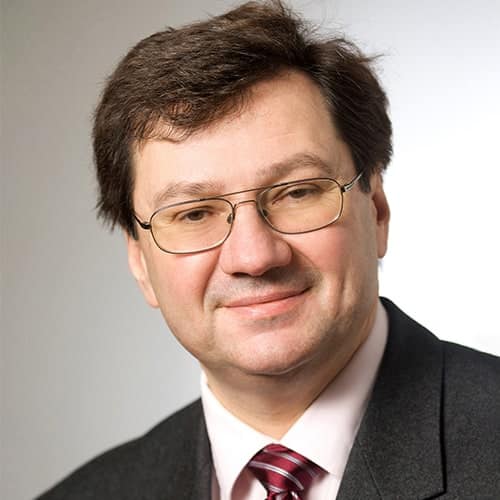
Roberta Sinatra is a Professor in Social Data Science at the University of Copenhagen, with part-time affiliations at ITU Copenhagen, ISI Foundation (Italy), and CSH (Austria). She co-founded the NERDS Research Group at ITU and co-leads the Pioneer Centre for AI in Copenhagen. Research Interests: Her work spans computational social science, network science, and data science, focusing on fairness in AI, scientific careers, and human mobility. Recent projects include analyzing child protection algorithms and modeling urban bicycle networks. Scientific Awards: ERC Consolidator Grant Villum Young Investigator Grant Complex Systems Society Junior Prize DPG Young Scientist Award for Socio- and Econophysics Sapere Aude: Starting Grant Publications: Her research, often in top-tier venues like Nature and Science , explores interdisciplinary themes, including AI ethics, gender disparities in science, and social network dynamics. Labs & Teams: She leads research initiatives at the Center for Social Data Science (KU) and co-founded the NERDS Research Group at ITU, fostering international collaboration in network science and AI ethics.
Diego Garlaschelli is Professor of Theoretical Physics at the IMT School for Advanced Studies in Lucca, Italy, and at the Lorentz Institute for Theoretical Physics, University of Leiden, the Netherlands. He leads the NETWORKS research unit at IMT and the Econophysics and Network Theory group at Leiden. He is also an external faculty member at the Complexity Science Hub in Vienna and an associate member of the Enrico Fermi Research Center in Rome. His affiliations reflect a strong international and interdisciplinary research profile in network science and statistical physics. He holds a master's degree in theoretical physics from the University of Rome III (2001) and a PhD in Physics from the University of Siena (2005). His postdoctoral experience includes positions at the Australian National University, the University of Siena, the University of Oxford, and the Sant’Anna School of Advanced Studies in Pisa. Garlaschelli’s research spans network theory, statistical physics, econophysics, financial complexity, ecological networks, and social dynamics. He applies maximum entropy models, information theory, and random graph frameworks to understand complex real-world systems. His teaching includes courses in Network Theory, Econophysics, and Complex Systems at both PhD and MSc levels. The 15 most recent publications highlight a consistent focus on network reconstruction, ensemble inequivalence, renormalization, and applications to financial and socio-economic systems. Key themes include statistical inference in networks, resilience, and multi-scale modeling, with publications in top journals such as Nature Reviews Physics , Physics Reports , Science , and Physical Review Letters . His scientific awards include the Best Paper Award at the 6th International Workshop on Self-Organizing Systems (2012) and the Jan Kijne Prize (2013) as supervisor. He has secured multiple grants from NWO, the European Union, and the Royal Society, and has supervised over 40 students at PhD, master’s, and bachelor’s levels. He also mentors postdocs and visiting scientists. Garlaschelli leads and organizes major international workshops and schools in network science and complex systems. He serves on scientific committees and is an active referee for journals like Nature and Physical Review Letters , as well as funding agencies including the ERC and NWO.
Kevin Crowston is a Distinguished Professor of Information Science at Syracuse University's School of Information Studies (iSchool), where he examines how information technology enables new organizational forms through empirical studies, theoretical modeling, and system design. His work focuses on coordination-intensive processes in virtual settings, with significant contributions to citizen science, data science teamwork, and journalism transformation. Education A.B. in Applied Mathematics (Computer Science), Harvard University, 1984 Ph.D. in Information Technologies, MIT Sloan School of Management, 1991 Research Focus : Crowston investigates coordination mechanisms in human-AI collaboration, particularly through projects like Gravity Spy (combining citizen scientists with machine learning for gravitational wave analysis) and journalism innovation (e.g., ReelFramer for AI-assisted news-to-video translation). His framework addresses how intelligent systems reshape work design, knowledge production, and team dynamics in scientific and media contexts. Publication Trends : Recent articles (2024-2025) reveal three dominant threads: (1) Human-AI co-creation in journalism (deskilling/upskilling dynamics, creative tool adoption), (2) Citizen science evolution with AI (co-learning systems, lexical entrainment), and (3) Socio-technical governance of intelligent machines (control-accountability alignment, project archetypes). These reflect his central inquiry into how technology reconfigures work structures. Scientific Recognition ACM Distinguished Speaker Research Leadership : Crowston currently directs two major NSF initiatives: (1) HCC grant 21-06865 on intelligent support for non-expert information navigation, and (2) FW-HTF grant 21-29047 exploring human-technology collaboration in journalism. He spearheaded a Research Coordination Network establishing socio-technical frameworks for work in the age of intelligent machines, culminating in a special issue of Information, Technology & People . Collaborative Infrastructure : He co-leads the Gravity Spy citizen science ecosystem (integrating LIGO physicists, machine learning systems, and volunteers) and serves as co-editor-in-chief of Information, Technology and People , previously editing ACM Transactions on Social Computing . His MIDST platform research advances stigmergic coordination for data science teams.
Kunihiko Kaneko is a Professor at the Niels Bohr Institute, University of Copenhagen, with a distinguished career in theoretical biophysics and complex systems. He received his PhD and MSc in Physics from the University of Tokyo, and has held leadership roles at the Universal Biology Institute and Center for Complex Systems Biology. PhD Physics, 1984 - University of Tokyo MSc Physics, 1981 - University of Tokyo His research spans five primary areas: Universal Biology, Evolutionary Constraints, Ecosystem Dynamics, Neural Cognition, and Universal Anthropology. He has published extensively on multi-level consistency principles, dimensional reduction in biological systems, and reciprocity between robustness and plasticity across scales. Recent publications show strong focus on microbial ecosystems (2025), evolutionary game theory (2025), neural modular architectures (2024), and dimensional reduction in cellular systems (2024). His work bridges physics and biology through dynamical systems theory applied to diverse phenomena from protocells to human societies.
Christian Geisler Asmussen serves as Professor of Strategic and International Management at Copenhagen Business School's Department of Strategy and Innovation. His research investigates competitive advantage, globalization, and multinational enterprise organization through formal modeling, game theory, and theories of the firm, with current emphasis on foreign location choices and global corporate social responsibility. Appointed after earning his PhD from CBS in 2007, he maintains active contributions to international business scholarship and executive education. His research portfolio centers on: Organization and Expansion of Multinational Firms Internalization Theory Game Theory applications Corporate Social Responsibility frameworks Foreign location decision-making Global CSR implementation challenges Analysis of his recent publications reveals a strategic evolution toward integrating sustainability into multinational operations, with 2024-2025 works examining global cities' role in reducing liability of foreignness, modular value chain design, and CSR orchestration mechanisms. His scholarship consistently applies game-theoretic approaches to multinational strategy while addressing emerging challenges in global governance and ethical operations. Recognition for his scholarly impact includes: Barry M. Richman best dissertation award Haynes Prize Tietgen Prize JIBS Decade Award Professor Asmussen supervises Cand.Merc. Master Theses and CEMS Business Projects while teaching Strategy, Contemporary Issues in International Business, Macroeconomics, and PhD-level Strategic Management. His external engagements include providing Strategic Risk Management training for Saxo Bank (2024) and serving as external accreditor for Cyprus' Higher Education Quality Assurance Agency (2024-2025).
Tom Brughmans serves as Associate Professor in Classical Archaeology at Aarhus University's School of Culture and Society, where he pioneers the application of network science and computational modeling to archaeological questions. His work bridges theoretical archaeology with complexity science, focusing on long-term economic dynamics in the Roman Empire through quantitative analysis of material culture distribution. His research centers on developing methodological frameworks for archaeological network analysis, with specific expertise in Roman economic integration, amphorae trade networks, and agent-based simulation of ancient economies. Brughmans advocates for computational reproducibility and open-science practices, creating accessible tools that transform complex archaeological data into analyzable network structures while challenging traditional interpretations of Roman market systems. Brughmans' publication trajectory reveals three dominant trends: advancing theoretical foundations of archaeological network science through handbooks and methodological guides; empirical investigations into Roman economic complexity using big-data approaches to amphorae distributions; and development of public-facing simulation platforms that translate academic research into interactive experiences. His work consistently integrates computational techniques with archaeological evidence to model socio-economic processes across centuries. His scientific recognition includes prestigious competitive fellowships: Leverhulme Early Career Fellowship (2017-2019) for the MERCURY project Marie-Curie Individual Fellowship (2019-2020) for SIMREC Brughmans directs multiple major research initiatives including the Past Social Networks Project (an open repository for ancient network data), NEFLARA (a Marie-Curie project developing landscape archaeology frameworks), and MINERVA (focused on Roman economic functioning). He has secured substantial funding from the Leverhulme Trust, Marie-Curie Actions, and ERASMUS+ for projects advancing computational archaeology, while actively promoting collaborative research through platforms like FORVM that make economic modeling accessible to broader audiences. As a core member of Aarhus University's Centre for Urban Network Evolutions (UrbNet), he contributes to interdisciplinary investigations of ancient urban connectivity. His leadership extends to developing international research networks through the Oxford Handbook of Archaeological Network Research and creating open educational resources that democratize access to network analysis methodologies in archaeology.
Matias Thuen Jørgensen is an Associate Professor and head of the Center for Tourism Research at Roskilde University, Denmark, within the Department of Social Sciences and Business. His interdisciplinary research bridges business studies, sociology, and human geography to examine tourism's societal impacts, with empirical focus on Chinese tourism markets and Nordic destinations. He holds a PhD in Tourism Management from The Hong Kong Polytechnic University (2017), awarded through the competitive Hong Kong PhD Fellowship Scheme. His educational foundation combines rigorous academic training with field expertise in tourism phenomena. The PhD research at Hong Kong Polytechnic University established his methodological approach to analyzing tourism distribution systems through Activity Theory and Actor-Network Theory frameworks. Jørgensen's research critically examines tourism's role in sustainable community development, emphasizing how mundane everyday experiences create destination value in Nordic contexts. His work explores social value creation through tourist-resident interactions, regenerative tourism models like CopenPay, and the socio-economic implications of tourism transitions in peri-urban areas. Key themes include the ethical dimensions of tourism development, community mobilization through social entrepreneurship, and the complex interplay between tourism policy and local realities. Analysis of his 15 most recent publications reveals dominant trends in regenerative tourism frameworks, micro-level host-guest interactions, and policy responses to overtourism challenges. His scholarship increasingly focuses on climate-responsive tourism models, ethical pricing mechanisms in aviation, and regulatory approaches to short-term rentals, demonstrating consistent evolution toward solution-oriented sustainability research. Notable recognitions include: Hong Kong PhD Fellowship Scheme (2014) Nomination for Danish National University Teaching Award (2023) Peter Keller Award (2022) Roskilde University Teaching Prize (2022) Teacher of the Year Award, Roskilde University (2022) As principal investigator on seven research projects totaling over 3 million DKK in funding, Jørgensen has secured grants from diverse sources including industry partnerships and public research councils. Current projects include the SeNSE initiative on sustainable nature-based tourism entrepreneurship and the Tourism Business Model Tool development. He actively supervises doctoral research on social value creation in urban tourism encounters while contributing to policy formulation through UNWTO engagements and frequent media commentary. Leading the Center for Tourism Research (CFTR), he fosters cross-disciplinary collaboration between academics, industry stakeholders, and policymakers. His recent activities include organizing the 2025 Academy of Management symposium on tourism transitions and establishing the 'Tourism and Everyday Life in Cities' research network, positioning CFTR at the forefront of contemporary tourism scholarship.
Giulio Cimini is Associate Professor of Theoretical Physics in the Department of Physics at the University of Rome Tor Vergata and a Research Associate at the 'Enrico Fermi' Research Center. He is a statistical physicist with a strong interdisciplinary focus on complex networks and their applications in socio-economic systems. His research interests include: Statistical Physics of Complex Networks Reconstruction and Validation of Economic Networks Social Network Interactions and Financial Markets Systemic Risk and Financial Contagion Scientific Success, Fitness, and Complexity Adaptive Social Recommendation Codon Usage Bias and Protein Interaction Networks His recent publications reveal a strong trend in applying statistical physics to real-world networks, particularly in finance and social systems. Key themes include the modeling of systemic risk in supply chains and financial networks, the dynamics of collective action on platforms like Reddit (e.g., the GameStop short squeeze), and the development of network reconstruction methods using maximum entropy and optimal transport frameworks. His work often combines empirical analysis with theoretical modeling. Scientific awards and recognitions include: Associate Editor, Frontiers in Physics – Interdisciplinary Physics Board Member, Network Science Society Member, Council of the Complex Systems Society Steering Committee, CCS/Italy He has advised or collaborated with numerous researchers, particularly in projects related to economic networks and complex systems. His work has been supported by Italian national grants such as PRIN and PNRR. He leads or co-leads research projects including RENet and C2T. His research is conducted within interdisciplinary teams involving physicists, economists, and computer scientists, often in collaboration with institutions like ISC-CNR, IMT Lucca, and the Network Science community.
Alfred Taudes is a Full Professor at the Department of Information Systems and Operations, Institute for Production Management, Vienna University of Economics and Business (WU Vienna). He holds a doctoral degree and a Habilitation from WU Vienna in Business Administration and Management Information Systems, and a Magister degree from Vienna University. He has held assistant professorships at WU and visiting professorships at Augsburg, Münster, Essen, and Tsukuba University, Japan. He joined WU permanently in 1993 and served as head of the Department of Information Systems and Operations from 2010 to 2016. His research spans Operations and Supply Chain Management , Marketing Engineering , Knowledge Management , and the impact of Big Data and Blockchain on production systems. Using Complexity Science and Cryptoeconomics , he investigates digital production, integrated value chains, and market designs. He teaches undergraduate and graduate courses including Operations Strategy, Data Science, and IT seminars in WU’s International Supply Chain Master program, and has also taught at Japanese universities. His recent publications focus on blockchain privacy (e.g., CoinJoin analysis), CBDCs, MiCAR regulation, decentralized federated learning, and digital custody, reflecting a strong trend toward cryptoeconomics and blockchain-based systems in operations and finance. These works appear in top journals and conferences in information systems, security, and operations research. Cooperation Officer of the Year 2013/14 Distinguished Paper Award WI 2009 VHB Best Paper Award Nomination VHB Best Paper Award Dr. Wolfgang Houska - Recognition Award Alfred Taudes has coordinated major research projects such as the WWTF-project “Integrated Demand and Supply Chain Management” and the Special Research Area Adaptive Models in Economics and Management Science. He currently leads the research group on Cryptoeconomics at WU and chairs the scientific board of the Austrian Internet Offensive . His leadership extends to project management in initiatives like the Austrian Blockchain Center and research on decentralized finance and digital assets. He is actively involved in academic service, including organizing conferences like DEXA 2022, serving on editorial boards, and advising on research policy. His lab and research group focus on blockchain applications, digital transformation in operations, and the societal implications of big data.
Thomas Riise Johansen is a Professor in the Department of Accounting at Copenhagen Business School (CBS), where he has been affiliated since completing his PhD in Accounting from CBS in 2005. Prior to joining CBS, he worked at Ernst & Young (1996-2005), bringing practical industry experience to his academic role. His primary academic home is within the Department of Accounting, focusing on critical intersections between auditing practices and corporate governance structures. His research centers on auditing, sustainability accounting, corporate governance, and annual report disclosure. Key investigations include: The relationship between board networks and auditor selection Value and barriers in annual report innovation Performance evaluation systems within audit firms Public oversight mechanisms in auditing Information systems for sustainability reporting Accountability dynamics between employees and organizations His work bridges academic rigor and practitioner relevance, addressing evolving regulatory landscapes and market demands. Analysis of his 15 most recent publications reveals consistent focus on audit quality determinants, sustainability reporting evolution, and governance-audit interdependencies. Recent work increasingly examines EU regulatory frameworks (Taxonomy Regulation, climate risk disclosure) and Big 4 governance structures, reflecting growing emphasis on public interest accountability in auditing. He actively supervises master's theses in accounting, auditing, and corporate governance. His current research portfolio includes projects on: Revisors' declaration (FSR) Enforcement impact on financial reporting Annual report disclosure value enhancement TIME MIRROR: Accounting for Green Transition Diversity in accounting careers Behavioral aspects of auditor professionalism
Nicolai J. Foss is a Professor of Strategy at the Department of Strategy and Innovation, Copenhagen Business School (CBS). He holds additional roles as Honorary Adjunct Professor at the University of Southern Denmark, External Chair of the Danish Institute for Advanced Studies (2020–2025), and Professor II at the Norwegian School of Economics. A Knight of the Order of the Dannebrog, he previously held the Rodolfo Debenedetti Chair of Entrepreneurship at Bocconi University (2016–2019). His academic journey includes degrees from the University of Copenhagen (M.Sc., 1989) and a PhD from CBS (1993). He has held visiting professorships at Warwick, Hong Kong Polytechnic University, and others. Research interests focus on strategic management (resource-based view, microfoundations), organizational design (knowledge processes, open innovation), entrepreneurship (cross-country analyses, strategic entrepreneurship), and social science methodology. He has authored over 266 journal articles, 109 book chapters, and 26 books, with a Google Scholar h-index of 116 and ~60,000 citations. Recognitions include Clarivate’s Highly Cited Researcher status since 2018 and being ranked the 13th most cited living business scholar globally. Professional contributions include founding CBS’s Department of Strategic Management and Globalization (2005), directing World Class Environment programs at CBS, and serving on ERC panels and the Strategic Management Society board. He co-founded influential think tanks like the Danish Research Unit for Industrial Dynamics and CEPOS. His work is featured in outlets like the Wall Street Journal and Forbes , and he has been a columnist for Danish newspapers Børsen and Berlingske .
Mitchell Dean is a Professor and Head of Department at Copenhagen Business School, specializing in political theology, governmentality, and neoliberalism through interdisciplinary lenses. His work intersects philosophy, political science, and cultural studies, often analyzing power structures and sovereignty. Current Affiliation: Copenhagen Business School Department: Business Humanities and Law Role: Head of Department Recent research explores: Political Theology (post-Carl Schmitt analysis) Governmentality in modern governance Foucault's neoliberalism engagement Indigenous rights and custodial policy Democratic processes and sovereignty Interdisciplinary SDG contributions Articles and lectures demonstrate his focus on: Power dynamics (2014-2025) Political theology's evolution (2023) Critical analyses of authoritarianism (2025) Psychoactive experimentation in intellectual history (2021, 2023)
Mircea Epure is the Serra Hunter Associate Professor at the Department of Economics and Business at Universitat Pompeu Fabra (UPF). He holds affiliated professorships at the UPF-Barcelona School of Management and the Barcelona School of Economics. His research focuses on governance, corporate performance, entrepreneurship, and accounting, with notable contributions to understanding firm strategies during crises, public policy impacts, and signaling mechanisms in corporate social responsibility. Epure's work has been published in leading journals and recognized with awards such as the Best Paper Prize at the Financial Markets and Corporate Governance Conference. His research has been cited in prestigious outlets like the World Bank studies and The Oxford Handbook of Corporate Law and Governance. He teaches graduate and undergraduate courses on organizational dynamics and management accounting. Key research themes include the real effects of public grants during crises, strategic responses to uncertainty, and the role of organizational identity in firm performance. Epure has explored topics ranging from macroprudential policies to the opaque aspects of ESG reporting during crises. His interdisciplinary approach bridges corporate governance, entrepreneurship, and financial accountability. Awards: ICQS Nomination, Financial Markets Conference Best Paper Grants: Funding from La Caixa Foundation and CEIBS Cathay Cross-border Private Equity Research Fund Labs/Teams: Collaborates with the Barcelona School of Economics and UPF-Barcelona School of Management research networks
Professor Finn Olesen is affiliated with Aalborg University Business School under the Faculty of Social Sciences and Humanities. His research focuses on macroeconomics, post-Keynesian economics, economic methodology, and the history of economic thought. Olesen explores ethical dimensions in economics and investigates pedagogical approaches like problem-based learning. His research interests span macroeconomic theory, economic ethics, crisis management, and innovative teaching methodologies. Olesen's work frequently examines the intersection of economic behavior and moral philosophy, particularly in contexts of global economic instability. Olesen's publications demonstrate a consistent focus on re-evaluating macroeconomic paradigms post-financial crisis, exploring Keynesian solutions to contemporary economic challenges, and advancing pedagogical methods in economics education. His recent work increasingly engages with sustainability and ethical dimensions of economic policy. Awards: Årets underviser på oecon 2020 He supervises doctoral students and leads research projects including 'Critical thinking and discovery based learning' and 'Macroeconomic and ethics'. His work emphasizes pluralistic approaches to economic education and policy analysis.
Katrien Steenmans is a Postdoctoral Research Fellow at CEPRI – Centre for Private Governance , Faculty of Law, University of Copenhagen , where she investigates the legal dimensions of circular economy transitions. She also serves as External Examiner at Nottingham Trent University. Education PhD in Environmental Law, University of Surrey (2018) – thesis on enabling industrial symbiosis through regulation, policy and property rights. Graduate Certificate in Learning and Teaching, University of Surrey (2016). LLM in Environmental Law, Queen Mary University of London (2013). Graduate LLB (Hons), Nottingham Trent University (2012). Legal Practice Course, Nottingham Trent University (2012). Graduate Diploma in Law, Nottingham Trent University (2011). BSc (Hons) Mathematics, University of Warwick (2010). Research Interests Dr Steenmans’ work sits at the intersection of EU environmental law, waste law, circular economy governance, climate finance and emerging technologies . A central strand of her current research on the Circular Supply Chains (CirCus) project examines how extended producer responsibility (EPR) and liability instruments in private law can accelerate circular economy adoption. She also explores how blockchain technologies can underpin traceable, trust-based waste management systems, and scrutinises the role of property rights in waste and by-products in promoting reuse, recycling and recovery. Publication Trends Across 48 scholarly outputs, Dr Steenmans demonstrates a marked focus on legal risk assessment for EPR schemes, blockchain-enabled governance of plastic waste, and the evolving scope of waste law in the EU and internationally . Her recent articles and book chapters (2021-2025) reveal intensified engagement with transboundary waste regulation, interdisciplinary governance models, and policy gap analyses , often combining doctrinal legal methods with empirical policy evaluation. Scientific Awards & Distinctions Queen Mary University of London Prize for Excellence in Academic Performance (2013). University of Surrey Researcher of the Year (2020). Course Team of the Year (2021). Raising the School Profile (2021). Grants, Projects & Advising Dr Steenmans is a core investigator on the Circular Supply Chains (CirCus) project, which brings together legal, economic and technological expertise to map and mitigate legal risks in circular supply chains. While specific grant values are not disclosed, the project involves collaboration with industry partners and international policy bodies. She has organised high-profile workshops such as the ECR Waste Law Workshop: Preventing the “Wasting” of Waste (2023) and regularly delivers invited lectures on private law pathways to circularity. Labs & Teams She is affiliated with the Centre for Private Governance (CEPRI) at the University of Copenhagen, a multidisciplinary hub advancing research on private law, regulation and governance. Through CEPRI she collaborates with scholars across Europe on comparative waste law and policy initiatives.