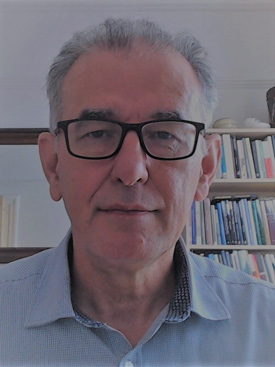
Lucas Introna is a Distinguished Professor of Organisation, Technology, and Ethics at Lancaster University's Management School. He holds a BCom, BA (Hons), MBA, and PhD. His research focuses on the ethical and social implications of technology, particularly information systems, informed by phenomenology and process philosophy. He has served as Associate Dean for Research (2010-2016) and Head of the Organisation, Work and Technology Department (2007-2010). **Research Interests:** Sociomateriality and performativity Ethical implications of IT (privacy, surveillance) Political studies of technology design Plagiarism and cultural values Virtuality and embodiment **Recent Work Trends:** His publications explore algorithmic governance, digital ethics, and the interplay between technology and social structures. Notable themes include blockchain trust dynamics, refugee precarity, and the ethical dimensions of facial recognition systems. **Awards:** IFIP Outstanding Service Award **Grants & Roles:** Co-founder of the Centre for the Study of Technology and Organisation Member of multiple ethics committees and editorial boards Visited professor at University of Amsterdam **Labs/Groups:** Affiliated with the Centre for Technological Futures and the Society Management and Society group.
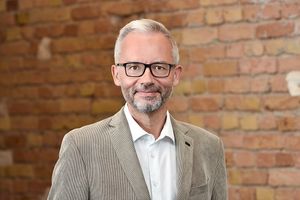
Prof. Dr. Olaf Schnur is an extraordinary professor at the Department of Applied Geography at Humboldt-Universität zu Berlin and Head of Research at the vhw Federal Association for Housing and Urban Development in Berlin. His academic journey includes professorships at the Universities of Tübingen and Potsdam, and visiting research roles in Basel. He holds a habilitation and doctorate in Geography from Humboldt-Universität. His research focuses on urban and neighborhood development, demographic change, resilience, and housing policy. Education: Studies in Geography, Urban Planning, Sociology (University of Bonn), and Architecture (TH Darmstadt). Leadership roles: Editorships of academic series like 'Quartiersforschung' and 'RaumFragen', and founder of the DGfG-AK Neighborhood Research working group. Research interests include urban resilience, quartier governance, social integration, and the impact of demographic shifts. His work bridges academic and practical urban development, with a focus on sustainable and inclusive city planning. Awards include the 'Golden Globe' for teaching excellence and recognition for innovative research. Publications span over 50 works, including seminal contributions on quartier theory, urban sociology, and policy frameworks. He actively participates in conferences and advisory roles for national and international organizations.
University of North Carolina at Chapel HillUnited States
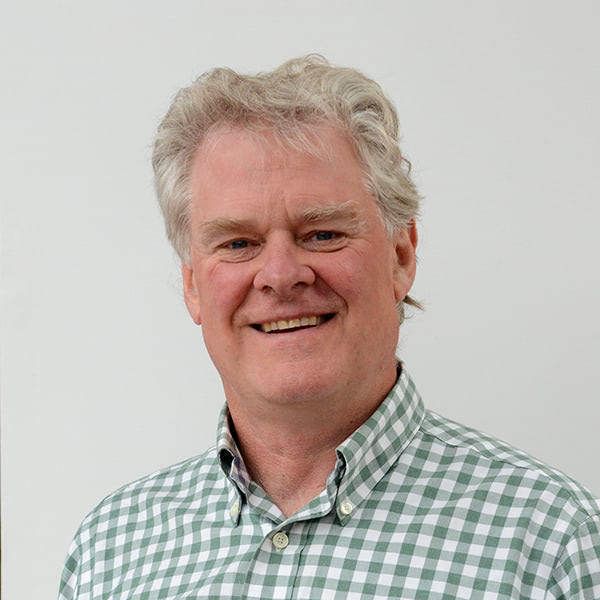
Yong Cai is an Associate Professor in the Department of Sociology at the University of North Carolina at Chapel Hill. His research focuses on social demography, sociology of health, Chinese society, comparative historical sociology, and research methodology. He holds a Ph.D. from the University of Washington (2005). Dr. Cai’s work examines population dynamics in China, including fertility trends, aging, policy impacts, and socioeconomic transformations. His recent studies address challenges such as China’s aging population, low birth rates, and the legacy of the one-child policy. He also explores global fertility changes and the interplay between public policies and demographic outcomes. His research frequently integrates historical, comparative, and methodological approaches to analyze issues like family planning policies, health disparities, and public transfer systems. While no academic awards are explicitly listed, his contributions to demographic studies are evident through his prolific publication record and engagement with critical sociopolitical questions in China and beyond. In advising and grants, no specific details are provided in the text. His professional activities include maintaining a Google Scholar profile, a departmental website, and a curriculum vitae accessible via his faculty page. Dr. Cai’s work often intersects with interdisciplinary themes, such as the fiscal challenges posed by aging populations, healthcare accessibility, and the sociocultural dimensions of policy implementation.
Dr. Yolande E. Chan is the Dean and James McGill Professor at McGill University's Desautels Faculty of Management. She previously served as Associate Dean of Research and held the E. Marie Shantz Chair at Queen’s University’s Smith School of Business. Her academic career spans roles in research leadership, including Associate Vice-Principal (Research) at Queen’s and directorships in innovation centers. Chan’s expertise lies in digital strategy, business-IT alignment, and knowledge-driven innovation. She holds a PhD from Western University’s Ivey Business School, an M.Phil. from Oxford (as a Rhodes Scholar), and degrees in Electrical Engineering from MIT. Education: Ph.D. in Business Administration (MIS), Ivey Business School, Western University (1992) M.Phil. in Management Studies, University of Oxford (1984) S.M. & S.B. in Electrical Engineering & Computer Science, MIT (1982) Her research focuses on digital innovation, IT alignment, and strategic improvisation. Over 100 peer-reviewed articles appear in top journals like Journal of Strategic Information Systems and MIS Quarterly . Awards include the AIS LEO Award, Distinguished Cum Laude membership, and the James McGill Professorship. Chan’s work bridges theory and practice, emphasizing technology’s role in fostering agility and societal impact. Her leadership spans grants totaling millions, including SSHRC-funded projects on inclusive innovation and rural economic development. She co-edits the Journal of Strategic Information Systems and advocates for diversity and equity in academia. Chan’s career reflects a commitment to advancing both scholarly rigor and real-world business challenges.
Dr. Martin Mattsson is an Assistant Professor in the Department of Economics at the National University of Singapore (NUS). He holds a PhD in Economics from Yale University, an MPA/ID from Harvard University, and a BA in Economics and Management from the University of Oxford. His research focuses on improving government institutions, including large-scale field experiments in Bangladesh on performance scorecards and village courts. Current work addresses air pollution reduction in South Asia, aligned with Effective Altruism principles. Teaching includes courses on Effective Altruism (HS2921), Applied Econometrics (EC4305), and Advanced Development Economics (EC6371). His research spans Development Economics, Political Economy, and Public Economics, with notable projects analyzing corruption, public sector governance, and environmental policy. Recent studies investigate reelection incentives and corruption in India, internet shutdowns' economic impacts, and air purifier adoption in Bangladesh. He co-authored works on education's anti-corruption effects in Vietnam and frontline bureaucrats' compensation in India. Mattsson actively advises through NUS's Economics PhD program and collaborates with organizations like JPAL South Asia. His work emphasizes scalable solutions for global welfare improvement.
Maria Sharmina is a Professor in Energy and Sustainability at The University of Manchester’s School of Engineering, affiliated with the Tyndall Centre for Climate Change Research and Policy@Manchester. She holds roles including Co-Director of Policy@Manchester, UKRI Digital Security & Resilience Theme advisor, and Sustainable Robotics Committee member at BSI. Her work focuses on low-carbon business models, circular economy, and climate policy, with leadership in projects like the £6M UKRI BuildZero programme. Education: PhD in the Tyndall Centre, background in economics and statistics. She advises governments (e.g., UK Government Office for Science, BEIS) and has served on University Senate and Departmental Research Leadership roles. Research Interests: Energy systems transformation, food-energy-water nexus, emission scenarios, and policy design. She emphasizes sustainable innovation, net-zero housing, and plastics circularity. Key projects include analyzing hydrogen’s role in decarbonization, SME compliance with plastics policies, and financing smart local energy systems. Awards: 2024 Social Responsibility Medal and Making A Difference Award for contributions to social/environmental impact via entrepreneurship. Her work bridges academia and policy, with outputs including 79 research publications and 16 projects. Grants/Consultancy: Principal Investigator on BuildZero (UKRI £6M), funded studies on community energy finance, and consultancy with Oxfam, Manchester City Council, and the Co-operative Group. Labs/Teams: Lead researcher at Tyndall Manchester, collaborates across disciplines (e.g., Digital Futures Institute) to address sustainability challenges through systemic approaches.
Professor Atula Abeysekera is a Professor of Practice in Risk Management at the Department of Civil and Environmental Engineering, Faculty of Engineering, Imperial College London. He holds Honorary Fellow status of the Royal Academy of Engineering and advises government bodies on risk strategies. His career spans 40+ years in global engineering (Mott MacDonald) and financial institutions (Morgan Stanley, Schroders). Education: Graduate of Imperial College London’s Civil Engineering Department. Affiliations include visiting professorship at Universidad de Navarra (Spain), advisory roles at the Institution of Civil Engineers, and membership in the Worshipful Company of International Bankers. He chairs the UK Government’s Industry Steering Group for building safety post-Grenfell and advises on risk culture improvements. Research focuses on extreme risk management, systems resilience, and infrastructure safety. Notable contributions include work on 'Black Swan' risks (unpredictable high-impact events) and innovative funding models for flood defenses. His 2015 book What’s the small idea? explores risk culture in government. Scientific Recognition: Freedom of the City of London (2017), Fellowship by HRH Princess Royal Advisory Roles: Non-Executive Director (Institution of Civil Engineers), Board Member (City & Guilds College Association) Labs/Teams: Active in Imperial’s Centre for Systems Engineering and Innovation. Leads interdisciplinary projects combining engineering, finance, and policy to address systemic risks.
Destenie Nock is an Assistant Professor in Civil and Environmental Engineering (CEE) and Engineering and Public Policy (EPP) at Carnegie Mellon University. Her research focuses on energy justice, sustainable energy transitions, and equitable infrastructure planning. She develops mathematical models to address societal challenges in energy systems, particularly for vulnerable communities. Nock co-founded Peoples Energy Analytics , using algorithms to identify energy poverty and connect households with assistance programs. Education: PhD in Industrial Engineering and Operations Research (UMass Amherst, 2019); BS in Electrical Engineering and Applied Mathematics (North Carolina A&T State University). Research Interests: Energy equity, decarbonization impacts, transportation electrification, and policy analysis. She investigates how energy systems disproportionately affect marginalized groups and designs solutions to mitigate disparities. Awards: 2024 Science Defender (Union of Concerned Scientists), 2025 Outstanding Alumni Award (UMass Amherst). Grants & Funding: Six National Science Foundation grants, Sloan Foundation, and EPA support for projects on energy justice and equity metrics. Labs/Teams: Leads research groups in energy modeling and policy at CMU, collaborating with utilities and policymakers to implement equitable energy solutions.
Lee Rybeck Lynd is the Paul E. and Joan H. Queneau Distinguished Professor of Engineering and Adjunct Professor of Biology at Dartmouth College's Thayer School of Engineering. He has been a member of the Dartmouth faculty since 1987 and serves as Co-Founder and Chief Technology Officer of Terragia Corporation, Consolidated Bioprocessing Team Leader for the DOE Center for Bioenergy Innovation, and Director of the Advanced Second Generation Biofuel Laboratory. Professor Lynd's research spans microbial cellulose utilization, metabolic engineering, innovative biomass processing technologies, and sustainable bioenergy futures. His work focuses on cost-effective production of cellulosic biofuels that benefit people and the environment, with particular emphasis on consolidated bioprocessing (CBP) which offers potential for transformative cost reductions in biofuel production. His research integrates molecular biology, microbiology, and chemical/biochemical engineering to advance both fundamental understanding and applied capability in bioenergy. His publication record includes over 300 papers with more than 42,000 citations and an h-index of 88. Recent research trends show increasing focus on sustainability metrics, carbon-negative biofuels, and the integration of bioenergy systems with food production and environmental protection. His work increasingly addresses the socio-economic dimensions of bioenergy deployment alongside technical innovations. Charles Thom Award, Society for Industrial Microbiology and Biotechnology (2021) Thayer Distinguished Research Award for Faculty (2020) Lemelson-MIT Sustainability Award (2007) AAAS Fellow (2012) Charles D. Scott Award for Distinguished Contributions (2005) Professor Lynd has advised numerous graduate students and postdoctoral researchers, currently mentoring several PhD candidates including Nick Cervenka, Madeline Hoey, Shu Huang, Matthew Kubis, and Bishal Sharma. His research has been supported by multiple funding sources including the Department of Energy, USDA NIFA, Sao Paulo Research Foundation (Brazil), and The Link Foundation. He has testified before the US Senate three times and has been featured in Wired, Forbes, and Nova. He leads the Lynd Research Lab which includes postdoctoral associates, graduate students, technicians, and undergraduate researchers. The lab collaborates closely with the DOE Center for Bioenergy Innovation and maintains an international network of collaborators. Current research focuses on consolidated bioprocessing, metabolic engineering of cellulolytic microbes, and sustainable bioenergy futures that integrate environmental, economic, and social considerations.
Susana Franco is Research Director at Orkestra Basque Institute of Competitiveness and holds a PhD in Economics from the University of Nottingham. With prior academic experience at British and Latin American universities, she coordinates research on territorial competitiveness and regional development. Her research expertise spans: Quantitative analysis of regional competitiveness indicators Cluster development in evolving economies Employment-wellbeing relationships Policy evaluation methodologies Her publications primarily analyze competitiveness frameworks through longitudinal regional studies, with recent focus on inclusive growth and digital transformation impacts. As research director, she supervises doctoral candidates and manages international projects with UN agencies, facilitating knowledge exchange between academic and policy stakeholders.
Federico Demaria is a Researcher at the Environmental Science and Technology Institute, Universitat Autònoma de Barcelona. He focuses on ecological economics, political ecology, and environmental justice, advocating for socio-ecological transformation beyond economic growth. As a founding member of Research & Degrowth and a board member of the European Society for Ecological Economics, he bridges academic research with activism. His current role includes deputy coordination of the ERC-funded EnvJustice project, studying global environmental justice movements. Research emphasizes waste management conflicts, informal recyclers' roles, and degrowth alternatives. Key publications include Decrecimiento: Vocabulario para una nueva era and Pluriverse: A Post-Development Dictionary , translated into multiple languages. Research interests coalesce around dismantling growth-based paradigms, centering marginalized groups in environmental struggles, and redefining sustainability beyond capitalist modernity. His work critiques extractive systems while proposing pluriversal alternatives grounded in indigenous and communal knowledge. Key Projects: EnvJustice (ERC), Degrowth initiative Key Themes: Waste politics, environmental conflicts, post-development, degrowth economics
Pavlos S. Georgilakis is a Professor at the School of Electrical and Computer Engineering, National Technical University of Athens (NTUA), specializing in modern techniques for power system analysis, optimization, and renewable energy integration. He holds a Diploma (1990) and PhD (2000) in Electrical Engineering from NTUA. His career includes roles as Lecturer (2009) and Associate Professor (2018–2023) at NTUA, and Assistant Professor at the Technical University of Crete (2004–2009). Research focuses on power transmission/distribution systems, transformer design, and applying AI/optimization for grid efficiency. He led 10 research projects, including Horizon 2020 initiatives SHAR-Q, WiseGRID, and NobelGrid. He authored 3 books and over 230 publications (SCOPUS citations: >5,500). Editor of IET Smart Grid, Energies, and Electricity journals; senior IEEE member. He supervised 4 doctoral, 9 master’s, and 76 diploma theses. Awards include the 2013 Best Reviewer Award from Electric Power Systems Research. Active in energy storage, smart grids, and decentralized energy resource integration.
Wantao Yu is a Professor of Supply Chain Management at the Roehampton Business School, part of the University of Roehampton's Faculty of Business and Law. Previously, he held academic positions at the University of Kent, University of East Anglia, and Buckinghamshire New University. His expertise spans digital supply chain management, sustainability, and modern slavery prevention. He actively supervises PhD students in areas like agri-tech and LARG (Lean, Agile, Resilient, Green) supply chains. Research Interests: His work focuses on digital innovation in supply chains, sustainable practices, and ethical sourcing. Notable projects include STFC-funded initiatives in agri-food systems (UK, China, Kenya, Uganda) leveraging IoT and machine learning for sustainability and productivity. He emphasizes public-private partnerships with smallholder farmers and agribusinesses. Notable Achievements: Included in Stanford's World Top 2% Scientists (2020-2024) and recognized with multiple awards, including the Emerald/EFMD Doctoral Research Award (2010) and conference paper accolades (e.g., 2017, 2015). His pandemic-related research was featured in the WHO database. Teaching: Leads courses on Supply Chain Strategy & Processes and Digital Logistics. External roles include serving as an academic examiner at universities like Essex and Hertfordshire. Collaborations: Active in global research networks, with recent projects in Kenya, Uganda, and China. Key themes include data-driven supply chains, agri-tech, and resilience strategies for SMEs.
Dr. L. Jane McMillan is a Professor and former Canada Research Chair (2006-2016) in the Department of Anthropology at St. Francis Xavier University. Her work focuses on Indigenous legal frameworks, treaty rights, and sustainable community development, particularly among Mi’kmaq communities. She leads the Indigenous Peoples and Sustainable Communities Lab, fostering collaborative research with Indigenous communities to address governance, resource rights, and social justice. Her research emphasizes the intersection of historical treaties with modern practices, aiming to disrupt colonial dependency patterns. Key research areas include treaty implementation strategies post-R. v. Marshall (1999), Mi’kmaq ecological knowledge systems (Netukulimk), urban Indigenous wellbeing, and social policy frameworks informed by Indigenous traditions. She collaborates with institutions like the Tripartite Forum and Atlantic Aboriginal Health Research Program, training graduate students and advocating for culturally congruent policies. Notable achievements include policy-informing publications on Mi’kmaq resource rights and family violence dynamics, as well as community-driven initiatives to enhance cultural competency in healthcare and justice systems. Her work highlights the transformative potential of Indigenous self-governance and reconciliation efforts. Awards: Canada Research Chair (2006-2016) Grants: Canadian Foundation for Innovation funding for collaborative research labs Labs/Teams: Indigenous Peoples and Sustainable Communities Lab
Dr John Owens is a Senior Lecturer in the School of Education, Communication & Society at King's College London. He co-directs the Centre for Public Policy Research and previously founded the BA Social Sciences programme. His research focuses on applying philosophical and sociological theories to policy challenges in education, healthcare, and environmental sectors, emphasizing critical realism and the capabilities approach. He teaches modules on social justice, environment-society relations, and education policy at undergraduate and postgraduate levels. Research Interests: John explores ethical, social, and political dimensions of public policy through interdisciplinary lenses. His work addresses autonomy, equity, and justice in contexts like environmental pedagogy, healthcare professionalism under austerity, and disability service personalization. He has led projects funded by the Health Foundation and Wellcome Trust, investigating topics like self-management support for long-term conditions and interdisciplinary bioethics training. Publications: His recent works include studies on wearable technology's impact on autonomy, medical professionalism in challenging environments, and the financialization of public services. He has contributed to journals like *Health Care Analysis*, *BMJ Leader*, and *Frontiers in Education*, with over 30 peer-reviewed articles and book chapters. Advising & Grants: John supervises doctoral research on topics like pediatric professionalism and environmental youth engagement. He co-led projects on healthcare ethics and self-management strategies, supported by major health foundations. His work aligns with UN Sustainable Development Goals on health, education, and climate action. Labs/Teams: Active in King's Climate & Sustainability Research and the Centre for Public Policy Research, focusing on policy analysis for social justice in education, healthcare, and environmental policy.