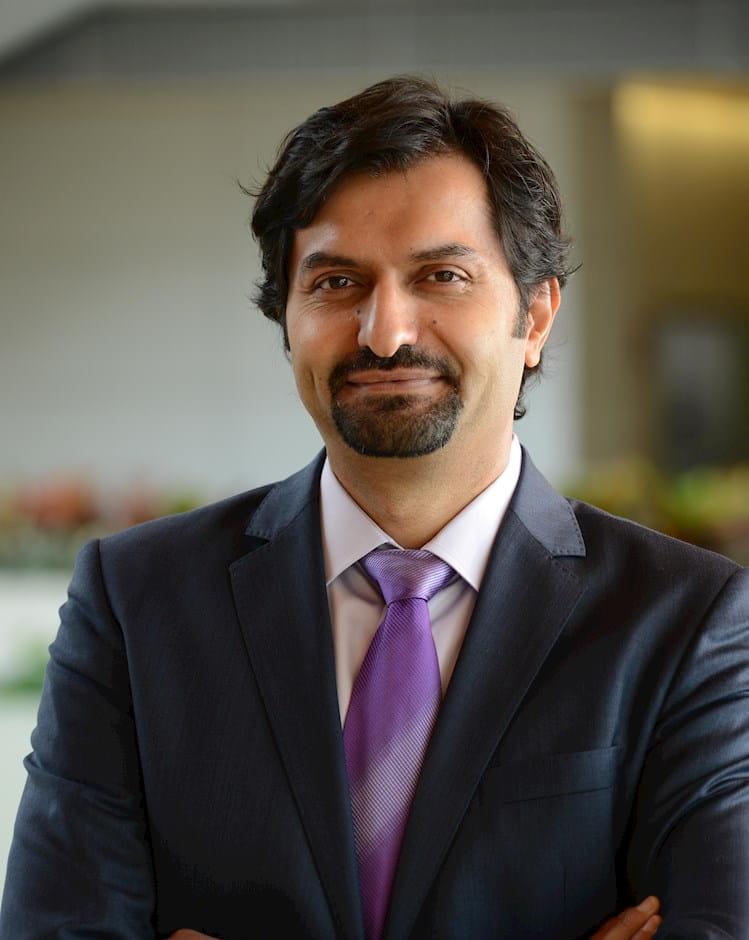
Flavio Vasconcellos Comim is a Full Professor at IQS School of Management in Barcelona, Spain, holding the Chair of Ethics and Christian Thought (intercenter). His research focuses on the intersections of Sustainability, Economics, and Ethics. Fields of Interest : Human Development, Capability Approach, Social Exclusion, Regional Development, AI Ethics, Poverty Stigma (Aporophobia), Sustainable Development, Social Welfare, Justice, and Happiness. Recent research includes publications on youth HDI in Spain (2025), AI bias against the poor (2024), and critiques of Sen's social choice theory (2024). He leads projects like Big data applied to the study of aporophobia and Population Medicine and Sustainable Development collaborations with China. His academic output spans journals like Regional Studies , AI and Society , and Cambridge Journal of Regions, Economy and Society , with keywords spanning Economics, Machine Learning, Human Development, and Social Justice. No formal students or awards are listed in available records.
Dr. Juan Manuel Berbel Pineda is a full Professor at the Department of Business Organization and Marketing at Universidad Pablo de Olavide, Spain. His academic work focuses on tourism economics, sustainable tourism practices, and international business strategies, particularly within the hotel industry and textile sector. Key research areas: Tourism Economics, Sustainable Tourism, International Business Strategy Affiliated with IMEGS (Innovation and Marketing for a Sustainable Global Environment) research group Doctoral Programs: Innovation, Entrepreneurship and Family Business His research explores tourism competitiveness and internationalization patterns through empirical studies on hotel chains in Latin America, fair trade impacts in emerging economies, and post-COVID-19 rural tourism development. Analysis of 15 recent publications reveals strong emphasis on structural equation modeling, cross-cultural comparisons, and market segmentation strategies. Current academic activity includes international collaborations with institutions like Massey University, Varna University of Management, and University of Mauritius. His 2020 work on Ecuadorian chia seed exports demonstrates methodology for EU market selection using 7-dimensional indicators, while his sustainable tourism studies provide frameworks for pandemic-era tourism revival through non-overcrowding strategies.
Sergio Bermudo Navarrete is a Professor at the Department of Economics, Quantitative Methods and Economic History, Universidad Pablo de Olavide. His research spans combinatorics, graph theory, and operator theory. Education: PhD in Mathematics (2003, University of Seville) with thesis on functional models of operators in Hilbert spaces. Research Interests: Focus on graph theory, domination problems, topological indices, and operator theory. Publication Trends: Recent work includes vertex-degree-based indices for oriented graphs, domination parameters in product graphs, and differential analysis of line graphs. Keywords span Computer Science , Mathematical Chemistry , and Operations Research . Collaborations: Frequent co-authors: José María Sigarreta Almira, José Manuel Rodríguez García, Juan Alberto Rodríguez-Velazquez. Contact: Email sbernav@upo.es .
Sergio Moreno Gil is a Professor in the Department of Economics and Business Management at Universidad de Las Palmas de Gran Canaria (ULPGC), Spain. He is affiliated with the GIR TIDES research group (Economy, Environment, Sustainability and Tourism) and the Institute of Tourism and Sustainable Economic Development. His academic work focuses on tourism economics, marketing, and sustainability within the Social and Legal Sciences branch. Dr. Moreno Gil's research interests span across multiple dimensions of contemporary tourism. His primary focus areas include sustainable tourism development, destination marketing, sharing economy platforms in tourism, and consumer behavior analysis. He has made significant contributions to understanding tourism in the Canary Islands, particularly through his work with the Canary Islands Tourism Observatory. His research integrates traditional tourism studies with emerging fields like neurotourism and biometric analysis of tourist experiences. His publication record shows a clear trend toward addressing contemporary challenges in tourism. Recent works focus on sustainability in mass tourism destinations, the impact of sharing economy platforms, gastronomic tourism marketing, and collaborative tourism networks. His research demonstrates a strong methodological diversity, employing bibliometric analysis, social network analysis, and empirical studies of tourist behavior. Dr. Moreno Gil has been actively involved in the Canary Islands Tourism Observatory, contributing to annual reports on tourism sustainability in the region. His collaborative work spans across the Ibero-American region, with numerous co-authorships reflecting international research networks in tourism studies.
Jose Luis Belmonte Postigo is an active researcher and faculty member at the University of Seville, specifically in the Department of American History within the Faculty of Philosophy, Arts and Humanities. His academic career spans over a decade, with research activity documented from 2010 to the present. He earned his doctorate from the Pablo de Olavide University with a thesis on slavery in Santiago de Cuba (1780-1803), supervised by Dr. Juan Marchena Fernández. Belmonte Postigo's research focuses on the history of slavery in the Spanish Caribbean and Latin America, with particular attention to Cuba, Puerto Rico, Peru, and the broader Atlantic World. His work examines the social, economic, and cultural dimensions of slavery, including enslaved people's resistance strategies, social mobility, and the complex relationships between masters and slaves. He has conducted extensive research on how enslaved individuals navigated systems of power, sought freedom, and maintained cultural practices across the colonial period. His publications reveal a strong interest in the microhistories of enslaved individuals and communities, analyzing how they negotiated their circumstances within rigid colonial structures. Belmonte Postigo has made significant contributions to understanding the regional variations of slavery across the Spanish Empire, particularly examining how local contexts shaped slave societies in different parts of the Caribbean and Latin America. Belmonte Postigo has received recognition for his scholarly work, with a substantial following on academic platforms like Academia.edu where he has 938 followers. He collaborates with scholars across Latin America and Spain, contributing to edited volumes and participating in international research projects focused on slavery and colonial history. In addition to his research, Belmonte Postigo has demonstrated commitment to academic service through peer reviewing and contributing to scholarly journals. His expertise in colonial slavery has positioned him as a key contributor to ongoing scholarly conversations about the legacy of slavery in Latin America and the Caribbean.
Nicolò Cesa-Bianchi is a Professor of Computer Science at the University of Milan, where he serves as head of the Computer Science programs. He is also associated with the Department of Electronics, Information and Bioengineering (DEIB) at Politecnico di Milano. Cesa-Bianchi holds significant leadership roles including Board member, Fellow and co-director of the Milan unit of the European Laboratory for Learning and Intelligent Systems (ELLIS), and membership in the prestigious Accademia Nazionale dei Lincei. He is also involved with The European Lighthouse on Secure and Safe AI (ELSA), The European Lighthouse of AI for Sustainability (ELIAS), and The FAIR foundation. Professor Cesa-Bianchi's research focuses on the theoretical foundations of machine learning, with special emphasis on sequential decision making and online learning algorithms. His work spans multiple areas including multi-armed bandit problems, regret analysis, prediction with expert advice, and learning on graphs. He has made significant contributions to understanding the theoretical limits of learning algorithms and developing efficient methods for various learning scenarios. His research has important applications in online markets, social networks, and bioinformatics. His monographs 'Prediction, Learning, and Games' and 'Regret Analysis of Stochastic and Nonstochastic Multi-armed Bandit Problems' are considered seminal works in the field. His recent publications demonstrate continued leadership in advancing the theoretical understanding of machine learning, with 2024-2025 papers covering cooperative online learning, multitask learning, fair trade mechanisms, and refined analyses of bandit algorithms. The research shows increasing focus on practical economic applications while maintaining strong theoretical foundations. Google Research Award Xerox Foundation UAC Award Member of the Accademia Nazionale dei Lincei ELLIS Fellow Cesa-Bianchi has been deeply involved in academic service, having served as action editor for the Machine Learning Journal, IEEE Transactions on Information Theory, and the Journal of Machine Learning Research. He currently serves as associate editor for the Journal of Information and Inference and TheoretiCS. He has held leadership positions including President of the Association for Computational Learning and member of the steering committee for the EC-funded Network of Excellence PASCAL2. He was program chair of the 13th Annual Conference on Computational Learning Theory and the 13th International Conference on Algorithmic Learning Theory. He leads the Laboratory for AI and Learning Algorithms (ALGA) at the University of Milan, which focuses on theoretical and applied research in machine learning. His international collaborations are extensive, with visiting positions at UC Santa Cruz, Graz Technical University, Ecole Normale Supérieure in Paris, Google, and Microsoft Research. As an educator, he teaches advanced courses including Reinforcement Learning and Statistical Methods for Machine Learning, and has supervised numerous students through the years.
Jan Eeckhout is an ICREA Research Professor at Pompeu Fabra University (UPF) in Barcelona, specializing in macroeconomic theory, labor markets, and urban economics. His work focuses on market power dynamics, wage inequality, and technological impacts on labor and urban systems. He holds a PhD from the London School of Economics (LSE). Eeckhout has received a prestigious ERC Advanced Grant (€2.45M) for research on 'Macro Market Power and Distribution.' He authored the influential book The Profit Paradox (2021), exploring how dominant firms reshape labor markets and economies, translated into multiple languages. His research frequently appears in top journals like the Quarterly Journal of Economics and Review of Economic Studies. Research Interests: Macro-Labor Theory, Labor Markets, Urban Economics, Market Power, and Economic Inequality. Recent work examines technological origins of labor market stagnation, IT-driven urban polarization, and wealth effects on worker productivity. Advising and Grants: Supervises PhD students (e.g., Milena Djourelova, David Puig) and collaborates with institutions globally (CEMFI, EUI, Sciences Po). His team includes co-authors like Jan De Loecker and Philipp Kircher. Active in policy discussions via think tanks and media outlets like VoxEU and the NYT. Labs/Teams: Leads a diverse research group at UPF, with projects on market power, urban economics, and labor dynamics.
Alicia Orea Giner is a Professor at the Faculty of Economics and Business Sciences of Rey Juan Carlos University, specializing in sustainable tourism and social justice. Her research focuses on Generation Z's sustainable consumption practices in food tourism, AI integration in hospitality, and ethical dimensions of tourism. She co-authored the award-winning article The way we live, the way we travel: generation Z and sustainable consumption in food tourism experiences , recognized with the 2024 Emerald Literati Outstanding Paper Award. Her work bridges sustainability, technology, and cultural studies. Key themes include feminist methodologies in tourism research, transformative travel through ecofeminism, and post-pandemic food tourism trends. She explores AI applications in service robots, wellness tourism's mental health connections, and marginalized communities' roles in culinary tourism. Recent studies address LGBTQ+ tourism challenges, stakeholder participation in World Heritage sites, and ghost tours' cultural narratives. Awards highlight her contributions to sustainability and social justice in tourism. Awards: 2024 Emerald Literati Outstanding Paper Award Research Foci: Food Tourism, AI Ethics, Feminist Tourism Studies, Cultural Heritage Management Labs/Teams: No specific lab mentioned; collaborates across interdisciplinary tourism research networks.
Dr. Steven Kemp is a Senior Lecturer in the Department of Public Law at the University of Girona, Spain. His research focuses on the intersection of criminal law, cybercrime, and criminological analysis, with affiliations to institutions like UNICRI, Open University of Catalonia, and the Institute of Public Security of Catalonia. His work spans digital security, fraud victimization, and sentencing disparities. Current roles: Serra Hunter Fellow, University of Girona (2023–present); Collaborating Teacher, UNICRI (2024–present) Previous roles: Associate Professor, University of Girona (2015–2021); Postdoctoral Researcher, Pompeu Fabra University (2021–2023) and University of Manchester (2021) His research interests include: Cybercrime dynamics during global crises (e.g., pandemic-related fraud trends) Victimization patterns in digital societies, particularly among older adults Legal implications of smart technologies and cybersecurity frameworks Comparative criminal justice systems, especially plea bargaining and sentencing disparities Key trends in his recent publications (2025–2019) highlight: Rising cyberfraud incidents and their societal impacts Interdisciplinary approaches to digital security and legal systems Statistical modeling of crime trends post-COVID-19 Behavioral responses to cybercrime risks Scientific recognition includes: Serra Hunter Fellow He actively collaborates with research groups like the Research Group in the Seminar of Criminal and Criminological Sciences and contributes to public policy initiatives in cybersecurity and fraud prevention.
Javier Franco Aixelá **Roles and Affiliations**: Full Professor of Translation and Interpreting at the University of Alicante, Director of the Department of Translation and Interpretation (2017–2021). Coordinates the Master's in Institutional Translation (Legal and Economic). Active in teaching Translation Theory, Professional Ethics, and Advanced Literary Translation. **Education**: PhD in English Philology (University of Alicante, 1996), Licenciatura in English Philology (Complutense University of Madrid, 1986), Expert in Translation (Complutense University of Madrid, 1991). **Research**: Specializes in translation theory, cultural aspects of translation, and bibliometrics. Founded the BITRA database (70,000 entries by 2017), a comprehensive online bibliography on translation and interpreting. Recent focus on bibliometric analysis of translation studies, including advertising translation, open access in academia, and cognitive approaches. **Teaching**: Taught courses like Professional Ethics, Advanced Literary Translation, and Translation of Research Genres. Supervised over 125 theses in the last five years, including high-impact works on medical neologisms (Habiba Chbab El Fakhi) and gender-neutral translation (María López Medel). **Awards**: Coordinator of the University of Alicante's Translation Doctoral Program, which received a quality distinction from the Ministry of Education. His theses have been awarded "Excellent Cum Laude" by the university. **Projects**: Led competitive research projects such as the 2021–2025 bibliometric study on economic translation and the BITRA database expansion (2007–2010). Collaborated on international initiatives like the 5th ICEBFIT Conference (2023). **Publications**: Authored 40+ books (e.g., *La traducción condicionada de los nombres propios*), co-edited *ENTI: Encyclopedia of Translation and Interpreting*, and published widely in journals like *META* and *Translation & Interpreting*.
Michalis Vazirgiannis is a Professor at LIX, École Polytechnique (France) leading the Data Science and Mining (DaSciM) group. With academic backgrounds in Physics (Athens University), AI (Heriot-Watt University), and Informatics (Athens University), he has conducted research at Fraunhofer, Max Planck MPI, and INRIA/FUTURS while teaching at institutions across Greece, France, China, and Spain. His research spans Machine/Deep Learning for Graphs (GNNs, graph kernels, embeddings) Text Mining & NLP (Graph-of-Words, biomedical text analysis) Combinatorial Optimization for pandemic forecasting and energy systems Event/Anomaly Detection in time series and sensory data Industrial collaborations with Airbus, Google, Tencent, and BNP . He has supervised 29 completed PhD theses, published over 250 papers, and received prestigious awards including Marie Curie and Tencent Rhino-Bird Fellowships. His team leads the ANR-HELAS Chair (2020-2025) focusing on heterogeneous data deep learning.
Francesc Miralles Torner is an Associate Professor affiliated with the Department of Enterprise and Technology, specializing in digital innovation, artificial intelligence, and entrepreneurial ecosystems. He leads the BOCETO: Boosting Comfort in Educational Environments project and participates in initiatives like Digital Innovation and AI as an agent for Digital Transformation . His work focuses on sustainability frameworks, innovation intermediaries, and technology's role in addressing global challenges. Academic Rank: Associate Professor Department: Enterprise and Technology Key Research Areas: Digital Innovation, Entrepreneurial Ecosystems, Sustainability, AI Recent research explores configurational approaches to startup innovativeness, orchestration of innovation networks, and digital transformation through global and sustainable lenses. His collaborations span institutions like AGAUR and international researchers.
Seth Blumsack is a Professor at the Pennsylvania State University in the Department of Energy and Mineral Engineering and serves as Director of the Center for Energy Law and Policy . He holds an Adjunct Research Professor position at the Carnegie Mellon Electricity Industry Center and is affiliated with the Santa Fe Institute as an External Faculty member. His research spans energy economics , power grid reliability , and complex infrastructure networks . Key projects include: Interdependent natural gas and electricity systems analysis Governance of regional transmission organizations Smart grid consumer behavior studies Power grid reliability tools development He has secured funding from the U.S. National Science Foundation , Department of Energy , Environmental Protection Agency , and private industry. His Best paper award at Hawai’i International Conference on System Sciences (2011) and John T. Ryan, Jr. Fellowship (2011-17) highlight his scientific recognition. Publications emphasize electricity market deregulation , energy infrastructure resilience , and consumer response to smart grid technologies . His work has been cited in major media outlets like The New York Times and The Los Angeles Times , and he has consulted for National Renewable Energy Laboratory , U.S. Department of Energy , and other industry stakeholders.
Baris Ata is the Sigmund E. Edelstone Distinguished Service Professor of Operations Management at the University of Chicago Booth School of Business. His work bridges theoretical operations management with practical applications, focusing on dynamic decision-making under uncertainty. Research Interests Ata’s research spans stochastic networks, manufacturing/service operations, healthcare delivery, and social sector innovation. Recent projects address high-dimensional stochastic control, xenotransplantation candidate selection, criminal justice logistics, and last-mile delivery challenges in Africa. Scientific Awards Best Paper in Service Science Award, INFORMS (2009) William Pierskalla Best Paper Award, INFORMS (2015) Wickham Skinner Best Paper Award, POMS (2019) Manufacturing and Service Operations Management Young Scholar Prize, INFORMS (2015) Emory Williams MBA Teaching Award (2021) Recent Publications Ata’s recent work includes topics in dynamic pricing, stochastic control, and healthcare logistics. His papers examine congestion-based pricing strategies, equilibrium analysis in queues, and policy design for organ transplantation. Broad disciplines include operations management, stochastic modeling, and healthcare analytics.
Juan Francisco Jiménez-Alcázar is a Professor at the Universidad de Murcia, affiliated with the Department of Prehistory, Archaeology, Ancient History, Medieval History and Historiographic Sciences and Techniques within the Faculty of Arts and Humanities. His research focuses on Medieval History, Digital Humanities, and the intersection of history with video games and digital media. He holds a Doctorate from the Universidad de Murcia (1993) with a thesis on 'Espacio, poder y sociedad en Lorca (1460-1521)'. His work explores historical representation in modern media, particularly analyzing how video games depict medieval soundscapes, warfare, and cultural frontiers. Key themes include the study of linguistic diversity in medieval Spain, governance structures in frontier regions like Murcia, and the impact of historical epidemics such as the 1507-08 plague in Murcia. Recent publications include books on Digital Humanities and video games (2020), medieval warfare simulations, and interdisciplinary studies on migration and historical identity. He collaborates with institutions like CONICET and the CNR in Italy, and his research contributes to both academic and public understanding of medieval history through digital tools and cultural analysis.