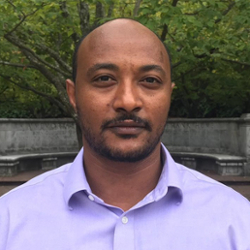
Amir Sufi is the Bruce Lindsay Distinguished Service Professor of Economics and Public Policy at the University of Chicago Booth School of Business, where he has been a faculty member since 2005. He serves as a Research Associate at the National Bureau of Economic Research and co-director of its Corporate Finance Program. Bachelor’s Degree, Walsh School of Foreign Service, Georgetown University (1999) PhD in Economics, Massachusetts Institute of Technology (2005) His research focuses on finance , macroeconomics , and corporate finance . Key areas include household debt dynamics , credit market structure , income inequality , and interest rate impacts on productivity growth . Recent work examines customer capital investment and low-interest rate effects on market concentration . Selected scientific awards include the 2017 Fischer Black Prize, Econometric Society Fellow (2022), and American Academy of Arts and Sciences Fellow (2024). His peer-reviewed publications and working papers span topics from syndicated loans to global household debt cycles , with notable contributions to understanding credit-driven business cycles and government-led consumer credit programs . He teaches courses in leveraged finance , private credit , and corporate restructuring .
Carmen Huckel Schneider is an Associate Professor at the University of Sydney, holding positions as Deputy Director of the Leeder Centre for Health Policy, Economics and Data and Director of Academic Education in the Sydney School of Public Health. She also serves as Honorary Senior Fellow at the George Institute and Senior Adviser at the Sax Institute. Her research focuses on global health governance, health policy analysis, and health systems financing. She completed her PhD at the University of Tübingen, examining global health organizations' legitimacy. Her current research explores governance in global health, comparative health systems analysis, and systems approaches to health policy. She leads the Health Governance, Policy and Leadership theme at the Leeder Centre and coordinates units on 'Health Systems and Financing' and 'Global Health Policy'. Notable grants include NHMRC Partnership Grants for health system reforms in NSW and a Centre for Research Excellence in Integrating Health and Social Care. She collaborates internationally, including with the University of Geneva on projects analyzing global health security discourses. Her publications span global health governance, health system reforms, and policy frameworks. She has authored books like *The Legitimacy of Global Health Governance* and contributed to high-impact journals such as *The Lancet Regional Health* and *BMJ Global Health*.
Dr Marcus Keogh-Brown is an Associate Professor in the Department of Global Health and Development within the Faculty of Public Health and Policy at the London School of Hygiene & Tropical Medicine (LSHTM). His position is split between research focusing on macroeconomic modeling of health and serving as Deputy Programme Director for the school's public health distance learning program. Education: BSc in Mathematics and Statistics, Queen Mary University of London (1995-1998) MSc in Computer Studies, University of Essex (1998-1999) PhD in "A Statistical Model of Internet Traffic," Queen Mary University of London (1999-2004) PGCILT Modules 1 and 2, London School of Hygiene and Tropical Medicine (2008-2012) Dr Keogh-Brown's research focuses on analyzing the macro-economic impact of health disorders and developing macro-economic models in health contexts. His areas of interest include infectious diseases (SARS, influenza, COVID-19, tuberculosis, malaria) and non-communicable diseases (Alzheimer's Disease, Dementia). He specializes in health-related applications of Computable General Equilibrium (CGE) Modeling with GAMS, with current work on health and macroeconomic modeling of COVID-19, tuberculosis, child labor, and health-related food policies. His publication record shows a strong trend toward integrated macroeconomic-epidemiological modeling, particularly for infectious disease outbreaks and public health interventions. Recent work focuses on tuberculosis in India, Covid-19 impacts in Pakistan, and food policy interventions like the UK Soft Drinks Industry Levy. His research consistently applies economic modeling frameworks to evaluate the health and economic impacts of disease and health policies across multiple countries including Ghana, India, Thailand, Myanmar, UK, and China. Grants: Current: "Modelling the health social care and macroeconomic impacts of dementia policies in the UK" (NIHR, 2025-2026) Current: "Co-designing food system fiscal policy for healthy people and planet" (University of Oxford, 2022-2025) Completed: "COVID-19 vaccine scenario analysis for health economic and social impacts" (WHO, 2022) Completed: "Evaluation of the impact of the UK industry levy of sugar-sweetened beverages" (University of Cambridge, 2017-2023) Completed: "Macroeconomic Burden of Alzheimers in China" (Jansen Global Services LLC, 2014-2015) Dr Keogh-Brown is affiliated with several research centers at LSHTM including the Malaria Centre, Global Health Economics Centre, and Centre for Mathematical Modelling of Infectious Diseases. His collaborative work spans multiple countries and addresses critical intersections between health, economics, and policy.
Professor Jeevan R. Sharma serves as Chair of South Asia and International Development and Co-director of the Centre of South Asian Studies at the University of Edinburgh's School of Social and Political Science. An elected General Secretary of the Britain Nepal Academic Council (BNAC), he brings extensive field research experience from Nepal, India, Sri Lanka, and Malawi to his work in development and political anthropology. His current Wellcome Trust-funded transdisciplinary project examines health and well-being of South Asian migrant workers through collaboration with medical scientists and social anthropologists at Aga Khan University and Kathmandu Medical College. Sharma's research interests span labor migration, border-crossing, Maoist conflict, humanitarianism, human rights documentation, and health policy with particular focus on gender dynamics and social transformation. His fieldwork has investigated community health volunteers, maternal and child health, and international research collaboration in South Asia. He has previously worked at Feinstein International Centre at Tufts University (2009-2011) and Save the Children UK (2007-2009), bringing practical development experience to his academic work. His publication trends reveal consistent focus on migration, health policy, and political transformation in South Asia, with increasing attention to transnational health issues and pandemic impacts on vulnerable populations. Recent work examines Covid-19's effects on migrant workers, mental health policy in Nepal, and cross-cultural health measurement tools, demonstrating his commitment to bridging academic research with practical health interventions. Elected General Secretary of the Britain Nepal Academic Council (BNAC) Co-editor of HIMALAYA Journal (2019-2025), transitioning to Editor-at-large from January 2025 Associate Editor of 'South Asia: Journal of South Asian Studies' Co-editor of Routledge Edinburgh South Asia Series Member of ESRC GAP panel C (2024-2025) Member of the commissioning panel for the ESRC Centres Competition 2018 Sharma has secured significant research funding including a Wellcome Trust grant for migrant worker health research, ESRC funding for projects examining low-income migrant workers' access to services in India, and NERC funding for flood resilience research in Nepal's Terai region. His collaborative approach is evident in projects involving multiple institutions across South Asia and the UK, with particular emphasis on transdisciplinary work that bridges social science and medical research. He has served as Principal Investigator on six completed projects and currently leads an active Wellcome Trust-funded initiative. As Co-director of the Centre for South Asian Studies in Edinburgh, Sharma contributes to one of the UK's leading institutions for South Asian research, fostering academic collaboration and knowledge exchange between scholars in the UK and South Asia. His work with the Britain Nepal Academic Council strengthens bilateral academic relations, while his editorial roles with HIMALAYA Journal and South Asia: Journal of South Asian Studies position him at the forefront of scholarly discourse on the region.
Prof. Dr. Mona Mensmann is an Associate Professor of Innovation Management and Entrepreneurship at the University of Cologne , School of Business and Social Sciences. Her research bridges entrepreneurship with psychology, focusing on entrepreneurial mindset, proactive behavior, and training curricula. Current: Associate Professor (W2), University of Cologne (2021–) Previous: Associate/Assistant Professor at Warwick Business School (2018–2021) Education: PhD in Psychology, Leuphana University (2013–2017); MSc in Psychology, University of Heidelberg (2011–2013) Mensmann’s research explores the psychological foundations of entrepreneurship, including the impact of cognitive traits (e.g., ADHD, need for cognition) on entrepreneurial intentions and outcomes. She emphasizes personal initiative training as a tool for poverty reduction and sustainable business development, particularly in West Africa and developing economies. Her publications span peer-reviewed journals like Entrepreneurship Theory and Practice and Science , focusing on topics such as sleep quality’s influence on founders, training program effectiveness, and lifespan entrepreneurship. She has also contributed to academic book chapters and conference proceedings.
Hundanol Kebede is an Assistant Professor of Economics at Southern Illinois University, Carbondale . His research focuses on International Trade , Development Economics , and Applied Microeconomics , with a particular emphasis on low-income countries. Ph.D. in Economics from the University of Virginia (2020) Key research themes: Trade and infrastructure impacts on economic activities, structural transformation, household responses to shocks, and gender disparities in technology adoption Research trends from his five published articles (2013–2024) include analyses of rural road construction’s welfare gains, market integration effects on agricultural households, commodity price shock transmission, and gender-based risk aversion in technology adoption. His work often leverages Ethiopian case studies with high-resolution micro data. Contact : hundanol.kebede@siu.edu | Faner Hall, Room 4138 | (618) 453-5072
Afsan Bhadelia, PhD, MS is an Assistant Professor in the Department of Public Health at Purdue University, where she teaches PUBH 240 – Global Health . Her nearly two decades of global-health scholarship focus on health-systems analysis, equity-oriented priority-setting, and the integration of palliative care for chronic diseases, notably cancer. Education: PhD – Johns Hopkins University MS – Tufts University BS – Tufts University Research Interests: Dr. Bhadelia’s transdisciplinary programme sits at the intersection of public health, complexity science, ethics, economics, and policy . She develops novel methodologies and metrics to illuminate social and structural determinants of health—using cancer and palliative care as tracer conditions—and embeds a gender-justice lens throughout. Her overarching goal is citizen-driven priority-setting that aligns health-system investments with societal values. Awards & Recognition: Fulbright U.S. Scholar (2021) Gordis Teaching Fellowship, Johns Hopkins Bloomberg School of Public Health (2015) Young Cancer Leader, Union for International Cancer Control (2015) Presidential Award for Citizenship and Public Service, Tufts University (2006) Research Trajectory & Impact: Bhadelia’s prolific publication record (46+ papers) charts a clear arc from quantifying the global burden of serious health-related suffering to crafting ethically-grounded, policy-ready solutions. Recurring themes include opioid-access equity, racism and casteism in pain relief, and integration of palliative care into universal health coverage. Her 2025 updates to the Lancet Commission, alongside multiple WHO-aligned metrics papers, position her work at the forefront of global palliative-care science. Community-Engaged Scholarship & Teaching: Emphasising community-partnered research, she mentors students in community-engaged methods and co-develops curricula that blend complexity thinking with real-world policy challenges. Through Purdue’s signature research areas— Developmental Health & Wellness, Healthy Lifestyles & Vital Longevity, Sustainable Organizations & Thriving Communities —her lab collaborates across disciplines to ensure research uptake by policymakers and practitioners.
Associate Professor Emily Jones is a political economist at the Blavatnik School of Government, University of Oxford, and Director of the Global Economic Governance Programme. Her work focuses on international trade, financial regulation in developing countries, and post-Brexit policy analysis. University of Oxford, DPhil in International Political Economy School of African and Oriental Studies, MSc in Development Economics University of Oxford, BA in Philosophy, Politics, and Economics Her research explores the political economy of global trade , Basel banking standards , and digital economy governance , with an emphasis on asymmetric negotiations and developing country agency . Recent projects examine cross-border data flows and regulatory competition . Notable publications include the 2020 book The Political Economy of Bank Regulation in Developing Countries and the 2019 Global Policy article on Europe-Africa relations. Her work has attracted ESRC Impact Acceleration Award DFID-ESRC Growth Research Grant and engages with the UK Parliament as a Special Advisor to the International Trade Committee.
Dr. Mylene Lagarde is an Associate Professor of Health Economics and Deputy Head of Department (Research) at the London School of Economics and Political Science (LSE), Department of Health Policy. Her research focuses on applied economic analysis of healthcare decisions in low- and middle-income countries (LMICs), particularly provider behavior, healthcare demand, and health policy evaluation. She has conducted studies on topics such as health worker incentives, user fee removal policies, and the impact of performance-based financing. She holds affiliations with J-PAL and the University of Witwatersrand, South Africa. Her work combines quantitative methods, randomized experiments, and policy analysis to inform global health interventions. Educated in France and with field experience in Cameroon, Lagarde’s academic career includes roles at the London School of Hygiene and Tropical Medicine before joining LSE in 2016. She teaches advanced health economics courses, including MPhil/PhD programs in Health Economics and Policy, and modules on randomized evaluations of health programs. Her research has explored provider behavior in Senegal, Zambia, South Africa, and other LMICs, addressing challenges like antibiotic overprescription, healthcare quality under workload pressures, and equitable access to services. Key areas of focus include the role of pro-social preferences in healthcare workforce distribution, the effectiveness of group incentives for preventive care, and the framing effects of health policies. She has contributed to understanding how financial and non-financial incentives shape healthcare provider performance and patient choices, with implications for improving health system efficiency and equity globally.
Ranjeeta Thomas is an Associate Professor of Health Economics at the Department of Health Policy, London School of Economics (LSE). She is Programme Director for the MSc in International Health Policy (Health Economics) and affiliates with LSE Health, the Behavioural Lab, and the Aging and Health Incentives Lab. Prior roles include Research Fellowships at Imperial College London and the University of Oxford. She holds a PhD in Economics from the University of York. Education: PhD in Economics (University of York) Affiliations: LSE Health, Behavioural Lab, Aging and Health Incentives Lab Grants/Awards: Co-investigator on grants from the National Institute of Mental Health (USA) and European & Developing Countries Clinical Trials Partnership. Her research focuses on applied health economics, including drivers of risky health behaviors, incentives for preventative healthcare, and long-term impacts of childhood interventions. She employs randomized field experiments and large-scale data analysis in low-resource settings. Recent work addresses HIV/AIDS prevention strategies, stigma reduction, and cost-effectiveness of health interventions in Sub-Saharan Africa. Labs/Teams: Active in interdisciplinary teams at LSE and collaborating institutions, focusing on global health challenges and behavioral interventions.
Dr. S.V. Subramanian (Subu) is Professor of Population Health and Geography at Harvard University with primary appointments in the Department of Social and Behavioral Sciences at Harvard T.H. Chan School of Public Health and the Harvard Center for Population and Development Studies. He serves as Faculty Chair of Harvard's Center for Geographic Analysis and holds affiliations with the Department of Sociology, Weatherhead Center for International Affairs, and Lakshmi Mittal South Asia Institute. As founding director of Harvard's PhD program in Population Health Sciences, he established key academic infrastructure. Education: PhD in Geography (2000), University of Portsmouth, UK MPhil (1993) and MA (1991) in Geography, Delhi School of Economics BA Honors in Geography (1989), University of Delhi Research Focus: Dr. Subramanian leads the Geographic Insights Lab, pioneering data science approaches for precision public policy. His work examines: 1) Food/nutrition security in low-income countries, 2) Geographic heterogeneity in health outcomes, 3) Multilevel modeling of social inequalities, and 4) Political geography-health policy intersections. His 900+ publications employ spatial epidemiology and statistical innovation to address health disparities. Publication Trends: Recent articles demonstrate consistent focus on geospatial analysis of health disparities, particularly in Indian states and constituencies. Work emphasizes granular mortality metrics, nutritional epidemiology, and SDG monitoring using advanced statistical frameworks. Awards & Leadership: Co-Editor-in-Chief of SSM-Population Health (PROSE Award-winning journal) Editorial consultant for The Lancet Highly Cited Researcher since 2015 (top 1% citations globally) Mentoring: Has advised 185+ students across undergraduate, doctoral, and postdoctoral levels. Developed Harvard's first course on multilevel statistical methods (taught globally since 2001). Lab Leadership: Directs the Geographic Insights Lab, which advances precision public policy through geospatial data science and cross-disciplinary health equity research.
Eric Bettinger is the Conley DeAngelis Family Professor in the Stanford University School of Education and a Senior Fellow at the Hoover Institution. He also holds appointments as a Senior Fellow at the Stanford Institute for Economic Policy Research (SIEPR) and Professor (by courtesy) of Economics. Bettinger directs the Center for Educational Policy Analysis and the Lemann Center for Brazilian Education at Stanford, and serves as a research associate with the National Bureau of Economic Research. His educational background includes a Ph.D. in Economics from the Massachusetts Institute of Technology (2000) and a B.A. in Economics, Magna cum Laude with Honors, from Brigham Young University (1996). Bettinger's research focuses on the economics of education, with particular emphasis on student success and completion in college, the impacts of online education, financial aid effects, teacher characteristics, and voucher programs. His work employs rigorous statistical methods to identify cause-and-effect relationships in higher education. Notably, his research on simplifying financial aid applications has directly influenced White House efforts to streamline financial aid processes, demonstrating the real-world policy impact of his scholarship. His recent publications reveal consistent focus on educational interventions, technology in education, and policy evaluation. Bettinger's work spans multiple methodologies including randomized controlled trials, natural experiments, and large-scale data analysis. His research often addresses practical educational challenges while maintaining strong theoretical foundations in economics. Bettinger has served as a consultant to the White House and various state governments on financial aid policies, translating academic research into actionable policy recommendations. His work bridges the gap between academic scholarship and practical educational policy implementation. As an academic leader, Bettinger directs multiple research centers and has advised numerous doctoral students. His current advisees include Joseph Moore, Sergio Arango, Michelle Blair, Dallas Gilmore, Gabriel Koraicho, and postdoctoral researcher Saloni Gupta.
Yuri Zhukov is an Associate Professor at Georgetown University, holding dual appointments in the Edmund A. Walsh School of Foreign Service and the Department of Government (College). His research focuses on armed conflict, state repression, and geospatial data science, with notable work on the Russian invasion of Ukraine and historical legacies of political violence. He earned his Ph.D. in Government from Harvard University, an M.A. in National Security Studies from Georgetown, and a B.A. in International Relations from Brown University. Education: Ph.D., Government, Harvard University M.A., National Security Studies, Georgetown University B.A., International Relations, Brown University His research interests span the intersection of political violence and quantitative methods. He has pioneered geospatial analysis tools like VIINA to track conflict incidents and developed databases such as xSub for subnational violence studies. His work on Ukraine’s economic resilience during the 2022 invasion and vaccine hesitancy in low-income countries highlights his interdisciplinary approach to global challenges. His articles frequently address modern warfare dynamics, repression strategies, and historical conflict impacts. Awards include the 2015 Bruce Russett Award for excellence in conflict research. Zhukov’s advising and grants focus on military conflict, authoritarian regimes, and global health policy, reflecting his commitment to understanding systemic drivers of violence and governance.
Sohail Kamran is a Senior Lecturer in Marketing at the School of Business and Law, University of Brighton, UK. He holds a PhD in Marketing from the University of Jyväskylä, Finland, and an MSc in Management from Brunel University, London. He is a Fellow of the Higher Education Academy (FHEA) and has been actively contributing to academic leadership, curriculum development, and student supervision since 2006. Education: PhD in Marketing, University of Jyväskylä (2018) MSc Management, Brunel University London (2006) Professional Teacher Education Certificate, Häme University of Applied Sciences (2022) Fellow of the Higher Education Academy (FHEA), UK (2023) His research centers on consumer vulnerability , financial inclusion , and transformative service research , particularly among low-income and unbanked populations in developing countries. He explores how marginalized consumers navigate marketplace challenges, face discrimination in basic services, and develop coping strategies under resource constraints. His work emphasizes ethical marketing and consumer wellbeing. The recent publications reflect a strong thematic focus on financial exclusion, informal financial systems, and digital financial inclusion via fintech and mobile wallets. His research combines qualitative methods with transformative service frameworks, often highlighting sociocultural and structural barriers faced by vulnerable consumers. Scientific Awards and Recognition: Fellow of the Higher Education Academy (FHEA), UK Professional Teacher Education Certificate in Pedagogical Studies Sohail Kamran actively supervises doctoral research in areas such as consumer vulnerability, marketplace inclusion, and marketing ethics. He serves as an external examiner for PhD theses at institutions including the University of Sussex and Air University Islamabad. He also engages in research collaboration with scholars from Finland and Pakistan. His upcoming visiting researcher position at the University of Jyväskylä in 2025 underscores his international academic engagement. Research Groups and Networks: Research Excellence Group: Business and Economic Change Active collaborator in transformative service and consumer vulnerability research networks
Drew Cameron is an Assistant Professor of Public Health (Health Policy) at the Yale School of Public Health, affiliated with the Department of Health Policy and Management and the Center for Methods in Implementation and Prevention Science (CMIPS). His research focuses on health economics, evaluating health and development programs in resource-poor and low- to middle-income country contexts. Education: PhD in Health Policy, University of California, Berkeley MA in International Development, American University School of International Service BA in International Political Economy, University of Puget Sound His work examines targeted subsidies, behavioral 'nudges,' and cost-effectiveness methods addressing healthcare access constraints. Key areas include child growth, water sanitation, HIV/AIDS, carceral health, and rural development. Recent publications highlight implementation strategies for HIV-hypertension integration, pandemic preparedness, and cost analysis frameworks. Notable Research Trends: 2025-2024: U.S. HIV workforce strengthening, Ugandan HIV-hypertension costs, and Alaska vaccine behavior analyses 2023-2019: Water delivery experiments in India, VMMC cost modeling, TB treatment economics, and HIV intervention cost repositories 2018-2014: Urban land titling impacts, healthcare quality policy in Brazil, and structural violence in pharmaceutical triage