University of California, Los AngelesUnited States
Yunxiang Yan is a Professor in the Department of Anthropology at the University of California, Los Angeles (UCLA). His work focuses on China and Cultural Anthropology , with specific expertise in Economic Anthropology , Family and Kinship , and Individualization . Education: Ph.D. in Social Anthropology from Harvard University (1993). Yan’s research explores the intersection of social change , moral theory , and family dynamics in modern China. His ethnographic studies in rural villages provide foundational insights into exchange theory and cultural globalization . Recent publications analyze food safety , medical ethics , and moral crises in China, reflecting his interdisciplinary approach combining anthropology, sociology, and philosophy. Articles span themes like intergenerational intimacy , political oppression , and networked social structures . Scientific Awards: Guggenheim Fellowship Levenson Prize-winning Research Yan’s work bridges local Chinese studies with global anthropological discourse. He has held positions at the Chinese University of Hong Kong, Johns Hopkins University, and UCLA since 1996. His career reflects a commitment to documenting the lives of ordinary people, rooted in his early experiences as an expelled villager during Maoist China. Contact: yan@anthro.ucla.edu
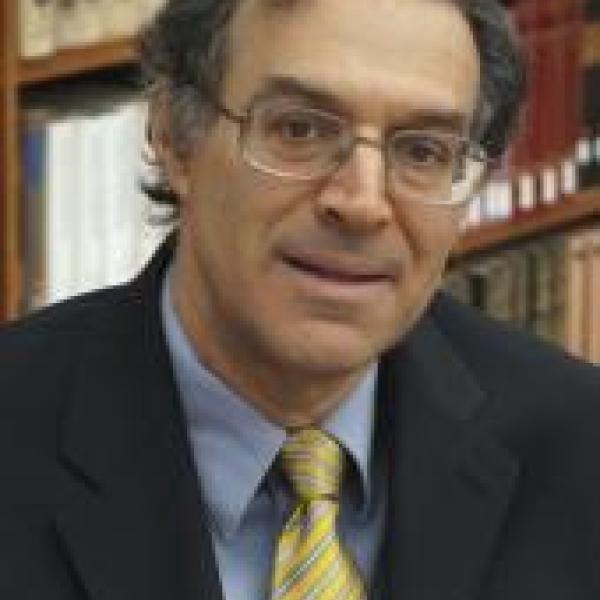
Douglas W. Diamond is the Merton H. Miller Distinguished Service Professor of Finance at the University of Chicago's Booth School of Business, where he has been on the faculty since 1979. He received the Nobel Memorial Prize in Economic Sciences in 2022 for his groundbreaking research on banks and financial crises. Diamond is also a research associate of the National Bureau of Economic Research and a visiting scholar at the Federal Reserve Bank of Richmond. His research focuses on financial intermediaries, financial crises, and liquidity. Diamond's work has established the theoretical foundations for understanding why banks exist, how they create liquidity, and why they are vulnerable to runs. His seminal papers with Philip Dybvig on bank runs and deposit insurance form the basis of modern bank regulation. Diamond's extensive publication record shows a consistent focus on banking theory, financial intermediation, and financial stability. His research has evolved from foundational theoretical work to more recent analyses of liquidity, pledgeability, and the role of banks in the financial system. His work has become increasingly relevant following the 2008 financial crisis and the more recent banking turmoil. Nobel Memorial Prize in Economic Sciences (2022) Onassis Prize in Finance (2018) CME Group-Mathematical Sciences Research Institute Prize (2016) Morgan Stanley-American Finance Association Award (2012) Member of the National Academy of Sciences Fellow of the Econometric Society Fellow of the American Academy of Arts and Sciences Diamond has served as president of both the American Finance Association and the Western Finance Association. He has advised policymakers during financial crises, including providing analysis of the Silicon Valley Bank collapse in 2023. His research has directly influenced financial regulation and central bank policy regarding bank stability and liquidity requirements.
Massachusetts Institute of TechnologyUnited States
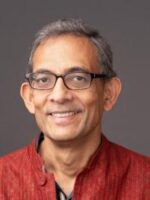
Abhijit Banerjee is a Professor in the Department of Economics at the Massachusetts Institute of Technology (MIT). His research focuses on development economics, public health policy, and social protection programs, particularly addressing poverty and inequality in low- and middle-income countries. He has conducted large-scale experiments evaluating interventions such as conditional cash transfers, universal basic income, and healthcare policies. Key areas of interest include the design and implementation of anti-poverty programs, behavioral economics, and the long-term health impacts of infectious diseases like COVID-19. His work often integrates experimental methods to assess policy effectiveness, with contributions to global health studies and economic development strategies. Notably, his research on the RECOVERY trial evaluates treatments for hospitalized COVID-19 patients, while other studies explore financial spillover effects of electronic government transfers in Indonesia and savings behavior interventions in Chile. Banerjee has collaborated on projects analyzing post-COVID-19 health outcomes, labor market dynamics in India, and the role of trusted messengers in public health communication during crises. Despite the breadth of his contributions, specific details about his educational background, grants, or lab affiliations are not explicitly provided in the source text.
Matthew Potolsky is Professor of English at the University of Utah, specializing in nineteenth-century literature and literary theory. His career spans from 1998 Lecturer at Harvard University to current University Professorship. He earned a BA in Comparative Literature and Philosophy (1990), followed by MA and PhD in Comparative Literature (1992, 1997) from UC Irvine. Chair of English Department (2013-2016) University Professor (2014-2016) Research focuses on Decadence , Mimesis , Finance-Aesthetics intersections , and Government Secrecy . His work traces connections between financialization and decadent aesthetics, revealing how economic cycles influence artistic production. Key themes include: Decadent anti-realist literary movements Finance capital's cultural impact Decadent counterpublic formations Victorian aesthetic education debates Sublime aesthetics in national security Cosmopolitanism in literary communities Recent publications analyze: Decadent style as financialization rhetoric Reintroduction of verisimilitude theory Decadent responses to financial crises Mimetic labor in artistic production Decadent cosmopolitan counterpublics Historical parallels between financialization and literary decadence
Massachusetts Institute of TechnologyUnited States
Lily L. Tsai is the Ford Professor of Political Science at the Massachusetts Institute of Technology (MIT) and founder/director of the MIT Governance Lab (MIT GOV/LAB). She previously chaired the MIT Faculty and focuses her research on governance, accountability, and political participation in developing contexts, particularly Asia and Africa. Her research explores how decentralization, democratic reforms, informal institutions, and economic development influence public goods provision. She also investigates the dual impacts of social capital and civil society on political outcomes, and analyzes political behavior in authoritarian and transitional systems through surveys, interviews, and field experiments. Recent publications span topics including collective governance, vaccine compliance in Uganda, anticorruption strategies in China, and the role of informal institutions in rural China. Tsai’s work appears in journals like American Political Science Review and World Development . Dogan Award for best book in comparative research (2007-08) She leads interdisciplinary projects such as the Compass Initiative (SHASS Education Innovation Fund) and The Science of Respect with MIT’s Brain and Cognitive Sciences department. MIT GOV/LAB, which she founded in 2014, emphasizes real-time empirical collaboration between researchers and practitioners to address governance challenges.
Rhenish Friedrich Wilhelm University of BonnGermany
Gül Şen is a Senior Lecturer and Privatdozentin at the Institute of Oriental and Asian Studies, University of Bonn, and also serves as a Lecturer at the University of Heidelberg. Her academic work focuses on premodern Ottoman history, historiography, and the dynamics of dependency, particularly in maritime contexts such as galley slavery and war captivity. She is actively involved in major research programs including the DFG-Priority Program 'Transottomanica' and the Bonn Center for Dependency and Slavery Studies. Her research areas include: Premodern Ottoman historiography and narrative strategies Legitimacy of rule and political transitions Maritime unfree labor and galley slavery War captivity and captivity narratives in the 18th century Dependency and asymmetrical power relations in the early modern Mediterranean Her recent publications reveal a strong thematic trend centered on the interplay between narrative construction and social power, particularly in contexts of slavery and captivity. She investigates how historical actors used storytelling to assert legitimacy, cope with crises, and negotiate identity. Her work bridges literary analysis with social history, offering nuanced understandings of agency within systems of dependency. She frequently collaborates with leading scholars like Stephan Conermann and contributes to major edited volumes and series in Ottoman studies. Her scientific awards include: DAAD Award for outstanding academic achievements (2012) Postdoctoral Scholarship from the Fritz Thyssen Foundation (2012–2013) Postdoctoral Fellowships at the Annemarie Schimmel Kolleg (2015–2016, 2018–2019) Postdoctoral Scholarship from the University of Bonn (2019–2020) She has supervised numerous B.A. and M.A. theses at the University of Bonn and Heidelberg and has secured third-party funding, including a DFG project (€192,000) from 2016–2018 and Fritz Thyssen Foundation grants. She is co-editor of the 'Ottoman Studies' and 'Otto Spies Memorial Series' book series, and holds leadership roles in the Society for Turkic, Ottoman and Turkish Studies (GTOT) and the International Association for Ottoman Social and Economic History (IAOSEH). Her academic activities are deeply embedded in collaborative and interdisciplinary research environments. She is affiliated with the Bonn Center for Dependency and Slavery Studies and contributes to the DFG-Priority Program 'Transottomanica,' where she examines mobility dynamics and captivity narratives. Her work is supported by a strong network of international collaborations and editorial engagements.
Andrew Mitchell is a Professor at the Faculty of Law, Monash University, and a member of the WTO Dispute Settlement Panelists Indicative List. He has extensive legal practice experience with Allens Arthur Robinson and consults for governments, international organizations, and the private sector. Mitchell has taught law in Australia, Canada, Indonesia, Singapore, and the US. He holds law degrees from the University of Melbourne, Harvard Law School, and a PhD from the University of Cambridge. His research focuses on international economic law, public international law, and digital trade governance, with a particular emphasis on the intersection of trade law and public health. Mitchell has secured six major grants, including an Australian Research Council Future Fellowship, and has authored over 170 books and articles. He serves as an editor for Edward Elgar’s International Economic Law Series and multiple journal editorial boards. Recent projects include 'Safeguarding Health in International Investment Agreements' (2022–2025) 'Maritime Cooperation for a Sustainable Indo-Pacific' (2021–2022) 'Global E-Commerce and Cottage Industries in India' (2020–2021) He has contributed to policy submissions on bilateral investment treaties and delivered lectures on data sovereignty and digital trade. His awards include editorial leadership roles at journals like the Journal of World Investment and Trade and Asia Pacific Law Review .
Emily Hannum is a Professor of Sociology and Education at the University of Pennsylvania's College of Arts & Sciences, where she also serves as Associate Dean for Social Sciences. She is affiliated with the Population Studies Center, Center for the Study of Contemporary China, Graduate School of Education, and Penn Development Research Initiative. Education: PhD in Sociology from University of Michigan (1998) Research Focus: Poverty and child welfare, gender and ethnic stratification, sociology of education Projects: Gansu Survey of Children and Families, climate-environment-childhood inequalities in LMICs Workshops: Co-organizer of Penn Education and Inequality Workshop Her research explores childhood poverty in China, demographic impacts on education systems, and climate risks affecting children's welfare. She investigates environmental hazards, educational disparities, and family separation effects across China, India, and low/middle-income countries. Recent publications analyze educational expansion in East Asia, climate crisis impacts on child health, and gender disparities in Latin America. She directs longitudinal studies on rural poverty and collaborates on cross-national projects related to environmental and educational equity. Scientific awards include the Stanley I. Sheerr Term Professorship in Social Sciences.
Kenneth Pomeranz is the University Professor of Modern Chinese History at the University of Chicago in the Department of East Asian Languages and Civilizations (EALC). Previously taught at the University of California, Irvine , his research spans late Imperial and twentieth-century China , comparative world history , and global economic systems . Research Focus: Reciprocal influences between state, society, and economy; origins of the world economy through mutual regional influences; comparative studies of labor, family organization, and economic history. Current Projects: A history of Chinese political economy from the seventeenth century to the present; a book titled Why Is China So Big? exploring China's political unity despite its vast size. Scientific Awards and Fellowships: John K. Fairbank Prize (twice) World History Association Book Prize (shared) Guggenheim Fellowship American Academy of Arts and Sciences Fellow Publications: Key works include The Great Divergence , The Making of a Hinterland , and The World that Trade Created . His articles address topics such as labor-intensive industrialization, global environmental history, and Qing state-building.
Karl Gustafsson is a Professor at Stockholm University within the Department of Economic History and International Relations. His work bridges security studies , collective memory , and digital research methods in international relations. Current Role: Professor of International Relations, Stockholm University Previous Positions: Post-Doc at Lund University, Researcher at Swedish Institute of International Affairs Visiting Appointments: University of Tokyo, Osaka University, Keio University, Academia Sinica, Nordic Institute of Asian Studies Research Focus: Karl specializes in memory politics , ontological security , and anxiety-driven international dynamics , particularly in Sino-Japanese relations and digital platforms . His studies explore how historical narratives and online memory construction influence state identity and policy. Awards & Grants: Recipient of the Wang Gungwu Prize (2014) and Stockholm University Association’s award (2011). Holds Swedish Research Council and Marianne & Marcus Wallenberg Foundation grants for projects on apologies in international politics and digital memory in East Asia . Publications: His work appears in journals such as International Studies Quarterly , European Journal of International Relations , and Memory Studies , addressing topics like narrative power in East Asia, anxiety’s role in policy change , and digital humanities applications in IR.
California Institute of Technology (Caltech)United States
Jonathan N. Katz is the Kay Sugahara Professor of Social Sciences and Statistics at the California Institute of Technology (Caltech). He holds a S.B. from MIT (1990), M.A. from UC San Diego (1992), and Ph.D. from UC San Diego (1995). His career includes roles as Assistant Professor (1995-98), Associate Professor (1998-2003), and Professor (2003-11) at Caltech, with subsequent appointments as Sugahara Professor (2012–present), Executive Officer for Social Sciences (2007), and Division Chair (2007–14). His research focuses on statistical methods in social sciences, electoral systems, and public policy. Key affiliations include the Caltech/MIT Voting Technology Project and the Linde Institute of Economic and Management Sciences. Katz is Deputy Editor for Social Sciences at Science Advances and a Fellow of the American Academy of Arts and Sciences (2011) and the Society for Political Methodology (2008). Research interests span political methodology, formal theory, and American politics. Recent work addresses partisan fairness in electoral systems, statistical rigor in political modeling, and institutional dynamics in legislative and judicial contexts. Notable contributions include critiques of electoral college bias and audits of political behavior research methodologies. Awards: Career Achievement Award in Political Methodology (2024), Inaugural Fellow, Society for Political Methodology (2008). Grants/Labs: Caltech/MIT Voting Technology Project, Linde Institute Directorship (2013–14).
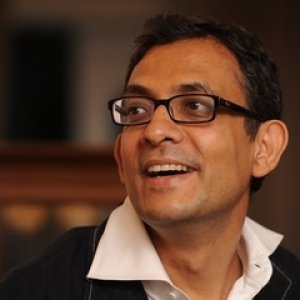
Abhijit Banerjee is the Ford Foundation International Professor of Economics at MIT and Director of the Abdul Latif Jameel Poverty Action Lab (J-PAL). A 2019 Nobel laureate in Economic Sciences, his research focuses on development economics, political economy, and poverty alleviation. He co-authored influential books like Poor Economics and Good Economics for Hard Times , emphasizing evidence-based policies and randomized controlled trials. Banerjee’s work addresses global challenges such as education, health, and social welfare, with notable contributions to microfinance, public health interventions, and anti-poverty programs. He holds leadership roles in global initiatives like the Global Education Evidence Advisory Panel and has advised governments worldwide. His research spans topics from police resource allocation in India to the impact of information during crises like demonetization and the pandemic. Education: Bachelor’s in Statistics, Presidency College, Kolkata M.A. in Economics, Jawaharlal Nehru University PhD in Economics, Harvard University Key Contributions: Co-founder of J-PAL, promoting evidence-based poverty reduction strategies. Pioneer in using randomized controlled trials (RCTs) for policy evaluation. Research on microfinance, education reforms, and health interventions in developing countries. Awards: Nobel Prize in Economics (2019), Infosys Prize in Social Sciences (2009), Member of the National Academy of Sciences (2020). Grants/Advisory Roles: Collaborations with institutions like the World Bank, UN, and governments on poverty, health, and education policies. Labs/Teams: J-PAL global network, Abdul Latif Jameel Poverty Action Lab.
Dr. Ana Radulovic is a researcher at the University of Singidunum, Serbia, with expertise in leadership, organizational behavior, and management. She earned her PhD in Management from Aston Business School, UK, focusing on relational leadership and the impact of leader-follower relationships on outcomes. Her academic journey includes two master's degrees—one in Management from the Faculty of Organizational Sciences, University of Belgrade, and another in Postmodern English Literature from the Faculty of Philology, University of Belgrade—as well as undergraduate studies in English language and literature at the Faculty of Philology and management studies at Indiana University of Pennsylvania. PhD: Management, Leadership (Aston Business School, UK, 2012–2016) Master's: Management (University of Belgrade, 2010–2012) Master's: Postmodern English Literature (University of Belgrade, 2010–2011) Undergraduate: English language and literature (University of Belgrade, 2006–2010); Management (Indiana University of Pennsylvania, 2008–2009) Her research interests center on Leadership , with a focus on relational dynamics, interdependence theory, and quantitative/experimental methodologies. She explores how social media, crises, and virtual environments influence leadership effectiveness and organizational sustainability. Dr. Radulovic has received numerous scholarships and awards, including multiple Fund for Young Talents scholarships, a full scholarship for her doctoral studies at Aston University, a US government scholarship for Indiana University, and recognition for TESOL curriculum design and academic achievement. She has also contributed to the field through grants like the US Government Grant for Sustainable Development Program implementation. Scholarship from the Fund for Young Talents (2009/2010, 2012/2013, 2013/2014, 2014/2015) Full scholarship for doctoral studies (Aston University, 2012–2015) US government scholarship (Indiana University, 2008/2009) Ministry of Education, Science and Technological Development scholarship (2007/2008, 2010/2011) Best curriculum design award in TESOL (2009) Dean's Award for Academic Achievement (2008/2009) US Government Grant for Sustainable Development Program (2010) ERSTE Bank 'Club 27 Superstars' finalist (2011) Her work spans theoretical and applied research, with publications on topics like forgiveness in leader-member exchange relationships, servant leadership for sustainability, and charismatic leadership during crises. She has also participated in international conferences, presenting on leadership dynamics in virtual teams and social media integration.
Alexandra Livada is a Professor at the Department of Statistics within the School of Information Sciences and Technology at Athens University of Economics and Business (AUEB). She holds office at two locations: 12 Codringtonos Street, 2nd Floor and 76 Patision Street, Antoniadou Wing, 3rd Floor in Athens, Greece. Her contact information includes email livada@aueb.gr and phone number +30 210-8203521. Dr. Livada earned her BA and MA in Economics from Athens School of Economics and Business followed by a PhD in Economics from Essex University, UK in 1988. Her academic career has spanned several decades with extensive teaching experience at both undergraduate and postgraduate levels. Her research interests encompass a diverse range of quantitative fields: Quantitative economics and applied econometrics Time series analysis and forecasting techniques Income distribution and inequality measurement Applied financial econometrics Business cycles analysis Medical statistics Index numbers and official statistics Professor Livada's publication record demonstrates consistent scholarly productivity across multiple disciplines, with a noticeable trend toward interdisciplinary work connecting economics with healthcare and social policy. Her recent research shows increasing focus on income inequality across different geographic regions, economic sentiment during crises, and the intersection of medical conditions with statistical analysis. Her scholarly contributions have been recognized through numerous citations in leading journals and books. She has served as a referee for prestigious journals including the European Journal of Political Economy, Journal of Public Economics, and Journal of Insurance, Mathematics and Economics. Professional service highlights include: Member of multiple project teams Marie-Curie project supervisor External evaluator for the Greek State Scholarship Foundation (IKY) External evaluator for the Social Sciences and Humanities Research Council of Canada Co-author of the book "Index Numbers and Official Statistics" Professor Livada maintains an active research agenda with collaborations spanning economics, statistics, and medical fields, demonstrating the interdisciplinary nature of contemporary quantitative research.
Athanasios TRIANTAFYLLOU is an Associate Professor of Finance at IÉSEG School of Management in France. He holds a Ph.D. in Economics from the University of Athens (2017) and has held academic positions including Visiting Professor at Cornell University (2019), Lecturer at the University of Essex (2017–2022), and General Equilibrium Modeler at the National Technical University of Athens (2015). His research focuses on commodity markets, volatility forecasting, risk management, and monetary economics. Key contributions include analyzing commodity price uncertainty's impact on economic activity and financial markets. He has published extensively in journals like Journal of Futures Markets , Economics Letters , and International Journal of Finance and Economics . Education includes a BSc in Mathematics (2008), MSc in Accounting and Finance (2010), and M.Phil. in Economics (2013), all from Greek institutions. Professional experience includes risk management consulting at Ernst & Young (2016–2017). His teaching covers financial derivatives, multinational finance, and commodity markets. Research highlights include exploring the role of commodity price uncertainty in global economic dynamics and the predictive power of market information in corporate defaults. His work often bridges theoretical econometrics with practical policy implications, addressing issues like inflation dynamics driven by oil market risks and the tourism-led growth hypothesis in the Eurozone. TRIANTAFYLLOU’s publications emphasize volatility modeling, commodity market linkages, and the interplay between economic uncertainty and financial stability.