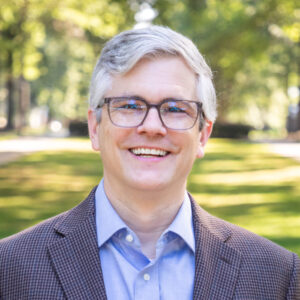
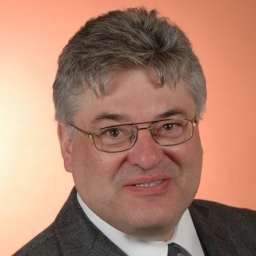
Stefan Furrer is a Research Associate at the University of Lucerne's Faculty of Theology, Department of Church History. He holds a Master of Arts in Catholic Theology and Bachelor of Arts in Theology and History from the University of Lucerne. Currently, he works on the Swiss National Science Foundation (SNSF) project "The Abbey of Einsiedeln and the Benedictine Priory of Fahr 1960-1980 (Einsiedeln and Fahr during the Council Period)" as a doctoral student and researcher. Professional Experience Research Associate, University of Lucerne (2025–present) Distance Learning Director, Study Advisor and Research Assistant at Chair of Canon Law/Church-State Law (2014-2021) Previous work in construction, archaeology, museum education, and youth ministry Research Focus His research examines historical church administration and legal relationships, with expertise in Benedictine institutions during Vatican II. His master's thesis analyzed 15th-century ecclesiastical relations between the Diocese of Constance and Thurgau territories.
Richard W. Winston serves as Associate Professor of New Testament at Erskine Theological Seminary (graduate school of Erskine College) and directs both the Master of Arts in Theological Studies (MATS) and Master of Theology (ThM) programs. His academic leadership spans graduate education administration and New Testament scholarship within the seminary's theological framework. His educational foundation includes: Doctor of Philosophy in New Testament from Central Baptist Theological Seminary (Plymouth, MN) Master of Divinity from Geneva Reformed Seminary (Greenville, SC) Bachelor of Arts in Humanities from Bob Jones University (Greenville, SC) Dr. Winston's research centers on New Testament exegesis with specialized focus on Pauline theology, particularly the interpretation of Law in Romans 9-10 and Matthew's Gospel. His work bridges historical analysis of early Christianity with contemporary theological application, examining Israel's relationship to Mosaic Law, justification doctrines, and second-century apologetics through figures like Justin Martyr. This scholarly trajectory demonstrates consistent engagement with biblical hermeneutics and its ethical implications for modern Christian practice. Analysis of his publications reveals concentrated exploration of Pauline Law theology across multiple publications, with secondary emphasis on patristic thought. The 2020-2022 works show evolution from dissertation-based Romans research toward broader applications in Matthew and early church studies, while maintaining core focus on righteousness, covenant theology, and faith-works dynamics. His scholarship appears in specialized theological journals (Puritan Reformed Journal, Themelios) and accessible ministry publications (Bible Study Magazine, Reformation21), indicating dual commitment to academic rigor and church-oriented communication. As Director of graduate programs, Dr. Winston oversees theological education administration though specific advising details are unreported. His ecclesiastical roles include current Senior Pastor position at Roebuck Presbyterian Church (PCA) since 2015 and prior service as Calvary Presbytery Moderator (2021), reflecting integrated academic-pastoral vocation without documented research grants or scientific awards.
Hans Helander serves as Professor in Latin at Uppsala University's Department of Linguistics and Philology within the Faculty of Languages. His academic career spans decades of specialized research in Neo-Latin literature with particular focus on Swedish intellectual history during the 16th-18th centuries. His research interests encompass Neo-Latin literature, historical linguistics, classical philology, and Swedenborg studies. Helander has established himself as a leading scholar in Swedish Neo-Latin production, examining stylistic conventions, vocabulary development, and the sociopolitical contexts of Latin writing during Sweden's era as a great power. His work frequently intersects with church history, legal studies, and the history of science through detailed textual analysis of primary sources. Analysis of his publication record reveals consistent scholarly output centered on three major thematic clusters: 1) Swedenborg's Latin poetry and philosophical works, 2) 17th-century Swedish Neo-Latin literature including royal panegyrics and academic oratory, and 3) linguistic aspects of Latin usage in scientific and ecclesiastical contexts. His methodological approach combines philological rigor with historical contextualization, often involving critical editions of rare texts. While no formal awards are documented in available sources, Helander's scholarly contributions include significant editorial work on primary sources such as Swedenborg's Camena Borea and Ludus Heliconius , as well as collaborative editions including William Turner's botanical treatise. His research has been disseminated through monographs published by Acta Universitatis Upsaliensis and contributions to major reference works like Brill's Encyclopaedia of the Neo-Latin World. Helander maintains active engagement with interdisciplinary research communities, as evidenced by publications spanning medical history journals ( Läkartidningen ), biological education periodicals, and specialized Neo-Latin conference proceedings. His work frequently addresses the practical applications of Latin knowledge in contemporary academic contexts while preserving historical linguistic traditions.
Catholic University of Eichstätt-IngolstadtGermany
Prof. Dr. Dr. Andreas Weckwerth serves as Professor and Chair of Ancient Church History and Patrology at the Faculty of Theology, Catholic University of Eichstätt-Ingolstadt. His research centers on early church councils, canon law development, and liturgical history within Late Antiquity, with significant contributions to the Research Programme Antiquity - Christianity. Based in Ulmer Hof Building (Room UH-208), he maintains active scholarly engagement through publications and consultation hours by appointment. His research interests encompass: History and theology of early church councils Development of early canon law Religious-cultural encounters in Late Antiquity Liturgical history (hymnology and prayer language) Christian Latinity from antiquity to modernity Didactics of classical languages in non-philological programs History of liturgical organ music Analysis of his recent publications (2017-2022) reveals evolving focus from synodal procedures to intricate liturgical and linguistic dimensions. His work consistently bridges historical theology with cultural anthropology, examining how early Christian practices transformed under Greco-Roman influences. Notable trends include increasing attention to purity concepts, martyrdom theology, and the rhetorical foundations of liturgical language, demonstrating interdisciplinary rigor across patristics, canon law, and liturgical studies. Prof. Weckwerth co-developed the Bibliographia iuris synodalis antiqui (www.bisa.uni-bonn.de), an essential digital resource for ancient synodal law research. His editorial work on volumes like Bishops between Autarky and Collegiality (2019) and Dying and Killing for God (2022) significantly advances scholarly discourse in early church studies.
Gregory Halfond serves as a Professor in the History Department at Framingham State University, specializing in ancient and medieval European history with a dedicated research focus on religion and law during Late Antiquity and the Early Middle Ages. His academic profile demonstrates deep expertise in the socio-political structures of early medieval Europe, particularly within Merovingian Gaul. His research interests span Medieval European History, Ancient History, Religious History, Legal History, Late Antiquity, and Early Middle Ages, with specific investigations into Frankish Church Councils, Merovingian political systems, and Medieval Military History. These areas reflect his commitment to understanding the complex interplay between religious institutions, legal frameworks, and political power in formative European periods. Analysis of Professor Halfond's publication trajectory reveals consistent thematic focus on Merovingian society, evolving from archaeological studies of church councils to examinations of episcopal patronage and military history, culminating in recent work on historiographical reception in American scholarship. His research demonstrates methodological diversity, integrating textual analysis with archaeological evidence to reconstruct early medieval institutional dynamics. Information regarding academic advising responsibilities and research grant activities is not publicly available in the provided documentation.
Alberto Fabbri serves as an Associate Professor in the Department of Law at the University of Urbino Carlo Bo, specializing in ecclesiastical and religious law matters. His academic work focuses on the intersection of legal systems and religious institutions within both Italian and international contexts. Professor Fabbri's research interests center on ecclesiastical law, church-state relations, and the role of religion in public spheres. His expertise encompasses canon law, religious freedom, and the legal frameworks governing religious institutions. His scholarly work examines how religious organizations interact with secular legal systems and public policy. Currently teaching multiple courses including Ecclesiastical Law, Law and Politics of Religious Institutions, and Public Sphere and Religion across various degree programs in Law and International Politics. His courses are offered both in Italian and with optional foreign language materials, reflecting the international dimension of his field. Professor Fabbri maintains an active teaching schedule for the 2024/2025 and 2025/2026 academic years across multiple law programs at the university, including the Law degree program and specialized courses in Legal Sciences for Labour and Public Administration. His departmental affiliation is with the Department of Law (DiGiur) at the University of Urbino, where he contributes to both undergraduate and graduate legal education with a specialized focus on religious law dimensions.
Dr. Sandro Notari is an Associate Professor of History of Medieval and Modern Law at the University of Urbino Carlo Bo, affiliated with the Department of Law. Since the 2021-2022 academic year, he has taught core courses in legal history for both undergraduate and graduate law programs. Beginning in 2024-2025, he directs the Diritti e discriminazione di genere laboratory focusing on gender rights in medieval/modern legal sources. His academic credentials include a PhD in Legal History and Theory from Università di Roma 'Tor Vergata' and research positions at multiple Italian institutions. His research explores: Medieval communal statutes and legal orders Collective property systems in medieval/modern eras 19th-century civil codifications Central state institutions in liberal Italy Italian constitutional history Recent publications (2017-2025) concentrate on statutory law evolution, papal juridical reforms, and socio-legal marginalization, primarily within Italian contexts. Awards include: Premio Giovanni De Vergottini fellowship Research grants from CNR, LUISS, and Giuseppe Ermini Centre 2021 national qualification for full professorship (unanimous) He leads international projects including BIDDC (customary law database) and FoNTES (European legal sources), and holds leadership roles in academic societies like Associazione De Statutis (Vice President) and Italian Society for Law and Literature . No specific student advisees or grants are detailed in available materials.
Philosophical-Theological University of MünsterGermany
Klaus-Bernward Springer serves as Professor of Medieval and Modern Church History at the Philosophical and Theological University of Münster since 2016, concurrently holding leadership roles as Managing Director of the Institute for Research into the History of the Dominican Order in German-speaking Areas (IGDom) and archive employee for the Dominican Province Teutonia in Cologne. His academic formation includes: Doctorate in Catholic Theology from Johannes Gutenberg-Universität Mainz (1998) Habilitation in Church History of the Middle Ages and Modern Times at University of Erfurt (2011) Studies in Philosophy and Catholic Theology at Mainz University and St. Peter's College Glasgow (1982-1988) Specializing in Church History with emphasis on Medieval and Modern periods, Springer's research centers on the Dominican Order's institutional development, Reformation-era religious transformations, and regional ecclesiastical histories of Erfurt and Mainz. His work integrates monastic studies, inquisition procedures, and the interplay between religious orders and secular authorities across German-speaking territories. Analysis of his 15 most recent publications reveals consistent focus on Dominican historical networks, Meister Eckhart's ecclesiastical context, and regional church histories during pivotal transition periods. The research demonstrates methodological integration of archival archaeology, liturgical manuscript analysis, and institutional history within broader European religious frameworks. Professor Springer maintains active editorial leadership as member of the Advisory Board for Archivum Fratrum Praedicatorum (Rome) and editorial board for Sources and Research on the History of the Dominican Order in the German-Speaking World. His third-party funded research positions, including a 1990-1992 project at Mainz University, demonstrate sustained external research support. As Managing Director of IGDom since 2014, he oversees comprehensive research into German-speaking Dominican history through archival projects, publication initiatives, and international scholarly collaboration centered at the Cologne archive facilities.
Guillaume Payan is a Professor of Private Law and Criminal Sciences at the Faculty of Law, University of Toulon, responsible for the DU Amicable Dispute Resolution Methods and Master's in Judicial Litigation programs. His scholarly focus integrates civil procedure, European law, and digital transformation within legal frameworks. Education: PhD in Law from University of Toulon (2008) on European Civil Enforcement Law His research examines normative compliance in legal systems, digitalization's impact on judicial processes, and harmonization of civil enforcement across Europe. Recent work critically analyzes AI's role in legal practice, consumer protection in digital markets, and state-ecclesiastical justice interactions, emphasizing practical applications for modern legal challenges. Publications from 2023-2025 reveal consistent exploration of civil enforcement reform, alternative dispute resolution mechanisms, and European legal integration. Key themes include digital governance in bailiff practices, cross-border consumer rights, and normative effectiveness in regulatory frameworks, demonstrating interdisciplinary engagement with technological and societal shifts. Scientific Awards: No major awards or fellowships listed in source material Professor Payan has supervised nine doctoral theses covering judicial impartiality, digital public services, and multinational corporate regulation. His collaborations with UMR DICE and CDPC research units facilitate pan-European academic initiatives, though specific grant funding details remain unreported in the provided text. Affiliated with CDPC (Centre de Droit et de Philosophie Criminelle) and UMR DICE (Aix-Marseille University), he co-organizes high-impact events like the 2025 'Future of Civil Enforcement Procedures' conference and 'Politicization of Justice' study day, driving discourse on judicial reform and European legal harmonization.
Lukáš Führer serves as Assistant Professor at Masaryk University's Faculty of Arts within the Institute of Auxiliary Historical Sciences and Archives. His academic work focuses on medieval documentary practices and historical source analysis, with primary responsibilities spanning research, publication, and specialized instruction in historical methodologies. Current institutional affiliations include active participation in multiple university-funded research initiatives through 2025. Dr. Führer's research centers on medieval diplomatics, paleography, and codicology, with particular emphasis on Bohemian and Moravian historical sources. His projects integrate traditional auxiliary historical sciences with digital humanities approaches, examining arbitration practices, manuscript production, and archival heritage presentation. Recent work demonstrates strong interdisciplinary connections between legal history, material culture studies, and digital preservation methodologies. His scholarly output shows consistent annual publication rates, with significant 2024 contributions including the comprehensive monograph Moc inkoustu: středověká knižní kultura na Moravě (Ink Power: Medieval Book Culture in Moravia) examining manuscript production techniques. Publication trends reveal deepening specialization in medieval arbitration charters and ecclesiastical dispute resolution mechanisms, supported by ongoing project funding from Masaryk University's research programs. Principal investigator for "Codicology in Practice. Medieval and Early Modern Manuscripts" (2015) Researcher in 10+ university projects since 2015 including "Analysis, Access and Presentation of Archival Heritage" (2023-2025) Supervises bachelor's and master's theses in medieval diplomatics and paleography Coordinates the "Scriptorium Brunense" Summer School of Auxiliary Historical Sciences Dr. Führer leads the Scriptorium Brunense initiative, an intensive summer training program for students in manuscript studies and diplomatics. His team collaborates with Moravian archives and libraries to develop practical paleography skills through direct engagement with medieval documents, emphasizing hands-on analysis of diplomatic materials and archival organization systems.
Lukáš Reitinger serves as an Assistant Professor at the Institute of History within the Faculty of Arts at Masaryk University in Brno, Czech Republic. His academic position is maintained through the Institute of Auxiliary Historical Sciences and Archives, reflecting his dual institutional affiliation within the university's historical research framework. Specializing in medieval Central European history, Reitinger's research focuses on the political structures of the Přemyslid dynasty, particularly examining Moravian integration within the Bohemian state during the 13th century. His work extensively analyzes royal representation mechanisms, historiographical traditions, and the symbolic dimensions of medieval monarchy. Notable research threads include the political significance of humility practices among Přemyslid rulers, the iconography of the Znojmo Rotunda, and the diplomatic resolution strategies employed by Přemysl Ottokar II. His publication record demonstrates consistent scholarly output across multiple formats including peer-reviewed journal articles, book chapters, conference presentations, and educational materials. Recent work shows particular emphasis on active learning methodologies for history education, indicating engagement with pedagogical innovation alongside his core historical research. Reitinger maintains active participation in academic discourse through conference presentations and collaborative research projects, primarily centered on medieval Central European history. His correspondence is managed through the university's established channels at the Arna Nováka campus in Brno.
Viviana Mellone is a Researcher in Modern History at the University of Naples L'Orientale's Department of Human and Social Sciences, specializing in political revolutions, diplomatic history, and legal frameworks of conflict. She holds a PhD in Modern European History from L'Orientale and has held research fellowships at institutions including the German Historical Institute of Rome, Warwick University, and Fondation Maison des Sciences de l'Homme. Her research examines: Translocal dynamics of Southern Italian revolutions (especially 1848 Naples) Atlantic repercussions of Spanish-American independence movements Legal compensation systems for civilian victims of armed conflicts Bourbon monarchy strategies during the Restoration era Analyses of her recent publications reveal strong emphases on: Diplomatic reconfiguration after the Congress of Vienna Network analysis of political dissidents Comparative revolutionary epistemologies across Mediterranean/Atlantic spheres Honors include: Accademia Nazionale dei Lincei-British Academy Fellowship (2016) Supervision and grants: Advised Master's thesis on abolition in the Two Sicilies Secured multiple research grants including projects on 'Bourbon Space' geopolitics (2018-2023)
Riikka Miettinen is a Senior Research Fellow at the Centre of Excellence in the History of Experiences (HEX), based at Tampere University, Finland, where she also holds the title of Associate Professor (Docent) in Social History. She is a historian specializing in the early modern period, with particular expertise in the social history of madness, disability, suicide, and legal practices in 17th-18th century Sweden and Finland. Dr. Miettinen's research focuses on how early modern communities interpreted and responded to mental disturbances, suicide, and disability within the context of Lutheran orthodoxy and evolving legal systems. Her work examines the intersection of religious beliefs, legal practices, and community responses to these phenomena, revealing how local contexts and social relationships shaped historical experiences. She employs a multidisciplinary approach that combines legal history, social history, and history of experiences to analyze court records, ecclesiastical documents, legislation, and contemporary literature. Her recent publications demonstrate a consistent focus on the lived experiences of marginalized individuals in early modern Nordic societies. The trends in her work show increasing attention to disability history alongside her foundational research on suicide and madness. Dr. Miettinen's scholarship reveals how categories of mental impairment and disability were constructed through local negotiations rather than top-down legal mandates, challenging traditional narratives of social control in early modern Europe. Her research demonstrates that legal statutes often differed significantly from actual practice, with local communities adapting and interpreting laws according to their specific circumstances and needs. As a Senior Research Fellow at HEX, Dr. Miettinen participates in collaborative research projects examining historical experiences across different time periods and cultures. Her work contributes to the center's mission of understanding how people in the past perceived, interpreted, and made sense of their world, with special attention to experiences that have been marginalized or pathologized in historical records. Through her research on suicide, madness, and disability, she brings to light the complex ways in which early modern communities navigated issues that continue to challenge contemporary societies.
Laura De Gregorio serves as Associate Professor of Law and Religion (SSD GIUR-07/A) at the University of Florence's Department of Legal Sciences since 2018, following her researcher appointment (2009-2018) at the Faculty of Political Sciences Cesare Alfieri. Her institutional affiliations include the Doctoral Faculty in Legal Sciences (2022-present) and Departmental Board membership (2024-present). Her academic background includes: Law Degree (2002, summa cum laude ) from Catholic University of Milan PhD in Canon Law and Ecclesiastical Disciplines (2007) from University of Milan Gratianus Doctoral Program at Université Paris-Saclay/Institut Catholique de Paris (2002-2003) Her research centers on State-religion relations with distinctive expertise in pontifical diplomacy, Episcopal conferences, and comparative religious freedom frameworks—particularly examining Italian and Canadian contexts. Current investigations focus on religious cultural routes through the €450,000 PRIN-PNRR ITINEREL project, exploring how pilgrimage paths like Camino de Santiago embody European values. Her methodological approach integrates historical-legal analysis of Vatican diplomatic records, court decisions, and ecclesiastical documents with contemporary sociological perspectives. Recent scholarly output (2022-2024) demonstrates concentrated productivity in three interconnected domains: papal diplomatic practices (5 publications), Canadian religious freedom jurisprudence (4 publications), and religious food regulations (3 publications), appearing in leading journals including Il Diritto Ecclesiastico and Archivio Giuridico . Her supervision follows structured academic pathways requiring prerequisite coursework completion before thesis assignment in Canon Law, Law and Religions, or Religions and International Relations. Current funding includes the PRIN-PNRR ITINEREL project (€450,000), Departmental Excellence Project mobility grants, and three dedicated research fellowships. Public engagement constitutes significant scholarly translation through SCIENZESTATE and BRIGHT NIGHT initiatives, transforming research on religious heritage into accessible public formats—from Renaissance execution narratives to contemporary Camino de Santiago explorations.