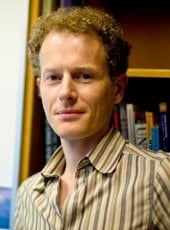
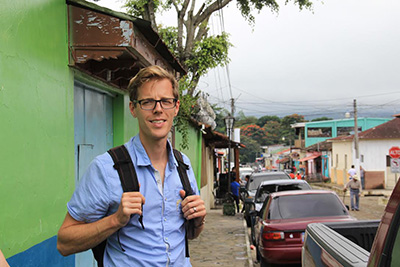
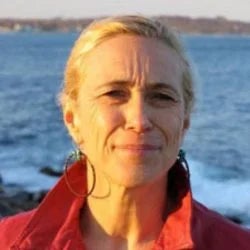
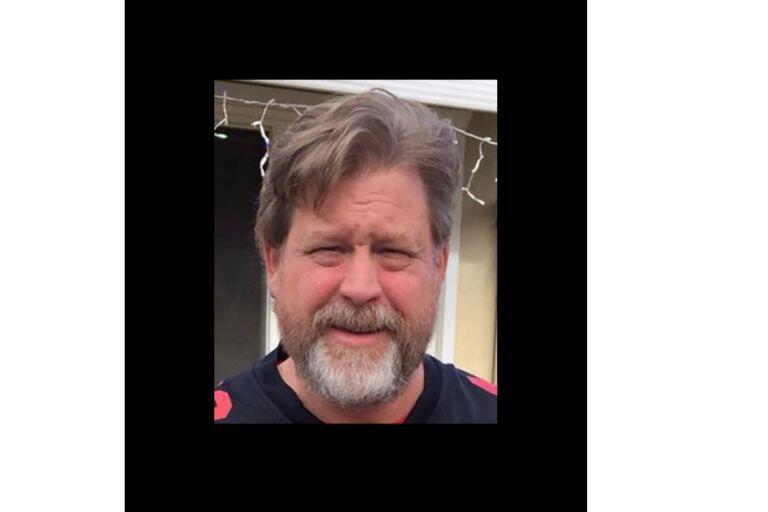
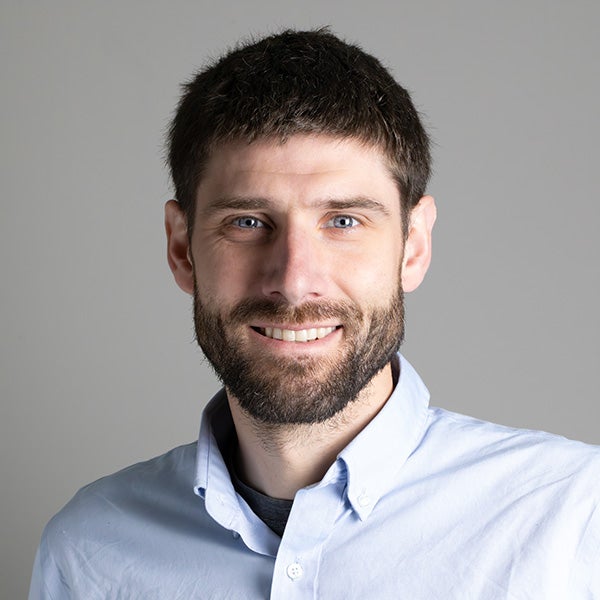
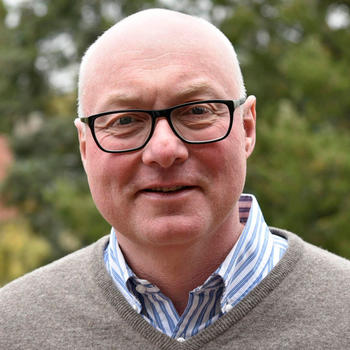
Simon Carn is a Professor in the Department of Geological and Mining Engineering and Sciences at Michigan Technological University, specializing in satellite-based monitoring of volcanic degassing and atmospheric pollution. His work leverages NASA satellite constellations to quantify sulfur dioxide emissions and their climate impacts. Education: PhD in Volcanology from Cambridge University MS in Volcanology and Magmatic Processes from Université Blaise Pascal BA in Earth Sciences from Oxford University Research Focus: Carn pioneers the use of space-borne sensors like OMI and TEMPO to measure volcanic SO 2 , ozone, and other trace gases. His research bridges satellite observations with climate modeling to understand sulfate aerosol formation, volcanic cloud transport, and anthropogenic pollution sources. Key methodologies include DOAS/FTIR remote sensing, satellite-ground data validation, and aviation hazard mitigation systems. Publication Trends: Recent work (2023-2025) centers on high-cadence monitoring via geostationary satellites (TEMPO, DSCOVR/EPIC), analysis of major eruptions (Hunga Tonga, Raikoke), and extending 20+ years of global SO 2 records. Research emphasizes volcanic-climate interactions, eruption response protocols, and quantifying underreported passive degassing that affects climate models.
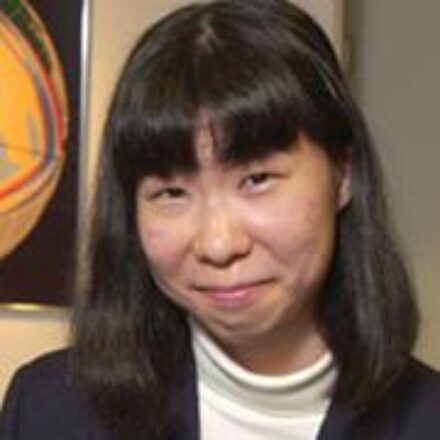
Miaki Ishii is a Professor of Earth and Planetary Sciences at Harvard University, affiliated with the Department of Earth and Planetary Sciences. She leads the Harvard Seismology Group and has held academic roles at Harvard since 2006, progressing from Assistant to Associate Professor and then Full Professor. Education: Ph.D. in Geophysics (2003), Harvard University Hon.B.Sc. in Physics (1998), University of Toronto Research Interests: Ishii specializes in seismic imaging of Earth's internal structure, including the mantle and core. Her work focuses on earthquake mechanisms, signal processing, and theoretical seismology. She uses seismic data to study rupture dynamics, subduction zone processes, and free oscillations of the Earth. Key Contributions: Notable projects include analyzing the 2011 Tohoku-Oki earthquake rupture, developing the DigitSeis software for analog seismogram digitization, and studying inner core anisotropy using normal mode splitting. Her research integrates high-performance computing and waveform inversion techniques. Awards: James B. Macelwane Medal (2009) Kavli Fellow (2012) Charles F. Richter Award (2008) Alice Wilson Award (2004) Labs/Teams: Directs the Harvard Seismology Group, collaborating internationally on seismic networks like Hi-net and USArray. Her work bridges computational seismology with observational geophysics.
Pengfei Wang is an Assistant Professor in the Department of Civil & Environmental Engineering at Old Dominion University (ODU). He holds a Ph.D. in Geotechnical Engineering and an M.S. in Statistics from UCLA, alongside a B.S. in Transportation Engineering from Tongji University. Prior to ODU, he conducted postdoctoral research at UCLA. His expertise focuses on Geotechnical Engineering , Engineering Seismology , and Applied Statistics , with emphasis on regional geo-hazard modeling, multi-hazards risk assessment, and statistical learning applications. Key research interests include seismic site response analysis, liquefaction susceptibility, and probabilistic risk frameworks for infrastructure resilience. Dr. Wang’s work integrates geospatial analysis and statistical methodologies to address challenges in earthquake engineering. He has developed frameworks for regional landslide and liquefaction risk assessments, particularly in vulnerable regions like California’s Sacramento-San Joaquin Delta. His contributions include advancing HVSR (Horizontal-to-Vertical Spectral Ratio) methodologies and ergodic site response modeling. He maintains active collaborations with institutions globally and contributes to open-source databases for seismic data, promoting transparency and reproducibility in geotechnical research. His educational background in transportation engineering enriches interdisciplinary approaches to civil infrastructure resilience.
Martin C. Chapman serves as Research Professor of Geophysics in Virginia Tech's College of Science, Department of Geosciences. He directs the Virginia Tech Seismological Observatory (VTSO), operating from a Cold War-era fallout shelter near the Virginia Tech Executive Airport. His research integrates observational seismology with earthquake hazard mitigation in plate-interior regions, particularly eastern North America. His educational background includes: Ph.D. in Geophysics, Virginia Tech (1998) M.S. in Geophysics, Virginia Tech (1979) B.S. in Geophysics, Virginia Tech (1977) Chapman's primary research focuses on plate-interior seismicity/tectonics and strong-motion seismology. He combines field observations from the VTSO network with global strong-motion data to investigate earthquake causes and wave propagation characteristics. Recent work emphasizes induced seismicity from aquifer recharge and wastewater injection, site amplification effects in sedimentary basins, and development of seismic monitoring networks for risk reduction in eastern North America. Analysis of his 2022-2025 publications reveals concentrated research on injection-induced seismicity in Virginia's Hampton Roads region, sediment thickness mapping of Atlantic/Gulf Coastal Plains for ground motion prediction, and advanced characterization of historical earthquakes (1886 Charleston) and recent sequences (2024 New Jersey, 2020 Sparta). His methodology integrates dense seismic arrays, machine learning detection algorithms, and geospatial analysis to refine hazard models. His scientific recognition includes: Jesuit Seismological Association Award for Contributions to Observational Seismology (2016) As VTSO director, Chapman oversees seismic monitoring across Virginia and leads the Hampton Roads Seismic Network initiative. His work involves significant collaboration with the US Geological Survey on coastal plain amplification studies and regional seismic hazard workshops. Current projects focus on optimizing earthquake detection during aquifer recharge operations and developing site-specific amplification models for eastern US infrastructure. Chapman's laboratory operations center on the VTSO's network of seismic stations, utilizing advanced techniques including reverse vertical seismic profiling and dense array backprojection imaging. His team's recent field deployments target induced seismicity monitoring in Southeast Virginia and detailed characterization of the Central Virginia Seismic Zone.
Keith D. Koper is a Professor in the Department of Geology & Geophysics at the University of Utah and serves as Director of the University of Utah Seismograph Stations (UUSS). He is also the editor-in-chief of The Seismic Record . His work integrates academic research with operational seismic monitoring and public safety initiatives across Utah and the Intermountain West. Education: PhD in Geophysics, Washington University, 1998 BA in Math, Geology, and ISP, Northwestern University, 1993 Dr. Koper's research focuses on array seismology, forensic seismology, deep Earth structure (especially the inner core), earthquake rupture imaging, ambient seismic noise, and seismic hazards in the Intermountain West, including mining-induced and urban earthquakes. His work combines observational seismology with advanced signal processing and machine learning techniques to improve detection, discrimination, and imaging capabilities. He has led or contributed to major projects involving the Wasatch Front, Yellowstone, and regional seismic networks. His recent research emphasizes machine learning for earthquake detection, high-resolution relocation of aftershock sequences (e.g., Magna 2020, Bluffdale 2019), microseism generation in lakes, and fine-scale imaging of the Earth's inner core using seismic reflections. His studies often involve interdisciplinary collaboration, particularly with mining engineering and geodesy. Dr. Koper's research has been consistently funded by federal and state agencies, including the National Science Foundation (NSF), U.S. Geological Survey (USGS), Department of Energy (DOE), Air Force Research Laboratory (AFRL), and the Utah Department of Public Safety. His publications reflect a strong trend toward integrating computational methods with traditional seismological analysis to tackle complex problems in both natural and induced seismicity. Scientific Service and Leadership: Editor-in-Chief, The Seismic Record Director, University of Utah Seismograph Stations Secretary, U.S. Air Force Seismic Review Panel Former Chair and Vice-Chair, Utah Seismic Safety Commission Dr. Koper mentors graduate students in seismology and geophysics, including recent advisees Sean Hutchings and Alysha Armstrong. His research group actively engages in both fundamental and applied seismological research, with strong ties to national labs such as Sandia. The group is involved in deploying portable seismic arrays, analyzing large datasets, and developing new algorithms for event detection and classification. The University of Utah Seismograph Stations, under his leadership, plays a critical role in monitoring seismicity in Utah and Yellowstone, producing real-time earthquake information, ShakeMaps, and public outreach materials. The station also contributes to national and international efforts in nuclear test monitoring and volcanic hazard assessment.
Prof. Flavio Anselmetti is a Full Professor of Quaternary Geology and Paleoclimatology at the University of Bern , where he has been employed since 2012. He also serves as the Managing Director of the Institute of Geological Sciences . Prior to this, he held significant roles at ETH Zurich, including SNSF Assistant Professor, and at EAWAG Dübendorf as Head of the Sedimentology Group, while remaining a Titular Professor at ETH Zurich until 2012. His academic training includes a Diploma in Geology (1990) from the University of Basel , followed by a PhD (1994) from ETH Zurich and University of Miami (USA) . He spent three years as a Postdoctoral Fellow and Research Associate at the University of Miami between 1994 and 1997. Paleoseismology : Using lacustrine and marine sediments to reconstruct earthquake and tsunami records Climate Change Studies : Investigating Holocene and Pleistocene climate shifts through sediment cores Sediment Dynamics : Analyzing source-to-sink systems and glacial sediment properties His recent publications focus on sedimentary archives in Science Advances , Quaternary Research , and Environmental Modelling and Software , with an emphasis on deep learning applications in sediment analysis , multi-proxy paleoenvironmental reconstructions , and human impact assessments over millennia. He has contributed to major projects in the Alpine foreland and Caribbean regions . Prof. Anselmetti leads the Quaternary Geology and Paleoclimatology Research Group and collaborates with international teams on ICDP-DOVE drilling campaigns and multibeam bathymetry mapping in Swiss lakes. His work extends to geohazard assessment , carbonate-siliciclastic shelf dynamics , and subaqueous fault analysis in active tectonic zones.
David Eaton is a Professor and former NSERC/Chevron Industrial Research Chair in Microseismic System Dynamics at the University of Calgary's Department of Geoscience. He holds a PhD in Geophysics from the University of Calgary (1992) and has published the textbook 'Passive Seismic Monitoring of Induced Seismicity'. Educational Background: PhD Geophysics, University of Calgary, 1992 MSc Geophysics, University of Calgary, 1988 BSc Geology and Physics, Queen's University, 1984 His research focuses on induced seismicity characterization, microseismic monitoring technology development, distributed acoustic sensing applications, physics-informed machine learning approaches, and lithospheric structure analysis. Current projects investigate earthquake triggering mechanisms during hydraulic fracturing and geothermal energy development. Publications show consistent focus on induced seismicity source characterization, monitoring methodologies, and geophysical applications for energy resource development. Recent work integrates machine learning with seismic monitoring to understand geological controls on induced seismicity. Scientific Awards: NSERC Synergy Award for Innovation (2020) J. Tuzo Wilson Medal, Canadian Geophysical Union (2020) CSEG Distinguished Lecturer (2019) Schulich School of Engineering Distinguished Collaborator (2019) University of Calgary Great Supervisor Award (2016) He leads the CREATE-REDEVELOP program training future leaders in responsible resource development and directs the microseismic research laboratory.
Steven Constable is a Professor of Geophysics at the Institute of Geophysics and Planetary Physics (IGPP) within the Scripps Institution of Oceanography at UC San Diego. He specializes in electrical conductivity studies of Earth’s crust and mantle, seafloor instrumentation development, and geophysical data analysis. His research focuses on understanding tectonic processes, subduction zone dynamics, and marine geohazards through electromagnetic methods. Education: B.S., University of Western Australia Ph.D., Australian National University Research Interests: Electrical conductivity of crust and mantle Seafloor instrumentation development Magnetotelluric and controlled-source electromagnetic (CSEM) methods Subduction zone fluid dynamics CO 2 sequestration monitoring Mid-ocean ridge magmatism Grants & Collaborations: NSF-NERC Collaborative Research: Magnetotelluric imaging of plume-ridge interactions (Galapagos) Magnetotelluric Investigation of the Salton Trough (MIST) Experiment PI-LAB Experiment at the Equatorial Mid-Atlantic Ridge Labs & Teams: He leads the Marine Electromagnetics Lab , developing cutting-edge instrumentation for marine geophysical surveys. His team collaborates globally on projects ranging from Arctic permafrost assessment to subduction zone imaging.
Dr. Thomas Goebel is an Assistant Professor at the Center for Earthquake Research and Information (CERI), University of Memphis. He holds a PhD from the University of Southern California (2013). His research focuses on induced seismicity, fault structure, and earthquake source processes, integrating rock mechanics, seismology, and hydrogeology. Key projects include studies on fault roughness effects, aftershock clustering, and induced seismicity mitigation. He leads the Earthquake Physics Group (EPG), comprising 1 PostDoc and 5 graduate students, and collaborates internationally on volcano monitoring and geothermal energy projects. Dr. Goebel has received the 2023 Tigers Ascending to Excellence Award. Education: PhD in Earth Sciences, University of Southern California, 2013. Research interests emphasize interdisciplinary approaches to understanding stress storage/release in the crust, earthquake size prediction, and fault responses to fluid perturbations. His work bridges laboratory experiments, numerical modeling, and statistical analyses to address fundamental seismological questions. Recent publications highlight contributions to induced seismicity spatial footprints, laboratory-based aftershock dynamics, and volcano-seismic network development. He actively mentors students, with recent accolades including NSF internships and travel awards. Labs/Teams: Earthquake Physics Group (EPG) at CERI, collaborating with institutions in France, El Salvador, and the U.S. on projects like volcanic seismic networks and fault hydrology studies.
Annette R. Grilli is a Research Professor in the Department of Ocean Engineering at the University of Rhode Island , focusing on ocean renewable energy and coastal hazard assessment. Her work integrates numerical modeling and statistical analysis to study extreme events like tsunamis and storms. Ph.D. in Climatology, University of Delaware (2000) M.S. in Oceanography, University of Liege (1984) B.S. in Geography & Education, University of Liege (1983) Her research spans offshore wind farm siting optimization , tsunami propagation modeling , and coastal erosion dynamics . Recent publications highlight applications of phase-resolving wave models and machine learning to coastal resilience and marine renewable energy systems. Grants include collaborations with NOAA , Department of Energy , and NSF , focusing on coastal hazard visualization , tsunami detection algorithms , and design elevation mapping under climate change scenarios. She contributes to digitalCommons@URI with over 100 publications in Ocean Engineering and Civil Engineering domains.
Sergey Fomel is a Professor of Geophysics at the University of Texas at Austin, holding the Wallace E. Pratt Professorship and serving as Director of the Texas Consortium for Computational Seismology (TCCS). He is affiliated with the Jackson School of Geosciences, Bureau of Economic Geology, and the Oden Institute for Computational Engineering and Sciences. His research focuses on seismic data analysis, computational seismology, and machine learning applications in geophysics. He leads the Madagascar software project for open-source geophysical data analysis. Dr. Fomel earned his Ph.D. in Geophysics from Stanford University in 2001. He has held leadership roles in the Society of Exploration Geophysicists (SEG), including Vice President, Publications (2017–2019) and Distinguished Lecturer (2020). His awards include honorary memberships in SEG and the Geophysical Society of Houston (GSH). Recent research emphasizes deep learning for seismic inversion, noise reduction, and fault segmentation. His work addresses challenges in geophysical data processing, including adaptive algorithms, wave propagation modeling, and CO2 monitoring. Fomel's contributions span both theoretical and applied domains, bridging computational methods with practical geoscience applications. Education: Ph.D. in Geophysics, Stanford University (2001) Affiliations: Jackson School of Geosciences, Bureau of Economic Geology, Oden Institute Labs/Teams: Texas Consortium for Computational Seismology (TCCS), Madagascar Project
Douglas Dreger is a Professor in the Department of Earth and Planetary Science at the University of California, Berkeley. His research focuses on seismic source analysis, wave propagation, Earth structure, and geophysical inverse problems. He primarily uses waveform data to investigate earthquake mechanics, stress orientations, and fluid-faulting interactions. Email: dreger@seismo.berkeley.edu His work spans diverse tectonic and geothermal environments, including the Ridgecrest earthquake sequence, Mendocino Triple Junction, North Korean nuclear tests, and The Geysers geothermal field. Recent studies examine graviquake hypotheses, long-period volcanic tremors, and stress drop validation through advanced inversion techniques. Dreger's publications reveal a strong emphasis on moment tensor inversion, fault geometry modeling, and seismic hazard assessment. He has contributed to understanding earthquake rupture heterogeneity, coseismic deformation, and 3D seismic simulations for hazard scenarios.
Brandon Schmandt is a Professor in the Department of Earth, Environmental and Planetary Sciences at Rice University, where he leads research using seismology to investigate Earth systems. His work integrates interdisciplinary approaches, data science, and numerical modeling to study tectonic processes, magmatic systems, and environmental interactions. His educational background includes a PhD in Geological Sciences from the University of Oregon (2011) and a BA in Environmental Studies from Warren Wilson College (2006). Dr. Schmandt's research focuses on seismology, tectonics, volcanology, and surface processes , with emphasis on seismic imaging of subsurface structures. His group employs innovative time-series analysis and field projects to resolve geologic history and contemporary Earth dynamics, particularly examining fault zones, magmatic reservoirs, and deep convective processes. Key methodologies include dense seismic arrays and machine learning applications. Analysis of his recent publications (2023-2025) reveals dominant trends in seismic event discrimination (earthquakes vs. explosions), magmatic system imaging (Yellowstone, Cascades), and global mantle structure studies. There is strong emphasis on induced seismicity, machine learning applications, and high-resolution imaging of Earth's discontinuities using dense arrays. His distinguished honors include: Aki Award of the AGU Seismology Section GSA Donath Medal AGU Macelwane Medal Body Dr. Schmandt directs an active research group conducting field projects across diverse settings including the Raton Basin, Yellowstone, Antarctica, and the Caribbean. While specific student advisees and grant details aren't provided in available materials, his group's work involves collaborative data collection, advanced computational modeling, and development of novel seismic analysis techniques applicable to both natural and anthropogenic seismic sources. The research program maintains focus on magmatic systems beneath volcanic regions, induced seismicity mechanisms, and global mantle structure using dense node arrays and interdisciplinary approaches to address fundamental questions in Earth dynamics.
Dr. Catherine Rychert is an Associate Professor in the Department of Geology and Geophysics at the University of Southampton, where she conducts cutting-edge research in seismology and marine geophysics. She is a member of both the Geology and Geophysics research group and the Southampton Marine and Maritime Institute, contributing significantly to our understanding of Earth's interior structure and dynamics through advanced seismic imaging techniques. Her research focuses on several key areas: Seismic imaging of lithosphere-asthenosphere boundary Subduction zone dynamics and slab structure Continental rifting processes Seafloor spreading mechanisms Mantle flow patterns and upwellings Development of novel seismic sensing technologies Dr. Rychert's recent publications (2023-2025) demonstrate a strong focus on applying advanced seismic techniques across diverse tectonic settings including subduction zones (Lesser Antilles, Cascadia, Hikurangi), mid-ocean ridges (Mid-Atlantic Ridge), and continental rift systems (East African Rift). A notable trend is her increasing use of distributed acoustic sensing technology for both terrestrial and planetary applications, showing interdisciplinary reach beyond traditional Earth science. Dr. Rychert actively supervises PhD students, including William Arnold Buffett working on the INSPIRE project. She has secured significant research funding from diverse sources including the European Union (EURO-LAB project), National Geographic Society, and Natural Environment Research Council (NERC). Her collaborative network includes Dr. Nicholas Harmon and Professor Derek Keir, with whom she frequently publishes. Her research team conducts fieldwork and data analysis focused on understanding fundamental Earth structure and processes through innovative seismic methodologies, contributing to both theoretical understanding and practical applications in hazard assessment and resource exploration.
Prof. Serge A. Shapiro is a Full Professor of Geophysics at Freie Universität Berlin since 1999 and Director of the PHASE consortium since 2004. He holds a Diploma in Applied Geophysics from Lomonosov Moscow State University (1982), a PhD from the Moscow Research Institute of Geosystems (1987), and a Habilitation from Karlsruhe University (1995). His research focuses on seismogenic processes, induced seismicity, rock physics, and subduction zone dynamics, with applications to geothermal energy, CO2 storage, and hydraulic fracturing. Education: Diploma in Applied Geophysics, Lomonosov Moscow State University (1982) PhD in Geophysics, Moscow Research Institute of Geosystems (1987) Habilitation, Karlsruhe University (1995) Research Interests: Induced seismicity from fluid operations CO2 storage and hydraulic fracturing risks Seismic hazard assessment Rock physics under stress Key Contributions: Developed the Seismogenic Index Model for induced earthquakes Pioneered DAS-based seismic monitoring techniques Advanced understanding of fault stability and pressure diffusion effects Awards: Virgil Kauffman Gold Medal (2013) for work in microseismic monitoring and rock physics Grants & Projects: PHASE consortium leader (2004–present) Utah FORGE EGS project advisor Labs/Teams: Seismology Group, Freie Universität Berlin PHASE university consortium