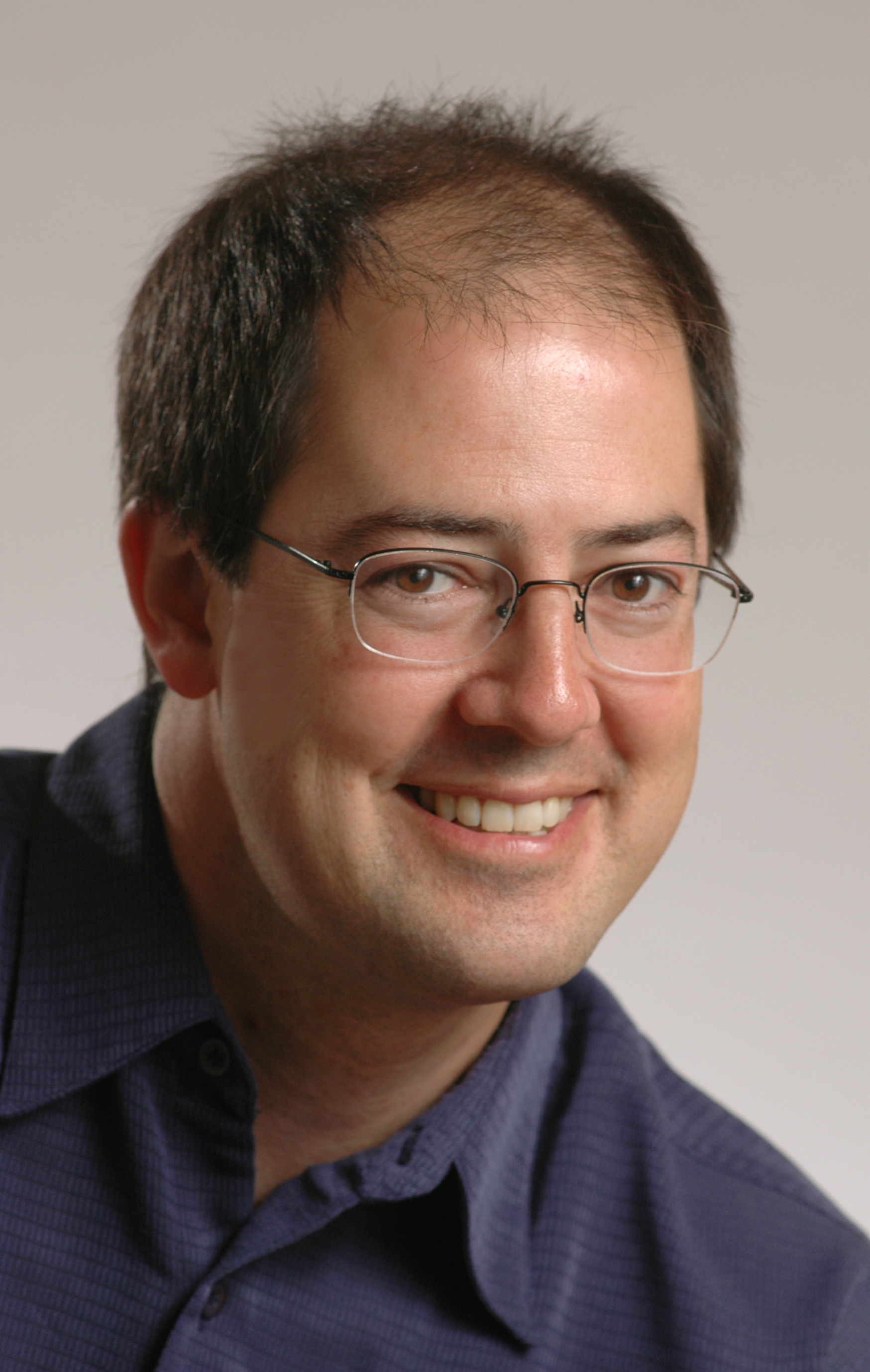
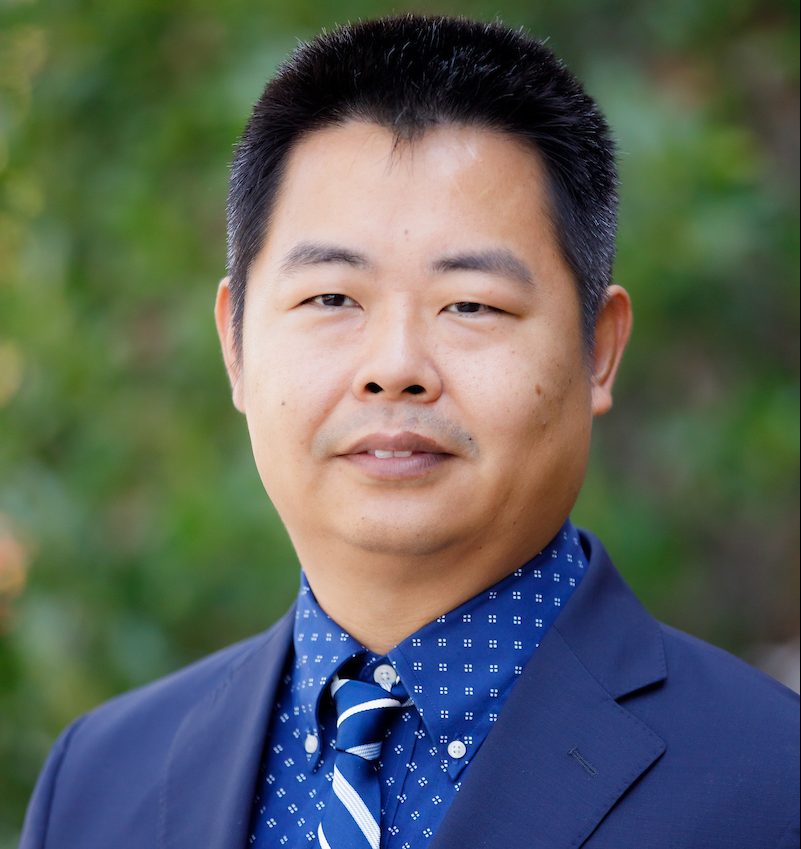
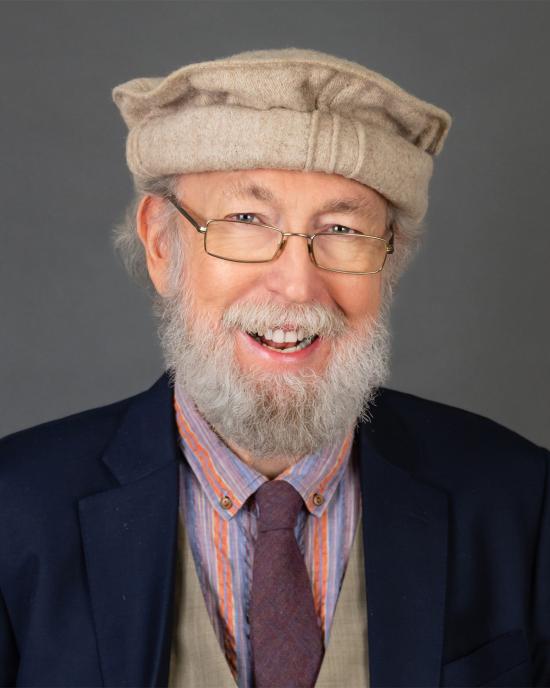
Jeroen Tromp serves as the Blair Professor of Geology and Professor of Geosciences and Applied and Computational Mathematics at Princeton University, where he also directs the Princeton Institute for Computational Science and Engineering (PICSciE). His work centers on theoretical and computational seismology with applications across Earth and planetary sciences. His research interests focus on imaging Earth's interior through advanced computational techniques. Key areas include surface waves, free oscillations, body waves, seismic tomography, numerical simulations of 3-D wave propagation, and seismic hazard assessment. His group develops open-source software for acoustic, elastic and poroelastic wave propagation, addressing problems in exploration geophysics, regional and global seismology, and helioseismology. Current research trends show strong emphasis on Mars seismology (InSight mission), iron spin crossover in the lower mantle, tilted transverse isotropy in Earth's inner core, and crosstalk-free waveform inversion techniques across multiple scales. Tromp actively mentors graduate students and leads collaborative projects involving seismic wavefield imaging across planetary bodies. His group maintains strong connections with NASA's InSight mission and develops computational frameworks for global centroid moment tensor inversions. The research team operates within the Department of Geosciences, leveraging high-performance computing resources through PICSciE to tackle large-scale inverse problems in seismology.
Adam Wickberg is a researcher in the Division of History of Science, Technology and Environment at KTH Royal Institute of Technology in Stockholm. He serves as co-director of the VR Excellence Centre for Anthropocene History and deputy director of the KTH Environmental Humanities Lab . His work critically examines the intersections of digitalization, sustainability , and the Anthropocene , focusing on their social, political, and historical dimensions. He leads the research project The Mediated Planet: Claiming data for environmental SDGs and has held visiting positions at the Max Planck Institute for the History of Science in Berlin. Education : Not explicitly stated His research spans media studies, environmental history, critical data studies , and postcolonial science and technology studies . Key themes include: Digital twins and marine futures AI ethics for climate justice Colonial histories of environmental data Temporal dimensions of Anthropocene governance Environing media as epistemological tools Planetary datafication systems Recent publications explore how data infrastructures shape environmental governance and how historical media practices inform contemporary sustainability challenges. He has contributed to journals like New Media and Society , Nature , and Critical Inquiry , while engaging in public debates through op-eds in Dagens Nyheter and Aftonbladet . Teaching : Courses include Artificial Intelligence and Sustainable Development (AK122V), Environmental History (AK2210), and The Anthropocene (AK126V). Labs/Teams : Leads the Environmental Humanities Lab and collaborates with the WASP-HS Community .
Kristofer Pister is a Professor in the Department of Electrical Engineering and Computer Sciences at the University of California, Berkeley. He co-directs the Berkeley Sensor and Actuator Center (BSAC) and the Ubiquitous Swarm Lab. His career spans groundbreaking innovations in Micro/Nano Electro Mechanical Systems (MEMS), Control Systems, and Low-Power Circuits, with a focus on Smart Dust and synthetic insects. Education: Ph.D. and M.S. in EECS from UC Berkeley (1992, 1989); B.A. in Applied Physics from UC San Diego (1986). His research areas include MEMS , Control Systems , Robotics , and Integrated Circuits , with recent work on self-powered micro-sensors, crystal-free radios, and interplanetary swarm networks. Key awards include the ISA Albert F. Sperry Founder Award (2009) , Alexander Schwarzkopf Prize (2006) , and the NSF CAREER Award (1996) . He has authored numerous influential publications in wireless sensor networks and microrobotics. His lab, Ubiquitous Swarm Lab , explores distributed robotics and swarm intelligence. Pister emphasizes open collaboration in research, ethical conduct in academia, and efficient resource utilization for graduate students.
Soumya Dutta is an Assistant Professor in the Department of Computer Science and Engineering at the Indian Institute of Technology Kanpur (IITK), where he leads the INSIGHT: Intelligent Scientific and Visual Computing of Big Data Research Group. He joined IIT Kanpur in October 2022 after working as a Scientist II at Los Alamos National Laboratory (LANL) from July 2019 to August 2022, and previously as a Postdoctoral Research Associate at LANL from June 2018 to July 2019. His educational background includes a Ph.D. and M.S. in Computer Science and Engineering from The Ohio State University (2011-2018), where he was part of the GRAVITY research group, and a B.Tech. in Electronics and Communication Engineering from West Bengal University of Technology, India (2005-2009). Research Interests: Dr. Dutta's research focuses on the intersection of machine learning, visual computing, big data, and high-performance computing. His primary research areas include Machine Learning for Visual Computing and Image Analysis, Big Data Visualization and Analytics, Data Science and HPC, Machine Learning for Scientific Computing, and Explainability and Interpretability of AI Models. His work addresses various big data characteristics including the 5 Vs: Volume, Velocity, Variety, Veracity, and Value. He develops techniques that make complex machine learning models more interpretable and explainable, enabling their effective adoption in real-life applications across scientific domains, social media, IoT, healthcare, and industry applications. Dr. Dutta's research group has secured multiple funded projects including: DAVi: An Intelligent Data Analytics and Visualization Framework (funded by ISRO), Intelligent Visual Computing of Extreme-scale Data for Accelerating Scientific Discovery (IIT Kanpur Initiation Grant), Enabling Interactive Big Data Analytics and Visualization at Exascale (SERB), Development of AI-Enabled National Portal for Efficient Search of Missing People (C3iHub), and Proactive and Generalized Deepfake Defense Mechanisms (C3iHub). Best Reviewer, Honorary Mention Award for IEEE Transactions on Visualization & Computer Graphics (TVCG), 2021 Best Paper Award at ISAV 2021, co-located with Supercomputing (SC) LAAP Award at Los Alamos National Laboratory, 2021 Best Paper Award at TopoInVis 2019 Best Paper Award at ISAV 2018, co-located with Supercomputing (SC) Best Poster Award in 12th Annual CSE Student Poster Exhibition, The Ohio State University, 2018 Best Poster Award in 11th Annual CSE Student Poster Exhibition, The Ohio State University, 2017 Best Paper Honorable Mention Award at IEEE Visualization Conference (IEEE VIS) 2016 Dr. Dutta actively mentors a large group of students including Ph.D., M.Tech., and B.Tech. students. His current Ph.D. students include Shanu Saklani, Sankhadeep Bhowmick, Ananya Chaturvedi, Arpita Santra, Anubhav Dixit (co-supervised), and Robin Shah. He has supervised numerous M.Tech. students with thesis topics ranging from uncertainty-aware neural networks to deepfake detection. Dr. Dutta currently teaches courses including CS360 - Introduction to Computer Graphics and CS661 - Big Data Visual Analytics. The INSIGHT research group collaborates internationally with researchers from Meta, Oak Ridge National Laboratory, and National Taiwan Normal University. The group's work focuses on building machine learning and data science-based solutions to analyze large-scale multifaceted data in a scalable way, enabling interactive and interpretable analytics of complex data from scientific simulations, social media, IoT, healthcare, and other application domains.
Dr. Jiaqi Gong serves as Associate Professor in Computer Science and Adjunct Associate Professor in Mechanical Engineering at The University of Alabama's College of Engineering, while directing the Alabama Center for the Advancement of Artificial Intelligence. His academic foundation includes: B.S. in Engineering, China University of Geoscience (2004) Ph.D. in Engineering, Huazhong University of Science and Technology (2010) Dr. Gong's research pioneers human-AI convergence through cyber-physical systems and smart health technologies, developing mobile/wearable platforms to enhance human perceptual, cognitive, and physical capabilities. His work spans artificial intelligence, machine learning, computer vision, and IoT with applications in healthcare, environmental monitoring, and education. The Sensor-Accelerated Intelligent Learning (SAIL) laboratory he founded drives innovation in behavior change interventions, human movement modeling, and educational data mining. Recent publications reveal strong interdisciplinary trends: healthcare AI dominates with medication adherence prediction and surgical classification systems, while environmental applications feature flood-risk communication and drought analysis. His work increasingly integrates generative AI and LLMs across domains, demonstrating methodological innovation in federated learning, knowledge graphs, and explainable storytelling frameworks. Notable recognitions include: Best Student Paper Award, IEEE/ACM Connected Health Conference (2022) Best Student Paper Award, Body Sensor Networks Conference (2019) Data Challenge Win, IEEE Biomedical Health Informatics (2018) Best Paper Award, Body Area Networks Conference (2014) Best Demonstration Award, IEEE Wireless Health Conference (2014) Dr. Gong leads significant funded projects including a $2M CDC/NIOSH grant for first responder safety and $3M NSF funding for hydrologic research. As SAIL laboratory director, he mentors students in developing clinically deployed technologies for multiple sclerosis, dementia, and mental health. Future work focuses on scaling AI applications in chronic disease management and climate resilience through the Alabama AI Center. The SAIL laboratory (founded 2017) operates as a multidisciplinary hub developing wearable/mobile systems for health applications, with active collaborations across medical clinics and engineering departments for real-world deployment of behavior change interventions and movement analysis tools.
Dr. Farha Sattar is a Lecturer in Education (Mathematics) at the Faculty of Arts and Society, Charles Darwin University. With over thirty years of teaching experience in Mathematics, Science education, GIS, Remote Sensing, and e-Learning technologies at undergraduate and postgraduate levels, Dr. Sattar brings extensive expertise to her academic role. She holds a PhD in Geospatial Science from Charles Darwin University, focusing on Spatial Mathematical Modelling for 3D Gully Mapping and Erosion Quantification. Her educational background includes: PhD in Geospatial Science (Three Dimensional Gully Mapping and Erosion Quantification within a Geoinformatics Framework), Charles Darwin University (2012) Prior academic experience at several Asian and European universities Dr. Sattar's research spans multiple interdisciplinary fields with a strong focus on the intersection of education and technology. Her primary research interests include Mathematics Education, STEM Education, Geoscience Education, Spatial Mathematical Modelling, Drone Technology, Remote Sensing, Geographic Information Systems, and Innovative Pedagogies such as experiential learning and inquiry-based approaches. She has developed expertise in cognitive development, particularly in fostering critical and creative thinking skills through iSTEM approaches. An analysis of Dr. Sattar's recent publications reveals a consistent trajectory toward integrating emerging technologies like drones, augmented reality, and geospatial artificial intelligence into educational contexts. Her work demonstrates a progression from foundational geospatial research on erosion mapping to innovative applications in STEM education. Recent publications increasingly focus on drone technology for educational purposes, spatial data infrastructure for policy development, and computational thinking development through technology-enhanced learning. Dr. Sattar has received numerous accolades for her contributions to education and research: NT Science Week Awards – Inspired NT STEM Hero of the Year award (2021) Long Service Recognition Award (2023) Finalist, CDU Alumni Award (2023) Multiple Best Presentation Awards (2008, 2010, 2017) Australian College of Educators - 2021 College Medal Nominee As a supervisor, Dr. Sattar mentors postgraduate research students including Ayesha Farhan, who is working on "A Framework for Cognitive Development: Fostering Critical and Creative Thinking Skills, Using iSTEM Approach." She actively secures research funding through various projects such as "DBELaSTEM: Drone-Based Experiential Learning and STEM Education," "STEM_D & VR: Youth STEM Learning and Empowerment with Drones and VR," and "CodProg Drone Lab." Her research is supported by grants from NT Government projects and other external funding sources. Dr. Sattar leads the CodProg Drone Lab, an innovative research space exploring drone technology applications in education. She is a certified drone pilot and aeronautical radio operator, which enables her to bridge theoretical knowledge with practical applications. Her work with the "Flying Forward: Drones, STEM Equity, and Indigenous Empowerment" initiative demonstrates her commitment to community engagement and addressing educational disparities through technology.
Angelo Peccerillo is a distinguished Full Professor of Petrology at the University of Perugia, Italy, with an extensive academic career spanning multiple Italian universities. He previously served as Full Professor of Petrology at the Universities of Calabria (1993-1997) and Messina (1985-1993), and as Associate Professor of Volcanology (1982-1985) and Assistant Professor (1971-1982) at the University of Florence. He earned his Laurea Degree in Geology from the University of Florence in 1970 and has been a member of Academia Europaea since his election. Peccerillo's research focuses on the petrology and geochemistry of magmatic processes, with particular expertise in igneous petrology, geochemistry, volcanology, orogenic volcanism, and continental rift magmatism. His scholarly work has established him as a leading expert in understanding the complex relationships between mantle processes, crustal interactions, and volcanic activity in the Mediterranean region and beyond. His research methodology integrates petrological, geochemical, and geophysical approaches to develop comprehensive models of magmatic systems. Analysis of Peccerillo's recent publications reveals a consistent focus on magmatic processes across diverse geological settings. His work spans from detailed studies of specific volcanic systems like the Aeolian Islands and Ethiopian Rift to broader investigations of mantle structure and geodynamic processes in the Mediterranean region. A recurring theme is the integration of multiple analytical approaches to model magma plumbing systems, understand mantle composition, and elucidate the geodynamic evolution of volcanic regions, particularly examining the relationships between deep and shallow mantle processes. Antonio Feltrinelli Price 2006 for Earth Sciences, awarded by the National Academy of Lincei, Italy Professor Peccerillo has supervised numerous MSc and PhD students both at his home institution and abroad. His editorial leadership includes serving as Chief Editor of the "European Journal of Mineralogy" from 2006 to 2008 and membership on the editorial boards of several prestigious journals including "Lithos," "Journal of Volcanology and Geothermal Research," "Geological Society of Italy Bulletin," and "Open Mineralogy Journal." He has been actively involved in research evaluation, serving on national and international panels for organizations such as NSF, ESF, CNR, MIUR, and NATO. Peccerillo maintains strong international scientific connections through visiting positions at institutions like the Australian National University, University of Gottingen, and University of Paris XI at Orsay. His leadership extends to professional organizations, having served as President of the Italian Petrology Group and currently as a Member of Academia Europaea. His administrative experience includes serving as Department Head and Coordinator of PhD programs at the Universities of Messina, Cosenza, and Perugia.
Professor David C. Dunand is a faculty member in the Department of Materials Science and Engineering at Northwestern University , where he leads the Dunand Research Group . His work focuses on mechanical metallurgy of advanced metallic materials, including alloys, composites, and foams, with applications in energy-efficient transportation and biomaterials. He also investigates additive manufacturing techniques like laser powder-bed fusion and 3D ink extrusion. Research Interests: Physical and mechanical metallurgy of multiphase metals Additive manufacturing (ink extrusion, selective laser melting) Green/sustainable metal production In situ X-ray tomography for microstructure analysis Metallic foams and scaffolds Thermoelectric materials Recent Publications show expertise in redox cycling stability, precipitation strengthening, and hierarchical microstructures, with applications in batteries, shape-memory alloys, and high-entropy systems. Awards: TMS Fellow (2012) Structural Materials Division Distinguished Scientist/Engineering Award (2008) Fellow, ASM International (2007) Department Teacher of the Year (1998) He has held leadership roles including Co-Director of the Initiative for Sustainability and Energy at Northwestern (2008-2015) and Visiting Professor at École Polytechnique Fédérale de Lausanne (2000). The group operates a SISMA MYSINT 100 laser powder bed fusion machine and collaborates extensively.
Anna Delin is a Full Professor at KTH Royal Institute of Technology since 2011, leading research on magnetic and quantum phenomena in materials. She heads the WISE research school (wise-materials.org) and served as Deputy Head of the School of Engineering Sciences (SCI) from 2018–2022. Her expertise spans condensed matter physics, with a focus on nanomagnetism, skyrmions, spin-lattice couplings, and topological materials. Education: PhD in Condensed Matter Physics from Uppsala University (1998). Key awards include Naturvetarpriset (1998), Royal Swedish Academy of Sciences Research Fellowship (2007), Thuréus Prize (2018), and Edlundska Prize (2024). She has held visiting roles at ICTP, Los Alamos National Lab, and the Fritz Haber Institute. Research interests include magnetic skyrmions, magnonics, spintronics, and ultrafast demagnetization. Recent publications focus on spin-lattice dynamics, topological materials, and quantum analogs of classical magnetic models. Her work bridges theory and experiment, with contributions to tools like SpinView for computational magnetism analysis. Teaching includes roles as examiner for the Degree Project in Applied Physics and teacher for Sustainable Development in Engineering Physics. She actively participates in materials design initiatives and semantic data processing for big research data. Lab affiliations include her own research group at KTH and collaborations through WISE. Current projects explore skyrmion stabilization, magnon entanglement, and quantum spin systems, with implications for next-generation spintronic devices.
Devis Tuia serves as Associate Professor at the Swiss Federal Institute of Technology Lausanne (EPFL), holding appointments in the Institute of Environmental Engineering (IIE) within the School of Architecture, Civil and Environmental Engineering (ENAC). He leads the Environmental Computational Science and Earth Observation Laboratory (ECEO) since 2020 and contributes to EPFL's Doctoral Program in Civil and Environmental Engineering. His academic journey began in Lausanne with studies at UNIL and EPFL, culminating in a PhD in remote sensing from UNIL. Postdoctoral research followed at institutions in Valencia, Boulder, and EPFL, focusing on machine learning model adaptation. He progressed from Research Assistant Professor at University of Zurich to Associate and Full Professor at Wageningen University before joining EPFL. Tuia's research bridges Earth observation with artificial intelligence, specializing in interpretable deep learning for environmental applications. His lab develops algorithms for making remote sensing accessible, with particular emphasis on digital wildlife conservation through automated censuses using drone and satellite imagery. Current projects tackle the 'black box' problem in environmental modeling while advancing spatial intelligence for sustainable urban development. His 2023-2025 publication portfolio reveals three dominant trends: (1) species distribution modeling using incomplete observations, (2) multimodal fusion of satellite/drone data with textual descriptions, and (3) interpretable AI frameworks for environmental decision-making. This work consistently addresses real-world challenges like wildfire forecasting and biodiversity monitoring. As an educator, Tuia supervises 12 current PhD students and has graduated 4 former EPFL doctoral candidates. His teaching portfolio includes Frontiers of Deep Learning for Engineers , Sensing and Spatial Modeling for Earth Observation , and Image Processing for Earth Observation courses. The ECEO laboratory maintains active collaborations with ESA-NASA initiatives and conservation organizations globally.
Michael R. Dove is the Margaret K. Musser Professor of Social Ecology and Professor of Anthropology at Yale University, where he also serves as Curator of Anthropology at the Peabody Museum and Co-Coordinator of the Combined YSE/Anthropology Doctoral Program. With over forty years of research experience, his work focuses on environmental anthropology, particularly the environmental relations of local communities in South and Southeast Asia. Dove earned his B.A. from Northwestern University and his M.A. and Ph.D. from Stanford University. His academic journey has spanned decades of field research in Asia, including more than a dozen years conducting long-term studies on human ecology in Borneo and Java, developing government research capacity in Indonesia, and advising the Pakistan Forest Service on social forestry policies. Professor Dove's research interests encompass the anthropology of climate change, cultural and political aspects of natural hazards and disasters, indigenous environmental knowledge and practice, environmental institutions and movements, history of environment-related sciences, and multispecies ethnography. His work often examines how local environmental systems interact with national and global markets, politics, and ideologies, with a focus on problematizing orthodox approaches to conservation and development. He has made significant contributions to understanding human-environment relations through both theoretical frameworks and practical applications. Dove's recent scholarly output demonstrates a progression toward more integrated approaches to environmental challenges, blending historical perspectives with contemporary issues. His publications increasingly focus on the intersections of climate change, social justice, and indigenous knowledge systems, while maintaining his longstanding interest in Southeast Asian environmental relations. The work shows a growing emphasis on post-humanist approaches and multispecies ethnography, reflecting broader trends in environmental anthropology while maintaining his distinctive focus on political ecology and institutional analysis. As an educator, Professor Dove has supervised numerous doctoral and master's students, many of whom have gone on to win research awards and secure prestigious positions. He organizes separate research labs for doctoral students from Yale School of the Environment and other departments, as well as for joint YSE/Anthropology doctoral students. His advisees typically conduct international research and have excellent records of obtaining research support both within and beyond Yale. The Dove Lab at Yale School of the Environment serves as a hub for environmental anthropology research, focusing on topics including natural resource management, property rights, power struggles, household energy transitions, and human-wildlife interactions. The lab fosters a collaborative environment with 30-50 students working on related issues each year, characterized by supportive peer dynamics rather than competition. It also contributes to policy and social change through its research and the work of its alumni.
Tiancheng Zhao is a principal researcher at the Binjiang Institute of Zhejiang University and founder of the Om Artificial Intelligence Laboratory (Om AI Lab), dedicated to frontier open multimodal AGI research for building next-generation agents that transform work and life through advanced human-machine interaction. His academic credentials include: Ph.D. in Computer Science from Carnegie Mellon University (2016-2019) under Prof. Maxine Eskenazi, Prof. Louis-Philippe Morency, Prof. William W. Cohen, and Dr. Dilek Hakkani-Tur, with pioneering dissertation “Learning to Converse With Latent Actions” in end-to-end generative conversational models M.S. in Computer Science from Carnegie Mellon University (2014-2016) B.S. in Electrical Engineering from UCLA (2010-2014) with Summa Cum Laude, focusing on speech signal processing under Prof. Abeer Alwan Dr. Zhao’s research centers on multimodal foundation models and agents, tackling three core challenges: Multimodal Models for cross-modal representation learning in high-dimensional data, Learning to Learn for effective skill acquisition from diverse signals (supervised labels, rewards, meta-learning), and AI Agents for open-world understanding and complex decision-making. His work bridges computer vision, natural language processing, and real-world applications including healthcare analytics and remote sensing. Analysis of his 50+ publications reveals accelerating innovation in multimodal large language models (2024-2025), with emphasis on stable vision-language architectures (VLM-R1), agent orchestration frameworks, and domain-specific applications in geospatial analysis and healthcare. Key trends include solving long-tail distribution challenges in satellite imagery, developing human-like zooming capabilities for multimodal LLMs, and creating unified benchmarks for autonomous GUI testing. His scientific recognition includes: National Breakthrough Technology Award by Ministry of Science and Technology (2021) Microsoft Research Best & Brightest PhD (2018) BEST PAPER AWARD at SIGDIAL 2018 Best Paper Nomination at SIGDIAL 2016 Top 1 Outstanding Bachelor of Science Award at UCLA (2014) As Om AI Lab founder, Dr. Zhao leads research teams developing computational building blocks for human-AI collaboration. While specific student mentorship details aren’t public, his extensive publication record with junior co-authors indicates active research supervision. Current projects focus on practical system implementations for real-world multimodal agent deployment across diverse domains.
Kati Kulovesi is Professor of Law at the University of Eastern Finland , specializing in International Environmental Law , EU Climate Law, and the intersection of climate change law with international economic law. She works closely with the 3E Center at the Brussels School of Governance, Vrije Universiteit Brussels , and Earth Negotiations Bulletin , with multidisciplinary collaborations in the Atmospheric and Climate Competence Center . Education: LL.M. from University of Helsinki and London School of Economics; PhD from LSE Research Focus: EU Climate Policy, Legitimacy in Climate Governance, Arctic Environmental Regulation, Carbon Market Mechanisms Professional Experience: Legal adviser for Finnish Government, World Bank, UN FAO, European Commission, Nordic Council of Ministers, IUCN, and World Resources Institute Publications span EU Climate Law, WTO-Environmental Disputes, Arctic Governance, and Short-Lived Climate Pollutants, with recent work on the European Green Deal and Fit for 55 Package . Her scholarship integrates legal theory with empirical analysis of climate policy implementation.
Lorenzo M. Polvani is the Maurice Ewing and J. Lamar Worzel Professor of Geophysics at Columbia University, with dual appointments in the Department of Applied Physics and Applied Mathematics and the Department of Earth and Environmental Sciences. He has taught at Columbia for over 30 years and received multiple teaching awards. PhD in Physical Oceanography, MIT/Woods Hole Joint Program (1988) MSc and BSc in Physics, McGill University His research spans Atmospheric Science , Climate Modeling , and Arctic Studies , focusing on geophysical fluid dynamics, radiative forcing, and climate sensitivity. Recent work examines nonlinear climate responses to CO2 variations, Arctic amplification mechanisms, and volcanic aerosol impacts. Scientific publications reveal trends in radiative forcing , Arctic sea ice dynamics , stratospheric ozone effects , and climate feedback interactions . Key tools include the ClimKern Python package for radiative feedback analysis. Notable research includes: Nonlinear precipitation responses to volcanic eruptions High CO2 forcing effects on North Atlantic Oscillation Cloud feedbacks reducing hydrological sensitivity Arctic amplification through radiative-advective equilibrium Stratospheric ozone impacts on tropical climate patterns
Andrew Markham is a Professor of Computer Science at the University of Oxford , affiliated with Kellogg College . He leads a research group focusing on Cyber Physical Systems (CPS) , specializing in sensors, signal processing, and machine learning to enable machines to better perceive the physical world. His work emphasizes cross-disciplinary collaboration, notably in wildlife tracking and indoor positioning systems. He has held roles as a Postdoctoral Fellow (2008-2012), Associate Professor (2013), and Full Professor (2021). Education : PhD in Electrical Engineering (University of Cape Town, 2008), BSc (Hons) in Electrical Engineering (2004). Research Interests : Tracking and localization in GPS-denied environments (e.g., underground, indoors), magneto-inductive systems, physics-informed machine learning, and data-driven approaches for noisy sensor data. His projects include wildlife monitoring via wireless sensor networks and mmWave radar for human motion capture. Key Projects : CARACAL acoustic monitoring system, mmPoint dense human tracking, and RandLA-Net for large-scale point cloud segmentation. His work spans robotics, environmental sensing, and biomedical applications. Advising & Grants : Supervises over 30 students and collaborates with industrial partners. Research teams include Cyber Physical Systems, Autonomous Ubiquitous Sensing, and Wildlife Monitoring initiatives. Labs/Teams : Leads the CPS research group, focusing on sensor networks, inertial navigation, and multimodal fusion systems. Collaborates with zoology and earth science disciplines on applied projects.