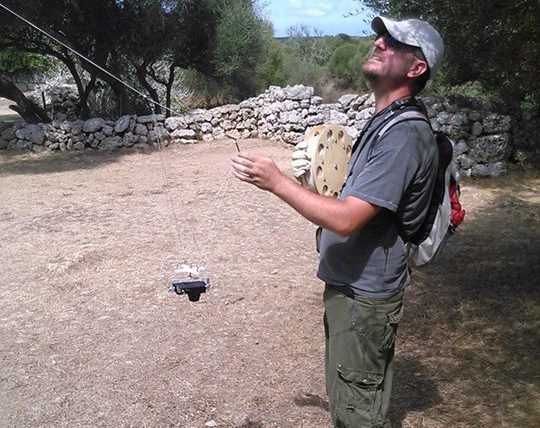
José Javier Martínez García is a Researcher at the University of Murcia specializing in Ancient History . With a multidisciplinary background in History, Anthropology, and Archaeology, he has conducted extensive fieldwork in Murcia, Egypt, and Menorca since 2004. Bachelor's in History (University of Murcia) Degree in Social and Cultural Anthropology (Catholic University of Murcia) Master's in Egyptology (Virtual Institute of Human Sciences) Doctoral research on Oxyrhynchus' Christian period (in progress) His research focuses on the transition to Christianity in the Iberian Peninsula and Egypt, with special attention to archaeological heritage management and advanced technologies for heritage dissemination . He co-directs excavation projects at Begastri and La Alberca, and participates in international missions at Oxyrhynchus and Heracleopolis Magna. Recent publications analyze figural graffiti , Christian epitaphs , and ritual fish deposits in Egyptian sites. He also contributes to Iberian archaeology through fieldwork at Los Villaricos and Coimbra del Barranco Ancho.
Christopher I. Beckwith serves as Full Professor in the Department of Central Eurasian Studies at Indiana University, Bloomington, a position he has held since 1994 after progressing from Lecturer (1976) to Associate Professor (1987) in the predecessor Department of Uralic and Altaic Studies. His international academic footprint includes visiting professorships at the University of Hawaii, National Museum of Ethnology (Osaka), Tokyo University of Foreign Studies, University of Vienna, and Sorbonne. His educational foundation comprises: Ph.D. in Inner Asian Studies, Indiana University (1977) M.A. in Tibetan, Indiana University (1974) B.A. in Chinese, Ohio State University (1968) Beckwith's research integrates historical linguistics and religious studies to examine cultural transmission across Eurasia, with concentrated expertise in ancient/medieval Central Eurasian-East Asian interactions, early Buddhist developments, Old Tibetan/Chinese linguistic reconstruction, and cross-cultural onomastics. His methodological approach combines philological precision with broad historical analysis to trace religious and linguistic diffusion patterns. His scholarly recognition includes the prestigious MacArthur Fellowship (1986) and KHK Visiting Research Fellowship (2011-2012), the latter supporting his project The Influence of Central Eurasian Religious Beliefs on the Cultures of the Periphery . While no formal advisees are documented in the source materials, his research has been sustained through major fellowships including the MacArthur and KHK grants. The absence of laboratory or team affiliations in the provided text suggests independent scholarly work focused on archival and textual analysis.
PD Dr. Georg Leube is a Senior Academic Councillor (Akademischer Oberrat) at the Chair of Islamic Studies within the Faculty of Linguistics and Literature at the University of Bayreuth. He completed his doctorate in Islamic Studies at the University of Bayreuth in 2014 and achieved his habilitation there in 2021. Since 2022, he has held his current position, following previous roles as an Academic Councillor (2016-2022), Deputy Chair of Islamic Studies (2018), and Acting Professor for Islamic Studies at the University of Hamburg (2020-2022). Dr. Leube's academic journey began with his doctorate in 2014, followed by postdoctoral work in the ANR/DFG-funded DYNTRAN project at the University of Marburg (2015-2016). His habilitation in 2021 qualified him for his current senior academic position. He has also held prestigious fellowships, including a 12-month membership at the Institute for Advanced Study in Princeton (2022-2023), supported by a Feodor Lynen Research Fellowship from the Alexander von Humboldt Foundation. Dr. Leube specializes in early Islamic history with particular focus on courtly representation in the 15th century. His research employs methodologically reflected approaches to pre-industrial Islamic cultural history, incorporating prosopography, iconography, epigraphy, textual criticism, material culture studies, and memory studies. He investigates Islamic and Islamicate historiography as a resonance chamber of polyphonic Muslim societies and examines transcultural interrelations in the post-antique extended Mediterranean region. His work often explores the interactions between Turkmen dynasties like the Aqquyunlu and various religious and ethnic communities, particularly Armenian populations in medieval Anatolia. Dr. Leube's scholarly output demonstrates a consistent focus on the political and cultural dynamics of medieval Islamic societies, particularly during the 15th century. His recent publications reveal a strong emphasis on the Aqquyunlu and Qaraquyunlu dynasties, their interactions with religious minorities, and the complex political landscape of Anatolia and surrounding regions. He combines traditional historical methods with innovative approaches from material culture studies and iconography to provide nuanced interpretations of historical sources. Among his notable achievements is the Feodor Lynen Research Fellowship from the Alexander von Humboldt Foundation, which supported his membership at the Institute for Advanced Study in Princeton. This prestigious fellowship recognizes his significant contributions to the field of Islamic studies and provides opportunities for advanced research in an international context. Dr. Leube has been actively involved in research projects throughout his career, including the ANR/DFG-funded DYNTRAN project on "Dynamics of Transmission: Families, Authority and Knowledge in the Early Modern Middle East." His current position as Senior Academic Councillor involves both teaching responsibilities and ongoing research. He has published extensively in leading journals and with major academic presses, establishing himself as a significant voice in the study of medieval Islamic history, particularly regarding Turkmen dynasties and their interactions with religious minorities. While specific laboratory or team information isn't prominently featured in his profile, Dr. Leube appears to collaborate with scholars across disciplines, as evidenced by his co-authored publications with researchers in linguistics, Semitic studies, and manuscript analysis. His work demonstrates engagement with international academic communities through publications in multiple languages and collaborations with scholars from various institutions.
Dr Simon Corcoran is Senior Lecturer in Roman History in the School of History, Classics & Archaeology at Newcastle University, where he has taught since 2016. He is simultaneously Co-Director of the long-standing Projet Volterra at University College London and, for the academic year 2023/24, a Fellow of the ERC-funded AntCoCo project based at the University of Bamberg. Education B.A. in Literae Humaniores, Christ Church, Oxford (1984) D.Phil. in Ancient History, St John’s College, Oxford (1992) M.Ar.Ad. in Archive Administration, University of Liverpool (1994) Research Interests Corcoran’s scholarship centres on the history and transmission of Roman law from the third to the seventh centuries and beyond. His work integrates legal, papyrological, epigraphic and manuscript evidence to trace how imperial constitutions were preserved, re-used and transformed across antiquity and the early Middle Ages. Particular focal points include the Tetrarchic and Constantinian periods , Greek and Latin epigraphy , Justinian’s codification programme , and the bilingual character of eastern imperial law . A recent strand investigates the reception of Roman legal manuscripts in the work of the twelfth-century English historian William of Malmesbury . Scientific Awards & Distinctions Henryk Kupiszewski Prize, Centro romanistico internazionale Copanello (1998) – silver medal for his monograph The Empire of the Tetrarchs Honorary Senior Research Associate, Department of History, University College London (2016–present) Co-Director, Projet Volterra, British Academy Project (2018–present) Research Leadership & Grants Since 1999 Corcoran has been a core member of Projet Volterra , directing the creation of comprehensive digital corpora of Roman imperial legislation. He assumed the co-Directorship in 2018, leading teams in the UK and abroad in reconstructing the Codex Gregorianus and Hermogenianus and tracking the palingenesis of constitutions across textual traditions. His year-long fellowship with the ERC Consolidator Grant AntCoCo (2023/24) enables concentrated research on legal continuity and change in the Constantinian era. Laboratories & Teams Corcoran collaborates closely with the Projet Volterra research collective, which unites classicists, legal historians and digital humanists at University College London and partner institutions to analyse Roman legal texts using TEI-compliant encoding and advanced database technologies.
Christine Hoet-Van Cauwenberghe is a Professor of Roman History at the University of Lille , affiliated with the Faculty of Humanities and History Department . She specializes in political and social history of the Late Republic and Early Roman Empire, with a focus on epigraphic studies. Current affiliation: University of Lille Research laboratory: UMR 8164 - History, Archaeology and Literature of the Ancient Worlds (HAL) Research Interests: Roman political and societal structures Greek and Latin epigraphy Belgian Gaul regional history Integration of archaeological and literary sources Publications: Recent works include the Chronicle of Belgian Gaul (2021) and a book on Rome and the Roman World for the French Society for Epigraphic Studies (2022). These publications emphasize provincial administration and epigraphic evidence.
Luca DE CURTIS is a Research Fellow at the Department of Humanities, Ca' Foscari University of Venice. His academic work focuses on philology, epigraphy, and paleography, with particular attention to Byzantine studies and cultural networks from the 9th to 10th centuries. University: Ca' Foscari University of Venice Department: Department of Humanities Academic Rank: Research Fellow Research Interests: DE CURTIS's research centers on graphic dislocations and book production in Byzantium, analyzing how these reflect broader cultural and intellectual networks during the early medieval period. His work intersects with philology, epigraphy, and paleography to decode historical manuscripts and inscriptions. Current Project: He is involved in the MIUR-funded PRIN project titled Book production, graphic dislocations and cultural networks in Byzantium in the 9th and 10th centuries , serving as a key team member (code LD) since 2022. The project spans 36 months and collaborates with researchers like Paola DEGNI. Scientific Awards: No specific awards mentioned in the provided texts. Advising and Grants: No students or formal advising roles listed. The project is funded by MIUR (Italy's Ministry of University and Research) under the PRIN program, highlighting his engagement with competitive national grants.
Dr. Astrid Schmölzer is a Research Associate at Otto-Friedrich University of Bamberg, working on the DFG Urban Research Project Neuenstadt am Kocher. She holds a PhD in Archaeology from the University of Graz (2020) and has held research positions at Graz including the FWF project 'Celtic God Names on Roman Inscriptions.' Her roles include membership in the university's Academic Advisory Board and Convention of Academic Staff. Her research focuses on: Roman provincial archaeology, especially Germania Inferior Iconography and epigraphy of goddess cults (Matronae) Artificial cranial deformation in Migration Period graves Digital archaeology and material culture studies Her publications reflect interdisciplinary approaches combining archaeology with anthropology, digital humanities, and pedagogy. Recent works explore Roman religious iconography, settlement archaeology at Neuenstadt am Kocher, and digital epigraphic resources. She has contributed to significant projects including: DFG Urban Research Project Neuenstadt am Kocher FWF project 'Celtic God Names in Germania Inferior' Digital Edition of Celtic divine epithets Development of archaeological classification thesauri As board member of the Working Group on Theories in Archaeology (TidA), she supports methodological discourse in the discipline.
Klaus Johan Myrvoll is a Professor of Nordic linguistics at the University of Stavanger, working within the Department of Cultural Studies and Languages in the Faculty of Arts and Education. He received his PhD in Old Norse philology with a focus on skaldic metre from the University of Oslo in 2015. His academic career centers on the intricate relationship between language, literature, and history in medieval Scandinavia. Professor Myrvoll's research interests span several interconnected fields of medieval Scandinavian studies. His primary focus is on Old Norse philology, particularly examining the metrical structures of skaldic poetry and the textual criticism of medieval manuscripts. He has made significant contributions to onomastics, investigating the origins and development of personal names and place names in the Norse world. His work on the etymology of Norway's name and the analysis of names like Erlingr and Erlendr demonstrates his expertise in historical linguistics. Additionally, he explores the historical contexts of sagas, challenging established theories about authorship and provenance, as seen in his work on Fagrskinna where he argues for a specifically Norwegian origin rather than the traditionally accepted Icelandic one. His publication record shows consistent scholarly output across multiple disciplines within medieval Scandinavian studies. Recent works examine everything from runic inscriptions on the Svingerud stone to the historical background of A.O. Vinje's writings. His research demonstrates both depth in specialized areas like dróttkvætt metre analysis and breadth across linguistic, literary, and historical aspects of Norse culture. Professor Myrvoll actively participates in the academic community through doctoral examinations, as evidenced by his role as second opponent for Þorgeir Sigurðsson's thesis defense. His work bridges linguistic analysis with historical and cultural interpretation, contributing to a more nuanced understanding of medieval Scandinavian literature and society.
Dr. Oliver Grimm is a Research Fellow at the Leibniz-Zentrum für Archäologie (Leibniz Center for Archaeology) in Schleswig, Germany, working within the Competence Area for Early Medieval Archaeology and Byzantium. Previously affiliated with the Zentrum für Baltische und Skandinavische Archäologie (ZBSA) from 2008 to 2023, his research spans interdisciplinary approaches connecting archaeology, anthropology, and history to explore human-animal relationships in Northern Europe. Dr. Grimm's research interests form an interconnected web of inquiry: Human-Animal Studies, with particular focus on bears, birds of prey, beavers, and elk in prehistoric and early historic societies North European Archaeology, emphasizing maritime history, social organization, and power structures Falconry history across Europe from the 5th to 18th centuries Interdisciplinary methodologies connecting natural sciences with humanities Runology and cultural interpretations of ancient inscriptions His methodological approach combines meticulous archaeological evidence with theoretical frameworks to reconstruct social practices and cultural meanings. Dr. Grimm has organized numerous international conferences that have generated significant interdisciplinary publications on topics like 'Bear and Human' and 'Raptor on the Fist,' creating vital dialogue across multiple academic fields. His work often challenges conventional interpretations, such as demonstrating that bear skin burials included both male warriors and high-status women during the Migration Period. Dr. Grimm's academic achievements include extensive publication in leading archaeological journals and edited volumes. His monographs 'Roman Period Court Sites in Southwestern Norway' (2010) and 'Großbootshaus – Zentrum und Herrschaft' (2006) established his expertise in North European social organization, while his more recent work has significantly advanced understanding of human-animal relationships. His collaborative approach is evident in numerous co-authored publications with scholars across disciplines and national boundaries. As an active member of the archaeological community, Dr. Grimm maintains profiles on Academia.edu, ORCID, and ResearchGate, and continues to organize major international conferences, with upcoming events planned through 2025. His commitment to scholarly communication and interdisciplinary collaboration makes him a significant figure in contemporary archaeological research focused on Northern Europe.
Dr. Andreas Rau is a researcher at the Leibniz Centre for Archaeology (Schleswig branch), specializing in non-Roman Central and Northern European archaeology. Since 2008, he has served as a scientific assistant and thematic coordinator for 'Man & Society' at ZBSA/LEIZA. His career includes previous research positions at Aarhus and Copenhagen universities (2005-2008) through the Carlsberg Foundation's 'Iron Age in Northern Europe' project. His research focuses on: Iron Age warfare and ritual practices Scandinavian war booty offerings Runic inscriptions and material culture Archaeological methodology and interpretation Notable publications analyze sites like Nydam and Thorsberger Moor, examining weapon deposits through interdisciplinary approaches combining archaeology, epigraphy, and scientific dating methods. Awards: Dr. Walther-Liebehenz Prize (2012) for prehistory research Dr. Rau maintains active scholarly networks across European institutions and contributes to academic discourse through publications, exhibitions, and collaborative fieldwork.
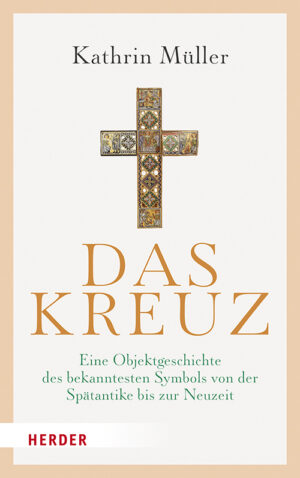
Kathrin Müller is a Professor of Visual Cultures of the Middle Ages at the Institute for Art and Visual History (Humboldt University Berlin). She explores intersections of medieval art with liturgy, theology, and scientific visualization, with particular expertise in astronomical diagrams and animal representations. Studied art history/history in Hamburg & New York Former Max Planck research scholar (2003-2005) Habilitated on late medieval animal depictions (2018) Research Themes include: Medieval diagrammatic knowledge systems Sacred object studies (crosses, reliquaries) Courtly visual culture (textiles, hunting motifs) Ornament theory and material semiotics Recent Publications analyze: Medieval cosmological diagrams (2025 article in preparation) Cultural duality in Italian silks (2024) Divine visualization through geometry (2014) Epigraphic practices on medieval objects (2014) Her 2022 monograph The Cross: A History of the Most Well-Known Symbol examines the Christian cross's paradoxical identity from late antiquity to modernity.
Lasse Christian Arboe Sonne serves as an Associate Professor at the SAXO Institute within the Faculty of Humanities at the University of Copenhagen. His academic profile centers on Viking Age societies and medieval Scandinavian history, with particular expertise in religious transformations and calendrical systems during this period. He maintains active scholarly engagement through research publications and teaching activities focused on early medieval Northern Europe. Professor Sonne's research spans Viking Age history, the evolution of religious practices in pre-Christian Scandinavia, and medieval timekeeping systems. His work integrates archaeological evidence, historical texts, and anthropological perspectives to analyze societal structures, settlement patterns, and cultural exchanges. Current investigations examine runestone inscriptions, Viking expansion dynamics, and the political narratives surrounding figures like Svend Estridsen, revealing complex interactions between indigenous traditions and external influences. His recent publications (2016-2017) demonstrate concentrated scholarship on Viking Age archaeology and medieval Danish society. Literature reviews critically assess works on Hebridean settlements, urban development, and numismatics, while book chapters explore political biography and literary representations of paganism. These outputs collectively highlight interdisciplinary methodologies bridging history, archaeology, and religious studies, with recurring themes of cultural memory, identity formation, and the material manifestations of religious change in medieval Scandinavia.
Dr. Pau Marimon Ribas is an Assistant Professor in the Department of History and Theory of Art at the University of the Balearic Islands, where he specializes in Ancient History with particular expertise in Mediterranean archaeology, Roman provincial administration, and the history of the Balearic Islands. His academic profile demonstrates a strong commitment to both teaching and research across undergraduate and graduate programs. Marimon Ribas's research interests span several interconnected domains within Ancient History, with particular emphasis on: Roman and Visigothic history of the Balearic Islands Mediterranean trade networks and amphora studies Epigraphy and paleographic analysis Roman provincial administration and integration The transition from Roman to Islamic rule in the western Mediterranean Gaulish-Roman relations and river trade networks His methodological approach combines traditional historical analysis with archaeological evidence and increasingly incorporates digital humanities techniques, as evidenced by his recent work using 3D modeling for epigraphic studies. Analysis of his publication record reveals a consistent scholarly trajectory focused on Mediterranean connectivity, with particular attention to trade networks and cultural exchange. His research demonstrates how local Balearic history connects to broader Mediterranean patterns, challenging insular perspectives. Recent publications show a shift toward more specialized epigraphic studies while maintaining his focus on Mediterranean integration. As an educator, Marimon Ribas teaches across multiple programs including the History degree (courses on Ancient History of the Balearic Islands, History of the Ancient East, Societies and Cultures in Antiquity), the Master's in Teacher Training, and the Master's in Mediterranean Studies. His teaching reflects his research interests while providing practical training in historical methodology and heritage management. His professional activities include membership in the Research into Ancient History (CIVITAS) R+D+I Group, demonstrating institutional research engagement. While specific grant information isn't detailed in available sources, his publication record indicates sustained research productivity across multiple venues including specialized journals in archaeology, history, and epigraphy.
Mevlüt POYRAZ is an Associate Professor in the Department of Islamic History and Arts at the Faculty of Theology, Artvin Coruh University, Turkey. He has served as an academician since 2016 following prior roles as an Imam-Hatip at the Presidency of Religious Affairs (2001-2004) and a teacher at the Ministry of National Education (2004-2016). His academic credentials include: Bachelor of Theology, Atatürk University (1996-2001) Master's in Islamic History, Atatürk University (2005-2009) Ph.D. in Islamic History, Atatürk University (2009-2015) Dr. POYRAZ specializes in Islamic historical studies with emphasis on early Islamic political structures , Prophetic biography , Ottoman regional history , and Crusader-era conflicts . His research critically examines primary sources including Quranic interpretations, hadith literature, and Ottoman-era documents to reconstruct historical narratives. He frequently investigates theological dimensions of historical events and analyzes socio-political dynamics in early Islamic governance. His recent publications (2023-2025) demonstrate a concentrated focus on Caliphal history, Battle of Karbala interpretations, and Ottoman-era Anatolian studies. Methodologically, he combines textual criticism with archaeological evidence (e.g., tombstone inscriptions) and cross-references Islamic sources with Christian historical accounts. Key thematic trends include political correspondence analysis, dream interpretation in early Islam, and regional Islamization processes in Northeastern Anatolia. Dr. POYRAZ has contributed to national research projects: Traces of Medicinal and Aromatic Plants in Ottoman Medical History in the Artvin Region (2022-2023) Ottoman Era Tombstones in OrtaHopa Cemetery (2022-2024) He served as Department Head in 2020 and teaches undergraduate courses including Islamic History I/II, Ottoman History, Siyer, and Turkish-Islamic Arts History. No doctoral or master's students are listed in available records.
Lennart Elmevik is a Professor at the Department of Scandinavian Languages at Uppsala University, specializing in Nordic linguistics, etymology, and place name research. His extensive academic career spans several decades with continuous scholarly contributions to the field of Scandinavian studies. Professor Elmevik's research interests focus on Nordic linguistics, etymology, place name research (toponymy), runology, historical linguistics, and Old Norse studies. His work demonstrates deep engagement with the evolution of Scandinavian languages, particularly through the analysis of place names and historical linguistic patterns across the Nordic region. His research often bridges linguistic analysis with cultural and historical contexts, providing insights into medieval Scandinavian society through language evidence. Analysis of Professor Elmevik's recent publications reveals a consistent focus on Scandinavian toponymy and historical linguistics. His work frequently examines Swedish and Norwegian place names, exploring their etymological roots and historical development. He has made significant contributions to understanding runic inscriptions and their linguistic implications. His research often connects linguistic evidence with broader cultural and historical contexts of the Viking Age and medieval Scandinavia, demonstrating interdisciplinary approaches that combine philology, archaeology, and cultural history. Throughout his career, Professor Elmevik has served in editorial capacities, notably for Scripta Islandica (1972-1979), and has contributed to numerous academic journals focused on Nordic languages and cultural history. He has participated in scholarly discussions about the reconstruction of lost words from place names and the interpretation of historical linguistic patterns across Scandinavia. Professor Elmevik has been active in academic communities, contributing memorials for colleagues and participating in ceremonies of the Royal Gustavus Adolphus Academy for Swedish Folk Culture. His work reflects a deep commitment to preserving and analyzing Nordic linguistic heritage through meticulous scholarly research.