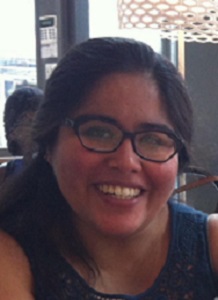
Grace Funsten is a Teaching Assistant Professor of Classics at the University of Pittsburgh. She holds a Ph.D. in Classics from the University of Washington (dissertation on Augustan elegy reception), an M.A. in Classics, and a B.A. in Classical Languages and French from Georgetown University. Her research focuses on Roman epigraphy, marginalized voices in classical texts, and gender/sexuality studies. She currently leads a book project on Roman columbarium inscriptions, exploring poetic practices of enslaved/freed populations. Funsten’s academic career includes postdoctoral fellowships at Harvard (Loeb Foundation, 2022–2024) and the American Academy in Rome (Emeline Hill Richardson/Arthur Ross Rome Prize, 2021–2022). She has taught advanced Latin at Davidson College and incorporates material culture in pedagogy, emphasizing ancient graffiti and burial inscriptions to reveal social realities. Her work bridges classical antiquity with early modern French poetry, particularly Louise Labé’s Élégies. Awards: Lambda Classical Caucus Graduate Student Paper Award (2022), CAWMS Presidential Award (2018) Grants: Rome Prize (2021–2022), Loeb Fellowship (2022–2024)
Julien Cooper is an Egyptologist, Nubiologist, and archaeologist currently serving as an ARC Future Fellow in the School of Humanities at Macquarie University. His research focuses on the archaeology of the Eastern Desert (Atbai) and the history of its nomadic peoples. He directs the 'Atbai Survey Project,' a fieldwork program surveying the vast deserts between the Nile and the Red Sea, aiming to shed light on the region's heritage from neolithic rock art to ancient Egyptian trade routes and medieval goldmines. Cooper completed his PhD in Egyptology at Macquarie University in 2016, followed by postdoctoral fellowships at Oxford (as an ERC Fellow) and Yale universities, and an Assistant Professor position at United International College-Beijing Normal University from 2020-2022. His educational background includes a PhD in Egyptology from Macquarie University (2016) with a dissertation titled 'Toponymy on the Periphery: Placenames of the Eastern Desert, Red Sea, and South Sinai.' His academic journey reflects a deep commitment to understanding the complex cultural landscape of Northeast Africa. Cooper's research interests center on Egypt & Nubia and the networks of connections across Northeast Africa, with specific focus on nomads in the region, survey archaeology, rock art studies, heritage conservation, Nubian history, foreign connections of ancient Egyptian state, Egyptian epigraphy, language contact, and Middle Egyptian language. His work reveals how nomadic peoples significantly influenced the political, economic, and environmental landscape of ancient Northeast Africa, challenging traditional 'Nile Narrative' perspectives that often overlook desert cultures. His recent publications demonstrate a growing trend toward interdisciplinary approaches combining archaeology, linguistics, and historical geography to understand cultural boundaries and interactions in ancient Nubia. Cooper's work increasingly focuses on heritage conservation in Sudan amid ongoing conflicts, reflecting the urgent need to document and protect vulnerable archaeological sites. ARC Future Fellowship 'Rescuing Pharaoh's Gold Mines: Archaeological conservation in Eastern Sudan' (2024-2028) Sir Douglas Newbold Archival Project: The Archaeology and History of Eastern Sudan Nomades et nomadismes au Sahara oriental (Égypte, Soudan, est libyen) Cooper has advised numerous students and collaborated extensively with Sudanese academics and scientists. His projects provide training in GIS and archaeological mapping for local communities in Sudan's Red Sea Province. He has organized workshops with UNESCO and international partners to develop strategies for cultural heritage preservation in conflict zones. His fieldwork with the Atbai Survey Project has established a significant presence in Eastern Sudan, with ongoing efforts to document and conserve archaeological sites threatened by looting and environmental degradation. He leads the Atbai Survey Project team, which conducts extensive fieldwork in the Eastern Desert, documenting rock art, ancient trade routes, and settlement patterns. His work has gained international attention through media coverage of discoveries like 4,000-year-old rock art depicting boats and cattle, which supports the 'Green Sahara' theory. Cooper actively engages with local communities in Sudan, incorporating indigenous knowledge into archaeological interpretations and ensuring research benefits the people whose heritage is being studied.
Marte Spangen is an Associate Professor of Historical Archaeology at UiT - Arctic University of Norway and affiliated with the Museum of Cultural History, University of Oslo since April 2023. Her research focuses on medieval archaeology, Sámi archaeology, and religious rituals, with a particular emphasis on cross-cultural interactions and sacred landscapes in northern Fennoscandia. She holds a PhD in Archaeology from Stockholm University (2016) and has held visiting research positions at the University of Cambridge. Her work combines osteological studies, isotope analysis, and historical sources to explore topics such as Sámi offering practices, medieval Christianization, and mobility patterns. Key projects include the Roads of the North (2018-2023), analyzing medieval territoriality, and the OSSO network studying Sámi offering sites. She teaches courses on archaeological theory, historical sources, and global archaeology at UiT. Recent publications address open access publishing trends in archaeology, the Ervika Runestone's significance in early Christianization, and the role of bear bones in Sámi rituals. She actively contributes to public archaeology through exhibitions and debates on metal detecting policies.
Valeria Di Clemente is an Associate Professor of German Philology and Linguistics at the University of Catania, Department of Humanities, and is based at the Special Teaching Structure of Foreign Languages and Literatures in Ragusa. She holds teaching responsibilities in Germanic Philology, Diachrony of Linguistic Change, and German Language within degree programs in Linguistic and Intercultural Mediation and Linguistic Sciences. Since March 2023, she has served as Chair of the Bachelor's program in Linguistic and Intercultural Mediation. Her academic journey includes a PhD from the University of Siena-Arezzo and prior roles as a fixed-term researcher at the same institution from 2011 to 2019. PhD in Germanic Philology and Linguistics, University of Siena-Arezzo (2004) Graduated in Foreign Languages and Literatures, University "G. d'Annunzio" of Chieti-Pescara (1999) National Scientific Qualification for Associate Professor (2015) C2 Certification in German, Goethe-Institut Freiburg (2002) Her research centers on medieval Germanic languages, with a focus on medical literature, historical linguistics, anthroponymy, and cultural influences in medieval Scotland. She investigates Early Scots, The Bruce, the Declaration of Arbroath, and the interplay between Germanic and other cultures. Her interests also extend to Old and Middle English, Old Norse, Middle Dutch, and contemporary adaptations of medieval texts. She emphasizes the pedagogical applications of historical linguistics in modern language learning. Her recent publications span topics such as Scandinavian runic inscriptions, medieval medical translations (e.g., Capsula Eburnea ), royal women in medieval Scandinavia, and narrative strategies in John Barbour’s The Bruce . These works reflect a consistent focus on textual analysis, cultural identity, and cross-linguistic contact in medieval Europe. Scientific Awards: Recipient of the Scardigli Prize (2011) for her monograph on 11th–12th century German medical-pharmaceutical texts. Valeria Di Clemente actively mentors academic work through her role in thesis supervision and research projects. She has led multiple funded research initiatives, including projects on Germanic heritage in medieval Scotland, medieval women’s status, and textual transmission of medical knowledge. She is a key organizer of the annual "Giornate Iblee della Germanistica" and has contributed to conferences on power, language, and gender. She is also co-director of the academic series Pronoéo (Agorà) and contributes biographical entries to the online Enciclopedia delle donne . Her lab and team involvement includes participation in the SWART research group and the PiACeRi 2024 EGEM project on Germanic and Mediterranean Europe.
Emilie Mineo is a researcher specializing in medieval writing practices, with a focus on diplomatics, archival reconstruction, and epigraphic analysis. Her work centers on medieval documentary culture, particularly chirographs (urban contracts) and epigraphic signatures in 13th-century Northern France, examining how dispersed archives can be reconstructed through traces of destroyed documents. Mineo's research reveals a deep engagement with the materiality of medieval writing, analyzing municipal archives of Tournai and Douai, epigraphic poems of Suger at Saint-Denis, and artist signatures in Romanesque abbeys. Her publications demonstrate consistent evolution from early studies on medieval artist signatures (2009-2017) toward sophisticated reconstructions of lost archival collections (2022-2023), with increasing emphasis on contract law, urban governance, and the interplay between text and materiality. Scientific awards: Prix de thèse du Collège des écoles doctorales de Poitiers (2017) Mineo has secured significant research funding as co-investigator in the ChiroN project (2017-2020) studying Nivelles' chirographs for urban governance. She maintains an active scholarly profile with 29 recorded academic activities (2009-2024), including organizing the 2024 symposium 'Les lieux de l’acte' and delivering invited lectures at Heidelberg University. Her work bridges historical, linguistic, and art historical methodologies to illuminate medieval documentary practices.
Martin Nodl is an Associate Professor in the Department of General Anthropology at Charles University's Faculty of Humanities, Prague, where he has served as a Research Fellow since 2011. Concurrently, he holds a Research Fellow position at the Centre for Medieval Studies (Academy of Sciences of the Czech Republic) since 2001, reflecting his dual institutional commitment to medieval scholarship. His educational trajectory includes: 2019: Habilitation at the Faculty of Humanities, Charles University 2011: PhD defense of thesis "Dekret kutnohorský" (Kuttenberg Decree) 2009–2011: External doctoral program at Masaryk University's Faculty of Arts 1988–1995: Undergraduate studies at Charles University's Faculty of Arts Nodl's research centers on the History and Theory of Historical Writing, Social History of the Late Middle Ages, and Late Medieval Doctrines and Mentalities. His work examines how medieval societies constructed historical narratives, navigated social transformations, and expressed religious worldviews, with particular focus on Bohemian-Czech contexts. He integrates anthropological frameworks to analyze cultural practices, institutional power dynamics, and collective memory formation in pre-modern Central Europe. His publication portfolio reveals consistent thematic evolution across three decades: early works established foundations in Kuttenberg Decree analysis (2010), followed by expanded explorations of medieval mentalities (2015), and culminating in recent interdisciplinary studies bridging historiography with anthropology (2020). Recurring motifs include ritual practices, urban social structures, religious conversion, and the political symbolism of medieval institutions. Nodl actively shapes scholarly discourse through editorial leadership, serving on boards for Studia z dziejów średniowiecza (Gdańsk), Forum historiae (Bratislava), and Studie mediaevalia Bohemica (Prague). His grant evaluation service for the Czech Academy of Sciences (2001-2003, 2006-2008) demonstrates institutional trust in his expertise. Since 1995, he has edited historical literature for Argo Publishers, contributing to public scholarly engagement. His research infrastructure operates through the Centre for Medieval Studies, where he collaborates with historians, archaeologists, and philologists on Central European medieval projects. Current initiatives emphasize transnational approaches to medieval ritual studies and the digital archiving of Czech historiographical traditions.
Prof. Dr. Manuel Bastias Saavedra is a faculty member at the Faculty of Philosophy , Leibniz University Hannover , affiliated with the Historical Seminar . He serves as Deputy Management at the Historical Seminar and represents professors in the Faculty Council. Additionally, he is a member of the Center for Atlantic and Global Studies . Academic Focus: Legal history, land rights, normativity in Iberian empires, and social inequality. Current Research: Explores ownership regimes, legal pluralism, and colonial legacies in Latin America and the Iberian Atlantic world. Recent Publications (2021-2025) address topics like: Global perspectives on Latin American legal history Land regulation in Iberian colonial contexts Normative frameworks beyond empire Ownership regimes and kinship Religious law in Iberian empires His work reveals strong interdisciplinary interests spanning legal history, colonial studies, and socio-economic inequality. The articles often examine hybrid ownership systems, legal normativity in colonial contexts, and the intersection of law with land and community structures across the Iberian world.
Nadia Jamil is a Senior Researcher at the University of Oxford's Faculty of Asian and Middle Eastern Studies, leading the ERC-funded Documenting Multiculturalism project (2018-2024). Her work focuses on interfaith coexistence in Norman and Hohenstaufen Sicily through Arabic legal documents. Position: Senior Researcher Project: Documenting Multiculturalism (2018-2024) Collaboration: University of Palermo Her research bridges two key areas: the early Arabian poetic tradition (5th-8th centuries AD) and the Arabic documentary archive of Norman Sicily (11th-13th centuries AD). Current outputs include a Lexicon of the Arabic of Norman Sicily and a companion volume on diplomatic practices. Recent publications analyze bilingual charters, gambling in pre-Islamic poetry, and linguistic acculturation signatures in Sicilian documents. The project's inter-relational database enables bottom-up historical analysis of multicultural Sicily.
Arjen Versloot is a full-time Professor of Frisian Linguistics at the Faculty of Humanities , University of Amsterdam . His research focuses on historical linguistics, phonology, morphology, and sociolinguistics within Germanic languages, particularly Frisian, Old English, and their interactions with Dutch and other regional languages. Research Interests : Historical development of Frisian and Germanic languages Phonological and morphological constraints Language contact and bilingualism Dialectology and sociolinguistic variation Language policy and preservation Publications highlight comparative studies across Germanic varieties, phonological evolution, morphosyntactic analysis, and sociolinguistic impacts of multilingualism. His work spans corpus-based historical dialectology, computational modeling of language change, and interdisciplinary approaches to linguistic documentation. Contact: a.p.versloot@uva.nl
Dr Nadine Viermann is an Associate Professor in the Department of History at Durham University and a member of the Institute of Medieval and Early Modern Studies, having joined in September 2021 after serving as Visiting Assistant Professor at Heidelberg University and a research fellow at the German Archaeological Institute in Istanbul. Her research centers on political decision making and communication within the East Roman monarchy of the 6th and 7th centuries, alongside sacred space construction and religious connectivity in the Late Antique Mediterranean. Dr Viermann earned her PhD from Konstanz University in 2020 following studies in Ancient History, Classical Archaeology, and Byzantine Archaeology at Heidelberg University. Her primary research interests include political communication, political decision making, sacred space, structural history, and urbanism. She is renowned for her structural analysis of Emperor Heraclius' reign in her monograph Herakleios, der schwitzende Kaiser and currently investigates relic translations in Constantinople through interdisciplinary approaches combining historical analysis with GIS mapping to reconstruct Christian sacred topography. Analysis of her recent publications reveals consistent thematic focus on East Roman political transformation, imperial authority, and religious spatial dynamics during the 7th century crisis period, with notable interdisciplinary integration of digital humanities methodologies in her relic translation project. No scientific awards listed. Dr Viermann supervises postgraduate researchers including Michael O'Ryan (focusing on Byzantine empresses from Theodora to Theodora Porphyrogenita) and actively leads major collaborative projects: co-editing Brill’s Companion to the Age of Heraclius with Phil Booth, Reading the Late Roman Monarchy with Johannes Wienand, and Empresses-in-waiting with Christian Rollinger, while co-founding a research network on the Cult of Relics in the Late Antique Mediterranean with Katinka Sewing. She co-established the international research network on Cult of Relics in the Late Antique and Early Medieval Mediterranean with Katinka Sewing, which convened its inaugural workshop at Heidelberg University in March 2023 to examine relic translations and sacred topography across Mediterranean societies.
Dr. Wojciech Pietruszka is an Assistant Professor at the Institute of Classical Philology and Ancient Culture , University of Wrocław, within the Faculty of Historical and Pedagogical Sciences . His research focuses on Ancient Egypt , Alexander the Great , Greek Epigraphy , and Hieroglyphs . His scholarly work explores the intersection of Hellenistic and Roman influence in Egypt, particularly through epigraphic and numismatic studies. He has co-organized international conferences such as Greeks, Romans and their Neighbours and Alexander the Great and Egypt , and contributed to edited volumes on Alexander’s legacy and historiography. Key publications include studies on the epigraphic curve in Alexandria , Persian-period coinage , and the reception of Alexander the Great across Roman, Byzantine, and Early Modern Egypt. Awards include the Rector’s Best Student Award (2004) and multiple Lanckoronski Foundation Scholarships .
Marlene Hennessy is a Professor of English at Hunter College, City University of New York, affiliated with the School of Arts and Sciences and the Department of English. She serves on Hunter's Council on Honors and specializes in medieval literature, manuscript studies, and religious culture. Her research spans Chaucerian contexts, late medieval Scottish manuscripts, and visual-liturgical intersections. B.A., Bard College Ph.D., Columbia University (2001) Andrew W. Mellon Post-Doctoral Fellow (2003-2004) Hennessy's research focuses on Middle English literature , medieval manuscript culture , and religious practices , particularly in Scottish and Carthusian contexts. She examines symbolic elements like blood piety , devotional imagery , and book ownership by diverse medieval communities. Her recent publications include An Index of Images in English and Scottish Manuscripts (2022) and studies on Charterhouse manuscripts. She has co-edited collections on medieval illuminators and is working on Blood Writing: Manuscripts and Metaphors in the Late Middle Ages , while preparing collaborative projects on merchant book ownership and late medieval women's roles. Scientific awards include the Donald Bullough Fellowship (2012). She has taught courses on Chaucer, Early British Literature, and Medieval Women, contributing to graduate and undergraduate education at Hunter College.
Lasse Mårtensson is Professor of Nordic Languages at Uppsala University's Department of Nordic Languages, specializing in medieval Nordic philology, paleography, and digital manuscript analysis. His current research focuses on scribal attribution, text transmission, and Nordic onomastics, with leadership roles in major projects like the Riksbankens jubileumsfond-funded 'Digitization of West Nordic Manuscripts' (2022–2025). Research Interests: Martensson's work spans three core areas: Grafonomy & Paleography : Developing computational methods to analyze scribal habits in medieval manuscripts using digital tools like quill-feature analysis. Textual Criticism : Critical editions of Old Norse/Icelandic texts (e.g., Codex Upsaliensis ) for the Medieval Nordic Text Archive (MENOTA). Onomastics : Quantitative study of personal names in medieval Swedish runic inscriptions, highlighting Viking Age naming traditions. Publication Trends: His 15 most recent articles (2010–2025) demonstrate a consistent focus on integrating digital humanities with traditional philology, particularly in scribal identification, orthographic analysis, and Old Norse textual studies. Computational paleography and quantitative approaches dominate his methodological innovations. Awards & Honors: Dag Strömbäcks belöningsfond (2015) for the monograph Skrivaren och förlagan . Westinska priset (2008) for his doctoral dissertation. Icelandic Ministry of Education Scholarship (1999–2000). Supervision & Projects: Advises PhD student Birger Mård on Old Swedish bynames. Secured 13.4M SEK (2016–2020) for the project 'Nya ögon på Sveriges medeltida skrivare,' applying digital paleography to Swedish medieval scribes. Co-investigator in 4+ international projects including 'Konungsbók Snorra Eddu' (Iceland, 2016–2018). Academic Service: Co-editor of Scripta Islandica (2013–present), chair of the Icelandic Society, board member of Svenska fornskriftsällskapet and Kungl. Humanistiska Vetenskaps-Samfundet, and coordinator of the Early North European Seminar (ENES).
Pragya Vohra is a Lecturer in Medieval History at the Department of History, University of York, where she is based at King's Manor. She previously held academic positions at Aberystwyth University (Lecturer in Early Medieval European History, 2013), University of Leicester (Teaching Fellow, 2012), and has taught at the Universities of York, Sheffield, and Hull. Her educational background includes a BA (with Honours) from St. Xavier’s College (University of Mumbai), an MA from the University of Mumbai, and MA/PhD from the Centre for Medieval Studies, University of York. Her research focuses on Viking Age social dynamics, with particular expertise in migration patterns, diaspora formation, and cultural memory processes across the British Isles and Scandinavia. Vohra's scholarly work examines how kinship structures sustained Viking diasporas in the North Atlantic, the memorialization of King Knut's reign, and regional identity development in Anglo-Scandinavian England. Her publications reveal consistent engagement with Scandinavian runic evidence, elite identity construction, and the intersection of historical memory with material culture, particularly through her discovery of the Tees Valley runic inscription. She has directed significant research initiatives including the Leverhulme Trust 'Impact of Diasporas on the Making of Britain' project (2014-2016) as Research Associate and Project Manager, and contributed to the AHRC 'Languages, Myths and Finds' project that identified England's eighteenth Scandinavian runic inscription. Vohra actively bridges academic research and public engagement through BBC History Extra and In Our Time podcasts, heritage trail consultancy, and exhibitions like the 'Coppergate Woman' sculpture project, demonstrating commitment to knowledge exchange beyond traditional academic boundaries.
Paul Kershaw is an Associate Professor in the Department of History at the University of Virginia, where he maintains an office in NAU 235 with office hours on Mondays from 12:30 PM - 1:30 PM and Wednesdays from 12:15 PM - 1:15 PM. His academic expertise focuses on North-Western Europe and the Mediterranean world in late antiquity and the earlier Middle Ages, with particular concentration on the period circa CE 700-950. His educational background includes a PhD from King's College, University of London, an MPhil in Medieval History from Jesus College, University of Cambridge, and a BA (Hons) in Medieval and Modern History from King's College, University of London. Dr. Kershaw's research interests encompass Carolingian Europe; post-Roman Britain; the Viking world; early medieval diasporas; political thought and practice; historiography; and travel, cross-cultural communication, and diplomacy. His scholarly work demonstrates a consistent focus on how political power intersected with cultural exchange and concepts of peace in the early medieval period, particularly examining how rulership was conceptualized through the lens of peaceful governance. Analysis of his publications reveals a sustained scholarly trajectory exploring the intellectual frameworks of early medieval political thought, with particular emphasis on how peace functioned as both an ideal and practical component of rulership. His work spans diverse geographical contexts including Frankish territories, Anglo-Saxon England, and the Viking world, consistently examining cross-cultural interactions and the transmission of political ideas across linguistic and cultural boundaries. Major Awards and Honors: Fellow of the Royal Historical Society (elected 2013) NEH/Richard A. and Sara Page Mayo Distinguished Teaching Professorship (2013-16) University of Virginia Alumni Board of Trustees Teaching Award (2005) Dr. Kershaw has made significant contributions to major collaborative online projects, most notably the CISP Database of Non-runic Inscriptions from Ireland, Scotland, Isle of Man, Wales, South-Western England and Brittany (400-1100 AD), demonstrating his commitment to digital humanities and accessible scholarly resources. His book Peaceful Kings: Peace, Power and the Early Medieval Political Imagination (Oxford University Press, 2011) represents a landmark contribution to the field, offering the first comprehensive scholarly exploration of the relationship between peace and rulership in early medieval political thought. His scholarly activities indicate active engagement with multiple research communities through his editorial work on collections such as Cities, Saints and Communities in Early Medieval Europe (Brepols, 2020), suggesting leadership within his academic field and commitment to fostering collaborative scholarly dialogue.