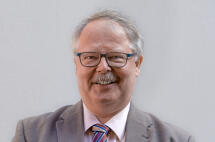
Ricardo Azambuja Silveira is a Professor at the Federal University of Santa Catarina, Brazil, with a distinguished research career spanning over two decades in the fields of multi-agent systems, intelligent tutoring systems, and semantic web technologies for education. His work bridges artificial intelligence with educational technology, creating innovative frameworks for adaptive learning environments and intelligent educational agents. Dr. Silveira's research interests focus on developing agent-based approaches to enhance educational experiences through technologies like BDI (Belief-Desire-Intention) architectures, ontology-based systems, and multi-context reasoning. His work particularly emphasizes the integration of intelligent agents with learning management systems to create personalized educational experiences. His recent publications demonstrate a continued evolution from foundational multi-agent frameworks to sophisticated neural-symbolic integrations and context-aware educational technologies. Throughout his career, he has published over 60 scholarly works, with consistent output from 2001 through 2024, demonstrating sustained research productivity. His publication trends show a clear trajectory from early work on JADE (Java Agent Development Framework) for distance education to current research on neural-symbolic integration in agent systems. The majority of his publications appear in prominent conferences like PAAMS, MICAI, and ICAART, reflecting his standing in the multi-agent systems community. Dr. Silveira has mentored numerous researchers who have become his frequent collaborators, including Arnoldo Uber Junior, Rodrigo Rodrigues Pires de Mello, and Thiago Ângelo Gelaim. His research has been supported through various academic grants that enabled the development of frameworks like Sigon (a multi-context system framework) and iEnsemble (for committee machine learning). He has been actively involved in the organization of academic events, particularly the Methodologies and Intelligent Systems for Technology Enhanced Learning (MIS4TEL) conference series, where he has served as both participant and organizer. His work contributes significantly to the theoretical foundations and practical implementations of intelligent educational technologies.
Ulrich Schroeders is a Professor of Psychological Diagnostics at the University of Kassel, where he has been employed since October 2017. His work focuses on developing and validating psychological assessment tools, with particular expertise in cognitive diagnostics and educational measurement. He teaches various programs for approximately 500 students annually and serves as a supervisor for teacher training students preparing for their oral state examinations in Pedagogy/Psychology. Dr. Schroeders earned his PhD from Humboldt University of Berlin in 2010 with a dissertation titled "Measurement of Cognitive Abilities Using Modern Technologies: Artifacts, Equivalence, and New Constructs." Prior to that, he completed his Diploma in Psychology at Julius-Maximilians-University Würzburg in 2004 with a thesis on diagnosing dyscalculia in first-grade students. His research spans several key areas in psychological assessment. He specializes in technology-based competency diagnostics, developing innovative methods for measuring cognitive abilities and school competencies. A significant portion of his work involves applying Machine Learning and metaheuristics to psychometric problems, particularly in structural equation modeling. His methodological expertise includes advancing techniques in Local Structural Equation Modeling (LSEM) and Meta-Analytic Structural Equation Modeling (MASEM), with applications across educational and clinical psychology contexts. Analysis of Dr. Schroeders' recent publications reveals a strong focus on computational approaches to psychological assessment. His work frequently employs optimization algorithms like Ant Colony Optimization and Bee Swarm Optimization to address challenges in test construction and validation. There's a clear trajectory toward game-based and technology-enhanced assessment methods, as seen in studies using Mastermind and Wordle as assessment tools. His research also demonstrates growing interest in applying machine learning to predict behavioral outcomes, including juvenile delinquency, suicide risk, and psychotherapy outcomes. Dr. Schroeders has secured significant research funding, including projects funded by the German Research Foundation (DFG) and the Hector Foundation. His current projects include "Facing the Replication Crisis in Machine Learning Modeling" (2025-2027) and "PINGUIN: Potenzialidentifikation IN der GrUndschule" (2024-2027), which focuses on identifying elementary students' initial competencies. He leads the development of the BEFKI assessment system (Berliner Test zur Erfassung fluider und kristalliner Intelligenz), which includes versions for different age groups (5-7, 8-10, and 11+). His methodological toolbox includes specialized approaches for test construction and validation, particularly focusing on optimization algorithms applied to psychological measurement problems.
Cengiz Hakan Aydin , PhD, is a full professor at Anadolu University in Turkey, where he has been a faculty member since the early 1990s. He currently serves as the Head of the Distance Education Department in the Faculty of Open Education and is the Director of the OpenAnadolu Project , which includes the AKADEMA MOOCs platform. Additionally, he holds the role of Director of the Office of Learning and Teaching Enhancement at Özyeğin University . Dr. Aydin’s research is centered on the design and development of open and distance learning (ODL) environments. His work explores the integration of emerging technologies such as AI, VR, AR, and MR into educational systems. He is deeply engaged in the study and promotion of Open Educational Resources (OER) , Open Educational Practices (OEP) , and Massive Open Online Courses (MOOCs) . His scholarly contributions also address current trends and challenges in higher education. Dr. Aydin has held leadership roles in several international organizations. He served as President and Board Member of the International Division at the Association for Educational Communications and Technology (AECT) , and as a Board Member of the International Council for Educational Media (ICEM) . He is currently a Steering Committee Member of the OpenupEd initiative under the European Association of Distance Teaching Universities (EADTU) , and a member of the AECT Board and the Centre for Distance Education Research (COER) . He is actively involved in editorial work, serving on the boards of International Review of Research in Open and Distance Learning (IRRODL) , Educational Media International (EMI) , and Journal of Open, Distance, and Digital Education (JODDE) . Research Projects and Grants: Volkswagen Foundation – AI in Education (AIEd) : Local researcher. Erasmus+ CRED4TEACH (MOOC-based micro-credentials for teacher professional development): Leading researcher at Anadolu University. Erasmus+ ADMIT (Generative AI and Large Language Models in Higher Education): Researcher. Anadolu University Internal Funds – Multiple projects including AI-based tools for writing skills, intelligent personal education coach, and automated grading systems for open-ended questions. Dr. Aydin serves as both Project Coordinator and Researcher . Labs and Teams: Dr. Aydin leads the OpenAnadolu Project , which encompasses platforms like AKADEMA and serves as a hub for innovation in distance education and MOOC development at Anadolu University.
Michael Beaney is Regius Professor of Logic at the University of Aberdeen, holding this position since June 2020. He also maintains a half-time position as Professor of History of Analytic Philosophy at Humboldt University in Berlin (since 2016). Previously, he served as Professor of Philosophy at King's College London (2016-20, part-time), Reader and then Professor of Philosophy at the University of York (2005-15), and held positions at the Open University, University of Manchester, University of Leeds, Birkbeck College London, and University of Sheffield. In Germany, he has held Alexander von Humboldt Research Fellowships at the University of Jena and University of Erlangen-Nürnberg. He has been actively engaged with Chinese academia since 2011, serving as Visiting Professor at Peking University and currently as Visiting Chair Professor at Tsinghua University, while also chairing the British Committee of the Summer School in China Programme. Beaney received his undergraduate education in PPE at St. Catherine's College, Oxford (1978-81), followed by a B.Phil. (1985) and D.Phil. (1990) in Philosophy from the same institution. He also holds an MA from the University of Keele (1983). Professor Beaney's research spans several interconnected areas within philosophy. His primary focus is on the history of analytic philosophy, with special attention to the works of Frege, Wittgenstein, Stebbing, and Collingwood. He has made significant contributions to understanding the development of analytic methodology and the historiography of philosophy. His work on Chinese philosophy explores ancient Chinese philosophy of language and logic, as well as the development of Chinese analytic philosophy, representing an important bridge between Eastern and Western philosophical traditions. Beaney is particularly interested in philosophical methodology, especially the role of analysis and creativity throughout the history of philosophy. His comparative work examines Chinese-Western philosophical comparisons and the philosophy of comparison itself. Additionally, he has made notable contributions to the theory and practice of philosophical translation, particularly between German-English and English-Chinese. Beaney's recent publications demonstrate a consistent focus on the history and methodology of analytic philosophy. His work frequently examines the intersection of historical analysis with contemporary philosophical concerns, particularly regarding conceptual creativity and the evolution of philosophical ideas. A significant portion of his recent scholarship addresses translation issues in philosophy, especially concerning Frege's works and Chinese philosophical texts. His editorial work on the British Journal for the History of Philosophy for nearly a decade reflects his commitment to advancing scholarly discourse in the field. Michael Beaney currently serves as President of the Society for the Study of the History of Analytical Philosophy (SSHAP). He was Editor of the British Journal for the History of Philosophy from 2011 to 2020 and remains on the Editorial Board as an Associate Editor. He serves on the Editorial Board of Russell: the Journal of Bertrand Russell Studies and on the Advisory Boards of the Journal of Chinese Philosophy and the Journal for the History of Analytical Philosophy. Beaney is General Editor of a book series on the history of analytic philosophy published by Palgrave Macmillan (30+ volumes) and Co-Editor of a new book series entitled 'New Texts in the History of Philosophy' published by Oxford University Press. He has been a member of the AHRC Peer Review College since 2010 and is a Fellow of the Royal Society of Arts. Professor Beaney welcomes PhD students in all areas of his research expertise, particularly in history of analytic philosophy, Chinese philosophy, philosophical methodology, historiography of philosophy, comparative philosophy, and philosophical translation. His extensive editorial experience and leadership roles in professional organizations provide valuable mentorship opportunities for graduate students. While specific grant information isn't detailed in the provided text, his ongoing research projects, international collaborations (particularly with Chinese institutions), and editorial work suggest substantial research activity supported by various funding mechanisms. Though not explicitly mentioned as leading a specific laboratory, Beaney is deeply involved in several collaborative research initiatives. His work with Prof. Karyn Lai (UNSW) on ancient Chinese epistemology represents an important international collaboration. His leadership of the British Committee of the Summer School in China Programme fosters ongoing academic exchange between British and Chinese philosophers. Additionally, his editorial roles with multiple journals and book series create virtual research communities centered around the history of analytic philosophy.
Prof. Dr. Susanne Kuger is a Professor for Empirical Social and Educational Research in Childhood and Adolescence at the Faculty of Psychology and Education, Ludwig-Maximilians-Universität München (LMU). She serves as Research Director and Acting Head of Department at the Center for Continuous Monitoring and Methods , German Youth Institute (DJI). Her work focuses on educational processes in life-course-specific learning environments, survey methodology in cross-national comparative studies, and pandemic-related educational adaptations. Key academic roles: LMU Professor (2022–present), DJI Research Director (2023–present) Research areas: Educational contexts, early childhood development, international comparative studies Current projects: "Growing Up in Germany: Everyday Worlds" (AID:A), "Corona-KiTa Study", "EarlyMath" Research Highlights : Her 15+ recent publications (2016–2023) address pandemic impacts on childcare quality, instructional practices, home learning environments, and methodological innovations in educational surveys. Collaborative projects span Germany-wide studies on daycare infection patterns, mathematical development, and policy frameworks for educational equity. Leadership : She leads the NEPS research group "Educational Processes in Life-Course-Specific Learning Environments" and chairs multiple methodological advisory boards. Her methodological expertise includes anchoring vignettes, thin slices technique, and longitudinal data analysis.
Univ.-Prof. Dr. Katja Heim is a prominent academic in the field of English Didactics, currently serving at the Institute of English Philology (WE6) at Freie Universitaet Berlin . With extensive experience in primary and secondary English education, her work focuses on social inclusion , learner autonomy , and hybrid/digital learning environments . She has held various academic positions including Freie Universitaet Berlin since 2024, after roles at Duisburg-Essen and other institutions. PhD in English Didactics Specializes in project-based teacher education Expert in bilingual learning in primary schools Her research emphasizes democratic classroom practices , multimodal texts , and technology integration in language teaching. Notable contributions include coordinated projects on digital media in teacher training and publications on inclusive education strategies. While her recent articles highlight hybrid learning and learner autonomy frameworks, her career spans over two decades of academic development in English education. Key research trends include: Blended learning implementation Bilingual education models Action research methodology
Fani Lauermann is a Professor of Empirical Educational Research and Educational Psychology at the University of Bonn, where she is affiliated with the Bonn Center for Teacher Education (BZL). She also serves as a Co-opted Member of the Department of Psychology at the University of Bonn and maintains a research affiliation with the Institute for Research on Education and School Development (IFS) at TU Dortmund University. Her work bridges educational psychology and teacher education through empirical research on motivation and learning processes. Dr. Lauermann earned her Ph.D. from the Combined Program in Education and Psychology at the University of Michigan (2008-2013) following her Diplom-Psychologist degree at the University of Bonn, Germany (2001-2006). Her academic journey includes postdoctoral research in the Gender and Achievement Research Program (GARP) at the Institute for Social Research at Michigan. Her research program centers on three interconnected domains: academic motivation and achievement, educational trajectories and occupational choices, and teacher motivation and teaching quality. She frequently applies expectancy-value theory to understand motivational processes across educational contexts, with particular attention to gender differences in academic choices. Recent methodological approaches include longitudinal designs, multilevel analyses, and cross-cultural comparisons, often examining how students' and teachers' beliefs influence academic trajectories and outcomes in math-intensive study programs. Analysis of her recent publications (2022-2025) reveals a strong focus on gender disparities in educational choices, particularly in STEM fields, as well as the role of comparative processes in forming academic self-concepts. Her work increasingly examines teacher self-efficacy, responsibility beliefs, and their impact on classroom processes, with growing attention to online learning environments and their implications for student motivation and belonging. Dr. Lauermann has held significant editorial positions including Associate Editor for Learning and Instruction (2018-2021) and editorial board membership for Journal of Educational Psychology, Journal of Learning and Instruction, Contemporary Educational Psychology, and Educational Psychologist. She served as elected coordinator for EARLI SIG-08 "Motivation and Emotion" from 2017-2021, representing members from over 30 countries. Dr. Lauermann advises several graduate students who have received recognition for their work, including Daria Benden (Paul R. Pintrich Award winner) and Sirui Wan (Graduate Student Research Excellence Award recipient from Division C at AERA 2022). Her research group collaborates with international scholars, notably Eccles, Wigfield, and Bailey on expectancy-value theory research, and with German colleagues at TU Dortmund on the FAIR research profile area. Dr. Lauermann's research contributes to understanding how motivational processes operate across different educational contexts, with implications for teacher education and classroom practice. Her work continues to advance theoretical models of motivation while providing practical insights for educators seeking to support students' academic development across domains.
Prof. Dr. Barbara Sophie Hänel-Faulhaber is a Professor at the University of Hamburg’s Faculty of Education , specializing in German Sign Language (DGS) and audiopedagogy . Her research focuses on language acquisition and processing in DGS , particularly among deaf children and inclusive educational settings . She leads the Deafness, Language and Learning Lab (D2L) and contributes to the faculty’s core research area Literacy in Diversity Settings . Education: Dr. phil. in Sign Languages (University of Hamburg, 1999–2003) Magister Artium in Sign Languages, Linguistics (University of Hamburg, 1996–1999) Double Degree in Deaf Education, Elementary Education (LMU Munich, 1992–1996) Her work examines bimodal-bilingual education , iconicity in early sign learning , and structural conditions in inclusive daycare centers . She develops diagnostic tools like the DGS-Version of MBK 0 for assessing numerical competencies in deaf children. Current projects include Coactivation of Difference (2023–2026) and Sign4Inclusion (Math) (2023–2024). Scientific Awards: Institutional Prize for German Language 2023 Heinrich Böll Stiftung Promotionsstipendium (1999–2003) Wilhelm-Stiftung Post Doc Fellowship (2005) She collaborates with institutions like the Institute of German Sign Language and Deaf Communication and the Graduate School Martha Muchow , with recent publications spanning sign language diagnostics , inclusive pedagogy , and cross-modal literacy studies .
Dr. Gesa Schaadt is a postdoctoral research scientist at the Clinic of Cognitive Neurology , University of Leipzig, affiliated with the Medical Faculty . Holding a PhD in Psychology from Humboldt-Universität zu Berlin, her work focuses on the neurocognitive mechanisms underlying speech processing and language development in children, particularly those with writing difficulties and dyslexia. She has held research positions at both Humboldt-Universität and the Max Planck Institute for Human Cognitive and Brain Sciences. Education AS-Level (Psychology, Biology, Mathematics, Spanish), King Edward VI Sixth Form College (2003) University Entrance Certificate (Advanced Courses: English, Biology), Rübekamp School (2005) Diploma in Psychology (Cognitive Psychology), Humboldt-Universität zu Berlin (2011) Doctor of Psychology (Dr. rer. nat.), Humboldt-Universität zu Berlin (2016) Research Interests encompass visual-auditory speech integration, developmental language disorders, and the hormonal impacts on language acquisition during 'mini-puberty'. Her work bridges cognitive psychology and clinical neurology, utilizing neuroimaging and behavioral methods. Scientific Awards include fellowship support during her PhD studies at the Max Planck Institute for Human Cognitive and Brain Sciences (2011-2013). Current Work investigates neurocognitive pathways in language development and disorders, combining insights from cognitive psychology and neurology.
Hermann Lichtenberger is Professor of New Testament and Ancient Judaism at the University of Tübingen, where he also directs the Institute for Ancient Judaism and Hellenistic Religious History. Born May 25, 1943, in Neu Werbas, Hungary, he holds a doctorate (1974) and habilitation (1986) in theology. His academic trajectory includes formative roles at Qumran Research Centers in Heidelberg and Marburg, professorial positions at the University of Münster (1988-1993), and leadership at Tübingen since 1993. Education: 1964-1970: Protestant Theology and Semitic Languages at Universities of Erlangen and Heidelberg Research Focus: Lichtenberger specializes in Dead Sea Scrolls (Qumran), Pauline anthropology, and New Testament exegesis within Second Temple Jewish contexts. His work bridges ancient Jewish thought and early Christian theology, with emphasis on apocalyptic literature, demonology, and messianic expectations. Recent publications analyze textual interconnections between Qumran manuscripts and Christian scriptures, anthropological themes in Pauline epistles, and historiographical methods in biblical narratives. Publications Trend (2000-2005): His 15 most recent articles reflect sustained engagement with Dead Sea Scrolls hermeneutics (demonology, messianism), New Testament exegesis (Romans, Matthew, Revelation), and Jewish-Christian theological interfaces. Common themes include angelology, temple symbolism, and the reception of Jewish texts in early Christianity. Institutional Leadership: Director, Institute for Ancient Judaism and Hellenistic Religious History (1993–present) Former Director, Institutum Judaicum Delitzschianum (1988-1993)
Laura Dierksmeier is a Research Fellow at the Department of History, Faculty of Humanities, University of Tübingen. As a member of Collaborative Research Center 1070 'ResourceCultures', she specializes in comparative island studies and environmental history through projects like Inselökonomien – Eine vergleichende Studie von Insel-Gesellschaften im späten Mittelalter und in der Frühen Neuzeit . Her work bridges early modern Spain's colonial practices with contemporary resource management debates. University of Tübingen (PhD, MA, BA) Stonehill College & Simmons College (USA) Research focuses on confraternity networks in colonial Mexico, indigenous knowledge transmission under Spanish rule, and preindustrial water management strategies in island societies. She examines how fluid cultural boundaries shaped religious autonomy and economic structures through comparative analysis of Caribbean and Canary Islands. Recent publications analyze missionary science in Latin America, indigenous medical practices under Catholic frameworks, and historical water scarcity in volcanic island ecosystems. Her edited volume European Islands Between Isolated and Interconnected Life Worlds (2021) established interdisciplinary paradigms for island studies. Albert C. Outler Prize (2022) for best book on global Christianity Förderpreis für Medizingeschichte (2021) Bartolomé de las Casas Dissertation Prize (2017) Teaching includes graduate seminars on colonial Latin American history , history of cartography , and missionary knowledge networks . She co-founded the Insularitäten research group (2017) and directs the DFG Island Studies Network (2021).
Holger Strutwolf is a Professor at the University of Münster , where he chairs Patristics and New Testament Textual Research. He also serves as director of the Institute for New Testament Textual Research (INTF) and the Bible Museum. Education Studied Protestant theology at Bethel and Heidelberg Universities 1988: First theological examination at the Evangelical Lutheran Church of Oldenburg; MTheol at Heidelberg 1991: Doctorate at Heidelberg 1997: Habilitation at Münster Research Focus Strutwolf specializes in New Testament textual research, ancient church history (with particular interest in Gnosticism, Origen, and Eusebius of Caesarea), and the intersection of ancient theology with philosophy. His work explores Platonic influences on early Christian thought and methodological approaches to biblical textual criticism. Publications & Methodological Contributions His scholarship spans critical editions, book reviews, and analyses of scribal practices in manuscript transmission. Key themes include the reception of Gnosis in patristic writings, theological cosmology in late antiquity, and digital tools like the New Testament Virtual Manuscript Room for textual analysis. Academic Roles After academic and pastoral roles (1998–2004), he has led the INTF since 2004. His career integrates textual scholarship with systematic theological inquiry, particularly in patristic contexts.
Tonio Sebastian Richter is a Professor of Egyptology with a focus on Coptology at the Free University of Berlin's Department of History and Cultural Studies, Institute of Egyptology. He holds the position of Academy Professor at the Berlin-Brandenburg Academy of Sciences and Humanities and has served as the head of several major research projects including the DFG long-term project "Database and Dictionary of Greek Loanwords in Coptic" (DDGLC) and the Academy project "Structures and Transformations of the Vocabulary of the Egyptian Language. Text and Knowledge Culture in Ancient Egypt." His educational background includes a Magister Artium in Egyptology and Religious History from the University of Leipzig (1996), followed by a doctorate in 1999 and habilitation in 2005, both based on works concerning Coptic legal documents and their linguistic features. Richter has held academic positions at the Universities of Leipzig, Heidelberg, and Berlin, including serving as a Heisenberg Fellow of the German Research Foundation from 2011-2014. Richter's research interests span the history and cultural history of Egypt during the Roman, Byzantine, and early Islamic periods, with particular focus on Coptic language and texts. His work examines documentary texts including papyri, ostraca, and inscriptions that illuminate economic, legal, and social history. He has made significant contributions to the study of Coptic legal documents, magical and alchemical texts, and language contact phenomena between Egyptian/Coptic and Greek/Arabic. His research has revealed important insights into Coptic alchemical papyri, which represent some of the earliest witnesses to "the divine art" and enrich our knowledge of the development of late antique science and its transmission from Greek to Arabic. Richter has also pioneered work on language change and contact in the Egyptian-Coptic language, particularly regarding Greek and Arabic loanwords. Academy Professor, Berlin-Brandenburg Academy of Sciences and Humanities (2015-present) Professor of Egyptology with focus on Coptology, Free University Berlin (2014-present) Heisenberg Fellow, German Research Foundation (2011-2014) Extraordinary Professor, University of Leipzig (2011) Richter has received numerous scientific awards including the Heisenberg Fellowship from the German Research Foundation (2011) and the Friedrich-Weller Prize from the Saxon Academy of Sciences (2000). He serves on the scientific advisory boards of several prestigious institutions including the International Thesaurus Commission of the Thesaurus Linguae Latinae and the Scientific Advisory Board of the German Archaeological Institute. As an educator, Richter has been a main instructor for multiple International Summer Schools in Coptic Papyrology and has organized numerous academic conferences and workshops on Coptology, papyrology, and Egyptology. His work bridges linguistic, historical, and archaeological approaches to understanding ancient Egyptian civilization through its textual remains.
Tanja Ackermann is a Professor of German Linguistics with a focus on Variation and Change at Bielefeld University , holding the position since 2023. She serves as project leader in two subprojects of the Collaborative Research Center 1646: Linguistic Creativity in Communication (projects A06 and B03), and as a member of BiSEd (Bielefeld School of Education). Her academic affiliations include the Faculty of Linguistics and Literary Studies and its Habilitation Committee . Doctorate in Linguistics (2017) Habilitation, Venia legendi in German Linguistics (2023) Prior academic roles: Acting Professor at University of Mainz (2020–2022), Research Associate at Freie Universität Berlin (2011–2023), and short-term lectureship at Peking University (2017). Research interests span diachronic and synchronic analysis of language variation (areal/sociolinguistic), language change (functional/contrastive), historical grammar (morphology/morphosyntax), and pragmatics (speech acts, address forms, (im)politeness, expressivity). She specializes in onomastics (name grammar, sociopragmatic aspects, phonology) and interactive linguistic creativity (interrogative forms, indirect meaning). Publications reflect trends in Germanic morphosyntax, historical pragmatics, and onomastic variation. Key themes include inflectional erosion , possessive markers , and gendered phonological patterns in proper names. Scientific Recognition Awarded Wilhelm von Humboldt Prize by the DGfS in 2019 Affiliation Highlights Project leader for SFB 1646 (linguistic creativity in communication) Previous involvement in SRC 980 'Episteme in Motion' (subproject C08, 2016–2020)
Eric Oberheim is a Researcher at the Department of Philosophy within the Faculty of Philosophy at Humboldt-Universität zu Berlin . He is affiliated with the DFG-Emmy-Noether Research Group: A Sensible World , focusing on philosophical and historical analyses of scientific theories and their evolution. Role : Researcher Institution : Humboldt-Universität zu Berlin Research Group : DFG-Emmy-Noether Research Group: A Sensible World His research interests center on the philosophy of science , particularly the incommensurability of scientific theories , theoretical pluralism , and the historical development of scientific concepts . He has extensively studied the works of Paul Feyerabend, Thomas Kuhn, and Karl Popper, examining their contributions to understanding scientific progress and conceptual change. Eric’s publications include analyses of Feyerabend’s intellectual trajectory, the role of falsificationism in scientific methodology, and the implications of incommensurability for theory comparison. His work often bridges historical scholarship with contemporary philosophical debates, emphasizing the dynamic and context-sensitive nature of scientific knowledge. He has contributed to edited volumes and critical discussions on topics such as scientific revolutions , nonsense in paradigm shifts , and the ethical dimensions of scientific authority . His editorial collaborations include introductions to Feyerabend’s works and co-edited collections on the philosophy of science.