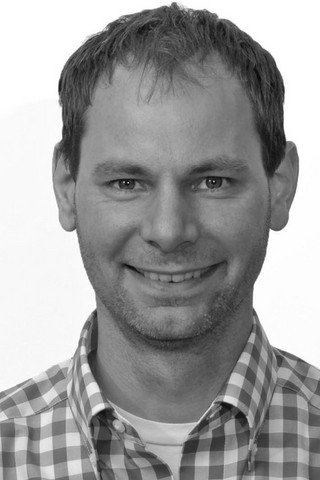
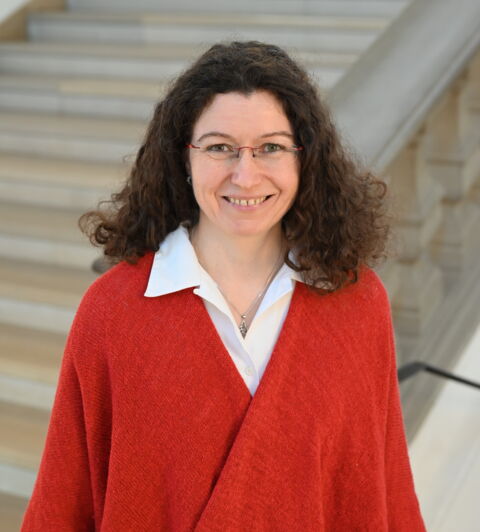
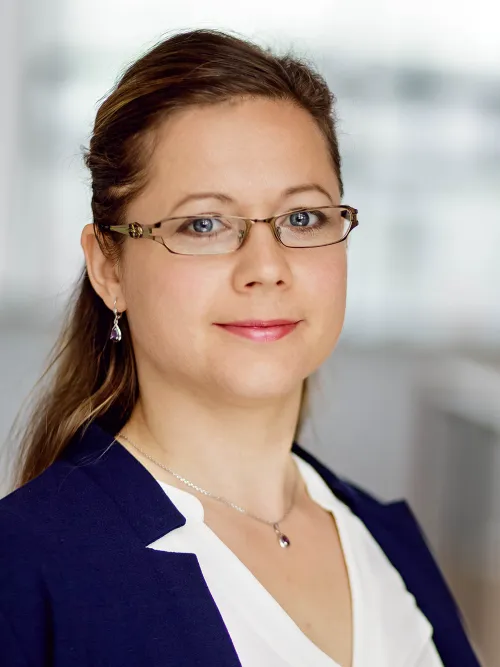
Maxim Romanov heads 'The Evolution of Islamic Societies' project at University of Hamburg's Asia-Africa-Institut, funded by DFG's Emmy Noether Program. Former positions include senior research fellow at KITAB Project and University of Vienna. Research reconstructs social history of Islamic world (c.600-1600 CE) through computational analysis of Arabic chronicles and biographical collections. Research Focus: Digital humanities approaches to premodern Islamic history including OCR development for Arabic manuscripts, corpus linguistics, and geospatial modeling of historical data. Technical Contributions: Developed OpenITI corpus infrastructure, al-Ṯurayyā gazetteer system, and computational methods for large-scale historical text analysis. Recent work enhances NLP for classical Arabic with OCR accuracy exceeding 90%.
Jan Reitzner is a Research Associate at the Chair of Church History I (Institute for Late Middle Ages and Reformation) at Eberhard Karls University of Tübingen. He holds a Dr. theol. (2022) from Georg August University of Göttingen and was awarded the 2023 Doctoral Award of the University Association. As an ordained volunteer pastor in the Evangelical Lutheran Church of Hanover (since 2024), he combines academic and pastoral roles. His research focuses on medieval monasticism, liturgical practices, and Reformation-era theology, with particular attention to 12th-century French monasticism and the Gregorian Mass. He has held a DFG-funded research position (2018-2021) and served as a vicar in Bexhövede parish (2021-2023). Education PhD (Dr. theol.) in Protestant Theology, Georg August University Göttingen (2022) Scholarship holder, Konrad Adenauer Foundation (2013-2018) Studies in Protestant Theology at Universities of Wuppertal, Tübingen, Jerusalem, and Göttingen (2013-2018) Church examination, Evangelical Lutheran Church of Hanover (2018) High school diploma, Carolinum High School Osnabrück (2013) Research Interests Dr. Reitzner's work bridges medieval monastic studies and early modern Reformation history. He examines how monastic traditions influenced late medieval liturgical practices ( Die Verba Seniorum monograph, 2022) and explores theological debates in Reformation-era Europe. His recent work on the Gregorian Mass (ZKG 2024) highlights liturgical developments in 12th-century France. He also engages in systematic theology through translations of Bruce McCormack's works on Barthian theology. Publications Trends His publications emphasize interdisciplinary approaches: combining historical analysis (e.g., medieval liturgy studies) with systematic-theological reflections (e.g., translations of McCormack). Recent reviews demonstrate expertise in late medieval piety, Reformation-era doctrine, and early modern European church networks. Awards & Grants Doctoral Award of the University Association (2023) DFG Project: Reception of Apophthegmata Patrum (2018-2021) Labs/Teams Member of the Institute for Late Middle Ages and Reformation at Tübingen. Active in scholarly societies including the Wissenschaftliche Gesellschaft für Theologie (WGTh), Mediävistenverband, and Societas mediaevistica evangelicorum theologicorum.
Prof. Dr. Annette Zgoll is a Professor at the Department of Ancient Near Eastern Studies , Georg-August-Universität Göttingen, and a member of the Academy of Sciences in Göttingen (2010–present). She co-directs the interdisciplinary Collegium Mythologicum (2011–present) and leads the DFG Research Group 2064 STRATA (2016–present), focusing on mythological stratification and cross-cultural storytelling. Her research spans comparative mythology, hylistic theory, and the interplay between myth, ritual, and cultural transmission. Director of the Collegium Mythologicum (2011–present) Principal Investigator for DFG STRATA Research Group (2020–present) Editorial roles in the Mythological Studies series (De Gruyter, 2019–present) Her research interests include: myth as a polymorphous and polystratic Erzählstoff (narrative material), stratification analysis of mythological traditions, and hylistic methods for reconstructing myth variants across texts, images, and rituals. She specializes in comparative studies of Mesopotamian, Egyptian, Greek, and Roman myths, particularly those involving celestial descent, underworld journeys, and divine-human interactions. Recent scientific awards include the Peregrinus Prize (2023) for innovative mythological research. She has organized international conferences like the First International Early Career Researchers’ Conference on New Approaches to Myths (2023) and co-edited volumes such as Was vom Himmel kommt (2021), analyzing sky-origin myths across ancient Mediterranean cultures. Teaching includes courses on Hittite language, comparative myth studies, and interdisciplinarity. She collaborates with institutions like Oxford University and the University of Helsinki, and her lab/team activities involve the Collegium Mythologicum and DFG STRATA Group , advancing transmedia and cross-cultural myth analysis.
Professor Richard Bussmann is a Professor of Egyptology at the Institute for African Studies and Egyptology, University of Cologne. His office is located at Meister-Ekkehart-Str. 7, first floor, room 1.04 in Cologne, Germany. He has made significant contributions to the field of Egyptology, particularly in the areas of social archaeology of ancient Egypt, urbanism in North-Eastern Africa, and cross-cultural comparison of early complex societies. Professor Bussmann's research focuses on combining Egyptology with social archaeology, anthropology and cultural history. His work revolves around questions of ancient Egyptian society and culture at a local level, using material, visual and written sources to understand long-term transformations in North-Eastern Africa. His chronological focus spans from late prehistory to the New Kingdom (the Bronze Age), though he also examines earlier and later developments. His research includes a book on community shrines of the third millennium, examining how central administration penetrated into local milieus. He is currently writing "The Archaeology of Pharaonic Egypt," which synthesizes discussions of Egyptian society and culture from the Old to the Middle Kingdom. He directs a project on seals and seal impressions from Hierakonpolis to investigate administrative practice in early Egypt and co-directs the archaeological fieldwork project at Zawyet Sultan, exploring life of a local community from prehistory to the present day. Professor Bussmann has published extensively, with recent works including "The archaeology of pharaonic Egypt: society and culture, 2700-1700 BC" (2023) and "Zawyet Sultan: second preliminary report. Excavation season 2022" (2023). His publications demonstrate a strong focus on social structures, urban development, and cultural practices in ancient Egypt, particularly during the Old and Middle Kingdoms. His professional memberships include: Secretary General of the International Association of Egyptologists Full member of the German Archaeological Institute Member of scientific advisory board of the Cairo division of the German Archaeological Institute Speaker of the Association of archaeological institutions in Cologne and Bonn Deputy speaker of the Research Training Group 1878 "Archaeology of premodern economies" Member of the advisory board of the Competence Area IV, University of Cologne Member of the steering committee of the Friends of Egyptology in Cologne "Uschebti e.V." Member of the board of the German Association of Egyptology Professor Bussmann has supervised numerous PhD students, including Anouk Everts, Isabell Steinhardt-Sedlak, Lisa Augner, and others, working on diverse topics ranging from social networks in the Middle Kingdom to economic systems and resource management in ancient Egypt. His teaching focuses on Egyptian archaeology and language, with an emphasis on source critical skills and theoretically informed discussions of ancient Egyptian society and culture.
Prof. Dr. Heiner Rindermann is a Professor of Educational and Developmental Psychology at Chemnitz University of Technology (TUC). Affiliated with TUC's Institute of Psychology under the Behavioural and Social Sciences school, his work bridges educational practices and cognitive development. Academic Timeline: 1988-1993 Heidelberg RA, 1994-1999 LMU Munich RA, 1999-2007 Otto-von-Guericke-University Magdeburg RA, 2001 University of Graz visiting professor, 2003-2004 University of Kassel interim, 2004-2006 Saarland University interim, 2006-2007 Paderborn University interim, 2008-2010 University of Graz Professor, 2010-present TUC Professor. Educational Background: 1972-1985 Baden-Württemberg schools, 1986-1995 University of Heidelberg (PhD 1995), 2005 Landau habilitation. Research Interests focus on cognitive competence development , cross-cultural comparisons , intelligence-societal development links , kindergarten quality assessments , and international comparative studies . His work examines psychometric vs. Piagetian frameworks, emotional competence, and educational program evaluation. Academic Contributions include the William-Stern-Preis (2007) , APS Fellowship (2010) , and Mexican National Award of Giftedness (2016) . He serves on editorial boards for journals like Zeitschrift für Pädagogische Psychologie and Intelligence , and reviews for over 40 journals and institutions. Projects include BMBF-funded SoKonBe (external educational consultation using socio-cognitive conflicts) and international collaborations like the Study of Latin American Intelligence with Earl Hunt and Jelte Wicherts. His publications span books including Cognitive Capitalism (Cambridge University Press, 2018) and chapters in encyclopedias.
Professor Irene Schneider is a distinguished scholar of Arabic and Islamic Studies at the University of Göttingen, currently on sabbatical as a Distinguished Fellow at the Max Weber Institute/University of Erfurt since October 2024. She leads the ERC Advanced Grant project '(De)Colonizing Sharia?' focused on tracing transformation, change and continuity in Islamic Law in the Middle East and North Africa during the 19th and 20th centuries. Her research spans Islamic law (particularly family, criminal, and public law), gender studies with emphasis on gender constructions in law, legal history, and contemporary Muslim societies in Morocco, Egypt, Palestine, Iran, and Afghanistan. She has made significant contributions to understanding the relationship between international law and national legislation in Palestine, as detailed in her influential book 'Debating the Law, Creating Gender: Sharia and Lawmaking in Palestine, 2012-2018.' Professor Schneider's scholarly work demonstrates a remarkable historical depth, examining issues from Islam's formative period to contemporary contexts. Her publications span multiple languages including German, English, French, and Farsi, reflecting her interdisciplinary approach that combines historical analysis with contemporary legal and social issues. Her recent research particularly focuses on conceptual history, civil society development, and the translation of global legal concepts into local Islamic contexts. Among her notable achievements is the establishment of the 'Islamic Law' specialization in the Master's program at Göttingen in 2011, which allows students to gain intensive insight into Islamic legal language while simultaneously taking modules from the Faculty of Law. She has also established the research and teaching focus 'Palestine and the Middle East Conflict' in 2014. ERC Advanced Grant recipient (2024) Deputy Chair of the German Working Group on the Middle East (DAVO) since 2022 Director of SAI II since 2021 Former Chair of Gender Studies Working Group at University of Göttingen (2010-2013) Professor Schneider has supervised numerous academic projects and collaborations, including work with Judge Somoud al-Damiri on Palestinian women's legal status, and has been instrumental in fostering academic dialogue between German and Palestinian institutions. Her research methodology uniquely combines socio-legal analysis with detailed linguistic examination of legal terminology evolution, particularly examining how terms like 'moussab' (equality) transform during legal discourse.
PD Dr. Ansgar Schanbacher serves as a Research Fellow at the Institute for Regional Historical Research, University of Göttingen, specializing in environmental and urban history of Early Modern Central Europe and the Netherlands. His work examines resource management and hazard responses in cities like Braunschweig, Würzburg, and Utrecht through interdisciplinary environmental history frameworks. His academic formation includes a Dr. phil. from Göttingen University (2011-2015) on Potato Blight and Famine in Northwestern Germany (1845-1848), completed within the Research Training Group Interdisciplinary Environmental History. Earlier, he earned an M.A. in History, Economy, and Polish Language/Literature from Leipzig University and Lublin's Catholic University (2003-2010), followed by freelance translation work (2009-2011). Schanbacher's research centers on Environmental History, Urban History (17th-19th centuries), History of Science, and Eastern European History. His scholarship reveals how early modern cities navigated ecological challenges through municipal policies, technological adaptations, and social coping mechanisms, with particular attention to waste management, fire prevention, food crises, and horticulture across German and Dutch urban contexts. His 15 most recent publications demonstrate consistent focus on urban environmental resilience, showing evolution from specific hazard case studies (fires, earthquakes) toward broader sustainability frameworks. Key trends include comparative analysis of municipal responses, interdisciplinary methodology bridging history and environmental science, and contextualization of historical practices within modern sustainability discourse. His scientific recognition includes: Prize of the Historical Commission for Lower Saxony and Bremen (2016) DFG Scholarship at Göttingen University (2011-2014) DAAD Scholarship for Poznań/Kraków (2008) Grant leadership includes Scientific Coordination of 'Sustainability as Argument' (2016-2020) and a 2016 Graduate School of Humanities research grant. He actively disseminates research through the 'Stadtgeschichten' urban history blog (co-editor), 'Epidemien in der frühneuzeitlichen Stadt' podcast series, and public lectures on Central European urban environments. Current affiliations include the European Society for Environmental History and European Association for Urban History, with contributions to the Portal zur Geschichte and Frauenstift Gandersheim projects. Based at Göttingen University's Heinrich-Düker-Weg campus, he maintains active scholarly engagement through editorial work, conference presentations, and interdisciplinary collaborations exploring historical dimensions of urban sustainability.
Prof. Dr. Chunyang Chen is a Full Professor at the Department of Computer Science, Technical University of Munich (TUM), Heilbronn, Germany. He holds the Chair of Software Engineering & AI, serves as a core member of the Munich Data Science Institute, board member of the Heilbronn Data Science Center, and Fellow at Fortiss. He also maintains an Adjunct Professor role at Monash University, Australia. Research Focus: His work bridges Software Engineering, Deep Learning, and Human-Computer Interaction (HCI), specializing in AI/ML, NLP, and program analysis for mobile app development, testing, and security. Key areas include LLM-assisted app development, robustness of deep learning models, and accessibility testing. Scientific Awards: Best Paper Honorable Mention in CHI 2024 Discovery Early Career Researcher Award (DECRA), Australian Research Council ACM SIGSOFT Early Career Researcher Award Facebook Research Award in Probability and Programming Dean's Award for Research Impact at Monash University Academic Leadership: He actively mentors PhD students, supervises postdocs, and leads research teams focusing on software security, automated testing, and LLM applications. His recent work explores the intersection of software security and large language models, with a special issue call for EMSE journal.
Doreen Patzelt is a Researcher at the Weingarten University of Education, specializing in Educational Psychology and Early Childhood Education. Since 2011, she has been an academic staff member in the Elementary Education program, focusing on childhood education. She previously served as a Research Associate from 2005 to 2009 in the "Language Support for Preschool Children" project under prominent professors. Education : Dipl.-psych. (University of Potsdam, 2004), Dr. phil. (Weingarten University of Education, 2011), Creative Dance and Expressive Arts Therapy Certification (2016) Patzelt's research explores language development in preschoolers, particularly the interplay between linguistic skills and non-verbal intelligence, with an emphasis on migration backgrounds. Her work contributes to understanding educational equity and intervention effectiveness in early childhood settings. The 2014–2007 publications highlight her focus on language acquisition, migration-related educational disparities, and program evaluation. Collaborative projects like "Sag' mal was" underscore her commitment to evidence-based language support frameworks for underserved populations. As an academic researcher, Patzelt collaborates with interdisciplinary teams and integrates pedagogical psychology into childhood education curricula. Her 2016 creative dance therapy qualification suggests complementary interests in expressive arts for child development.
Gerlind Große is a Research Professor for Early Childhood Studies at the University of Applied Sciences Potsdam and leads the interdisciplinary PINA Research Laboratory. She is deeply involved in applied and basic research focused on early childhood education, social-emotional development, and pedagogical architecture. As Head of the Master's programme in Early Childhood Studies, she contributes to academic leadership via roles in the Faculty Council and Senate. Her research bridges developmental psychology and educational practice, with projects like BIKA (Participation in Daycare Everyday Life), NAWII (natural science interest in early education), and INSO (inclusive social space development). She emphasizes emotion regulation, language-emotion interplay, and pedagogical interaction quality, yielding publications on emotion vocabulary, analog/digital play, and teacher-child dynamics. Recent publications highlight trends in educational psychology, cognitive development, and social-emotional learning. Collaborative work with teams at the University of Potsdam, Freie Universität Berlin, and international institutions underscores her interdisciplinary approach. Projects often intersect with public policy, such as the Babyhelfer App for parental mental health support and the BeoKiz initiative for daycare documentation. As head of PINA, she integrates research across domains like inclusive schools, peer interaction, and developmental assessment. Funding from the Federal Ministry for Family Affairs and partnerships with institutions like ASH Berlin and the University of Graz reflect her commitment to practice transfer and systemic educational reform.
Prof. Dr. Bianca Devos is a University Professor at the Department of Iranian Studies within the Center for Near and Middle Eastern Studies (CNMS) at Philipps University of Marburg . Specializing in 20th-century Iranian history, her work examines intersections of religion and state politics, press history, and cultural policies during the Pahlavi era. Professor of Iranian Studies (W3), Philipps University of Marburg (since 2021) Co-Director, Gerda Henkel Foundation project State Islam in Pre-Revolutionary Iran (2018-2021) Key research themes: Modernization processes, cultural heritage, secularism, and societal elites in Iran Her research projects, such as the analysis of Friedrich Werner von der Schulenburg and Ernst E. Herzfeld's correspondence (1923-1939), explore socio-cultural contexts of archaeological practices and state engagement with antiquity. She has presented extensively on topics like the Shah's Mecca pilgrimages, press coverage of Persepolis excavations, and debates on literary modernity in Persian texts. Current leadership roles: Director of CNMS, member of the Senate of Marburg University Academic networks: Association for Iranian Studies, Societas Iranologica Europaea, Deutsche Morgenländische Gesellschaft
Nicola Zambon is a researcher at the Institute for Religious Studies (WE 8), Free University of Berlin , with a focus on Phenomenology , Modern Philosophy , and Philosophy of Religion . He holds an Abilitazione Scientifica Nazionale in practical and theoretical philosophy and history of philosophy (2023) and completed his PhD at Ludwig-Maximilians-Universität München (2014). His research explores self-deception , myth theory , and phenomenological anthropology , with a particular emphasis on Kant, Nietzsche, and Blumenberg. Education PhD in Philosophy, Ludwig-Maximilians-Universität München (2014) Habilitation, Italy (2023) Studies in Bologna, Mainz, Freiburg im Breisgau (2002–2009) Research Interests : Zambon's work bridges phenomenology (Husserl, Heidegger, Merleau-Ponty, Blumenberg) with modern philosophy (Spinoza, Kant, Vico) and philosophy of religion/psychoanalysis . He investigates self-deception through Kantian moral philosophy, myth theory in contemporary culture, and anthropological concepts like tactility and the life-world. His forthcoming monograph on visibility (2025) extends these themes. Recent Publications include studies on self-deception (2024), Blumenberg's dialectics of Enlightenment (2022), and Kant's moral anthropology (2020). His edited works feature in the Zeitschrift für Kulturphilosophie and Phänomenologische Forschungen . Scientific Awards : Oskar-Karl-Forster-Preis der LMU München (2014) Grants and Fellowships : Nietzsche-Fellowship, Klassik Stiftung Weimar (2023) Fellow, Research Institute for Philosophy Hannover (2022–2023) DAAD/FMSH Research Grant, Paris (2015) DFG Research Grant, Paris (2016–2017) Academic Activities : Zambon is a member of the Käthe-Kluth-Nachwuchsgruppe (2024–2027) and the Hans Blumenberg-Gesellschaft . He teaches courses on Blumenberg's philosophy , Nietzsche , and modern religious thought at FU Berlin and international institutions like the University of Turin (visiting professor, 2025).
Ann-Katrin Zimmermann is an apl. Professor (non-tenured professor) at the Musicological Institute within the Faculty of Philosophy at the University of Tübingen. She has held this position since 2018, following her time as a private lecturer from 2012-2018. In addition to her academic work, she serves as a dramaturg at the Gewandhaus Leipzig since 2013 and has teaching assignments at LMU Munich, Felix Mendelssohn Bartholdy University of Music and Theatre, and Leipzig University since 2012. Her educational background includes: Habilitation (2012) on "Forms of slow movements in the classical cycle" Promotion/PhD (2006) on "Studies on medieval three-part harmony" Master's degree in musicology, philosophy and art history from University of Tübingen and University of Oxford (1998-2003) Professor Zimmermann's research spans multiple eras and aspects of music history and theory. Her work focuses particularly on polyphony of the 12th and 13th centuries, keyboard music from the 15th-18th centuries, early German-language music terminology, and the works of Heinrich Schütz, composers of the Viennese classics, and Richard Strauss. She has made significant contributions to the fields of organology, instrumentation, music iconography, and 19th-century symphonies, with particular interest in cross-temporal aspects of genre, form, and composition. Her extensive publication record shows a consistent focus on historical music analysis, particularly examining compositional strategies across different periods. Her recent work has increasingly focused on Richard Strauss and Mozart, while maintaining her longstanding interest in early music traditions and terminology. She has published numerous articles in prestigious journals and contributed to important edited volumes in musicology. Professor Zimmermann is actively involved in the academic community: Member of the Society for Music History in Baden-Württemberg since 2009 Member of the DHV since 2012 Throughout her career, Zimmermann has balanced academic research with practical musical experience. She has been a bassoonist and leader of various vocal and instrumental ensembles since 1998, and served as a church musician from 1997-2014. Her work as a dramaturg at the Gewandhaus Leipzig since 2013 demonstrates her commitment to connecting scholarly research with contemporary musical practice.
Prof. Dr. Silke Hertel is a Professor of Personal Competencies in the School Context at Heidelberg University’s Institute of Educational Science, and currently holds the position of Vice-Rector for Student Affairs and Teaching until 2026. In her role as Vice-Rector, she oversees strategic advancements in research-oriented teaching, innovative teaching formats, and the integration of accessibility, diversity, and digitalization in university education. Her research focuses on self-regulated learning, teacher competencies, and educational psychology, with a particular emphasis on fostering adaptive learning environments and parental-child interactions in early education. Notable contributions include the development of the SAVE suicide prevention program for schools and studies on parental scaffolding in cognitive development. Education: No explicit details provided in the text, though her academic role implies advanced qualifications in educational science. Labs/Teams: Active in the Institute of Educational Science, collaborating on projects related to educational policy and teacher training. Prof. Hertel’s work bridges theoretical research and practical implementation, addressing challenges in modern educational systems through evidence-based interventions and policy guidance.
Prof. Dr. Helen Engemann is a Junior Professor at the Department of English, School of Humanities, University of Mannheim. Her research focuses on multilingualism, language acquisition, and cognitive aspects of bilingualism. She is affiliated with the Research Team JP Multilingualism and is a member of the Deutsche Gesellschaft für Sprachwissenschaft (DGfS), European Second Language Association (EUROSLA), and International Association for the Study of Child Language (IASCL). Her work investigates how language structures influence cognitive processes, particularly in bilingual children and heritage speakers. Key topics include motion event constructions, crosslinguistic influence, and syntactic packaging in multilingual environments. Recent studies explore language change mechanisms in Italian heritage speakers and the impact of typological factors on memory and event encoding. Publications span prestigious journals like Linguistic Approaches to Bilingualism , Journal of Child Language , and Bilingualism: Language and Cognition . Her research bridges linguistics, psychology, and education, addressing both theoretical and applied questions in multilingual development.