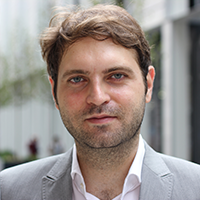
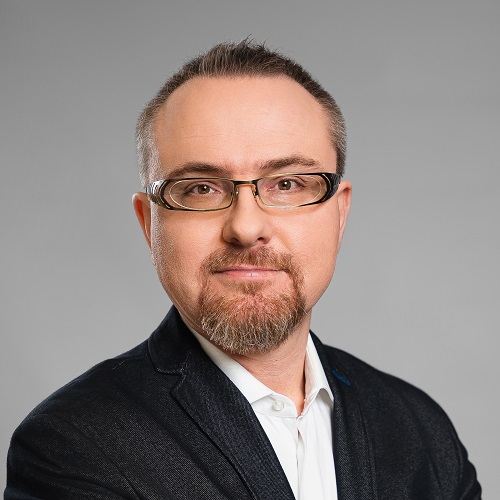
Grzegorz Lechowski is a visiting researcher at the WZB Berlin Social Science Center within the Research Group Globalization, Work, and Production. His work focuses on technological, organizational, and regulatory changes in globalized industrial and digital economies, with expertise in digital sovereignty, geopolitics of tech, and automotive sector transitions. Doctoral candidate at Freie Universität Berlin Co-edited the 2025 book Global Shifts in the Automotive Sector with M. Krzywdzinski, J. Humphrey, and T. Pardi Collaborated with institutions like ETUI, SASE, and Gerpisa Network Research Themes : Lechowski examines the EU's digital sovereignty discourse, geopolitical tensions in tech value chains, and electromobility's impact on automotive labor and production. His studies span state-business dynamics, Industry 4.0, and global production reorganization. Key Trends in Publications : His outputs highlight geopolitical disruptions in automotive and digital sectors, EU industrial policy, green transitions, and reconfiguration of global value chains. Topics include electric vehicle supply chains, labor rights in electromobility, and corporate adaptation to regulatory shifts. Teaching : Lecturer at Helmut Schmidt University Hamburg for courses on globalization of industry and labor (2021) and introduction to sociology (2020). Projects & Collaborations : Co-led a VolkswagenStiftung-funded study on automotive responses to the pandemic (2021–2023). Participated in the Blankensee Colloquium on global digital economies (2022).
Dr Isidora Maletic is a Reader in Law (Education) at King's College London , affiliated with The Dickson Poon School of Law and the Centre of European Law . Her expertise spans legal education, regulatory frameworks, and interdisciplinary research in trade, competition, and technology law. Education: BA (Hons) in Law, Queens’ College, University of Cambridge LLM, King’s College London MA, Queens’ College, University of Cambridge Doctorate, King’s College London Legal Practice Course, The College of Law Her research focuses on trade regulation , competition law , post-Brexit regulatory frameworks , financial services regulation , environmental law , and technology regulation , with a strong emphasis on sustainability and digital governance. She also investigates educational quality assurance, assessments, and feedback practices in legal education. Scientific Awards and Roles: Principal Fellow of the Higher Education Academy (PFHEA) Fellow and Advisory Board member of the Centre of European Law Dr Maletic has contributed to the new Jean Monnet Centre at King's, focusing on EU/UK relations. Her work bridges academic research with practical applications, including consultations with international law firms and global speaking engagements.
Annie BLANDIN is an Enseignant Chercheur (Professor) at IMT Atlantique, a leading French technological university, where she is affiliated with the Department of Network Systems, Cyber Security and Digital Law at the Rennes campus. Her academic work bridges legal studies and digital technology, focusing on the evolving relationship between law, governance, and the digital world. Professor BLANDIN's research interests center on digital law and governance, with particular emphasis on European digital sovereignty, data protection frameworks, internet regulation, telecommunications law, and the intersection of market forces with digital rights. Her work critically examines how legal frameworks can address the power dynamics between large digital platforms and nation-states, exploring whether law can serve as a tool for digital sovereignty rather than merely accommodating existing technological and economic power structures. Her recent publications (2020-2024) reveal a consistent focus on European regulatory approaches to digital challenges, with particular attention to data sovereignty, digital market regulation, and the geopolitical dimensions of internet governance. Her work demonstrates a sophisticated understanding of how digital sovereignty operates both as a factual reality shaped by platform dominance and as a legal construct that can be shaped through regulation and ethical frameworks. The research shows increasing attention to practical implementation challenges of digital rights, such as data portability, and the international dimensions of digital governance, particularly regarding EU-Asia and EU-Canada relations. Professor BLANDIN has maintained a productive academic career spanning nearly three decades, with publications dating back to 1996. Her early work focused on telecommunications regulation within the European context, evolving to address broader digital governance issues as technology advanced. She has authored significant books including Droits et souveraineté numérique en Europe (2016) and L'Union européenne et internet : entre logique de marché et préoccupations citoyennes (2001), demonstrating her longstanding engagement with the legal and policy challenges posed by digital technologies. Her scholarly contributions appear across various formats including peer-reviewed journal articles, conference papers, book chapters, and research reports. She frequently collaborates with other scholars from diverse disciplines, reflecting the interdisciplinary nature of digital governance issues. Her work has been cited in academic and policy contexts, particularly regarding European approaches to digital sovereignty and data protection.
Benjamin K. Sovacool serves as Director of the Boston University Institute for Global Sustainability (IGS) and Professor in the Department of Earth & Environment within the College of Arts & Sciences, focusing on global energy policy and climate justice challenges. His academic credentials include: PhD in Science & Technology Studies from Virginia Tech MsC in Science Policy from Virginia Tech MA in Communication Studies from Wayne State University BA in Philosophy and Communication Studies from John Carroll University Research centers on energy justice , climate change mitigation , and renewable energy transitions , examining ethical dimensions of energy infrastructure, policy design for energy access, and adaptive capacity building. His work bridges social science and engineering perspectives, endorsed by figures like former President Clinton and Nobel Laureate Ostrom. Publications address urgent decarbonization challenges, exemplified by his 2022 Science article on industrial megaprojects. His scholarship consistently analyzes equity implications across energy supply chains and climate solutions, emphasizing interdisciplinary approaches. Key recognitions: Distinguished Graduate Alumni Achievement Award (Virginia Tech) 2019 USERN Prize for Social Justice research Dedication to Justice Award (American Bar Association) Distinguished Visiting Energy Professorship (Vermont Law School) Academician of the UK Academy of Social Sciences Secured $28.2+ million in competitive funding from DOE, NSF, European Commission, and major foundations. Current projects include Advancing Transformational Energy Justice (Sloan Foundation), Limits to Digitalization (Norwegian Research Council), and NIH-funded climate-health initiatives. Leadership spans IPCC AR6 authorship and EU energy advisory roles. As IGS Director, he leads cross-institutional teams tackling global sustainability through initiatives like the Industrial Decarbonization Research Center and GENIE project on negative emissions technologies, fostering collaborations with European and US research entities.
Dr. Reza Fazeli is a Research Fellow at the Zero-Carbon Energy for the Asia-Pacific Grand Challenge at the Australian National University's School of Engineering. He joined ANU in January 2020, following six years as a Research Analyst and Adjunct Lecturer at the University of Iceland. His research focuses on sustainable energy transitions, decarbonization strategies, and energy policy assessment. Education background: PhD in Sustainable Energy Systems, University of Porto (MIT-Portugal program) MSc in Energy Systems Engineering, Sharif University of Technology BSc in Mechanical Engineering, University of Tehran Dr. Fazeli's research spans energy modeling, system dynamics, and multi-criteria decision analysis. He investigates decarbonization pathways for transportation and energy systems, GIS-based sustainability assessments, and hydrogen economy transitions. His work combines technological and behavioral perspectives to develop sustainable energy solutions. His recent publications focus on hydrogen certification, emission accounting frameworks, and renewable integration challenges. Articles consistently address policy-technical interfaces in energy transitions, with increasing emphasis on international hydrogen trade and certification systems since 2021. Dr. Fazeli leads research on green hydrogen economy assessments and coordinates cross-disciplinary projects at the ANU Energy Change Institute.
Lisa Soder serves as Senior Policy Researcher and Acting Head of Technical AI Governance at Interface, a leading European tech policy think tank, and is an incoming Visiting Research Fellow at Stanford University's Intelligent Systems Laboratory within the School of Engineering. She holds a Master's degree from the London School of Economics focusing on comparative transatlantic approaches to technology regulation and competition law, and brings prior experience from the Centre for the Governance of AI, Boston Consulting Group, and global health NGO work in Ethiopia. Her research centers on establishing AI accountability infrastructures with particular emphasis on developing third-party auditing ecosystems and bridging technical and regulatory aspects of AI governance. She has developed a taxonomy for Technical AI Governance organized along technical targets (Data, Compute, Algorithms and Models, Deployment) and governance capacities (Assessment, Access, Verification, Security, Operationalization, Ecosystem Monitoring). Her work examines open problems across these dimensions, highlighting the critical need for technical tools to support effective AI governance. Analysis of her publications reveals a strong focus on practical implementation challenges in AI regulation, particularly regarding the EU AI Act's provisions for general-purpose AI systems. Her research consistently addresses the gap between policy aspirations and technical capabilities, with particular attention to verification mechanisms, risk assessment frameworks, and the development of technical infrastructure necessary for oversight. She advocates for closer collaboration between technical experts and policymakers to ensure governance mechanisms are both feasible and effective. Lisa has been actively engaged in high-level policy discussions, participating in events such as the AI Action Summit in Paris, Sino-German Track 2 Dialogues on AI governance, and expert briefings on frontier AI systems. Her upcoming visiting research fellowship at Stanford University represents a formal academic affiliation that complements her policy-focused work at Interface.
Ben McWilliams is a Research Fellow at Bruegel, focusing on Energy and Climate Policy . His work combines data-driven analysis to critique and inform European public policy, with particular emphasis on energy sector decarbonisation , industrial policy , and hydrogen-based economic geography . Recently, he has analyzed European energy crises and proposed policy responses , while tracking clean tech trends and natural gas dynamics across Europe. Education : MSc in Economic Policy (Utrecht University, thesis on carbon taxation in British Columbia); BSc in Economics (University of Warwick) with exchange year at Monash University Research Focus : Energy Security , Climate Policy , Hydrogen Economics , and Industrial Decarbonisation Key Contributions : Co-authored 15 major analyses (2021-2025) on topics including EU-Russia energy divorce , transatlantic clean investment , and hydrogen strategy Awards : No scientific awards mentioned in available records Affiliations : Bruegel (Affiliate Fellow), dual citizenship (British/Dutch)
Dr. Florian Foos is an Associate Professor in Political Behaviour at the LSE's Department of Government, affiliated with the LSE Data Science Institute and Electoral Psychology Observatory. He holds a D.Phil from Nuffield College, Oxford. His research focuses on partisan election campaigns using randomized field experiments to study electoral mobilization, opinion change, and political activism. Key interests include social influence in political networks, media effects, and campaign strategies. He has published in top journals like the American Political Science Review and American Journal of Political Science. Current projects include the Register to Vote '21 initiative testing voter registration methods. He teaches experimental methods and political behavior, and co-organizes the European Workshop in Empirical Political Science (EuroWEPS). Research highlights include analyzing tabloid media's impact on Euroscepticism, the role of partisan cues in mobilization, and subnational representation effects. His work combines experimental designs with quasi-experimental methods, emphasizing causal inference. Collaborations span institutions like King's College London and German parliamentarians. He advises on policy experiments and serves on academic advisory boards.
Dr. Dicky Tsang is an Associate Professor at the Faculty of Law , The Chinese University of Hong Kong. He holds degrees from Georgetown University (S.J.D.), Columbia University (LL.M., J.D.), University College London (LL.M.), and the University of Hong Kong (LL.B., PCLL). His practice experience includes corporate finance law at Linklaters and Shearman & Sterling across New York, London, Hong Kong, Beijing, and Shanghai. Admitted to practice in New York, England & Wales, and Hong Kong Research Interests : Dr. Tsang specializes in Private International Law and Company Law , focusing on cross-border corporate liability, veil-piercing, arbitration agreements, and FRAND litigation. His work bridges empirical legal analysis with comparative law frameworks. Publication Trends : His recent scholarship examines jurisdictional conflicts, enforcement of foreign judgments, and regulatory challenges in global corporate law. Publications span journals like Virginia Journal of International Law and Journal of Private International Law . Scientific Awards : Outstanding Research Impact Award 2022-23 CUHK Research Excellence Award 2019-2020 CUHK Teaching Excellence Award 2016-2017 Grants : He has led multiple RGC-funded projects, including empirical studies on China’s choice-of-law regime and foreign judgment enforcement. Collaborative grants explore corporate governance and legal education in Asia.
Shanshan Xu is a Dame Kathleen Ollerenshaw Fellow and Academic Lecturer in Catalysis at the Department of Materials, University of Manchester, since January 2025. She specializes in heterogeneous catalytic systems for sustainable chemical reactions, including hydrogen production, nitrogen fixation, and CO2 conversion, employing operando X-ray spectroscopy and DRIFTS techniques to study catalytic mechanisms. Previously, she worked on the EU-funded Laurelin project, focusing on CO2 conversion to renewable methanol using nonthermal plasma catalysis. She earned her PhD in Chemical Engineering (2021) and MSc in Materials Science and Engineering from the University of Manchester. Her research interests span catalyst design (metal oxides, porous materials like zeolites and MOFs), operando spectroscopy (XAS, XPDF, IR), and sustainable chemistry. She leads the UoMaH research group at the University of Manchester-Harwell, collaborating internationally. Xu is actively mentoring PhD students and supervising projects in catalysis, with funding opportunities through scholarships like the President’s Doctoral Scholarship and the University of Manchester-CSC joint program. Notable awards include the Dame Kathleen Ollerenshaw Fellowship (2024), Dean’s Doctoral Scholarship (2017), and First Prize in the China ShaoXing Innovation Competition (2023). Her work aligns with UN Sustainable Development Goals, contributing to clean energy and sustainable industrial processes. Xu’s lab focuses on advancing catalyst design through operando studies, with emphasis on nonthermal plasma systems. She collaborates on projects like the UoMaH initiative, exploring nanoparticle behavior and catalytic materials for industrial applications.
Professor Dr. Prof. h.c. Thomas M.J. Möllers holds the Chair for Civil Law, Commercial Law, European Law, International Private Law and Comparative Law at the Faculty of Law, University of Augsburg. As a full professor, he leads research and teaching in multiple legal disciplines with a particular focus on German and European financial regulation, corporate law, and legal methodology. His work bridges traditional legal scholarship with contemporary challenges posed by digitalization and globalization. Professor Möllers' research interests span German and European Capital Markets law, German and European Company Law, Legal methods, Comparative Law, European Union Law, and Competition Law. His scholarly work demonstrates exceptional breadth, connecting doctrinal legal analysis with practical applications in evolving regulatory environments. He has made significant contributions to understanding the interface between national legal systems and EU regulation, particularly in financial markets. His recent publications reveal a strong focus on capital markets regulation, particularly regarding the Wirecard scandal and auditor liability, consumer protection in e-commerce, data protection across different legal systems, and the impact of AI on legal methodology. The trajectory of his work shows increasing engagement with comparative legal analysis between European, American, and Chinese legal systems, reflecting his growing international influence. TOP 1% Most Cited Books (2019-2023) - Legal Translations in China for his 'Legal Methodology' Honorary Professor at Central South University, Changsha, Hunan (2024) Professor Möllers has mentored numerous successful legal scholars who have gone on to academic and professional careers, including Dr. Liuhua Shen (now a professor at Jiangsu University), Dr. Maximilian Merwald, and Dr. Lisa Wolf. His research is supported by various grants, including DAAD funding for US exchange programs and participation in the Jean Monnet Centre of Excellence - INspiRE on consumer protection, capital markets, and competition law enforcement. He leads the Research Center of Innovation and Legal Studies between China and Europe (RICE) and is actively involved in the Caplaw initiative, which provides resources on European and national business law. His work connects legal scholarship with practical applications through podcasts, student research showcases, and collaborative projects across multiple legal systems.
Timo Minssen is Professor of Law at the University of Copenhagen (UCPH) and the Founding Director of UCPH's Center for Advanced Studies in Bioscience Innovation Law (CeBIL). He also holds affiliations as an LML Research Affiliate at the University of Cambridge and an Inter-CeBIL Research Affiliate at Harvard Law School's Petrie-Flom Centre. With extensive expertise in Intellectual Property, Competition, and Regulatory Law, Minssen focuses on the legal aspects of emerging health and life science technologies, including genome editing, big data, artificial intelligence, and quantum technology. His educational background includes a German law degree (Staatsexamen) from Georg-August-University in Göttingen, and Swedish biotech & IPR related LL.M., LL.Lic., and LL.D. degrees from Lund University and Uppsala University. His PhD thesis on the patentability of biopharmaceutical technology in the US & Europe received the prestigious Swedish King Oscar award. 2024: TUM Global Visiting Professor, Technical University of Munich (Germany) 2016: Visiting Research Fellow, University of Cambridge (UK) 2014: Visiting Research Fellow, University of Oxford (UK) 2013-14: Visiting Scholar, Harvard Law School (US) 2012: LL.D. - Doctor of Laws (Swedish "juris doktor"), EU/US patent law, Lund University, Sweden Minssen's research spans AI & Big Data in Health & Life Sciences, Sustainable and responsible innovation & tech transfer, Pharmaceutical-, Life Science- & Biotech Law, Comparative European & US Patent Law, Intellectual Property Law & Open Innovation, and EU Competition- & US Antitrust Law. His work addresses legal issues throughout the lifecycle of health and life science products and processes, from R&D regulation to technology transfer and commercialization. His extensive publication record includes 7 books and over 200 articles and book chapters published in leading journals such as Science, Nature Biotechnology, JAMA, and Harvard Business Review. His research has been featured in The Economist, Financial Times, and other major media outlets. Minssen's recent work shows a strong focus on AI regulation, quantum technology law, and data governance in health contexts, reflecting the evolving landscape of technology and law. Scientific Awards and Recognition King Oscar award for best Jur. Dr. thesis (2014) Jorcks Fonds Forsknings Pris (Jorck's Foundation Research Prize) (2017) Awapatent Research Prize (2009) Max Planck Research Scholarship (2005) Visiting Scholar appointments at Harvard Law School, University of Oxford, and University of Cambridge Recipient of a Novo Nordisk Foundation Grant for a "Collaborative Research Program in Biomedical Innovation Law" (2018) As an advisor, Minssen serves international organizations including the WHO, WIPO, and EU Commission. He has supervised numerous PhD students in areas including pharmaceutical law, biotechnology patents, and antimicrobial resistance. His current research projects include the Novo Nordisk Foundation's International Collaborative Bioscience Innovation & Law (Inter-CeBIL) Programme (50 million DKK), CLASSICA: EU Horizon Project on AI-assisted surgery, and AI@Care: Law and Ethics and Algorithmic Bias in Healthcare. Minssen leads the Center for Advanced Studies in Bioscience Innovation Law (CeBIL), which serves as a hub for interdisciplinary research on the intersection of law, technology, and innovation in the health and life sciences. The center collaborates with institutions worldwide to address pressing legal challenges in emerging technologies.
Professor Dinusha Mendis is a leading academic in Intellectual Property and Innovation Law at Bournemouth University, where she serves as Director of the Centre for Intellectual Property Policy and Management (CIPPM). Her expertise bridges copyright law with emerging technologies like 3D printing, AI, blockchain, and the Metaverse, informed by extensive research and consultation with entities such as the European Parliament, UKIPO, and corporations like HP and Chanel. She holds a PhD from Edinburgh University and has authored seminal works on the intersection of technology and IP. BSc in Law from Aberdeen University LLM and PhD from Edinburgh University Called to the Bar of England and Wales Her research focuses on copyright challenges in immersive environments , AI-generated content regulation , and blockchain/NFTs . She led major studies for the European Commission and UKIPO , including the first peer-reviewed work on 3D printing and IP. Her 2019 co-edited book with Stanford and QUT scholars established foundational frameworks for additive manufacturing legal analysis. Recent publications highlight AI copyright disputes (2024 The Conversation ), NFT legal ambiguities (2022), and pandemic-era 3D printing (2020). Trends show increasing emphasis on decentralized IP systems and machine learning's impact on creative industries . Scientific Awards & Grants JSPS Visiting Professorship (2023) Daiwa Anglo-Japanese Foundation Grant (2024) EU Commission Research Funding (2020) AHRC Grant for 3D Jewellery Study (2017) As a PhD supervisor, she mentors researchers on AI copyright (Benjamin White), crypto-art (Bahar Dagli), and music creation law (Elizabeth Bailey). She contributes to global IP policy through the World Economic Forum's Metaverse Governance Team and EU IPR Enforcement Projects .
Alberto Brugnoli is a Full Professor in Applied Economics at the University of Bergamo, Italy, where he has served since 2020. He holds the UNESCO Chair on Human Rights, International Cooperation and Sustainable Development and serves as Delegate for International Cooperation in Developing Countries at the University of Bergamo. His academic career spans over 30 years with progressive appointments from Researcher to Full Professor. Brugnoli's research focuses on International Development Cooperation, Sustainable Development, Local Development, Regional Governance and Policy, Migration, Municipal Financing, and Trade. His work demonstrates a strong international dimension through collaborations with institutions like Fundação Getulio Vargas (Brazil), McGill University (Canada), OECD, and the European Commission. His recent publications show a clear trajectory toward sustainability, decarbonization, and economic transition topics. His research output reveals a progression from traditional economic policy topics toward contemporary challenges of sustainability, climate change, and social development. The most recent publications (2022-2025) predominantly address decarbonization, sustainable economic transitions, and regional development strategies, reflecting current global economic policy priorities. Award by the Scientific Committee of the First Report on Finance of the Rosselli Foundation (2012) Award by the NATO Assistant Secretary General for Public Diplomacy (2009) Recognition from Università Bocconi for editorial contributions (1999) Brugnoli has advised numerous international research projects and has extensive teaching experience in Development Economics, Regional Economics, and International Cooperation. His leadership extends to serving as President of the Master's Degree Program in Human Rights, Migration and International Cooperation (2018-2022) and various delegate roles at the University of Bergamo.
Janusz Bujnicki is a Professor and head of the Laboratory of Bioinformatics and Protein Engineering at the International Institute of Molecular and Cell Biology in Warsaw (IIMCB), Poland. He holds concurrent roles in science policy advisory bodies, including the European Commission's Group of Chief Scientific Advisors (2015-2020, then expert) and the Polish Academy of Sciences’ advisory panel (2024-). He is also a founding member of the Association of ERC Grantees (AERG) and serves on the Scientific Advisory Board of Life Science Center at Vilnius University. Academia Europaea Member (2018-) EMBO Member (2018-) Leadership Academy for Poland (2018) His research spans structural biology, RNA modification, computational biology, and molecular evolution. He has pioneered computational methods like ModeRNA, SimRNA, and ClaRNA for RNA structure prediction and analysis, and developed databases like MODOMICS for RNA modification pathways. His work has applications in understanding RNA function and drug design targeting RNA-processing enzymes. The 15 most recent publications focus on RNA structural modeling (e.g., ModeRNA, ClaRNA, SupeRNAlign), RNA-ligand interactions (LigandRNA), and RNA modification biology (MODOMICS database). These works bridge computational methods with experimental validation in RNA enzymology and structure-function relationships. Scientific Awards: ERC Starting Grant (2010), EMBO Member (2018), Crystal Brussels Sprout (2016), Prime Minister’s Award (2014), Knight’s Cross of Polonia Restituta (2014) Grants & Leadership: Founded RNA bioinformatics infrastructure at IIMCB, led EU science policy advisory groups, and organized international research competitions (RNA Puzzles)