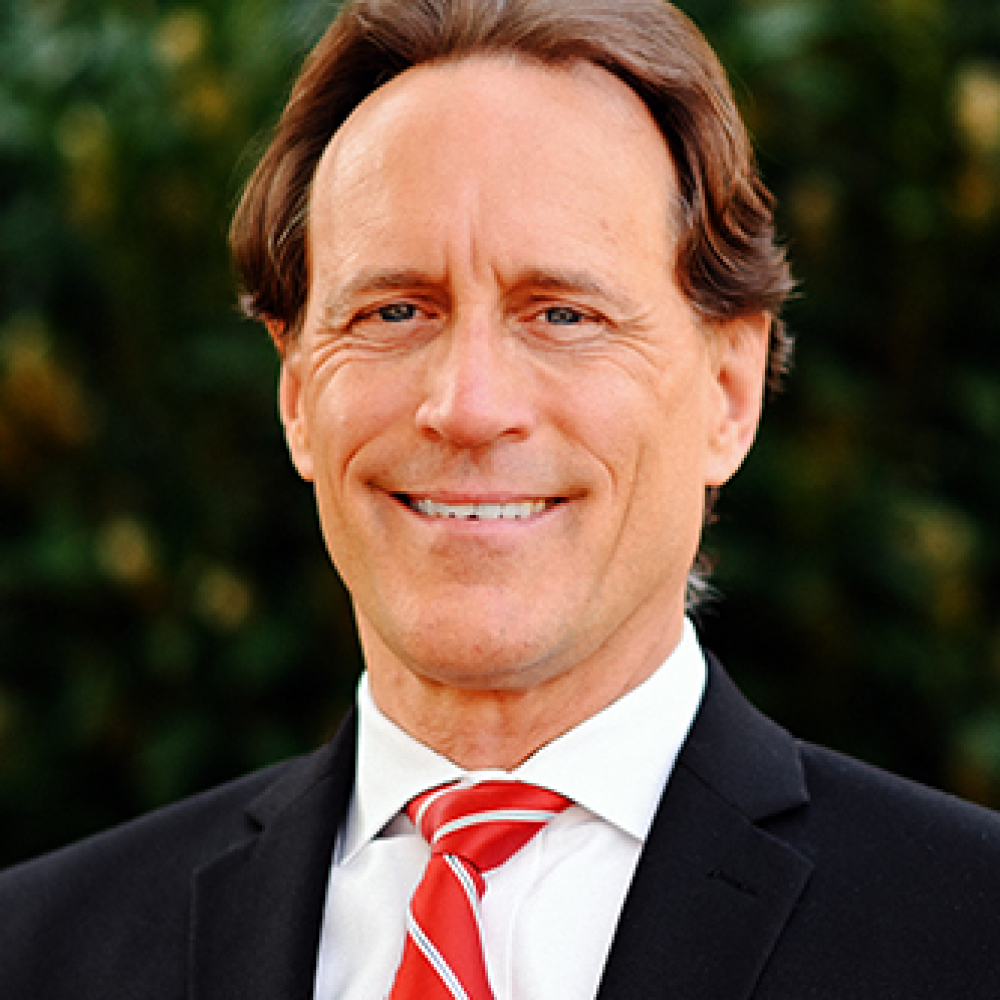
Jeffrey Schall is a Full Professor of Biology and Program Director of the Visual Neurophysiology Centre at York University. He holds the Canada Research Chair in Translating Neuroscience. His research focuses on neural mechanisms underlying behavior, integrating neurophysiological and computational approaches across multiple scales. Schall is a core member of the Centre for Vision Research and the Canada First Research Excellence Fund Connected Minds initiative. Education: PhD in Anatomy (University of Utah School of Medicine, 1986), postdoctoral training at MIT. Awards include the Troland Research Award, Sloan Foundation Fellowship, and AAAS Fellowship. He served as Vision Science Society President in 2019. Research interests include visual attention, executive control, error monitoring, and translational neuroscience applications in law. His work bridges basic science with applied studies in clinical populations like schizophrenia patients. Collaborative projects involve EEG/MEG analysis, cortical microcircuitry modeling, and neuromodulation techniques. Teaching: YU_NRSC 2100 Systems, Behavioral, and Cognitive Neuroscience. Active in interdisciplinary initiatives linking neuroscience with legal systems through scholarship and policy engagement.
Takako Fujioka is an Associate Professor of Music at Stanford University, affiliated with the Center for Computer Research in Music and Acoustics (CCRMA). Her research focuses on the neural mechanisms underlying auditory perception, auditory-motor coupling, and music-supported therapy for neurorehabilitation. She holds a Ph.D. in Physiology from the Graduate University for Advanced Studies, Japan, and M.Sc./B.Eng. degrees in Electrical Engineering from Waseda University. Her work combines neurophysiological techniques such as MEG and EEG to study brain plasticity in development, aging, and stroke recovery. Notable contributions include investigating how music influences motor and cognitive recovery in stroke patients, as well as exploring the neural basis of musical perception through rhythmic synchronization and pitch discrimination studies. Supported by awards from the Canadian Institutes of Health Research during her postdoctoral work at the Rotman Research Institute, her research bridges clinical neuroscience and music cognition. Dr. Fujioka’s expertise spans auditory neuroscience, neurorehabilitation, and technology-assisted music therapy. She has pioneered studies on tactile mapping for cochlear implant users and networked music performance systems, emphasizing cross-modal perception and human-technology interaction. Her findings contribute to both theoretical understanding of auditory processing and practical applications in medical and educational settings. Awards: Canadian Institutes of Health Research Awards (postdoctoral phase) Labs/Teams: CCRMA, Stanford Music Perception Laboratory, Rotman Research Institute collaborations Key Themes: Neuroplasticity, Music-Mediated Rehabilitation, Auditory-Motor Integration, Multisensory Processing Her recent work examines aging-related changes in binaural hearing and the role of beta/gamma oscillations in rhythmic processing. She advocates for translational research that connects neural mechanisms with real-world therapeutic interventions.
Prof. Dr. Nicole Ondrusch is a Professor at Heilbronn University (HHN) within the Faculty of Computer Science. She specializes in teaching methodological fundamentals of software engineering, including ERP systems, Design Thinking, Change Management, and digital transformation. Her research focuses on educational concepts for computer science technologies and future-relevant skills. Key Roles and Projects: Member of BW-CAR doctoral center Organizer of Barcamp Heilbronn, an unconference teaching project fostering student teamwork Principal investigator in funded projects like DigiTrans (digital transformation education) and DEV:GAMES (educational game development) SAP Academic Board DACH spokesperson since 2021 Research Interests: Her work emphasizes innovative teaching methods such as Design Thinking, agile project implementation, and digital experimentation. She explores ethical AI education, interdisciplinary collaboration, and the societal impact of digital transformation. Nicole also develops practical teaching tools like virtual escape rooms and game-based learning frameworks. Grants & Partnerships: Funded by DAAD (DigiTrans), Stiftung Innovation, and others Collaborates with industry partners like SAP and local IT organizations (ConnectIT) Labs & Teams: She leads the Lab:D initiative, developing digital teaching platforms, and co-organizes the Barcamp, a student-led event integrating real-world project management and community building.
Dalibor Radovanović is a researcher at Singidunum University , affiliated with the Faculty of Business Informatics . His work spans cybersecurity, blockchain technologies, and their applications in business and IoT systems. Education: Doctoral Dissertation (2016, Singidunum University) Master's & Basic Studies (Faculty of Business Informatics) Secondary Education: ETŠ Nikola Tesla Research Interests include: Security frameworks for IoT and blockchain integration Smart card and wireless network vulnerabilities E-governance and corporate IT audit methodologies Machine learning applications in cybersecurity Environmental performance optimization in agribusiness Publication Trends reveal a focus on blockchain (2022), cybersecurity (2009-2022), and IT governance (2010-2017). His work bridges theoretical analysis with practical implementations in Serbia's digital economy. Collaborations with scholars like Marko Šarac and Saša Adamović highlight interdisciplinary approaches to securing financial systems, educational institutions, and industrial IoT applications.
Prof. Dr. Pia Knoeferle is a leading academic at Humboldt-Universität zu Berlin , where she serves as a Professor in the Department of German Language and Linguistics . She is a principal investigator in the Collaborative Research Center (CRC 1412) focused on register phenomena and leads the Reaction Time, Eye-tracking, and EEG Laboratories . Her research spans psycholinguistics , cognitive neuroscience , and computational modeling of language , with a central interest in how real-time language comprehension interacts with social context , formality-register congruence , and morphosyntactic processing . Appointments: Professor at Humboldt-Universität (2024), CRC 1412 member Methodologies: Eye-tracking, EEG, Visual World Paradigm, ERP Her work investigates lifespan language processing (children, adults, older adults) through contextual cue integration , including emotional , spatial , and social context such as gender cues , eye gaze , and facial expressions . Key questions include: How do pragmatic and contextual factors modulate lexical and grammatical processing ? What representations underlie register sensitivity in spoken and written comprehension ? Recent articles (2022-2024) focus on register congruence effects in German sentence processing, age-related differences in formality-register anticipation , and interactions between register and morphosyntactic knowledge . Using eye-tracking and visual world paradigms , her team examines incremental integration of socially-situated context with verb-argument relations and grammatical constraints . Findings suggest subtle late-stage register effects and interference between pragmatic and syntactic processing . Her lab collaborates with researchers like Katja Maquate , Valentina Nicole Pescuma , and Camilo Ronderos , contributing to the Frame text of the Second Phase Proposal for CRC 1412 (2020) and subsequent reviews in Frontiers in Psychology (2023). The work emphasizes complementary methods to model register variability across languages , modalities , and cultural contexts .
Professor Aditi Lahiri is a Research Professor of Linguistics at the University of Oxford's Faculty of Linguistics, Philology and Phonetics. She holds positions in the Centre for Linguistics and Philology and directs the Language and Brain Laboratory. Her research focuses on phonology, phonetics, historical linguistics, psycholinguistics, and neurolinguistics, with special expertise in metrical theory, feature theory, and morphological complexity. Education : BA (Mathematics, Economics) from University of Calcutta (1971); MA (Comparative Philology) from University of Calcutta (1973); DPhil (Comparative Philology and Linguistics) from University of Calcutta (1979); PhD (Linguistics) from Brown University (1982). Research Interests : Her work spans experimental and theoretical linguistics, including prosodic phrasing, lexical representation, language change, and neural correlates of phonological processing. Key areas include: Metrical phonology and historical sound change Cognitive representation of speech sounds Morphological complexity in the mental lexicon Speech perception and production mechanisms Recent Research Trends : Over the past decade, her publications emphasize cross-disciplinary approaches, integrating experimental psycholinguistics with computational modeling (e.g., ERC-funded projects on morphophonological alternations). Recent work explores language processing in multilingual speakers and the neural basis of phonological features. Awards : Recipient of prestigious awards including the Leibniz Prize (2000), Max Planck Research Prize (1994), and Fellow of the British Academy (2010). She serves as Vice President of the British Academy and President of the Philological Society. Grants & Leadership : Secured over €8 million in research funding, including ERC Advanced Grants (e.g., MORPHON, WORDS). Directed the DFG-funded Sonderforschungsbereich 471 (2006-2008). Established key partnerships in India through endowed scholarships and academic outreach initiatives. Labs & Collaborations : Leads the Language & Brain Laboratory, collaborating internationally on projects combining neurolinguistic methods with historical and experimental linguistics. Supervised numerous PhD students who have become leading academics globally.
Andrew Yonelinas is a Professor in the Department of Psychology at the University of California, Davis, where he directs the Human Memory Lab. He holds additional leadership roles as Associate Director of the Center for Mind and Brain and is an affiliated faculty member with the UC Davis Center for Neuroscience. His research bridges cognitive psychology and neuroscience to investigate fundamental memory mechanisms and their neural substrates. His educational background includes a Ph.D. in Experimental Psychology from McMaster University (1995) and a B.S. in Cognitive Science from the University of Toronto (1990). These foundational studies established his expertise in experimental methodologies and cognitive theory. Yonelinas specializes in dual-process models of memory, distinguishing between recollection (detailed contextual retrieval) and familiarity (vague recognition). His lab employs process dissociation, remember/know procedures, and ROC modeling alongside neuroimaging (fMRI, ERP) and clinical studies with amnesic and Alzheimer's patients. Recent work expands into auditory working memory, multisensory integration, and the impact of mental illness on cognitive processes, revealing hippocampal roles across memory systems. His research consistently addresses how memory fails in clinical conditions while developing unified theoretical frameworks. Analysis of his 2024-2025 publications shows a strong focus on memory mechanisms across sensory modalities, with increasing emphasis on clinical applications. Key trends include hippocampal contributions to visual/auditory working memory, EEG-based biomarkers for mental illness, and the interplay between schema knowledge and memory distortion in aging populations. His work demonstrates methodological innovation through model-based EEG phenotyping and multisite clinical collaborations. His scientific recognition includes: American Psychological Society’s Shahin Hashtroudi Memorial Award University of California Chancellor’s Fellow Award European Brain and Behavior Society International Lecture Award Yonelinas actively shapes his field through editorial roles at top journals including Proceedings of the National Academy of Sciences and Journal of Experimental Psychology, while serving as a grant reviewer for NIH, NSF, and international funding bodies. His Human Memory Lab trains next-generation researchers in memory theory and methodology, with recent projects examining stress effects on memory precision and neural mechanisms of action slips. The Human Memory Lab operates within UC Davis's neuroscience ecosystem, collaborating closely with the Center for Mind and Brain on projects involving clinical populations and neuroimaging. Current initiatives include the CNTRACS Consortium for EEG standardization in mental illness and investigations into how stress modulates memory binding through hippocampal mechanisms.
Lee Miller is a Professor in the Department of Neurobiology, Physiology, and Behavior at the University of California, Davis, College of Biological Sciences. His research integrates neural engineering, physiology, and computational methods to develop communication restoration technologies and investigate sensory processing mechanisms. His primary research interests include neural engineering for speech neuroprosthetics, electrophysiological analysis of speech production, auditory neuroscience, and geometric approaches to neuromuscular signal decoding. He employs surface electromyography (EMG), electroencephalography (EEG), and computational modeling to study brain-machine interfaces for speech restoration and multisensory integration. Recent publications reveal a dominant focus on EMG-based speech neuroprostheses, with geometric and topological analysis of neuromuscular signals emerging as a key methodology. His lab has pioneered non-invasive approaches to speech articulation decoding, created standardized EMG databases, and investigated neural mechanisms of attention in speech-in-noise processing. This work bridges engineering innovation with fundamental neuroscience to address communication disorders. Professor Miller leads the Miller Lab at UC Davis, which specializes in neural engineering for communication restoration. The lab develops real-time speech synthesis systems from neural signals and investigates the physiological basis of speech production and perception using multimodal recording techniques.
Professor Louis Schmidt is a leading academic in the Department of Psychology, Neuroscience & Behaviour at McMaster University , with a research focus on developmental psychophysiology, temperament, and the long-term effects of early adversity. His work bridges neuroscience, psychology, and behavioral science, emphasizing the interplay between brain function and socio-emotional development across the lifespan. Key research themes: Shyness, social anxiety, autism spectrum disorder, schizophrenia, and outcomes of extremely low birth weight. Recognized for mentoring postdoctoral fellow Kristie Poole, who was celebrated as a role model in the Child Emotion Laboratory. Scientific Awards : Royal Society of Canada recognition for contributions to research and scholarship. Research Trends from 15 recent publications include: Neurophysiological mechanisms of shyness (EEG, ERP, RSA) Impact of antenatal corticosteroids on adult brain function Intergenerational effects of maternal mental health interventions Cross-cultural comparisons of temperamental shyness Developmental consequences of preterm birth Behavioral and neural correlates of social anxiety in diverse populations Grants & Collaborations : Led the SNACS randomized controlled trial on antenatal corticosteroids, with applications in obstetrics and developmental neuroscience. Collaborates extensively on topics like autism spectrum disorder, schizophrenia, and emotion regulation. Labs & Teams : Directs the Child Emotion Laboratory at McMaster University, fostering interdisciplinary research on developmental psychopathology and neural mechanisms of temperament.
Bydgoszcz University of Science and TechnologyPoland
Andrzej Majkowski is an Associate Professor at the Institute of the Theory of Electrical Engineering, Measurement and Information Systems, Faculty of Electrical Engineering, Warsaw University of Technology. His career spans over two decades of research in biomedical engineering, focusing on brain-computer interfaces, signal processing, and emotion recognition. Active in both teaching and research, he contributes to advancing methodologies in electrophysiological signal analysis. Warsaw University of Technology Institute of the Theory of Electrical Engineering, Measurement and Information Systems Faculty of Electrical Engineering Specializing in biomedical engineering , Majkowski's research bridges control systems and information technologies with neuroscience applications. His work explores brain-computer interfaces , EEG/EMG signal processing , and emotion recognition using multimodal physiological data. Recent studies focus on deep learning architectures for artifact removal and classification tasks. Recent publications highlight trends in CNN-LSTM hybrid models for signal denoising, convolutional networks for seizure detection, and machine learning applications in visual evoked potential analysis. His work spans both clinical applications (epilepsy monitoring) and human-computer interaction (emotion recognition, sign language detection). With over 98 documented publications and significant bibliometric indicators (h-index 13 in Scopus), Majkowski has supervised 95 promoted theses. His research includes one funded project and collaborations in biomedical instrumentation, though specific award details remain unspecified in available records.
Prof. Sadettin Emre Alptekin is a full Professor of Industrial Engineering at Galatasaray University, Faculty of Engineering and Technology, where he also serves as Vice Dean. Since joining the university as a research assistant in 2000, he has steadily advanced through the academic ranks, becoming an Assistant Professor (2006–2010), Associate Professor (2010–2023), and finally Professor in 2023. Education: PhD (Dr), Industrial Engineering, Istanbul Technical University, Institute of Science and Technology, 2001–2006 MSc, Industrial Engineering, Galatasaray University, Faculty of Engineering and Technology, 1999–2001 BSc, Industrial Engineering, Istanbul Technical University, Faculty of Management, 1995–1999 Languages: Advanced English (C1), Upper-Intermediate French (B2), Advanced German (C1) Research Interests: Prof. Alptekin’s research focuses on Computer Learning , Fuzzy Sets and Systems , and Decision Support Systems . His work integrates artificial intelligence, machine learning, and soft-computing techniques to solve complex industrial and managerial problems in areas such as supply chain management, quality function deployment, blockchain adoption, and mental-health prediction. Publication Trends: Across more than 50 refereed publications, Prof. Alptekin has consistently explored hybrid intelligent models that combine fuzzy logic, machine learning, and multi-criteria decision-making. Recent articles emphasize deep-learning-based anomaly detection in industrial time-series data, blockchain adoption in supply chains, and machine-learning applications in subjective well-being and mental-health modeling. Scientific Awards & Honors: No specific awards or medals are listed in the provided documents. Research Leadership & Funding: Since 2008 he has been the principal investigator (executive) of 12 nationally funded projects, covering topics such as Industry 4.0 sub-system design, Internet of Things applications, artificial neural networks in organizational decision-making, big-data analytics, and strategic decision processes. Graduate Advising: He has formally supervised at least 8 master’s theses and numerous undergraduate projects. Representative thesis titles include Gaussian-process-regression-based man-hour prediction, machine-learning-driven human-behavior modeling, recommender-system design for e-commerce, thyroid-nodule diagnosis from scintigraphic images, software-effort estimation via neural networks, spreadsheet heuristics for joint-replenishment problems, cross-selling decision systems in insurance, and profitability analyses of Turkish banks under disinflation. Laboratories & Teams: While no dedicated laboratory name is disclosed, his continuous role as Vice Dean and principal investigator implies active leadership of the Industrial Engineering department’s research clusters in intelligent systems and decision support technologies.
Lindsay C. Bowman is an Assistant Professor of Psychology at the University of California, Davis, and Principle Investigator of the Brain and Social Cognition (BASC) Lab within the Center for Mind and Brain. Her work bridges developmental psychology, neuroscience, and social cognition, focusing on neural and behavioral mechanisms underlying social understanding in infancy and childhood. Education: Ph.D. in Psychology, University of Michigan (2013) B.S. in Psychology, Queen’s University (2007) Research Interests: Dr. Bowman explores how the 'social brain' develops through interdisciplinary methods including EEG, ERP, and fNIRS. Her lab examines neural correlates of social cognition, emotion regulation, and theory of mind across developmental stages. Key themes include the interplay between biological, experiential, and conceptual changes shaping social behavior. Awards: Rackham Predoctoral Dissertation Fellowship (2012–2013) Natural Sciences and Engineering Research Council Scholarships (2008–2012) Outstanding Graduate Student Instructor Award (2013) Teaching & Mentorship: She teaches courses in Developmental Psychology and Cognitive Neuroscience. The BASC Lab actively involves undergraduate and graduate students in research, emphasizing participation from those aligned with its focus on social cognition and neural development. Lab Mission: The Brain and Social Cognition Lab investigates how neural systems underpin social understanding, using cutting-edge neuroimaging alongside behavioral observations. Research spans infancy through childhood, addressing questions about empathy, cooperation, and the neural foundations of social behavior.
Lesya Ganushchak is Assistant Professor in Educational Sciences at Erasmus School of Social and Behavioural Sciences, Erasmus University Rotterdam. Her research employs cognitive neuroscience methods to examine language processing, reading development, and educational interventions. Using EEG/ERP and eye-tracking methodologies, she investigates cognitive mechanisms underlying self-monitoring, lexical access, and sentence production. Recent publications demonstrate her focus on evidence-based educational interventions: Meta-analyses of reading proficiency interventions (2024) Inference-making development in early readers (2023) Behavioral nudges improving online learning engagement (2022) Her ORCID profile documents extensive research output with collaborative networks spanning cognitive psychology and education research.
Robert Winter is a Full Professor of Business IT at the University of St. Gallen (HSG), Switzerland, and Director of the Institute of Information Management (IWI-HSG). He serves as Founding Director of HSG’s Executive MBA in Business Engineering and has led the School of Management’s Doctoral Program. His roles include Vice Editor-in-Chief of Business & Information Systems Engineering and current editorial board membership at MIS Quarterly Executive. Education M.Sc. Business Administration (1984), Goethe University, Frankfurt M.Sc. Business Education (1986), Goethe University, Frankfurt Ph.D. in Social Sciences (1989), Goethe University, Frankfurt Venia legendi (1995), Goethe University, Frankfurt Research Interests Focuses on Design Science Research, Enterprise Architecture Management, and governance of digital platforms. His work explores methodologies for collaborative innovation, data-driven transformation, and complexity management in large-scale systems. Key areas include enterprise transformation steering, data mesh adoption, and agile methodologies in public-sector contexts. Key Contributions Developed frameworks for enterprise architecture governance and digital platform ecosystems Authored influential papers on design science methodology and simulation-based research Recipient of AIS Senior Scholars’ Global Best Paper Award (2017) and Herbert A. Simon Award (2022) Professional Roles President of the School of Management Doctoral Program Member of editorial boards for leading journals (e.g., European Journal of Information Systems) Leadership in professional associations: VHB Board (2011–2014), AIS Swiss Chapter President (2012–2016)
Cristina Baus Marquez is a Research Fellow at the University of Barcelona's Faculty of Psychology, affiliated with the Department of Cognition, Development, and Educational Psychology. She holds a Ramon y Cajal Research Fellowship (2020–2025) and leads research in the Brain Dynamics and Structure of Human Cognition (BraCo) group. Her work focuses on cognitive neuroscience, bilingualism, and language processing, with a particular emphasis on electrophysiological and behavioral studies of language production, perception, and social cognition. Education: Bachelor's Degree (Llicenciatura) in Psychology, University of Barcelona (2003) PhD in Cognitive Neuroscience and Specific Educational Needs, Universidad de La Laguna (2010) Research Interests include the neural mechanisms underlying bilingual speech production, cross-modal language interactions, and how linguistic experience shapes perception of faces and voices. She employs EEG/ERP techniques to study self-monitoring processes in bilinguals and investigates the role of iconicity in sign language production. Key Projects: Ramón y Cajal Fellowship (2020–2025): Investigates verbal interactions and learning mechanisms Fundación BIAL Grant (2017–2019): Explored electrophysiology of bimodal bilingualism AGAUR Grant (2018–2020): Studied verbal interactions' cognitive mechanisms Labs/Teams: Active member of the BraCo research group, collaborating internationally on multilingualism and cognitive neuroscience projects.