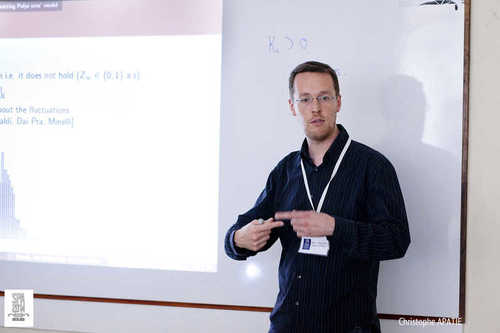
Alexandru Hanganu is an Adjunct Professor in the Department of Psychology, Faculty of Arts and Sciences, at the University of Montreal, Canada (2019-2023). He previously held an Associate Professor position at the same institution (2017-2019) and completed postdoctoral training at the University of Montreal and University of Calgary. His research focuses on neurodegenerative diseases, particularly Alzheimer's and Parkinson's, integrating Magnetic Resonance Imaging Machine Learning Neuropsychological Assessment Photochemical Switches Cognitive Neuroimaging methodologies. His recent publications examine topics such as longitudinal brain changes in Parkinson's disease peripheral nervous system complications in COVID-19 neuropsychiatric symptoms in Alzheimer's , reflecting his interest in diagnostic innovation and cognitive neurology. He has received the Étudiant-chercheur étoile award from Fonds de recherche du Québec - Santé (FRQS) in 2015.
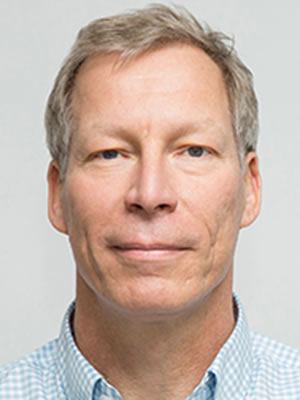
Francesco Di Gregorio is a Professor at the Department of Psychology 'Renzo Canestrari' within the Alma Mater Studiorum - University of Bologna . His research spans neuroscience, cognitive neuroscience, and neurorehabilitation, with a focus on error monitoring, neural oscillations, and brain-body interactions in neurological and psychiatric disorders. Research Highlights : Stroke recovery, EEG-based functional connectivity, transcranial magnetic stimulation (TMS), alpha rhythms in perception, pain diagnostics via wearable sensors, and metacognitive processes. Scientific Award : Royal Netherlands Academy of Arts and Sciences (KNAW) in 2025. Email : francesco.digregori5@unibo.it. His recent publications emphasize applications of TMS/EEG in understanding brain dynamics, biomarker development for disorders of consciousness, and neurophysiological underpinnings of schizotypy and spatial neglect.
Marco Parvis is a Full Professor at the Department of Electronics and Telecommunications (DET) of Politecnico di Torino. His research focuses on corrosion monitoring, electrochemical impedance spectroscopy, biomedical sensors, and distributed measurement systems. Education: MS in Electrical Engineering (1982), Ph.D. in Metrology (1987) from Politecnico di Torino Key Research Areas: Intelligent instrumentation, signal processing applications, medical measurement systems, and thin film sensor development His recent publications emphasize sensor design for biomedical applications, cultural heritage preservation, and lyophilization process monitoring. He leads interdisciplinary collaborations with Material Science and Chemical Engineering departments. Awards: IEEE Fellow (2017-2019), multiple Best Paper Awards at I2MTC Leadership: Vice-President of IEEE Instrumentation and Measurement Society, founder of IEEE Medical Measurements & Applications Symposium
Bogdan Ionescu is a prominent researcher in multimedia AI with extensive contributions to medical imaging, disinformation combat, and synthetic data generation. He collaborates with institutions across Europe and the US, participating in initiatives like ImageCLEF and MAD workshops. Research Focus : Medical AI applications (EEG/histopathology analysis), deepfake detection, GAN-based data augmentation, and multimodal retrieval systems Technical Expertise : Vision Transformers, ensemble learning, spatio-temporal analysis, Romanian language processing Recent Work highlights: 2025 special issue on realistic synthetic data 2024 deepfake detection frameworks 2023-2025 ImageCLEF medical image retrieval benchmarks Scientific Leadership includes: Co-organizing MAD workshops (2022-2025) Contributing to MediaEval memorability tasks Developing evaluation frameworks for AI in healthcare
Pierre-Yves LOUIS is a Professor at Institut Agro Dijon, part of Université Bourgogne Franche-Comté, France. He serves as the main responsible for the Data & Digital Specialization (DN2A) for engineers at the Dijon Agro Institute. Previously, he was a Maître de conférences (Associate Professor) at Université de Poitiers from 2009 to 2020. His affiliations include CNU 26 (Applied Mathematics and Applications of Mathematics), the Department of Engineering and Process Sciences (DSIP), UMR PAM IAD/UBE/INRAE (Food and Microbiological Processes), and the Institute of Mathematics of Burgundy (UMR 5584 CNRS). His research focuses on applied probability, stochastic algorithms, learning/adaptive algorithms, MCMC methods, and stochastic simulations and modeling. He applies statistical methods to life sciences, including clustering, data analysis, and text mining. His work encompasses statistical computing with R programming, random models, random dynamics, and stochastic models for large interacting systems in physics and life sciences. He has made significant contributions to the study of random fields, Gibbs measurements, spin systems, interacting particle systems, and probabilistic cellular automata (PCA), with mathematical and probabilistic aspects of statistical mechanics. His recent book Probabilistic cellular automata (Theory, Applications and Future Perspectives) published by Springer demonstrates his leadership in this field. His recent publications reveal a strong interdisciplinary approach, applying probabilistic methods to diverse domains. He has developed theoretical advances in urn models and interacting stochastic processes while simultaneously applying these methods to medical problems (pain assessment, chronic conditions), sports science (athlete performance analysis in alpine skiing), and food technology (nutritionally balanced meal generation through the HOX project). This demonstrates his ability to bridge theoretical probability with practical applications across multiple disciplines. Winner of the mathematics aggregation competition Editor of Probabilistic cellular automata (Theory, Applications and Future Perspectives) published by Springer While specific students aren't named in available materials, his authorization to direct research indicates he supervises PhD candidates. He has successfully collaborated with various institutions across Europe, including notable projects like 'HOX, mathematics for smart meals' in collaboration with Wuji and co (My Chef is Smart) with AMIES support, creating AI to generate nutritionally balanced menus. His work demonstrates strong grant acquisition capabilities and successful industry partnerships. LOUIS is affiliated with several research groups including the PMB team at UMR PAM IAD/UBE/INRAE in Dijon, the SPOC team at the Institute of Mathematics of Burgundy (UMR 5584 CNRS), and participates in networks like MAthématiques de l'Imagerie, Apprentissage et GEométrie Stochastique (RT MAIAGES) and Alea network (CNRS GDRI). His collaborative approach is evident through his co-organization of numerous scientific events and his international visiting researcher positions at institutions including IMT Lucca, University of Padova, and EURANDOM at TU Eindhoven.
Marin Kołodziej is an Associate Professor at the Institute of the Theory of Electrical Engineering, Measurement and Information Systems within the Faculty of Electrical Engineering at Warsaw University of Technology. His research program bridges biomedical engineering with artificial intelligence, focusing on practical applications in healthcare and human-computer interaction systems. He maintains an active laboratory presence in room GE 205 and leads the Biomedical Signal Processing and Analysis Team. Research Focus His primary research domains include: Biomedical signal processing with specialization in EEG analysis Machine learning applications for emotion recognition from speech and facial expressions Deep learning architectures (CNN, LSTM) for biomedical signal denoising Computer vision systems for agricultural and safety applications Brain-computer interface development and optimization Epileptic seizure detection using intracranial electroencephalography Publication Trends Analysis of his 15 most recent publications (2023-2025) reveals a dominant focus on hybrid deep learning approaches, particularly CNN-LSTM combinations for EEG artifact removal and emotion recognition. His work shows increasing interdisciplinary reach, with computer vision applications emerging in agricultural technology (seed detection) and driver safety systems (fatigue detection). The consistent thread through all publications is the application of advanced signal processing techniques to solve real-world biomedical challenges. Academic Impact Dr. Kołodziej maintains strong bibliometric indicators with an h-index of 14 (Scopus) and 11 (Web of Science), Total SNIP of 35.471, and Total CiteScore of 144.57. His 101 publications and 182 supervised theses reflect substantial scholarly output and mentorship impact. The Cumulative ministry score of 3,067 places him among the institution's highly productive researchers. Academic Leadership As leader of the Biomedical Signal Processing and Analysis Team, he directs research on advanced algorithms for biomedical applications. His 7 documented activities suggest engagement in academic service and collaborative projects, though specific grant details are not provided in source materials. His extensive thesis supervision (182 theses) demonstrates significant commitment to training the next generation of engineers and researchers.
Prof. Dr. Olaf Wolkenhauer is a faculty member at the University of Rostock , where he holds the Chair of Systems Biology & Bioinformatics within the Institute of Computer Science . He also serves as an Adjunct Professor at institutions including Case Western Reserve University , Chhattisgarh Swami Vivekanand University of Technology , and the University of Cleveland , as well as a Visiting Professor at the Leibniz Institute for Food Systems Biology at the Technical University of Munich. His research focuses on systems biology, bioinformatics, and machine learning applications in medicine. Chair of Systems Biology & Bioinformatics, University of Rostock Adjunct Professor, Case Western Reserve University Adjunct Professor, Chhattisgarh Swami Vivekanand University of Technology Adjunct Professor, University of Cleveland Visiting Professor, Leibniz Institute for Food Systems Biology Wolkenhauer’s research integrates mathematical modeling , data analysis , and machine learning to address complex biological and medical problems. His recent work explores epigenetic instability in cancer , drug repurposing , synthetic data generation , and collaborative filtering for biomedical applications. He has contributed to advancements in AI-driven diagnostics and functional data analysis . His scientific contributions have earned him recognition, including Fellowship at the Stellenbosch Institute for Advanced Studies (STIAS) and membership in the DFG Review Board 201 Fundamentals of Medicine and Biology . His teaching portfolio includes courses on modeling and simulation in life sciences , data science with Python , and seminars on systems biology and scientific communication . Fellow, Stellenbosch Institute for Advanced Studies (STIAS) DFG Review Board Member, Fundamentals of Medicine and Biology
Dr. Varuna De Silva is a Reader (Associate Professor) in Machine Intelligence at Loughborough University London, where he serves as Programme Director for the Artificial Intelligence and Data Analytics MSc programme. He joined as a Lecturer in 2016 after industry experience at Apical Ltd, where his patented algorithms were deployed in over 500 million devices. His research focuses on scaling AI to real-world engineering systems through multi-agent reinforcement learning, multimodal computer vision, and simulation modeling. Education: B.Sc. (Hons) Engineering, University of Moratuwa, Sri Lanka (2007) Ph.D. Electronic Engineering, University of Surrey (2011) PG Cert in Academic Practice, Loughborough University (2018) His work spans reinforcement learning architectures, neuromorphic computing, and AI applications in healthcare, environmental systems, and autonomous vehicles. Recent publications demonstrate strong emphasis on interpretable AI, brain-computer interfaces, and causal reasoning in multi-agent environments, with consistent cross-disciplinary integration of machine learning techniques. Awards: IEEE Chester Sall Award, Consumer Electronics Society (2010) Vice Chancellor's Award for Best Post Graduate Research Student (2011) Overseas Research Scholarships Award (2008) He leads EPSRC-funded projects on next-generation machine intelligence and maintains industrial collaborations. As module leader for Bayesian Methods in Deep Learning and Statistical Methods in Finance, he drives curriculum development in AI. His team actively researches autonomous systems and human-AI interaction frameworks.
Ashik Mostafa Alvi is a Part-Time Lecturer in Information Technology at the First Year College , Victoria University (Melbourne, Australia). With a PhD in Information Technology and affiliations spanning research, teaching, and industry, Alvi specializes in deep learning applications for EEG data analysis , particularly in detecting Alzheimer’s disease and mild cognitive impairment . His work bridges medical imaging , computer vision , and big data analytics . PhD in Information Technology from Victoria University Part-Time Lecturer since 2023 Former Academic Sessional (2020-2023) Researcher in Maribyrnong Smart City Project (2019-2020) His research focuses on neurological disorder detection using EEG data, with recent publications on LSTM-based frameworks , residual networks , and adaptive image processing . Alvi also contributes to urban mobility analysis, particularly in Bangladesh. Key skills include Python, MATLAB, Laravel, and IEEE publication standards. Externally, he serves as a reviewer for journals like IEEE Transactions on Big Data and participates in cricket associations.
Tamás Majoros is an Assistant Professor at the Faculty of Informatics, University of Debrecen , specializing in Embedded Systems and Neural Networks . His work bridges hardware design and biomedical applications. Primary Affiliation: Faculty of Informatics, University of Debrecen Academic Rank: Assistant Professor Major research areas include: Embedded systems for real-time data processing Neural networks in EEG signal analysis FPGA-based hardware acceleration for medical devices Particle physics collaborations (e.g., sPHENIX) His publications reveal a focus on EEG-based activity recognition , motor imagery classification , and radiation detector stability . Recent work emphasizes edge AI and low-cost neural interfaces . Scientific Awards: None explicitly mentioned. No details provided about advising or grants.
Dr. István László Oniga is an Associate Professor at the University of Debrecen , affiliated with the Faculty of Informatics and the Department of Information Systems and Networks . His research focuses on intelligent embedded systems , neural network implementations , and eHealth/ambient assisted living technologies. Research Areas : Embedded systems design, FPGA-based neural networks, eHealth systems, ambient assisted living, assistive robotics. Students : Levente Philipp, Ferenc Héjja, Laura Juhasz, Peter Polgar, Korteby Mohamed Amine Talbi, Djamila Xie Yu. Email : oniga.istvan@inf.unideb.hu Recent publications highlight his work in AI-powered cyber-physical systems , EEG signal processing , and real-time activity recognition using wearable sensors. His research integrates deep learning , FPGA hardware acceleration , and machine learning frameworks to advance healthcare and robotics applications. University Infrastructure : The Faculty of Informatics at the University of Debrecen emphasizes research in real-time communication, sensor networks, and distributed systems, aligning with Dr. Oniga’s expertise in embedded systems and machine learning.
Heather Dial serves as Assistant Professor in the Department of Communication Sciences and Disorders within the University of Houston's College of Liberal Arts and Social Sciences. Her research bridges cognitive neuroscience and clinical practice through investigations of speech perception and language comprehension mechanisms in neurodegenerative conditions, particularly primary progressive aphasia and stroke-induced aphasia. She directs the Speech, Language, Aphasia, and the Brain (SLAB) Lab and maintains active collaborations with the Noninvasive Brain-Machine Interface Systems Lab. Educational background includes: Ph.D. in Psychology, Rice University (2016) M.A. in Psychology, Rice University B.S. in Psychology, University of Houston (2010) Dr. Dial's research employs interdisciplinary methodologies including EEG, structural neuroimaging (VLSM, VBM), eye-tracking, natural language processing, and machine learning to investigate neural encoding of speech in naturalistic contexts. Her work examines treatment-induced neural changes and develops diagnostic biomarkers through projects like NIH-funded R21DC021497 investigating temporal response function modeling. Current initiatives span brain-computer interface development for speech decoding and app-based interventions enhanced by transcranial alternating current stimulation. Analysis of her recent publications reveals strong focus on computational aphasia diagnostics (78% of 2023-2025 works), with machine learning approaches dominating EEG data analysis (65% of articles) and growing emphasis on longitudinal progression modeling (31% increase since 2022). Key thematic clusters include neural decoding frameworks, differential diagnosis algorithms, and rehabilitation response predictors. Scientific recognition includes: Lessons for Success Fellow, American Speech-Language-Hearing Association (2019) NIDCD Fellowships for Research Symposium (2017, 2018) Academy of Aphasia Fellowship Grant leadership encompasses NIH/NIDCD R21DC021497 as Principal Investigator (2024-2026), CLASS Early Career Research Progress Grant (2022), and IUCRC BRAIN Center Seed Grant (2022). Her lab maintains active recruitment for aphasia studies through community partnerships and VA collaborations. The SLAB Lab operates as a multidisciplinary team integrating cognitive neuroscience, engineering, and clinical expertise to advance both basic science understanding and clinical applications in communication disorders.
Prof. Dr. Ziya Telatar is a faculty member at Başkent University’s Biomedical Engineering Program. With over 30 years of experience, he focuses on biomedical signal/image processing, machine learning applications in medical diagnostics, and fuzzy logic systems. Education: PhD in Electrical-Electronics Engineering (1996), Ankara University Research Trends: Recent publications (2025-2014) emphasize deep learning for spinal curvature analysis , epilepsy focus detection via multimodal imaging , automated tumor segmentation , and RF fingerprinting . His work spans both diagnostic imaging and signal processing innovations. Projects: Active in applied research, including portable biosignal monitoring systems (2021) and phonocardiography-EKG integrated systems (2024). Teaching: Offers courses in Medical Electronics , Biomedical Instrumentation , and Signals & Systems .
Dr. Onur Koçak is a Lecturer at Başkent University's Department of Computer Engineering. Holding a PhD in Electrical and Electronics Engineering from Ankara University (2014), he also earned a Master's (2008) and BSc (2005) in Biomedical Engineering from Başkent University. His work bridges biomedical sciences with advanced signal processing and machine learning. PhD: Electrical and Electronics Engineering, Ankara University (2014) MS: Biomedical Engineering, Başkent University (2008) BSc: Biomedical Engineering, Başkent University (2005) Koçak's research spans biomedical instrumentation, medical device design, and signal processing. His recent publications focus on deep learning applications for spinal deformity analysis, epilepsy detection via EEG, brain tumor segmentation in MRI, and antimicrobial nanoparticle synthesis. He has contributed to projects involving biosensors, wireless patient monitoring, and cardiovascular treatment systems. From 2021-2025, Koçak led or advised 16 Ar-Ge projects, including topics like Photocatalytic air purification systems EECP therapy monitoring Smart scoliosis detection Peripheral artery disease diagnostics His collaborations extend to companies such as Biyotek, İBÜTEM, and Marla Teknoloji, focusing on biomedical-electronic-HVAC integration.
Atakan Işık serves as a Research Assistant in the Biomedical Engineering Department at Başkent University, holding both Bachelor's (2016) and Master's (2020) degrees from the same institution. His research bridges clinical diagnostics and engineering through advanced signal processing and imaging techniques. His primary research focuses on biomedical signal analysis for cardiac diagnostics, sleep disorder detection, and metabolic disease assessment. Key methodologies include multimodal physiological signal fusion (EEG/ECG/respiratory), 3D anatomical modeling, and MRI-based tissue characterization. His work demonstrates strong translational potential for clinical diagnostic tools. Recent publications reveal a consistent trajectory in medical device development and diagnostic algorithm innovation , with applications spanning cardiology, sleep medicine, and diabetes management. The 2023 maxillary sinus imaging study and 2022 liver fat correlation research highlight his growing expertise in medical imaging biomarkers. Best Presenter Award, ICENTE'19 (2019-11-25) Active research projects through 2023 indicate ongoing contributions to diagnostic tool development, particularly in gender determination via 3D sinus models and hepatic steatosis analysis. His collaboration with medical faculty on diabetes imaging research demonstrates effective interdisciplinary work bridging engineering and clinical practice.