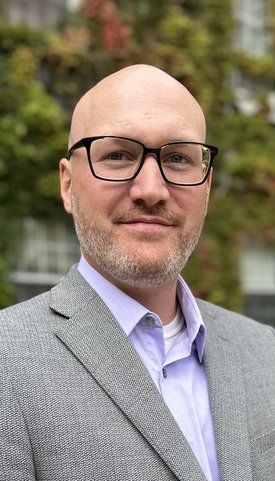
Justin M. Ryan serves as a Part-Time Lecturer in the Department of Mathematics at Syracuse University's College of Arts and Sciences. He is affiliated with the Auerbach Lab at SUNY Upstate Medical University, focusing on interdisciplinary research at the intersection of mathematics and medical science. His work bridges differential geometry, data science, and applied mathematics to address complex problems in epilepsy, cardiac physiology, and autonomic nervous system dysfunction. Research interests include computational biology applications to medical diagnostics, particularly in distinguishing epileptic versus psychogenic seizures through cardiac biomarkers. He has contributed to understanding SUDEP (Sudden Unexpected Death in Epilepsy) mechanisms and genetic models of epilepsy-related cardiac disorders. Ryan has secured multiple grants as a co-investigator, including NIH funding for genetic rabbit model development and wearable diagnostics research. His academic contributions span pure mathematics (e.g., pseudo-Riemannian Lie groups) to clinical applications (e.g., ECG-based seizure classification tools). He maintains active collaborations through professional memberships in the American Epilepsy Society and International Society for Computerized Electrocardiography. Grants: NIH R61/R33, University of Rochester Translational Research, Dravet Syndrome Foundation Key Lab Affiliation: Auerbach Lab @ SUNY Upstate Publications Highlight: 2023 Seizure Biomarker Study in Seizure Journal
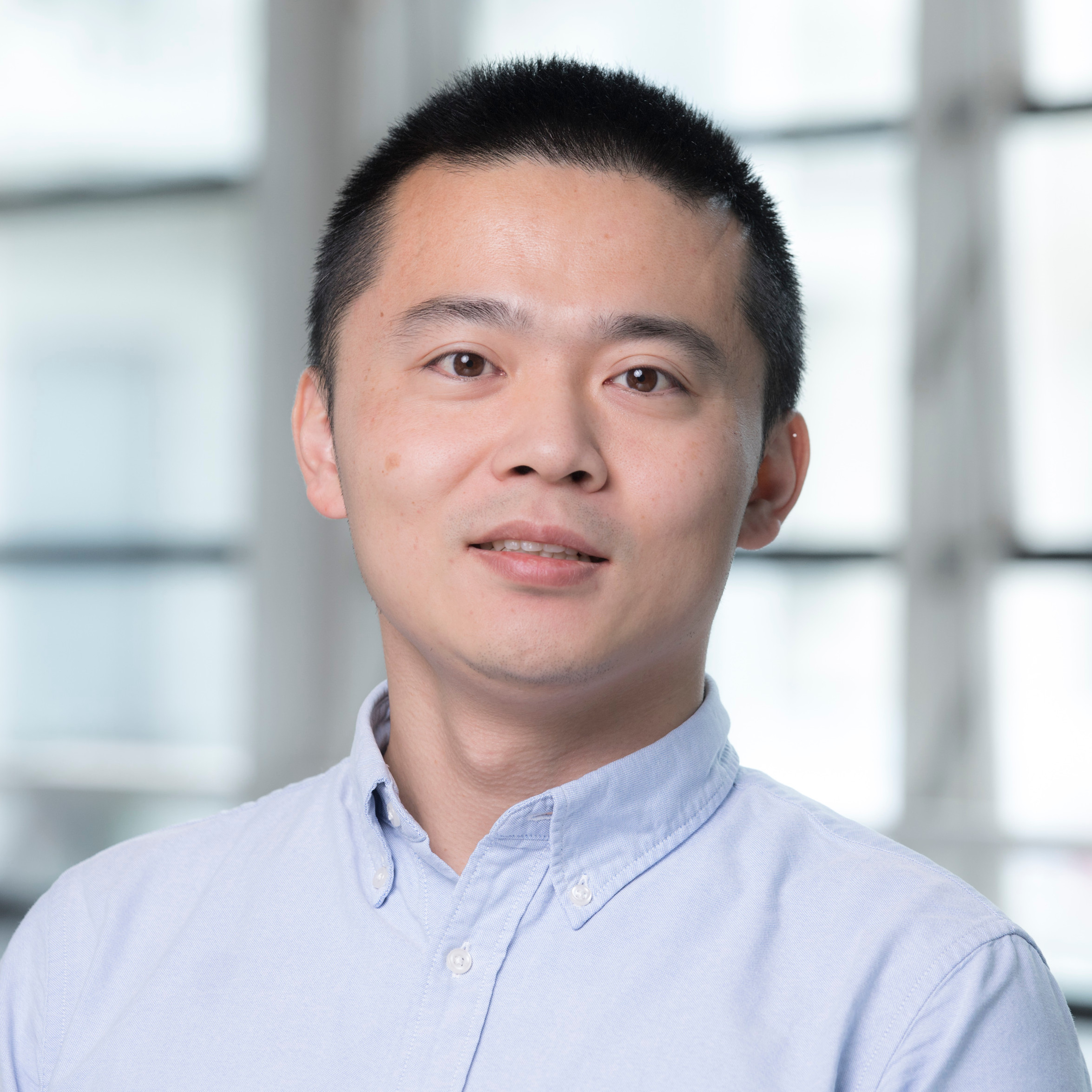
Chan Yeob Yeun is a Professor at United Arab Emirates University in the College of Information Technology, with prior affiliation at Qatar University's Department of Computer Science. His research focuses on cybersecurity, machine learning, and biometric authentication systems, particularly in industrial IoT and digital twin environments. Current Affiliation: United Arab Emirates University, College of Information Technology Prior Affiliation: Qatar University, Department of Computer Science His work spans multiple domains including: Explainable AI for healthcare and security Biometric authentication using EEG and ECG signals Blockchain applications in UAV networks and industrial systems Federated learning security and data poisoning defense Digital twin threat modeling Recent publications demonstrate technical innovation in: YOLOv3-based safety monitoring Physics-informed neural networks Hybrid TESLA protocol security Shadow AI cybersecurity Metaverse threat intelligence
Nuno Gonçalo Coelho Costa Pombo is an active researcher and faculty member at the University of Beira Interior, Portugal, where he works in the School of Technology and Management within the Department of Computer Science. His academic career spans over a decade with consistent publication output from 2014 through 2025, demonstrating sustained research productivity and evolving expertise across multiple domains. Dr. Pombo's research interests center on the intersection of computer science and healthcare applications. His work prominently features ECG signal processing for medical diagnostics, with significant contributions to sleep apnea detection systems and clinical decision support systems . He has pioneered approaches in activities of daily living recognition using sensor data from mobile devices, which has important applications in elderly care and chronic disease management. His research methodology often combines machine learning techniques with Internet of Things (IoT) frameworks to create healthcare monitoring solutions that balance effectiveness with user privacy concerns. Recent work has expanded into educational technology applications, including augmented reality for programming instruction and futuristic thinking development in education. An analysis of Dr. Pombo's publication trends reveals a natural progression from foundational research in activity recognition to increasingly sophisticated healthcare applications. His early work focused on basic activity recognition frameworks, while more recent publications demonstrate advanced applications in specific medical conditions including diabetes management, mental health support, and cardiovascular diagnostics. The interdisciplinary nature of his research is evident in his extensive collaborations across engineering, medical, and social science domains, reflecting a holistic approach to healthcare technology development. Dr. Pombo maintains an active supervision role, with numerous publications featuring co-authors who appear to be students or early-career researchers. His work has been supported by research initiatives focused on healthcare technology innovation, though specific grant details are not evident from publication records. The consistent output across reputable venues including IEEE Access, Sensors, and international conferences demonstrates sustained research impact in his field.
Jie Su is a researcher affiliated with Zhejiang University of Technology, College of Information Engineering, Institute of Cyberspace Security. Their work spans interdisciplinary areas including machine learning, control systems, medical imaging, environmental science, and computer vision. Notable contributions include advancements in reinforcement learning for sepsis treatment, prescribed-time control theory, and Arctic sea-ice motion analysis using satellite data. They also contribute to medical AI applications like bone marrow image analysis for hematological disorders and adversarial robustness in object tracking systems. Research interests emphasize applying machine learning to solve real-world challenges in healthcare, environmental monitoring, and engineering systems. Recent work focuses on neural dynamics models for decision-making, energy-efficient hybrid vehicle systems, and vibration analysis in urban infrastructure. Their interdisciplinary approach bridges theoretical foundations (e.g., control systems, signal processing) with practical applications in biomedical and environmental domains. Publications reflect a strong focus on AI-driven solutions, including medical image analysis, adversarial machine learning, and physics-informed algorithms. Collaborations span multiple disciplines and institutions, evidenced by frequent co-authorships on topics ranging from biomedical engineering to civil engineering applications.
Dr. Shideh Kabiri Ameri Abootorabi is an Assistant Professor in the Department of Electrical and Computer Engineering at Queen’s University. She holds a PhD in Electrical Engineering from Tufts University (2015) and completed a postdoctoral fellowship at the University of Texas at Austin (2015–2018). Her research focuses on 2D material-based electronic devices, wearables, bioelectronics, and human-machine interfaces (HMI), with applications in IoT and mobile healthcare. Dr. Ameri has authored over 40 journal articles and received the 2017 Rising Star in EECE award. Her work has been featured in media outlets like BBC, IEEE Spectrum, and Phys.Org. Education: PhD in Electrical Engineering (Tufts University, 2015), Postdoctoral Fellowship (University of Texas, 2015–2018), M.Sc. and B.Sc. in Physics (Solid State), and B.A.S. in Medical Laboratory Science. Research interests include wearable sensors, stretchable electronics, bio-signal processing, and graphene-based sensor systems. Notable contributions include tattoo-assisted optical sensors, hydrogel-based biosensors, and strain-mitigated 2D electronics. Awards: Rising Star in EECE 2017. Office: Walter Light, 601.
Petar Spalević is a professor at Singidunum University within the School of Electrical Engineering and Computing. With over two decades of academic contributions from 2002 to 2025, he has established himself as a significant researcher in electrical engineering and computer science disciplines. His research expertise spans multiple interconnected domains: Wireless communications and fading channel modeling Free space optical (FSO) transmission systems Machine learning applications for healthcare diagnostics Educational technology and innovative teaching methodologies Dr. Spalević's publication trajectory reveals an evolution from foundational work in signal processing and wireless communications to more contemporary applications integrating machine learning techniques. His recent publications (2023-2025) demonstrate a strong focus on healthcare applications including Parkinson's detection from gait analysis, respiratory condition classification from audio, and ECG anomaly detection using advanced neural network architectures. He maintains parallel research in wireless communications, particularly examining FSO system performance under various atmospheric turbulence conditions. His work bridges theoretical communication engineering with practical applications across healthcare, transportation, and education sectors. This multidisciplinary approach while maintaining technical depth in core engineering principles characterizes his research philosophy.
Aleksandar Petrović is a researcher and academic at Singidunum University, currently finishing his doctoral studies in Intelligent Software Engineering. He holds a B.Sc. and M.Sc. in Informatics and Computing from Singidunum University. His work focuses on artificial intelligence, machine learning, and optimization algorithms applied to cybersecurity, healthcare, and agriculture. He has published over 50 scientific papers in top-tier journals and conferences. Education : Bachelor of Science (2017-2021): Informatics and Computing, Singidunum University Master of Science (2021-2022): Software and Information Engineering, Singidunum University Doctoral Studies (2022-): Intelligent Software Engineering, Singidunum University Research Interests : Petrović specializes in metaheuristic optimization techniques for machine learning models, with applications in: Cybersecurity (e.g., intrusion detection, SQL injection prevention) Healthcare (e.g., ECG anomaly detection, Parkinson’s disease analysis) Agriculture (e.g., crop yield forecasting, weed detection) Key Research Trends : His recent work emphasizes hybrid models combining recurrent neural networks (RNNs), attention mechanisms, and evolutionary algorithms (e.g., Salp Swarm, Firefly). He frequently explores real-world challenges like renewable energy forecasting and generative adversarial networks (GANs) for synthetic data generation. Advising & Grants : Petrović collaborates on projects funded by Singidunum University and international partners, focusing on AI-driven solutions for smart cities and healthcare. His lab develops tools like Singibot (AI chatbot) and YOLOv8-based surveillance systems. Labs/Teams : Participates in the Singidunum AI Research Group, working on cross-disciplinary projects involving machine learning, robotics, and IoT security.
Professor Elaine Chew is a Professor of Engineering with a joint appointment between the Department of Engineering in the Faculty of Natural, Mathematical & Engineering Sciences and the Department of Cardiovascular Imaging in the School of Biomedical Engineering & Imaging Sciences at King's College London. An operations researcher and pianist by training, she is a pioneering researcher in music information retrieval (MIR) and computational music structure analysis, forging innovative paths at the intersection of music and cardiovascular science. Her work focuses on mathematical and computational modeling of musical structures in both music and electrocardiographic traces, with applications to music-heart-brain interaction and computational arrhythmia research. Professor Chew's educational background includes: PhD and SM in Operations Research from MIT BAS in Mathematical & Computational Sciences (honors) and Music (distinction) from Stanford University FTCL and LTCL diplomas in Piano Performance from Trinity College, London Her research spans multiple disciplines, with a primary focus on the mathematical and computational modeling of musical structures and their physiological effects. She investigates how musical expressivity affects cardiovascular function, developing novel frameworks for understanding music perception and cognition through computational approaches. Her work integrates operations research, computational mathematics, and human-computer interaction to advance music information retrieval and create innovative applications at the intersection of music science and cardiovascular medicine. Professor Chew's research has evolved from theoretical music structure analysis to applied clinical research with direct medical implications, particularly in music-based therapeutics for cardiovascular conditions. Analysis of Professor Chew's recent publications reveals a strong focus on the intersection of music and cardiovascular science, with increasing application of advanced computational methods including graph neural networks, Bayesian inference, and nonlinear dynamics. Her work demonstrates a progression from pure music analysis to clinical applications, with significant contributions to understanding how musical structures affect physiological responses, particularly in hypertension and cardiovascular disease contexts. She has developed innovative approaches to using music as a therapeutic tool for autonomic modulation and cardiovascular health. Professor Chew's groundbreaking contributions have been recognized with numerous prestigious awards: Falling Walls Art & Science Breakthrough of the Year (2023) European Research Council Advanced Grant (2019) Harvard Radcliffe Institute for Advanced Study Fellowship (2007) US Presidential Early Career Award in Science & Engineering (PECASE, 2005) US National Science Foundation Faculty Early Career Development (CAREER) Award (2004) As Principal Investigator of the European Research Council Advanced Grant COSMOS (Computational Shaping and Modeling of Musical Structures) and Proof of Concept HEART.FM (Maximizing the Therapeutic Potential of Music through Tailored Therapy with Physiological Feedback in Cardiovascular Disease), Professor Chew leads significant interdisciplinary research initiatives that bridge music science and cardiovascular medicine. Her work has secured substantial funding from the European Commission, supporting innovative research that combines data analytics, citizen science, and physiological monitoring to advance understanding of music's effects on the human body. She has mentored numerous researchers through her various positions and projects, fostering interdisciplinary collaboration across music, engineering, and medical domains. Professor Chew founded and directs the Music Theranostics Laboratory, which focuses on developing music-based diagnostic and therapeutic approaches for cardiovascular conditions. She leads the COSMOS and HEART.FM projects, which involve collaborations with researchers across multiple disciplines including cardiology, musicology, computer science, and engineering. Her work often integrates interactive scientific visualizations and lab-grown compositions in live demonstrations, creating unique concert-conversations that bridge artistic performance with scientific discovery. She is a frequent invited keynote speaker who effectively communicates complex interdisciplinary research to diverse audiences.
Aarnout Brombacher is a Full Professor of Design Theory and Information Flow Analysis at Eindhoven University of Technology (TU/e), affiliated with the Department of Industrial Design and the EAISI Health research group. He holds a BSc, MSc, and PhD in Engineering from Twente University of Technology. His research focuses on data analytics in complex systems, quality and reliability management, and the application of activity data to improve health and vitality. Brombacher has held leadership roles, including Dean of Industrial Design (2010–2018) and Vice-Rector for International Relations (2012–2016). He co-edits the journal *Quality and Reliability Engineering International* and has authored over 100 journal papers. His recent work bridges design theory with health technology, emphasizing participatory frameworks for behavioral interventions and telemonitoring solutions in clinical settings. **Education**: Brombacher earned his degrees in Electrical Engineering and Engineering Science from Twente University. His early career at TU/e spanned quality management in both Industrial Design and Mechanical Engineering departments. He served as Distinguished Visiting Professor at the National University of Singapore (1998–2006). **Research**: His interests span design methodologies, field-data analysis for user-centric systems, and translating human activity data into actionable health insights. Recent projects include frameworks for cardiac telerehabilitation, gamified tools for workplace wellness, and AI-driven health interventions. His work often integrates industrial design principles with healthcare challenges, addressing both technical and socio-behavioral dimensions. **Grants & Impact**: Brombacher’s research has led to practical solutions like NutriColoring (a dietary assessment tool) and WorkWalk (integrating microbreaks into office routines). His contributions to sports and vitality include advising the Dutch government’s TopTeam on Sports and Vitality. He advocates for transdisciplinary collaboration to tackle societal health challenges through Living Lab methodologies. **Awards**: While no explicit prizes are listed, his sustained academic leadership and prolific publication record highlight his impact in quality engineering and human-centered design.
Inna Skarga-Bandurova is a Senior Lecturer in Artificial Intelligence at Oxford Brookes University (OBU) and a Visiting Professor in Cybersecurity at Ternopil National Technical University (TNTU). She specializes in decision intelligence, uncertainty modeling, and human-AI collaboration. Her research focuses on AI-driven solutions in healthcare, defense, and robotics, with notable projects in smart infrastructure for emergency response and robotic-assisted surgery. Roles: Senior Lecturer (OBU), Visiting Professor (TNTU) Research Interests: AI in healthcare, cybersecurity, robotics, decision theory Teaching: Leads modules on AI, computer science, and advanced AI at undergraduate and postgraduate levels. Her research spans AI applications in fetal ECG anomaly detection, surgical gesture prediction, and smart grid cybersecurity. She has led EU Horizon 2020 projects like SARAS (robotic surgery) and RESPONSE (smart city resilience). She currently supervises one doctoral student, having awarded seven PhDs. She is affiliated with the Visual Artificial Intelligence Laboratory (VAIL) and the AIDAS Institute. Publications highlight interdisciplinary work in medical AI, cybersecurity, and autonomous systems. Her work often bridges theoretical AI advancements with practical applications in healthcare and defense sectors.
Zijun Yao is an Assistant Professor at the Department of EECS, The University of Kansas, focusing on AI-driven healthcare applications. Previously, they worked as a research staff member at IBM Research, where they developed AI solutions for healthcare challenges. Education: Ph.D. in Information Technology from Rutgers University (2018). Research Interests: Their work bridges Data Mining Artificial Intelligence Health Informatics Medical Signal Processing Natural Language Processing Mobile Intelligence . Current projects emphasize ECG analysis, survival modeling, and multimodal deep learning for clinical diagnostics. Publication Trends: Recent articles highlight Explainable AI for Alzheimer's prediction Autoencoder-based ECG feature extraction Ontology-guided prescription recommendation Adversarial attacks in survival models Temporal dependency modeling in EHR Generative AI for personalized learning . Technical Expertise: The University of Kansas faculty member specializes in AI architectures like graph transformers, recurrent networks, and contrastive learning frameworks, with a focus on clinical data interpretability and robustness.
Lei Clifton is a Research Fellow and Official Fellow in AI & Machine Learning at Reuben College, University of Oxford. She leads a team of researchers in the Nuffield Department of Population Health and contributes to the Pandemic Science Institute’s preparedness efforts. With a PhD in Statistical Machine Learning (2007, University of Manchester), her expertise spans large-scale clinical data analysis and healthcare AI deployment. She advises the NIHR Research Support Service on study design and collaborates with Prof David Clifton’s 'AI for Healthcare' CHI Lab. Her research focuses on medical statistics and AI applications in observational studies and electronic health records, including synthetic data generation, immune protein biomarker discovery, and scalable AI implementation in healthcare systems. She co-leads projects like the Implementation framework for AI deployment and dysregulated immune protein prediction in Multiple Myeloma. Key areas of contribution include healthcare AI ethics, cross-institutional model validation, and LLM applications in medicine. Her work bridges statistical rigor with real-world clinical challenges, emphasizing generalizability and fairness in machine learning systems.
Dr. Antony J Workman is a Senior Lecturer in Cardiovascular & Metabolic Health at the University of Glasgow's Institute of Cardiovascular & Medical Sciences. His research focuses on atrial fibrillation mechanisms, particularly electrophysiological and molecular processes. He holds a BSc in Animal Physiology (London University, 1988) and a PhD in Cardiovascular Pharmacology (De Montfort University, 1996). He was awarded the British Heart Foundation Basic Science Lectureship (2001–2011) and secured tenure in 2006. His work integrates experimental and computational models to study arrhythmias, ion channels, and drug effects in atrial cells. Education: BSc Animal Physiology, London University (1988) PhD Cardiovascular Pharmacology, De Montfort University, Leicester (1996) Postgraduate Certificate in Academic Practice, Glasgow (2004) Research Interests: Dr. Workman investigates atrial fibrillation mechanisms, including ion channel remodeling, calcium signaling, and drug-induced effects. His projects explore how β-blockers and adrenergic signaling influence arrhythmogenesis, with a focus on human atrial myocytes and computational modeling. Recent studies address the role of ISK currents, adrenoceptor subtypes, and T-tubule organization in AF pathophysiology. Awards/Grants: British Heart Foundation Lectureships (2001–2011) Grants from BHF and EU for AF research Teaching & Mentorship: He coordinates the BSc Cardiovascular Studies program, oversees student projects, and mentors PhD candidates. Responsibilities include curriculum development, assessment design, and supervising MSc/MedSci research projects in cardiovascular sciences. Professional Activities: Presented at international conferences (e.g., Heart Rhythm UK, American College of Cardiology) and contributed to collaborative networks like AFib-TrainNet. His work bridges basic science and clinical applications, emphasizing translational research in cardiac arrhythmias.
Dr. Peter Francis Mathew Elango is a Research Fellow at RMIT University’s College of Engineering, affiliated with the ARC Centre of Excellence for Transformative Meta-Optical Systems (TMOS), specializing in Optical Integrated Sensors. His research spans biomedical engineering, sensor technology, and materials science, with a focus on wearable diagnostics and miniaturized sensing systems. University: RMIT University School: College of Engineering Academic Rank: Research Fellow Email: peter.francis.mathew.elango@rmit.edu.au Elango's work addresses cutting-edge challenges in sensor design, including: Development of wearable and flexible devices for physiological monitoring Exploration of metal-oxide thin films and nanomaterials for advanced sensing Investigation of humidity-dependent phase transitions in thermal sensors Creation of ultrafast optical systems and cost-effective nanofabrication tools His publications demonstrate interdisciplinary expertise across biomedical engineering, materials science, and optical physics. Key applications include chronic disease monitoring, non-invasive diagnostics, and nanotechnology-driven sensor systems.
Wenjia Bai is a Senior Lecturer in Artificial Intelligence in Medicine at Imperial College London, jointly appointed in the Department of Computing and the Department of Brain Sciences. She leads the Medical Vision group at the Data Science Institute and is a faculty member of the Biomedical Image Analysis (BioMedIA) Group. Prior to her current role, she held a Lectureship position from 2018 and became Senior Lecturer in 2022. Bai has a B.Eng and M.Eng in Automation from Tsinghua University (Distinction) and a D.Phil in Engineering Sciences from the University of Oxford, supervised by Prof. Sir Michael Brady. She previously collaborated with Prof. Daniel Rueckert before her lectureship. Education: B.Eng in Automation, Tsinghua University M.Eng in Automation, Tsinghua University D.Phil in Engineering Sciences, University of Oxford Research Interests: Bai's work focuses on advancing artificial intelligence and machine learning in medical imaging, particularly in cardiac and neurological applications. She develops algorithms for automated segmentation, motion analysis, and generative models to uncover disease mechanisms and improve clinical decision support. Her research also integrates genomics with imaging phenotypes to identify genetic determinants of cardiovascular and neurological disorders. She emphasizes open science, contributing to datasets like CMRxRecon2024 and deploying tools for large-scale studies such as the UK Biobank. Articles Trends: Her recent work highlights contributions to medical vision-language models, universal learning frameworks for cardiac reconstruction, and unsupervised clustering techniques for urban development analysis. She bridges AI with cardiology and neurology, addressing challenges in limited data scenarios and enhancing diagnostic accuracy through multimodal integration. Scientific Awards: Best Paper Award for Journal of Cardiovascular Magnetic Resonance (2018) Imperial College President’s Award for Outstanding Research Team (2019) Dudley Pennell Prize (2022) Advising & Grants: Bai advises PhD student Doga, whose work culminated in a successful viva. She leads grants as Principal Investigator for EPSRC, BHF New Horizon, and NIHR pilot projects. As a research stream leader in the SmartHeart programme (2016–2021) and co-investigator in CVD-Net (2024–2029), she drives cardiovascular research initiatives. Additionally, she serves on grant panels for Heart Research UK and the Multiple Sclerosis Society. Labs & Teams: She is affiliated with the Biomedical Image Analysis (BioMedIA) Group and leads the Medical Vision group within the Data Science Institute, fostering interdisciplinary collaboration in medical AI and imaging.