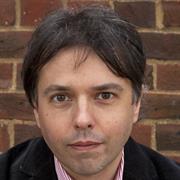
Professor George Buchanan is a leading researcher in human-computer interaction and digital libraries at RMIT University . His work bridges information science, digital humanities, and health informatics, focusing on usability in sensitive contexts like healthcare and misinformation. Deputy Dean, Research at RMIT University Former Director, University of Melbourne iSchool Research Interests: Digital information interaction Health and aging informatics Disinformation analysis Mobile interface design Digital library systems Key Contributions: Developed mobile web usability benchmarks, spatial hypertext tools, and thermal feedback interfaces. Currently seeking PhD students for 2025 projects on digital browsing and view change dynamics. Awards: Over twenty best paper awards and Honorary Life Fellow of the Royal Society of Arts. Advising: Accepting Masters/PhD supervision in information interaction and digital health domains.
Dr Ben Bailey is a Lecturer at the University of Newcastle's School of Health Sciences , specializing in Speech Pathology and Developmental Disability research. His work focuses on leveraging Virtual Reality (VR) and Augmented Reality (AR) to enhance communication development in children with Autism Spectrum Disorder (ASD) and other neurodevelopmental conditions . Key Affiliations: University of Newcastle (2020–Present), Flinders University (2020–2023), University of Technology Sydney (2019–2020) Education: Doctor of Philosophy (University of Sydney), Bachelor of Speech Pathology (University of Newcastle) His research explores interdisciplinary practice to co-design literacy instruction and digital interventions (VR/AR) for children with Down syndrome , cerebral palsy , and ASD . Notable projects include the DISCOVR VR prototype and InterPlay AR application . He has supervised PhD and Honours students on topics like Vocabulary Development in ASD and Communication Skills in Kindergarten . Publications span telepractice literacy , eye-tracking , and cross-cultural autism studies in Indigenous Australian communities. Current Teaching: Course coordinator for Language, Literacy and Hearing and Research Review at the University of Newcastle (2024).
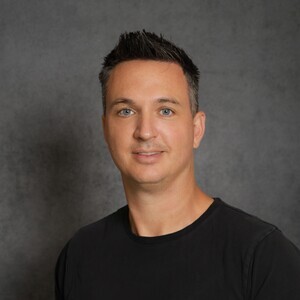
Anne Castles is a Distinguished Professor of Cognitive Science and Honorary Professor at Macquarie University's School of Psychological Sciences. She serves as Scientific Director of the Macquarie University Centre for Reading and is part of the Centre for Atypical Neurodevelopment. Her research focuses on reading development, dyslexia, and variability in reading-impaired populations. She is a Fellow of the Academy of Social Sciences in Australia (FASSA) and has held editorial roles in journals like Scientific Studies of Reading and Cognitive Neuropsychology . She previously served as President of Learning Difficulties Australia (2017–2018). Her research projects include the ARC Centre of Excellence for the Developing Mind and initiatives addressing literacy in adolescence. She collaborates internationally and has authored over 189 publications. Key areas include orthographic learning, vocabulary acquisition, and morphological instruction effects. Grants/Projects: FL22 Literacy Project (2023–2028), Macquarie University Centre for Reading Bequest (2021–2026) Labs/Teams: Macquarie University Centre for Reading, Centre for Atypical Neurodevelopment Her work bridges cognitive science and education, emphasizing practical applications for developmental and clinical contexts.
Grace Oakley is an Associate Professor at The University of Western Australia's Graduate School of Education, specializing in language and literacy education across Early Childhood and Primary years, with a strong focus on integrating ICTs and innovative teaching practices. She holds a BA(Hons), GradDipEd, MEd, and PhD from Edith Cowan University. Her research interests include mobile technologies for literacy learning, blended learning, and the application of augmented/virtual reality (XR) in education. She has led numerous grants and projects, including initiatives in Cambodia, Japan, and China, focusing on technology-enhanced teacher professional development and cross-cultural educational exchanges. Key roles include Deputy Dean of the Graduate School of Education (2020–present), Course Coordinator for Master of Teaching Primary (2009–2020), and leadership in curriculum committees and academic governance. She has received multiple awards for teaching excellence, including the AAUT Citation (2025) and ALEA Special Services Award (2024). Her work aligns with UN Sustainable Development Goals, particularly in quality education (SDG 4) and partnerships for the goals (SDG 17). She actively engages in international collaborations, keynote presentations, and policy advising to advance educational innovation globally.
David Armstrong is Associate Professor in Inclusive and Specialist Education at La Trobe University's School of Education, internationally recognized for advancing educational inclusion and ethically sound disability education. As a trusted advisor to Australian federal/state governments, disability advocacy organizations, and international human-rights bodies, he leads translational research addressing complex educational challenges. His educational background includes a PhD in Inclusive Educational Curriculum from De Montfort University (1994-1998), MEd Psychology with British Psychological Society accreditation from University of Manchester (2005-2006), and PG Diploma in Specialist Teaching from London South Bank University (1999-2000). Research focuses on transnational educational equity with core areas: Disability Inclusion, Evidence-Based Teaching, Mental Health Literacy, Behaviour in Schools, Dyslexia/ADHD, and Multidisciplinary Teams Key funded projects: Occupational Violence reduction in schools, Suspension reduction for disabled students, Culturally responsive First Nations education, NDIS reform leveraging school impacts, and International school attendance analysis Served as expert witness and scoping consultant for Australia's Disability Royal Commission (2020-2023) Regular media commentator for SBS and ABC on disability inclusion and educational policy Lead author of Educational Trends Exposed (2022) analyzing global educational trends His 15 most recent publications reveal strong emphasis on policy-practice translation, with recurring themes in disability rights, suspension reduction, and wicked problems theory applied to educational behavior challenges. Research spans Australian, UK, and Asia-Pacific contexts with significant policy impact including Disability Royal Commission contributions. Current leadership includes the Momentum Schools Extension Project (2025-2027) funded by Helen Macpherson Smith Trust, focusing on inclusive educational models. His work consistently bridges academic research with frontline educational practice through partnerships with schools, regulators, and disability organizations.
Dr. Ari Chand is a Lecturer in Illustration and Animation at UniSA Creative, University of South Australia. His expertise spans visual communication design, art education, and creative industries, with research focusing on sociological frameworks in design and the role of illustration in biodiversity, science, health, and heritage communication. He holds a PhD in Design and teaches courses in illustration practice, digital literacies, and conceptual thinking. Education: PhD (Design), University of Newcastle Bachelor of Natural History Illustration (Hons Class I), University of Newcastle Bachelor of Fine Arts/Bachelor of Teaching (Secondary), University of Newcastle Research Interests: Dr. Chand explores how illustration and design can transform communication across disciplines. His work bridges art and science through projects like Activating Artifacts (reviving Margaret Senior’s illustrations) and AI and Aspiration (student perceptions of creative futures). He advocates for inclusive design practices, such as dyslexia-friendly children’s books, and promotes creative career pathways for regional students. Awards & Engagement: Emerging Scholar Award (2022) Advance HE Fellowship (2025) Invited judge for national/international illustration competitions Contributor to The Conversation (published in SBS News, Gizmodo, etc.) Labs/Teams: Member of the Creative People, Products and Places Research Centre (CP3) and Board Member of the International Illustration Research Network. Collaborates on cross-disciplinary projects like Seeking Vision exhibition showcasing global illustration research.
Professor Nicholas G. Martin is a distinguished researcher at the Queensland Brain Institute, University of Queensland, with extensive contributions to behavioral genetics and psychiatric research. His work primarily focuses on twin studies, genetic epidemiology, and the genetic basis of mental health disorders. His research interests span behavioral genetics, particularly twin studies methodology, psychiatric genetics focusing on depression and substance use disorders, neurogenetics examining brain structure and function, and genome-wide association studies of complex traits. Martin has pioneered methodologies for analyzing genetic and environmental contributions to complex human behaviors and disorders. His publication record demonstrates consistent productivity in high-impact journals, with recent work emphasizing polygenic risk scores, gene-environment interactions, and cross-ancestry genetic studies. His research often involves large-scale collaborative efforts examining the genetic architecture of psychiatric conditions and related phenotypes. Multiple publications in Nature Genetics, Molecular Psychiatry, and other top-tier journals Extensive work on depression genetics and related phenotypes Significant contributions to twin study methodology Research spanning psychiatric disorders, substance use, and cognitive traits Professor Martin maintains active collaborations across international research networks and has contributed significantly to advancing our understanding of the genetic underpinnings of human behavior and mental health conditions through rigorous quantitative genetic approaches.
Weifeng Han is a Senior Lecturer in Inclusive Education Futures at Flinders University's College of Education, Psychology and Social Work. With dual PhDs in Linguistics and Speech Pathology , their research focuses on culturally and linguistically diverse (CALD) language development/disorders, interprofessional practice (IPP), and early language literacy policy in inclusive education contexts. PhD in Speech Pathology PhD in Linguistics MA in Applied Linguistics BA in English Research explores language development variations across cultural contexts, diagnostic/intervention strategies in multilingual settings, and evidence-based projects addressing social inclusion. Key themes include: Bilingual language development Developmental language disorders Assistive technology in education UN Sustainable Development Goals (Education) Recent publications analyze digital mental health interventions, dysgraphia interventions, and semantic acquisition in L2 learners. Awards include IELTS Research Grant (2020-2022) and Ember Venning Scholarships (2016-2017).
Sachiko Kinoshita is an Associate Professor in the School of Psychological Sciences at Macquarie University, where she contributed to founding the Macquarie Centre for Cognitive Science (MACCS) and later the ARC Centre of Excellence in Cognition and its Disorders (CCD). Her research focuses on automatic cognitive processes like visual word recognition and masked priming, particularly exploring how readers process distorted or novel stimuli across languages. She has developed the Bayesian Reader model with Dennis Norris, explaining phenomena such as letter position flexibility and task-dependent priming effects. Teaching responsibilities include undergraduate cognitive psychology courses and research methods. Supervision spans Honours projects (e.g., dyslexia, Japanese kana recognition) and PhD topics on reading aloud mechanisms and cognitive control. She holds editorial roles at leading journals including Psychological Science , Journal of Experimental Psychology: Learning, Memory, and Cognition , and Journal of Memory and Language . Current research includes a 2020-2022 project bridging theory and brain mechanisms in reading, and a 2014 ongoing study on the Noisy Channel model for word recognition. Collaborations span institutions like the MRC Cognition and Brain Sciences Unit (Cambridge) and involve multi-national studies on taboo language processing.
Dr. Shahriar Kaisar is the Deputy Head of the Department of Accounting, Information Systems and Supply Chain at RMIT University, Australia. He holds a PhD from Monash University and a master's degree from the University of Saskatchewan. His research focuses on data analytics, cybersecurity, AI, health informatics, ad-hoc networks, and emerging technologies. Dr. Kaisar has held academic roles in Australia, Canada, and Bangladesh. Research Interests: His work spans generative AI in education, cyberthreat detection, health informatics, and decentralized networking. Notable projects include frameworks for cybersecurity in power grids and AI-driven decision-making systems. Teaching & Supervision: He supervises PhD students on topics like platform economy value creation and AI-driven cybersecurity. Taught courses include Digital Business Security, Practical Cybersecurity in Business, and Networking in Business. Awards: No specific awards are listed, but his work appears in top-tier journals such as Journal of Information Security and Applications and Future Generation Computer Systems . Collaborations: Active in global research networks, with a focus on interdisciplinary projects involving industry 5.0, sustainable cities (UN SDG 11), and smart infrastructure.
Professor Mike Nicholls is a full-time faculty member at Flinders University, holding a Strategic Professorship in Psychology within the College of Education, Psychology and Social Work. He is Director of the Brain and Cognition Laboratory and currently serves as Dean of Research for his college. Previously, he was a professor at the University of Melbourne for 17 years. His educational background includes a BArchSt from the University of Adelaide (1985–1987), a BA (Hons) in Psychology from the University of Adelaide (1998), and a PhD in Experimental Psychology from King’s College, Cambridge (1990–1993), funded by a Cambridge Commonwealth Trust scholarship. Mike Nicholls’ research is centered on cognitive neuroscience, particularly the study of behavioral and perceptual asymmetries related to brain lateralization. His work investigates handedness, spatial attention in clinical and healthy populations, language, facial expression perception, and the role of eye movements. He explores how attention is controlled by the brain across sensory modalities and spatial dimensions. His recent publications reveal a strong focus on how social context influences perception, body image, facial judgments, and attentional processes, often employing neuroimaging and psychophysical methods. His 15 most recent articles (2023–1996) span topics including inattentional blindness, social modulation of visual perception, reinforcement learning in visual cortex, and attentional distortions in spatial cognition. These works reflect a consistent interest in the neural and cognitive underpinnings of lateralized behavior and attention, with applications in both healthy and clinical populations. Scientific Awards: Outstanding Academic Mentor Award, Australian Psychological Society (2020) Mike Nicholls has supervised numerous research students and PhD candidates, with advising interests in laterality, attention, and cognitive neuroscience. He has secured substantial research funding, including multiple ARC Discovery and Linkage Grants, with recent projects focusing on decision aids in complex environments, augmented reality for defense, and attentional asymmetries in navigation. He has also held editorial roles in journals such as Laterality and the Quarterly Journal of Experimental Psychology , and currently serves on the ARC's Medical Research Advisory Group. He leads the Brain and Cognition Laboratory at Flinders University, a research team dedicated to understanding cognitive processes and their neural representations, particularly in the context of brain asymmetry and attentional control.
Myra LEUNG is an Assistant Professor in Optometry at the University of Canberra's College of Health, Medicine and Wellbeing. She is a registered optometrist with a PhD in optometry from the University of Auckland (2018), supervised by Associate Professor Jane Alsweiler and Professor Ben Thompson. Education PhD in Optometry (University of Auckland, 2018) Bachelor (University of Auckland, 2011) Research Interests: Myra specializes in clinical studies exploring visual development in children born preterm, myopia control interventions, and nutrition's impact on vision. Her work combines optometric practice with interdisciplinary research on neonatal complications and digital device effects on vision. Publication Trends: Recent articles focus on preterm birth effects on visual development, myopia control through optical defocus, and binocular vision research. These span neuroscience, nutrition, and clinical optometry subfields. Collaborative Projects: She co-designed a physical activity program for women of childbearing age in CALD communities with Dr. DAVIS and colleagues (2022-2024). This work addresses health disparities and promotes community engagement.
Job Fransen is a Senior Lecturer at Charles Sturt University's School of Allied Health, Exercise and Sports Sciences, Port Macquarie campus. He teaches skill acquisition, motor control, and talent development, and is acclaimed for his non-linear pedagogy that encourages student self-discovery. Fransen holds a PhD and has received teaching accolades for his innovative methods. His research centers on human learning in sports, particularly how individual traits and environments shape movement. Key interests include talent identification in youth sports, perceptual-cognitive aspects of expertise, and collective team behavior. He adopts a meta-scientific approach to critically analyze skill acquisition literature. Recent publications (2023-2025) predominantly address soccer and esports, focusing on talent development, decision-making assessments, and the efficacy of training interventions. A recurring theme is the critique of far transfer in cognitive training, alongside innovative methods for evaluating skill and collective dynamics in team sports. Fransen actively contributes to the academic community as an associate editor for Science and Medicine in Football and through leadership in the international skill acquisition research group and teaching workgroup.
Dr. Varghese Peter is a Lecturer in Psychology at the University of the Sunshine Coast's School of Health. He holds a PhD from Macquarie University and degrees from the University of Mysore in India. His research focuses on speech perception and language development in infants/children, auditory cognition, and neural oscillations in speech processing. Dr. Peter uses EEG, psychophysics, and linear neural encoding models to investigate how environmental and genetic factors influence language acquisition. He has held academic positions at Western Sydney University and Macquarie University. Education : PhD (Macquarie University), MSc (University of Mysore), BSc (University of Mysore) Affiliations : School of Health, Discipline of Psychology His research explores topics such as maternal input quality, bilingualism, and genetic risks (e.g., dyslexia) on speech development. He also studies auditory perception impairments in conditions like dyslexia and hearing loss. Dr. Peter has secured research grants including the $495,500 'Perceptual and cognitive optimisation of visual augmented reality displays' and the $20,000 'Effect of age and background noise on cortical EEG entrainment to natural conversation'. Awards : Vice Chancellors Excellence in Research Interdisciplinary Group Award (2020) Director of Research Award for Team Research (2019) Society for Neurobiology of Language Travel Award (2009) Teaching areas include Introduction to Psychology and Personality Assessment. His work bridges developmental neuroscience and clinical applications, with recent publications focusing on cortical entrainment in dyslexia and neural mechanisms of speech perception in infants.
Greg Oates is an Associate Professor in Mathematics Education at the University of Tasmania's School of Education. His research examines technology integration in mathematics curricula, pedagogical content knowledge development for educators, and transition pathways from secondary to university mathematics. He currently serves as Program Director for the BEd (primary) program. Research interests focus on: Multi-modal approaches for learners with dyslexia Professional development using video-based reflection Learning progressions in mathematics and science Team-Based Learning in blended environments He has led several teaching innovation grants and serves on editorial boards for mathematics education journals. Current projects investigate out-of-field mathematics teaching and rural teacher support through digital technologies. Awards recognize his excellence in teaching and social justice initiatives through educational programs.