Margaretha Nordquist is a Senior Lecturer in Medieval History and researcher at Stockholm University's Department of History, with affiliations to the Center for Medieval Studies and the Language and Power Network. Her work explores the intersection of political, cultural, and social history through late medieval Scandinavian sources. PhD in 2015 analyzing Sturekrönikan and Cronica Swecie as ideological texts Current projects funded by Vetenskapsrådet and Åke Wibergs Stiftelse Specializes in historiography, cultural memory, and women's agency (1400–1750) Research focuses on: Memory and power dynamics in medieval chronicles Genealogical knowledge transmission in aristocratic families Gendered memory practices and identity formation Contradictions in Kalmar Unionist narratives Temporal structures in political historiography Publication trends show deep engagement with: Swedish/Danish/Norwegian late-medieval political culture Emotional rhetoric in power legitimization Chroniclers' role in shaping collective identity Women's contributions to historical writing Genealogical narratives as identity bridges Advising and grants include: Collaborative project with Kim Bergqvist on Swedish royal consorts Research council funding from Vetenskapsrådet and Åke Wibergs Stiftelse
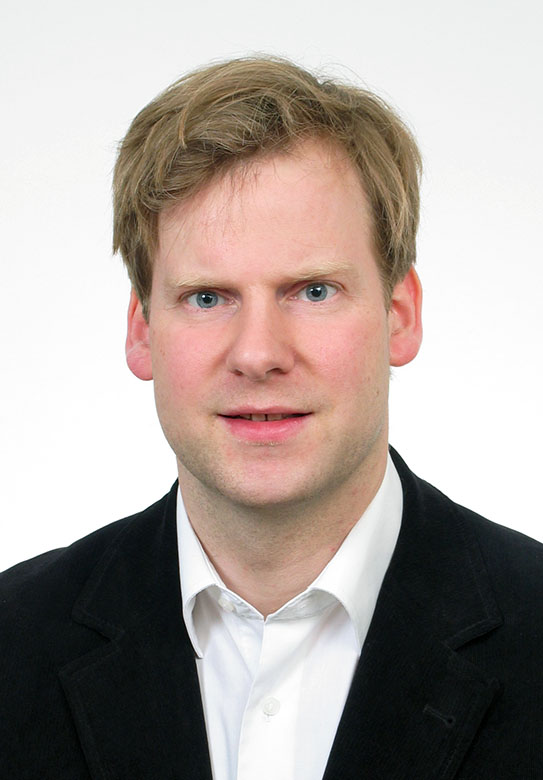
Grischa Vercamer is an Acting Professor of European Regional History at the Chemnitz University of Technology , Faculty of Philosophy, Institute for European Studies and History. He has previously served as Acting Professor for the History of the European Middle Ages at the University of Passau and holds the title of Privatdozent in Medieval History at the European University Viadrina. His academic career includes research positions at the German Historical Institute in Warsaw, the Polish Academy of Sciences, and the Humboldt and Free Universities of Berlin. Education: Dr. phil. (magna cum laude), Free University of Berlin, 2008 Habilitation, European University Viadrina, 2016 Master’s degree, Technical University of Berlin, 2003 Teacher training in History and German, FU and TU Berlin, University of Edinburgh His research interests focus on medieval concepts of power and rule, particularly in Central and Eastern Europe. He specializes in the historiography of the 12th and 13th centuries, analyzing how chroniclers in England, Poland, and the Holy Roman Empire conceptualized good and bad rulership. His work emphasizes comparative approaches, dynastic legitimacy, and the cultural memory of political structures, especially concerning the Teutonic Order and Polish-German relations. He has extensively studied the reception of medieval institutions in modern times. His publications reveal a strong trend toward editorial and monographic scholarship in medieval political and cultural history. He has published with leading academic publishers such as Brill and Harrassowitz, and his works often explore themes of legitimacy, imperial ideology, and cross-cultural perception in medieval narrative sources. His recent books examine rulership in East Central Europe and the perception of the 'Other' in German-Polish medieval chronicles. He has received research funding through programs such as the Max Weber Foundation and the EU’s Polonez 2 Marie Curie project. Vercamer has also led editorial projects and organized academic conferences on power and community in medieval Eastern Europe. Scientific Awards: No specific awards listed in the provided texts. Advising and Grants: While no students are listed, Vercamer has supervised research projects and served as a scientific project leader at the Polish Academy of Sciences. He has secured funding through competitive EU and foundation grants, indicating active grant acquisition. His role as editor of multiple volumes suggests mentorship and academic leadership. Labs and Teams: He was part of the research group 'Piast Rule in a European Context' at the German Historical Institute in Warsaw. He collaborates internationally, particularly with Polish and German institutions, and contributes to interdisciplinary teams focused on medieval political culture and historiography.
Prof Simon MacLean is a Professor of Mediaeval History at the University of St Andrews' School of History. He specializes in Early Medieval European history, particularly the Carolingian Empire and its successor kingdoms (8th-12th centuries), as well as medieval queenship. His research explores political structures, royal institutions, and the cultural memory of post-Carolingian Europe. Education: MA, University of Glasgow MPhil, University of Glasgow PhD, University of London Research Interests: Prof MacLean's work focuses on Carolingian and Ottonian political systems, medieval queenship dynamics, and the evolution of political communities in post-imperial Europe. He examines topics like royal assemblies, fortifications, and the use of historical narratives to legitimize power. Key Themes in Publications: His articles address Carolingian military strategies, the role of chronicles in political discourse, and the intersection of biblical exegesis with medieval governance. Recent work highlights the significance of frontiers, fortifications, and regional identities in shaping medieval political landscapes. Awards: Fellow of the Royal Historical Society (2005) Philip Leverhulme Prize (2008) Grants & Projects: Leverhulme Prize funded research on post-Carolingian queenship (2009-2012) British Academy projects analyzing Carolingian political structures (2016-2019) Professional Engagement: He participates in interdisciplinary networks like the Castles and Palaces Research Group and regularly presents at international conferences, bridging historical analysis with archaeological and literary evidence.
Frédérique Lachaud is a Professor of Medieval History at Sorbonne Université in Paris, specializing in medieval English political structures, particularly delegation of power and office, and medieval political thought with a focus on John of Salisbury. She previously held positions at the University of Lorraine (2010-2017) and Paris-Sorbonne (1993-2010), and was a Junior Research Fellow at St John's College, Oxford (1989-1993). Her research encompasses material culture of the English court under Edward I and the political culture of medieval London. She is a Fellow of the Royal Historical Society and is preparing a monograph on London's political culture (late 12th–early 13th centuries). Education: École Normale Supérieure (Paris), Agrégée d'Histoire, Doctorate from Oxford University (1992), and a Habilitation to Direct Research (2008) on 'The Ethics of Power: Office in Medieval English Political Culture.' Research Interests: Medieval English governance systems, political thought, urban political culture, and the historiography of medieval monarchy. Her work bridges material culture studies with institutional and intellectual history. Recent Work: Recent publications include analyses of King John's reign, medieval parliamentary petitions, and the role of political texts in legitimizing authority. She has co-edited volumes on medieval visual exegesis and contributed to debates on methodological approaches to medieval political thought. Awards: Fellow of the Royal Historical Society (2008+).
Anne Foerster is a Scientific Associate specializing in Medieval History at the University of Paderborn, Faculty of Cultural Studies, within the Historical Institute's Medieval History I department. She has been in this position since 2017, following previous research roles at the University of Kassel (2014-2017) and the International Max-Planck-Research-School for European Legal History in Frankfurt (2012-2014). Her educational background includes studies in Medieval History, Sociology, and Historical Auxiliary Sciences at the Albert-Ludwigs-Universität Freiburg (2004-2010), with an ERASMUS year at Trinity College Dublin (2007-2008). She has held various teaching positions including as a lecturer at the Institute for the Education of International Students in Freiburg (2011-2013). Dr. Foerster's research focuses on power structures in the Early and High Middle Ages, with particular emphasis on gender and authority, queenship, women's and gender history, and medieval historiography. Her current major project examines the legitimation of conquests in the Frankish and East Frankish-German Empires between approximately 500 and 1150, challenging previous scholarly assumptions about medieval justifications for military expansion. She analyzes how medieval authors employed concepts of just war, barbarian warfare, religious war, and holy war to legitimize conquests, despite the expectation that medieval rulers prove themselves in battle. Her publications reveal consistent themes exploring the intersection of gender and political power, particularly examining female regents, widowed queens, and the anxieties surrounding female rule. She has examined how female regents were evaluated in contemporary sources, particularly focusing on concerns about remarriage and potential loss of political control. Her work spans from early Anglo-Saxon England to high medieval continental Europe, with comparative studies including the Kingdom of Jerusalem. Since October 1, 2024: Member of DFG Network on Political Elites in Contexts of Rule and Religious Change: Transcultural Perspectives (ca. 500-1600) Since February 1, 2016: Member of Mediävistenverband (German Medieval Studies Association) Dr. Foerster maintains an active research agenda with multiple forthcoming publications examining medieval warfare, historical writing, and gender dynamics. Her work bridges traditional political history with gender studies and source criticism, offering fresh perspectives on medieval power structures and their representation in historical texts.
Dr. Marissa Stevens is a Lecturer in Near Eastern Languages and Cultures at the University of California, Los Angeles (UCLA), specializing in Egyptology with particular focus on the Third Intermediate Period's social history, funerary practices, and Achaemenid-era cultural intersections. She completed her Ph.D. (2018) with a dissertation on 'Shaping Identities in the Context of Crisis: The Social Self Reflected in 21st Dynasty Funerary Papyri', followed by a C.Phil. (2015) at UCLA and an M.A. in Social Sciences (2011) from the University of Chicago. Research Pillars: Third Intermediate Period materiality, Achaemenid political strategies in Egypt, social identity through funerary iconography, comparative ancient civilizations, Theban priesthood dynamics Academic Contributions: 15+ peer-reviewed publications, including book chapters on Persian influences and comparative studies with Han China, 2016 ARCE Best Student Paper award, and multiple conference presentations across four continents Digital Humanities: Co-authored the UCLA Archaeological Gazetteer of Iran, integrating digital technologies into ancient site documentation Awards & Funding: Recipient of prestigious Mellon, Keck, and Steinmetz grants, with over $50,000 in research support Comparative Frameworks: Pioneering comparative analysis between New Kingdom Egypt and Han China's state structures, hydraulic systems, and afterlife conceptions
Bethany Aram Worzella is an Associate Professor at Universidad Pablo de Olavide in Seville, Spain, affiliated with the Department of Geography, History, and Philosophy. She leads the interdiciplinary research group HG:VNI Historia de La Globalización: Violencia, Negociación E Interculturalidad and contributes to the Centro Interdisciplinar de Estudios Feministas, de las Mujeres y de Género (CINEF) . Her work focuses on early modern globalization through the Spanish Empire's Atlantic networks. Key Projects: Principal Investigator of ArtEmpire (ERC CoG 648535) and 3C project (HAR2014-52260-P) Research Themes: Interdisciplinary database design, colonial violence mechanisms, transatlantic commodity flows, and gender dynamics in royal authority Notable Publications: Co-editor of Global Goods and the Spanish Empire (2016) and author of La Reina Juana (2017). Her 2021 Historical Archaeology article redefined Panama Viejo's foundational history through interdisciplinary analysis. Scientific Recognition: European Research Council grant recipient and Spanish Ministry of Innovation awardee Academic Networks: Collaborates with institutions like Johns Hopkins University, Universidad Pablo de Olavide, and international research teams
Dr Lucinda H S Dean (Lucy) serves as Interim Head of Centre for History and Senior Lecturer in History at the University of the Highlands and Islands, specializing in Late Medieval and Early Modern Scotland and Europe. Her academic journey includes previous teaching positions at the Universities of Stirling, Glasgow, and Edinburgh, as well as the Open University (through Dundee). She completed her AHRC-funded doctoral thesis at the University of Stirling in 2013. Dr Dean's research centers on ceremony and ritual, monarchy and kingship, gender and masculinity, coming of age and the life cycle, material culture, and public history. Her recently published monograph Death and the Royal Succession in Scotland, c. 1214 – c. 1543: Ritual, Ceremony and Power (Boydell, 2024) represents a significant contribution to Scottish historical studies. She has co-edited The Routledge History of Monarchy (2019) and Medieval and Early Modern Representations of Authority in Scotland & the British Isles (2016), demonstrating her expertise in royal studies. Her scholarly work reveals consistent thematic development with increasing focus on material culture, masculinity studies, and public engagement with history. Recent publications show her expanding research into object-centered analysis of ritual objects and comparative approaches to royal masculinity and aging. Dr Dean has won the IRSS ECR Prize (2014) for her article 'Projecting Dynastic Majesty: State Ceremony in the Reign of Robert the Bruce'. IRSS ECR Prize (2014) Co-editor of The Routledge History of Monarchy (2019) Member of Advisory Committee for Stone of Destiny Reinterpretation at Perth Museum (2021-2022) Lead organiser of Royal Studies Network's tenth annual conference (2021) Dr Dean actively engages with the public through collaborations with Historic Environment Scotland, Royal Collections Trust, Culture Perth and Kinross, and National Museums of Scotland. She has contributed to media coverage regarding the Stone of Destiny in Charles III's coronation and has been involved in the rekindling of the Perth Charterhouse Project. Her teaching portfolio includes courses on Court, Kirk and Burgh in Medieval and Early Modern Scotland, Medieval and Early Modern Material Culture, Public History, and Royal Power, Propaganda and Performance in Early Modern Europe.
Maria Szuppe is a prominent Researcher at CNRS, affiliated with the Center for Research on the Iranian World – CeRMI (UMR 8041) , where she has served as Director since 2020. Her career spans over three decades, with significant contributions to the study of medieval and modern history of Iran and Central Asia. Education Habilitation à diriger des recherches, École Pratique des Hautes Études (EPHE), 2011 Doctorate in Iranian Studies/History, Université Sorbonne Nouvelle – Paris 3, 1991 Her research focuses on Persian-speaking literary spaces, dynastic legitimation strategies, women's roles in power, and the codicology of manuscripts from Eastern Iran and Central Asia. She has co-directed international collaborative projects like DYNTRAN and L’historiographie hors la cour , emphasizing non-official sources and intercultural transmission. Scientific Distinction Prix Ikuo Hirayama (2004) for co-authoring Les inscriptions persanes de Châr Bakr Maria Szuppe has supervised doctoral candidates in Iranian and Central Asian history while serving on editorial boards for key publications like Studia Iranica and the Encyclopaedia Iranica . Her career reflects deep engagement with academic societies and manuscript preservation initiatives.
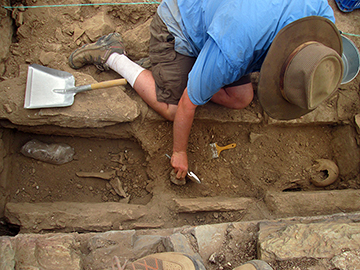
Tim Howe is a Professor of History at St. Olaf College, specializing in ancient Mediterranean and Near Eastern history. He holds affiliate roles in Gender and Sexuality Studies and Race and Ethnic Studies. His research focuses on mass-elite relations, political legitimation, and ancient historiography, with fieldwork experience in North America, the Mediterranean, and the Middle East. Howe serves as Senior Editor for The Ancient History Bulletin and leads the Acropolis Excavation Project at Antiochia ad Cragum in Turkey, a collaborative faculty-student initiative using advanced archaeological techniques. Education: B.A. in Anthropology, History, and Classical Studies from California State University, Chico; M.A. and Ph.D. in Classics and Ancient Mediterranean Studies from Penn State University. Research interests include Alexander the Great, Ptolemy I of Egypt, ancient trade networks, and agricultural practices. His work bridges history, archaeology, and classical literature, emphasizing interdisciplinary methods. Recent projects examine Hellenistic monarchy dynamics, Egyptian royal literature, and Roman-era urbanism in Cilicia. Publications include Ptolemy I Soter: A Self-Made Man , Ancient Macedonians in the Greek and Roman Sources , and edited volumes on Macedonian history and Hellenistic warfare. His excavations at Antiochia ad Cragum uncover Roman-era civic infrastructure and elite social practices.
Dr. Charlotte Dunn is a Lecturer in Classics at the University of Tasmania's School of Humanities. Her research focuses on the Hellenistic Age, particularly the Successors of Alexander the Great and figures like Demetrius Poliorcetes. She co-authored Demetrius the Besieger (2020), the first monograph on this Hellenistic king. Her work explores political imagery, numismatics, and family dynamics of ancient dynasties. Dunn holds the Gwen Nettlefold Memorial Fellowship (2024). She earned her PhD (2017) and MA (2012) from the University of Otago, specializing in Alexander's successors and propaganda. Prior roles include teaching and research at Otago University and collaborations with the Otago Museum on digitizing Roman coin collections. Her research bridges classical history and education, with projects on digital pedagogy and material culture. Dunn collaborates internationally, notably on medical humanities with Dr. Katherine Hall. She contributes to journals like Ancient History Bulletin and engages public audiences through media interviews and podcasts discussing Alexander the Great, the Ptolemies, and Hellenistic political dynamics.
Suthan Krishnarajan is an Associate Professor in the Department of Political Science at Aarhus University. His research focuses on democratic values, citizens' perceptions of undemocratic behavior, and the psychological mechanisms that sustain or erode democratic norms, particularly in contexts where partisan loyalty conflicts with democratic principles. His recent research explores the paradoxical relationship between elections and democratic satisfaction, the impact of economic experiences on democratic support, and the role of propaganda in shaping war attitudes. He has conducted projects like Disentangling Scandinavian Democratic Exceptionalism and experimental analyses of democratic paradoxes. Dr. Krishnarajan's publications span topics including free speech, democratic breakdown, electoral pledges, and authoritarian resilience. His methodological approach integrates survey experiments, historical analysis, and comparative political studies to understand democratic behavior across diverse contexts.
Dr. Friederike Herklotz is a Lecturer at the Institute of Classical Philology at Humboldt University of Berlin, affiliated with the Alexander von Humboldt Professorship. Her research focuses on the intersection of Egyptian and Hellenistic-Roman cultures, with specialties in Augustan Egypt, Ptolemaic religious practices, and medical discourses in antiquity. She coordinates projects such as the DFG-funded 'Medicine of the Mind' initiative and has held roles including Research Coordinator at the August-Boeckh Centre and Teaching Associate in Classical Philology. Her work examines imperial propaganda, cultural syncretism, and religious institutions in the ancient Mediterranean. PhD in Egyptology and Ancient History (2004) from Humboldt University Extensive teaching experience since 2001, including courses on Kleopatra, Herodotus, and Roman-Egyptian relations Project leadership in TOPOI Excellence Cluster and Berlin Antike Kolleg Her research explores topics such as Sarapis' evolution as a syncretic deity, Augustan religious policies in Egypt, and healing cults in the ancient world. She actively participates in academic networks like the 'Marburg Talks on Ancient Medicine.'
Ron Sela is an Associate Professor at Indiana University and Director of the Islamic Studies Program within the Hamilton Lugar School of Global and International Studies. He holds adjunct appointments in Religious Studies, History, Jewish Studies, and International Studies. Sela earned his PhD from Indiana University in 2004. His research focuses on the history and historiography of Central Asian Muslim communities, emphasizing self-representation in literary traditions, authority dynamics, ethnicity, and religious identity. His work examines sources ranging from the Mongol era to the present, analyzing rituals, genealogies, and mythmaking processes. He has advised over 20 doctoral students, many as dissertation chair, with topics spanning political, social, and cultural histories of Central Asia. Recent notable PhDs include studies on Zunghar state formation, Xinjiang cotton agriculture, and Āfāqiyya Sufi paths. Current students are investigating diverse themes in Central Eurasian history. Sela’s publications include monographs on Tamerlane’s legendary biographies and edited volumes on Central Asian religious authority. His courses cover Central Asian ethnic history, Turkic-Iranian civilizations, and historical methodology. Current research projects explore Turk-Iranian interactions, Manghit dynastic tombs, and Central Asian-Hindustani connections. He has contributed to interdisciplinary collaborations, including translations of historical sources and analysis of diplomatic missions. His work bridges historical analysis with broader questions of cultural identity and knowledge boundaries in Eurasia.
Dr. Mark Hagger is a Professor at Bangor University's School of History, Law and Social Sciences, specializing in medieval political history with a focus on Normandy and England from the 10th to 12th centuries. He holds a Ph.D. from the University of St Andrews (1998) and has held roles at Oxford University and the City of London. His current projects include research on Angevin rule in Normandy and editing the Anglo-Norman Studies conference proceedings. He is a Fellow of the Royal Historical Society, serves on the Pipe Roll Society council, and directs the annual Battle Conference on Anglo-Norman Studies. His research emphasizes governance structures, charters, and fiscal records like pipe rolls. Key publications include his monograph Norman Rule in Normandy, 911-1144 (2017) and recent work on Norman borders and the Bayeux Tapestry. He actively engages with international scholarly communities, including organizing events for the millennium of William the Conqueror's birth (2027). Dr. Hagger teaches undergraduate courses on medieval Europe, Norman Sicily, and Henry I, and coordinates postgraduate modules on medieval documents. His awards include fellowship status from the Royal Historical Society, and he contributes to major initiatives like the British Library's Norman-themed 2027 exhibition.