Dr. Juan Manuel Berbel Pineda is a full Professor at the Department of Business Organization and Marketing at Universidad Pablo de Olavide, Spain. His academic work focuses on tourism economics, sustainable tourism practices, and international business strategies, particularly within the hotel industry and textile sector. Key research areas: Tourism Economics, Sustainable Tourism, International Business Strategy Affiliated with IMEGS (Innovation and Marketing for a Sustainable Global Environment) research group Doctoral Programs: Innovation, Entrepreneurship and Family Business His research explores tourism competitiveness and internationalization patterns through empirical studies on hotel chains in Latin America, fair trade impacts in emerging economies, and post-COVID-19 rural tourism development. Analysis of 15 recent publications reveals strong emphasis on structural equation modeling, cross-cultural comparisons, and market segmentation strategies. Current academic activity includes international collaborations with institutions like Massey University, Varna University of Management, and University of Mauritius. His 2020 work on Ecuadorian chia seed exports demonstrates methodology for EU market selection using 7-dimensional indicators, while his sustainable tourism studies provide frameworks for pandemic-era tourism revival through non-overcrowding strategies.
Dr. Regina Enjuto Martinez is a Lecturer in International Development at King’s College London, based in the Department of International Development within the School of Global Affairs. She joined the university in 2021 and previously held positions at the London School of Economics (LSE), SOAS, and taught at Peking University. Her research focuses on welfare governance in China, particularly disability rights, HIV/AIDS policies, and migrant workers' welfare, examining state-society relations and NGO roles in welfare provision. Education: PhD in Development Studies (LSE, 2016), MSc in Sociology (National Chengchi University, Taiwan). Research Interests: Chinese politics, social welfare, civil society, migration, labor rights, project management and evaluation. Her work bridges international development theory and China’s unique policy contexts, analyzing how authoritarian governance structures influence welfare service delivery through contracting mechanisms. Collaborations with scholars like Yanchu Qu and Janet A. Howell highlight her engagement in cross-disciplinary research. She has contributed to debates on NGO autonomy, labor rights advocacy, and the convergence/divergence of China’s welfare practices with global models.
Samir Dani is a Professor of Operations and Supply Chain Management at Keele University’s Keele Business School. He holds Chartered Manager status and is a Fellow of multiple professional bodies, including the Higher Education Academy and Chartered Institute of Logistics and Transport. Prior to academia, he worked in India’s automotive industry. His research focuses on supply chain resilience, sustainability, food logistics, and Industry 4.0 technologies like AI and Blockchain. Affiliations: Keele University (current), University of Huddersfield (2014–2019), Loughborough University (2005–2008) Leadership: Former Head of Logistics, Marketing, Hospitality, and Analytics Department at University of Huddersfield Industry Engagement: £5M Leeds City Region LEP Supply Chain Program, UK-India trade advisory roles Research Interests: Supply chain risk and resilience Food supply chain sustainability AI, IoT, and Blockchain applications Industry 4.0 transformations Recent Article Trends: Focus on climate action impacts, blockchain trust mechanisms, and SME net-zero strategies. His work bridges academic theory with industry challenges, emphasizing technology adoption and sustainability. Awards: Prix des Associations (2015), UK Top 100 Logistics Professional (2017/18) Grants: £800K+ from EPSRC, IMCRC, and KTP Advisory Roles: Editorial Board member of Supply Chain Management: An International Journal, Academic Review Board member of International Journal of Operations and Production Management.
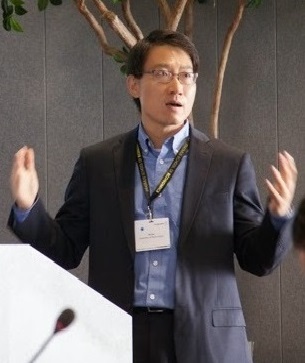
Professor Huibing Zhang is a Professor of Management at the Naveen Jindal School of Management, University of Texas at Dallas. He holds a Ph.D. in Economics from Duke University (1994) and a B.S. from Shanghai Jiao Tong University, China (1984). Prior to his current position, he served as Associate Professor at the University of North Carolina at Chapel Hill (2000–2005) and Assistant Professor at Carnegie Mellon University (1994–2000). Education: Ph.D. in Economics, Duke University, 1994 B.S., Shanghai Jiao Tong University, China, 1984 His research focuses on financial economics, tax policy, and asset pricing. Key areas include the impact of capital gains taxes on asset prices, behavioral finance, and optimal portfolio strategies. He explores topics such as model uncertainty in financial markets, external habits affecting stock returns, and optimal consumption decisions under borrowing constraints. His work integrates theoretical frameworks with practical applications in taxation and investment planning. Awards and Honors: Fellow, TIAA-CREF Institute TIAA-CREF Paul A. Samuelson Award (2004) for outstanding work on optimal asset location and allocation Barclays Global Investors/Michael Brennan Runner-Up Award (2002) for research on optimal consumption and investment with capital gains taxes Undergraduate Economics Teaching Award, Carnegie Mellon University (1998) BP America Research Chair, Carnegie Mellon University (1995–1996) Grants and Contracts: Taxes, Estate Planning and Financial Theory: New Insights and Perspectives (Q-Group, 2002; TIAA-CREF, 2002) Diversification and Capital Gains Taxes with Multiple Risky Assets (TIAA-CREF, 2001) Optimal Asset Location and Allocation with Taxable and Tax-Deferred Investing (TIAA-CREF, 2000) Optimal Portfolio Choice and Consumption with Capital Gains Taxes (TIAA-CREF, 1999) Carnegie Mellon Faculty Development Fund (1998–1999)
Zhi Da is the Howard J. and Geraldine F. Korth Chair in Finance and Professor of Finance at the University of Notre Dame , Mendoza College of Business, Department of Finance. He completed his Ph.D. in Finance at Northwestern University’s Kellogg School of Management (2006), preceded by an M.Sc. in Financial Engineering from the National University of Singapore (2001) and a B.B.A. with First-Class Honors (1999) from the same institution. Holding editorial roles at Journal of Finance , Management Science , Review of Financial Studies and several other top journals, he is a leading voice in empirical finance research. Education Ph.D. in Finance, 2006 – Kellogg School of Management, Northwestern University M.Sc. in Financial Engineering, 2001 – National University of Singapore B.B.A. (1st Class Honors), 1999 – National University of Singapore Research Interests Zhi Da’s scholarship sits at the intersection of asset pricing , behavioral finance , and market microstructure . He investigates how investor attention, institutional trading, liquidity frictions, and information flows jointly determine the cross-section of expected returns. His work delves into retail margin trading, the role of pension-fund flows in exchange-rate dynamics, the informational content of SEC filings, and the efficiency of short-selling mechanisms. By combining large-scale data analytics, textual analysis, and structural modeling, he uncovers novel predictors of returns ranging from presidential approval ratings to real-time attention measures. Recent projects explore fractional trading ’s impact on price efficiency, hedging demand as a driver of intraday momentum, and the hidden effort problem in delegated portfolio management. These themes collectively advance our understanding of limits to arbitrage and the formation of extrapolative beliefs. Publication Landscape Spanning 2025 back to 2009, his 15 most recent articles in Journal of Finance , Review of Financial Studies , Management Science , Journal of Financial Economics , and Journal of Financial and Quantitative Analysis converge on three broad motifs: (1) micro-level trading frictions—liquidity costs, margin requirements, and short-selling constraints; (2) macro-finance linkages—exchange rates, fiscal policy, and global capital flows; and (3) information economics—attention allocation, media analytics, and regulatory disclosures. The collective evidence demonstrates that seemingly small trading or informational frictions aggregate into large, persistent cross-sectional return predictability. Honors and Awards 2017 William F. Sharpe Award for Best Paper, Journal of Financial and Quantitative Analysis Lead-article distinctions in Journal of Finance , Review of Financial Studies , and Management Science Featured coverage in SmartMoney and CNBC Teaching & Mentorship At Notre Dame’s Mendoza College, Professor Da teaches Investments (undergraduate and MBA) and Fixed Income Securities , integrating cutting-edge research insights into the curriculum. While specific advisees are not listed, his extensive co-author network (22+ recurring collaborators) attests to a vibrant mentoring environment. Laboratory & Data Resources He publicly distributes the NAT (Net Arbitrage Trading) dataset, a stock-quarter panel of arbitrage positions used in Chen, Da & Huang (2019). This resource has become a standard tool for researchers studying arbitrage capital movements.
Mr. Dr. Gerdien Oldenhuis is an Assistant Professor at the Faculty of Law of the University of Groningen, specializing in Labor Law and Social Security Law. He holds multiple roles including Coordinator and Head Teacher of the post-academic social security law course (PAO), Member of the Supervisory Board of the Groninger Leergang Arbeidsrecht, and Coach for the National Team of the Hugo Sinzheimer Moot Court Competition. His expertise spans work contract law, social security claims, and legal policy analysis. He contributes to academic publications such as the Tijdschrift voor Ontslagrecht and Tijdschrift Arbeidsrechtpraktijk . Oldenhuis teaches courses on work contracts, social law fundamentals, legal research methodologies, and thesis supervision. His research focuses on labor transitions, dismissal law, and the intersection of employment and social security policies. Ancillary activities include roles at the Bestuursacademie Nederland, Schuldhulpacademie, and editorial work for legal journals. He actively participates in policy discussions and legal education initiatives, emphasizing practical applications of law in real-world scenarios.
Wei Xiong is the Hugh Leander and Mary Trumbull Adams Professor in Finance and Professor of Economics at Princeton University, affiliated with the Department of Economics and Bendheim Center for Finance. His research centers on behavioral finance and capital market imperfections with a focus on China's financial system and commodity markets. His educational background includes: Ph.D. in Finance from Duke University (2001) B.S. in Physics from University of Science and Technology of China (1993) Research Interests: Professor Xiong's work fundamentally explores behavioral finance and capital market imperfections , pioneering studies on speculative bubbles , heterogeneous beliefs in asset pricing , and financing frictions . His recent scholarship critically examines the financialization of commodity markets , belief distortions during financial crises , and the unique institutional dynamics of China's hybrid economy , where state and market forces interact. Publication Trends: Xiong's 48 publications in top-tier journals reveal an evolving trajectory from classical behavioral finance (2001-2013) toward contemporary China-focused systemic analysis (2017-2025). Recent works integrate cryptocurrency economics, real estate risk management, and policy design in emerging markets, demonstrating methodological rigor through structural modeling and empirical analysis of large-scale financial datasets. Scientific Awards: 2012 Smith Breeden Award (first prize) for the best non-corporate finance paper published in Journal of Finance 2013 NASDAQ OMX Award for the best asset pricing paper presented in Western Finance Association Meetings Professional Activities: As NBER research associate and former Management Science finance editor (2009-2011), Xiong bridges academia and policy. He co-founded VoxChina.org to foster China-world economic dialogue and co-edited The Handbook of China’s Financial System (Princeton University Press). His keynote addresses at major conferences—including the 2024 Chinese Economists Society meeting on “Information Discovery in a Hybrid Economy”—demonstrate sustained policy influence. Labs and Initiatives: Xiong leads Princeton's Bendheim Center for Finance research initiatives and directs VoxChina.org, which produces influential policy analyses on China's economy. His recent work includes the NBER-commissioned study on commodity market risks and ongoing projects examining big tech lending models and data privacy impacts on digital finance.
Peter Selinger is a Professor in the Department of Mathematics and Statistics at Dalhousie University , with a cross-appointment in Computer Science. He specializes in mathematical methods in computer science, particularly quantum computing and combinatorial game theory . His work on quantum programming languages like Quipper and foundational research in category theory has garnered international recognition. Education : Ph.D. in Mathematics (University of Pennsylvania, 1997), undergraduate studies in Mathematics (Technische Universität Darmstadt). Research Interests span quantum computing, category theory, and combinatorial game theory. He has pioneered formalisms for quantum programming languages, developed categorical models for quantum mechanics, and analyzed game-theoretic structures in games like Hex. His recent work includes linear dependent type theory , quantum circuit synthesis , and combinatorial game classification . Publications demonstrate expertise in quantum programming languages, categorical semantics, and game theory. Key trends include Hamiltonian simulation , Clifford+T circuits , and monotone game realization . Scientific Honors include the Killam Professorship (2017–2022), Faculty of Science Award for Excellence in Teaching (2023), and fellowships from the Alfred P. Sloan Foundation and German National Scholarship Foundation . Students he has supervised include PhD graduates Xiaoning Bian , Francisco Rios , and Neil J. Ross , along with MSc students like Fahimeh Bayeh and Seth Greylyn . He has advised 16 postdoctoral researchers.
Dr. Karin A. King is an LSE Fellow in the Department of Management at the London School of Economics and Political Science (LSE). Her expertise spans global talent management, leadership development, and strategic human resource management. She teaches in LSE's Master's programs, focusing on organisational behaviour, negotiations, and strategic rewards. With over two decades of experience in corporate HR and consulting, Dr. King advises leaders on evidence-based talent management practices aligned with business priorities. Her research explores global talent systems, leadership succession, and diversity in organisational contexts. Dr. King has been recognized with multiple awards, including the LSE Teaching Award (2023), Top Ten Best Lecturer (2022), and repeated Teaching Excellence Awards (2015–2022). She holds professional certifications in HR, management consulting, and is a Fellow of the Higher Education Academy. Her work bridges academic research and practice, with publications in leading journals like BRQ Business Research Quarterly and Journal of Global Mobility . Recent research emphasizes macro-contingent talent strategies and the role of line managers in global talent initiatives.
Prof. Dr. Mirko Kremer is a Professor of Supply Chain Management at the Frankfurt School of Finance & Management since July 2014. Prior to this, he was an Assistant Professor at Pennsylvania State University (2008-2014) and held visiting roles at London Business School, Kellogg School of Management, and INSEAD. He earned a Ph.D. in Business Administration from the University of Mannheim (2008), with prior studies in Business Administration at Mannheim (1999-2003) and Economics at Ruhr-Universität Bochum (1997-1999). Research Focus: Micro-behavioral foundations of supply chains, inventory management, sales forecasting, and service systems. Editorial Roles: Department Editor for Production and Operations Management , Associate Editor for Operations Research . Teaching: Courses in Operations Management, Supply Chain Strategy, and quantitative decision modeling at Frankfurt School, INSEAD, London Business School, and Kellogg School of Management. Research Trends: His work bridges behavioral economics with supply chain operations, emphasizing how human decision-making (e.g., managerial biases, consumer behavior) impacts inventory systems, pricing strategies, and forecasting accuracy. Recent articles focus on diagnostic errors under congestion, strategic sourcing biases, and dynamic pricing experiments.
Daniel Adelman is the Charles I. Clough, Jr. Professor of Operations Management at the University of Chicago Booth School of Business. He joined the faculty in 1997 after completing his PhD in industrial engineering and operations research at Georgia Tech. Adelman is a leading expert in Business Analytics and Management Analytics, helping companies deploy data and decision analysis to build world-class strategic and tactical management capabilities. Adelman received his PhD in industrial engineering and operations research in 1997, along with a bachelor's degree in industrial engineering and a master's degree in operations research, all from the School of Industrial and Systems Engineering at the Georgia Institute of Technology. Daniel Adelman's research focuses on applying analytical models to solve complex business problems across multiple industries. He has worked with firms from diverse sectors including internet services, chemical distribution, airlines, third party logistics, fiber-optics manufacturing, semiconductor manufacturing, oil, and healthcare. His research integrates real-world data with analytical models to bring structure and discipline to decision and control processes, enabling firms to achieve higher profits with lower risk. Adelman's recent work has concentrated heavily on healthcare analytics, where he leads the Healthcare Analytics Laboratory at Chicago Booth. This lab works with teams of doctoral and MBA students on projects with major healthcare institutions to optimize clinical, operational, and financial outcomes. His research spans foundational operations research including approximate dynamic programming, inventory theory/supply chain management, and revenue management/pricing optimization, as well as examining the linkage between operational performance metrics and financial performance of firms. Adelman's publications show a clear trend toward increasing focus on healthcare applications while maintaining strong theoretical foundations in operations research. His earlier work focused more on general operations management problems like inventory control and supply chain optimization, while his recent publications demonstrate a strategic shift toward healthcare analytics, particularly examining surgical team dynamics, hospital performance metrics, and resource allocation during public health emergencies like the COVID-19 pandemic. George B. Dantzig Prize (1998) for the best dissertation in operations research and management sciences that is innovative and relevant to practice Adelman regularly advises doctoral and MBA students through the Healthcare Analytics Laboratory at Chicago Booth. He has served as Associate Editor for Management Science, currently serves as Associate Editor for Manufacturing and Service Operations Management, and is the Area Editor for Operations and Supply Chain at Operations Research. His industry collaborations include significant projects with Akamai on internet pricing, with GE Global Research Labs on the electricity smart grid, with BP on gasoline supply contract portfolio optimization, and with Symantec on software release planning. Adelman leads the Healthcare Analytics Laboratory at Chicago Booth, which brings together interdisciplinary teams of doctoral and MBA students to work on a portfolio of projects with major healthcare institutions. The lab focuses on optimizing clinical, operational, and financial outcomes through advanced analytics and decision modeling.
Alexander I. Platt is the Earl B. Shurtz Research Professor of Law and Director of the Polsinelli Transactional Law Center at the University of Kansas School of Law. He specializes in securities regulation, corporate law, and administrative law, with a focus on regulatory frameworks, corporate governance, and legal ethics. Platt teaches Contracts, Securities Regulation, Business Organizations, and Due Diligence in Business Transactions. Platt earned his B.A. in Philosophy and Political Science (magna cum laude) from Columbia University in 2006 and his J.D. from Yale Law School in 2012, where he served as an Articles Editor on the Yale Law Journal. He clerked for Judges Stephen F. Williams (D.C. Circuit) and Royce C. Lamberth (D.D.C.) and practiced law at Boies Schiller Flexner LLP before joining KU. He is admitted to multiple U.S. courts, including the District of Columbia and New York. His research explores the intersection of regulatory enforcement, corporate transparency, and legal accountability. Notable works include critiques of SEC whistleblower programs and analyses of IPO regulatory frameworks. His 2024 article on mandatory disclosure was recognized as one of the Top 10 Corporate & Securities Law Articles of the year. Platt advocates for balanced legal guardrails to address modern market challenges like unicorn valuations and short seller dynamics. Research Highlights : SEC enforcement mechanisms and transparency Whistleblower incentives and corporate accountability IPO regulatory bureaucracy Corporate governance structures Awards : Top 10 Corporate & Securities Law Articles of 2024 Platt’s work has been cited by SEC Commissioners and featured in major media outlets like the Wall Street Journal and Bloomberg, underscoring the practical impact of his scholarship on legal and regulatory policy.
Prof. Eva-Marie Meemken is an Assistant Professor at the Department of Environmental Systems Science, ETH Zürich. Her research focuses on sustainability goals in global food systems, analyzing policies and institutional arrangements related to poverty reduction, gender equality, and food security in lower-income countries. She leads the Food Systems Economics and Policy Group, affiliated with the Institute for Environmental Decisions (IED), Institute of Agricultural Sciences (IAS), World Food System Center (WFSC), and ETH4D. Education: PhD Agricultural Economics (summa cum laude), University of Göttingen (2017) MSc Agricultural Economics, University of Hohenheim (2013) BSc Agricultural Sciences, University of Kassel-Witzenhausen (2011) Professional Experience: Since 2022: Assistant Professor (tenure track), ETH Zürich 2020–2022: Assistant Professor, University of Copenhagen 2019–2020: Postdoc, Cornell University 2018–2019: Postdoc, University of Minnesota 2017–2018: Postdoc, University of Göttingen Research Interests: Her work explores diverse actors in food systems (farmers, cooperatives, companies) and their roles in sustainable development. Current research emphasizes policy design for decent work, gender equality, and resilience in global agrifood supply chains. Teaching: She teaches the course World Food System in ETH Zürich’s Autumn Semester 2025.
Elliott Ash is an Associate Professor of Law, Economics, and Data Science at ETH Zurich's Center for Law & Economics. He holds a Ph.D. in Economics and J.D. from Columbia University, a B.A. in Economics, Government, and Philosophy from the University of Texas at Austin, and an LL.M. in International Criminal Law from the University of Amsterdam. His research focuses on empirical legal studies using econometrics, NLP, and ML, examining topics like judicial behavior, legislative impact, and AI-driven governance. He has been funded by the ERC, Swiss NSF, and others. Research Interests: Elliott explores automation of legal decisions, text-as-data analysis in law, and the intersection of AI with legal systems. He develops tools like BallotBot and LePaRD to enhance legal transparency and public understanding. His work bridges law, economics, and computer science, with publications in top journals like the American Economic Journal and Review of Economics and Statistics . Teaching: Courses include Building a Robot Judge , Natural Language Processing for Law , and Big Data for Public Policy . He co-organizes the Zurich Workshop in AI+Economics and Monash-Warwick-Zurich Text-as-Data Workshops. Awards: European Research Council Starting Grant, Swiss National Science Foundation Grant, and multiple grants from U.S. and Swiss institutions. His work has been featured in NPR , VoxEU , and Georgetown Law Journal . Labs/Teams: Leads the Swiss AI Initiative's Human-AI Alignment team, collaborates with the CEPR on Political Economy research, and serves as an Economic Journal Associate Editor.
Brett Kolesnik is a Research Fellow in the Department of Statistics at the University of Warwick. His research focuses on probability theory, random structures, bootstrap percolation, and interactions with combinatorics. He has held postdoctoral fellowships at UC Berkeley, San Diego, and the University of Oxford, and was a Senior Demy at Magdalen College. His work includes organizing workshops on bootstrap percolation and collaborating with leading researchers in probability and combinatorics. Education: PhD in Mathematics from the University of British Columbia (advised by Omer Angel). Notable awards include the NSERC Postdoctoral Fellowship and the Florence Nightingale Bicentennial Fellowship in Statistics. Research interests span bootstrap percolation models, random graph dynamics, and stochastic processes. Recent work includes studies on Brownian map geometry, tournament score sequences, and Coxeter group structures. Selected articles explore topics such as critical beta-splitting processes, Catalan percolation, and random walks on algebraic structures. His publications appear in top journals like Electronic Journal of Probability and Annals of Applied Probability . Awards include the Florence Nightingale Fellowship and NSERC Postdoctoral Fellowship. Professional involvement includes organizing the 2024 BIRS workshop on Bootstrap Percolation and contributing to interdisciplinary collaborations in probability and combinatorics.