Anne Pohrt is a researcher at Charité - University Medicine Berlin's Department of Biometry and Clinical Epidemiology. With a background in mathematics and a doctorate in medical science, her expertise spans medical biometrics, epidemiology, and statistical methodologies in clinical research. Languages: German (native), English, Swedish Programming Skills: R, SPSS, STATA Her research focuses on biometric consulting, study design evaluation, and statistical analysis in clinical settings. Key areas include logistic regression, survival analysis, meta-analyses, and psychosocial occupational factors. She provides methodological support for the Clinician-Scientist Program (CSP) and contributes to occupational medicine and psychological research. Recent publications highlight her interdisciplinary work across neurosurgery, geriatrics, nutrition science, and psychosocial workplace studies. She investigates topics like postoperative delirium predictors, dietary interventions for metabolic health, and end-of-life ICU practices. Her work integrates clinical routine data and advanced statistical modeling.
Prof. Dr. Moritz Börnert-Ringleb is a full-time professor at the Institute for Special Education within the Faculty of Philosophy at Leibniz University Hannover. His work focuses on process- and potential-oriented special education diagnostics, dynamic testing, relationships between school performance and emotional-social variables, domain-specific competency development, and digital learning in special education. Research Interests: He investigates diagnostic methodologies for learning difficulties, strategy use in cross-domain competencies, and technology integration in special education. His research bridges educational theory with practical applications for inclusive learning environments. Contact: Email: moritz.boernert-ringleb@ifs.uni-hannover.de Phone: +49 511 762 14068 Address: Schloßwender Straße 1, 30159 Hannover, Building 1211, Room 214
Emma Schlegel is a Scientific Associate at Bielefeld University within the Faculty of Health Sciences , specifically focusing on Health Services Research and Nursing Science . She is affiliated with the Center for Uncertainty Studies (CeUS) , indicating her interest in interdisciplinary research addressing complex healthcare dynamics. Her work appears to align with the university’s strategic emphasis on transcending boundaries between disciplines and societal challenges. Research Interests Schlegel’s research is likely centered on health services and nursing science, with a focus on improving healthcare delivery, patient outcomes, and system-level interventions. Given her affiliation with CeUS, her work may explore uncertainty and variability in healthcare contexts, integrating methodological approaches from interdisciplinary fields. Affiliations Faculty of Health Sciences, Bielefeld University Center for Uncertainty Studies (CeUS)
Pamela Villar González is a Lecturer and researcher at the Department of Psycholinguistics and Neurolinguistics within the Faculty of Arts and Humanities at Heinrich Heine University Düsseldorf (Germany). Her academic profile integrates research, teaching, and science communication initiatives. Role: Lecturer and researcher Department: Psycholinguistics and Neurolinguistics University: Heinrich Heine University Düsseldorf Her research spans interdisciplinary domains: Primary Focus: Language attrition and bilingualism Cognitive Neuroscience: Sleep-wake dynamics, brain aging, and neurodegenerative disease biomarkers Methodology: Open science practices and psycholinguistic research techniques Specialized Topics: Brain lateralization, whistled languages, and autism-related language studies Project Trends: Her recent publications emphasize the interplay between sleep regulation, cortical excitability, and neurodegenerative processes (tau/amyloid beta), alongside contributions to understanding cognitive resilience in aging populations. Scientific Recognition: Awarded second prize at the 2024 CERFA Symposium in Munich Active participation in neuroscience of language conferences Collaborations: Project ALHEA (language attrition study) Brain Awareness Week at HHU CERFA (Society of Spanish Scientists in Germany) The Linguist List Pint of Science outreach
Christian Feld is a Professor of Aquatic Ecology at the Faculty of Biology, University of Duisburg-Essen. His research focuses on bioindication, multiple stressor analysis, and restoration of freshwater ecosystems using Bayesian networks for diagnostic tools. He has contributed extensively to EU and national projects since 2000, particularly in implementing the Water Framework Directive. PhD in Biology (Dr. rer. nat.) from University of Duisburg-Essen (2005) Habilitated in Ecology at University of Duisburg-Essen (2018) Key research areas include: Bioindication with macroinvertebrates Freshwater biodiversity across spatial scales Mechanistic understanding of stressor impacts Bayesian networks for water management diagnostics Recent publications highlight: Advancements in δ15N measurement methodologies Salinity and drought impacts on aquatic organisms Global stressor quantification in rivers Challenges in European river typologies Teaching areas encompass ecosystem ecology, freshwater conservation, and statistical analysis at both bachelor's and master's levels.
Mats Leifels is a Research Fellow at the Dr. Karl Landsteiner Private University of Health Sciences, focusing on the Department of Water Quality and Health. His work bridges molecular virology and environmental health, specializing in detecting enteric viruses and microbial contaminants in water systems. Education: PhD in Molecular Methods for Enteric Virus Detection (Ruhr University Bochum, 2017), Master's in Viability PCR for Viruses in Surface Waters (2013), Bachelor's in RNA Thermometers in Cyanobacteria (2011) His research interests include environmental virology, biofilm dynamics in drinking water, wastewater-based epidemiology for SARS-CoV-2, and molecular techniques like viability PCR. Recent studies explore viral transport mechanisms, pharmaceutical removal in treatment plants, and microplastic contaminant interactions. Key trends in his publications (61 total, 15 most recent shown) span wastewater surveillance of arboviruses and SARS-CoV-2 variants, biofilm impacts on water quality, and advanced PCR methods for viral infectivity. Topics like "From Lab to Lake" highlight field applications of molecular tools. Scientific contributions are recognized by two major awards: the Young Scientist Award for the Dissertation (2018) and the Gateway Fellowship Postdoc Stipend (2017) . He actively collaborates in international workshops (e.g., ONE WATER 2024, WaterMicro2025) and serves as a panel moderator.
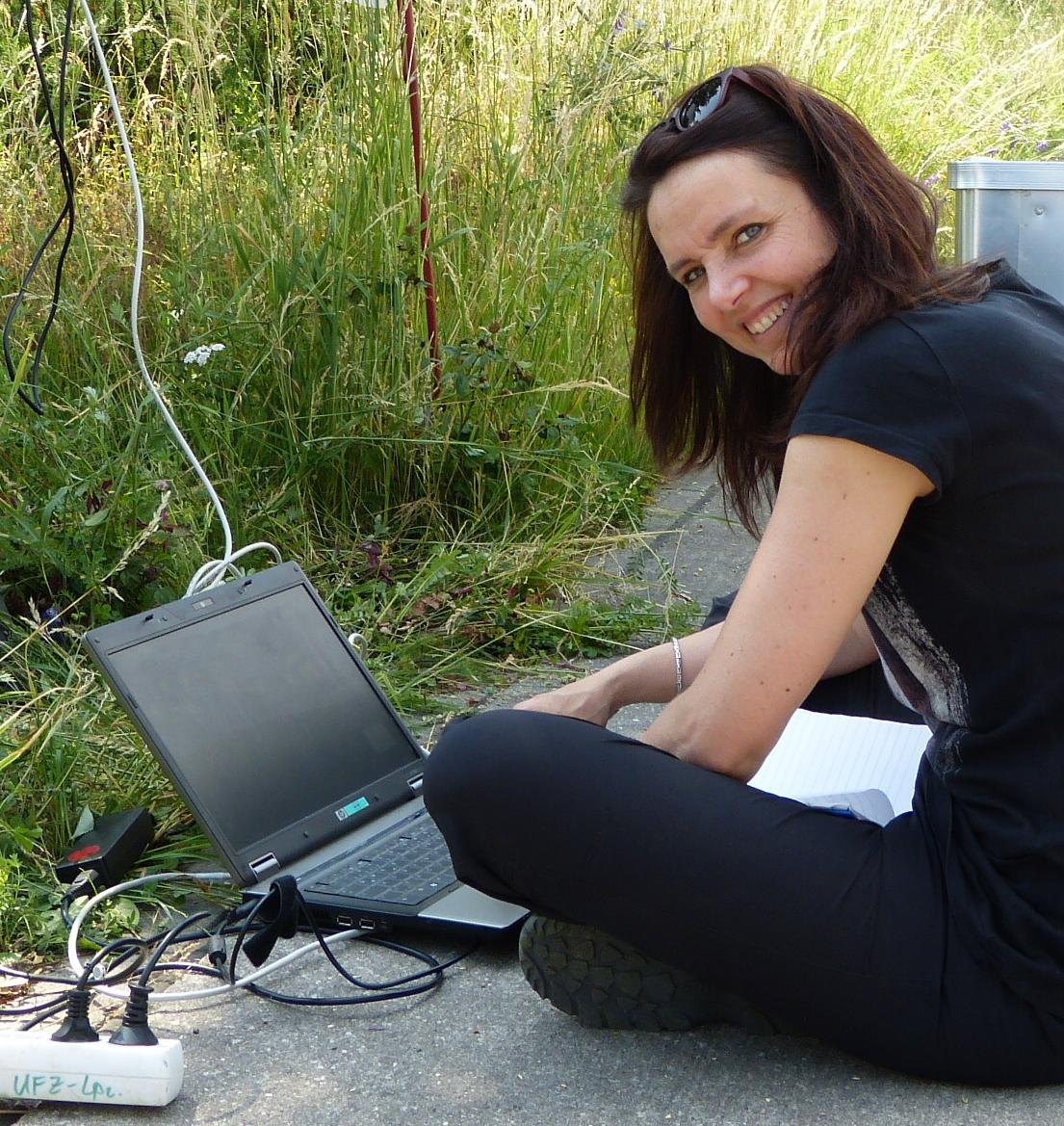
Prof. Dr. rer. nat. Claudia Schütze serves as a Scientist at the Department of Monitoring and Exploration Technologies within the Helmholtz-Centre for Environmental Research (UFZ) in Leipzig, Germany. She coordinates the Implementation Office for the MOSES Infrastructure, a significant environmental observation system. Since 2020, she holds an honorary professorship, and has been delivering lectures and practical education in applied geophysics at Leipzig University since 2006. Her academic journey began at Leipzig University's Institute for Geophysics and Geology, where she completed her PhD and postdoctoral work from 1994-2002. Dr. Schütze's research spans environmental monitoring, geophysics, and greenhouse gas emissions, with particular expertise in CO2 monitoring systems and methane flux analysis. Her work integrates field expeditions, remote sensing technologies, and citizen science approaches to address climate change impacts. She has led significant research on natural CO2 degassing sites, developing hierarchical monitoring approaches that combine geophysical methods with soil gas analysis. Her current focus includes polar environmental systems through the Polar MOSES initiative, investigating greenhouse gas emissions across Earth's compartments during dynamic events. Analysis of Dr. Schütze's recent publications reveals a strong emphasis on environmental monitoring systems, particularly the MOSES infrastructure for observing cross-compartment environmental processes. Her work spans from Arctic research to river systems and urban climate resilience, demonstrating interdisciplinary approaches that integrate geophysics, atmospheric science, and environmental informatics. A notable trend is her increasing focus on citizen science applications and data trustworthiness in environmental monitoring, reflecting evolving methodologies in the field. As coordinator of the MOSES Implementation Office, Dr. Schütze leads significant research infrastructure development for environmental observation systems. Her work connects with multiple collaborative projects across Europe, including contributions to drought monitoring systems and flood prediction frameworks. The MOSES infrastructure she coordinates represents a major platform for environmental scientists studying dynamic Earth system processes across spatial and temporal scales.
Igor Ogashawara serves as a Researcher and Director of the GEO Aquawatch Cal/Val Thematic Node at the Leibniz Institute of Freshwater Ecology and Inland Fisheries (IGB) in Berlin. His work bridges satellite remote sensing technology with practical water quality monitoring for inland aquatic systems globally. His research focuses on developing advanced algorithms for retrieving water quality parameters including chlorophyll-a, phycocyanin, and inherent optical properties from satellite data. Specializing in drought-impacted reservoirs and seasonally dynamic lake systems, he addresses critical challenges in cross-system algorithm validation and extreme event monitoring. His methodological innovations include quasi-analytical approaches for multi-water type classification and novel spectral band applications in Landsat 8 imagery. From 2021-2023, Dr. Ogashawara published 8 significant works demonstrating consistent output in high-impact journals. His publications reveal strong international collaboration patterns and cover algorithm development, observational studies of water quality dynamics, comprehensive reviews, and bibliometric analyses tracking 35 years of research evolution in inland water remote sensing. As Director of the GEO Aquawatch Cal/Val Thematic Node, he leads globally coordinated validation efforts that directly support UN Sustainable Development Goal 6. His collaborative network spans Germany, Brazil, USA, and China, with active engagement in early-career scientist development through initiatives like Eco-DAS XV. Current research priorities include expanding validation frameworks for diverse water bodies and improving monitoring capabilities during climate extremes.
Dr. Steffen Katzner is an associate faculty member in the Faculty of Biology at Ludwig Maximilian University of Munich, affiliated with the Department of Biology II and the Division of Neurobiology. He co-leads the Vision Circuits research group with Laura Busse, focusing on neural mechanisms underlying visually guided behavior in mice. His research integrates optogenetics with extracellular electrophysiology to analyze how behavioral relevance modulates cortical and sub-cortical neural activity. Key themes include sensory processing, locomotion effects on cognition, and cortical dynamics during attention. Recent publications highlight trends in mouse visual neuroscience , sensory-motor integration , and computational models of behavior . Articles explore corticothalamic feedback, V1 microcircuits, and prior knowledge in neural processing. Responsibilities include research group leadership and collaborative studies with Gregory Born, Laura Busse, and others. Contact: steffen.katzner@lmu.de
Prof. Dr. Luis Samaniego serves as Deputy Head of the Department of Computational Hydrosystems at the Helmholtz Centre for Environmental Research - UFZ in Leipzig, Germany. With the academic title 'Prof. Dr. rer. nat. habil.', he leads significant research initiatives focused on hydrological modeling and climate change impacts on water resources. Dr. Samaniego's research program centers on developing advanced parameterizations for the distributed mesoscale hydrologic model (mHM), with emphasis on capturing subgrid variability of land-vegetation-atmospheric interactions at high resolution from local to global scales. His work aims to improve predictions of streamflow, evapotranspiration, and soil moisture, particularly for extreme hydrological events under changing climatic conditions. He has been instrumental in developing the German Drought Monitor (https://www.ufz.de/duerremonitor), which provides high-resolution drought information at the one-kilometer scale for Germany. His publication record demonstrates consistent focus on drought and flood monitoring, forecasting, and modeling across multiple spatial scales. Recent work shows particular emphasis on high-resolution drought simulations, flood prediction systems, and climate change impacts on water resources across Europe and globally. His research often involves international collaborations, as evidenced by his participation in numerous multi-institutional publications, including the ESA-funded 4DHydro project that aims to improve Earth Observation data products for hydrological modeling. Dr. Samaniego actively contributes to impact-based early warning systems for riverine flooding, as demonstrated by his co-authorship of research published in Nature Communications that showcases 17-hour lead time for flood prediction. His work bridges scientific research with practical applications for disaster risk reduction, water resource management, and climate adaptation strategies.
Doris Ilicic (Doctoral Candidate) is affiliated with the Department of Plankton and Microbial Ecology at the Leibniz Institute of Freshwater Ecology and Inland Fisheries (IGB Berlin). Her research focuses on microbial ecology, fungal parasitism, and environmental stressors in aquatic systems. Research group: Aquatic Microbial Ecology Email: Doris.Ilicic@igb-berlin.de Her work explores the role of parasitic fungi in marine and polar ecosystems, including salinity-driven dynamics, climate change impacts, and host-pathogen interactions. Key areas include microbial community succession , environmental drivers of biodiversity , and fungal infection mechanisms in extreme environments. Recent publications highlight trends in chytrid fungi infecting Arctic microphytobenthos, temperature-related bacterial dynamics in Antarctica, and glacial meltwater effects on diatom-fungi associations. Her studies emphasize climate change and ecosystem resilience in marine and polar regions.
Prof. Dr. Goetz Greve has been a Professor of General Business Administration with a focus on Marketing and Sales at HSBA Hamburg School of Business Administration since 2007, affiliated with the Department of Marketing Transformation. He previously served as HSBA's Vice President for Research and International Affairs (2012-2021). He holds a PhD from Christian-Albrechts-Universität zu Kiel where he studied under Prof. Dr. Dr. h.c. Sönke Albers, and has professional experience as a consultant at Accenture. His research focuses on three interconnected domains: Customer Relationship Management including Social CRM implementations and influencer relationships Sales Management covering multi-actor ecosystems and automation technologies Online Marketing spanning performance measurement, social media, and attribution modeling Recent publications demonstrate strong emphasis on digital transformation in marketing, particularly analyzing social media influencer effectiveness (2022), service ecosystem dynamics (2021), and AI applications in sales (2020). Methodologically, his work combines empirical validation with practical frameworks for marketing technology implementation. Awards: Finalist for the 2023 EMAC-IJRM Jan-Benedict Steenkamp Award for Long-Term Impact (for 2009 CRM implementation research) Doctoral Supervision: Successfully advised Dr. Felix Wasser (competitive advertising dynamics) and Dr. Patrick Weretecki (experiential value in service ecosystems). Maintains editorial board positions at International Journal of Marketing Studies (since 2011) and International Journal of Internet Advertising and Marketing (since 2013). Actively contributes to Germany's Charta digitale Vernetzung initiative on societal digitalization since 2018.
Dr. Spyridon Koutroufinis is a Senior Lecturer (Privatdozent) at the Institute for Philosophy, History of Literature, Science and Technology within Faculty I - Humanities and Educational Sciences at the Technical University of Berlin. His work bridges process philosophy and biophilosophy, focusing on organismic dynamics, teleology, and the limitations of mechanistic approaches in systems biology. Research Interests : Process philosophy (Whitehead, Bergson, Aristotle) Biophilosophy and metaphysics of organisms Critique of genetic determinism and systems theory Teleological explanations in biology Ecological ethics and symbolic environments Scientific Contributions : Co-author of 'Process-Philosophical Perspectives on Biology' (2023) Editor of 'Life and Process: Towards a New Biophilosophy' (2014) Key work on 'dynamical depth' as a measure for organismic complexity (2014)
Wilfried Bauer is a Professor of Applied Geosciences at the German University of Technology in Oman (GUtech) , where he has been affiliated since 2015. He also holds an Adjunct Privatdozent position at RWTH Aachen University since 2004. His academic career includes leadership roles as Head of the Department of Applied Geosciences (2017–2025) , Dean of the Faculty of Science (2020–2025) , and Deputy Rector for Academic Affairs (since 2025) . Education: Habilitation in Geology, RWTH Aachen University, 2004 PhD in Geology, RWTH Aachen University, 1995 Diploma in Geology, RWTH Aachen University, 1991 Research Interests span structural geology , mineral exploration , metamorphic petrology , and carbon capture/storage (CCS) in Oman. Recent projects focus on: CO2 mineralization in Samail Ophiolite basalts/gabbros Paleomonsoon variability in the Arabian Sea during Pleistocene-Holocene Geochronology of Saih Hatat Dome and Ambatolampy Group Metamorphic sole textures and obduction mechanisms Gondwana glacial diamictites and supercontinent dynamics Publication Trends emphasize Oman Mountains tectonics , Madagascar mineralization , and Archean sedimentation . His scientific awards include the Jubilee Medal (2011) and 3rd prize in AAPG's Imperial Barrel Award (2019) . He has supervised over 25 GUtech BSc and MSc theses on topics like petrography , geochemistry , and hydrocarbon reservoir analysis , and contributed to geological field guides and training programs.
Dr. Jan Handwerker serves as the Acting Head of the Boundary Layer and Convective Systems Working Group at the Institute of Meteorology and Climate Research Troposphärenforschung (IMKTRO) at Karlsruhe Institute of Technology (KIT). His research focuses on meteorological phenomena with particular expertise in boundary layer dynamics, convective systems, and radar meteorology. He has led and participated in numerous international field campaigns including Swabian MOSES, DACCIWA, and COPS, demonstrating his leadership in atmospheric observation studies. His research interests span several critical areas of modern meteorology: Boundary layer dynamics and convective initiation processes Radar observation techniques and polarimetric measurements Extreme weather events and precipitation modeling Field campaign design and implementation across diverse geographical regions Mediterranean and West African meteorological systems Interdisciplinary approaches connecting meteorology with hydrology Dr. Handwerker's publication record reveals significant contributions to understanding convective storm development, hail formation mechanisms, and boundary layer processes. His work frequently employs innovative observational strategies combining multiple radar systems with in situ measurements to capture complex atmospheric phenomena. Recent research has focused on comprehensive event chain analysis through the Swabian MOSES campaigns in southwestern Germany, examining how convective storms develop and lead to flooding events. His scientific approach bridges observational meteorology with numerical modeling, contributing to improved understanding of atmospheric processes that drive severe weather. Dr. Handwerker collaborates extensively with international research teams across Europe and Africa, reflecting the global nature of atmospheric research and the need for multinational cooperation in studying weather systems.