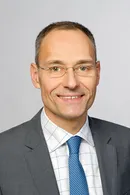
Prof. Dr. Burak Aricak is a faculty member at Bursa Technical University , where he serves in the Faculty of Forestry under the Department of Forest Engineering . His work integrates geospatial technologies and environmental science to address critical forestry challenges. Research Focus : Forest Road Planning, Harvesting Techniques, GIS & Remote Sensing Applications, and Ergonomics. Key Publications (2023-2025) explore climate change effects on forest species distribution, heavy metal accumulation in trees, soil respiration dynamics post-harvesting, and UAV/LiDAR advancements for biomass estimation. Contact : burak.aricak@btu.edu.tr | +90 (224)-8081101
Holger Caesar is a tenured Assistant Professor at Delft University of Technology (TU Delft) in the Intelligent Vehicles Lab . He leads research on scalable approaches for autonomous vehicle perception, prediction, and data annotation, with a focus on sensor fusion, domain adaptation, and minimal supervision. His work has been cited over 15,000 times. Education PhD in Computer Vision, University of Edinburgh Prior studies at KIT Karlsruhe, EPF Lausanne, and ETH Zurich Research Interests span autonomous driving perception, weakly supervised learning, novel view synthesis (NeRFs), diffusion models, and collaborative perception. He emphasizes reducing reliance on manual annotations through active learning and partial labeling techniques. Recent Publications include work on 4D Gaussian Splatting, camera-radar fusion, open-set scene graph generation, and safety benchmarking. These reflect trends toward multi-modal perception, robust sensor fusion, and foundation models for scalable autonomous systems. Scientific Awards ELLIS Europe Scholar (2024) TU Delft Cohesion Grant (100k EUR, 2024) Climate Action Grant (30k EUR, 2024) TKI High Tech Systems Grant (502k EUR, 2022) AiNed XS Grant (80k EUR, 2023) Argoverse Scene Flow Challenge Winner (unsupervised track, 2024) Advising & Grants include EU Horizon funding for the MOSAIC project (1 PhD and 1 Postdoc, 2024), EU KDT Cynergie4MIE grant (450k EUR, 2024), and industrial collaborations with Bosch, Motional, and partners across Europe. Labs & Teams include the Intelligent Vehicles Lab at TU Delft and founding roles in Motional's Data Annotation, Autolabeling, and Data Mining teams. He co-organizes workshops at ICCV, CVPR, and NCCV, and leads the ELLIS Delft Unit seminar series.
Bojan Đerčan is an Associate Professor at the Department of Geography, Tourism and Hospitality within the Faculty of Science and Mathematics, University of Novi Sad, Serbia. Born on June 23, 1984, in Sremska Mitrovica, he progressed from Researcher Trainee (2007-2010) to his current position since 2020, holding a Doctor of Science in Geoscience awarded in 2015 for his dissertation on Srem settlement systems. Bachelor's in Geography, Tourism and Hotel Management (University of Novi Sad, 2007) Master's in Architecture and Urban Planning (Faculty of Technical Sciences, 2018) PhD in Geoscience: 'Settlement Systems in Srem' (University of Novi Sad, 2015) His research centers on regional and social geography with specialized focus on settlement patterns, border region dynamics, and ethnic group sustainability in Vojvodina, Serbia. He examines demographic transitions, urban-rural linkages, and revitalization strategies for depopulated areas through interdisciplinary lenses combining spatial analysis, demographic modeling, and cultural studies. His work addresses critical challenges like ethnic minority resilience, cross-border cooperation, and sustainable tourism development in post-socialist contexts. Analysis of his 13 publications (2012-2021) reveals consistent thematic evolution toward integrated geographical-demographic frameworks. Early work focused on wood waste energy and traffic noise, while recent research emphasizes ethnic sustainability in Vojvodina, border region revitalization, and historical-demographic heritage. His methodology combines case studies of specific municipalities (e.g., Šid, Sremska Mitrovica) with regional-scale analysis, frequently collaborating with demographers and environmental scientists across international journals. Dr. Đerčan actively contributes to national and provincial research initiatives addressing Serbia's demographic challenges. His grant portfolio demonstrates sustained engagement with critical regional issues: Demographic transitions in Serbia (2006-2010) Revitalization of depopulated border areas in Banat (2008-2009) Migration processes in Kosovo/Metohija (2008-2009) Geospace transformations in Serbia (2011-2017) Depopulation challenges in Vojvodina (2011-2013) Ethnic group sustainability (2013-2019) Agricultural-tourism development in Vojvodina (2017-2018) He serves as Technical Editor for the Department of Geography's scientific journal and collaborates through multidisciplinary networks including the Serbian Geographical Society, Serbian Demographic Society, and international associations PLPR and ISDS. His fieldwork integrates with organizations like NGO Carpe Noctem for border region studies, while conference participation (ICB 2026, CTTH 2024) demonstrates ongoing scholarly engagement.
Stefan Nowak serves as Professor in the Department of Management and Innovation in Healthcare at Jerzy Kukuczka Academy of Physical Education in Katowice, Poland. His academic credentials include PhD and DSc (habilitation) degrees, with teaching responsibilities spanning Quality Management, Strategic Management, and Sustainable Development Engineering courses through 2025. His educational qualifications: PhD in Management Sciences DSc (habilitation) in Healthcare Systems Professor Nowak's research focuses on: Quality Management systems in tourism and healthcare Sustainable Development in supply chains Tourism Logistics optimization Waste Management innovation ERP/CRM system integration Religious pilgrimage infrastructure His work bridges theoretical frameworks with practical applications in public sector management, emphasizing environmental sustainability and operational efficiency. Analysis of his recent publications reveals consistent themes in sustainable tourism development, with increasing emphasis on digital transformation in waste management systems and pilgrimage site operations since 2015. His research demonstrates strong regional focus on Central European contexts while addressing global sustainability challenges. No scientific awards were documented in available sources. Professor Nowak actively supervises Master's and Diploma theses through coordinated seminars across multiple academic programs. While specific grant funding isn't referenced, his research output indicates sustained scholarly activity supported by institutional resources. He operates within standard university infrastructure without dedicated laboratory facilities, focusing on theoretical and applied management research through course development and thesis supervision.
Dr. Maria-Valasia Peppa is a researcher at Newcastle University's School of Civil Engineering and Geosciences . Her work focuses on remote sensing, photogrammetry, and geospatial technologies, with applications in hydrodynamic modeling, landslide monitoring, and urban infrastructure analysis. Key Research Areas: UAV-based photogrammetry, glacial lake dynamics, digital elevation models (DEMs), and environmental data uncertainty. Recent Trends: Integration of deep learning with CCTV for traffic analysis, calibration of multisensor UAV systems, and real-time flood nowcasting frameworks. Collaborations: Active partnerships with Professors Jon Mills, Claire Walsh, and international institutions in Africa and Nepal. Applications: Cultural heritage mapping, water security strategies, and urban air quality modeling.
Nasim Beigi-Mohammadi is an Assistant Professor at the Department of Electrical, Computer and Software Engineering within the Faculty of Engineering and Applied Science at Ontario Tech University. Her research focuses on Adaptive Systems and Autonomic Computing with applications in cloud infrastructure, cybersecurity, and smart grid technologies. PhD in Computer Science from York University (2019) MSc in Computer Science from Toronto Metropolitan University (2013) BEng in Computer Engineering from Shahed University (2008) Her work bridges Software Defined Networking with Self-Adaptive Applications , emphasizing automated threat mitigation (e.g., DDoS attacks), resource optimization in cloud environments, and secure smart grid implementations. Recent publications explore DevOps frameworks for system self-protection and network activity data privacy . Key article trends include: Cybersecurity (DDoS mitigation, intrusion detection), Cloud Computing (software-defined infrastructure, microservices), and Smart Grid Applications (secure communication protocols). Awards include the L'Oscar from York University and NSERC CGS D scholarship. Lassonde School of Engineering Award (L'Oscar) - York University (2017) NSERC Alexander Graham Bell Canada Graduate Scholarship (CGS D) - 2016 Recognition for Research Funding Achievements - York University (2016)
Professor Balázs Adam Kulcsár is a faculty member in the Automatic Control research group at the School of Electrical Engineering and Computer Science, Chalmers University of Technology. With 104 publications and involvement in 34 research projects, he is a prominent researcher in intelligent transportation systems. His work spans multiple domains within transportation engineering and control theory, with significant contributions to traffic flow modeling, electric vehicle routing, and advanced control systems. Professor Kulcsár's research primarily focuses on intelligent transportation systems design, traffic flow modeling for control, Linear Parameter Varying systems, and failure diagnostics. His work demonstrates a strong integration of control theory with practical transportation challenges, particularly in the context of electric mobility and sustainable transportation. Recent research shows a growing emphasis on machine learning applications for transportation optimization, electric vehicle infrastructure, and urban traffic management. Analysis of his recent publications reveals a clear trajectory toward sustainable transportation solutions, with electric vehicle charging infrastructure, fleet management, and public transit optimization as dominant themes. His work increasingly incorporates machine learning techniques, particularly graph neural networks and reinforcement learning, to address complex transportation challenges. The research demonstrates strong interdisciplinary collaboration across engineering disciplines, with a focus on practical implementation of theoretical advances. Professor Kulcsár leads and participates in numerous research projects focused on future transportation systems, including projects on electric mobility, traffic optimization, and intelligent transportation infrastructure. His research group collaborates extensively with industry partners like Volvo and Heart Aerospace, as well as with other academic institutions. Current projects include Rethinking the Sustainability of V2G, Quantum computing for future mobility solutions, and Digital Twin for Energy Prediction. His research group maintains strong connections with transportation industry stakeholders and contributes to major initiatives such as the Transport Area on Advance project, which aims to achieve leading competence in future green, safe, and efficient transport systems. The team operates at the intersection of theoretical control systems and practical transportation applications, with particular expertise in modeling complex traffic phenomena and developing implementable control solutions.
Philip Brighten Godfrey is a Professor in the Department of Computer Science at the University of Illinois at Urbana-Champaign (UIUC) and Technical Director at VMware (formerly Broadcom). He co-founded network verification startup Veriflow, which was acquired in 2019. His research focuses on networked systems, blending theoretical and practical approaches to low-latency networking, software-defined architectures, microservices communication, and machine learning for network optimization. Education: Ph.D. in Computer Science (UC Berkeley, 2009), B.S. in Computer Science (Carnegie Mellon, 2002) His work spans data center design, network verification (e.g., VeriFlow), congestion control (PCC Vivace), and innovative projects like cISP (Speed-of-Light Internet). Recent publications address microservice tracing (TraceWeaver), fault localization (Flock), and XR device offloading (XRgo). Notable awards include the ACM SIGCOMM Rising Star Award, NSF CAREER Award, Sloan Research Fellowship, and multiple best paper recognitions. He has chaired SIGCOMM and HotNets, and his teaching excellence in courses like CS 538 Advanced Computer Networks has been repeatedly recognized. Scientific Honors ACM SIGCOMM Rising Star Award NSF CAREER Award (2012) Sloan Research Fellowship (2014) Best Paper Awards (SIGCOMM, HotSDN, CoNEXT) IEEE ComSoc Data Storage Best Paper Engineering Council Outstanding Advisor Award (2015) Godfrey leads research in the Coordinated Science Laboratory (CSL) and contributes to the LDOS NSF Expeditions project. His group advises Ph.D. students on topics ranging from network verification to XR systems optimization, with alumni now at Meta, Google, and academic institutions like ETH Zurich.
Anna Borucka serves as an Assistant Professor at the Faculty of Security, Logistics and Management, Military University of Technology (WAT) in Warsaw, Poland. Her academic profile spans dual disciplines with equal focus: civil engineering, geodesy and transport (50%) and security studies (50%). With 189 publications, an h-index of 15 (Scopus), and a ministerial score of 9,765, she maintains significant scholarly impact in transport systems and national security domains. Her institutional affiliation includes active roles in research supervision and project leadership within Poland's premier military technical institution. Her research concentrates on transport logistics systems, military logistics, public security, and vehicle safety/reliability. Key interests include sustainable mobility transitions, military transport adaptation during geopolitical crises, road safety analytics using machine learning, and energy policy impacts on transport emissions. She investigates practical applications such as UAV deployment in prison services, military logistics during pandemics, and CO2 emission modeling across transport sectors, often contextualized within Polish infrastructure and policy frameworks. Analysis of her 15 most recent 2025 publications reveals dominant trends in sustainable transport decarbonization, military logistics adaptation to geopolitical disruptions, and advanced safety analytics. Her work increasingly integrates machine learning for traffic safety prediction while maintaining strong focus on Poland-specific case studies in energy transition and defense policy. The publications demonstrate interdisciplinary convergence between transport engineering, security studies, and environmental science. Professor Borucka has supervised 21 promoted theses and leads 4 active research projects, indicating substantial mentoring activity and grant acquisition capability. Her bibliometric profile shows consistent high-impact output with total CiteScore of 226.24 and SNIP of 56.458, reflecting significant influence in transport and security literature. She maintains active scholarly networks through multi-center publications and international database profiles (ORCID, Scopus, Web of Science).
Rainer Kolisch is a Professor of Operations Management at the TUM School of Management, Technical University of Munich , where he has held a chair since 2002. He currently serves as Head of the Operations & Technology Department (since 2024) and previously as Dean of the QTEM Masters Network (2016–present) and Vice Dean of International Affairs (2007–2020). His career includes academic roles at Technical Universities of Dresden (Full Professor, 2002) and Darmstadt (Associate Professor, 1999–2002). Affiliations: TUM School of Management, Technical University of Munich Editorial Roles: Editor-in-Chief of OR Spectrum (2014–2020), Member of editorial boards for journals like International Journal of Production Research Research Interests focus on Airport Operations Management , Health Care Operations Management , Project Management and Scheduling , and Engineer-to-Order Manufacturing . His work addresses dynamic scheduling, resource allocation, and robust optimization in transportation and healthcare systems, with recent studies on electric vehicle charging networks and agile project management. Scientific Awards include: Best Teaching Award (2022) Excellence in Reviewing (2022) OMEGA Best Paper Award (2021) Handelsblatt Research Recognition (2005) DFG Habilitation Fellowship Advising spans numerous PhD and Master’s students , including Christopher Bersch, Robert Brachmann, and Giacomo Dall'Olio. His grants likely include DFG funding, though specifics are not detailed here.
Giacomo Como is a Professor of Automatic Control at the Department of Mathematical Sciences "GL Lagrange" (DISMA) at Polytechnic University of Turin, Italy. He is a member of the Energy Center Lab and actively contributes to interdisciplinary research spanning Distributed Control , Game Theory , Network Systems , and Resilient Infrastructure . Research Focus : His work addresses stability analysis of dynamical flow networks, evolutionary game theory in social and epidemic models, and robust optimization in transportation and energy markets. Scientific Recognition : Recipient of the IEEE CSS George S. Axelby Outstanding Paper Award (2015) for contributions to networked control systems. Publication Trends : Recent articles explore population game stability , opinion dynamics in biased networks , and controlled evolutionary diffusion , reflecting his expertise in merging control theory with network science and social resilience . Key subfields include traffic signal optimization , imitation learning , and systemic risk modeling .
Tove Helldin is a Senior Lecturer at the School of Informatics, University of Skövde, Sweden. Her research focuses on anomaly detection , topic modeling , and human-computer interaction , particularly in telecommunications networks and decision support systems . She has led projects in AI for climate adaptation and future sepsis diagnostics , emphasizing team effectiveness and trust calibration in automated systems. PhD in Computer Science (2014), University of Skövde Licentiate in Computer Science (2012) MSc in Computer Science (2009) Her scientific work spans interactive machine learning , visualization of causal relationships , and transparency in military threat evaluation . She has contributed to automotive UI design and fighter aircraft automation , with publications in venues like ACM Computing Surveys and IEEE conferences. Notably, her work explores topic modeling applications in network monitoring and interpretable AI frameworks.
Fran Marquez is a Senior Lecturer at the Division for Industrial Electrical Engineering and Automation within the Faculty of Engineering at Lund University. They serve as a Theme Leader for Electric Drives and Charging at the Swedish Electromobility Centre and contribute to the LTH Profile Area: The Energy Transition. Current projects include Truck2Grid (Swedish Energy Agency, 2025–2027) and E-Charge 2 (Vinnova, 2024–2027). Active in research on transport electrification , charging infrastructure , and electric drive systems . Research focuses on conductive electric roads , renewable energy integration , and vehicle-to-grid (V2G) technologies . Publications analyze traffic characteristics , thermal models , and high-speed charging systems. Organized seminars and conferences as part of The Energy Transition initiatives, including collaborative retreats and lunch seminars in 2024.
Keivan Navaie is a Professor of Intelligent Networks at Lancaster University’s School of Computing and Communications. He serves as a member of the Independent Scientific Advisory Committee at the Alan Turing Institute, overseeing the £100 million BridgeAI programme, and previously as Principal AI Technology Advisor to the UK Information Commissioner’s Office (ICO). He is recognized with Fellowships from the Institution of Engineering and Technology (IET), Chartered Engineer status in the UK, Senior Fellowship of the Higher Education Academy (HEA), and the IEEE Young Investigator Award. Research Focus: Wireless communications, mathematics, artificial intelligence, 6G networks, blockchain technology, edge computing, cognitive radio networks, and non-orthogonal multiple access (NOMA). Supervision: Actively supervises PhD students in areas like wireless communications and mathematical modeling. Projects: Involved in distributed learning, blockchain integration, 6G research, and spectrum sharing systems. Awards: IEEE Young Investigator Award, Fellow of IET, Chartered Engineer, Senior Fellow of HEA.
Ehsan Etezadi is a visiting researcher and doctoral student at Chalmers University of Technology, affiliated with the Department of Electrical Engineering (E2) and actively contributing to advancements in Optical Networks . His research focuses on Network Resource Allocation , Deep Reinforcement Learning , and Spectrum Management in Elastic Optical Networks . He has played a pivotal role in the PROTECT project (2021–2024), which addresses resilient and secure networks for critical infrastructures. His recent publications demonstrate expertise in creating AI-driven solutions for spectrum defragmentation, programmable filterless optical network design, and impairment-aware resource allocation in multi-band environments. These works highlight his contributions to WDM Metro Network Optimization , Network Digital Twins , and Transport API Integration . Research Highlights Developing DeepDefrag - a reinforcement learning framework for spectrum defragmentation Advancing Filterless Optical Networks architecture Implementing AI-based Network Control via digital twins Addressing Joint Fragmentation and QoT Challenges