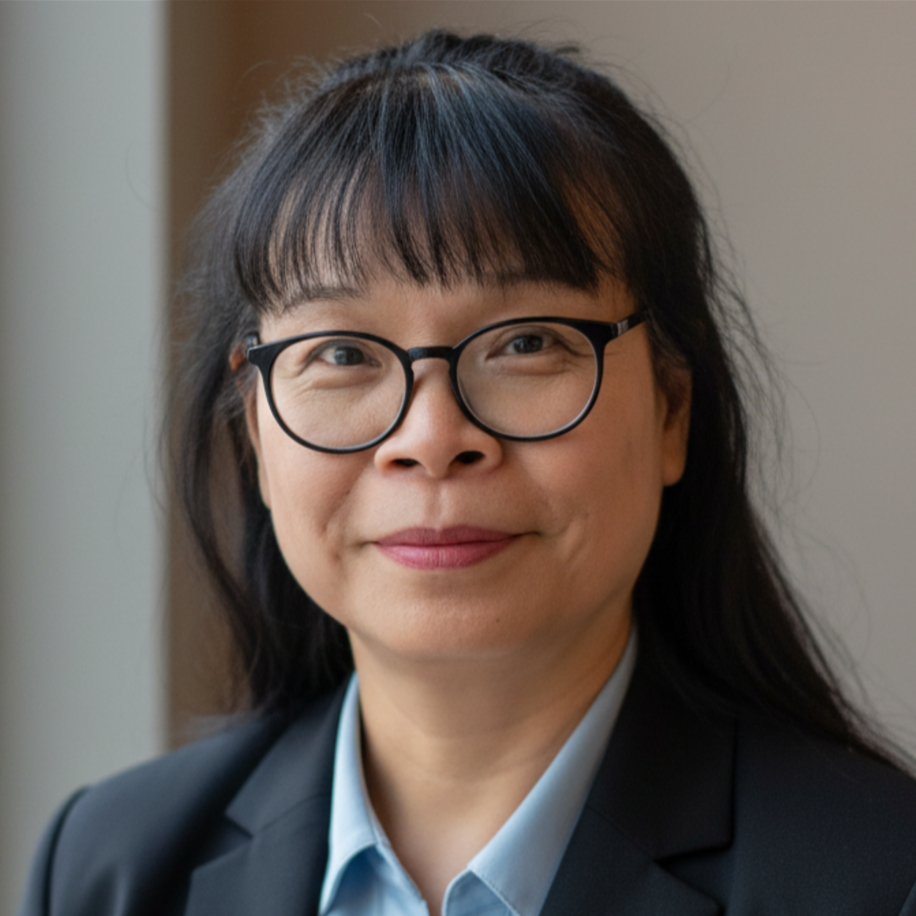
Professor Benchawan Wiwatanapataphee holds a PhD from Curtin University (1998) and has extensive academic experience, previously serving as a Professor and Deputy Head of the Department of Mathematics at Mahidol University until 2015. Since 2015, she has been an Associate Professor (now Professor) in the School of Electrical Engineering, Computing and Mathematical Sciences at Curtin University. Her research focuses on computational mathematics, including applications in biomedical engineering, finance, and nanotechnology. Notable contributions include modeling blood flow in coronary arteries, heat transfer in steel casting, and epidemic spread dynamics. She has supervised over 20 PhD and 12 MSc students, secured nine national research grants (including ARC and Thailand Research Funds), and published over 50 peer-reviewed papers. Awards include the Third World Academy of Science Award (1999) and Royal Thai decorations such as the Chakrabarti Mala Medal (2019). She has held editorial roles for journals like Cogent Mathematics and guest-edited special issues in Mathematical Problems in Engineering. Teaching expertise spans Advanced Numerical Analysis, Supply Chain Modeling, and Computational Mathematics. Active in interdisciplinary research, her work bridges theoretical mathematics with practical applications in healthcare, industry, and finance.
Elizabeth Jackson is an Associate Professor of Supply Chain Management & Logistics at Curtin University's School of Management and Marketing (Faculty of Business and Law). Her career spans academia and industry in agribusiness, with roles including Senior Lecturer at the Royal Veterinary College (UK), Course Director for Professional Doctorate programs, and leadership in livestock supply chain research. She holds a PhD from an ARC-Linkage studentship and is a Senior Fellow of the Higher Education Academy (UK). Education: BAgBus (Hons I) from Curtin University's Muresk Institute of Agriculture MBA (while employed at CBH Group) PhD in Agricultural Economics Research Interests: Focus on agri-food supply chains, food marketing, maritime transport, and mixed-method research. Specializes in livestock biosecurity, digital agriculture adoption, and behavioral determinants in supply chain decision-making. Recent work explores ethical food consumption trends, trust dynamics in buyer-seller relationships, and biosecurity compliance among farmers. Awards & Memberships: Senior Fellow of the Higher Education Academy (UK) Chartered Institute of Logistics & Transport (UK) International Farm Management Association Agribusiness Australia Teaching & Leadership: Teaches MGMT5013 and MGMT5045 at Bentley/Singapore campuses. Leads curriculum development in veterinary business education and supply chain management. Serves on boards for Sheep Producers Australia, Western Australian Farmers' Federation Livestock Council, and the Sheep Sustainability Framework. Key Contributions: Over 50 peer-reviewed publications since 2002, including seminal work on livestock supply chain digitization and biosecurity. Active in policy advisory roles, with expertise in bridging academic-researcher-practitioner gaps through collaborative frameworks.
Thomas Lee is a Senior Lecturer at the School of Business, University of Wollongong, Australia. He holds a PhD in Marketing from the University of Tasmania and bachelor's degrees in Management and Marketing from Curtin University. His research focuses on brand management, strategic ambidexterity, frontline employee behavior, and luxury branding. Lee's work explores how organizational strategies and market dynamics influence consumer behavior and business performance. His research outputs span cybersecurity in retail, workplace psychology, and sustainable housing, reflecting a blend of marketing, organizational behavior, and strategic management. Lee has secured grant funding, including the AEGiS grant (2022–2023), to investigate workplace competition's impact on service behaviors. He supervises PhD students on topics like customer incivility and frontline service excellence. Teaching interests align with his research, emphasizing brand strategy, strategic ambidexterity, and frontline motivation. Lee is available to supervise Master's and PhD students in related fields.
Manish Narsipura Sreenivasa is a Senior Lecturer at the School of Mechanical, Materials, Mechatronic and Biomedical Engineering, University of Wollongong (since 2018). Previously, he held postdoctoral roles at the University of Heidelberg (Germany) and University of Tokyo (Japan), focusing on neuromuscular system modeling. He earned his Ph.D. in Systems Engineering from the University of Toulouse-Jean Jaurès (France). His research integrates computational neuroscience, biomechanics, and robotics to develop assistive devices like exoskeletons and prosthetics. Key areas include patient-specific orthosis design, neuromusculoskeletal modeling for clinical interventions, and spinal exoskeleton optimization. He leads projects funded by the EU H2020 (Spexor) and Australian grants. Fields of Expertise: Biomechanics, Medical Robotics, Wearable Technologies Awards: Hengstberger Award (2015), Leopold Escande Thesis Prize (2010), IEEE Best Paper (2010) Supervision: Active advisor for 6 Ph.D./Master’s students in biomechanics and robotics His recent work emphasizes human-device interaction in exosuits, sensory feedback systems for prosthetics, and ergonomic solutions for construction workers. He collaborates with orthopedic departments and industry partners to translate research into clinical applications.
Dr. Abigail Koay is a Lecturer in Computer Science at the University of the Sunshine Coast's School of Science, Technology and Engineering. Her research focuses on developing security solutions through applied machine learning, with expertise in network threat detection and defense systems for critical infrastructure. Research domains include: Anomaly detection in network traffic Industrial control system security Federated learning applications Adaptive AI models for dynamic environments Her recent work includes QDSA-funded research on multi-agent collaboration using federated reinforcement learning and AI for decision-making initiatives.
Craig Williams is a Professor and Dean of Programs (Science, Construction & Project Management) at the University of South Australia (UniSA STEM). His research focuses on mosquito-borne diseases, public health, and environmental epidemiology, with a focus on understanding the ecological and social drivers of disease outbreaks like Ross River virus and Japanese encephalitis. He leads surveillance projects along the Murray River and has contributed to citizen science initiatives for low-cost mosquito monitoring. Education & Background: PhD in Public Health/Epidemiology (not explicitly stated, inferred from role) Affiliations include Sansom Institute for Health Research and Healthy Environments, Healthy People Research Group Research Interests: His work spans vector ecology, climate change impacts on disease spread, and biodiversity-environment links. Key areas include viral zoonoses, urban health risks, and surveillance tool development (e.g., RR Forester software). Articles Overview: Recent publications address emerging diseases in Australia, citizen science applications in entomology, and the role of urbanization in disease ecology. He emphasizes interdisciplinary approaches combining fieldwork, predictive modeling, and community engagement. Grants & Awards: NHMRC Grant 2008937 (Japanese encephalitis study) ARC Grant FL160100101 (urban environmental health) Advising & Teams: He collaborates with institutions like NSW Health Pathology and James Cook University. Projects include the Murray River mosquito surveys and the Australian Centre for Precision Health initiatives. Labs/Teams: Leadership roles in the Healthy Environments, Healthy People Research Group and involvement in the HEAL (Healthy Environments and Lives) network.
Dr. Lotti Tajouri serves as an Associate Professor in the Department of Biomedical Sciences within Bond University's Faculty of Health Sciences & Medicine. She holds dual affiliations as a member of the Dubai Police Scientific Council, demonstrating her cross-disciplinary impact in public health and security. Her academic journey began with undergraduate and master's studies in France, culminating in a PhD in Molecular Genetics from Griffith University, supported by the prestigious Lindsay Yeo Research Scholarship. Her research spans two primary domains: molecular genetics of complex diseases and infection control biosecurity . In molecular genetics, she has pioneered gene profiling studies across breast cancer, multiple sclerosis, rheumatoid arthritis, leukemia, and migraines. More recently, her work has gained international recognition for investigating microbial transmission via mobile devices, with findings showing SARS-CoV-2 on 45% of phones and establishing mobile phones as significant vectors for healthcare-associated infections. This research has directly influenced public health protocols, advocating for a "6th moment" of hand hygiene. Key Publications Trend: 78% of recent work (2020-2025) focuses on infection control biosecurity, particularly mobile device contamination, while 22% continues molecular genetics research Media Impact: Research covered by 31+ news outlets, referenced in policy documents, and shared by 158+ X users Collaboration Network: Strong international partnerships across UAE, Australia, and global research institutions Scientific Recognition: Lindsay Yeo Research Scholarship for doctoral studies 25 h-index with 2,223 Scopus citations 102 research outputs including high-impact publications in Microorganisms and Journal of Infection and Public Health As an educator, she convenes Immunology, Microbiology, and Exploring Human Disease courses while mentoring students in biomedical research. Her work contributes significantly to UN Sustainable Development Goals related to health and well-being, with research actively shaping global biosecurity standards and clinical infection control practices.
Ruitao Feng is a Lecturer in IT (Cybersecurity) at the Faculty of Science and Engineering, Southern Cross University. He holds an adjunct role as a Research Fellow at Nanyang Technological University (Singapore). His expertise spans cybersecurity, software engineering, and AI-driven security solutions. He earned his Ph.D. in Computer Science from NTU (2016–2021) and a Bachelor’s degree from Tianjin University (2010–2014). His research focuses on security and quality assurance in software systems, particularly leveraging AI4Sec & SE for intrusion detection, malware analysis, and vulnerability detection. He actively collaborates with students and researchers to advance these fields. He teaches courses like DATA2001 Database Systems and INFO6002 Cybersecurity Essentials . Ruitao is recruiting self-motivated Ph.D. candidates with strong programming skills and seeks honors/minor thesis students from SCU. His work has been published in top-tier conferences/journals (CORE A/A*, CCF A) in computer security and software engineering.
Tanju Yildirim is a Lecturer in the Faculty of Science and Engineering at Southern Cross University (SCU), specializing in the development of innovative solutions for scientific problems requiring sensors, actuators, materials synthesis, and instrumentation. His expertise spans multidisciplinary research areas including MEMS-based agricultural sensors, 2D materials physics, and acoustic olfactory systems. He maintains international collaborations across academia, government, and industry. Education Doctor of Engineering (2015–2017), University of Wollongong Bachelor of Engineering (2011–2014), University of Wollongong Research Interests Design and application of advanced sensors (MEMS, acoustic, gas/odor) Nonlinear dynamics and energy harvesting systems 2D materials physics (optoelectronics, strain engineering) Biomedical and environmental sensing technologies His recent work focuses on acoustic-based gas sensing, strain-modulated optoelectronic properties of 2D materials, and bio-inspired control algorithms. Tanju actively engages in teaching engineering skills aligned with real-world industry needs. Key Collaborations Partner universities in Japan, China, and Australia Government institutions and private firms for applied R&D projects
Kirsten Challinor is a Senior Lecturer at the School of Behavioural and Health Sciences, Faculty of Health Sciences. Her research spans visual perception, cognitive psychology, and human factors, with a focus on motion processing, body image misperception, and driver behavior in automated vehicles. She has published extensively on topics such as contrast gain control, psychophysical models of speed perception, and eye health in aged care populations. Recent publications highlight her interdisciplinary work, including a 2025 critical review on social isolation and Alzheimer's disease, systematic analyses of eye disease prevalence in residential aged care (2024), and studies on choroidal naevus management (2022–2023). Earlier work (2016–2020) established foundational insights into visual adaptation mechanisms and body-size misperception. Her contributions to transportation psychology (2020–2022) examine blame attribution in crashes involving automated vehicles, while older research (2004–2012) delves into neural models of motion perception and contrast suppression pathways.
Emma McBryde is an Adjunct Professor at the Australian Institute of Tropical Health and Medicine (JCU) and leads the TB control unit at the Torres Strait and Cape York Health Service. She holds a PhD in mathematical modeling from QUT and an MBios from the University of Melbourne, alongside clinical training as an infectious diseases physician (FRACP). Her research bridges clinical practice, epidemiology, and biostatistics, with a focus on infectious disease transmission modeling. Key affiliations include JCU, collaborations with Imperial College London, Harvard, and the Doherty Institute. Her work addresses emerging pathogens (e.g., tuberculosis, influenza, Ebola) and employs methods like Bayesian inference, compartmental models, and social network analysis. She has led international projects on tuberculosis control, healthcare-associated infections, and pandemic response. Research priorities include forecasting, scenario analysis for public health decisions, and integrating machine learning with epidemiological data. She advises governments and international bodies (e.g., WHO, Global Fund) on pandemic strategies and has contributed to Australia’s COVID-19 modeling efforts through initiatives like AUS-CMI. Emma collaborates across disciplines, leading teams of mathematicians, biostatisticians, and epidemiologists. Her work emphasizes cross-border health challenges, particularly in the Torres Strait/PNG region, and advocates for geospatial analysis to optimize resource allocation for TB control.
Damon Eisen is a Professor of Medicine at James Cook University and Director of Clinical Research at Townsville Hospital. His research focuses on sepsis prevention, biofilm-related infections, and tropical disease epidemiology. He holds an M.D. from the University of Melbourne, where his thesis addressed Plasmodium falciparum antigen diversity. Research explores novel antimicrobial strategies, infectious disease complications, and clinical trials. Recent articles emphasize Staphylococcus aureus therapies, COVID-19 dynamics, and pneumonia epidemiology. Publications demonstrate strong focus on translational research in tropical settings, with innovations in adjuvant therapies and infection prevention. No awards or student advising are noted.
Jacqui Baker is a Senior Lecturer in Southeast Asian Politics at Murdoch University, Australia, and a Principal Fellow at the Indo-Pacific Research Centre. She specializes in the political economy of Southeast Asia, with a focus on Indonesia’s democratization, security, corruption, and climate-induced loss and damage. She has held roles as editor of the Journal for Southeast Asian Studies and co-host of the Talking Indonesia podcast. Her research bridges academia and policy, with extensive consultancy for organizations including The Asia Foundation, UNODC, and the U4 Anti-Corruption Resource Centre. Baker holds a PhD in Anthropology from the London School of Economics (2006–2012), an MSc in Political Science from LSE (2004–2005), and a Bachelor of Asian Studies (Honours) from the Australian National University (ANU). Her academic career combines rigorous scholarly work with practical engagement in international development and policy reform. Her research interests emphasize Indonesia’s governance challenges, police reform, anti-corruption strategies, and the socio-political impacts of climate change. She has produced seminal work on Indonesia’s security sector dynamics, including analyses of police violence, elite networks, and illicit economies. Recent studies address climate-induced displacement and loss-and-damage frameworks in Southeast Asia. Baker’s publications span critical analyses of political regimes, anti-corruption mechanisms, and transnational crime. Her work often highlights structural drivers of democratic decline and the interplay between state institutions and informal economic networks. She has advised multiple international bodies on security sector reform, anti-corruption policies, and climate resilience. Her advisory roles include contributions to the Australia-Indonesia Partnership for Justice and collaborations with regional think tanks. Baker’s interdisciplinary approach integrates anthropology, political science, and policy analysis to address complex governance challenges in the Indo-Pacific region.
Conjoint Associate Professor Roslyn Hickson serves as Science Leader for Emerging Infectious Diseases through a joint appointment between James Cook University and CSIRO. She holds affiliations with the Australian Institute of Tropical Health and Medicine (AITHM), Centre for Tropical Biosecurity (CTB), Centre for Tropical Environmental and Sustainability Science (TESS), WHO Collaborating Centre for Vector Borne Diseases, and previously with the University of Melbourne's School of Mathematics and Statistics. PhD in Engineering (Heat/Mass Transfer), UNSW Canberra 2010 Research Fellow, National Centre for Epidemiology and Population Health (ANU) Postdoctoral Research Fellow, University of Newcastle (2011-2014) Research Scientist, IBM Research Australia (2014-2018) Research Fellow, Australian Centre of Research Excellence in Malaria Elimination (University of Melbourne, 2018) Her research program focuses on mathematical modeling of infectious disease transmission with emphasis on emerging pathogens, zoonotic spillover events, and vector-borne diseases through One Health and biosecurity frameworks. She develops quantitative tools for risk assessment, surveillance optimization, and policy evaluation across Australian, Southeast Asian, and Pacific Island contexts. Current projects integrate ecological niche modeling, behavioral epidemiology, and multi-scale transmission dynamics to address challenges in pandemic preparedness and tropical disease control. Analysis of her 28 publications reveals consistent focus on mathematical frameworks applicable to real-world health security challenges. Her work spans influenza, dengue, malaria (particularly Plasmodium vivax), Japanese encephalitis, and bat-borne pathogens, with increasing emphasis on model reproducibility and policy translation since the COVID-19 pandemic. Key methodological contributions include multiscale modeling approaches, behavior-disease interaction frameworks, and spillover risk prediction systems. Victorian Young Tall Poppy Science Award (2018) ITS Award for Excellence in Research and Development (2020) Ria de Groot Prize for best female postgraduate student (2010) Two-time EmTech Asia Innovators Under 35 Finalist (2016, 2017) Corporate Social Responsibility Award (2017) As primary advisor for five doctoral candidates and multiple honours students, she supervises research on bat-pathogen ecology, feral pig zoonoses, and wildlife disease dynamics. Her committee service includes PREZODE international working group, Biosecurity Commons Advisory Panel, and editorial roles for BMC Infectious Diseases. Current research integrates ecological modeling with public health decision support systems through partnerships with WHO, CSIRO, and regional health authorities across the Indo-Pacific.
Assoc Prof Eric Ng is an Associate Professor of Marketing at the School of Business, University of Southern Queensland. He holds a BBus (USQ), MBA (QUT), and DBA (USQ). His research focuses on agribusiness marketing, environmental sustainability, B2B dynamics, and international marketing. He has secured over $900k in collaborative research funding with organizations like GRDC and DAF. Teaching responsibilities include MKT1001, MKT3001, and MBA8002. Administrative roles include Program Director, Head of Marketing Discipline, and Acting Deputy Head of School. Eric is a Fellow (FAMI) and Certified Practising Marketer (CPM) with the Australian Marketing Institute, emphasizing industry alignment. Research interests span supply chain management, sustainable agriculture, and consumer behavior. Notable projects include mangrove rehabilitation studies and environmental literacy surveys. He actively collaborates with the Rural Economies Centre of Excellence and publishes in journals like Journal of Business-to-Business Marketing . Education: Doctorate in Marketing (USQ), MBA in International Business (QUT), Bachelor of Business (USQ) Languages: Cantonese, Mandarin (non-accredited translators) Industry Links: GRDC, DAF, AQIP, TMR Professional Memberships: Industrial Marketing & Purchasing Group His work bridges academia and industry, with a focus on agribusiness innovation and environmental stewardship. Leadership in curriculum design and postgraduate supervision underscores his commitment to fostering future marketers.