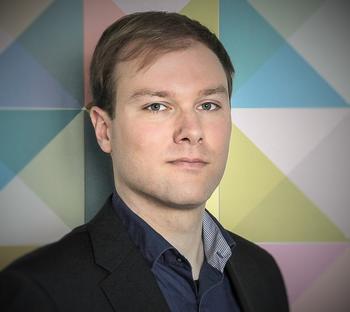
Pu Wang is an Associate Professor in the Department of Computer Science at the University of North Carolina at Charlotte (UNC Charlotte), part of the College of Computing and Informatics (CCI). His research focuses on networked systems, generative AI, computer vision, and computational biomechanics. He holds a Ph.D. from Georgia Institute of Technology (2013) and previously served as an Assistant Professor at Wichita State University (2013–2016). Education: B.E. in Electrical Engineering, Beijing Institute of Technology, 2003 M.E. in Electrical and Computer Engineering, Memorial University of Newfoundland, 2008 Ph.D. in Electrical and Computer Engineering, Georgia Tech, 2013 Research interests include modeling of networked systems (e.g., Software Defined Networking, IoT), AI-driven human mesh recovery, and biomechanically accurate 3D pose estimation. His work is supported by NSF grants and has led to advancements in federated learning, motion synthesis, and underwater communication systems. Awards and Honors: John A. See Innovation Award (Wichita State, 2016) BWN Lab Researcher of the Year (Georgia Tech, 2012) Best Student Paper Runner-Up (IEEE SCC 2016) Fellow of Memorial University’s School of Graduate Studies (2008) Key publications span top venues like ICCV, CVPR, AAAI, and IEEE journals, addressing topics such as masked motion control, vision-language models, and federated learning optimization. He actively mentors graduate students in AI/ML, computer vision, and network systems.
Margarida Carvalho is an Associate Professor in the Department of Computer Science and Operations Research at Université de Montréal, where she holds the FRQ-IVADO Research Chair in Data Science for Combinatorial Game Theory. She is also an Associate Academic Member at Mila (Quebec AI Institute), contributing to their research in AI for Humanity. Her academic journey spans from Portugal to Canada, where she has established herself as a leading researcher at the intersection of operations research and game theory. Carvalho earned her bachelor's and master's degrees in mathematics from the Faculty of Sciences of the University of Porto (FCUP), followed by a PhD in Computer Science from the same institution in 2016. Her doctoral work, which focused on game theory applications for kidney exchange programs, earned her the prestigious 2018 EURO Doctoral Dissertation Award, making her the first Portuguese woman to receive this honor. After completing her PhD, she worked as an IVADO Postdoctoral Fellow at Polytechnique Montréal before joining Université de Montréal as an Assistant Professor in 2018. Her research focuses on combinatorial optimization and algorithmic game theory, with applications spanning healthcare (kidney exchange programs, hospital operations), sustainable development (electric vehicle infrastructure, urban planning), and education (school choice systems). She develops novel mathematical programming approaches to model and solve problems involving multiple decision-makers with potentially conflicting objectives. Her work bridges theoretical advances in optimization with practical implementations that address real-world challenges in resource allocation and decision-making under uncertainty. Notably, her research on fairness in kidney exchange programs has contributed to more equitable organ allocation policies. Her 15 most recent publications reveal a strong trend toward integrating game-theoretic concepts with practical optimization challenges, particularly in healthcare and sustainable infrastructure. She has pioneered approaches that balance utilitarian objectives with fairness considerations, developed novel formulations for bilevel and multilevel optimization problems, and created learning-based frameworks for complex decision environments. Her work consistently demonstrates how mathematical rigor can inform practical policy decisions in critical domains. 2018 EURO Doctoral Dissertation Award for her PhD thesis on game theory applications for kidney exchange programs Mathematical Programming 2024 Meritorious Service Award Teaching Excellence Award from Université de Montréal Supervised student Maria Bazotte receiving the Dupačová-Prékopa Best Student Paper Prize in Stochastic Programming Carvalho actively advises graduate students, with Marylou Fauchard (Master's) and William St-Arnaud (PhD) among her current advisees. Her research is supported by grants from Hydro-Québec, the Natural Sciences and Engineering Research Council of Canada (Discovery grant 2017-06054 and Collaborative Research and Development Grant CRDPJ 536757–19), and FRQ-IVADO. She serves as an associate editor for INFORMS Journal on Computing, OR Spectrum, and Dynamic Games and Applications, and is a founding board member and treasurer of the Bilevel Optimization Society. She teaches courses in Mathematical Programming, Operational Research Models, and Discrete Mathematics at Université de Montréal. Carvalho is affiliated with Mila (Quebec AI Institute), where she contributes to research initiatives focused on AI for Humanity, particularly in the areas of algorithmic fairness and sustainable development. Her FRQ-IVADO Research Chair supports her work on combinatorial game theory applications, and she collaborates with researchers across disciplines through the IVADO research community. She has been instrumental in establishing the Bilevel Optimization Society, creating a dedicated forum for researchers working on hierarchical decision-making problems.
John Mallett is a Senior Lecturer at Ulster University’s School of Psychology and a chartered Psychologist with the British Psychological Society. He has over 20 years of experience teaching statistics and research methods and has published extensively in psychology, health, and social policy domains. PhD in Psychology (Poverty and health: a psychological analysis) Master’s in Psychology (Queens University Belfast) Bachelor’s in Psychology His research spans psychology, health, and social policy, focusing on the impact of pandemics (notably COVID-19), burnout, coping behaviors, and workforce dynamics in social work. Recent work analyzes safe staffing in UK social work, pandemic-driven mental health trends, and rural health disparities. Key trends in his publications include pandemic response, burnout mitigation, and safe staffing in social work. These studies employ mixed methods, cross-sectional surveys, and case studies, often integrating statistical analysis and policy evaluation. 1st Place Certificate of Achievement (Poster) Health and Social Care Board 8th Annual Social Work Conference 2021 ESWRA Award for Outstanding Publication in European Social Work Research 2021 Sustainable Development Goals (SDG) Research Prize 2022 John actively supervises PhD researchers like John McQuaide and has secured funding from diverse organizations. His collaborations extend to government departments and healthcare institutions, emphasizing practical policy translation.
Olivier Monso serves as an Affiliated Researcher at Sciences Po's Center for Research on Social Inequalities (CRIS) and the Interdisciplinary Laboratory for the Evaluation of Public Policies (LIEPP), where he contributes to the Educational Policies research axis. His work bridges statistical analysis from his tenure at the Ministry of National Education's Directorate of Evaluation, Forecasting and Performance (DEPP) with sociological research on educational inequality. After completing social sciences studies at ENSAE and ENS Cachan, Monso joined INSEE before moving to DEPP in 2011 as an expert on educational inequalities. He is currently finalizing his doctoral research on social segregation between French middle schools under Louis-André Vallet (CNRS, GEMASS), with defense scheduled for December 3, 2024. Monso's research examines social and spatial segregation in educational settings, with particular focus on school choice mechanisms, territorial disparities, and methodological tools for policy evaluation. His work analyzes how urban planning, zoning policies, and institutional frameworks contribute to or mitigate educational inequalities across France's rural-urban spectrum. His publication portfolio reveals consistent thematic focus on educational segregation patterns, with recent work analyzing boarding school impacts, social diversity evolution in middle schools, and rural-urban variations in students' social environments. Methodologically, Monso combines large-scale educational datasets with spatial analysis techniques to quantify segregation indices and policy effects. As an active member of LIEPP's Educational Policies axis, Monso contributes to developing evaluation frameworks for public policies while maintaining strong connections to France's educational administration through his ongoing work with DEPP. His research directly informs contemporary debates on educational equity and resource allocation in French public education.
Krzysztof Walkowiak is a Professor at the Faculty of Computer Science and Telecommunications, Wrocław University of Science and Technology (PWr), where he also serves as the Dean of the Doctoral School. He leads the Computer Networks Team (ZSK) and is actively involved in multiple research projects, including Dark-Box Optimization and evolutionary methods for multi-criteria network design. A Senior Member of IEEE and IEEE ComSoc, he contributes to academic governance as a member of the Polish Academy of Sciences’ Committee on Electronics and Telecommunications. PhD in Computer Science (2000, with distinction) Habilitation in Computer Science (2008) Professor of Technical Sciences (2017) Dean of the Doctoral School, PWr (since 2020) Senior Member, IEEE and IEEE Communications Society Member, Committee on Electronics and Telecommunications, Polish Academy of Sciences His research spans computer network optimization, machine learning in networks, evolutionary algorithms, survivable optical networks, and intelligent computational techniques . He has pioneered the integration of AI methods in teleinformatics and leads initiatives in intent-based and cognitive networking. His work emphasizes multi-layer, application-aware network design and distributed processing systems. The 15 most recent publications reflect a strong trend in optimization under uncertainty, AI-driven networking, and metaheuristic algorithm development . There is a clear focus on survivability, scalability, and automation in modern network architectures, with increasing attention to edge intelligence via TinyML and cognitive systems. His recent work also addresses internationalization and pedagogical innovation in doctoral education. Fabio Neri Best Paper Award 2014 (Elsevier Journal of Optical Switching and Networking) Best Paper Award, DRCN2009 (Washington, USA) Best Paper Award, RNDM2015 (Munich, Germany) Medal of the National Education Commission (2011) Scientific Scholarship, Wrocław University of Science and Technology (2017) Star of Internationalization 2024 – Teaching Star Professor Walkowiak has supervised 10 completed PhD theses and currently mentors 5 doctoral students. He has led or managed 13 research projects funded by NCN (including 4 OPUS grants), EU, NAWA, and national agencies. His grant leadership includes the NAWA InterDocSchool project (2021–2023) and the Unite! Doctoral School curriculum development. He has reviewed over 300 journal submissions and served as session chair at 22 international conferences. He leads several research teams: Computer Networks Team (ZSK), Machine Learning Team, Advanced Data Analysis Methods Team, Metaheuristics Team, and Teaching Team . He has developed innovative educational programs such as the Research Skills course and Recent Research Trends , promoting international collaboration and doctoral training. He championed the transition to English-language instruction in the Doctoral School and promotes internationalization as a 'team sport' across institutional levels.
Michele Polese is a Research Assistant Professor at the Institute for the Wireless Internet of Things (WIoT) and the Department of Electrical and Computer Engineering at Northeastern University in Boston. He holds a Ph.D. from the University of Padova (2020) and has conducted research visits at NYU, AT&T Labs, and Northeastern. His work focuses on 5G/6G wireless networks, O-RAN, mmWave/terahertz systems, spectrum sharing, and open-source networking. He leads projects funded by NTIA, O-RAN Alliance, NSF, and others. Education: Ph.D. in Information Engineering, University of Padova (2020) Visiting Researcher at NYU, AT&T Labs, and Northeastern University Research Interests: Polese specializes in Open RAN architectures , 6G wireless systems , and mmWave technologies . His work includes developing protocols for spectrum sharing between active/passive users, contributing to O-RAN technical specifications, and creating tools like Colosseum (a digital twin testbed). He also focuses on AI-driven network control and security for O-RAN systems. Key Projects: AutoRAN: Automated Open RAN Testing (CHIPS Act funding) Dynamically Adjustable Spectrum Sharing (NSF-funded) Open6G testing center and O-RAN Gym development Awards & Recognition: 2022 Mario Gerla Award for Research in Computer Science ISSNAF Young Investigator Award (2022) Best Paper Awards (CNSM 2024, VNC 2024) Labs & Teams: He leads the Wireless Networks and Embedded Systems Lab at Northeastern, focusing on experimental platforms like Colosseum and OpenRAN Gym. His team collaborates with industry partners on standards and testbeds.
T. Aaron Gulliver is a Professor at the University of Victoria's Department of Electrical and Computer Engineering, holding the former Canada Research Chair in Advanced Wireless Communications (2007–2021). He earned his BSc and MSc from the University of New Brunswick and a PhD from the University of Victoria. His academic roles include membership in Engineers and Geoscientists BC and fellowships with the Engineering Institute of Canada (2002) and the Canadian Academy of Engineering (2012). His research spans wireless communications, information theory, cryptography, and signal processing, with a focus on error-correcting codes, cognitive radio, and IoT. Notable contributions include work on turbo codes, LDPC codes, and underwater acoustic systems. Gulliver has authored over 1,000 publications and actively contributes to conferences like the IEEE Pacific Rim Conference on Communications. His current teaching includes courses on Information Theory (ECE 515) and Error Control Coding (ECE 405/ECE 511). Awards include the British Columbia Advanced Systems Institute Research Fellowship (2000) and recognition for his work in green communications and network security. His research group explores cutting-edge topics like quantum field coding and AI-driven spectrum sensing.
Spilios Giannoulis is a postdoctoral researcher at Ghent University's Faculty of Engineering and Architecture , Department of Information Technology (EA05). He actively contributes to wireless networking research through collaborations with IMEC and leadership in projects like 6G-SHINE and CODYSUN. Current Position: IMEC Postdoctoral Researcher University: Ghent University (UGent) Department: Information Technology (EA05) His research focuses on wireless communications and network protocol development , particularly addressing: Spectrum Sharing in heterogeneous networks MAC Protocol Design for IoT and LPWAN Wireless Testbed Development (WiSHFUL, LoRa) Dynamic Resource Allocation in ad hoc systems Recent publications highlight advancements in: 6G short-range wireless architectures Energy-efficient OTA software updates Cross-technology synchronization mechanisms Distributed spectrum sharing paradigms Protocol portability across radio platforms He serves as PhD supervisor and copromotor in funded research initiatives like the 2024-2026 Better than Wired Reloaded project focused on industrial wireless control systems.
Irfan Jabandžić is a Postdoctoral researcher affiliated with Ghent University 's Faculty of Engineering and Architecture under the Department of Information Technology (EA05) , with collaboration from IMEC. His research spans wireless communication systems, focusing on dynamic spectrum sharing, AI-driven network collaboration, and infrastructure optimization for next-generation wireless technologies. His work emphasizes dynamic spectrum sharing and collaborative intelligent radio networks (CIRNs) , leveraging artificial intelligence to predict and avoid spectrum collisions in hybrid environments. He has developed systems like the SCATTER approach for distributed spectrum allocation and the CODYSUN paradigm for satellite communications. His open-source wireless spectrum hypervisor enables multiplexing of OFDM signals across technologies like LTE, 5G-NR, and NB-IoT. Publications highlight his contributions to 5G network densification , cognitive radio , and multi-carrier signal processing . He has participated in the DARPA Spectrum Collaboration Challenge , designing protocols validated through Colosseum RF emulation and field trials. His research also addresses MAC protocol portability across IoT platforms.
Neal Patwari is a Professor at the University of Utah, holding appointments in the Kahlert School of Computing and the Department of Electrical and Computer Engineering. His research focuses on wireless networking, statistical signal processing, and equity in automated systems. He directs the Sensing, People, and Networks (SPAN) Lab, known for innovations in radio dynamic zones (RDZs) and the POWDER platform for wireless experimentation. Education: BS and MS in Electrical Engineering from Virginia Tech; PhD in EE:Systems from University of Michigan, Ann Arbor. Key Positions: Faculty at University of Utah since 2006 (briefly at Washington University in St. Louis, 2009–2024). Research interests span wireless systems, spectrum management, and societal equity. Notable projects include POWDER (a wireless experimentation platform) and studies on racial disparities in medical devices like pulse oximeters. His work has been recognized with awards, including the 2024 DySPAN Best Paper Award. Advisees include Cassie Jeng (MS 2023). Active grants include NSF-funded projects on spectrum sharing and radio dynamic zones. The SPAN Lab collaborates with institutions like Georgia Tech and the University of Utah.
Abhishek Roy is a researcher at Samsung Electronics, Suwon, South Korea , with a PhD in Software Department, Sungkyunkwan University (2010) . His work focuses on 5G/6G wireless networks , Internet of Things (IoT) , and machine learning-based network optimization . His research interests span beamforming , discontinuous reception (DRX) , device-to-device (D2D) communication , and network slicing , often integrating AI/ML for predictive analytics. Key contributions include optimizing NR-Unlicensed spectrum , enhancing V2X communication efficiency, and developing O-RAN frameworks for future networks. Recent publications analyze cross-frequency beam prediction (2024), GPS-based beam selection (2023), and predictive service automation in O-RAN (2022). His work intersects network resource management with smart grid integration and disaster connectivity .
Rahul Kumar Jaiswal is a Postdoctoral Fellow at the Department of Information and Communication Technology, University of Agder. His research focuses on speech processing, wireless communications, and machine learning applications. Research Interests: Dr. Jaiswal specializes in transfer learning and neural networks for speech enhancement, radio map estimation, and context-aware quality assessment. His work bridges signal processing with wireless network optimization. Publication Trends: His recent studies show expertise in transfer learning for indoor localization, context-aware speech quality metrics, and noise filtering techniques. Collaborations span Norway, India, and international institutions. Contact: Email: rahul.jaiswal@uia.no
Muntadher Fadhil Sallal is a researcher affiliated with the University of Portsmouth, Department of Computing and Informatics, United Kingdom. His academic work focuses on blockchain technology, Bitcoin network security, and performance optimization, with additional research interests in e-voting systems utilizing distributed ledger technology. Education: PhD in Computer Science, University of Portsmouth, UK (2018) Research Interests: Dr. Sallal's research primarily investigates the intersection of blockchain technology and network security, with a specific focus on Bitcoin network architecture and performance metrics. He explores methods to enhance propagation delay through clustering strategies and node protocol analysis. Additionally, his work extends to implementing blockchain-based solutions for secure e-voting systems with verifiability features, as well as innovative applications in 6G network spectrum management and industrial autonomous robot security. Publication Trends: His publications demonstrate expertise in blockchain performance analysis, with 15 recent works examining network optimization, security frameworks for decentralized systems, and verifiable voting mechanisms. Key research areas include cryptocurrency network topology, latency reduction in peer-to-peer systems, and blockchain-based infrastructure for secure digital processes.
Dr. Peter Paul Zurek serves as a Lecturer (Lehrkraft für besondere Aufgaben) in the Department of Special Education within the Department of Educational Science and Psychology at Free University of Berlin, a position held since October 2019. His academic foundation includes a PhD in Psychology from Freie Universität Berlin and a Diploma in Psychology from Humboldt-Universität zu Berlin. His educational trajectory features: Doctor of Philosophy (Dr. phil.) in Psychology from Freie Universität Berlin (2010-2015), dissertation: "Systemic Perspectives on Empathy: An Empirical Investigation on the Influence of Group Parameters on Empathic Processes in Small Groups" Diploma in Psychology (Dipl.-Psych.) from Humboldt-Universität zu Berlin (2002-2009) Dr. Zurek's research centers on empathy ontogenesis, theory of mind development, evolutionary perspectives on emotional-social development, dyadic/systemic psychometrics, sociosexual development, and autism-related social perception. His work integrates developmental, social, and educational psychology with emphasis on group-based empathy dynamics and educational applications. His publication record (2009-2019) reveals consistent exploration of empathy-prosocial behavior relationships, online self-assessment tools for academic orientation, teacher autism knowledge, and artist personality-commercial success links. These works demonstrate methodological diversity across empirical studies, literature reviews, and applied educational research within psychological frameworks. No scientific awards were documented in the source material. Regarding academic mentoring and funding, no student advisees or specific grant allocations were referenced in the available information. Dr. Zurek has collaborated with interdisciplinary research units including the Excellence Cluster "Languages of Emotion" and "Understanding Interaffectivity" research group at Freie Universität Berlin (2010-2012), plus Marketing Department at Technische Universität Berlin (2013-2016), reflecting his cross-disciplinary approach to psychological phenomena.
Bouras Christos is a Professor in the Department of Computer Engineering at the University of Patras , focusing on advanced research and teaching in computer science and telecommunications. His work spans both theoretical foundations and practical applications. Network Performance Analysis 5G/6G Communication Systems Machine Learning for Network Optimization IoT and Telematics His recent research emphasizes 5G network optimization , with publications on beamforming techniques, resource allocation algorithms, and energy efficiency in MIMO and DUDe architectures. Key subtopics include: Deep learning for user allocation Game theory-based resource management IoT latency reduction Adaptive beamforming Network slicing optimization Techno-economic modeling He contributes to the academic community through leadership in the Division of Applications and Foundations of Computer Science, which includes laboratories focused on distributed systems, combinatorial algorithms, and machine learning applications.