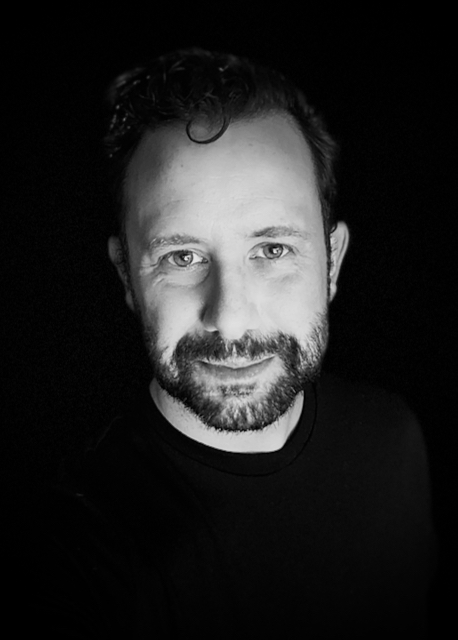
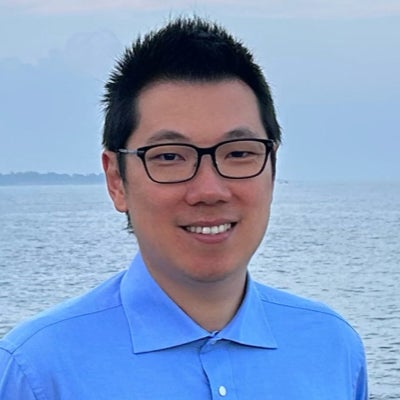
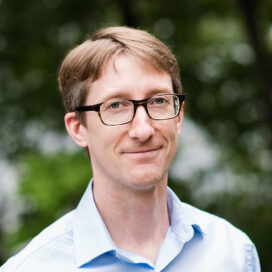
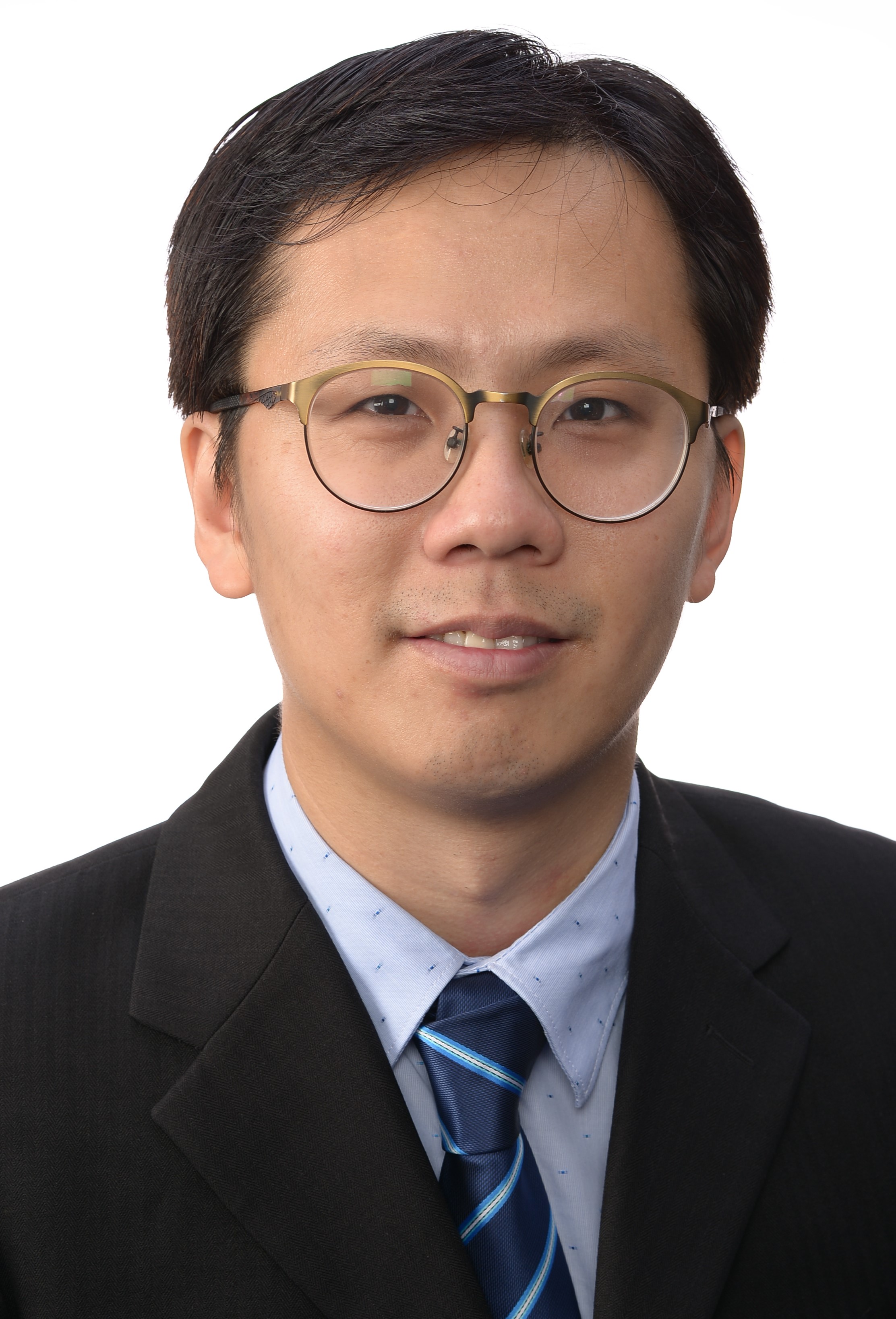
Professor Chris Greening is a Research Professor in the Department of Microbiology at Monash University, leading the One Health Microbiology group at the Biomedicine Discovery Institute. He holds a first-class degree in Molecular and Cellular Biochemistry from the University of Oxford (2010) and a PhD from the University of Otago (2013). His career includes postdoctoral roles at Otago, CSIRO, and the Australian National University, followed by appointments as a group leader in Monash’s School of Biological Sciences (2016) and a medically-focused NHMRC EL2 Fellow in the Department of Microbiology (2020). Research Focus: Bacterial persistence mechanisms, microbial metabolism, antimicrobial resistance (AMR), and One Health approaches linking environmental, clinical, and public health challenges. Awards: Fenner Medal (2022) and Jim Pittard Award (2019). Key Projects: RISE, Global Research Alliance on Agricultural GHGs, SAEF, and the ARC Carbon Utilisation Hub. Leads Monash’s AMR R&D Facility. Research spans metabolic pathways enabling bacterial survival in extreme conditions (e.g., hydrogen oxidation, F420 cofactor roles), climate impacts (greenhouse gas regulation), and translational programs addressing diarrheal diseases and AMR. Grants: ARC DECRA Fellowship, NHMRC EL2 Fellowship. Cross-disciplinary collaborations with engineers, ecologists, social scientists, and industry. Lab facilities include advanced microbiology, structural biology, and systems biology tools. Contributions align with UN SDGs: climate action (SDG13), good health (SDG3), and sustainable cities (SDG11).
Alexandre Poulain is a Full Professor in the Department of Biology at the University of Ottawa and Vice Dean for Research and Infrastructure in the Faculty of Science. His multidisciplinary research bridges biogeochemistry, microbial physiology, and environmental toxicology. Education: B.Sc. (Angers, France), M.Sc. (INRS, Canada), Ph.D. (Université de Montréal, Canada), Postdoc (MIT, USA) Research Interests: Mercury cycling in Arctic and temperate ecosystems, microbial metal transformations, biosensor development for contaminants, redox reaction dynamics, bioremediation using environmental microbes, and mercury-organic matter interactions. His lab (2017-2025) has produced 15 recent publications on mercury biogeochemistry in oil sands, rice paddies, and Arctic lakes, alongside arsenic speciation studies and pesticide impacts on pollinators. Current students explore archaeal mercury regulators, acidothermophilic biosensors, and microbial remediation. Scientific contributions include: NSERC Postdoctoral Fellowship (2007-2009) Co-PI on Microbright, a startup commercializing microbial water treatment Developed portable arsenic biosensor tested in Cambodia Co-edited mercury-climate synthesis in Nature Communications
Che-Wei Chang is an Assistant Professor in the Department of Ocean Engineering at the University of Rhode Island (URI) , where he joined in August 2023. Prior to URI, he was an Assistant Professor at the Disaster Prevention Research Institute of Kyoto University in Japan. He earned his Ph.D. in Civil and Environmental Engineering from Cornell University in 2017, along with an M.S. in Civil Engineering from National Taiwan University (2008) and a B.S. in Soil and Water Conservation from National Chung Hsing University (2006). Ph.D., Civil and Environmental Engineering, Cornell University, 2017 M.S., Civil Engineering, National Taiwan University, 2008 B.S., Soil and Water Conservation, National Chung Hsing University, 2006 Dr. Chang specializes in coastal engineering , coastal resilience , and nature-based solutions for mitigating coastal hazards. His research focuses on water waves and nearshore hydrodynamics , particularly how mangroves and other natural features reduce wave impacts from tsunamis, storm surges, and rising sea levels. He integrates numerical modeling , laboratory flume experiments , and field observations to advance understanding of coastal morphodynamics under climate change. His recent work, including 2025 publications on SPH simulations and field studies , emphasizes mangrove resilience against breaking wave forces and critical wave conditions leading to mangrove failure. Earlier studies (2015–2022) explore Boussinesq modeling , wave-vegetation interactions , and coastal forest functional evaluation . These articles highlight his commitment to sustainable shoreline management and science-based coastal design. Dr. Chang received the Coastal Engineering Journal (CEJ) Citation Award 2024 for his impactful review paper and was appointed a Senior Fellow of the Coastal Institute (URI) in 2025 . He actively mentors graduate students like Felipe Espinoza and Ramin Safari , who investigate wave-mangrove dynamics and vegetation impacts on coastal systems . His lab at URI, the Chang Coastal Lab , collaborates on conferences (e.g., ICCE 2024) and NSF-funded projects like NHERI RAPID Facility workshops.
Taylor Perron is the Cecil and Ida Green Professor of Earth, Atmospheric and Planetary Sciences at Massachusetts Institute of Technology (MIT), where he also serves as the EAPS Undergraduate Officer. His research program at MIT spans multiple interdisciplinary areas within Earth and planetary sciences, with strong connections to the MIT-WHOI Joint Program in Oceanography/Applied Ocean Science and Engineering. Dr. Perron's academic background includes an AB in Earth and Planetary Sciences and Archaeology from Harvard University (1999) and a PhD from the University of California, Berkeley (2006), followed by postdoctoral work at Harvard. His leadership roles at MIT have included serving as chair of the Program in Geology, Geochemistry, and Geobiology, and as Associate Department Head for Education. His research focuses on three interconnected areas: Landscape Evolution, Planetary Surfaces, and the Human Landscape. Within Landscape Evolution, he investigates dynamic river networks, climate-landscape interactions, grain-scale sediment transport mechanics, and the connections between landscape evolution and biological diversification. His Planetary Surfaces research examines river systems on Mars and Titan, using spacecraft data to understand extraterrestrial hydrological processes. The Human Landscape component explores archaeological applications of geomorphology, particularly in the Amazon basin. Analysis of his recent publications reveals a strong emphasis on comparative planetary hydrology, with significant work on Earth, Mars, and Titan. His research increasingly integrates field observations, mathematical modeling, and remote sensing to address questions about landscape evolution across different planetary environments and timescales, with growing attention to anthropogenic impacts on Earth's surface processes. Scientific Awards & Honors: MacArthur Fellowship (2021) James B. Macelwane Medal, American Geophysical Union (2014) Fellow, American Geophysical Union (2014) Editorial Committee Member, Annual Review of Earth & Planetary Sciences (2017-present) Dr. Perron has established a productive research group that collaborates across disciplines and institutions, including significant partnerships with WHOI, NASA missions, and archaeological teams. His work bridges fundamental questions about planetary evolution with practical implications for understanding climate change impacts on Earth's surface systems.
Dr. Chian Siau Chen is a Professor at the National University of Singapore (NUS), specializing in earthquake engineering and geotechnical engineering. His research focuses on soil liquefaction, land reclamation, and ground improvement. He holds leadership roles, including Vice President of the Geotechnical Society of Singapore (2016–2017) and President (2024–2025). He has been recognized with prestigious awards such as the Top 10 Innovators Under 35 in Asia (2016) and the Prominent Geotechnical Engineer Award (2022). Education: PhD in Engineering from Cambridge University (2012), B.Eng. (1st Class) from Nanyang Technological University (2006). Research Interests: Earthquake Engineering, Centrifuge Modelling, Ground Improvement, Remote Sensing, and Land Reclamation. His work bridges theoretical analysis and practical applications, including disaster risk reduction and sustainable construction. Publications: Over 50 peer-reviewed articles, focusing on seismic stability, soil mechanics, and innovative techniques for urban infrastructure. Recent trends emphasize digital tools (e.g., LiDAR, UAV) and probabilistic models for ground settlement predictions. Awards: Extensive accolades span technical excellence, teaching (ATEA 2017–2019), and professional service. He is a committee member for international geotechnical councils and editorial boards of journals. Grants & Projects: Funded by EPSRC for post-disaster reconnaissance and by Singaporean agencies for land reclamation. Leads collaborative efforts to recycle construction waste into sustainable fill materials. Labs/Teams: Active in NUS research groups and international collaborations, contributing to urban earthquake engineering and geotechnical innovation.
Dr. Kenneth Gavin is a researcher at the TU Delft , affiliated with the School of Civil Engineering & Geosciences and the Geo-engineering Department. With over 188 research outputs and active involvement in offshore engineering projects, his work focuses on foundation behavior, pile installation mechanics, and soil-structure interaction. Research Interests: Geotechnical engineering, pile foundations, offshore installation methods, soil mechanics, and computational modeling (particularly Coupled Eulerian Lagrangian analysis). In recent work, he has led studies on: Hip hammer impact duration effects on driveability resistance Self-weight penetration modeling with rate effects Centrifuge testing of open-ended pile loading behavior Scientific Awards: TRA Senior Researcher Rail Award (2018) Academic Leadership: Gavin has served on editorial boards for the Canadian Geotechnical Journal (2018-2019) and chaired committees for the International Society for Soil Mechanics and Geotechnical Engineering (ISSMGE). He has also contributed to key conferences including ISFOG 2025 and ALERT Geomaterials Workshop 2018.
Prof. Ioannis Anastasopoulos is a Full Professor and Head of the Department of Civil, Environmental and Geomatic Engineering at ETH Zurich. He leads the Chair of Geotechnical Engineering, focusing on advanced geotechnical modeling, seismic resilience, and infrastructure systems. His research integrates experimental and numerical methods to address challenges in tunnel engineering, offshore foundations, and seismic protection. Key research areas include seismic response of geotechnical structures, soil-structure interaction, metamaterial-based vibration mitigation, and innovative foundation technologies. He directs the Geotechnical Centrifuge Center and Soil Testing Laboratories at ETH Zurich, advancing physical modeling and material characterization. Recent work emphasizes earthquake engineering applications, including fault rupture interactions with tunnels, pile group dynamics under combined loading, and hybrid modeling of scour effects on bridge foundations. His contributions span geotechnical design methodologies, nuclear facility safety, and additive manufacturing for masonry structures. Prof. Anastasopoulos collaborates internationally on projects like the GEOLAB initiative, advancing Europe's geotechnical physical modeling infrastructure. His teaching includes courses on geotechnical design and theoretical soil mechanics, bridging academic research with practical engineering solutions.
Mohd Ahmad Syed is a Senior Lecturer in Geotechnical Engineering at the University of Manchester's Department of Civil Engineering and Management. His research focuses on climate change impacts on geotechnical infrastructure, resilient and sustainable infrastructure design, and earthquake engineering. He holds a PhD from the Indian Institute of Technology Bombay and has industry experience with firms like Consulting Engineering Services (I) Pvt. Ltd and Dar Al-Handasah Consultants. Education: BTech (Hons) in Civil Engineering, Indian Institute of Technology Kanpur (2001) MTech in Geotechnical Engineering, Indian Institute of Technology Kanpur (2003) PhD in Seismic Analyses of Waterfront Structures, Indian Institute of Technology Bombay (2009) Research Interests: Climate change modelling for geotechnical infrastructure resilience Development of sustainable construction materials (e.g., bagasse ash) Seismic risk analysis for dams and tunnels in West Africa Artificial soil weathering techniques for laboratory testing Coupled numerical methods for embankment stability under climate scenarios Editorial Activities: Assistant Editor, International Journal of Geomechanics (ASCE) Assistant Editor, Indian Geotechnical Journal (Springer) Key Achievements: Developed first-of-its-kind displacement-based S-curve for seismic earth pressure analysis Co-developed methodologies for post-liquefaction pile behavior and blast-loaded tunnels Guided 10 PhD/MSc students in geotechnical resilience and sustainability topics
Ioannis Antoniadis is a Professor at the School of Mechanical Engineering , National Technical University of Athens (NTUA), and serves as the Dean and Director of the Dynamics and Acoustics Laboratory (DAL) . He has held academic positions since 1982, rising through the ranks from Scientific Research Assistant to full Professor since 2012. Education: Diploma in Mechanical Engineering (NTUA, 1981), Ph.D. (NTUA, 1987) Research Focus: Vibration isolation, negative stiffness systems, smart materials, seismic protection, and energy conversion Key Projects: 25+ funded research initiatives including KDamper for seismic mitigation, TRANVIC for vehicle vibration control, and 3BUILD for 3D-printing construction systems His work has resulted in 15+ peer-reviewed publications on seismic protection devices and vibration control systems, with applications in bridges, wind turbines, and industrial equipment. He has taught courses in Dynamics and Vibrations , Noise Vibration , and Signal Processing at NTUA, while leading the Mechanical Design and Automatic Control Section .
Professor Dörthe Tetzlaff is a leading figure in ecohydrology, serving as Head of Department (A1) Ecohydrology at the Leibniz Institute of Freshwater Ecology and Inland Fisheries (IGB) and as Full Professor of Ecohydrology at Humboldt-Universität zu Berlin, Faculty of Mathematics and Natural Sciences, Geography Department. She also holds an Honorary Professorship at the University of Aberdeen, Scotland. Her work bridges theoretical hydrology with practical applications for water security and environmental management. Professor Tetzlaff's research focuses on ecohydrological processes, particularly using stable water isotopes to understand water cycling, catchment functioning, and landscape connectivity. Her work spans from pristine natural systems to complex urban environments, with particular emphasis on drought resilience, water security, and nature-based solutions. She has pioneered tracer-aided modeling approaches to quantify water storage, fluxes, and ages across the soil-plant-atmosphere continuum. Her publication record shows a clear trend toward increasingly sophisticated integration of multi-tracer approaches with ecohydrological modeling, with recent work focusing on urban systems, drought impacts, and nature-based solutions. The publications demonstrate expertise across hydrology, biogeochemistry, and ecological applications, with strong methodological development in isotope hydrology and modeling techniques. Polubarinova-Kochina Hydrologic Sciences Mid-Career Award of the American Geophysical Union AGU (2024) Water Resource Prize of the Rüdiger Kurt Bode Foundation (2024) Member of the Berlin-Brandenburg Academy of Sciences and Humanities (2023) Fellow of The European Academy of Sciences (2022) Fellow of the Geological Society of America GSA (2020) Professor Tetzlaff actively supervises numerous PhD students and postdoctoral researchers, with her group focusing on cutting-edge ecohydrological research. She leads multiple significant research projects including WETSCAPES2.0, ECCO, ISO-SCALE, and BiNatUr, which address critical questions about water security, climate change impacts, and nature-based solutions in urban environments. Her work is supported by substantial funding from various national and international sources. She leads the Ecohydrology research group at both IGB and Humboldt-Universität zu Berlin, which employs an integrative approach combining field measurements, isotope techniques, and advanced modeling to understand water dynamics across diverse landscapes. The group collaborates extensively with international partners across Europe, North America, and Asia, contributing to global understanding of hydrological processes.
Pengfei Wang is an Assistant Professor in the Department of Civil & Environmental Engineering at Old Dominion University (ODU). He holds a Ph.D. in Geotechnical Engineering and an M.S. in Statistics from UCLA, alongside a B.S. in Transportation Engineering from Tongji University. Prior to ODU, he conducted postdoctoral research at UCLA. His expertise focuses on Geotechnical Engineering , Engineering Seismology , and Applied Statistics , with emphasis on regional geo-hazard modeling, multi-hazards risk assessment, and statistical learning applications. Key research interests include seismic site response analysis, liquefaction susceptibility, and probabilistic risk frameworks for infrastructure resilience. Dr. Wang’s work integrates geospatial analysis and statistical methodologies to address challenges in earthquake engineering. He has developed frameworks for regional landslide and liquefaction risk assessments, particularly in vulnerable regions like California’s Sacramento-San Joaquin Delta. His contributions include advancing HVSR (Horizontal-to-Vertical Spectral Ratio) methodologies and ergodic site response modeling. He maintains active collaborations with institutions globally and contributes to open-source databases for seismic data, promoting transparency and reproducibility in geotechnical research. His educational background in transportation engineering enriches interdisciplinary approaches to civil infrastructure resilience.
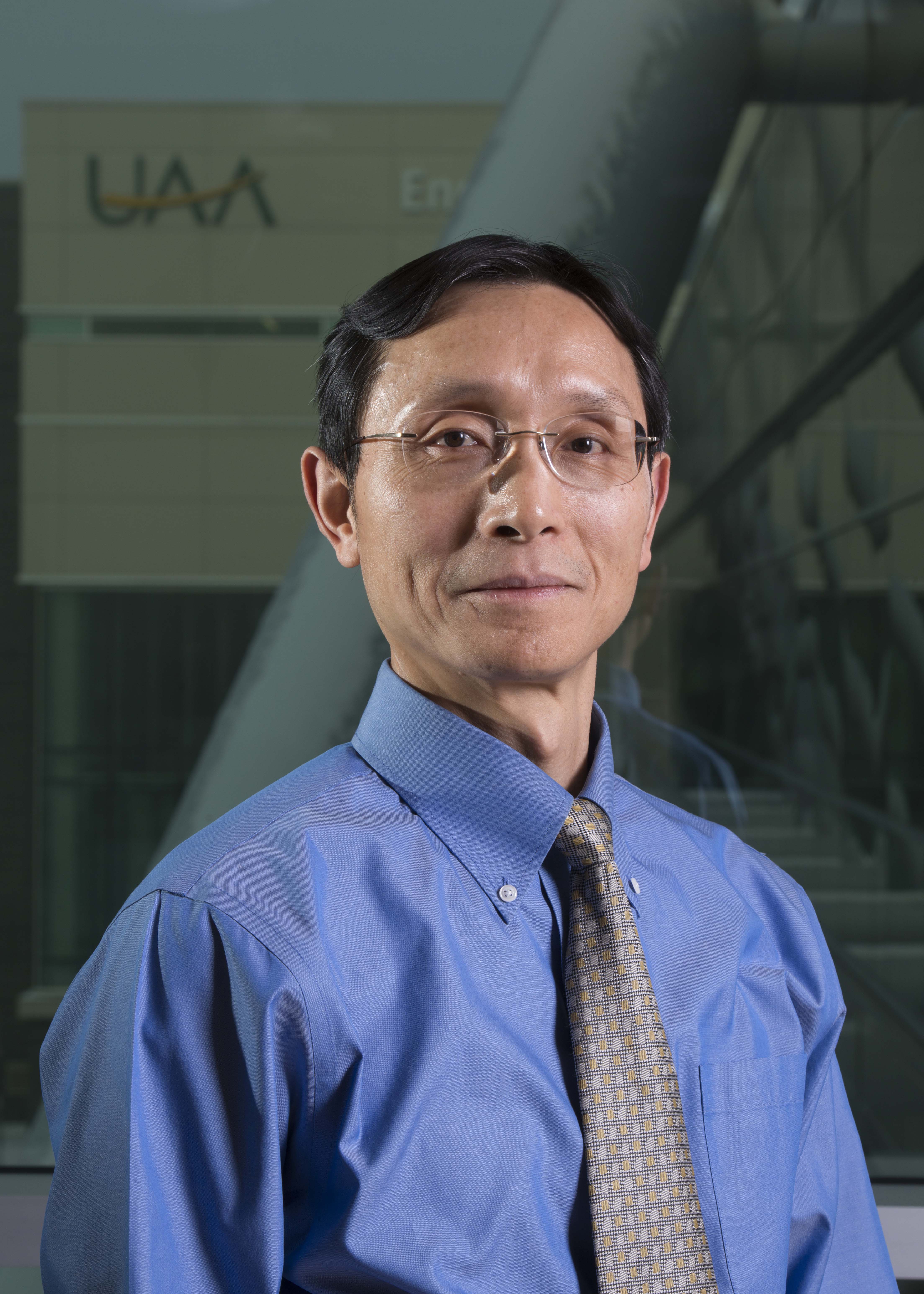
Joey Yang is a Professor of Civil Engineering at the University of Alaska Anchorage (UAA), serving as Associate Director of the Alaska University Transportation Center and Director of the Geotechnical and Frozen Ground Engineering Research Laboratory. His expertise spans geotechnical and earthquake engineering with a focus on cold regions, including permafrost dynamics, infrastructure resilience, and de-icing technologies. He holds a Ph.D. from the University of California, Davis, and a B.S. from Chengdu University of Science and Technology. Education: Ph.D., Civil and Environmental Engineering, University of California, Davis B.S., Hydraulic Engineering, Chengdu University of Science and Technology Research Interests: Dr. Yang's work addresses geotechnical challenges in cold regions, including permafrost thaw, seismic site response, frozen soil-pile interaction, and fungal mycelium-based biofoams for insulation. His research is funded by NSF EPSCoR, USGS, USDOT, and others. Professional Contributions: Chief Editor, ASCE Journal of Cold Regions Engineering Editorial Board Member, Cold Regions Science and Technology Keynote/Theme Session Speaker at International Permafrost and Earthquake Conferences Awards: Arctic Kicker Prize (2015) Outstanding Reviewer Awards (2010, 2014) ASTM Technical Editors Award (2014) Advising & Grants: Dr. Yang has advised over 20 visiting scholars and secured multi-million-dollar grants for cold regions infrastructure research. His lab focuses on advancing technologies for permafrost engineering, seismic resilience, and sustainable construction. Labs/Teams: Leads the Geotechnical and Frozen Ground Engineering Research Laboratory, collaborating with global partners on cold regions challenges.
Andrew S. Whittaker is a SUNY Distinguished Professor in the Department of Civil, Structural and Environmental Engineering at the University at Buffalo, State University of New York . He serves as Director of the Institute of Bridge Engineering and Interim Director of the Stephen Still Institute for Sustainable Transportation and Logistics , both within the School of Engineering and Applied Sciences . A registered Civil and Structural Engineer in California, Whittaker specializes in structural and earthquake engineering, bridge engineering, blast and impact engineering, performance-based engineering, and nuclear structures. Research Interests: His work focuses on seismic isolation systems for nuclear reactors, fluid-structure interaction in advanced reactor vessels, gamma radiation effects on materials, and the dynamic behavior of graphite blocks in high-temperature gas reactors (HTGRs). He also explores the commodification of microreactors and soil-structure interaction for seismically isolated facilities. Scientific Awards: Distinguished Member, American Society of Civil Engineers (2025) Untermyer & Cisler Reactor Technology Medal (2023) Nathan M. Newmark Medal (2023) Fellow of multiple societies (ASCE, SEI, ACI) Awards and grants highlight his leadership in nuclear safety, seismic engineering, and reactor design.
Dr. Michael Philben is an Associate Professor of Chemistry and Geological and Environmental Science at Hope College, where he joined in 2019 after postdoctoral positions at Memorial University (Canada) and Oak Ridge National Laboratory. His research focuses on climate-carbon cycle feedbacks in vulnerable ecosystems, particularly peatlands and Arctic tundra. His educational background includes a Ph.D. in Marine Science from the University of South Carolina (2014) and a B.A. in Earth and Planetary Science from Northwestern University (2010). At Hope College, he teaches Environmental Science courses and contributes to the Day1: Watershed program. Philben's research centers on carbon and nitrogen cycling in ecosystems containing vast organic carbon stocks. He leads an NSF CAREER-funded project investigating Michigan peat bogs as natural laboratories for climate change impacts, using a north-south transect from Portage to Newberry as a 'space-for-time' experiment. His work examines methane emissions, nitrogen availability, and net carbon balance under warming conditions, with particular attention to Sphagnum-dominated peatlands at the southern edge of their climate range. His 15 most recent publications (2020-2024) reveal a strong focus on peatland biogeochemistry, with increasing emphasis on methane dynamics, nitrogen cycling, and the role of specific biochemical compounds like sphagnan. The research combines field measurements across climate gradients with laboratory experiments, often involving Hope College students in all project phases. NSF CAREER Award for peatland climate research Philben actively mentors undergraduate researchers through the Philben Research Group, which investigates how warming impacts carbon cycling in peatlands. His projects involve interdisciplinary work spanning analytical chemistry, geology, and ecology. The group maintains a network of seven Michigan peat bog field sites and collaborates on international research, including Arctic studies in Alaska and Canada. His laboratory focuses on using analytical chemistry tools to predict climate-carbon cycle feedbacks, with particular attention to southern Michigan peatlands as sentinels for larger northern peatland complexes. The research group employs techniques including greenhouse gas flux measurements, radiometric dating of peat cores, and analysis of organic matter composition.
Professor Atilla Ansal is a distinguished academic in Civil Engineering at Özyeğin University's School of Engineering, where he has served as a full-time professor since March 2012 and previously as the Founding Chair of the Civil Engineering Department from 2012-2019. With an extensive career spanning over five decades, Professor Ansal has held prominent positions at Istanbul Technical University, Bogaziçi University's Kandilli Observatory and Earthquake Research Institute, and has served as a visiting professor at numerous international institutions including Northwestern University, University of California, and Tokyo University. Northwestern University, 1978 (Doctorate) Civil Engineering, Istanbul Technical University, 1969 (Master's) Civil Engineering, Istanbul Technical University, 1969 (Bachelor's) Professor Ansal's research focuses on Earthquake Geotechnical Engineering, Soil Dynamics, Seismic Hazard Analysis, Landslide hazard analysis, Seismic Microzonation, and Laboratory and In-Situ Testing of Soil Properties. His work has significantly advanced our understanding of soil behavior under seismic loading, site response analysis, and seismic microzonation methodologies. His research has direct applications in urban planning, earthquake risk mitigation, and performance-based seismic design. Professor Ansal has pioneered approaches to site-specific earthquake characterization and developed methodologies for seismic microzonation that have been implemented in numerous Turkish cities and adopted internationally. His extensive publication record demonstrates consistent contributions to earthquake engineering, with recent work focusing on probabilistic seismic microzonation, 2D basin effects, site-specific response analysis, and performance-based design approaches. His research shows a clear evolution from fundamental soil behavior studies to practical applications in urban risk assessment and mitigation. 7th Prof.N.Ambraseys Lecturer (2024), European Association for Earthquake Engineering 15th Nonveiller Lecturer (2017), Croatian Geotechnical Society Third Prof.Dr. Rıfat Yarar Lecturer (2015), Turkish Civil Engineers Association Third Ord.Prof.Dr. Hamdi Peynircioglu Lecturer (1988) Professor Ansal has advised 15 PhD students and 27 Master's students, shaping the next generation of earthquake engineers. His leadership extends to editorial roles as Editor-in-Chief of the Springer journal 'Bulletin of Earthquake Engineering' since 2002 and Editor-in-Chief for the Springer book series on 'Geotechnical, Geological and Earthquake Engineering'. He served as Secretary General (1994-2014), President (2014-2018), and Vice President (2018-2022) of the European Association for Earthquake Engineering, significantly influencing the field internationally. His work has been supported by numerous grants from Turkish government agencies, international organizations including UNESCO, and collaborative research projects across Europe. Professor Ansal has been instrumental in establishing geotechnical monitoring systems in Istanbul, including vertical arrays for site response analysis. His leadership in the 'Earthquake Master Plan for Istanbul' and 'Seismic Microzonation for Municipalities' projects has created critical infrastructure for earthquake risk management in Turkey's most populous city. His work with GeoIst, Geotechnical Earthquake Engineering and Consultancy Inc. has translated academic research into practical engineering solutions for seismic risk mitigation.