Xiumin Diao is an Associate Professor at Purdue University's School of Engineering Technology, specializing in robotics and mechatronic systems for healthcare and manufacturing applications. His work emphasizes human-robot interaction, control algorithms, and energy-efficient UAV designs. Education: Ph.D. in Mechanical Engineering (2007, New Mexico State University) M.S. in Measurement Technology and Automatic Device (2003, Beihang University) B.S. in Mechanical Design and Manufacturing (2000, Yantai University) Research focuses on cable-driven parallel robots , reinforcement learning , and intention prediction using neural networks. Recent publications explore stiffness analysis, UAV arm rotation efficiency, and hybrid control strategies. Key trends in his work include: Advancing adaptive control for robots with unknown dynamics Optimizing energy efficiency in aerial robotics Applying deep learning to human motion understanding His lab develops hardware-in-the-loop microgravity simulators and rehabilitation devices, with applications in disaster exploration and satellite docking.
Aude Billard is a Professor at the School of Engineering, École Polytechnique Fédérale de Lausanne (EPFL), where she leads the Learning Algorithms and Systems Laboratory (LASA). Her work focuses on enabling robots to learn complex tasks through human demonstration, with applications in manipulation, sports, and safe human-robot interaction. Her educational background includes: M.Sc. in Physics, EPFL (1995) M.Sc. in Knowledge-Based Systems, University of Edinburgh (1996) Ph.D. in Artificial Intelligence, University of Edinburgh (1998) Aude Billard's research centers on imitation learning, where robots learn from few demonstrations and even failed attempts to improve generalization and robustness. She emphasizes feasibility over optimality in control, modeling human-like variability to allow rapid adaptation in dynamic environments. Her work enables robots to perform delicate tasks like handling fragile objects and reacting instantly to perturbations, such as catching fast-moving items or playing golf with moving targets. Her research has been widely recognized and featured in BBC and IEEE Spectrum, highlighting its impact on real-world robotics applications. Notable scientific recognitions include: Intel Corporation Teaching Award Swiss National Science Foundation Career Award Outstanding Young Person in Science and Innovation (Swiss Chamber of Commerce) IEEE-RAS Best Reviewer Award Seven best paper awards at premier robotics conferences (ICRA, IROS, ROMAN) She has played key leadership roles in the robotics community, serving as an elected member of the IEEE Robotics and Automation Society Administrative Committee (2006–2008, 2009–2011), keynote speaker at ROMAN 2005, General Chair for HRI 2011, and Co-General Chair for Humanoids 2006. She has also contributed significantly to conference organization and peer review excellence. Aude Billard leads the Learning Algorithms and Systems Laboratory (LASA) at EPFL, a leading research group dedicated to developing intelligent robotic systems capable of learning complex motor skills through interaction with humans and environments.
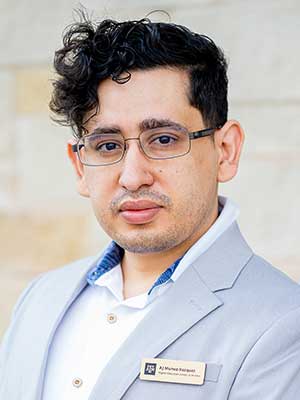
Aldo Jonathan Muñoz Vazquez serves as an Instructional Associate Professor in the Department of Multidisciplinary Engineering at Texas A&M University, where he focuses on advanced control systems research. He holds significant recognition as a Level I member of the Mexican National System of Researchers (SNI) and contributes to academic discourse as Associate Editor for Transactions of the Institute of Measurement and Control and International Journal of Control, Automation and Systems, following prior editorial service for IEEE Latin America Transactions (2018-2019). His research centers on Robotics and autonomous systems, Sliding mode techniques for control and observation, Fractional calculus applications, Fuzzy logic-based control, and Lyapunov stability theory. These interconnected domains emphasize developing robust, stable control strategies for complex systems with real-time performance guarantees, particularly addressing challenges in nonlinear dynamics and time-constrained operations. Recent publications reveal a concentrated research trajectory in predefined-time control methodologies, fractional-order systems, and sliding mode techniques applied to robotics and electromechanical systems. This work demonstrates consistent innovation in cooperative manipulation, second-order system stabilization, and data-driven control frameworks across high-impact engineering journals. His scientific recognition includes: Member of the Mexican National System of Researchers (SNI), Level I Publons Peer-review Award: Top 1% of Reviewers in Engineering While current advising activities and grant funding details remain unspecified in available records, his editorial roles and research output indicate active engagement in the global control engineering community. Laboratory affiliations or specialized research teams are not documented in the provided materials.
Satoru Emori is an Associate Professor in the Department of Physics at Virginia Tech's College of Science. He holds the Luther and Alice Hamlett Junior Faculty Fellowship. His research focuses on experimental condensed matter physics, particularly spin-driven phenomena in magnetic thin films, including spin coherence, spintronics, and domain wall dynamics. His work aims to develop 'poor man’s quantum materials' for next-generation computing and quantum technologies. Emori received his Ph.D. from MIT. His research spans magnetic thin films, spin-orbit torques, and low-damping materials, with applications in spintronic devices and quantum materials. He leads the Spin Magnetic Lab, exploring topics like ferromagnetic fiber robots for biomedical use and engineered magnetic systems. Key research areas include: Experimental investigation of spin coherence in nanomagnetic systems Exploration of spin-driven phenomena in transition metal thin films Domain wall dynamics in easy-plane magnetic systems Development of low-loss magnetic materials for spintronic applications His recent publications emphasize advancements in spin-orbit torque oscillators, suppression of spin pumping, and multifunctional magnetic fiber robotics. He has secured funding for projects like 'CAREER: Low-Loss Spintronic Devices with Vertically Engineered Magnets.' Awards include the Luther and Alice Hamlett Junior Faculty Fellowship. Emori's lab collaborates on projects involving ferromagnetic oxide heterostructures, strain-mediated magnetoelectric effects, and biomedical robotics applications of magnetic materials. His work bridges fundamental physics with applied technologies for computing and medical innovation.
Raymond J. Cipra is Professor Emeritus of Mechanical Engineering at Purdue University's College of Engineering. He holds B.S., M.S., and Ph.D. degrees from the University of Wisconsin. His research focuses on mechanical systems design, robotics, kinematics, dynamics, and computer-aided engineering. Cipra has contributed to several NASA-supported projects involving reconfigurable exploratory robotic vehicles. His publications cover robotic path planning, composite manufacturing, assistive wheelchair technologies, and mechanism design. Recent work includes developing discrete angular joints for digital robots and expanding manipulation workspaces using friction dynamics. His applied research spans industrial automation, space exploration systems, and rehabilitation engineering, with collaborations extending to NASA technology development initiatives.
Martha U Gillette is an Alumni Professor in the Department of Cell and Developmental Biology at the University of Illinois. She holds additional roles as Director of the Neuroscience Program and Professor in multiple interdisciplinary institutes, including the Beckman Institute and Carl R. Woese Institute for Genomic Biology. Education: B.A. in Biology, Grinnell College M.S. in Zoology, University of Hawaii Ph.D. in Zoology, University of Toronto Postdoc., University of California-Santa Cruz Research Interests: Neurobiology of circadian rhythms and their role in brain function Neuronal development and repair mechanisms Emergent behaviors in neuronal clusters Actin cytoskeleton signaling in circadian clock coupling Key Achievements: Recipient of AAAS Fellow (1995) Women in Neuroscience Lifetime Achievement Award NSF and NIH grants for BRAIN Initiative projects Co-developed microfluidic platforms for neuronal studies Lab & Collaborations: Leads interdisciplinary teams integrating neuroscience, bioengineering, and nanotechnology. Active in campus initiatives like the Center for Advanced Study and the Micro and Nanotechnology Lab.
Dr. Jinke Chang is a Postdoctoral Research Fellow in the Department of Engineering Science at the University of Oxford. He holds a PhD in Medical Science Engineering from University College London (2021), alongside Master's and Bachelor's degrees in Mechanical Engineering. His research focuses on functional materials, biomaterials, and advanced manufacturing technologies such as 3D printing, electrospinning, and photolithography, applied to medical devices like implants, sensors, and soft robotics. Collaborations with surgeons, engineers, and industrial experts drive innovations in cochlear devices, dental implants, and biomimetic tissue regeneration. Recent research emphasizes biomimetic remineralization of human tooth enamel using nanotechnologies like AFM, TEM, and synchrotron tomography. Dr. Chang is affiliated with the Multifunctional Materials & Composites Laboratory (MMC Lab). His work bridges engineering and medicine, addressing challenges in biocompatible materials and smart medical systems.
Yik Lung Pang is a researcher at the School of Electronic Engineering and Computer Science, Queen Mary University of London, based in the Peter Landin building (Room CS 440). His work bridges robotics, computer vision, and machine learning to advance human-robot collaboration in real-world environments. His research specializes in human-robot interaction with a focus on handover behaviors, 3D scene reconstruction, and object pose estimation. Key contributions include: Developing LaVA-Man for visual action representation learning in robot manipulation Creating stereo-based hand-object reconstruction systems for safe human-to-robot handovers Pioneering incremental 6D pose estimation techniques for dynamic object tracking Integrating audio-visual modalities to enhance object classification in collaborative tasks His methodology consistently emphasizes safety, adaptability to unseen environments, and real-time performance. From 2021-2025, Pang's publication trajectory reveals an escalating focus on multimodal perception (combining vision, audio, and depth data) and robustness in unstructured settings. His work addresses critical gaps in human-robot teaming, particularly for domestic and industrial applications involving unknown containers and complex handovers. No scientific awards, student supervision, or laboratory affiliations were documented in the provided sources.
Jordan Vice is a Research Fellow at The University of Western Australia's School of Physics, Maths and Computing, specializing in Computer Science and Software Engineering. They hold a Ph.D. in Mechatronic Engineering from Curtin University (2023) and a 1st Class Honours degree in the same field (2020). Their research focuses on AI transparency, fairness, security, and reliability, with expertise in generative models, explainable AI, and robotics. Education: Ph.D. in Mechatronic Engineering (2020-2023), Curtin University, Thesis: Accountable, Explainable Artificial Intelligence Incorporation Framework for a Real-Time Affective State Assessment Module Bachelor of Mechatronic Engineering (2015-2019), Curtin University, Thesis: Bi-modal Affect-Based Authentication Machines Research Interests: AI ethics, generative models, cybersecurity in AI systems, facial expression analysis, and AI applications in healthcare. They advocate for transparent and accountable AI deployment while addressing security and privacy challenges. Recent work explores bias quantification in text-to-image models and backdoor attacks in generative systems. Key Trends in Publications: Focus on adversarial machine learning, generative model vulnerabilities, and ethical AI frameworks. Notable contributions include frameworks for real-time affect assessment and methodologies to quantify bias in text-to-image systems. Awards: Chancellor's Commendation (2023) Proxima Consulting Prize (2020) RTP Scholarship (2019) Advising & Grants: No explicitly listed advisees or grants, though their work suggests involvement in collaborative research projects. Labs/Teams: Affiliated with the School of Computer Science and Software Engineering at UWA, contributing to interdisciplinary AI research groups.
Chris Eliasmith is a Professor jointly appointed in the Systems Design Engineering and Philosophy departments at the University of Waterloo, with a cross-appointment to Computer Science. He is the Founding Director of the Centre for Theoretical Neuroscience and holds the Canada Research Chair in Theoretical Neuroscience. His research focuses on mathematical modeling of neural systems, including the Neural Engineering Framework (NEF) and Semantic Pointer Architecture (SPA), which underpin the world’s largest functional brain simulation, Spaun. He leads the Computational Neuroscience Research Group (CNRG), advancing neuromorphic computing, spiking neural networks, and cognitive modeling. Education: PhD in Neuroscience & Psychology (2000), Washington University in St. Louis MA in Philosophy (1995), University of Waterloo BASc in Systems Design Engineering (1994), University of Waterloo Research: His work integrates theoretical neuroscience with practical applications in robotics, AI, and neuromorphic hardware. Key contributions include the NEF, Spaun, and innovations like the Legendre Memory Unit (LMU) and Spatial Semantic Pointers (SSPs). His lab explores adaptive neural systems, decision-making models, and biologically plausible machine learning algorithms. Teaching: Recent courses include SYDE 556 (Simulating Neurobiological Systems), SYDE 750 (Topics in Systems Modelling), and PHIL 356 (Intelligence in Machines, Humans, and Other Animals). Awards: 2015 NSERC Polanyi Prize Labs & Projects: The CNRG develops tools like Nengo for simulating large-scale neural systems and collaborates on neuromorphic hardware platforms such as Loihi. Current projects span neural robotics, cognitive architectures, and biologically inspired AI systems.
Chiara Gabellieri is an Assistant Professor specializing in Robotics and Mechatronics, focusing on advanced control systems, aerial robotics, and multi-rotor systems. Her work contributes to UN Sustainable Development Goals related to innovation and infrastructure. She collaborates internationally, with research emphasizing experimental validation, dynamic control, and morphing UAV designs. Her research interests include motion control of unmanned aerial vehicles (UAVs), collaborative robots (cobots), and optimal control strategies for flexible systems. Recent studies explore omnidirectional MAVs, impact-aware collision dynamics, and propeller force modeling in multi-rotor systems. Key contributions include experimental validation of propeller models, impact-aware UAV safety protocols, and the development of the OmniMorph morphing UAV. Her work is published in journals like Journal of Intelligent and Robotic Systems and at conferences such as ICUAS. Notable datasets include studies on cable-suspended load manipulation and collision dynamics, available via Zenodo and 4TU.Centre for Research Data. Collaborations span institutions globally, with a focus on interdisciplinary projects combining robotics, control theory, and aerospace engineering.
Frederico Fernandes Afonso Silva is a Marie Curie Research Fellow at the University of Manchester, working on the Reconfigurable Robots for Inhospitable Environments (REINE) project, funded through UKRI Horizon Europe. His research focuses on robot dynamics and dual quaternion algebra, with applications in nuclear decommissioning and modular robotics. Education: PhD in Electrical Engineering (2017–2022), Universidade Federal de Minas Gerais (Brazil) MSc in Electrical Engineering (2015–2017), UFMG BSc in Control and Automation Engineering (2009–2015), UFMG Research Interests: Robotics dynamics, dual quaternion algebra, modular robotics systems, control strategies for mobile manipulators, and nuclear robotics applications. Recent Research Trends: His work emphasizes dual quaternion-based approaches for modeling and control, particularly in mobile manipulators and reconfigurable systems. Key areas include real-time motion planning, dynamic modeling of branched robots, and feedback linearization techniques. Awards: Marie Skłodowska-Curie Actions Postdoctoral Fellowship (2023) Advising/Grants: Postdoctoral research at UFMG (2022–2023) and Technische Universität München (2023). Current funding via REINE project under UKRI Horizon Europe guarantee (EP/Y024508/1). Labs/Teams: Involved in the REINE project team at the University of Manchester, focusing on modular self-reconfigurable robotics for harsh environments.
Siddhartha Datta is a Researcher at the University of Oxford's Department of Computer Science, specializing in distributed machine learning and adaptive systems. His research develops end-to-end solutions for model training, security, and deployment. Key research areas include: Adaptive learning algorithms for dynamic environments Defense mechanisms against adversarial attacks Human-centered AI interfaces and tools Cross-reality systems blending digital/physical spaces Efficient model compression techniques Current projects investigate prompt engineering for generative models, online learning under data drift, and 3D object detection refinement. His work combines theoretical frameworks with practical implementations, resulting in tools like GreaseTerminator for digital sovereignty and DeepObfusCode for source protection. Datta has collaborated with Google and Cornell University during his doctoral studies. His open-source contributions include neurocogpy (ECoG processing) and Polysemy Word Tagging Tool, demonstrating commitment to accessible research tools.
Mohamed Shehata is the Acting Dean of Academics and Chair of the College of Engineering at Capitol Technology University. He holds a PhD in Electrical Engineering from Purdue University (1989) and has over 35 years of experience in academia, specializing in curriculum development, lab design, and research in power electronics and control systems. BS: Electrical Power Engineering, Helwan University (1980) MS: Electrical Engineering (Power Electronics), Purdue University (1985) PhD: Electrical Engineering (Power Electronics), Purdue University (1989) His research focuses on sliding mode control for power converters, power systems, and electric drives, with applications in renewable energy and robotics. Recent publications highlight interdisciplinary work in semiconductor lasers, FPGA-based satellite control, wind energy systems, and intelligent power converter management. Dr. Shehata has secured a $225,000 grant (2014) for laser diode driver research at KAUST and established industry partnerships (e.g., Cummins Inc.) to enhance student internships and lab infrastructure. He pioneered the first diesel engine lab in Saudi Arabia and led ABET accreditation efforts. He has supervised student teams in robotics, IEEE chapters, and Formula SAE competitions, emphasizing STEM outreach and academic leadership. His lab development portfolio includes renewable energy, photonic, and industrial control labs across Egypt, Saudi Arabia, and the UAE.
Sylvain Durand Chamontin serves as an Associate Professor at INSA Strasbourg, affiliated with the ICube research laboratory (UMR 7357) and the AVR (Automation, Vision, Robotics) team. His teaching encompasses advanced automation (anti-windup, Smith predictor, LQ control), embedded systems/IoT, motorization/axis control, linear automation (state feedback, observers), and sequential automation (GRAFCET, GEMMA) for electrical engineering, mechatronics, and mechanical engineering students across 2nd–5th year programs. His research centers on frugal design and control of embedded cyber-physical/robotic systems under resource constraints, with a dedicated focus on non-periodic sampling and event-driven techniques . Key domains include event-driven control architectures, dynamic vision sensor-based visual servoing, aerial robotics (UAVs/aerial manipulators), and swarm robotics. This work systematically reduces computational load, communication overhead, and energy consumption while maintaining robust performance in resource-limited environments—critical for embedded implementations in drones and cyber-physical systems. Analysis of Durand's 15 most recent publications (2022–2025) reveals a dominant trend in event-driven control for robotics, increasingly integrating machine learning for adaptive tuning. His work targets practical applications in aerial robotics, including UAV stabilization under ground effects, elastic-suspension aerial manipulation, and event-based visual servoing. A strong emphasis on frugality permeates techniques like non-periodic sampling and resource-aware control strategies, directly addressing hardware limitations in embedded platforms. Durand mentors award-winning PhD students including M. Pivert (Best Student Paper Award, IFAC Robotics 2025), T. Paul (i-PhD Innovation Contest 2022), and A. Yiğit (Best PhD Award in French Robotics 2021). He leads multiple ANR-funded projects: e-VISER (event-driven visual control, 2018–2021), DexterWide (cable robots, 2015–2018), and current initiatives eSWARM (modular UAVs, 2023–2025), muteSWARM (acoustic swarm control, 2023–2027), STRAD (street art drone, 2022–2026), TIR4sTREEt (urban micro-climatology, 2022–2026), and dark-NAV (GPS-denied navigation, 2021–2025). Within ICube's AVR team, Durand drives laboratory development of the dextAIR robot (omnidirectional aerial manipulator with elastic suspension) and embedded control systems for cable-driven parallel robots and swarm robotics. His experimental work emphasizes real-time implementation, energy efficiency, and frugal engineering principles—translating theoretical event-driven control into hardware solutions for resource-constrained robotic applications.